Why Our Milky Way Is a Thin Spinning Disc of Stars | Boring Science For Sleep
404 min
Listen through the publisher, then discuss the episode here or arrange an in-person Roundtable. Your city determines where to meet.
Roundtables are designed for groups of four, with a shared subject and room for everyone to speak. Come for discussion, with no dating expectation.
Fall asleep to this quiet science story. A Boring Science For Sleep episode about Why Our Milky Way Is a Thin Spinning Disc of Stars. Why Our Milky Way Is a Thin Spinning Disc of Stars Settle in for a quiet exploration of Why Our Milky Way Is a Thin Spinning Disc of Stars. This episode follows A Disc Seen From Inside; Counting Stars Field by Field; How the Disc Turns; Dust, War and Radio; How the Disc Settled. Listen closely or let the details drift past. Chapters 00:00:00 Why Our Milky Way Is a Thin Spinning Disc of Stars 01:39:17 Gramophone Records and the Pressing of Grooves 04:12:08 Graphite Pencils and the Clay Inside the Core If you enjoy this quiet science bedtime pace, you might also like Psalms for Sleep (https://open.spotify.com/show/7zd2RN8SMTCheFA2ifYK0m) on Spotify — same quiet rhythm, different night.
Episode information is provided by the publisher. Listening takes place on the publisher’s service.
In this calm and sleepy facts episode, we look up into the darkness above and explore everything the night sky has to offer, from the first faint star that appears at dusk to the most distant object the naked eye can see. We begin with why the sky gets dark at all, tracing the stages of twilight as the Sun slips below the horizon and the atmosphere slowly stops scattering its light. We learn why stars twinkle but planets do not, how brightness is measured in a scale of apparent magnitude that stretches from the blazing glow of Sirius all the way down to the faintest smudges visible only on the darkest nights. We wander through the 88 officially recognized constellations, discovering that they are not shapes drawn in the stars but entire regions of sky, and that different cultures across history connected the same stars into entirely different pictures. We spend time with the Moon, following its 29.5 day cycle from thin crescent to full and back again, learning how earthshine softly ill
Long before Christianity reached Britain, its people worshipped ancient gods, honored the spirits of nature, and followed traditions filled with mystery and magic. Sacred groves, stone circles, seasonal festivals, and mysterious rituals were part of a world shaped by beliefs passed down through generations. Discover the world of Celtic deities, the Druids who held positions of religious authority, and the magical traditions of ancient Britain. Explore sacred landscapes, pagan festivals, charms, folklore, and the beliefs surrounding spirits, supernatural forces, and the changing seasons. Follow the transformation of these ancient traditions as Christianity spread across Britain, while older customs and folk beliefs continued to survive in unexpected ways. Boring History for Sleep — Soft stories about ancient beliefs, forgotten traditions, and the mysteries of the past.
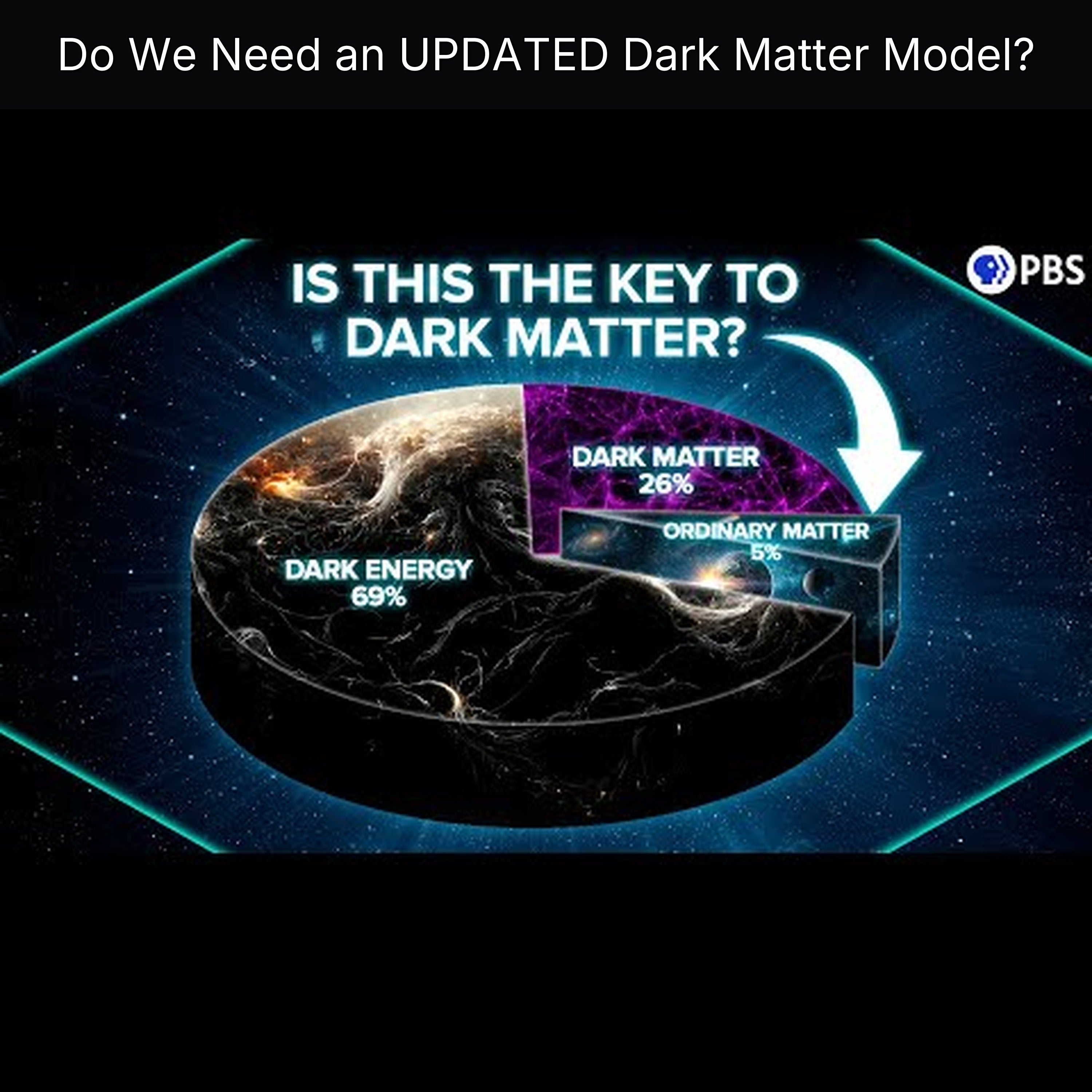
PBS Member Stations rely on viewers like you. To support your local station, go to: http://to.pbs.org/DonateSPACE Sign Up on Patreon to get access to the Space Time Discord! We have no idea what dark matter is, other than it’s some source of gravity that is completely invisible but exerts way more pull that all of the regular matter. More than all of the stars, all of the gas, all of the black holes…unless dark matter is black holes, then black holes are most of everything. Dark matter constitutes 80% or so of the mass in the universe, which means even our Milky Way galaxy is mostly a vast ball of dark matter that happens to have attracted a relative sprinkling of baryons—atoms in the form of gas, which lit up as starry glitter spinning in the middle of this invisible gravitational well. Check out the Space Time Merch Store Sign up for the mailing list to get episode notifications and hear special announcements! Search the Entire Space Time Library Here: https://search.pbsspacetime.com
Show notes The Supernova That Wouldn't Fade SN 2024vjm, discovered by BlackGEM at La Silla on 13 September 2024 in NGC 6744, is possibly the faintest supernova ever observed — 100 to 300 times dimmer than an ordinary one. It should have faded fast under the 30-year-old Phillips relation; instead its slow ejecta (~3,000 km/s) kept radiation trapped for more than 70 days. A Euclid image from 11 months earlier shows no star at the site, pointing to a faint white dwarf system. Zimmerman, Gal-Yam et al., Nature Astronomy, 26 Nov 2026 (preprint Feb 2026). Less Dark Matter Than Expected Lei, Zhu et al. (Shanghai Astronomical Observatory) modelled 136 nearby galaxies with MaNGA/CALIFA stellar kinematics and HI including FAST data. Above ~10 billion solar masses in stars, central dark matter densities fall below IllustrisTNG, EAGLE and SIMBA predictions. Cause unclear. Nature Astronomy, 26 Nov 2026 (preprint Sept 2026). Dating the Moon's Biggest Scar Qian, Zhao et al. (HKU) combine Chang'e-6 sa
After a long road trip to the beach, two exhausted friends stopped in South Carolina to spend the night with another friend. But before calling it a night, they decided to explore some nearby woods and railroad tracks rumored to be haunted. Running on very little sleep, they were already on edge. Every shadow seemed suspicious, and every movement in the darkness had them wondering whether they were seeing something paranormal—or simply letting their imaginations get the better of them. Eventually, they returned to their friend's house, hoping to finally get some rest. But once they settled in, the uneasy feelings only grew stronger. And what happened that night would leave one of them so frightened that he refused to spend another night in the house. Had they been searching for ghosts in all the wrong places? #RealGhostStoriesOnline #TrueGhostStories #HauntedHouse #GhostHunting #ParanormalEncounters #HauntedCloset #ShadowFigures #UnexplainedKnocking #SouthCarolinaGhostStories #UnseenPr
Sleep better with Pillow: https://pillow.app/bettersleep Experience the gentle hum of a summer garden mower, creating a soothing ambient soundscape perfect for deep sleep, meditation, and relaxation. Let this calming nature audio help you unwind, focus, and drift into peaceful rest. This episode includes AI-generated content.
Fall asleep to this quiet science story. A Boring Science For Sleep episode about Why Auroras Glow Green and Red Above the Poles. Why Auroras Glow Green and Red Above the Poles Settle in for a quiet exploration of Why Auroras Glow Green and Red Above the Poles. This episode follows Green Light Over the Pole; Spectroscopes, Terrellas and Cameras; Why Oxygen Waits to Glow; Frozen Nitrogen and a Toronto Tube; Red Skies Far From Home. Listen closely or let the details drift past. Chapters 00:00:00 Why Auroras Glow Green and Red Above the Poles 01:31:54 Why Dark Matter Holds Galaxies Together 02:48:42 Why Supernovae Can Outshine Entire Galaxies 04:01:33 Why Rainbows Separate Sunlight Into Colours If you enjoy this quiet science bedtime pace, you might also like True Crime for Sleep (https://open.spotify.com/show/05dzYD65s7sflbCdBiKBty) on Spotify — same quiet rhythm, different night.
Fall asleep to this quiet science story. A Boring Science For Sleep episode about How Photosynthesis Turns Sunlight Into Sugar. How Photosynthesis Turns Sunlight Into Sugar Settle in for a quiet exploration of How Photosynthesis Turns Sunlight Into Sugar. This episode follows The Willow in the Pot; Mint, Candles and Sunshine; Inside the Green Leaf; Following Carbon at Berkeley; Crystals, Cane and Old Seas. Listen closely or let the details drift past. Chapters 00:00:00 How Photosynthesis Turns Sunlight Into Sugar 01:35:09 Why the Speed of Light Is a Cosmic Speed Limit 02:41:42 Tennis Balls and the Stitching of Felt Covers If you enjoy this quiet science bedtime pace, you might also like Psalms for Sleep (https://open.spotify.com/show/7zd2RN8SMTCheFA2ifYK0m) on Spotify — same quiet rhythm, different night.
Fall asleep to this quiet science story. A Boring Science For Sleep episode about How a Steam Engine Turns Boiling Water Into Motion. How a Steam Engine Turns Boiling Water Into Motion Settle in for a quiet exploration of How a Steam Engine Turns Boiling Water Into Motion. This episode follows A Model That Ran Dry; The Dartmouth Ironmonger and Partners; Steam, Air and the Great Beam; A Sunday Walk on Glasgow Green; From Mine Pumps to Moving Wheels. Listen closely or let the details drift past. Chapters 00:00:00 How a Steam Engine Turns Boiling Water Into Motion 01:25:32 What Really Happens Near a Black Hole 02:32:27 How Pangaea Came Together and Then Broke Apart 03:36:25 Toothbrush Making and the Setting of Bristles If you enjoy this quiet science bedtime pace, you might also like Nature Documentary for Sleep (https://open.spotify.com/show/6Jcyoklmz2GdNGdCcNyQes) on Spotify — same quiet rhythm, different night.
Schools should explain the purpose of a rule before punishing students for breaking it.
Share your view, then see how readers voted. No sign-in required. This poll is shared across stories.
Do you agree or disagree?
Common Quandary
A Common Quandary to discuss
Another conversation to explore, separate from this news story.
You cannot stand your friend's partner. Do they still get a wedding invitation?
You are planning a small wedding and strongly dislike the person your longtime friend has been dating. Inviting them would make you uncomfortable, but excluding only that partner would embarrass your friend.
Whose comfort should govern a celebration centered on you?