How a Steam Engine Turns Boiling Water Into Motion | Boring Science For Sleep
366 min
Listen through the publisher, then discuss the episode here or arrange an in-person Roundtable. Your city determines where to meet.
Roundtables are designed for groups of four, with a shared subject and room for everyone to speak. Come for discussion, with no dating expectation.
Fall asleep to this quiet science story. A Boring Science For Sleep episode about How a Steam Engine Turns Boiling Water Into Motion. How a Steam Engine Turns Boiling Water Into Motion Settle in for a quiet exploration of How a Steam Engine Turns Boiling Water Into Motion. This episode follows A Model That Ran Dry; The Dartmouth Ironmonger and Partners; Steam, Air and the Great Beam; A Sunday Walk on Glasgow Green; From Mine Pumps to Moving Wheels. Listen closely or let the details drift past. Chapters 00:00:00 How a Steam Engine Turns Boiling Water Into Motion 01:25:32 What Really Happens Near a Black Hole 02:32:27 How Pangaea Came Together and Then Broke Apart 03:36:25 Toothbrush Making and the Setting of Bristles If you enjoy this quiet science bedtime pace, you might also like Nature Documentary for Sleep (https://open.spotify.com/show/6Jcyoklmz2GdNGdCcNyQes) on Spotify — same quiet rhythm, different night.
Episode information is provided by the publisher. Listening takes place on the publisher’s service.
In this calm and sleepy facts episode, we turn inward to explore the quiet, extraordinary science of human memory, the invisible system that holds together every experience, every face, and every half forgotten song from childhood. We begin with what memory actually is, not a recording stored neatly in a single place but a living reconstruction, rebuilt each time it is recalled and subtly reshaped in the process. We journey into the neuroscience behind it all, from the hippocampus, the small seahorse shaped structure at the center of memory formation, to the synapses that strengthen each time a memory is revisited, to the remarkable role sleep plays in moving the day's experiences from temporary storage into the deeper architecture of the brain. We explore the different kinds of memory, from the episodic memories that let us relive a moment in vivid detail to the procedural memories that let us ride a bicycle without thinking, to the brief sensory traces that hold the echo of a sound f
What’s really happening inside a black hole? Imagine that you’re flying through space, when suddenly you start to get dragged toward a dark abyss. Reality as you know it starts to change. Time begins to warp. And you start to feel this strange sort of sensation of being stretched and squashed… You’re falling into a black hole, one of the most astonishing places in our universe. Some are so big they can fit over 60 of our solar systems across them, with masses up to 100 billion times our Sun. And once you fall into one past a certain point, nothing can escape. ... Or can it? I wanted to know the latest cutting edge research about black holes, so I called up my favorite physicist, Dr. Brian Cox to answer the question: If you fell into a black hole, what would actually happen to you? What would it feel like? And what does our newest science tell us is really happening inside a black hole? Chapters: 0:00 What if you fall into a black hole? 1:20 What is a black hole, really? 2:20 How do we
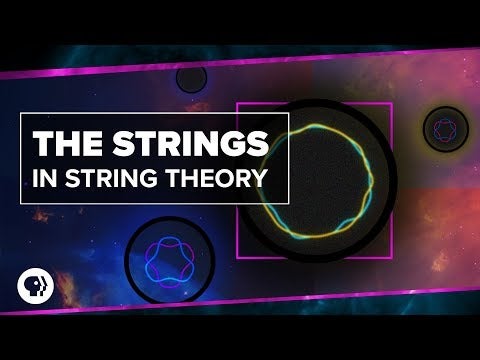
Viewers like you help make PBS (Thank you ) . Support your local PBS Member Station here: https://to.pbs.org/DonateSPACE Uploaded 18-10-18 To learn more about 23andMe head to https://23andme.com/spacetime Why strings? What are they made of? How did physicists even come up with this bizarre idea? And what’s all this nonsense of extra dimensions? You can further support us on Patreon at https://www.patreon.com/pbsspacetime Get your own Space Time t-shirt at http://bit.ly/1QlzoBi Tweet at us! @pbsspacetime Facebook: facebook.com/pbsspacetime Email us! pbsspacetime [at] gmail [dot] com Comment on Reddit: http://www.reddit.com/r/pbsspacetime Help translate our videos! Previous Episode: Computing a Universe Simulation Hosted by Matt O'Dowd Written by Matt O'Dowd Graphics by Luke Maroldi Assistant Editing and Sound Design by Mike Petrow Made by Kornhaber Brown (www.kornhaberbrown.com) In physics we like to reduce down our description of the mechanics of reality to the simplest possible form.
In 1982, a U.S. Forest Service biologist made plaster casts of reported Bigfoot tracks near Walla Walla. On page two of his report, he says he turned the casts and original photo negatives over to the Walla Walla Ranger District. Forty-four years later, I have a question for anyone who worked there. Do you remember what happened to them? I’m Jeremiah Byron, host of Bigfoot Society. I walk through all three Bigfoot/Sasquatch records the Forest Service posted on October 15, 2026. We start in the Mill Creek watershed, where Paul Freeman led investigators to two 15-inch tracks. I explain why the fine ridges in those impressions caught my attention and why the investigators came away skeptical. Then we head to Montana. At Petty Creek, hunters returned for a bull elk and found large tracks in the snow where they’d left it. Decades later, an eight-year-old visiting a neighbor near Plains spotted prints that two men followed about 100 yards into the woods. Read all three original files under “
This is a Grave Talks CLASSIC EPISODE! PART TWO What if you could see demons—and knew exactly how to fight them? For more than four decades, June Lundgren has lived in a world shaped by spirits, entities, and experiences most people would struggle to comprehend. A psychic medium, animal communicator, and self-described demon seer, June’s journey began in childhood after her grandmother encouraged her to embrace abilities others feared or dismissed. Since then, June says she has helped countless people confront terrifying paranormal activity, including demonic attachments and possessions that nearly destroyed lives. Along the way, she’s also experienced telepathic communication with animals, vivid memories of past lives, and encounters that she believes reveal what truly happens after death. June shares stories that push far beyond the boundaries of a traditional ghost story—into a world where unseen entities may be influencing far more than we realize. Whether you believe in the parano
The human brain remains one of the greatest unsolved mysteries in science. We have roughly 86 billion neurons firing in a way that somehow produces intelligence, and yet the brain is still largely a black box. In the early days of AI, researchers looked to the brain for clues about how to build smarter machines. But today, that relationship has been flipped on its head. Join Professor Hannah Fry and neuroscience researchers Maria Eckstein and Kim Stachenfeld to see how scientists are using AI to better understand the human mind. Please leave us a review on Spotify or Apple Podcasts if you enjoyed this episode. We always want to hear from our audience whether that's in the form of feedback, new idea or a guest recommendation! Hosted by Simplecast, an AdsWizz company. See https://pcm.adswizz.com for information about our collection and use of personal data for advertising.
Fall asleep to this quiet science story. A Boring Science For Sleep episode about Why Fire Needs Oxygen to Sustain Combustion. Why Fire Needs Oxygen to Sustain Combustion Settle in for a quiet exploration of Why Fire Needs Oxygen to Sustain Combustion. This episode follows The Candle Under The Jar; Pumps, Bladders And Burning Lenses; How A Flame Feeds Itself; Phlogiston, A Letter And A Cabin; Closed Rooms And Orbiting Candles. Listen closely or let the details drift past. Chapters 00:00:00 Why Fire Needs Oxygen to Sustain Combustion 01:34:13 How Plate Tectonics Keeps Continents Moving 02:49:18 Accordion Bellows and the Folding of Cardboard If you enjoy this quiet science bedtime pace, you might also like Psalms for Sleep (https://open.spotify.com/show/7zd2RN8SMTCheFA2ifYK0m) on Spotify — same quiet rhythm, different night.
Fall asleep to this quiet science story. A Boring Science For Sleep episode about How a Transistor Switches and Amplifies Signals. How a Transistor Switches and Amplifies Signals Settle in for a quiet exploration of How a Transistor Switches and Amplifies Signals. This episode follows Gold Points on Germanium; Crystals, Chemists and Surfaces; Inside the Base Region; Leakage, Heat and Stored Charge; Gates, Pairs and Quiet Logic. Listen closely or let the details drift past. Chapters 00:00:00 How a Transistor Switches and Amplifies Signals 01:38:47 Broom Making and the Binding of Broomcorn 04:09:45 Rubber Erasers and the Mixing of a Soft Compound If you enjoy this quiet science bedtime pace, you might also like Nature Documentary for Sleep (https://open.spotify.com/show/6Jcyoklmz2GdNGdCcNyQes) on Spotify — same quiet rhythm, different night.
Fall asleep to this quiet science story. A Boring Science For Sleep episode about How Mitochondria Power the Cells in Your Body. How Mitochondria Power the Cells in Your Body Settle in for a quiet exploration of How Mitochondria Power the Cells in Your Body. This episode follows The folded inner membrane; Cold sucrose and pigeon muscle; From sugar to spinning rotor; A theory tested in Cornwall; A living restless network. Listen closely or let the details drift past. Chapters 00:00:00 How Mitochondria Power the Cells in Your Body 01:32:12 Broom Making and the Binding of Broomcorn 04:03:10 Rubber Erasers and the Mixing of a Soft Compound If you enjoy this quiet science bedtime pace, you might also like Nature Documentary for Sleep (https://open.spotify.com/show/6Jcyoklmz2GdNGdCcNyQes) on Spotify — same quiet rhythm, different night.
Advertised prices should include all unavoidable charges.
Share your view, then see how readers voted. No sign-in required. This poll is shared across stories.
Do you agree or disagree?
Common Quandary
A Common Quandary to discuss
Another conversation to explore, separate from this news story.
Your friend is forty minutes late. Can the restaurant give away their chair?
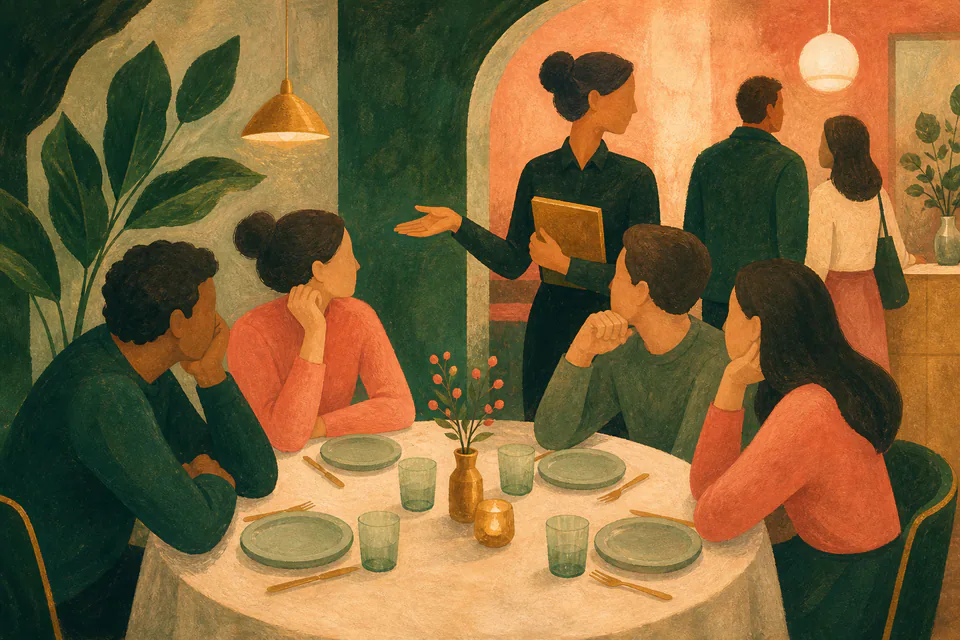
A busy restaurant seats your group only after everyone arrives. One friend is forty minutes late and keeps texting that they are almost there. A couple waiting nearby could use the empty place, and the server asks your group to order without them.
How long should one person's delay control everyone else's evening?