Why People Cheat: Inside Ashley Madison with CSO Paul Keable
74 min
Listen through the publisher, then discuss the episode here or arrange an in-person Roundtable. Your city determines where to meet.
Roundtables are designed for groups of four, with a shared subject and room for everyone to speak. Come for discussion, with no dating expectation.
Ashley Madison's 2015 hack threatened to destroy the company. Yet at the height of the scandal, daily sign-ups more than tripled, according to its Chief Strategy Officer Paul Keable. Keable joins Michael Shermer to talk about how dating apps are changing relationships and why people seek sex outside their marriages. What do you owe a spouse who no longer wants sex? Can an open marriage work? Why are women judged more harshly than men for wanting sexual variety? And how much of anyone else's sex life is our business?
Episode information is provided by the publisher. Listening takes place on the publisher’s service.
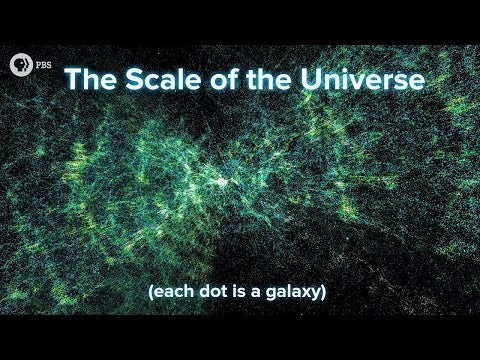
Thank you to Draper and its Hack the Moon initiative for supporting PBS Digital Studios | Learn more at https://wehackthemoon.com. (https://wehackthemoon.com./) Uploaded 25-07-19 PBS Member Stations rely on viewers like you. To support your local station, go to: http://to.pbs.org/DonateSPACE One of the fundamental questions humanity has always asked is how big is our Universe? For much of human history, people believed that Planet Earth was the very center of the entire universe. And Earth is pretty big. But compared the rest of the universe, we are infinitesimally small. The animation in this video the Digital Universe data collection curated by the American Museum of Natural History. The software is used to visualize these datasets is OpenSpace, which is developed through a collaboration between AMNH, Linköping University in Sweden, New York University, and the University of Utah. The software and datasets are open source and are free to download and explore. https://www.openspacepro
This is a Grave Talks CLASSIC EPISODE! PART TWO Most people think they know the story of Lizzie Borden: two brutal axe murders in 1892, a sensational trial, and an acquittal that still fuels debate more than a century later. Today, the former Borden family home stands as a popular haunted bed and breakfast, often portrayed as a site of mischievous spirits and lingering tragedy. But what if the real horror didn’t begin—or end—with Lizzie? Sam Baltrusis, who shares his firsthand investigations inside the infamous Borden house. According to Sam, some of what he encountered felt far too intelligent, far too oppressive, and far too dark to be explained as simple residual hauntings. Could a malevolent entity have influenced the family long before the murders occurred? Is it possible something far more sinister was at work behind closed doors? #TheGraveTalks #LizzieBorden #BordenHouse #HauntedMassachusetts #TrueCrimeMeetsParanormal #IntelligentHaunting #DarkEntity #HauntedHistory #FallRiver #
SILICON SATAN: THE HIDDEN HIERARCHY OF POWER EXPOSED! Who really controls the controllers? Michael Jaco welcomes back Cregg Lund, author of Silicon Satan, for an explosive conversation exploring what Cregg describes as the Luciferian hierarchy, the secret societies operating behind powerful institutions, and the hidden layers of influence he believes most people never see. Cregg breaks down his proposed levels of control, from political institutions and Silicon Valley power players to billionaire networks, secret societies, and what he calls the ancient Luci bloodlines. But according to Cregg, the biggest mistake is focusing on the visible players rather than the structures he believes operate above them. ⚡ Inside this episode: The Luci hierarchy and Cregg's claims of internal power struggles. The billionaire club, Silicon Valley, and alleged hidden networks of influence. Why Cregg believes dismantling the visible “deep state” would not eliminate the underlying system. Secret societies
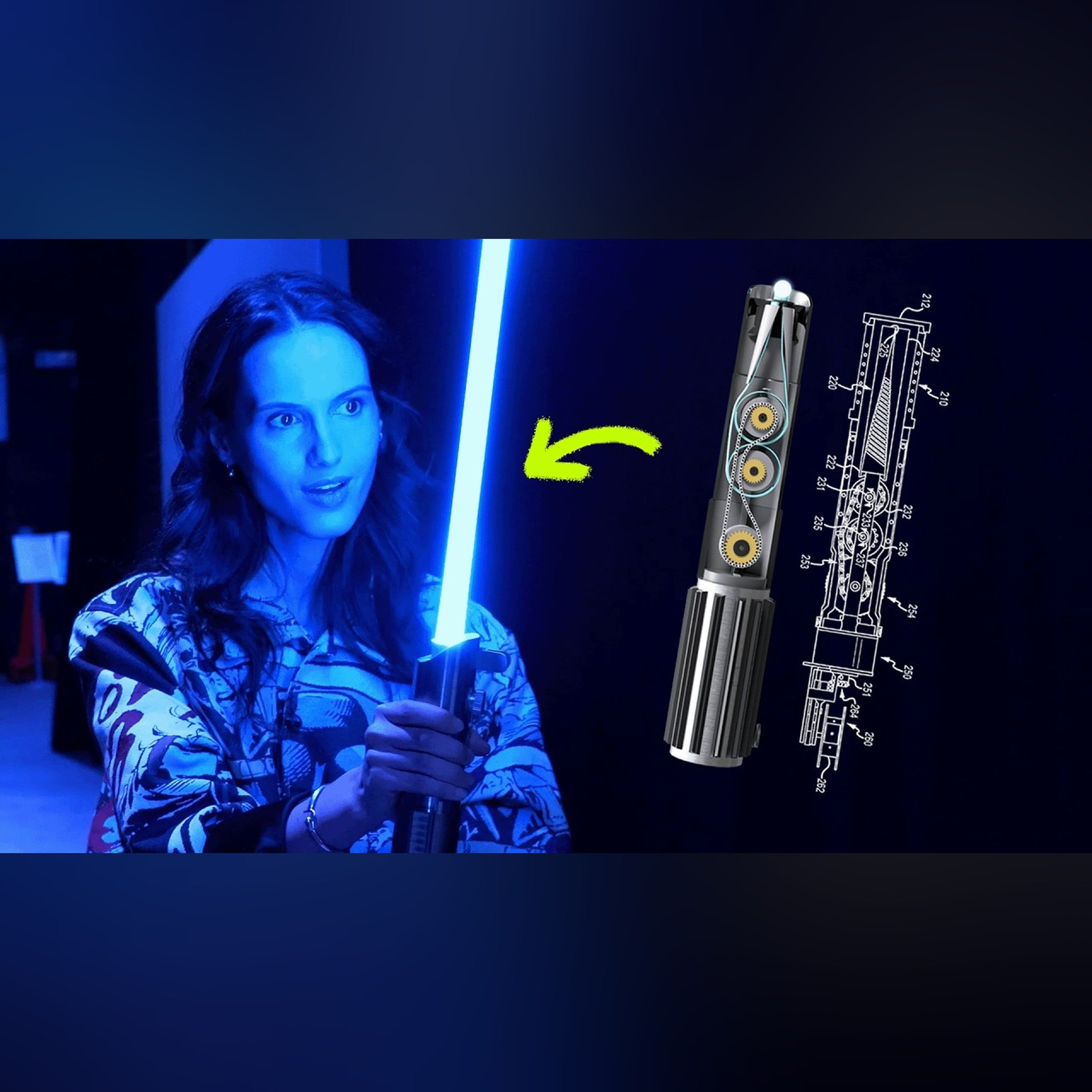
I tested Disney’s coolest new tech… Go to https://surfshark.com/cleo for 4 extra months of Surfshark Today I’ve been invited behind the scenes at Walt Disney Imagineering, the place where Disney brings their craziest ideas to life - from STUNT ROBOTS to a real life version of The Force, to adorable little droids! On this show Huge If True, we explore how tech can improve people’s lives - by living longer, going farther, doing more. But the reason I’ve loved Disney since I was a kid is they use tech to improve lives another way… by making people happy. And that means they end up pushing forward tech in some crazy, unexpected ways. So let me take you inside the magic, to show you the cutting edge tech they’re building… how it works… and what happens when we put it to the test! Chapters: 0:00 What is Disney building next? 1:11 What does Walt Disney Imagineering do? 1:52 What are Disney’s new droids really like? 2:47 How do Disney’s new droids work? 5:08 What’s the world’s most realistic l
Launch, Scale & Monetize Your Newsletter with Beehiiv! Start today by visiting www.beehiiv.com?via=fellow (https://www.beehiiv.com/?via=fellow) Run Your Agency on Autopilot – White Label CRM, Funnels, and Automations in One Platform for Success. Claim 2-week free trail now www.gohighlevel.com/protrial?fp_ref=fg (https://www.gohighlevel.com/protrial?fp_ref=fg) Mark Tilbury firmly believes that anyone who learns the skill sets of a millionaire can become a millionaire, ANYONE. Mark Tilbury left school at 16 with no qualifications and no money. Now he runs a multi-million dollar business & has grossed over 50 million. He has the house of his dreams and most importantly, the freedom to spend time with his family. Now Mark wants to help you become financially free as well. Follow the podcast and turn on notifications! Follow @MarkTilbury on Tiktok, YouTube, Twitter & IG Disclaimer: All content rights belong to Mark Tilbury. This Podcast is fan-made. No copyright infringement intended. -----
That’s the sound of the planet Uranus. It was produced from observations made by Voyager 2 when it flew past Uranus in 1986. Scientists used those observations to measure the planet’s rotation – the length of its day. But a decade of work by Hubble Space Telescope has revealed that the Voyager numbers were a little off. Precise timing is important for understanding what’s going on inside Uranus. It’s hard to measure the planet’s day. It doesn’t have a solid surface, so there are no landmarks to rotate in and out of view. The clouds that top the planet rotate at different rates, and they’re pushed by high-speed winds, so they’re no help. The best way to find the rotation rate is by studying the planet’s magnetic field. Hubble’s done that by watching auroras. They’re created by interactions between the magnetic field and the solar wind. As Uranus turns, the auroras change. The timing of those changes reveals how fast the planet’s interior is turning. The new work shows that a day is 17 h
Some of the people building AI say it could kill us all. Steven Pinker thinks their arguments deserve a lot more scrutiny. Does greater intelligence come with a desire for power? What does "superintelligence" actually mean? And where do those precise-sounding estimates of our odds of extinction come from?
The U.S. government built houses, dressed pigs in military clothing, and detonated atomic bombs to see what would survive. Jon H. Else, director of The Day After Trinity and author of Frenchman Flat: The Rise and Fall of Atomic Bombs, joins Michael Shermer to discuss the extraordinary history of nuclear testing in America's backyard. Jon H. Else is a documentary filmmaker and professor emeritus at the UC Berkeley Graduate School of Journalism. He holds an MA from Stanford University. A MacArthur Fellow, he has won five Emmy Awards and received two Academy Award nominations. His new book is Frenchman Flat: The Rise and Fall of Atomic Bombs.
By the summer of 1945, Japan's cities were burning, its people were starving, and its military leaders were preparing for a final battle on home soil. Even the destruction of Hiroshima did not bring an immediate surrender. Historian James Scott, author of Empire of Ashes, talks with Michael Shermer about why Japan kept fighting and why he believes Nagasaki was decisive. Could the war have ended without the atomic bombs? A Pulitzer Prize finalist and New York Times bestseller, James M. Scott is the author Black Snow, Rampage, Target Tokyo, The War Below, and The Attack on the Liberty, and co-author, with Jack Carr, of Targeted: Beirut. In addition, Scott, a former Nieman Fellow at Harvard, is a sought-after public speaker who leads battlefield tours and lectures at institutions around the world. His new book is Empire of Ashes.
Health advice should account for people's income, time, and practical circumstances.
Share your view, then see how readers voted. No sign-in required. This poll is shared across stories.
Do you agree or disagree?
Common Quandary
A Common Quandary to discuss
Another conversation to explore, separate from this news story.
The proposal is perfect and the ring is terrible. When do you say so?
Your partner proposes with a costly ring chosen after months of secret planning. You love the proposal and want the marriage, but strongly dislike the ring you would be expected to wear every day. Returns are possible for one week.
How much honesty can a loving gesture reasonably be asked to survive?