Listen through the publisher, then discuss the episode here or arrange an in-person Roundtable. Your city determines where to meet.
Roundtables are designed for groups of four, with a shared subject and room for everyone to speak. Come for discussion, with no dating expectation.
Stop guessing in conversations. See what’s really running them TODAY: https://nci.university/fe---sales-page-short-2 Uploaded 05-02-26 Please note that the content provided in this broadcast is for informational and educational purposes only and should not be construed as legal, medical, financial, or professional advice. No material in this communication establishes any form of professional relationship that is privileged or confidential. The insights and opinions expressed herein solely reflect the personal views of the speaker based on his extensive expertise and academic background in his field of study. These are purely personal opinions and should not be taken as direct statements of fact about any individuals, whether stated explicitly or implied. Any opinion shared in this broadcast is drawn from referenced material specific to this publication only. Remember, what's discussed here are perspectives—not claims of fact. Copyright and all rights reserved.
Episode information is provided by the publisher. Listening takes place on the publisher’s service.
This interview with Peter Mallouk, global finance expert and co-author of The Path, pulls the curtain back on what’s really happening in today’s marketplace – and shows you how to leverage it to build true financial independence. It’s a sneak peek of what’s in the book, packed with valuable advice from one of the greatest minds in finance: Mallouk has been ranked the #1 financial advisor by Barron’s and grew his wealth management firm, Creative Planning, from managing $30 million in assets to more than $50 billion. Uploaded 18-10-20 From financial principles like inflation, bear markets and taxes to the psychology of success, in this video Mallouk shares a few of the most essential concepts from the book. He’ll go over the importance of getting laser-focused on your goals, an idea that Tony Robbins himself also champions. As Peter explains, superstar athletes didn’t just wake up one day and start working out. They know their sport and they know what they have to do to win. This applies
Check out PIA's special Black Friday deal for Space Time fans https://www.piavpn.com/SpaceTime PBS Member Stations rely on viewers like you. To support your local station, go to:http://to.pbs.org/DonateSPACE Sign Up on Patreon to get access to the Space Time Discord! Neutrinos are one of the most bizarre of known particles. Black holes are probably the most bizarre of astrophysical objects. Makes sense we should use one to study the other, no? Well, today we’re doing just that. Special Thanks to: Science Communication Lab for DESY for use of their image in the thumbnail. Check out: https://www.scicom-lab.com/ to see more amazing images. Check out the Space Time Merch Store Search the Entire Space Time Library Here: https://search.pbsspacetime.com/ Hosted by Matt O'Dowd Written by Matt O'Dowd Post Production by Leonardo Scholzer, Yago Ballarini, Pedro Osinski, Caique Oliveira, Adriano Leal & Stephanie Faria Directed by Andrew Kornhaber Associate Producer: Bahar Gholipour Executive Produ
Being considerate is a good thing. It means recognising that your words, choices and actions affect other people. But sometimes, the desire to keep everyone happy slowly becomes a habit of abandoning yourself. You agree when you want to say no, apologise when you have done nothing wrong, hide your opinions to avoid disagreement and make decisions based on how people might react. The difference is whether your consideration comes from genuine love or from the fear of being rejected. Every contribution counts. Thank you for being part of our journey!
What is the Apple Vision Pro actually for? THIS… Get better sleep with $200 off your Eight Sleep Pod Cover using my code CLEO: https://www.eightsleep.com/cleo/ If you want to feel more optimistic about the future, consider subscribing. You’ve seen the Apple Vision Pro. But this isn’t a product review. In this video, @mkbhd and I take a dive into what the future might actually look like with this category of tech - and why you should care. (With a cameo from @ryan !) Honestly, with all the jargon and hype (VR! AR! Spatial computing! Metaverse!), I’ve been tuning out the news about these devices for a while. But now, I think it’s time to turn the volume back up and pay attention. There is a deeply optimistic future that’s possible here. Not Ready Player One, but something else entirely. I’m going to try to show you what it might really look and feel like. If the Apple Macintosh helped unlock personal computing, and the iPhone unlocked computers in our pockets, what is this device suppose
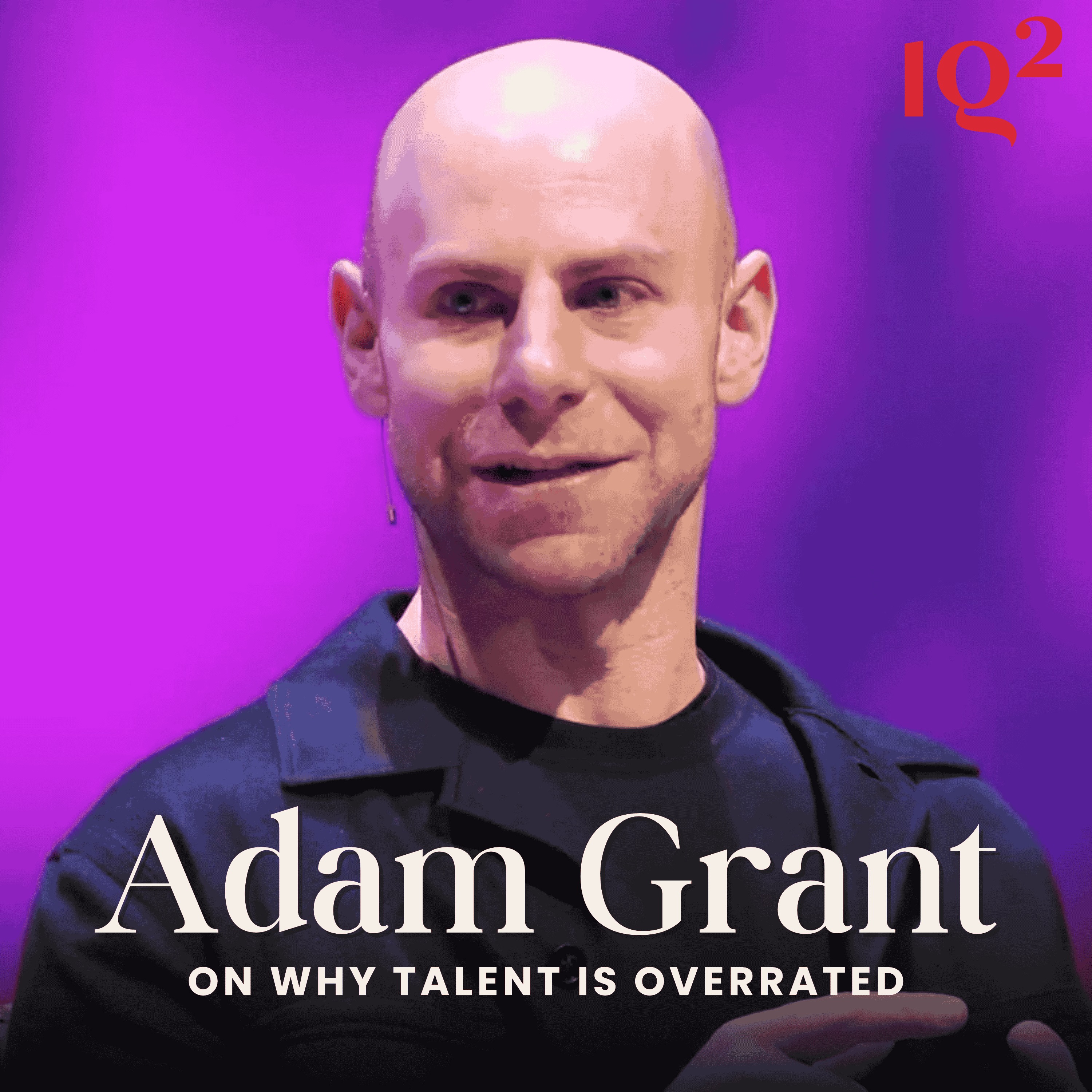
Adam Grant is one of the most sought after organisational psychologists in the world. He has provided expert advice to many of the world’s greatest business leaders, including Bill Gates and Sheryl Sandberg, equipping them with the mental tools to find motivation and meaning, rethink assumptions, and achieve greatness in their business and personal lives. In January 2024 Grant came to the Intelligence Squared stage for a rare, exclusive London event where he shared his revolutionary framework for how we can all exceed the expectations and aspirations we have set for ourselves. Drawing on his new book Hidden Potential he explained that despite living in a world that tends to admire people who start out with innate talent, there is clear scientific evidence that we can all bridge the biology gap and improve ourselves dramatically. In conversation with economist and FT columnist Tim Harford, Grant wove together groundbreaking evidence, surprising insights, and vivid story telling to take
You went back. Maybe not to the same person, but to the idea of them. You rehearsed the conversation again in your mind. You thought of better words, sharper examples, a clearer way to say the thing you'd already said. You kept trying to win an argument that was already over, with a person who had already walked away. Uploaded 13-10-26 That hunger to be understood is one of the most natural things in the world. And it is also one of the quietest thieves of a person's peace that I know of. You explain yourself to one person, feel relief for a day, and then someone else shakes their head, and you're back building the case for your own life all over again. Here is the truth: it is not another person's job to understand you. It is your job to understand yourself. And once you've done that interior work, the opinions of people who don't understand you go from feeling like a verdict to feeling like weather. This seminar unpacks the single mechanic behind why you keep over-explaining your lif
DISCOVER NCI - 1: https://nci.university/nci-1v2 Uploaded 09-05-26 ⬆️ Please note that the content provided in this broadcast is for informational and educational purposes only and should not be construed as legal, medical, financial, or professional advice. No material in this communication establishes any form of professional relationship that is privileged or confidential. The insights and opinions expressed herein solely reflect the personal views of the speaker based on his extensive expertise and academic background in his field of study. These are purely personal opinions and should not be taken as direct statements of fact about any individuals, whether stated explicitly or implied. Any opinion shared in this broadcast is drawn from referenced material specific to this publication only. Remember, what's discussed here are perspectives—not claims of fact. Copyright and all rights reserved.
Master the skills that change lives — enroll in your free human behavior course today: https://nci.university/learn Uploaded 09-01-26 You were never reacting to chaos — you were responding to structure. Outcomes don’t appear suddenly; they’re assembled long before you notice them. Understanding how pressure is built changes how the world feels immediately. All influence follows patterns once you know where to look. Reality doesn’t break — it gets reshaped in layers. Every system depends on predictable human responses. Given the right conditions, behavior becomes almost automatic. Once you see the architecture, panic loses its leverage. Detection beats reaction — every time. Please note that the content provided in this broadcast is for informational and educational purposes only and should not be construed as legal, medical, financial, or professional advice. No material in this communication establishes any form of professional relationship that is privileged or confidential. The insi
Instant Access to your FREE training course: https://nci.university (https://nci.university/) Uploaded 27-07-25 This is the simulation you already live inside of—and you’ve been breathing it like oxygen since the day you were born. In this video, we expose the invisible machinery beneath modern life—how symbols have replaced truth, how marketing has replaced meaning, and how our desires are manufactured by the very system that feeds on them. Drawing from the work of Jean Baudrillard and the hidden mechanisms of simulacra, we walk you through 10 real-life “glitches” that reveal the truth: • Why your food is rendered, not real • How social media replaced memory • Why you take photos of things you never actually see • And why even your “rebellion” is likely pre-approved This isn’t a conspiracy. It’s a mirror. And once you see it, you can’t unsee it. simulation theory, simulated reality, Baudrillard simulation, are we in a simulation, hyperreality explained, social media illusion, digital
A tradition can remain authentic while changing with the community that practices it.
Share your view, then see how readers voted. No sign-in required. This poll is shared across stories.
Do you agree or disagree?
Common Quandary
A Common Quandary to discuss
Another conversation to explore, separate from this news story.
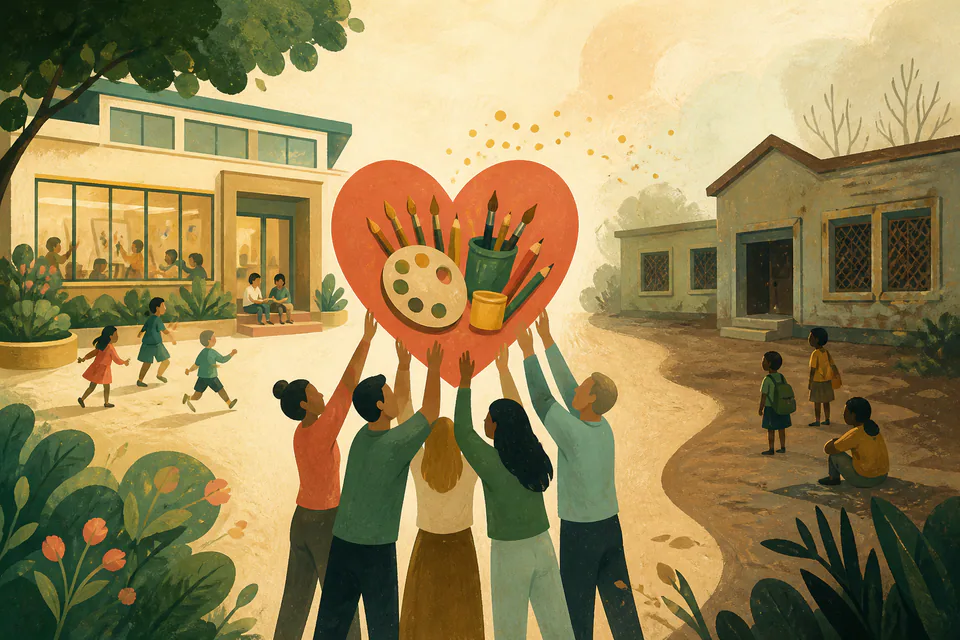
Rich parents want to buy their public-school class an art teacher. Should the school say no?
Parents at a well-resourced public school raise enough money for art teachers and smaller classes. Nearby schools cannot raise comparable amounts, widening differences within the same district.
Can helping your own community become unfair to the larger one?