PBS Member Stations rely on viewers like you. To support your local station, go to:http://to.pbs.org/DonateSPACE Sign Up on Patreon to get access to the Space Time Discord! Space is pretty deadly. But is it so deadly that we’re effectively imprisoned in our solar system forever? Many have said so, but a few have actually figured it out. Check out the Space Time Merch Store Search the Entire Space Time Library Here: https://search.pbsspacetime.com/ Hosted by Matt O'Dowd Written by Matt O'Dowd Post Production by Leonardo Scholzer, Yago Ballarini, Pedro Osinski, Adriano Leal & Stephanie Faria Directed by Andrew Kornhaber Associate Producer: Bahar Gholipour Executive Producers: Eric Brown & Andrew Kornhaber Executives in Charge (PBS): Adam Dylewski, Maribel Lopez Director of Programming (PBS): Gabrielle Ewing Want to Learn More About The Science of Aliens?!? Check out Our Aliens Playlist Hawking Radiation Episode Spacetime is produced by Kornhaber Brown for PBS Digital Studios. This progra
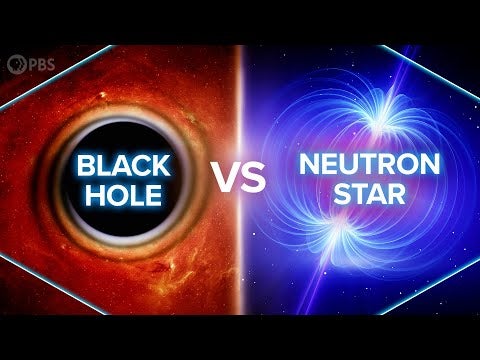
PBS Member Stations rely on viewers like you. To support your local station, go to: http://to.pbs.org/DonateSPACE ↓ More info below ↓ Uploaded 20-07-20 Sign Up on Patreon to get access to the Space Time Discord! Check out the Space Time Merch Store When we detected the very first gravitational wave, a new window was opened to the mysteries of the universe. We knew we’d see things previously thought impossible. And we just did - an object on the boundary between neutron stars and black holes, which promises to reveal the secrets of both. Hosted by Matt O'Dowd Written by Matt O'Dowd Graphics by Leonardo Scholzer, Yago Ballarini, and Pedro Osinski Directed by: Andrew Kornhaber Camera Operator: Bahaar Gholipour Executive Producers: Eric Brown and Andrew Kornhaber Previous Episodes Referenced: Ligo’s First Detection of Gravitational Waves: https://www.youtube.com/watch?v=gw-i_VKd6Wo The Future of Gravitational Waves: https://www.youtube.com/watch?v=eJ2RNBAFLj0 How to build a black hole http
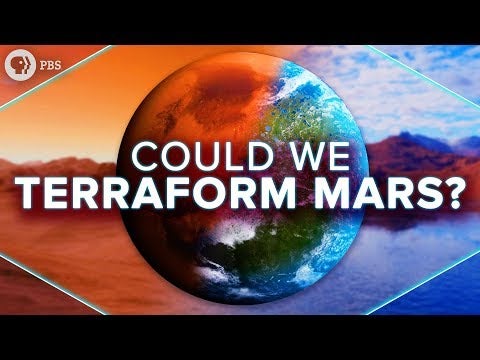
To discover more go to http://lego.build/CITYSpace Uploaded 16-09-19 PBS Member Stations rely on viewers like you. To support your local station, go to: http://to.pbs.org/DonateSPACE Humanity’s future is glorious. As we master space travel, we’ll hop from one lifeless world to the next. Life will blossom in our path and the galaxy with shimmer with beautiful Earth-like orbs. Hmmm… maybe. This won’t sound so far fetched if we prove we can do it at least once. If we successfully terraform Mars. Hosted by Matt O'Dowd Written by Matt O'Dowd Graphics by Murilo Lopes Directed by: Andrew Kornhaber Produced By: Kornhaber Brown Support Space Time on Patreon Check out the new Space Time Merch Store! We already have the technology to bring humans safely to Mars and set up small settlements - or at least could do within a generation. But those settlements will need to be cocooned - shielded against the deadly cold, intense radiation, and the fatal lack of atmospheric pressure. Surely if we want to
Viewers like you help make PBS (Thank you ) . Support your local PBS Member Station here: https://to.pbs.org/DonateSPACE Uploaded 30-08-17 Black holes are very well known but... What is a White Hole? LegalZoom is not a law firm or a substitute for the advice of an attorney. You can further support us on Patreon at https://www.patreon.com/pbsspacetime Get your own Space Time tshirt at http://bit.ly/1QlzoBi Tweet at us! @pbsspacetime Facebook: facebook.com/pbsspacetime Email us! pbsspacetime [at] gmail [dot] com Comment on Reddit: http://www.reddit.com/r/pbsspacetime Help translate our videos! https://www.youtube.com/timedtext_cs_... Previous Episode: Black Hole Playlist https://www.youtube.com/watch?v=vNaEBbFbvcY&list=PLsPUh22kYmNBl4h0i4mI5zDflExXJMo_x (https://www.youtube.com/watch?list=PLsPUh22kYmNBl4h0i4mI5zDflExXJMo_x&v=vNaEBbFbvcY) How Time Becomes Space Inside a Black Hole Are You a Boltzmann Brain? Lurking in the depths of the mathematics of Einstein’s general relativity is an o
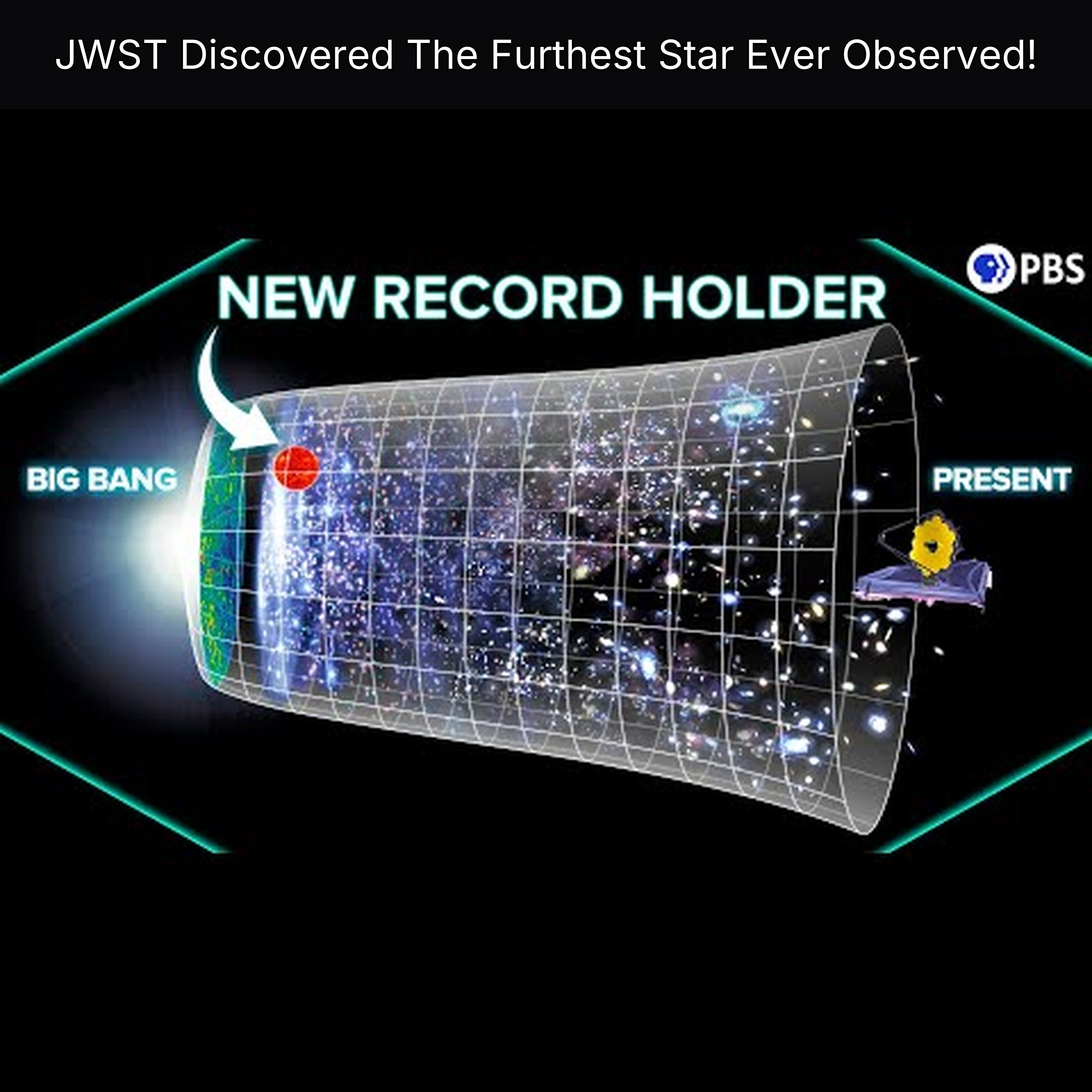
PBS Member Stations rely on viewers like you. To support your local station, go to:http://to.pbs.org/DonateSPACE Sign Up on Patreon to get access to the Space Time Discord! To understand where we came from—how earth, the solar system, the galaxy became what they are today—we need to understand the beginning of time. For example, how did the first galaxies pull themselves together from the dark universe-filling ocean of gas that followed the Big Bang? With the James Webb Space Telescope we’re starting to be able to find those first galaxies. It’s hard work because at those crazy distances all we see is tiny, faint and fuzzy blobs. If only we could see the individual stars in those galaxies we could learn so much more. Well, now using this one weird trick we can do exactly that. Or at least we have one lonely star at the end of the universe. But it won’t be lonely for long. Check out the Space Time Merch Store Search the Entire Space Time Library Here: https://search.pbsspacetime.com/ Ho
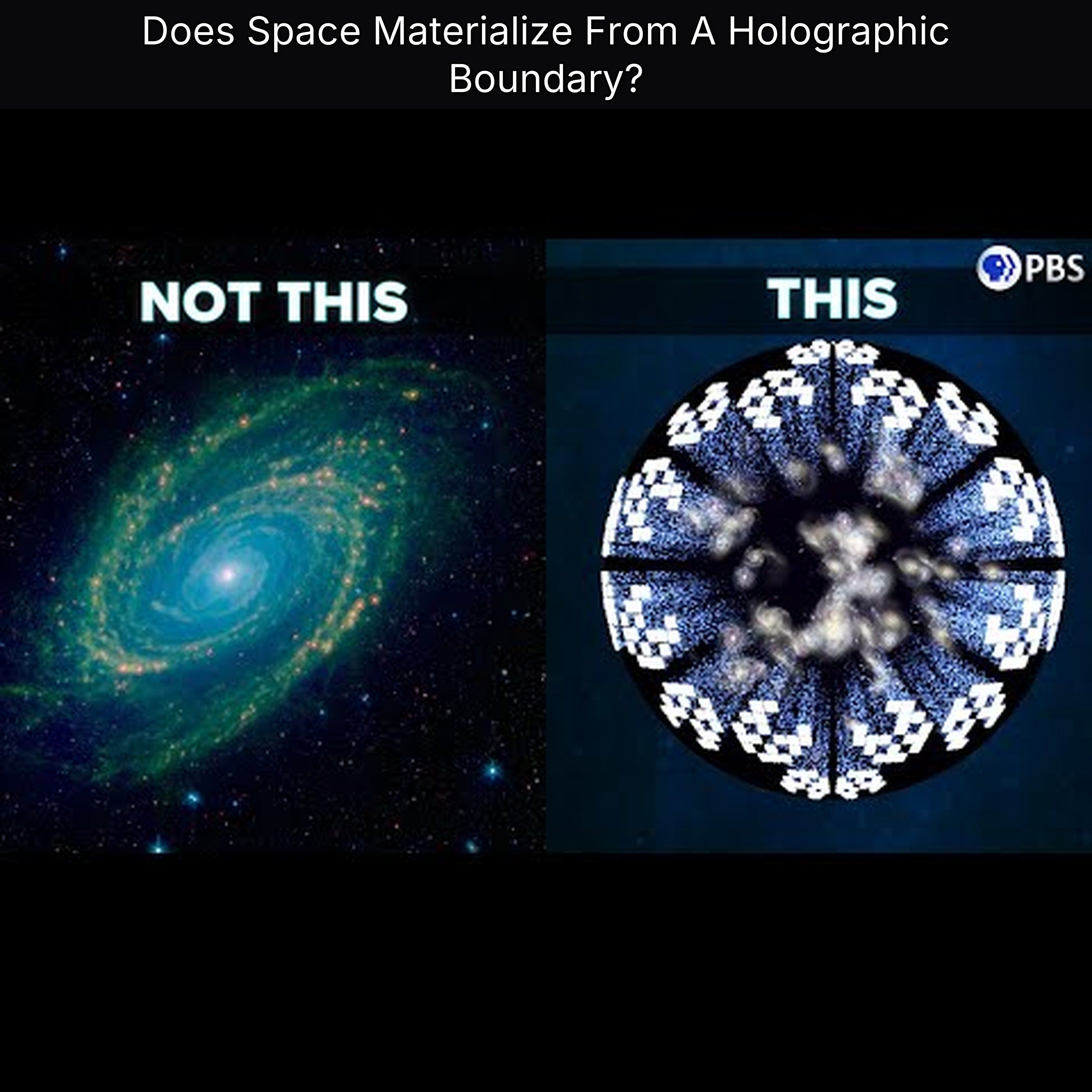
Check out the Space Time Merch Store Sign Up on Patreon to get access to the Space Time Discord! Space seems fundamental. To build a universe, surely you need something to build it on or in. Many, maybe most physicists now think that the fabric of space emerges from something deeper. And perhaps the most existentially disturbing such proposal is that our 3-D universe is just the inward projection of an infinitely distant boundary. A hologram, or sorts. Let’s see how that can actually work, and what the holographic principle really says about the “realness” of this universe. Check Out the Holographic Universe Playlist PBS Member Stations rely on viewers like you. To support your local station, go to:http://to.pbs.org/DonateSPACE Search the Entire Space Time Library Here: https://search.pbsspacetime.com/ Hosted by Matt O'Dowd Written by Matt O'Dowd Post Production by Leonardo Scholzer, Yago Ballarini & Stephanie Faria Directed by Andrew Kornhaber Associate Producer: Bahar Gholipour Execu
Viewers like you help make PBS (Thank you ) . Support your local PBS Member Station here: https://to.pbs.org/DonateSPACE Uploaded 09-05-18 The great advances in any science tend to come in sudden leaps. April 25th of 2018 marks the beginning of just such a leap for much of astronomy. In the early hours of the morning, the Gaia mission’s second data release dropped. Our understanding of our own galaxy will never be the same again. You can further support us on Patreon at https://www.patreon.com/pbsspacetime Get your own Space Time t-shirt at http://bit.ly/1QlzoBi Tweet at us! @pbsspacetime Facebook: facebook.com/pbsspacetime Email us! pbsspacetime [at] gmail [dot] com Comment on Reddit: http://www.reddit.com/r/pbsspacetime Help translate our videos! https://www.youtube.com/timedtext_cs_panel?tab=2&c=UC7_gcs09iThXybpVgjHZ_7g (https://www.youtube.com/timedtext_cs_panel?c=UC7_gcs09iThXybpVgjHZ_7g&tab=2) Previous Episode: The Star at the End of Time The Gaia satellite was launched in late
Thank you to Draper and its Hack the Moon initiative for supporting PBS Digital Studios | Learn more at https://wehackthemoon.com. (https://wehackthemoon.com./) Uploaded 25-07-19 PBS Member Stations rely on viewers like you. To support your local station, go to: http://to.pbs.org/DonateSPACE One of the fundamental questions humanity has always asked is how big is our Universe? For much of human history, people believed that Planet Earth was the very center of the entire universe. And Earth is pretty big. But compared the rest of the universe, we are infinitesimally small. The animation in this video the Digital Universe data collection curated by the American Museum of Natural History. The software is used to visualize these datasets is OpenSpace, which is developed through a collaboration between AMNH, Linköping University in Sweden, New York University, and the University of Utah. The software and datasets are open source and are free to download and explore. https://www.openspacepro
To learn to think like a scientist check out http://Brilliant.org/SpaceTime (http://brilliant.org/SpaceTime) Uploaded 17-06-19 PBS Member Stations rely on viewers like you. To support your local station, go to: http://to.pbs.org/DonateSPACE Check out the new Space Time Merch Store! Support Space Time on Patreon Black holes are really only dangerous if you get too close. Ha, who am I kidding. It turns out they may be responsible for ending star formation across the entire universe. Hosted by Matt O'Dowd Written by Matt O'Dowd Graphics by Leonardo Scholzer Directed by Andrew Kornhaber Produced By: Kornhaber Brown When we first realized that black holes could have masses of millions or even billions of times that of the sun, it came as a bit of a shock. They were discovered as the driving force behind quasars, where matter is heated to extreme incandescence before its plunge into vast black holes. But if that weren’t enough, we soon realized that every single decent-sized galaxy contains
PBS Member Stations rely on viewers like you. To support your local station, go to: http://to.pbs.org/DonateSPACE ↓ More info below ↓ Uploaded 14-04-20 Check out Antarctic Extremes on PBS Terra: https://www.youtube.com/pbsterra Sign Up on Patreon to get access to the Space Time Discord! Check out the Space Time Merch Store The Milky Way galaxy is relatively calm by the destructive standards of the rest of the Universe, and compared to its own very violent past. But just recently we discovered that its violent past was much more recent than we thought - and could even happen again. Hosted by Matt O'Dowd Written by Emily Diebert and Matt O'Dowd Graphics by Leonardo Scholzer, Yago Ballarini, and Pedro Osinski Directed by: Andrew Kornhaber Executive Producers: Eric Brown and Andrew Kornhaber End Credits Music by J.R.S. Schattenberg: https://www.youtube.com/channel/UCRl6-nb4iOnsij-vnpAjp0Q #space #astrophysics #spacetime Special Thanks to Our Patreon Supporters Big Bang Supporters Alexander
PBS Member Stations rely on viewers like you. To support your local station, go to: http://to.pbs.org/DonateSPACE ↓ More info below ↓ Uploaded 04-05-20 Sign Up on Patreon to get access to the Space Time Discord! Check out the Space Time Merch Store The universe is precisely 13.8 billion year old - or so our best scientific methods tell us. But how do you learn the age of the universe when there’s no trace left of its beginnings? Hosted by Matt O'Dowd Written by Dan Falk and Matt O'Dowd Graphics by Leonardo Scholzer, Yago Ballarini, and Pedro Osinski Directed by: Andrew Kornhaber Camera Operator: Bahaar Gholipour Executive Producers: Eric Brown and Andrew Kornhaber End Credits Music by J.R.S. Schattenberg: https://www.youtube.com/channel/UCRl6-nb4iOnsij-vnpAjp0Q #space #astrophysics #cosmology Special Thanks to our Patreon Supporters Big Bang Supporters Alexander Tamas David Nicklas Fabrice Eap Juan Benet Morgan Hough Radu Negulescu Quasar Supporters Christina Oegren Mark Heising Vinnie
PBS Member Stations rely on viewers like you. To support your local station, go to: http://to.pbs.org/DonateSPACE ↓ More info below ↓ Uploaded 28-03-19 Of all the unlikely ends of the universe, the Big Rip has to be the most spectacular. Galaxies ripped to shreds, dogs and cat first living together, then tragically separated by the infinitely accelerating expansion of space on subatomic scales. Good thing it's not going to happen. Or is it? Check out the new Space Time Merch Store! Support Space Time on Patreon #bigrip #endoftheuniverse #spacetime Learn More About Dark Energy Here: https://www.youtube.com/playlist?list... (https://www.youtube.com/playlist?list...=) Hosted by Matt O'Dowd Written by Matt O'Dowd Graphics by Aaron Halevy Directing by Andrew Kornhaber The universe is expanding, and that expansion is accelerating. We don’t know what’s causing that acceleration, but that hasn’t stopped us from giving it a name. We call this unknown influence dark energy. The observed accelera
Sign Up on Patreon to get access to the Space Time Discord! Uploaded 25-05-21 It’s fair to say that black holes may be the scariest objects in the universe. Happily for us, the nearest is probably many light-years away. Unless of course, Planck relics are a thing - in which case they might be literally everywhere. Check out the Space Time Merch Store Hosted by Matt O'Dowd Written by Matt O'Dowd Graphics by Leonardo Scholzer, Yago Ballarini, Pedro Osinski, Adriano Leal and Stephanie Faria GFX Visualizations: Katherine Kornei Directed by Andrew Kornhaber Assistant Producer: Setare Gholipour Executive Producers: Eric Brown and Andrew Kornhaber End Credits Music by J.R.S. Schattenberg: https://www.youtube.com/channel/UCRl6-nb4iOnsij-vnpAjp0Q Special Thanks to Our Patreon Supporters Big Bang Supporters Charlie Mrs. Tiffany Poindexter Leo Koguan Sandy Wu Matthew Miller Scott Gray Ahmad Jodeh Radu Negulescu Alexander Tamas Morgan Hough Juan Benet Vinnie Falco Fabrice Eap Mark Rosenthal David
Join two epic livestreams about Theories of Everything! Sign up for prizes, a download link to the videos, and more at http://www.pbsspacetime.com/events. Please subscribe to Brian Keating's YouTube Channel to watch one-on-one interviews with the guest speakers and more: https://www.youtube.com/DrBrianKeating July 28 @ 4pm Eastern (8pm UTC) - What is a Theory of Everything? Moderated by Matt O'Dowd & Brian Keating Featuring Max Tegmark, Stephon Alexander, James Beacham In this 90 minute conversation we explore what Theories of Everything really are outside the hype, dig into the essential physics mysteries that compel us to search for one, and survey the major TOE contenders currently being explored by the physics community. August 4 @ 10:30am Eastern (2:30pm UTC) - Theory of Everything Controversies Moderated by Matt O'Dowd & Brian Keating Featuring Lee Smolin, Eric Weinstein, Sabine Hossenfelder Existing Theories of Everything have not yet produced experimental evidence that solves t
Thanks to Radiacode for sponsoring this video. They say fusion is 50 years away, no matter when you ask. Then why are billions suddenly being pumped into fusion startups? Yes to train LLMs, but there's a reason the technobrats are bullish on fusion in particular. The fact is, the technological challenges have been chipped away and in many cases solved over the past decades, and there's really no one deal-breaker difficulty remaining. One of the final challenges is deciding on the physical vessel to contain our mini artificial stars--and we have some pretty sci-fi options that are nearly ready to go. PBS Member Stations rely on viewers like you. To support your local station, go to:http://to.pbs.org/DonateSPACE Sign Up on Patreon to get access to the Space Time Discord! Check out the Space Time Merch Store Search the Entire Space Time Library Here: https://search.pbsspacetime.com/ Hosted by Matt O'Dowd Written by Matt Caplan, Jake Mitstifer, & Matt O'Dowd Post Production by Leonardo Sch
PBS Member Stations rely on viewers like you. To support your local station, go to: http://to.pbs.org/DonateSPACE ↓ More info below ↓ Uploaded 24-01-19 Check out the new Space Time Merch Store! Support Space Time on Patreon The search for a single number: the hubble constant, which is the rate of expansion of our universe, has consumed astronomers for generations. Finally, two powerful and independent methods have refined its measurement to unprecedented precision. The only problem is that they don’t agree. This calls into question some of our most basic assumptions about the universe. Tweet at us! @pbsspacetime Facebook: facebook.com/pbsspacetime Email us! pbsspacetime [at] gmail [dot] com Comment on Reddit: http://www.reddit.com/r/pbsspacetime Help translate our videos! Previous Episode: Why String Theory Is Wrong Hosted by Matt O'Dowd Written by Matt O'Dowd Graphics by Luke Maroldi Directing by Andrew Kornhaber In 1929, Edwin Hubble discovered the universe. He gave us our first inco
You can learn more about CuriosityStream at https://curiositystream.com/spacetime Uploaded 20-02-19 PBS Member Stations rely on viewers like you. To support your local station, go to: http://to.pbs.org/DonateSPACE Check out the new Space Time Merch Store! Support Space Time on Patreon Hook up an old antenna to your TV and scan between channels. The static buzz you hear is mostly due to the ambient radio produced by our noisy pre-galactic civilization. But around one percent of that buzz is something very different – it’s the cosmic microwave background radiation – the remnant of the heat-glow released when the hot, dense early universe became transparent for the first time. It sound likes random static, but that buzz contains an incredible wealth of hidden information. It holds the secrets of the universe’s fiery beginning, Tweet at us! @pbsspacetime Facebook: facebook.com/pbsspacetime Email us! pbsspacetime [at] gmail [dot] com Comment on Reddit: http://www.reddit.com/r/pbsspacetime H
Check out http://rocketmoney.com/pbsspace or scan the QR code on the screen to start managing your personal finances today. PBS Member Stations rely on viewers like you. To support your local station, go to:http://to.pbs.org/DonateSPACE Sign Up on Patreon to get access to the Space Time Discord! Two protons next to each other in an atomic nucleus are repelling each other electromagnetically with enough force to lift a medium-sized labradoodle off the ground. Release this energy and you have, well, you have a nuclear explosion. Just as well there's an even stronger force than the electromagnetism holding our nuclei together. But it's not the strong force, as you might have imagined. At least not directly. Nuclei are held together by a quirk of nature, without which we would have no complex atoms, no chemistry, and certainly no labradoodles. Episode Companion Playlist Check out the Space Time Merch Store Search the Entire Space Time Library Here: https://search.pbsspacetime.com/ Hosted b
What happens when matter can’t get any denser yet somehow does? The answer - it becomes “strange.” Strange Stars may be the most massive stellar remnant that is just shy of forming a black hole. And they could be even cooler than black holes. Uploaded 16-11-16 Space Time is now on Patreon! If you’d like to support the show you can go to http://www.patreon.com/pbsspacetime and throw us a few bucks. Get your own Space Time tshirt at http://bit.ly/1QlzoBi Tweet at us! @pbsspacetime Facebook: facebook.com/pbsspacetime Email us! pbsspacetime [at] gmail [dot] com Comment on Reddit: http://www.reddit.com/r/pbsspacetime Help translate our videos! http://www.youtube.com/timedtext_cs_panel?tab=2&c=UC7_gcs09iThXybpVgjHZ_7g (http://www.youtube.com/timedtext_cs_panel?c=UC7_gcs09iThXybpVgjHZ_7g&tab=2) Neutron stars are made of a substance known as Neutronium. It was thought that this was the densest form of matter possible but some theoretical physicists believe that at the core of some neutron sta
PBS Member Stations rely on viewers like you. To support your local station, go to: http://to.pbs.org/DonateSPACE ↓ More info below ↓ Uploaded 10-02-21 Sign Up on Patreon to get access to the Space Time Discord! There’s a deep connection between gravity and time - gravitational fields seem to slow the pace of time in what we call gravitational time dilation. And today we’ll explore the origin of this effect. And ultimately, we’ll use what we learn to understand how curvature in time - this gradient of time dilation - can be thought of as the true source of the force of gravity. #space #generalrelativity #einstein Check out the Space Time Merch Store https://pbsspacetime.com (https://pbsspacetime.com/) Hosted by Matt O'Dowd Written by Matt O'Dowd Graphics by Leonardo Scholzer, Yago Ballarini, Pedro Osinski, Adriano Leal and Stephanie Faria Directed by Andrew Kornhaber Assistant Producer: Setare Gholipour Executive Producers: Eric Brown and Andrew Kornhaber End Credits Music by J.R.S. Sc
PBS Member Stations rely on viewers like you. To support your local station, go to: http://to.pbs.org/DonateSPACE ↓ More info below ↓ Uploaded 06-08-19 Check out the new Space Time Merch Store! Support Space Time on Patreon Every astronomy textbook tells us that soon after the Big Bang, there was a period of exponentially accelerating expansion called cosmic inflation. In a tiny fraction of a second, inflationary expansion multiplied the size of the universe by a larger factor than in the following 13 and a half billion years of regular expansion. This story seems like a bit of a … stretch. Is there really any mechanism that could cause something like this to happen? What what we’re covering today – the real physics of cosmic inflation. Hosted by Matt O'Dowd Written by Matt O'Dowd Graphics by Leonardo Scholzer Directed by Andrew Kornhaber Produced By: Kornhaber Brown Dark Energy Playlist: The Quantum Vacuum and Hawking Radiation Playlist https://www.youtube.com/watch?v=OvgZqGxF3eo&list
PBS Member Stations rely on viewers like you. To support your local station, go to: http://to.pbs.org/DonateSPACE Uploaded 27-01-22 Take the Space Time Fan Survey Here: https://forms.gle/wS4bj9o3rvyhfKzUA Sign Up on Patreon to get access to the Space Time Discord! Fact: in a black hole, all of the mass is concentrated at the singularity at the very center. Fact: every black hole singularity is surrounded by an event horizon. Nothing can escape from within the event horizon unless it can travel faster than light. Fact: gravity travels at the speed of light. So how does a black hole manage to communicate its gravitational force to the outside universe? How does gravity escape a black hole? Check out the Space Time Merch Store Hosted by Matt O'Dowd Written by Matt O'Dowd Post Production by Leonardo Scholzer, Yago Ballarini, Pedro Osinski, Adriano Leal and Stephanie Faria GFX Visualizations: Ajay Manuel Directed by Andrew Kornhaber Assistant Producer: Setare Gholipour Executive Producers:
Viewers like you help make PBS (Thank you ) . Support your local PBS Member Station here: https://to.pbs.org/DonateSPACE Uploaded 26-04-17 Was an incredible drop in entropy responsible for the Big Bang? If that’s the case, this would lead us to conclude that a great many other things are possible, including the likelihood that you are a Boltzmann Brain. Try The Great Courses Plus at http://ow.ly/4anY30acloO You can further support us on Patreon at https://www.patreon.com/pbsspacetime Get your own Space Time tshirt at http://bit.ly/1QlzoBi Tweet at us! @pbsspacetime Facebook: facebook.com/pbsspacetime Email us! pbsspacetime [at] gmail [dot] com Comment on Reddit: http://www.reddit.com/r/pbsspacetime Help translate our videos! https://www.youtube.com/timedtext_cs_panel?tab=2&c=UC7_gcs09iThXybpVgjHZ_7g (https://www.youtube.com/timedtext_cs_panel?c=UC7_gcs09iThXybpVgjHZ_7g&tab=2) Previous Episode: The Oh My God Particle The second Law of Thermodynamics tells us that everything moves towar
PBS Member Stations rely on viewers like you. To support your local station, go to: http://to.pbs.org/DonateSPACE ↓ More info below ↓ Uploaded 07-04-21 Support Us On https://www.patreon.com/pbsspacetime When a theory makes a prediction that disagrees with an experimental test, sometimes it means we should throw the theory away. But what if that theory has otherwise produced the most successful predictions in all of physics? Then, that little glitch may be pointing the way to layers of physics deeper than we've yet imagined. Well, FermiLabs Muon G-2 experiment has been chasing the most promising glitch of all, and they've just announced their results. Announcement Results Previous Episode of Space Time To Help Understand Muon G-2: Quantum Mechanics Most Incredible Prediction https://www.youtube.com/watch?v=7UwigY4SjKY&ab_channel=PBSSpaceTime (https://www.youtube.com/watch?ab_channel=PBSSpaceTime&v=7UwigY4SjKY) Muon g-2 Playlist Check out the Space Time Merch Store Hosted by Matt O'Dowd