Could someone hack your pacemaker? At TEDxMidAtlantic, Avi Rubin explains how hackers are compromising cars, smartphones and medical devices, and warns us about the dangers of an increasingly hack-able world. (Filmed at TEDxMidAtlantic.) Talk by Avi Rubin.
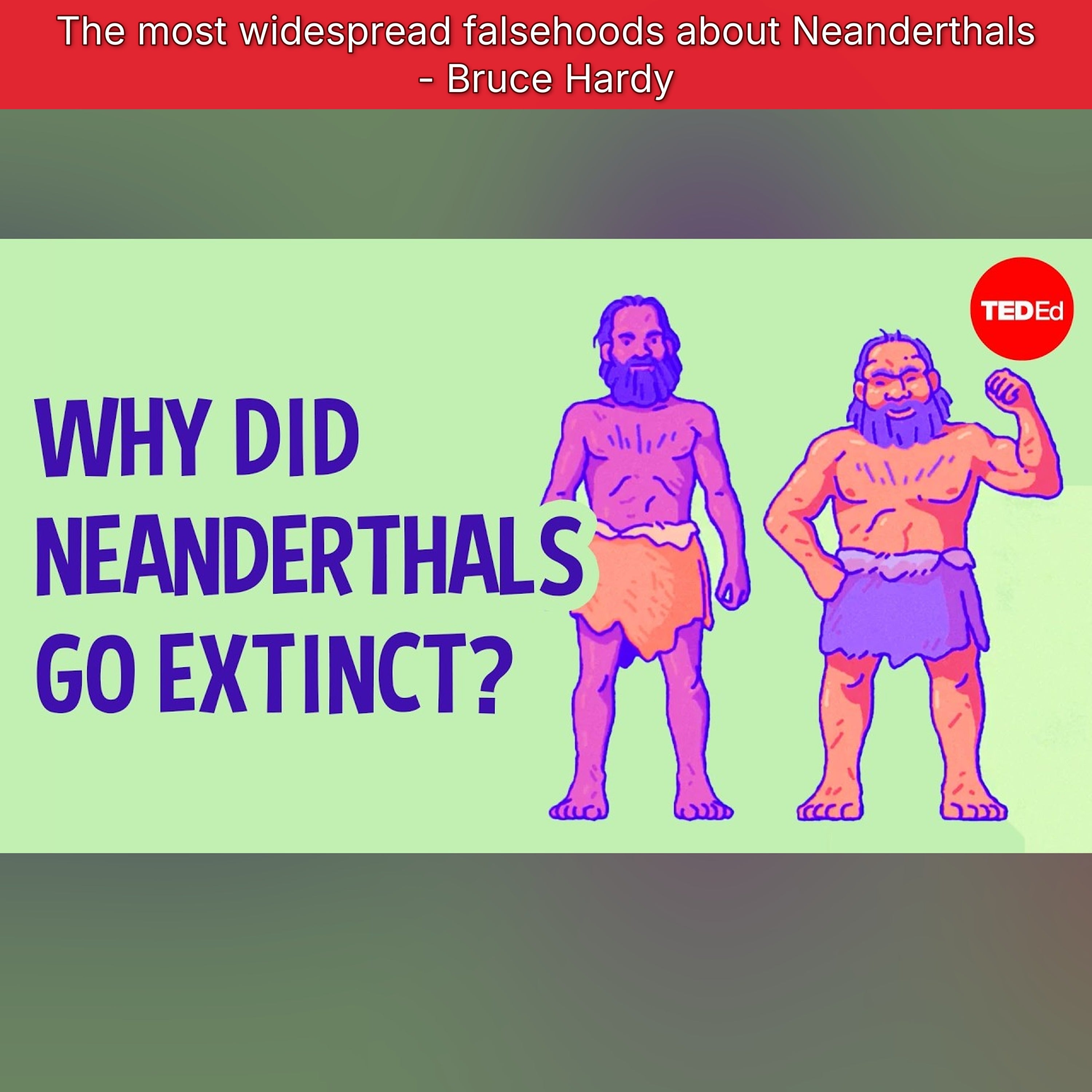
Dig into the surprisingly complex lives of Neanderthals, and explore theories on what happened to our evolutionary cousins. -- In 1856, quarriers working in Germany’s Neander Valley discovered several mysterious fossils. The remains changed hands until being identified as the skullcap and femur bones of something ancient and human, but not quite us. It soon became clear they belonged to an extinct human species— the first ever known to science: Neanderthals. Bruce Hardy explores what happened to our evolutionary cousins. Lesson by Bruce Hardy, directed by Daniel Harisberger, Team Tumult. Support Our Non-Profit Mission ---------------------------------------------- Support us on Patreon: http://bit.ly/TEDEdPatreon Check out our merch: http://bit.ly/TEDEDShop ---------------------------------------------- Connect With Us ---------------------------------------------- Sign up for our newsletter: http://bit.ly/TEDEdNewsletter Find us on Twitter: http://bit.ly/TEDEdTwitter Peep us on Instag
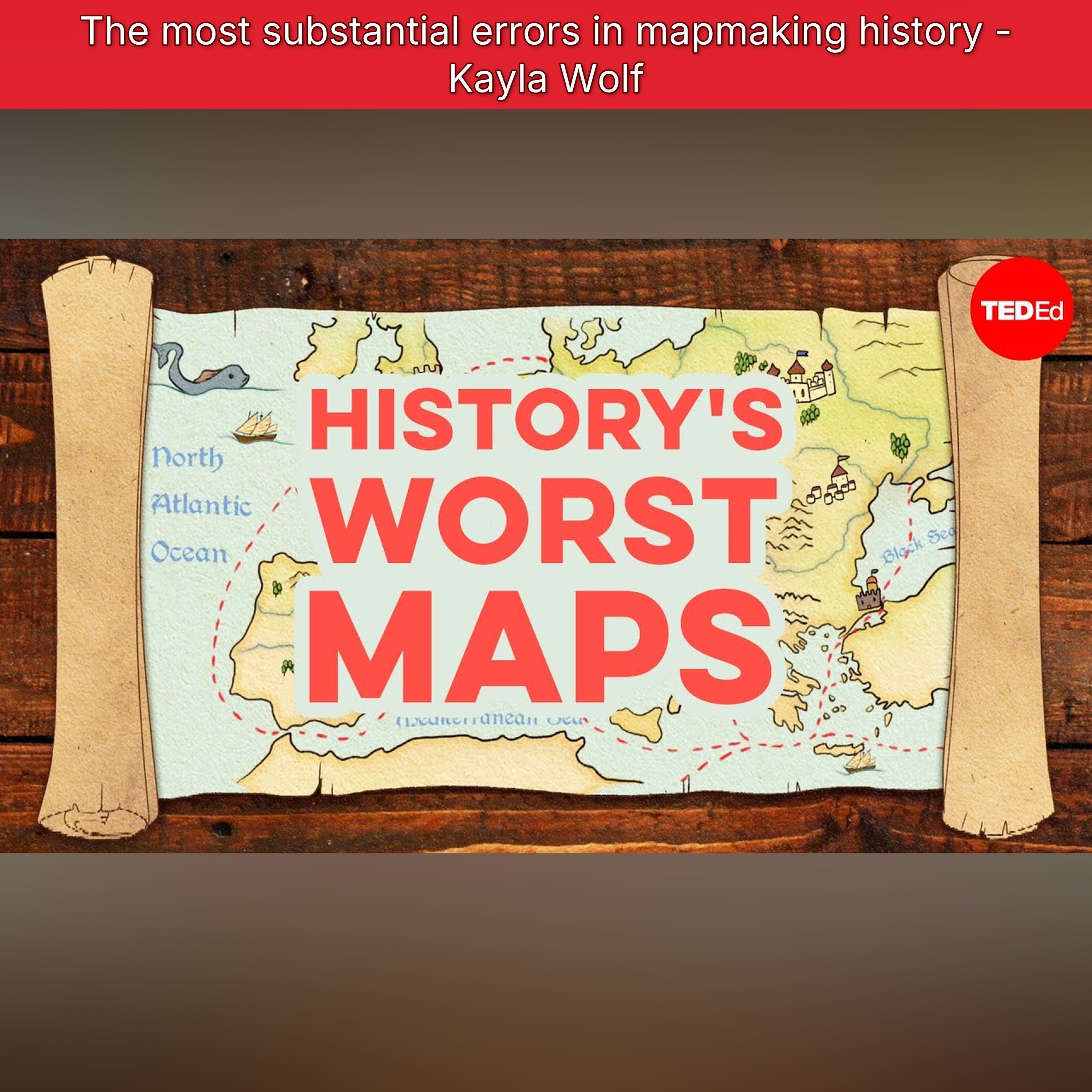
Travel through the history of mapmaking and discover what big mistakes cartographers made about the world’s geography. -- For thousands of years, people made both functional maps and what are known as cosmographies, illustrating the earth and its position in the cosmos, often including constellations, gods, and mythic locations. These maps were meant to depict the world's geography, but weren't necessarily useful for navigation and contained some glaring mistakes. Kayla Wolf shares mapmaking’s biggest blunders. Lesson by Kayla Wolf, directed by Serin İnan, Kozmonot Animation Studio. Tabula Rogeriana image from Konrad Miller: https://bit.ly/KonradMiller Support Our Non-Profit Mission ---------------------------------------------- Support us on Patreon: http://bit.ly/TEDEdPatreon Check out our merch: http://bit.ly/TEDEDShop ---------------------------------------------- Connect With Us ---------------------------------------------- Sign up for our newsletter: http://bit.ly/TEDEdNewslette
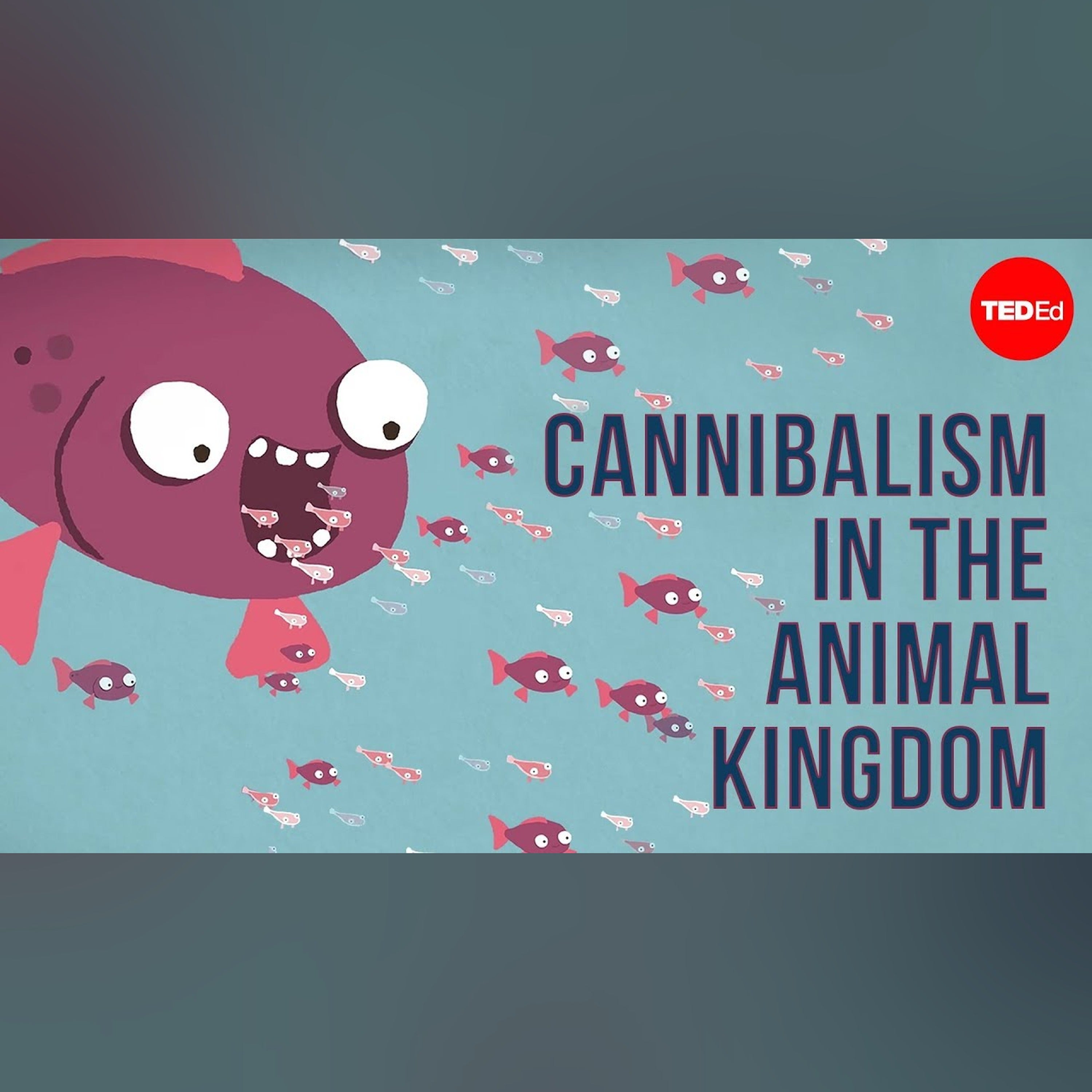
Check out Bill Schutt's "Cannibalism: A Perfectly Natural History": http://bit.ly/2HLWjrU Uploaded 19-03-18 View full lesson: https://ed.ted.com/lessons/cannibalism-in-the-animal-kingdom-bill-schutt Until recently, scientists thought cannibalism was a rare response to starvation or other extreme stress. Well-known cannibals like the praying mantis and black widow were considered bizarre exceptions. But now, we know they more or less represent the rule. Bill Schutt shows how cannibalism can promote the survival of a species by reducing competition, culling the weak, and bolstering the strong. Lesson by Bill Schutt, animation by Compote Collective. Thank you so much to our patrons for your support! Without you this video would not be possible! Dino Hrnjić, Côme Vincent, Astia Rizki Safitri, alessandra tasso, Gerald Onyango, Katrina Harding, Ezgi Yersu, Katie Dean, Kin Lon Ma, Carsten Tobehn, Boris Langvand, Jeremy Fryd, Charlene You, Carolyn Corwin, rakesh Katragadda, Sergi Páez, Jørgen
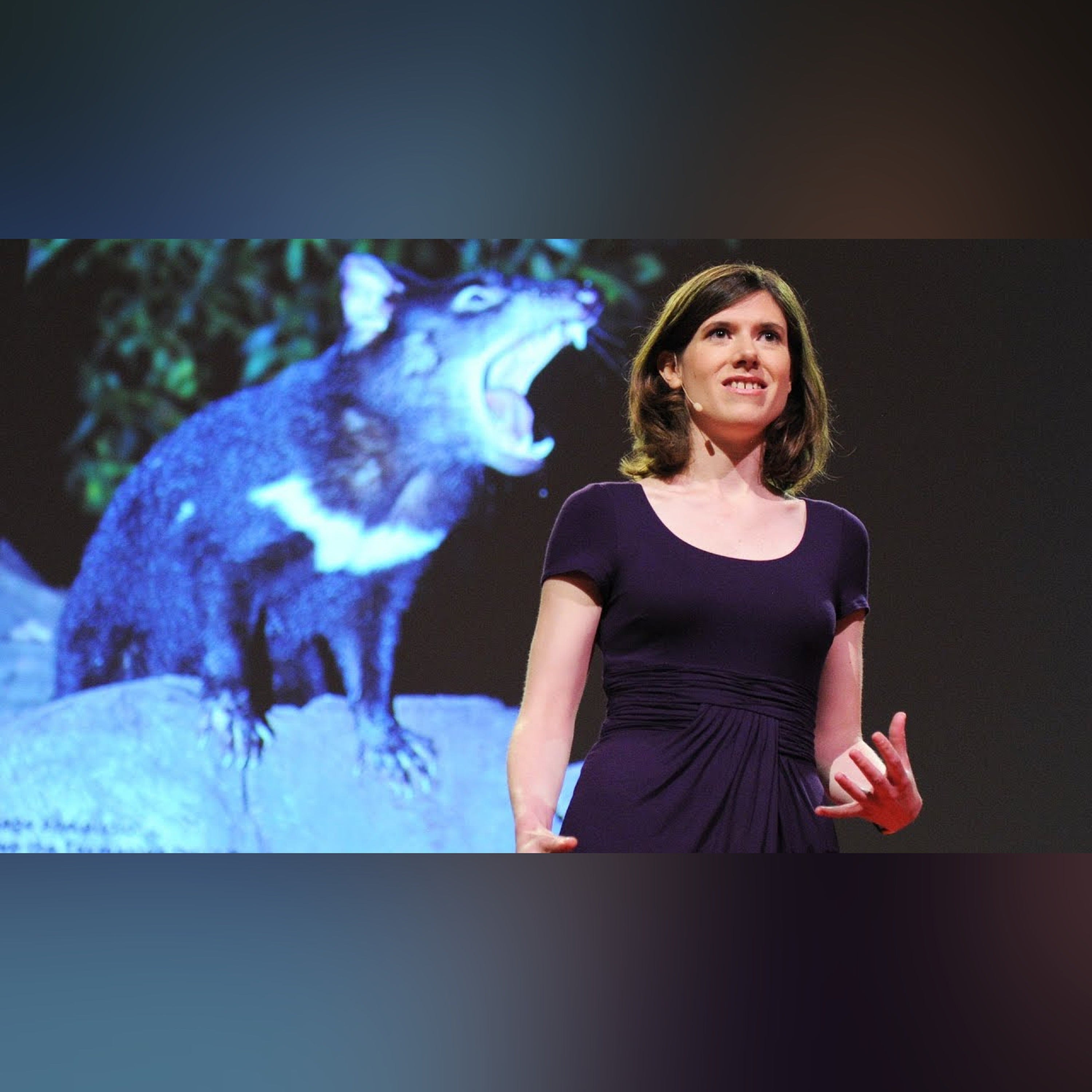
What is killing the Tasmanian devil? A virulent cancer is infecting them by the thousands -- and unlike most cancers, it's contagious. Researcher Elizabeth Murchison tells us how she's fighting to save the Taz, and what she's learning about all cancers from this unusual strain. Contains disturbing images of facial cancer. Uploaded 16-08-13 Talk by Elizabeth Murchison.
View full lesson: http://ed.ted.com/lessons/the-key-to-media-s-hidden-codes Colors, camera angles and logos in the media can all prompt immediate associations with emotions, activities and memories. Learn to decode the intricate system of symbols that are a part of everyday life -- from media messages to traffic signs. Lesson by Ben Beaton, animation by TED-Ed.
English novelist Jane Austen’s beloved works, like “Pride and Prejudice,” explored the dependence of women on marriage in British high society. Uploaded 21-03-19 -- Whether she’s describing bickering families, quiet declarations of love, or juicy gossip, Jane Austen’s writing often feels as though it was written just for you. Her dry wit and cheeky playfulness informs her heroines, whose conversational tone welcomes readers with a conspiratorial wink. Iseult Gillespie explores the sly societal satire and unique tongue-in-cheek humor of Jane Austen. Lesson by Iseult Gillespie, directed by Compote Collective. Sign up for our newsletter: http://bit.ly/TEDEdNewsletter Support us on Patreon: http://bit.ly/TEDEdPatreon Find us on Twitter: http://bit.ly/TEDEdTwitter Peep us on Instagram: http://bit.ly/TEDEdInstagram View full lesson: https://ed.ted.com/lessons/the-wicked-wit-of-jane-austen-iseult-gillespie Thank you so much to our patrons for your support! Without you this video would not be
For a full year, A.J. Jacobs followed every piece of health advice he could -- from applying sunscreen by the shot glass to wearing a bicycle helmet while shopping. Onstage at TEDMED, he shares the surprising things he learned. Uploaded 26-07-13 Talk by A. J. Jacobs.
Uploaded 18-05-15 View full lesson: http://ed.ted.com/lessons/mansa-musa-one-of-the-wealthiest-people-who-ever-lived-jessica-smith Mansa Musa, the 14th century African king of the Mali Empire, is said to have amassed a fortune that possibly made him one of the wealthiest people who ever lived. Jessica Smith tells the story of how Mansa Musa literally put his empire – and himself – on the map. Lesson by Jessica Smith, animation by Sandro Katamashvili.
Dig into the science of what makes period cramps so painful, and find out what we still don’t know about this common experience. -- Period pain affects hundreds of millions of people. Anywhere from 50 to 90% of people who menstruate deal with painful abdominal or pelvic cramps during their period. Individual experiences can vary, from mild discomfort, to throbbing aches, to contraction-like cramps that rival the pain of labor. So, why do menstrual cramps hurt so much? Chen X. Chen explains this surprisingly common experience. Lesson by Chen X. Chen, directed by Caitlin McCarthy. Support Our Non-Profit Mission ---------------------------------------------- Support us on Patreon: http://bit.ly/TEDEdPatreon Check out our merch: http://bit.ly/TEDEDShop ---------------------------------------------- Connect With Us ---------------------------------------------- Sign up for our newsletter: http://bit.ly/TEDEdNewsletter Find us on Twitter: http://bit.ly/TEDEdTwitter Peep us on Instagram: http
Dig into the history of Election Day in the United States, and how voting on Tuesdays affects voter turnout. -- Since 1845, Americans have been voting on Tuesdays — but why? In this humorous talk, Jacob Soboroff shares the history of Election Day and shows how voting on a Tuesday affects voter turnout. Lesson by Jacob Soboroff. Support Our Non-Profit Mission ---------------------------------------------- Support us on Patreon: http://bit.ly/TEDEdPatreon Check out our merch: http://bit.ly/TEDEDShop ---------------------------------------------- Connect With Us ---------------------------------------------- Sign up for our newsletter: http://bit.ly/TEDEdNewsletter Find us on Twitter: http://bit.ly/TEDEdTwitter Peep us on Instagram: http://bit.ly/TEDEdInstagram ---------------------------------------------- Keep Learning ---------------------------------------------- View full lesson: http://ed.ted.com/lessons/why-do-americans-vote-on-tuesdays Dig deeper with additional resources: https:/
Dig into the body's biological process that heals a broken bone, and find out how different kinds of fractures are mended. -- The human body’s 206 bones come in many shapes and sizes: short bones, long bones, flat bones, irregular bones. Roughly 50% of people will break a bone at some point in their lives. But whether the cause is as mundane as a slip on the ice or as dramatic as a tightrope-walking accident, how do our broken bones heal? Gurpreet Baht and Natalie Pang dig into the incredible biological process. Lesson by Gurpreet Baht and Natalie Pang, directed by Eliška Oz, Lee Oz, Oz Animation. Support Our Non-Profit Mission ---------------------------------------------- Support us on Patreon: http://bit.ly/TEDEdPatreon Check out our merch: http://bit.ly/TEDEDShop ---------------------------------------------- Connect With Us ---------------------------------------------- Sign up for our newsletter: http://bit.ly/TEDEdNewsletter Find us on Twitter: http://bit.ly/TEDEdTwitter Peep us
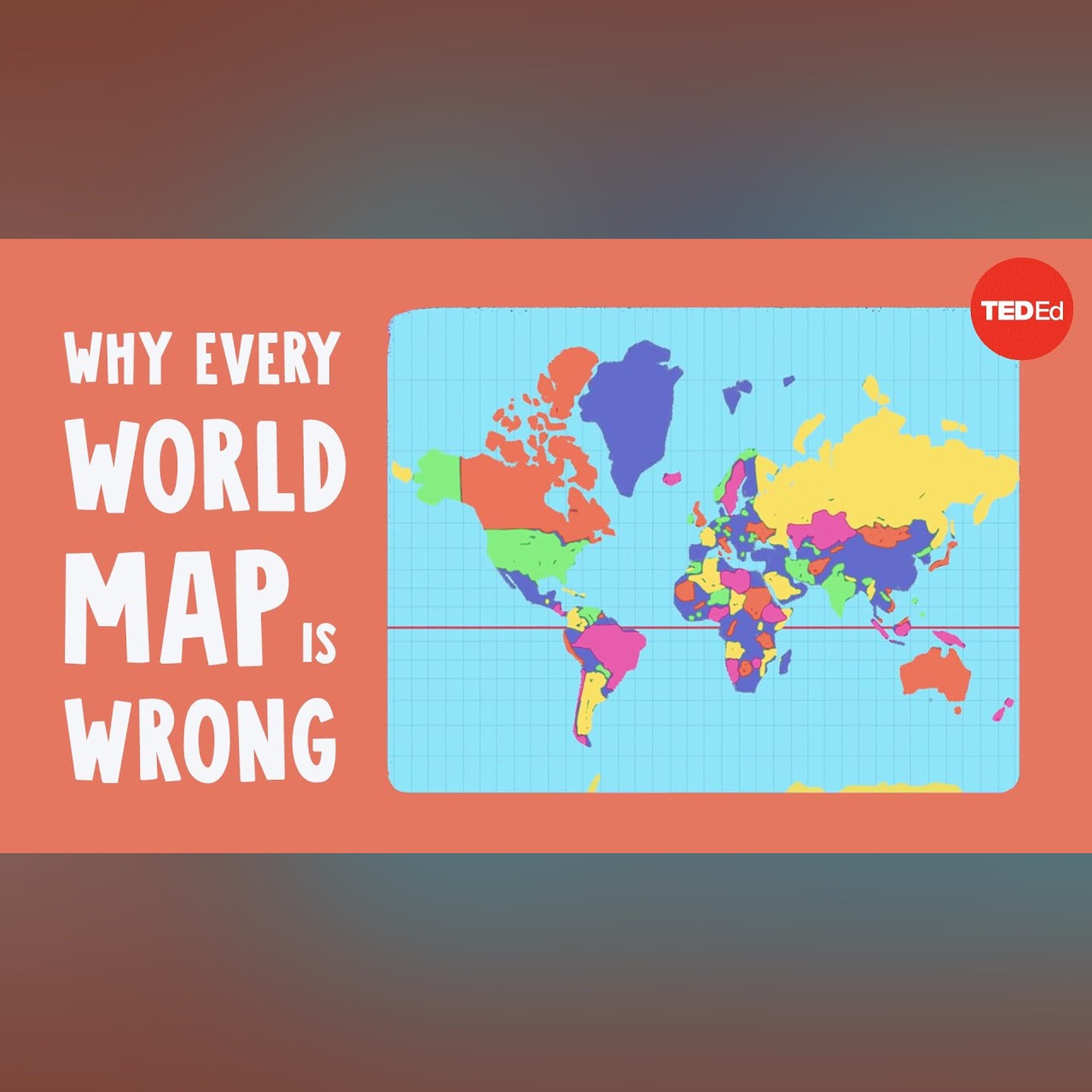
Dig into the inaccuracies of flat maps and how different map designs can shift our point of view. Uploaded 29-03-21 -- Fourteen Greenlands could fit in Africa— but you wouldn’t guess it from most maps of the world. The fact is, every world map humans have ever made is wrong. Actually, it’s impossible to make a flat map of the whole spherical world 100% right. So why do we bother with these inaccurate maps at all? Kayla Wolf explores how even the simplest changes in map design can shift our point of view. Lesson by Kayla Wolf, directed by Hernando Bahamon, Globizco Studios. Support Our Non-Profit Mission ---------------------------------------------- Support us on Patreon: http://bit.ly/TEDEdPatreon Check out our merch: http://bit.ly/TEDEDShop ---------------------------------------------- Connect With Us ---------------------------------------------- Sign up for our newsletter: http://bit.ly/TEDEdNewsletter Find us on Twitter: http://bit.ly/TEDEdTwitter Peep us on Instagram: http://bit
Practice more problem-solving at https://brilliant.org/TEDEd/ Uploaded 22-03-18 View full lesson: https://ed.ted.com/lessons/can-you-solve-the-buried-treasure-riddle-daniel-griller After a massive storm tears through the Hex Archipelago, you find five grizzled survivors in the water. As an act of gratitude for saving them, they reveal a secret – the island they were just on holds some buried treasure. But when the sailors try to describe the island, something seems off. Can you find the booty despite their strange instructions? Daniel Griller shows how. Lesson by Daniel Griller, animation by Patrick Smith. Thank you so much to our patrons for your support! Without you this video would not be possible! Cailin Ramsey, Seung Hoon Shin, John Saveland, Nicolle Fieldsend-Roxborough, Venkat Venkatakrishnan, Sandy Nasser, CG Nobles, Yoga Trapeze Wanderlust, Jaron Blackburn, Alejandro Cachoua, Thomas Mungavan, Elena Crescia, Edla Paniguel, Anna-Pitschna Kunz, Tim Armstrong, Alessandro , Erika B
"You're a fishmonger!" By taking a closer look at Shakespeare's words--specifically his insults--we see why he is known as a master playwright whose works transcend time and appeal to audiences all over the world. Lesson by April Gudenrath, narration by Juliet Blake, animation by TED-Ed. View the full lesson: http://ed.ted.com/lessons/insults-by-shakespeare
Where do squid, jellyfish and other sea creatures begin life? The story of a sea urchin reveals a stunningly beautiful saga of fertilization, development and growth in the ocean depths. Lesson by Tierney Thys, visualization by Christian Sardet (CNRS/Tara Oceans), Noé Sardet, and Sharif Mirshak (Plankton Chronicles Project, Parafilms). View the full lesson: http://ed.ted.com/lessons/how-life-begins-in-the-deep-ocean
View full lesson: http://ed.ted.com/lessons/the-fight-for-the-right-to-vote-in-the-united-states-nicki-beaman-griffin Uploaded 05-11-13 In the United States today, if you are over eighteen, a citizen, and the resident of a state, you can vote (with some exceptions). So, how have voting rights changed since the first election in 1789? Nicki Beaman Griffin outlines the history of the long fight for a more inclusive electorate. Lesson by Nicki Beaman Griffin, animation by Flaming Medusa Studios.
How do we choose which news to consume? Get the scoop on how opinions and facts affect the news and how to tell them apart. Uploaded 05-06-14 -- With the advent of the Internet and social media, news is distributed at an incredible rate by an unprecedented number of different media outlets. How do we choose which news to consume? Damon Brown gives the inside scoop on how the opinions and facts (and sometimes non-facts) make their way into the news and how the smart reader can tell them apart. Lesson by Damon Brown, animation by Augenblick Studios. Sign up for our newsletter: http://bit.ly/TEDEdNewsletter Support us on Patreon: http://bit.ly/TEDEdPatreon Find us on Twitter: http://bit.ly/TEDEdTwitter Peep us on Instagram: http://bit.ly/TEDEdInstagram View full lesson: http://ed.ted.com/lessons/how-to-choose-your-news-damon-brown
View full lesson: http://ed.ted.com/lessons/the-complex-geometry-of-islamic-design-eric-broug Uploaded 14-05-15 In Islamic culture, geometric design is everywhere: you can find it in mosques, madrasas, palaces, and private homes. And despite the remarkable complexity of these designs, they can be created with just a compass to draw circles and a ruler to make lines within them. Eric Broug covers the basics of geometric Islamic design. Lesson by Eric Broug, animation by TED-Ed.
Dig into trickle-down economics, which claims that tax cuts for corporations and the wealthy stimulate the economy and improve people's lives. -- In 1981, the US economy was struggling: unemployment rates were climbing and inflation had peaked at an all-time high. To combat these issues, President Reagan introduced a number of economic policies, including tax cuts for large corporations and high-income earners. But did these policies actually stimulate economic growth or improve circumstances for Americans? Jonathan Smith investigates. Lesson by Jonathan Smith, directed by Gavin Edwards, Movult. Support Our Non-Profit Mission ---------------------------------------------- Support us on Patreon: http://bit.ly/TEDEdPatreon Check out our merch: http://bit.ly/TEDEDShop ---------------------------------------------- Connect With Us ---------------------------------------------- Sign up for our newsletter: http://bit.ly/TEDEdNewsletter Find us on Twitter: http://bit.ly/TEDEdTwitter Peep us o
View full lesson: http://ed.ted.com/lessons/five-fingers-of-evolution How can a "thumbs up" sign help us remember five processes that impact evolution? The story of the Five Fingers of Evolution gives us a clever way of understanding change in gene pools over time. Lesson by Paul Andersen, animation by Alan Foreman.
Dig into the false analogy fallacy, which assumes that because two things share a characteristic, they must be alike in other respects. Uploaded 05-04-21 -- It’s 1997. The United States Senate has called a hearing about global warming. Some expert witnesses point out that past periods in Earth’s history were warmer than the 20th century. Because such variations existed long before humans, they claim the current trend is also the result of natural variation. Can you spot the problem with this argument? Elizabeth Cox explores the false analogy fallacy. Lesson by Elizabeth Cox, directed by TOGETHER. Support Our Non-Profit Mission ---------------------------------------------- Support us on Patreon: http://bit.ly/TEDEdPatreon Check out our merch: http://bit.ly/TEDEDShop ---------------------------------------------- Connect With Us ---------------------------------------------- Sign up for our newsletter: http://bit.ly/TEDEdNewsletter Find us on Twitter: http://bit.ly/TEDEdTwitter Peep us
View full lesson: http://ed.ted.com/lessons/your-body-language-shapes-who-you-are-amy-cuddy Body language affects how others see us, but it may also change how we see ourselves. Social psychologist Amy Cuddy shows how "power posing" -- standing in a posture of confidence, even when we don't feel confident -- can affect testosterone and cortisol levels in the brain, and might even have an impact on our chances for success. Talk by Amy Cuddy.
Learn more by reading Douglas J. Emlen's "Animal Weapons": Uploaded 26-03-18 View full lesson: https://ed.ted.com/lessons/why-isn-t-the-world-covered-in-poop-eleanor-slade-and-paul-manning Check out our book rec page: http://bit.ly/2I3INQC Each day, the animal kingdom produces roughly enough poop to match the volume of water pouring over Victoria Falls. So why isn’t the planet covered in the stuff? You can thank the humble dung beetle for eating up the excess. Eleanor Slade and Paul Manning explain how these valiant insects make quick work of an endless stream of feces. Lesson by Eleanor Slade and Paul Manning, animation by Anton Bogaty. Thank you so much to our patrons for your support! Without you this video would not be possible! Emma Moyse, Fahad Nasser Chowdhury, Marin Kovachev, Mohamad Aiman Fitri Bin Annuar, Daniel Huerga, Maria Lerchbaumer, Kevin Le, Edgar Campos Barrachina, Dianne Palomar, Chris Buccellati, Curtis Light, Liana Switzer, Maija Chapman, Pamela Harrison, Dylan Dro