View full lesson: http://ed.ted.com/lessons/could-your-brain-repair-itself-ralitsa-petrova Uploaded 27-04-15 Imagine the brain could reboot, updating its damaged cells with new, improved units. That may sound like science fiction — but it’s a potential reality scientists are investigating right now. Ralitsa Petrova details the science behind neurogenesis and explains how we might harness it to reverse diseases like Alzheimer’s and Parkinson’s. Lesson by Ralitsa Petrova, animation by Artrake Studio.
Explore the science of silica gel, and find out why these packets are everywhere and if they're actually dangerous to ingest. -- Of the many, many things we’re not supposed to snack on, perhaps the most common forbidden food is silica gel. This tiny packet pops up in packaging for everything — from TVs and guitar cases to sunscreen and snack foods. So why is silica gel everywhere, and what would actually happen if you ate it? Vivian Jiang digs into the science of this pervasive product. Lesson by Vivian Jiang, directed by Denys Spolitak. Support Our Non-Profit Mission ---------------------------------------------- Support us on Patreon: http://bit.ly/TEDEdPatreon Check out our merch: http://bit.ly/TEDEDShop ---------------------------------------------- Connect With Us ---------------------------------------------- Sign up for our newsletter: http://bit.ly/TEDEdNewsletter Find us on Twitter: http://bit.ly/TEDEdTwitter Peep us on Instagram: http://bit.ly/TEDEdInstagram -----------------
Explore the cognitive benefits of risky play and how we can design better playgrounds that promote fun, agency, and development. -- The best play environments offer freedom and novelty that kids can explore as much or as little as they like. But traditional playgrounds don’t offer much flexibility— swings, slides, and climbing frames are hardly novel structures. So, how do we create better play spaces? Explore the cognitive benefits of risky play and how we can design playgrounds that promote fun, agency, and development. Directed by AIM Creative Studios. This video made possible in collaboration with the LEGO Group and the LEGO Foundation Learn more about how TED-Ed partnerships work: https://bit.ly/TEDEdPartner Support Our Non-Profit Mission ---------------------------------------------- Support us on Patreon: http://bit.ly/TEDEdPatreon Check out our merch: http://bit.ly/TEDEDShop ---------------------------------------------- Connect With Us -----------------------------------------
Practice more problem-solving at https://brilliant.org/TedEd -- Bad news: your worst enemies are at the gate. Your fledgling kingdom guards the world’s only herd of tiny dino creatures. To you, they’re sacred. To everyone else, they’re food. The three closest nation-states have teamed up to smash open your walls and devour the herd. Can you build fortifications for your kingdom before the siege weapons arrive? Henri Picciotto shows how. Lesson by Henri Picciotto, directed by Igor Coric, Artrake Studio. Support Our Non-Profit Mission ---------------------------------------------- Support us on Patreon: http://bit.ly/TEDEdPatreon Check out our merch: http://bit.ly/TEDEDShop ---------------------------------------------- Connect With Us ---------------------------------------------- Sign up for our newsletter: http://bit.ly/TEDEdNewsletter Find us on Twitter: http://bit.ly/TEDEdTwitter Peep us on Instagram: http://bit.ly/TEDEdInstagram ---------------------------------------------- Keep L
Professional songwriters share their writing process, how they collaborate with other artists, and what it takes to be a songwriter. -- "Think Like A Musician" connects you with working musicians who want to help the music-curious and music-passionate hone and share the gift of music with the world. Part interview, part animated course, our second season "Think Like A Songwriter" features artists sharing their insight on the ins and outs of fine-tuning your songwriting and crafting timeless, memorable music. Each episode features free supplemental learning materials developed by Education Through Music (https://etmonline.org) (https://etmonline.org)/) — a nonprofit with over 30 years of experience developing classroom-adaptable curriculum for music educators. Directed by Kozmonot Animation Studio. A special thanks to the musicians who provided their insights and expertise for this video. You can check out their pages here: Support Our Non-Profit Mission --------------------------------
Uploaded 16-04-18 View full lesson: https://ed.ted.com/lessons/the-surprising-reasons-animals-play-dead-tierney-thys From lemurs to lizards, ants to amphibians, sharks to chickens, hundreds of animals "play dead" as a survival tactic. But how and why do animals do this? Tierney Thys explains how this curious behavior, known as tonic immobility or TI for short, can be used as a defense or offense. Lesson by Tierney Thys, animation by Stretch Films Inc. Thank you so much to our patrons for your support! Without you this video would not be possible! Robert Hargis, Mark wisdom, Mircea Sîrbu, Molly Gardner, Irindany Sandoval, William Bravante, Elizabeth Parker, Sai Krishna Koyoda, Therapist Gus, Samuel Barbas, Betsy Feathers, Maxwell Ingram, Ajinkya Deshmukh, Victoria Soler-Roig, Abdulmateen Aderinto, Pavel Maksimov, Cyrus Garay, Triết Thạch Minh, Yvette Mocete, Mike Azarkman, Valeria Sloan Vasquez, Patricia Alves Panagides, William Biersdorf, Michael Aquilina, Vinamr L. Sachdeva, Ryan Phil
Some of the world's most baffling social problems, says Peter Eigen, can be traced to systematic, pervasive government corruption, hand-in-glove with global companies. In his talk, Eigen describes the thrilling counter-attack led by his organization Transparency International. (Filmed at TEDxBerlin.) Uploaded 25-07-13 Talk by Peter Eigen.
Explore the technique known as the Socratic Method, which uses questions to examine a person’s values, principles, and beliefs. Uploaded 12-04-21 -- Socrates, one of the founding fathers of Western philosophical thought, was on trial. Many believed he was an enemy of the state, accusing the philosopher of corrupting the youth and refusing to recognize their gods. But Socrates wasn’t feared for claiming to have all the answers, but rather, for asking too many questions. Erick Wilberding digs into the technique known as the Socratic Method. Lesson by Erick Wilberding, directed by Draško Ivezić. Support Our Non-Profit Mission ---------------------------------------------- Support us on Patreon: http://bit.ly/TEDEdPatreon Check out our merch: http://bit.ly/TEDEDShop ---------------------------------------------- Connect With Us ---------------------------------------------- Sign up for our newsletter: http://bit.ly/TEDEdNewsletter Find us on Twitter: http://bit.ly/TEDEdTwitter Peep us on I
Bernie Krause has been recording wild soundscapes -- the wind in the trees, the chirping of birds, the subtle sounds of insect larvae -- for 45 years. In that time, he has seen many environments radically altered by humans, sometimes even by practices thought to be environmentally safe. A surprising look at what we can learn through nature's symphonies, from the grunting of a sea anemone to the sad calls of a beaver in mourning. Uploaded 16-08-13 Talk by Bernie Krause.
View full lesson: http://ed.ted.com/lessons/a-digital-reimagining-of-gettysburg-anne-knowles Uploaded 26-05-14 Geographer Anne Knowles uses digital technologies to reimagine the past. In this fascinating talk, Knowles transports us to the Battle of Gettysburg, the turning point of the Civil War. Using Geographic Information Systems (GIS) and historical maps, she traces the footsteps of Robert E. Lee as he orders Pickett's Charge -- and makes an educated guess why he made this crucial mistake. Talk by Anne Knowles.
View full lesson: http://ed.ted.com/lessons/how-to-unboil-an-egg-eleanor-nelsen Uploaded 23-04-15 It’s so obvious that it’s practically proverbial: you can’t unboil an egg. But actually, it turns out that you can -- sort of. Eleanor Nelsen explains the process by which mechanical energy can undo what thermal energy has done. Lesson by Eleanor Nelsen, animation by Provincia Studio.
Download a free audiobook version of "The Three-Body Problem" and support TED-Ed's nonprofit mission: https://www.audible.com/ted-ed Uploaded 03-08-20 -- In 2009, researchers ran a simple experiment. They took everything we know about our solar system and calculated where every planet would be up to 5 billion years in the future. They ran over 2,000 simulations, and the astonishing variety in results revealed that our solar system may be much less stable than it seems. Fabio Pacucci explores the n-body problem and the motion of gravitating objects. Lesson by Fabio Pacucci, directed by Hype CG. Animator's website: https://www.hype.cg/ and https://www.luisacopetti.com/ Sign up for our newsletter: http://bit.ly/TEDEdNewsletter Support us on Patreon: http://bit.ly/TEDEdPatreon Find us on Twitter: http://bit.ly/TEDEdTwitter Peep us on Instagram: http://bit.ly/TEDEdInstagram View full lesson: https://ed.ted.com/lessons/newton-s-three-body-problem-explained-fabio-pacucci Thank you so much to
Puzzle through the ethical dilemma of lying to a friend, and decide: is lying always wrong or can it be justifiable? -- Your plan to set up your friend Carey with your acquaintance Emerson is finally coming together. You’ve made them a dinner reservation, but suddenly realize that there's a problem: Carey is always late. You really want this relationship to work— what if you told Carey dinner was at 6 instead of 6:30, so they arrived on time? Is it okay to lie? Sarah Stroud explores this classic ethical dilemma. Lesson by Sarah Stroud, directed by Avi Ofer. This video was produced in collaboration with the Parr Center for Ethics, housed within the renowned Philosophy Department at the University of North Carolina at Chapel Hill. The Parr Center is committed to integrating abstract work in ethical theory with the informed discussion of practical ethical issues, and prides itself on the development of innovative and inclusive approaches to moral and civic education. Support Our Non-Profi
Explore the psychology of the cognitive bias known as the conjunction fallacy, where we assume specific conditions are more probable than general ones. Uploaded 25-11-19 -- Meet Lucy. She was a math major in college, and aced all her courses in probability and statistics. Which do you think is more likely: that Lucy is a portrait artist, or that Lucy is a portrait artist who also plays poker? How do we know which statement is more likely to be true? Alex Gendler explores our tendency to look for shortcuts and the phenomenon known as the conjunction fallacy. Lesson by Alex Gendler, directed by Artrake Studio. Animator's website: https://www.artrake.com (https://www.artrake.com/) Sign up for our newsletter: http://bit.ly/TEDEdNewsletter Support us on Patreon: http://bit.ly/TEDEdPatreon Find us on Twitter: http://bit.ly/TEDEdTwitter Peep us on Instagram: http://bit.ly/TEDEdInstagram View full lesson: https://ed.ted.com/lessons/can-you-outsmart-this-logical-fallacy-alex-gendler Thank you s
Dig into how the simple game of peek-a-boo contributes to babies developing their cognitive, motor, and social skills. -- In Italy, it’s called il gioco del cucù. Palestinians say ba' 'éno. And in Japan, it’s inaīnaibā! Peek-a-boo is a near universal source of laughter and connection for infants and adults— it’s the first game that almost everyone plays. So what is it about this goofy game that babies love so much? Dig into how this simple game promotes the development of our cognitive, motor, and social skills. Directed by Homework Studio. Support Our Non-Profit Mission ---------------------------------------------- Support us on Patreon: http://bit.ly/TEDEdPatreon Check out our merch: http://bit.ly/TEDEDShop ---------------------------------------------- Connect With Us ---------------------------------------------- Sign up for our newsletter: http://bit.ly/TEDEdNewsletter Find us on Twitter: http://bit.ly/TEDEdTwitter Peep us on Instagram: http://bit.ly/TEDEdInstagram --------------
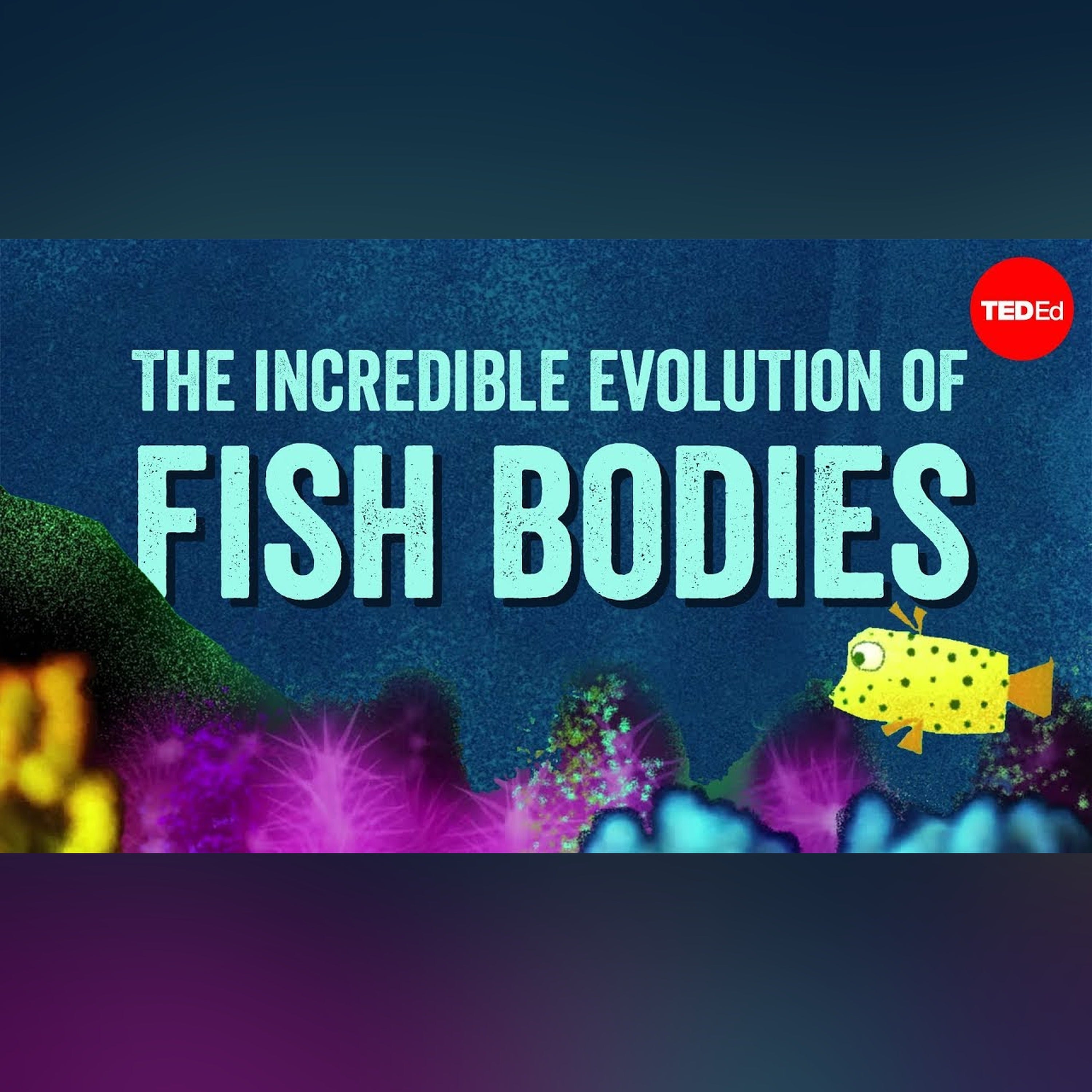
Uploaded 17-04-18 View full lesson: https://ed.ted.com/lessons/the-incredible-evolution-of-fish-bodies-lauren-sallan In tropical seas, flying fish leap out of the water, gliding for up to 200 meters, before dipping back into the sea. In the Indo-Pacific, a hunting sailfish swims up to 110 kilometers per hour. These feats are made possible by a fish’s form -- which in most species is a smooth, long body, fins, and a tail. Lauren Sallan explains why these features are so common, and what it reveals about fish. Lesson by Lauren Sallan, animation by Aeon Production. Thank you so much to our patrons for your support! Without you this video would not be possible! Erika Blanquez, zjweele13, Judith Benavides, Ken, Caitlin de Falco, Scheherazade Kelii, Errys, Kack-Kyun Kim, Alexandrina Danifeld, Stina Boberg, Anthony Wiggins, Hoai Nam Tran, Joe Sims, David Petrovič, Chris Adriaensen, Lowell Fleming, Amir Ghandeharioon, Anuj Tomar, Sunny Patel, Vijayalakshmi, Devesh Kumar, Uday Kishore, Aidan Fo
Dive into the Irish myth of Táin Bò Cuailnge, where Queen Meadhbh of Connaught seeks to capture the fabled brown bull of Ulster. Uploaded 06-08-20 -- Cú Chulainn, hero of Ulster, stood at the ford at Cooley, ready to face an entire army single handedly— all for the sake of a single bull. The army in question belonged to Queen Meadhbh of Connaught. Enraged at her husband’s possession of a white bull of awesome strength, she set out to capture the fabled brown bull of Ulster at any cost. Iseult Gillespie details the Irish myth Táin Bò Cuailnge. Lesson by Iseult Gillespie, directed by Paper Panther. Animator's website: https://www.paperpanther.ie/ Sign up for our newsletter: http://bit.ly/TEDEdNewsletter Support us on Patreon: http://bit.ly/TEDEdPatreon Find us on Twitter: http://bit.ly/TEDEdTwitter Peep us on Instagram: http://bit.ly/TEDEdInstagram View full lesson: https://ed.ted.com/lessons/the-myth-of-ireland-s-two-greatest-warriors-iseult-gillespie #myth Thank you so much to our patr
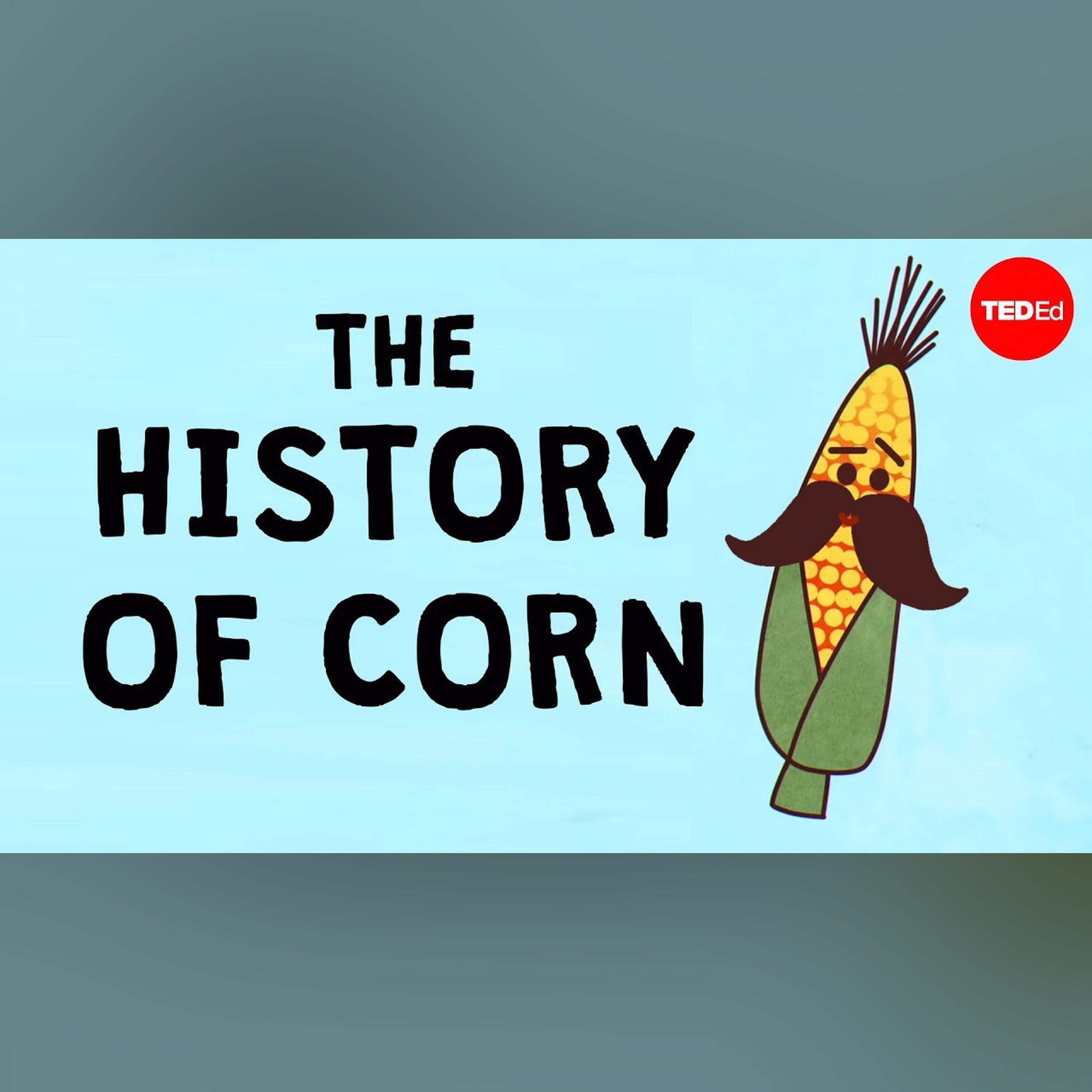
Trace the 9,000 year old history of the domestication of corn, or maize, and its effects on global agriculture. Uploaded 26-11-19 -- Corn currently accounts for more than one tenth of our global crop production. And over 99% of cultivated corn is the exact same type: Yellow Dent #2. This means that humans grow more Yellow Dent #2 than any other plant on the planet. So how did this single variety of this single plant become the biggest success story in agricultural history? Chris Kniesly investigates the rise of this wonder-crop. Lesson by Chris A. Kniesly, directed by Artrake Studio. Animator's website: https://www.artrake.com (https://www.artrake.com/) Sign up for our newsletter: http://bit.ly/TEDEdNewsletter Support us on Patreon: http://bit.ly/TEDEdPatreon Find us on Twitter: http://bit.ly/TEDEdTwitter Peep us on Instagram: http://bit.ly/TEDEdInstagram View full lesson: https://ed.ted.com/lessons/how-corn-conquered-the-world-chris-a-kniesly Thank you so much to our patrons for your
Until recently, many teachers only got one word of feedback a year: "satisfactory." And with no feedback, no coaching, there's just no way to improve. Bill Gates suggests that even great teachers can get better with smart feedback -- and lays out a program from his foundation to bring it to every classroom. Uploaded 16-08-13 Talk by Bill Gates.
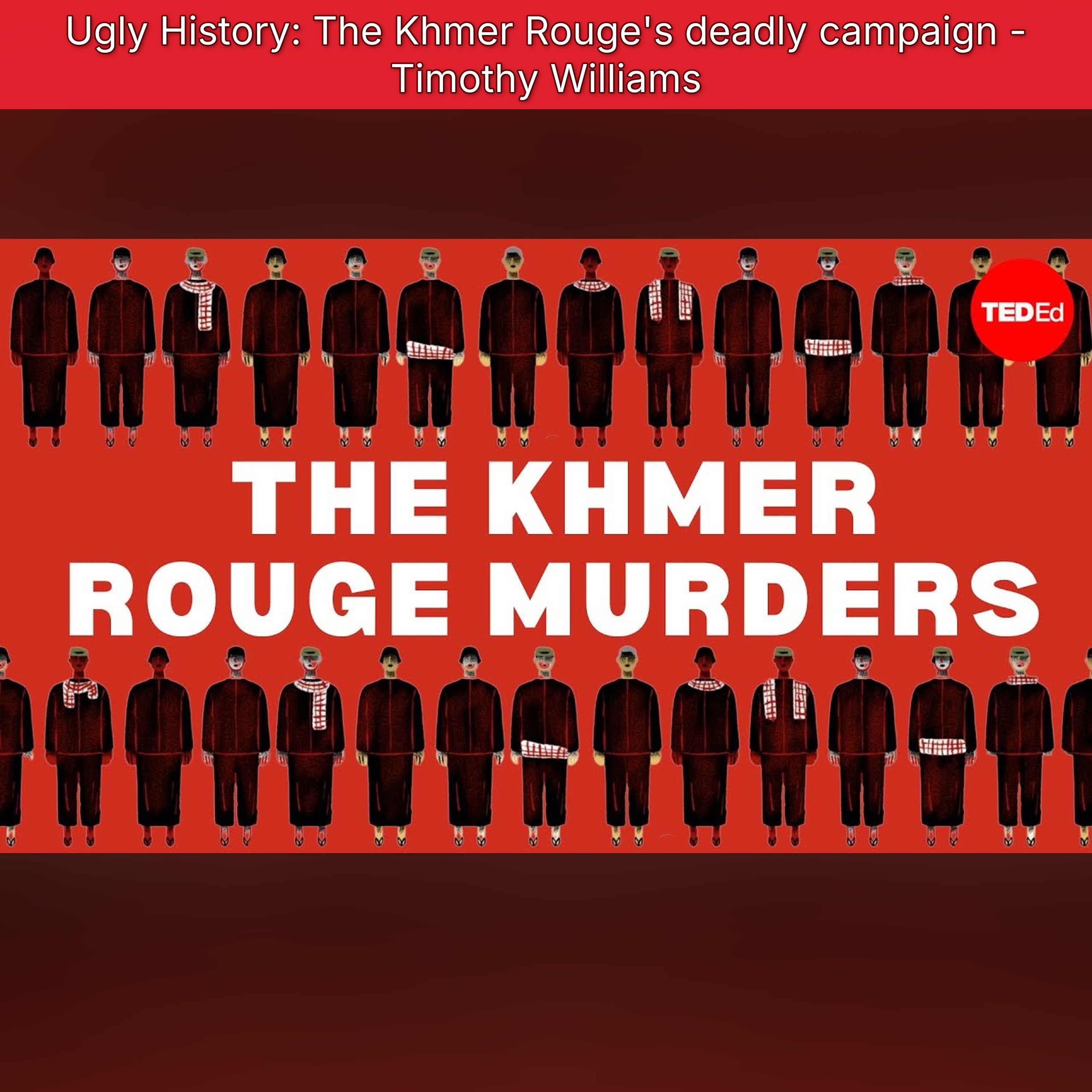
Dig into the era of the Khmer Rouge in Cambodia, which perpetuated a genocide that killed a quarter of the country’s population. -- From 1975 to 1979, the Communist Party of Kampuchea ruled Cambodia with an iron fist, perpetrating a genocide that killed one fourth of the country’s population. Roughly one million people were executed as suspected political enemies or due to their ethnicities, and another million died of starvation, disease, or overwork. How did this happen? Timothy Williams details the rise of the Khmer Rouge. Lesson by Timothy Williams, directed by Héloïse Dorsan-Rachet. Support Our Non-Profit Mission ---------------------------------------------- Support us on Patreon: http://bit.ly/TEDEdPatreon Check out our merch: http://bit.ly/TEDEDShop ---------------------------------------------- Connect With Us ---------------------------------------------- Sign up for our newsletter: http://bit.ly/TEDEdNewsletter Find us on Twitter: http://bit.ly/TEDEdTwitter Peep us on Instag
View full lesson: http://ed.ted.com/lessons/what-really-happens-to-the-plastic-you-throw-away-emma-bryce Uploaded 21-04-15 We’ve all been told that we should recycle plastic bottles and containers. But what actually happens to the plastic if we just throw it away? Emma Bryce traces the life cycles of three different plastic bottles, shedding light on the dangers these disposables present to our world. Lesson by Emma Bryce, animation by Sharon Colman.
Learn the techniques and tricks that pyramid schemes use to recruit new members and how to avoid being fooled yourself. Uploaded 02-04-19 -- In 2004, a nutrition company offered a life-changing opportunity to earn a full-time income for part-time work. There were only two steps to get started: purchase a $500 kit and recruit two more members. By 2013, the company was making $200 million. There was just one problem -- the vast majority of members earned less than they paid in. Stacie Bosley explains what a pyramid scheme is and how to spot one. Lesson by Stacie Bosley, directed by Wooden Plane Productions. Sign up for our newsletter: http://bit.ly/TEDEdNewsletter Support us on Patreon: http://bit.ly/TEDEdPatreon Find us on Twitter: http://bit.ly/TEDEdTwitter Peep us on Instagram: http://bit.ly/TEDEdInstagram View full lesson: https://ed.ted.com/lessons/how-to-spot-a-pyramid-scheme-stacie-bosley Thank you so much to our patrons for your support! Without you this video would not be possib
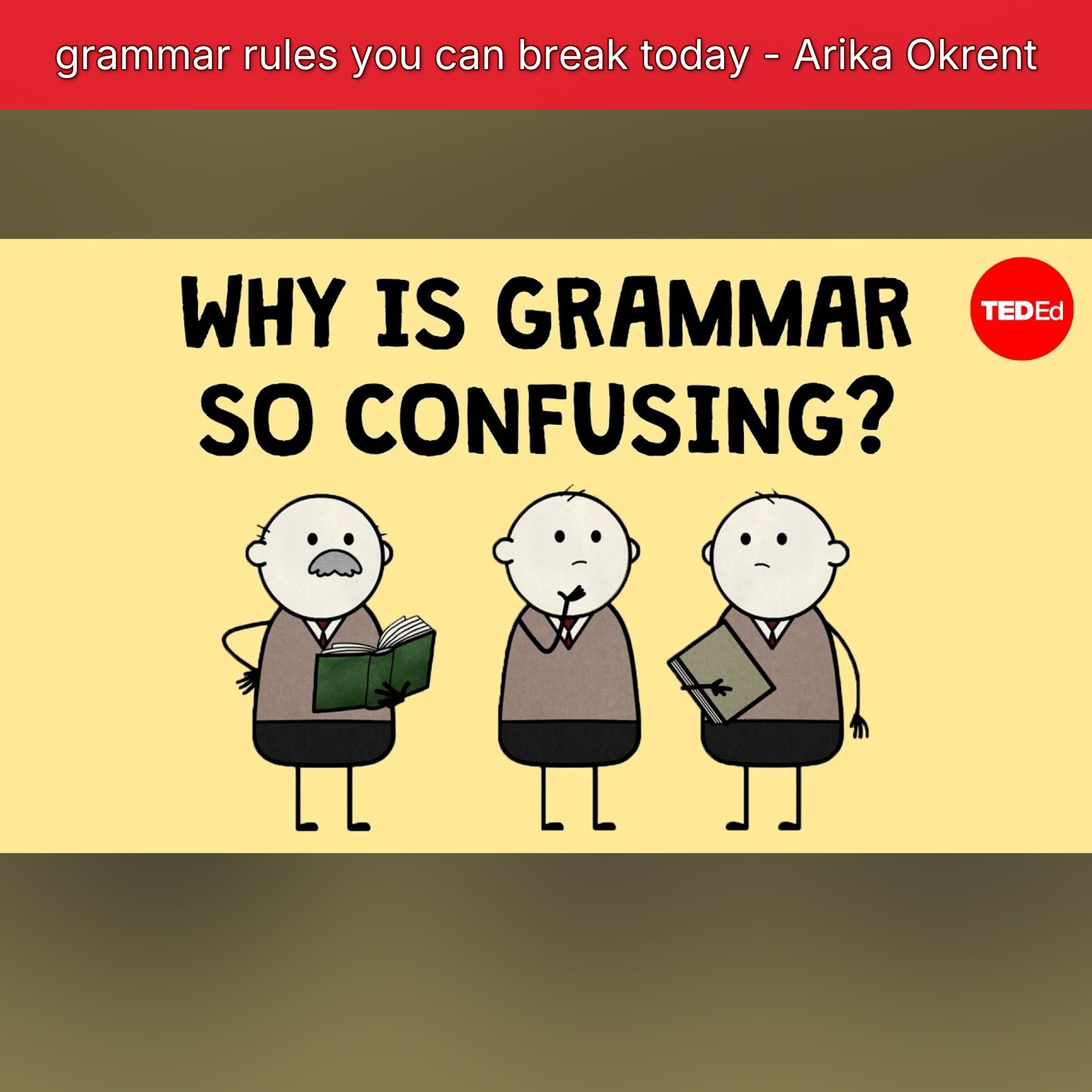
Take a look at 3 English language grammar rules to find out where they come from and if you actually need to follow them. -- Grammatical rules have caused heated debate in various regions and languages for centuries. But while we know people take grammar seriously, what’s less clear is, why? Where do these seemingly random rules come from, and which, if any, actually matter? Arika Okrent takes a closer look at three famous examples from the English language that have been the source of numerous grammatical arguments. Lesson by Arika Okrent, directed by Sharon Colman. Support Our Non-Profit Mission ---------------------------------------------- Support us on Patreon: http://bit.ly/TEDEdPatreon Check out our merch: http://bit.ly/TEDEDShop ---------------------------------------------- Connect With Us ---------------------------------------------- Sign up for our newsletter: http://bit.ly/TEDEdNewsletter Find us on Twitter: http://bit.ly/TEDEdTwitter Peep us on Instagram: http://bit.ly/TE
TED-Ed's mission is to capture and amplify the voices of great educators around the world. We do this by pairing extraordinary educators with talented animators to produce a new library of curiosity-igniting videos. You can nominate a teacher, nominate an animator or suggest a lesson here: http://education.ted.com (http://education.ted.com/)