Dig into the psychology of how memories are susceptible to false information and why we shouldn’t treat them as truth. Uploaded 08-09-20 -- In a 1990’s study, participants recalled getting lost in a shopping mall as children. Some shared these memories in vivid detail, but there was one problem: none of these people had actually gotten lost in a mall. They produced these false memories after psychologists told them they’d gotten lost and parents confirmed it. So what’s going on? Daniel L. Schacter explores the fallibility of our memory. Lesson by Daniel L. Schacter, directed by AIM Creative Studios. Animator's website: http://aimcreativestudios.com/ Sign up for our newsletter: http://bit.ly/TEDEdNewsletter Support us on Patreon: http://bit.ly/TEDEdPatreon Find us on Twitter: http://bit.ly/TEDEdTwitter Peep us on Instagram: http://bit.ly/TEDEdInstagram View full lesson: https://ed.ted.com/lessons/are-all-of-your-memories-real-daniel-l-schacter Thank you so much to our patrons for your s
View full lesson: http://ed.ted.com/lessons/the-mysterious-workings-of-the-adolescent-brain-sarah-jayne-blakemore Why do teenagers seem so much more impulsive, so much less self-aware than grown-ups? Cognitive neuroscientist Sarah-Jayne Blakemore compares the prefrontal cortex in adolescents to that of adults, to show us how typically "teenage" behavior is caused by the growing and developing brain. Talk by Sarah-Jayne Blakemore.
View full lesson: http://ed.ted.com/lessons/the-uncertain-location-of-electrons-george-zaidan-and-charles-morton Uploaded 14-10-13 The tiny atoms that make up our world are made up of even tinier protons, neutrons and electrons. Though the number of protons determine an atom's identity, it's the electrons -- specifically, their exact location outside the nucleus -- that particularly perplex scientists. George Zaidan and Charles Morton show how to make an educated guess of where those itty-bitty freewheeling electrons might be. Lesson by George Zaidan and Charles Morton, animation by Karrot Animation.
View full lesson: http://ed.ted.com/lessons/earworms-those-songs-that-get-stuck-in-your-head-elizabeth-hellmuth-margulis Uploaded 26-03-15 -- Have you ever been waiting in line at the grocery store, innocently perusing the magazine rack, when a song pops into your head? Not the whole song, but a fragment of it that plays and replays until you find yourself unloading the vegetables in time to the beat? Elizabeth Hellmuth Margulis explores earworms — a cognitive phenomenon that plagues over 90% of people at least once a week. Lesson by Elizabeth Margulis, animation by Artrake Studio.
Uncover the rich history of illuminated manuscripts and the often bizarre images that filled the margins of medieval books. Uploaded 16-04-19 -- A rabbit attempts to play a church organ, while a knight fights a giant snail and a naked man blows a trumpet with his rear end. These bizarre images, painted with squirrel-hair brushes on vellum or parchment by monks, nuns and urban craftspeople, populate the margins of the most prized books from the Middle Ages. Michelle Brown explores the rich history and tradition of illuminated manuscripts. Lesson by Michelle Brown, directed by WOW-HOW Studio. Sign up for our newsletter: http://bit.ly/TEDEdNewsletter Support us on Patreon: http://bit.ly/TEDEdPatreon Find us on Twitter: http://bit.ly/TEDEdTwitter Peep us on Instagram: http://bit.ly/TEDEdInstagram View full lesson: https://ed.ted.com/lessons/what-is-a-butt-tuba-and-why-is-it-in-medieval-art-michelle-brown Thank you so much to our patrons for your support! Without you this video would not be
In this funny and blunt talk, Larry Smith pulls no punches when he calls out the absurd excuses people invent when they fail to pursue their passions. (Filmed at TEDxUW.) Uploaded 15-08-13 Talk by Larry Smith.
Download a free audiobook version of "Take a Nap: Change Your Life" by Sara Mednick or Matthew Walker's "Why We Sleep" and support TED-Ed's nonprofit mission: https://www.audible.com/ted-ed Uploaded 29-04-21 -- Your eyes get heavy and gradually close… But wait! It’s only lunch time and you still have so much to do. Would taking a nap help? Or would it derail your day? Well, that depends on a few things— especially what stages of sleep the nap includes. Sara C. Mednick details the cognitive benefits of napping, and explores the optimal length and time of day for a quick snooze. Lesson by Sara C. Mednick, directed by Qian Shi. Support Our Non-Profit Mission ---------------------------------------------- Support us on Patreon: http://bit.ly/TEDEdPatreon Check out our merch: http://bit.ly/TEDEDShop ---------------------------------------------- Connect With Us ---------------------------------------------- Sign up for our newsletter: http://bit.ly/TEDEdNewsletter Find us on Twitter: http:/
In her talk, Ali Carr-Chellman pinpoints three reasons boys are tuning out of school in droves, and lays out her bold plan to re-engage them: bringing their culture into the classroom, with new rules that let boys be boys, and video games that teach as well as entertain. (Filmed at TEDxPSU.) Uploaded 15-08-13 Talk by Ali Carr-Chellman.
Uploaded 15-05-18 View full lesson: https://ed.ted.com/lessons/why-do-we-sweat-john-murnan There are a number of scenarios that can make us sweat–including exercise, eating spicy foods, and nervousness. But how does this substance suddenly materialize, and what exactly is its purpose? John Murnan explores the science behind sweat. Lesson by John Murnan, directed by Dogzilla Studio. Thank you so much to our patrons for your support! Without you this video would not be possible. Exal Enrique Cisneros Tuch, Ana Maria, Vignan Velivela, Ibel Wong, Ahmad Hyari, A Hundred Years, eden sher, Travis Wehrman, Minh Tran, Louisa Lee, Kiara Taylor, Hoang Viet, Nathan A. Wright, Jast3r, Аркадий Скайуокер, Milad Mostafavi, Rob Johnson, Ashley Maldonado, Clarence E. Harper Jr., Bojana Golubovic, Mihail Radu Pantilimon, Benedict Chuah, Karthik Cherala, haventfiguredout, Violeta Cervantes, Elaine Fitzpatrick, Lyn-z Schulte, cnorahs, Henrique 'Sorín' Cassús, Tim Robinson, Kiarash Asar, Jun Cai, Paul Schne
Explore how synthetic biologists are programming bacteria to fight cancer by manipulating their DNA. Uploaded 10-12-19 -- In 1884, an unlucky patient who had a rapidly growing cancer in his neck came down with an unrelated bacterial skin infection. As he recovered from the infection, the cancer surprisingly began to recede. The infection had stimulated the patient’s immune system. Today, synthetic biologists program bacteria to safely deliver drugs directly to tumors. How is this possible? Tal Danino investigates. Lesson by Tal Danino, directed by Chris Bishop. Animator's website: https://www.chrisbishopartist.com (https://www.chrisbishopartist.com/) Sign up for our newsletter: http://bit.ly/TEDEdNewsletter Support us on Patreon: http://bit.ly/TEDEdPatreon Find us on Twitter: http://bit.ly/TEDEdTwitter Peep us on Instagram: http://bit.ly/TEDEdInstagram View full lesson: https://ed.ted.com/lessons/hacking-bacteria-to-fight-cancer-tal-danino Thank you so much to our patrons for your supp
View full lesson: http://ed.ted.com/lessons/mining-literature-for-deeper-meanings-amy-e-harter Writing a great English paper can be tough because literature doesn't always reveal its deeper meanings immediately. You might not know Mr. Darcy's true feelings for Elizabeth Bennett in Jane Austen's "Pride and Prejudice" or grasp the complex moral universe of Toni Morrison's "Beloved" at first reading. Amy E. Harter offers a few tips on how to read and write more critically and thoughtfully. Lesson by Amy E. Harter, animation by The Leading Sheep Studios.
Learn how to identify, develop, and share your best ideas with TED Masterclass: http://bit.ly/tedmasterclass Uploaded 24-08-20 -- What we call language is something more specific than communication. Language is about sharing what’s in our minds: stories, opinions, questions, the past or future, imagined times or places, ideas. It is fundamentally open-ended, and can be used to say an unlimited number of things. So what does language mean for humanity, and how did we come to have it? Michael Corballis investigates. Lesson by Michael Corballis, directed by Biljana Labovic. Sign up for our newsletter: http://bit.ly/TEDEdNewsletter Support us on Patreon: http://bit.ly/TEDEdPatreon Find us on Twitter: http://bit.ly/TEDEdTwitter Peep us on Instagram: http://bit.ly/TEDEdInstagram View full lesson: https://ed.ted.com/lessons/evolution-s-great-mystery-language-michael-corballis Thank you so much to our patrons for your support! Without you this video would not be possible! Scott Gass, Ruth Fang
Discover the tradition of worm grunting, and find out why earthworms come to the surface when they sense vibrations in the earth. -- In the middle of Florida’s Apalachicola National Forest, a bizarre, almost magical scene is unraveling. Sliding a metal strip over a wooden stake, a master summoner is sending deep croaking noises reverberating throughout the area. And, as if in a trance, hundreds of earthworms begin emerging from the soil. What’s going on? Kenny Coogan explores the tradition known as worm grunting. Lesson by Kenny Coogan, directed by Martina Meštrović. Support Our Non-Profit Mission ---------------------------------------------- Support us on Patreon: http://bit.ly/TEDEdPatreon Check out our merch: http://bit.ly/TEDEDShop ---------------------------------------------- Connect With Us ---------------------------------------------- Sign up for our newsletter: http://bit.ly/TEDEdNewsletter Find us on Twitter: http://bit.ly/TEDEdTwitter Peep us on Instagram: http://bit.ly/TE
View full lesson: http://ed.ted.com/lessons/what-did-democracy-really-mean-in-athens-melissa-schwartzberg ↵↵While we might consider elections to be the cornerstone of democracy, the Athenians who coined the term actually employed a lottery system to choose most of their politicians. Melissa Schwartzberg describes the ins and outs of the Athenian democracy, and addresses some ways in which a lottery system might benefit us today. ↵↵Lesson by Melissa Schwartzberg, animation by TED-Ed. Uploaded 24-03-15
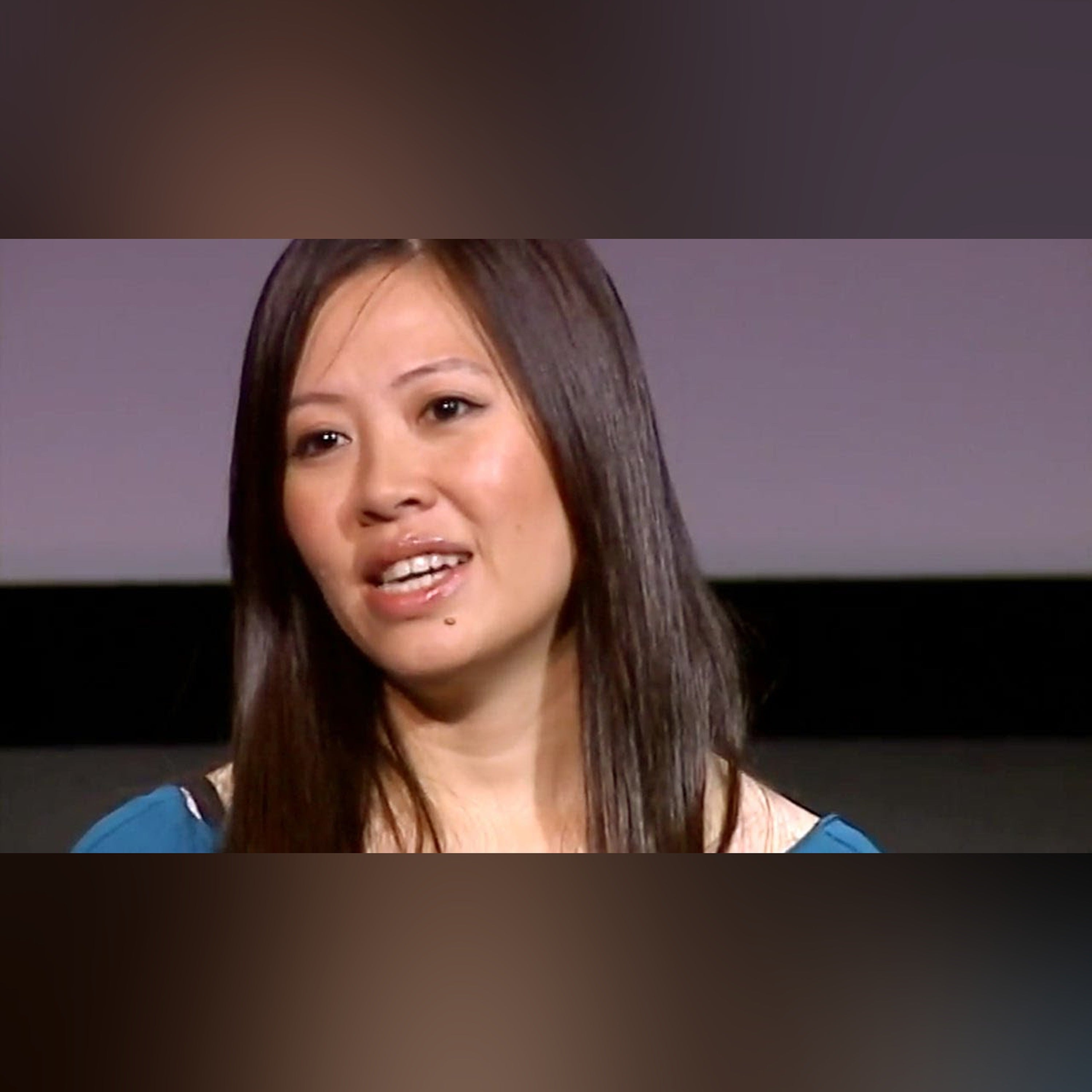
In 2010, technologist Tan Le took the TEDGlobal stage to demo a powerful new interface. But now, at TEDxWomen, she tells a very personal story: the story of her family -- mother, grandmother and sister -- fleeing Vietnam and building a new life. (Filmed at TEDxWomen.) Uploaded 15-08-13 Talk by Tan Le.
View full lesson: http://ed.ted.com/lessons/the-science-of-attraction-dawn-maslar Uploaded 08-05-14 Romantic chemistry is all about warm, gooey feelings that gush from the deepest depths of the heart...right? Not quite. Actually, the real boss behind attraction is your brain, which runs through a very quick, very complex series of calculations when assessing a potential partner. Dawn Maslar explores how our five senses contribute to this mating game, citing some pretty wild studies along the way. Lesson by Dawn Maslar, animation by TOGETHER.
Get to know Amy Tan’s novel “The Joy Luck Club,” a series of interconnected vignettes centered around four Chinese American families. Uploaded 16-12-19 -- In her Auntie An-mei’s home, Jing-Mei reluctantly takes her seat at the eastern corner of the mahjong table. At the north, south and west corners are her aunties, long-time members of the Joy Luck Club. This gathering is the point of departure for a series of interconnected vignettes in Amy Tan’s debut novel. Sheila Marie Orfano explores why the novel still captivates readers worldwide. Lesson by Sheila Marie Orfano, directed by Kayu Leung and Alo Trusz. Animator's websites: https://www.instagram.com/kayucaillou... Sign up for our newsletter: http://bit.ly/TEDEdNewsletter Support us on Patreon: http://bit.ly/TEDEdPatreon Find us on Twitter: http://bit.ly/TEDEdTwitter Peep us on Instagram: http://bit.ly/TEDEdInstagram View full lesson: https://ed.ted.com/lessons/why-should-you-read-the-joy-luck-club-by-amy-tan-sheila-marie-orfano #boo
Explore the differences between weather and climate – what they are, how we predict them, and what those predictions can tell us. Uploaded 25-08-20 -- From 2016 to 2019, the world saw record-breaking heat waves, rampant wildfires, and the longest run of category 5 tropical cyclones on record. The number of extreme weather events has been increasing for the last 40 years, and current predictions suggest that trend will continue. So, is the increase in extreme weather due to random chance, or changing climate? R. Saravanan investigates. Lesson by R. Saravanan, directed by Hype CG. Animator's website: https://www.hype.cg/ and https://www.luisacopetti.com/ Educator's website: https://r.saravanan.us/ Sign up for our newsletter: http://bit.ly/TEDEdNewsletter Support us on Patreon: http://bit.ly/TEDEdPatreon Find us on Twitter: http://bit.ly/TEDEdTwitter Peep us on Instagram: http://bit.ly/TEDEdInstagram View full lesson: https://ed.ted.com/lessons/is-the-weather-becoming-more-extreme-r-sarav
Check out Alan Stern's "Chasing New Horizons": https://shop.ed.ted.com/collections/ted-ed-book-recommendations/products/chasing-new-horizons Uploaded 17-05-18 View full lesson: https://ed.ted.com/lessons/the-journey-to-pluto-the-farthest-world-ever-explored-alan-stern As of 1989, mankind had successfully sent craft to every known planet in the solar system except one: Pluto. Located in an mysterious region called the Kuiper Belt, Pluto is a scientific goldmine, and could hold clues to the formation of our solar system. Alan Stern explains how NASA's New Horizons mission is going to allow us to see Pluto for the first time. Lesson by Alan Stern, animation by Eoin Duffy. Thank you so much to our patrons for your support! Without you this video would not be possible! Husain Mohammad, Max Shuai Tang, Côme Vincent, Astia Rizki Safitri, Alan Froese, alessandra tasso, Gerald Onyango, Katrina Harding, Ezgi Yersu, Al the Scottish Wildcat, Katie Dean, Kin Lon Ma, Carsten Tobehn, Boris Langvand,
Download a free audiobook version of “The Lord of the Rings: The Fellowship of the Ring“ and support TED-Ed's nonprofit mission: https://www.audible.com/ted-ed -- More than 2,000 years ago, the Greek philosopher Plato recounted the legend of the Ring of Gyges in “Republic.” The story of the ring surfaces as the philosopher, Socrates, and his student discuss why people act justly: is it because it’s what’s right? Or because it’s a convention that’s enforced through punishment and reward? Alex Gendler shares the allegory of the ill-gotten, magical ring. Lesson by Alex Gendler, directed by Vitalii Nebelskyi. Learn more about how TED-Ed partnerships work: https://bit.ly/TEDEdPartners Support Our Non-Profit Mission ---------------------------------------------- Support us on Patreon: http://bit.ly/TEDEdPatreon Check out our merch: http://bit.ly/TEDEDShop ---------------------------------------------- Connect With Us ---------------------------------------------- Sign up for our newsletter:
When Ramona Pierson was 22, she was hit by a drunk driver and spent 18 months in a coma. In this talk, she tells the remarkable story of her recovery -- drawing on the collective skills and wisdom of a senior citizens' home. (Filmed at TEDxDU.) Uploaded 15-08-13 Talk by Ramona Pierson.
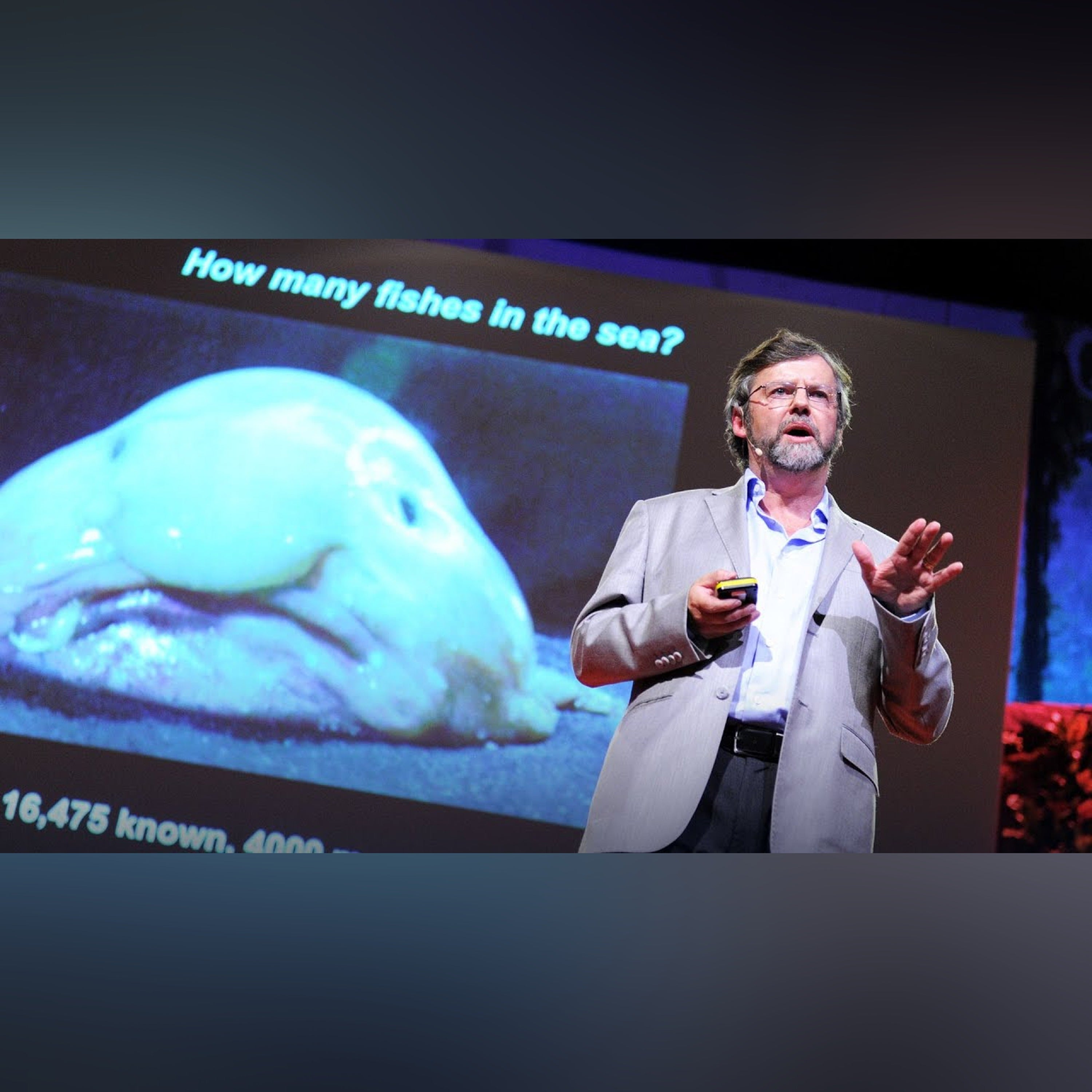
Oceanographer Paul Snelgrove shares the results of a ten-year project with one goal: to take a census of all the life in the oceans. He shares amazing photos of some of the surprising finds of the Census of Marine Life. Uploaded 19-07-13 Talk by Paul Snelgrove.
Puzzle through the classic game theory challenge, The Prisoner’s Dilemma, and decide: would you choose to spare or sacrifice? Uploaded 27-08-20 -- Two perfectly rational gingerbread men, Crispy and Chewy, are out strolling when they’re caught by a fox. Instead of simply eating them, he decides to put their friendship to the test with a cruel dilemma. He’ll ask each gingerbread man whether he’d opt to Spare or Sacrifice the other. What should they choose? Lucas Husted dives into the classic game theory scenario: the Prisoner's Dilemma. Lesson by Lucas Husted, directed by Ivana Bošnjack and Thomas Johnson. Sign up for our newsletter: http://bit.ly/TEDEdNewsletter Support us on Patreon: http://bit.ly/TEDEdPatreon Find us on Twitter: http://bit.ly/TEDEdTwitter Peep us on Instagram: http://bit.ly/TEDEdInstagram View full lesson: https://ed.ted.com/lessons/how-to-outsmart-the-prisoner-s-dilemma-lucas-husted Thank you so much to our patrons for your support! Without you this video would not b
View full lesson: http://ed.ted.com/lessons/where-did-earth-s-water-come-from-zachary-metz Uploaded 23-03-15 Water covers over 70% of the Earth, cycling from the oceans and rivers to the clouds and back again. It even makes up about 60% of our bodies. But in the rest of the solar system, liquid water is almost impossible to find. So how did our planet end up with so much of this substance? And where did it come from? Zachary Metz outlines the ancient origins of water on Earth. Lesson by Zachary Metz, animation by The Moving Company Animation Studio.