Find out how smallpox became the first (and only) disease to be permanently eradicated through the use of vaccination and isolation to prevent transmission. Uploaded 10-03-15 -- For most of human history, we have sought to treat and cure diseases. But only in recent decades did it become possible to ensure that a particular disease never threatens humanity again. Julie Garon and Walter A. Orenstein detail how the story of smallpox – the first and only disease to be permanently eliminated – shows how disease eradication can happen, and why it is so difficult to achieve. Lesson by Julie Garon and Walter A. Orenstein, animation by TOGETHER. Sign up for our newsletter: http://bit.ly/TEDEdNewsletter Support us on Patreon: http://bit.ly/TEDEdPatreon Find us on Twitter: http://bit.ly/TEDEdTwitter Peep us on Instagram: http://bit.ly/TEDEdInstagram View full lesson: http://ed.ted.com/lessons/learning-from-smallpox-how-to-eradicate-a-disease-julie-garon-and-walter-a-orenstein
Get to know the different kinds of co-ops, how they work, and how they differ from traditional companies. -- Co-ops are a big part of the global economy: they employ 10% of the world’s workforce and over two trillion dollars flow through their doors every year. At a co-op, there’s no single person with overarching, top-down power over everyone else, like a CEO at a traditional company. So what exactly is a co-op and how does it work? Explore the different types of cooperatives and how they operate. Directed by Elizabeth Galian, AIM Creative Studios. This video made possible in collaboration with World Economic Forum Learn more about how TED-Ed partnerships work: https://bit.ly/TEDEdPartners Support Our Non-Profit Mission ---------------------------------------------- Support us on Patreon: http://bit.ly/TEDEdPatreon Check out our merch: http://bit.ly/TEDEDShop ---------------------------------------------- Connect With Us ---------------------------------------------- Sign up for our n
View full lesson: http://ed.ted.com/lessons/why-extremophiles-bode-well-for-life-beyond-earth-louisa-preston Uploaded 07-10-13 Life on Earth requires three things: liquid water, a source of energy within a habitable range from the sun and organic carbon-based material. But life is surprisingly resilient, and organisms called extremophiles can be found in hostile living conditions (think extreme temperatures and little access to oxygen). Louisa Preston argues why extremophiles give astrobiologists hope for life in the universe. Lesson by Louisa Preston, animation by Emanuel Friberg.
View full lesson: http://ed.ted.com/lessons/the-science-of-stage-fright-and-how-to-overcome-it-mikael-cho Uploaded 08-10-13 Heart racing, palms sweating, labored breathing? No, you're not having a heart attack -- it's stage fright! If speaking in public makes you feel like you're fighting for your life, you're not alone. But the better you understand your body's reaction, the more likely you are to overcome it. Mikael Cho advises how to trick your brain and steal the show. Lesson by Mikael Cho, animation by KAWPA Studioworks.
Discover the myth of Bellerophon, the hero who battled and killed the Chimera monster atop the winged horse Pegasus. -- Shielded from the gorgon’s stone gaze, Perseus crept through Medusa’s cave. When he reached her, he drew his sickle and brought it down on her neck. From Medusa's neck sprung two children. One was a giant wielding a golden sword; the other was the magnificent, winged horse, Pegasus. No bridle could contain him— until one fateful day. Iseult Gillespie details the myth of the hero Bellerophon. Lesson by Iseult Gillespie, directed by Karina Forero, Lucy Animation Studio. Support Our Non-Profit Mission ---------------------------------------------- Support us on Patreon: http://bit.ly/TEDEdPatreon Check out our merch: http://bit.ly/TEDEDShop ---------------------------------------------- Connect With Us ---------------------------------------------- Sign up for our newsletter: http://bit.ly/TEDEdNewsletter Find us on Twitter: http://bit.ly/TEDEdTwitter Peep us on Instagra
If you enjoy our riddles, we highly recommend reading "The Number Devil": https://amzn.to/2kO7S8P Uploaded 04-06-18 Check out our book rec page to learn more: http://bit.ly/2JqwgLE View full lesson: https://ed.ted.com/lessons/can-you-solve-the-penniless-pilgrim-riddle-daniel-finkel After months of travel, you’ve arrived at Duonia, home to the famous temple that’s the destination of your pilgrimage. The walk from the welcome center to the temple isn't a long one ... but there’s a problem. Can you outsmart the city's imposed tax and make it to the temple without paying a fee? Daniel Finkel shows how. Lesson by Daniel Finkel, animation by Artrake Studio. Thank you so much to our patrons for your support! Without you this video would not be possible! Tan YH, Brittiny Elman, Mayra Urbano, Ruth Fang, Kostadin Mandulov, Alex Schenkman, Sdiep Sriram, Ivan Todorović, Antero Semi, Yanuar Ashari, Mrinalini, Anthony Kudolo, Scott Gass, Querida Owens, Hazel Lam, Manav parmar, Dwight Tevuk, Stephen
View full lesson: http://ed.ted.com/lessons/what-on-earth-is-spin-brian-jones Why does the Earth spin? Does a basketball falling from a spinning merry-go-round fall in a curve, as it appears to, or in a straight line? How can speed be manipulated while spinning? In short, why is the spinning motion so special? Brian Jones details the dizzyingly wide array of ways that spinning affects our lives. Lesson by Brian Jones, animation by Flaming Medusa Studios.
You and your team of scientists are trapped on Mars. Can you figure out how to survive on the desert planet? -- Today is the anniversary of the best-worst day of your life. The best part was discovering a subterranean city on Mars. The worst part was when you lost contact with Earth. You and the other 99 scientists have spent the year engineering your survival, but you’re almost out of water and solutions. Can you figure out how the last civilization lived on this desert planet? Henri Picciotto shows how. Lesson by Henri Picciotto, directed by Igor Coric, Artrake Studio. Support Our Non-Profit Mission ---------------------------------------------- Support us on Patreon: http://bit.ly/TEDEdPatreon Check out our merch: http://bit.ly/TEDEDShop ---------------------------------------------- Connect With Us ---------------------------------------------- Sign up for our newsletter: http://bit.ly/TEDEdNewsletter Find us on Twitter: http://bit.ly/TEDEdTwitter Peep us on Instagram: http://bit.l
View full lesson: http://ed.ted.com/lessons/the-fundamentals-of-space-time-part-2-andrew-pontzen-and-tom-whyntie Uploaded 01-05-14 View part 1 here: http://ed.ted.com/lessons/the-fundamentals-of-space-time-part-1-andrew-pontzen-and-tom-whyntie Light always travels at a speed of 299,792,458 meters per second. But if you're in motion too, you're going to perceive it as traveling even faster -- which isn't possible! In this second installment of a three-part series on space-time, CERN scientists Andrew Pontzen and Tom Whyntie use a space-time diagram to analyze the sometimes confounding motion of light. Lesson by Andrew Pontzen and Tom Whyntie, animation by Giant Animation.
Is living on the moon possible? How would we survive? Explore the challenges and benefits of building a lunar colony. Uploaded 05-06-18 -- The European Space Agency is hoping to establish an inhabited research base on the moon by the 2020s. But living in this "moon camp" won’t be easy. How will humans deal with the cosmic radiation? What will the inhabitants eat? And what's the point, anyway? Alex Gendler details the challenges and benefits of building a lunar colony. Lesson by Alex Gendler, animation by Allen Laseter. This video was made in partnership with the Airbus Foundation. Find out more about their work here: http://bit.ly/2M262NF Sign up for our newsletter: http://bit.ly/TEDEdNewsletter Support us on Patreon: http://bit.ly/TEDEdPatreon Find us on Twitter: http://bit.ly/TEDEdTwitter Peep us on Instagram: http://bit.ly/TEDEdInstagram View full lesson: https://ed.ted.com/lessons/what-would-it-be-like-to-live-on-the-moon-alex-gendler Thank you so much to our patrons for your suppo
Dig into the Attica Prison Rebellion, where prisoners took control of the facility in response to inhumane living conditions, and the violent retaking that followed. Uploaded 11-05-21 -- On September 9th 1971, a spontaneous uprising began in a New York State prison. A group of prisoners overpowered guards, broke windows, started fires, and captured supplies, sparking the Attica Rebellion. Soon, over 1,200 prisoners had assembled with 42 hostages to demand better treatment and better living conditions. Orisanmi Burton details the revolt and deadly retaking of Attica prison. Lesson by Orisanmi Burton, directed by Tomás Pichardo-Espaillat. Support Our Non-Profit Mission ---------------------------------------------- Support us on Patreon: http://bit.ly/TEDEdPatreon Check out our merch: http://bit.ly/TEDEDShop ---------------------------------------------- Connect With Us ---------------------------------------------- Sign up for our newsletter: http://bit.ly/TEDEdNewsletter Find us on Twi
Trace the history and evolution of the Spanish language, from its origins in the 3rd century BCE to modern day. -- Beginning in the third century BCE, the Romans conquered the Iberian peninsula. This period gave rise to several regional languages in the area that’s now Spain, including Castilian, Catalan, and Galician. One of these would become Spanish— but not for another 1,500 years. Those years tell the origin story of what’s become a global modern language. Ilan Stavans traces the evolution of Spanish. Lesson by Ilan Stavans, directed by Hernando Bahamon, Globizco Studios. Support Our Non-Profit Mission ---------------------------------------------- Support us on Patreon: http://bit.ly/TEDEdPatreon Check out our merch: http://bit.ly/TEDEDShop ---------------------------------------------- Connect With Us ---------------------------------------------- Sign up for our newsletter: http://bit.ly/TEDEdNewsletter Find us on Twitter: http://bit.ly/TEDEdTwitter Peep us on Instagram: http:/
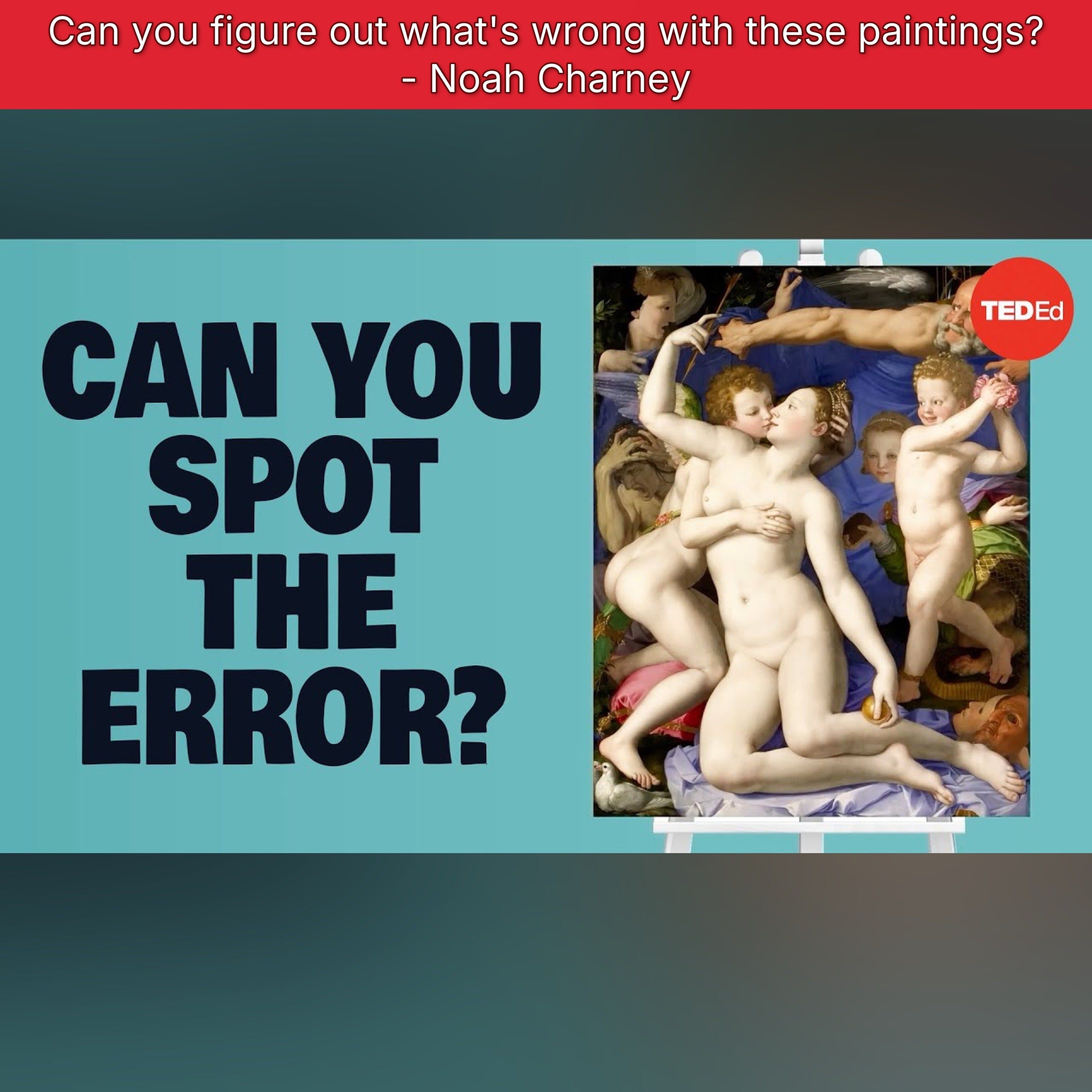
Discover the scientific process art conservators use to restore centuries-old paintings and fix the damage of past restorations. -- Prior to the mid-20th century, art restorers took a heavy-handed approach, often drastically altering paintings in the name of “improving” art. Today, they focus on keeping the original work intact with minimal intervention, and must regularly contend with past modifications. So, how is damaged artwork repaired? Noah Charney explains the painstaking process of restoring priceless artifacts. Lesson by Noah Charney, directed by Michael Kalopaidis, Zedem Media. Image credit for the Portrait of Isabella de Medici: Gift of Mrs. Paul B. Ernst This video made possible in collaboration with Marriott Hotels Learn more about how TED-Ed partnerships work: https://bit.ly/TEDEdPartners Support Our Non-Profit Mission ---------------------------------------------- Support us on Patreon: http://bit.ly/TEDEdPatreon Check out our merch: http://bit.ly/TEDEDShop -------------
Dig into the experiment known as the lost wallet test, and find out the surprising results of this study of honesty. -- Picture this: you’re working a shift in a hotel lobby when someone approaches the front desk. They found a lost wallet around the corner, but they’re in a rush and don’t have time to follow up. Looking at the wallet you see it contains a key, grocery list, about $13, and three business cards you assume belong to the wallet’s owner. So, what do you do? Dig into the infamous lost wallet experiment. Directed by Maryna Buchynska, and action creative agency. This video made possible in collaboration with Character Lab Learn more about how TED-Ed partnerships work: https://bit.ly/TEDEdPartners A special thanks to Alain Cohn who provided information and insights for the development of this video. Support Our Non-Profit Mission ---------------------------------------------- Support us on Patreon: http://bit.ly/TEDEdPatreon Check out our merch: http://bit.ly/TEDEDShop --------
View full lesson: http://ed.ted.com/lessons/why-sitting-is-bad-for-you-murat-dalkilinc Uploaded 05-03-15 Sitting down for brief periods can help us recover from stress or recuperate from exercise. But nowadays, our lifestyles make us sit much more than we move around. Are our bodies built for such a sedentary existence? Murat Dalkilinç investigates the hidden risks of sitting down. Lesson by Murat Dalkilinç, animation by Oxbow Creative.
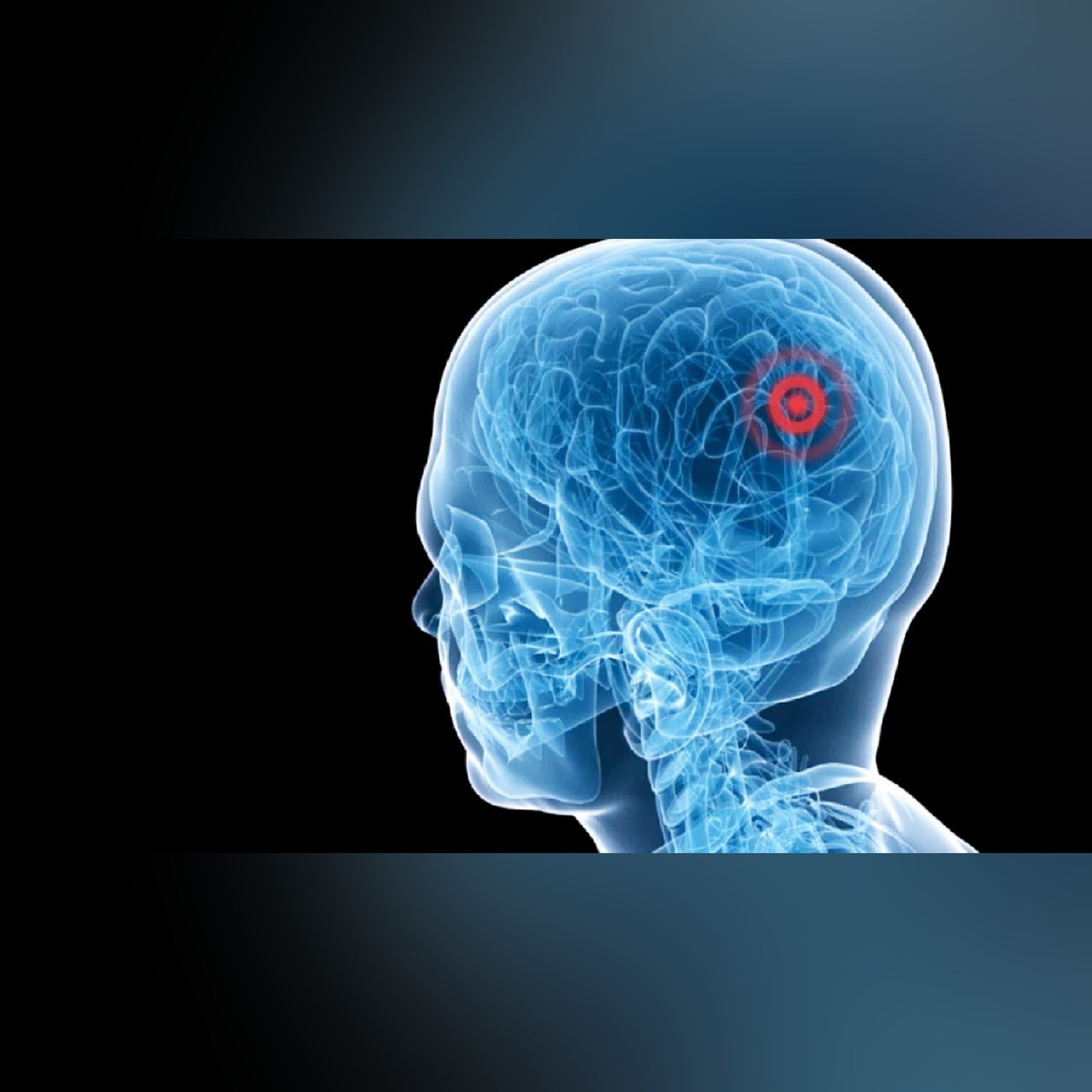
Imagine having a surgery with no knives involved. At TEDMED, Yoav Medan shares a technique that uses MRI to find trouble spots and focused ultrasound to treat such issues as brain lesions, uterine fibroids and several kinds of cancerous growths. Uploaded 19-07-13 Talk by Yoav Medan.
Dig into what happens to your brain during adolescence that changes how you value, understand, and connect to friends. -- If it seems like friendships formed in adolescence are particularly special, that's because they are. Childhood, adolescent, and adult friendships all manifest differently in part because the brain works in different ways at those stages of life. During adolescence, there are changes in the way you value, understand, and connect to friends. Shannon Odell explores the neuroscience of friendship. Lesson by Shannon Odell, directed by Biljana Labović. This video made possible in collaboration with Bezos Family Foundation Learn more about how TED-Ed partnerships work: https://bit.ly/TEDEdPartners A special thanks to Ilanit Gordon who provided information and insights for the development of this video. Support Our Non-Profit Mission ---------------------------------------------- Support us on Patreon: http://bit.ly/TEDEdPatreon Check out our merch: http://bit.ly/TEDEDShop
Shame is an unspoken epidemic, the secret behind many forms of broken behavior. Brené Brown, whose earlier talk on vulnerability became a viral hit, explores what can happen when people confront their shame head-on. Her own humor, humanity and vulnerability shine through every word. Uploaded 19-07-13 Talk by Brené Brown.
TED wants to promote student ideas! Learn more here: http://bit.ly/2M7hd87 Uploaded 07-06-18 View full lesson: https://ed.ted.com/lessons/how-one-scientist-averted-a-national-health-crisis-andrea-tone In 1960, Frances Kelsey was one of the Food and Drug Administration’s newest recruits. Before the year was out, she would begin a fight that would save thousands of lives — though no one knew it at the time. Andrea Tone explains how Kelsey was able to prevent a massive national public health tragedy by privileging facts over opinions, and patience over short-cuts. Lesson by Andrea Tone, animation by TED-Ed. Thank you so much to our patrons for your support! Without you this video would not be possible! Claudia Mayfield, Justus Berberich, Pavel Zalevskiy, Yankai Liu, Duo Xu, Ghassan Alhazzaa, Miloš Stevanović, Joy Love Om, Gi Nam Lee, Shawn Quichocho, Simone Kidner, Anika Westburg, Barun Padhy, Brandy Jones, Devin Harris, Tony Trapuzzano, Stephen Michael Alvarez, Tom Lee, Juliana, Jason We
You’ve promised to get your son the cutest creature in creation: the cuddly. Can you outsmart the cuddly incubator and go home a hero? Uploaded 25-04-19 -- You’ve promised to get your son the cutest creature in creation: the cuddly. It’s part of the Wuddly species, cousin to the terrifying duddly and the hideous fuddly. To make one, 100 eggs are placed in an incubator to undergo egg fusion, and the resulting combination will produce either a cuddly, a duddly or a fuddly. Can you make the right combination to get a cuddly? Dan Finkel shows how. Lesson by Daniel Finkel, directed by Artrake Studio. Sign up for our newsletter: http://bit.ly/TEDEdNewsletter Support us on Patreon: http://bit.ly/TEDEdPatreon Find us on Twitter: http://bit.ly/TEDEdTwitter Peep us on Instagram: http://bit.ly/TEDEdInstagram View full lesson: https://ed.ted.com/lessons/can-you-solve-the-cuddly-duddly-fuddly-wuddly-riddle-dan-finkel Thank you so much to our patrons for your support! Without you this video would no
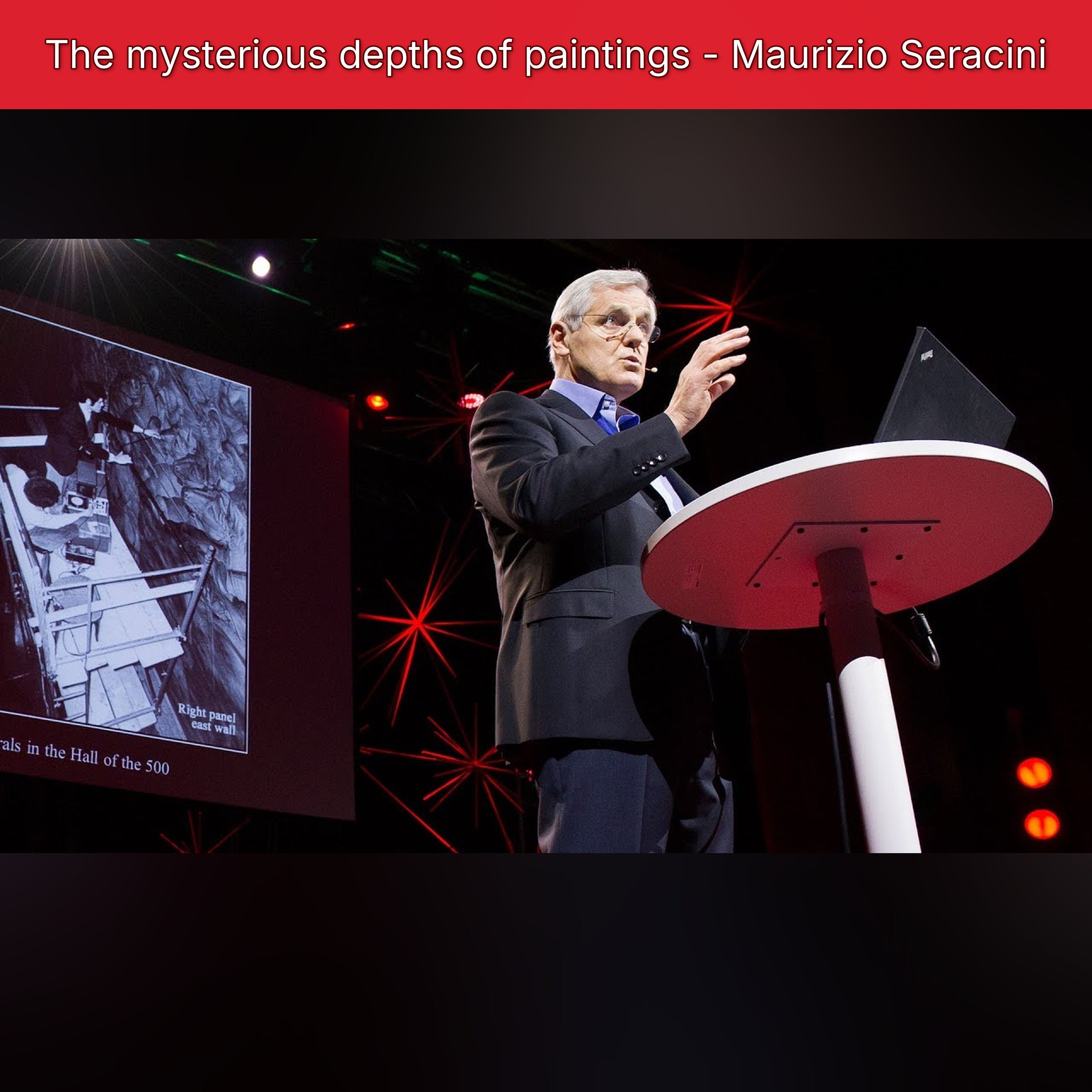
Art history is far from set in stone. Engineer Maurizio Seracini spent 30 years searching for Leonardo da Vinci's lost fresco "The Battle of Anghiari," and in the process discovered that many paintings have layers of history hidden underneath. Should they be part of the viewing experience too? Talk by Maurizio Seracini.
When you're getting medical treatment, or taking part in medical testing, privacy is important; strict laws limit what researchers can see and know about you. But what if your medical data could be used -- anonymously -- by anyone seeking to test a hypothesis? John Wilbanks wonders if the desire to protect our privacy is slowing research, and if opening up medical data could lead to a wave of health care innovation. Talk by John Wilbanks.
View full lesson: http://ed.ted.com/lessons/actually-the-world-isn-t-flat-pankaj-ghemawat It may seem that we're living in a borderless world where ideas, goods and people flow freely from nation to nation. We're not even close, says Pankaj Ghemawat. With great data (and an eye-opening survey), he argues that there's a delta between perception and reality in a world that's maybe not so hyperconnected after all. Talk by Pankaj Ghemawat.
View full lesson: http://ed.ted.com/lessons/rhythm-in-a-box-the-story-of-the-cajon-drum-paul-jennings Uploaded 03-03-15 Many modern musical instruments are complicated pieces of machinery with many moving parts. But the cajon is simply a drum and a stand and a seat all in one box. Paul Jennings explains the history behind the cajon and how it has become one of the most versatile and popular percussion instruments in the world today. Lesson by Paul Jennings, animation by Avi Ofer.