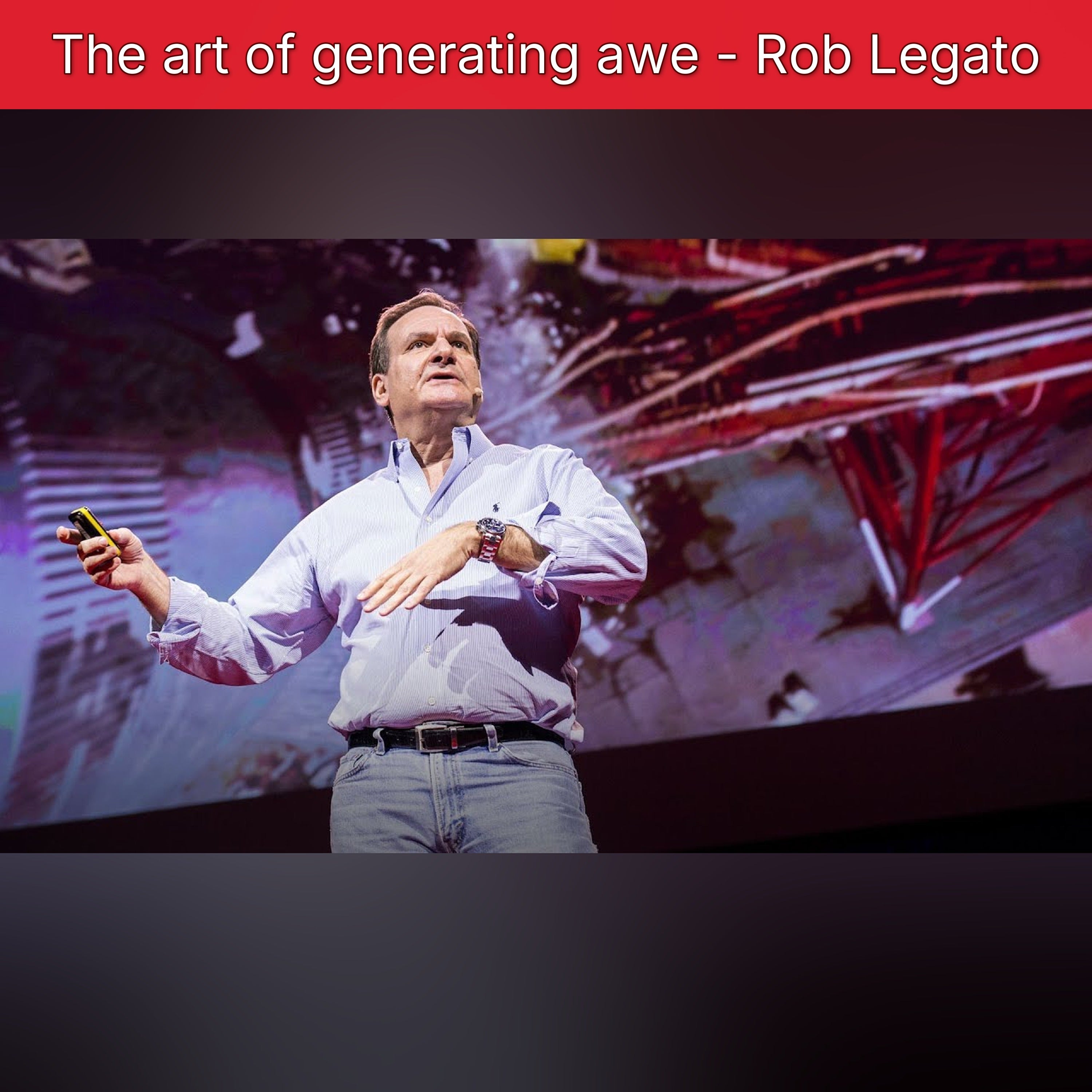
Rob Legato creates movie effects so good they (sometimes) trump the real thing. In this warm and funny talk, he shares his vision for enhancing reality on-screen in movies like Apollo 13, Titanic and Hugo. Talk by Rob Legato.
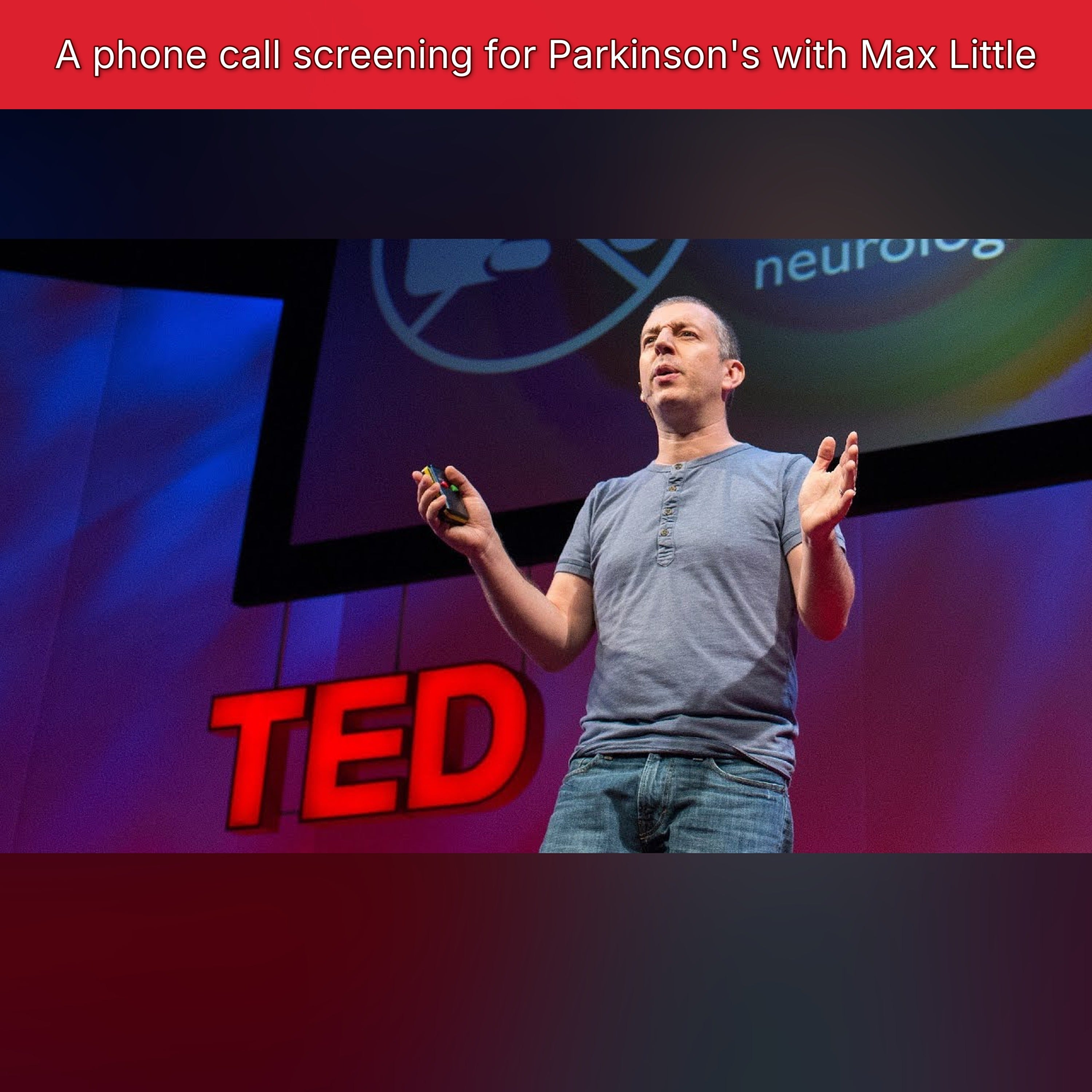
Parkinson's disease affects 6.3 million people worldwide, causing weakness and tremors, but there's no objective way to detect it early on. Yet. Applied mathematician and TED Fellow Max Little is testing a simple, cheap tool that in trials is able to detect Parkinson's with 99 percent accuracy -- in a 30-second phone call. Talk by Max Little.
View full lesson: http://ed.ted.com/lessons/how-do-nerves-work At any moment, there is an electrical storm coursing through your body. Discover how chemical reactions create an electric current that drives our responses to everything from hot pans to a mother's caress. Lesson by Elliot Krane, animation by TED-Ed.
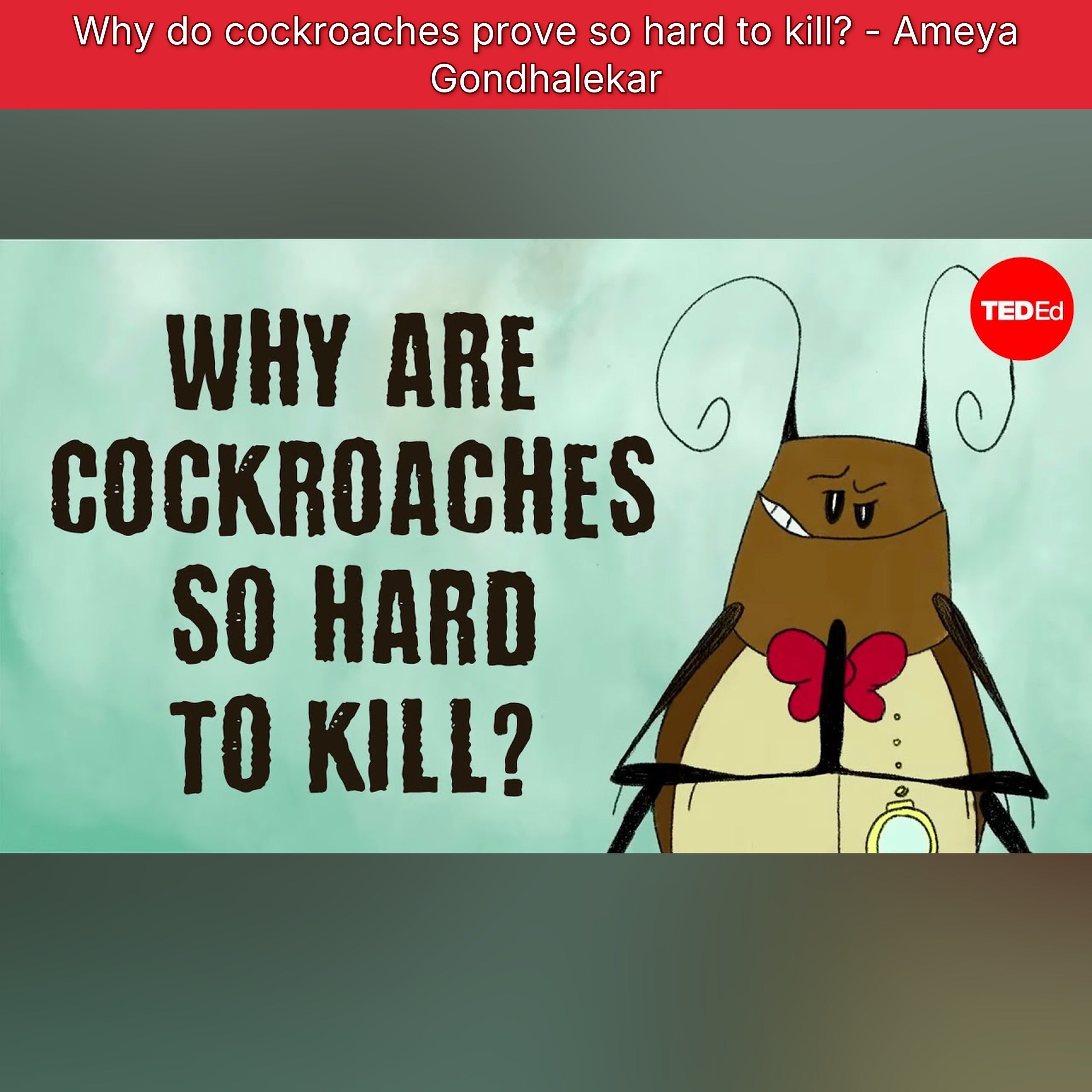
Dig into the genetic adaptations of cockroaches, and find out what makes it so hard to get rid of these tenacious creatures. -- In ancient Egypt, there was a spell that declared, “Be far from me, O vile cockroach.” Thousands of years later, we’re still trying to oust these insects. But from poison traps to brandished slippers, cockroaches seem to weather just about everything we throw at them. So, what makes cockroaches so hard to kill? Ameya Gondhalekar digs into the genetic wonders of this troublingly tenacious creature. Lesson by Ameya Gondhalekar, directed by Irida Zhonga. In order to visualize and dramatize the lives of these fascinating creatures, the artists have chosen to playfully anthropomorphize cockroaches. In real life cockroaches don’t dine like humans, go shopping for organic matter, and most unfortunately, don’t wear lederhosen (at least, to the best of our knowledge). Support Our Non-Profit Mission ---------------------------------------------- Support us on Patreon: h
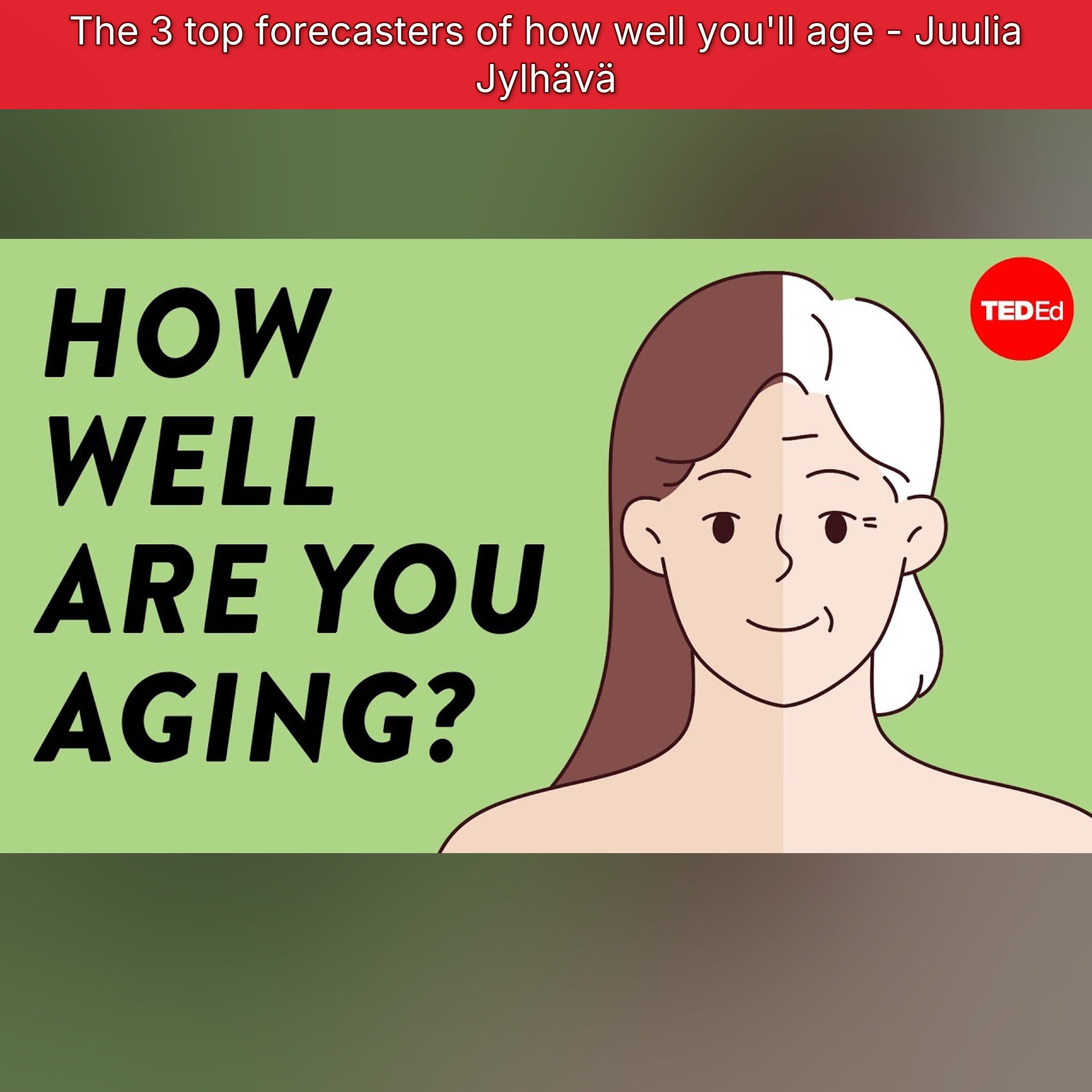
Explore how our bodies change and age over time, and the three common markers scientists use to measure aging. -- If you want to learn a tree’s age, you can count their rings. When it comes to humans, scientists have yet to find any visible traits that mark our age with the same specificity. But in the past few decades, they’ve discovered small, invisible markers hidden within the body that do change over time. Juulia Jylhävä shares what these markers can tell us about our health, history, and future. Lesson by Juulia Jylhävä, directed by Flaka Kokolli, Diellza Franca, Flammorum Animation Studio. Support Our Non-Profit Mission ---------------------------------------------- Support us on Patreon: http://bit.ly/TEDEdPatreon Check out our merch: http://bit.ly/TEDEDShop ---------------------------------------------- Connect With Us ---------------------------------------------- Sign up for our newsletter: http://bit.ly/TEDEdNewsletter Find us on Twitter: http://bit.ly/TEDEdTwitter Peep us
Dig into the history of comic books and graphic novels in education, and explore their potential for helping kids learn. -- In the 1940s, comic books became a mass medium, with millions of copies selling every month. Teachers even began experimenting by bringing comics into their classrooms. So, can comic books and graphic novels really help you learn? Gene Luen Yang explores the history of comics in American education, and reveals some unexpected insights about their potential for helping kids learn. Directed by Vicente Numpaque, Hernando Bahamon, Globizco Studios. This is an animated adaptation of a TEDx Talk given by Gene Luen Yang. You can watch the talk in full here: https://www.youtube.com/watch?v=xjvTIP7pV20 Education is the ultimate idea worth spreading. That’s why we’ve launched InnovaTED — a program that helps educators develop their brightest ideas and share them with the world. Learn more: https://ed.ted.com/edtalks Support Our Non-Profit Mission ---------------------------
Explore the three major methods of machine learning, which allows computers to write their own rules to problem solve and process data. Uploaded 11-03-21 -- Today, artificial intelligence helps doctors diagnose patients, pilots fly commercial aircraft, and city planners predict traffic. These AIs are often self-taught, working off a simple set of instructions to create a unique array of rules and strategies. So how exactly does a machine learn? Briana Brownell digs into the three basic ways machines investigate, negotiate, and communicate. Lesson by Briana Brownell, directed by Champ Panupong Techawongthawon. Support Our Non-Profit Mission ---------------------------------------------- Support us on Patreon: http://bit.ly/TEDEdPatreon Check out our merch: http://bit.ly/TEDEDShop ---------------------------------------------- Connect With Us ---------------------------------------------- Sign up for our newsletter: http://bit.ly/TEDEdNewsletter Find us on Twitter: http://bit.ly/TEDEdTwi
Travel around the world to visit some of nature’s most incredible snakes: vipers, and find out which are the most dangerous. -- As of 2021, there are 368 species of viper worldwide. The name comes from the term viviparity, which means giving birth to live young. Vipers are often highly venomous, with two hollow, extra long fangs that unfold into imposing weapons when the viper prepares to strike. So, which are the most dangerous? Andrew Whitworth travels around the world to visit some of nature’s most incredible snakes. Lesson by Andrew Whitworth, directed by Billie Baxter. Support Our Non-Profit Mission ---------------------------------------------- Support us on Patreon: http://bit.ly/TEDEdPatreon Check out our merch: http://bit.ly/TEDEDShop ---------------------------------------------- Connect With Us ---------------------------------------------- Sign up for our newsletter: http://bit.ly/TEDEdNewsletter Find us on Twitter: http://bit.ly/TEDEdTwitter Peep us on Instagram: http://bi
Professional musicians share how they chose their instruments, and what you should consider when choosing what to play. -- "Think Like A Musician" connects you with working musicians who want to help the music-curious and music-passionate hone and share the gift of music with the world. Part interview, part animated course, our first season "Think Like A Performer" features artists sharing their insight on the ins and outs of fine-tuning your instrument and crafting a great performance. Each episode features free supplemental learning materials developed by Education Through Music (https://etmonline.org) (https://etmonline.org)/) — a nonprofit with over 30 years of experience developing classroom-adaptable curriculum for music educators. Directed by Kozmonot Animation Studio. A special thanks to the musicians who provided their insights and expertise for this video. You can check out their pages here: Support Our Non-Profit Mission ---------------------------------------------- Support
Sign up for our newsletter and never miss an animation: http://bit.ly/TEDEdNewsletter Uploaded 16-06-15 One hundred green-eyed logicians have been imprisoned on an island by a mad dictator. Their only hope for freedom lies in the answer to one famously difficult logic puzzle. Can you solve it? Alex Gendler walks us through this green-eyed riddle. Lesson by Alex Gendler, animation by Artrake Studio.
View full lesson here: http://ed.ted.com/lessons/daniel-dulek-how-big-is-a-mole-not-the-animal-the-other-one The word "mole" suggests a small, furry burrowing animal to many. But in this lesson, we look at the concept of the mole in chemistry. Learn the incredible magnitude of the mole--and how something so big can help us calculate the tiniest particles in the world. Lesson by Daniel Dulek, animation by Augenblick Studios.
View full lesson: http://ed.ted.com/lessons/why-aren-t-we-only-using-solar-power-alexandros-george-charalambides Uploaded 19-06-14 Solar power is cheaper and more sustainable than our current coal-fueled power plants, so why haven't we made the switch? The real culprits here are the clouds, which make solar power difficult to control. Alexandros George Charalambides explains how solar towers and panels create electricity and how scientists are trying to create a system that can function even under cloud cover. Lesson by Alexandros George Charalambides, animation by Ace and Son Moving Picture Co., LLC.
Practice more problem-solving at https://brilliant.org/TedEd/ Uploaded 30-06-20 -- Ragnarok: The fabled end of the world, when giants, monsters, and Norse gods battle for the future. The gods were winning until the great serpent Jörmungandr emerged. It swallowed Valhalla and contorted itself across the land. Odin has just enough power to strike with one final bolt of lightning, and you have the fabled hammer, Mjölnir. Can you two destroy the serpent? Dan Finkel shows how. Lesson by Dan Finkel, directed by Artrake Studio. Animator's website: https://www.artrake.com (https://www.artrake.com/) Sign up for our newsletter: http://bit.ly/TEDEdNewsletter Support us on Patreon: http://bit.ly/TEDEdPatreon Find us on Twitter: http://bit.ly/TEDEdTwitter Peep us on Instagram: http://bit.ly/TEDEdInstagram View full lesson: https://ed.ted.com/lessons/can-you-solve-the-ragnarok-riddle-dan-finkel Thank you so much to our patrons for your support! Without you this video would not be possible! zjweele13
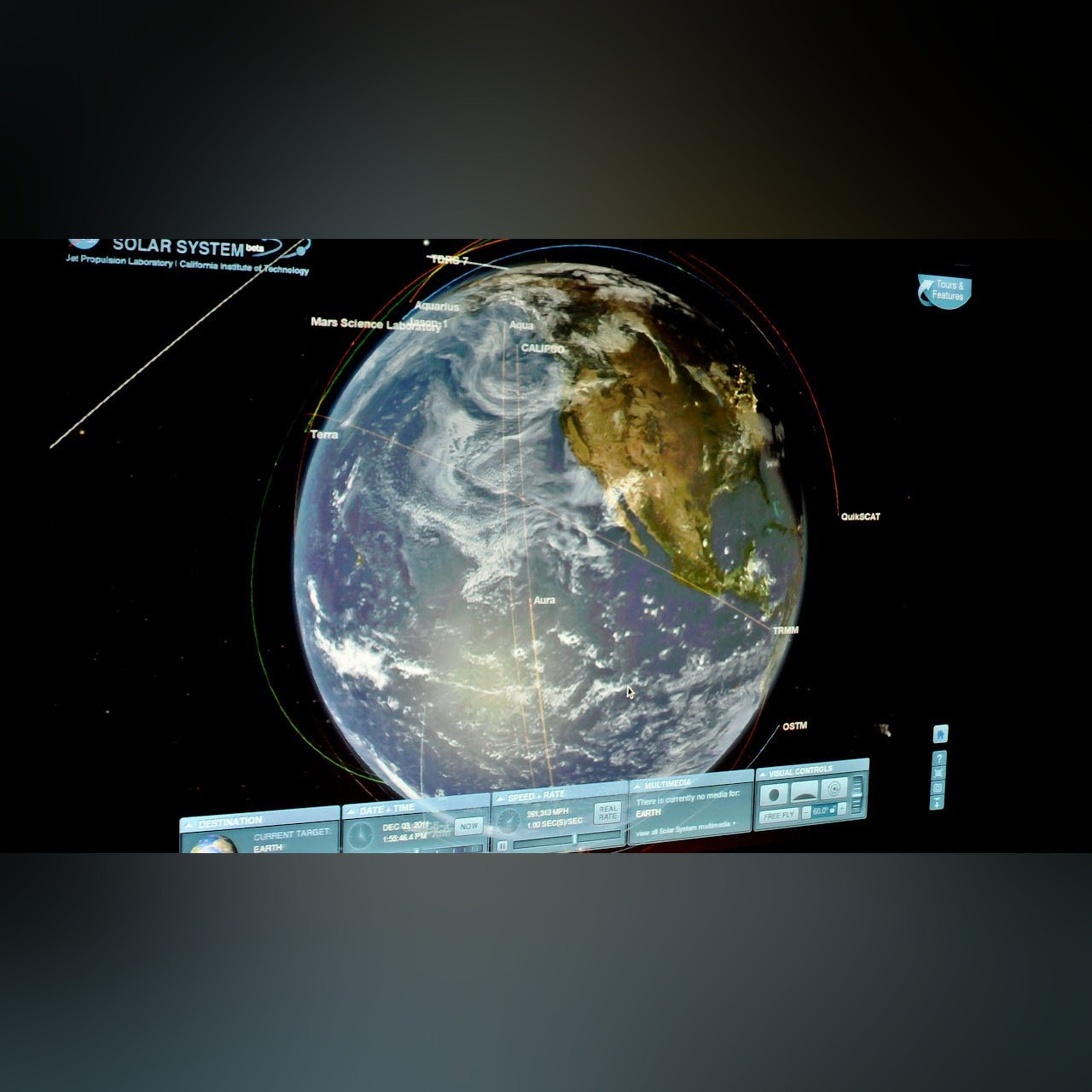
Want to navigate the solar system without having to buy that expensive spacecraft? Jon Nguyen demos NASAJPL's "Eyes on the Solar System" -- free-to-use software for exploring the planets, moons, asteroids, and spacecraft that rotate around our sun in real-time. (Filmed at TEDxSanDiego.) Uploaded 21-08-13 Talk by Jon Nguyen.
Solve this classic game theory challenge: given integers from 0 to 100, what would the whole number closest to ⅔ of the average of all numbers guessed be? Uploaded 05-11-19 -- Given a range of integers from 0 to 100, what would the whole number closest to 2/3 of the average of all numbers guessed be? For example, if the average of all guesses is 60, the correct guess will be 40. The game is played under conditions known to game theorists as “common knowledge:” every player has the same information— they also know that everyone else does too. Lucas Husted explains. Lesson by Lucas Husted, directed by Anton Trofimov. Animator's website: https://www.antontrofimov.com (https://www.antontrofimov.com/) Sign up for our newsletter: http://bit.ly/TEDEdNewsletter Support us on Patreon: http://bit.ly/TEDEdPatreon Find us on Twitter: http://bit.ly/TEDEdTwitter Peep us on Instagram: http://bit.ly/TEDEdInstagram View full lesson: https://ed.ted.com/lessons/game-theory-challenge-can-you-predict-human
View full lesson: http://ed.ted.com/lessons/making-a-ted-ed-lesson-visualizing-big-ideas View original lesson: http://ed.ted.com/lessons/exploration-on-the-big-data-frontier-tim-smith Uploaded 25-11-13 How can animation convey complex, intangible concepts? A visual metaphor, or an idea represented through imagery, can take an idea as massive as Big Data and tie it to the familiar depiction of a growing tree. TED-Ed animators explain how to make an abstract idea come alive visually.
Learn more at https://brilliant.org/TedEd -- In 1980, philosopher John Searle developed a thought experiment in response to AI advancement at the time. His aim was to interrogate whether a programmed computer has cognitive states, and asked: if a computer looks like it understands something, does that mean it actually understands the way a human does? Charles Wallace and Dan Kwartler explore whether or not AI could have a mind like ours. Lesson by Charles Wallace and Dan Kwartler, directed by Hernando Bahamon, Vicente Numpaque, Globizco Studios. This video made possible in collaboration with Brilliant Learn more about how TED-Ed partnerships work: https://bit.ly/TEDEdPartner The AI-generated animation at 3:24 and 5:23 were created using ChatGPT, Gemini, MidJourney, Sora, and Kling. Support Our Non-Profit Mission ---------------------------------------------- Support us on Patreon: http://bit.ly/TEDEdPatreon Check out our merch: http://bit.ly/TEDEDShop ----------------------------------
Uploaded 08-02-18 View full lesson: https://ed.ted.com/lessons/the-myth-of-arachne-and-athena-iseult-gillespie From sailors who were turned into pigs, nymphs that sprouted into trees, and a gaze that converted the beholder to stone, Greek mythology brims with shape-shifters. The powerful Gods usually changed their own forms at will - but for mortals, the mutations were often unwanted. Iseult Gillespie shares how one such unnerving transformation befell the spinner Arachne. Lesson by Iseult Gillespie, animation by Mette Ilene Holmriis. Thank you so much to our patrons for your support! Without you this video would not be possible! Manav parmar, Dwight Tevuk, Stephen A. Wilson, Siamak H, Dominik Kugelmann, Katie Winchester, Mary Sawyer, David Rosario, Samuel Doerle, Be Owusu, Susan Herder, Savannah Scheelings, Prasanth Mathialagan, Yanira Santamaria, Chad Harper, Dawn Jordan, Chris Mathew, Constantin Salagor, Activated Classroom Teaching, Kevin Wong, Umar Farooq, Goh Xiang Ting Diana, Dm
View full lesson: http://ed.ted.com/lessons/michele-weldon-capturing-authentic-narratives Journalism can be much more than reporting. An authentic, human narrative touches audiences and keeps them reading. Learn how to shape a human-centered news story, and the importance of facts, context and heart. Lesson by Michele Weldon, animation by Augenblick Studios.
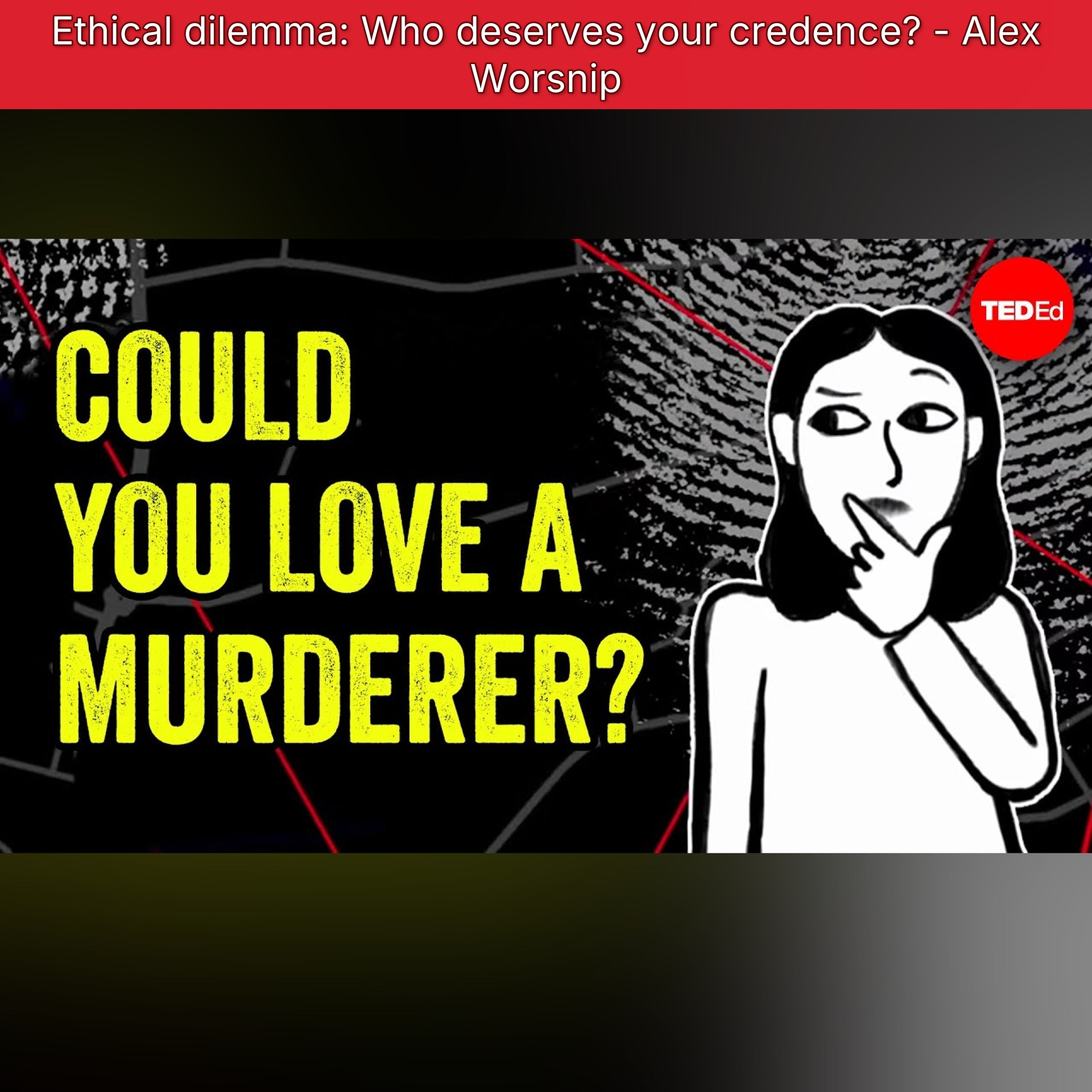
Puzzle through the ethical dilemma of a spouse accused of murder and decide: do you believe your spouse or the evidence? -- You’re sitting on the couch, when you hear a knock on the door. The police have arrived to arrest your spouse— for murder. This accusation comes as a total shock, but their fingerprints were found on the murder weapon. Your spouse insists they’re innocent. Should you believe your spouse, even though the evidence against them looks damning? Alex Worsnip takes a look at this classic ethical dilemma. Lesson by Alex Worsnip, directed by Emily Howells and Aaron Brady. This video was produced in collaboration with the Parr Center for Ethics, housed within the renowned Philosophy Department at the University of North Carolina at Chapel Hill. The Parr Center is committed to integrating abstract work in ethical theory with the informed discussion of practical ethical issues, and prides itself on the development of innovative and inclusive approaches to moral and civic educ
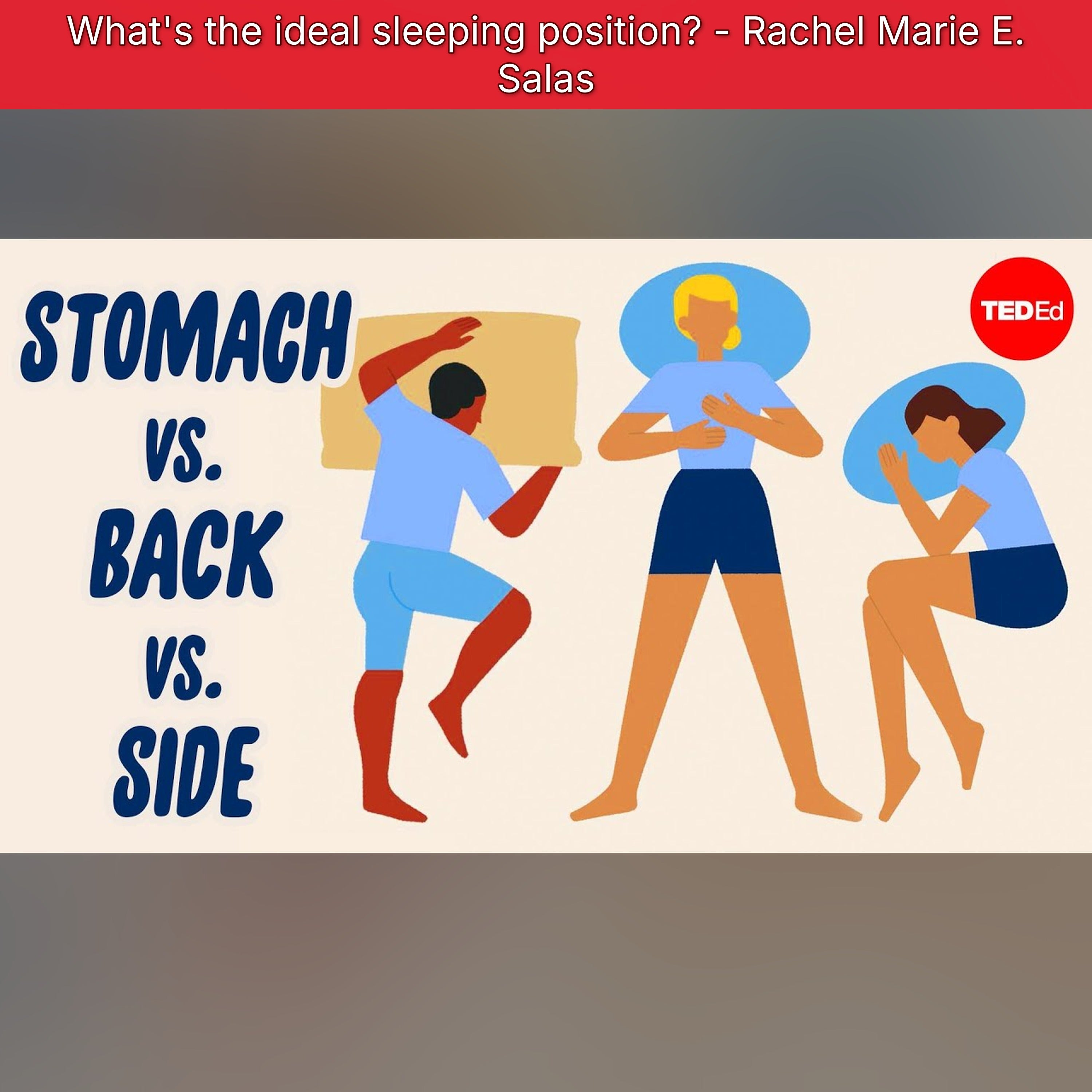
Is there a best sleep position? Dig into how sleeping on your side, back, or stomach can impact your body and health. -- Sleep positions go by countless creative names— the zombie, mountain climber, free faller, soldier, and more. Yet sleep experts typically simplify them into the basic types: side, stomach, or back. Individual sleep styles are highly personal, but how we spend the night affects our bodies and health in several ways. So, what’s the best position to sleep in? Rachel Marie E. Salas investigates. Lesson by Rachel Marie E. Salas, directed by Sofia Pashaei. Support Our Non-Profit Mission ---------------------------------------------- Support us on Patreon: http://bit.ly/TEDEdPatreon Check out our merch: http://bit.ly/TEDEDShop ---------------------------------------------- Connect With Us ---------------------------------------------- Sign up for our newsletter: http://bit.ly/TEDEdNewsletter Find us on Twitter: http://bit.ly/TEDEdTwitter Peep us on Instagram: http://bit.ly/
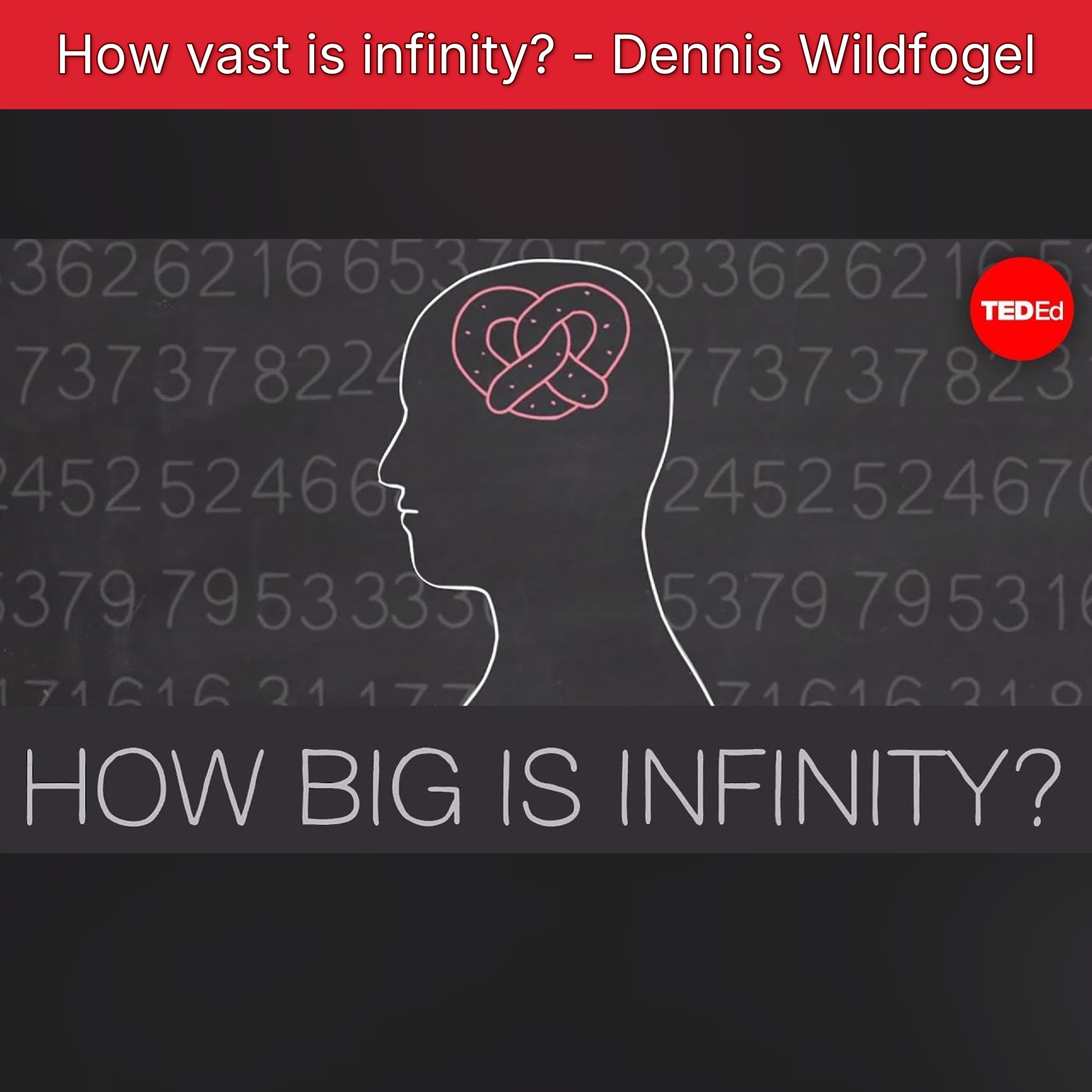
View full lesson: http://ed.ted.com/lessons/how-big-is-infinity Using the fundamentals of set theory, explore the mind-bending concept of the "infinity of infinities" -- and how it led mathematicians to conclude that math itself contains unanswerable questions. Lesson by Dennis Wildfogel, animation by Augenblick Studios.
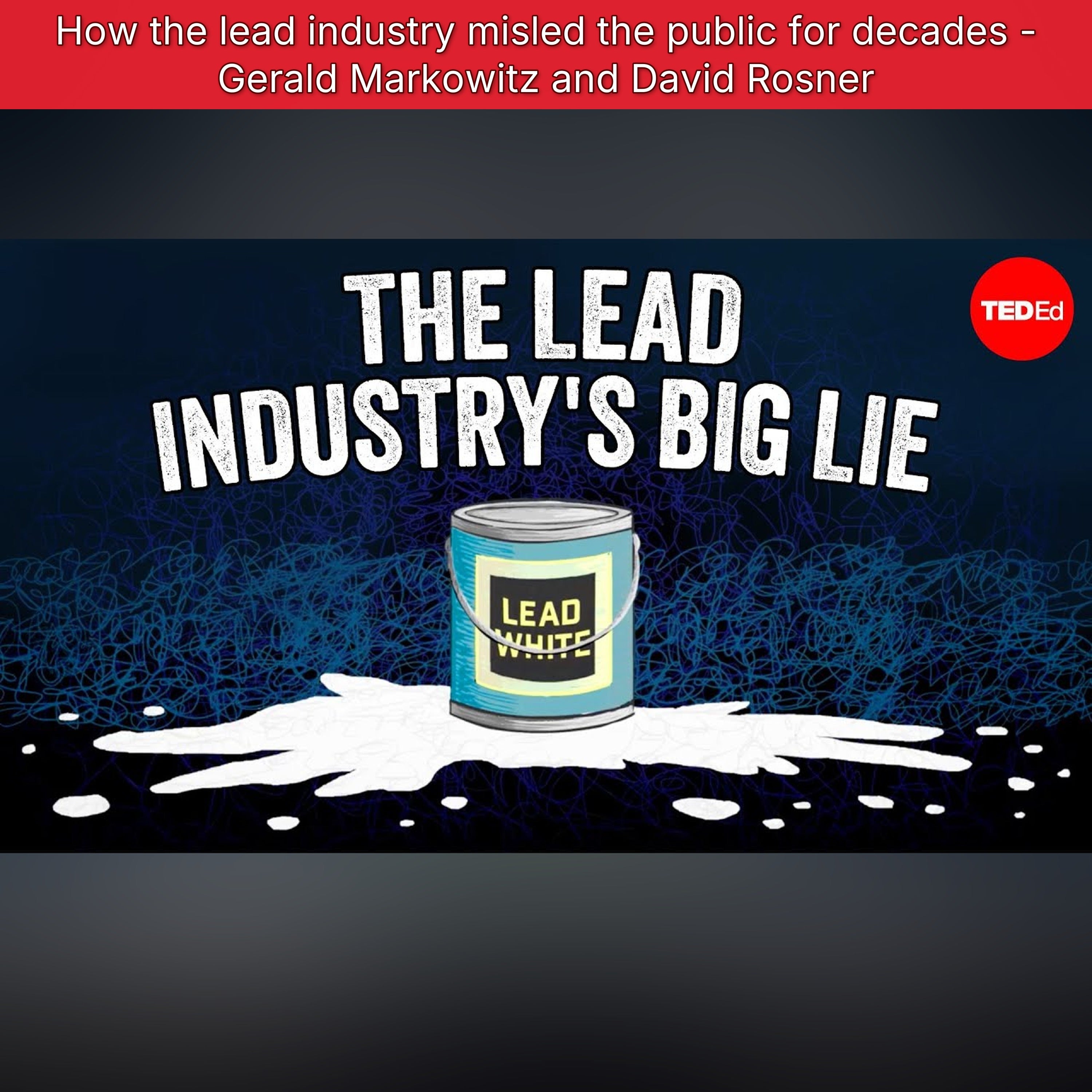
Explore the ways that lead exposure can harm the human body, and why this toxic element can be found in so many products. -- Lead is a metallic element that’s distributed across Earth’s crust. When it enters the human body, it can disrupt many critical processes that span various systems, producing a diverse set of symptoms. So, just how bad is lead for human health? And if it’s really that dangerous, how did it get into so many products? Gerald Markowitz and David Rosner dig into the lethal history of lead. Lesson by Gerald Markowitz and David Rosner, directed by Tim Rauch. Support Our Non-Profit Mission ---------------------------------------------- Support us on Patreon: http://bit.ly/TEDEdPatreon Check out our merch: http://bit.ly/TEDEDShop ---------------------------------------------- Connect With Us ---------------------------------------------- Sign up for our newsletter: http://bit.ly/TEDEdNewsletter Find us on Twitter: http://bit.ly/TEDEdTwitter Peep us on Instagram: http://b
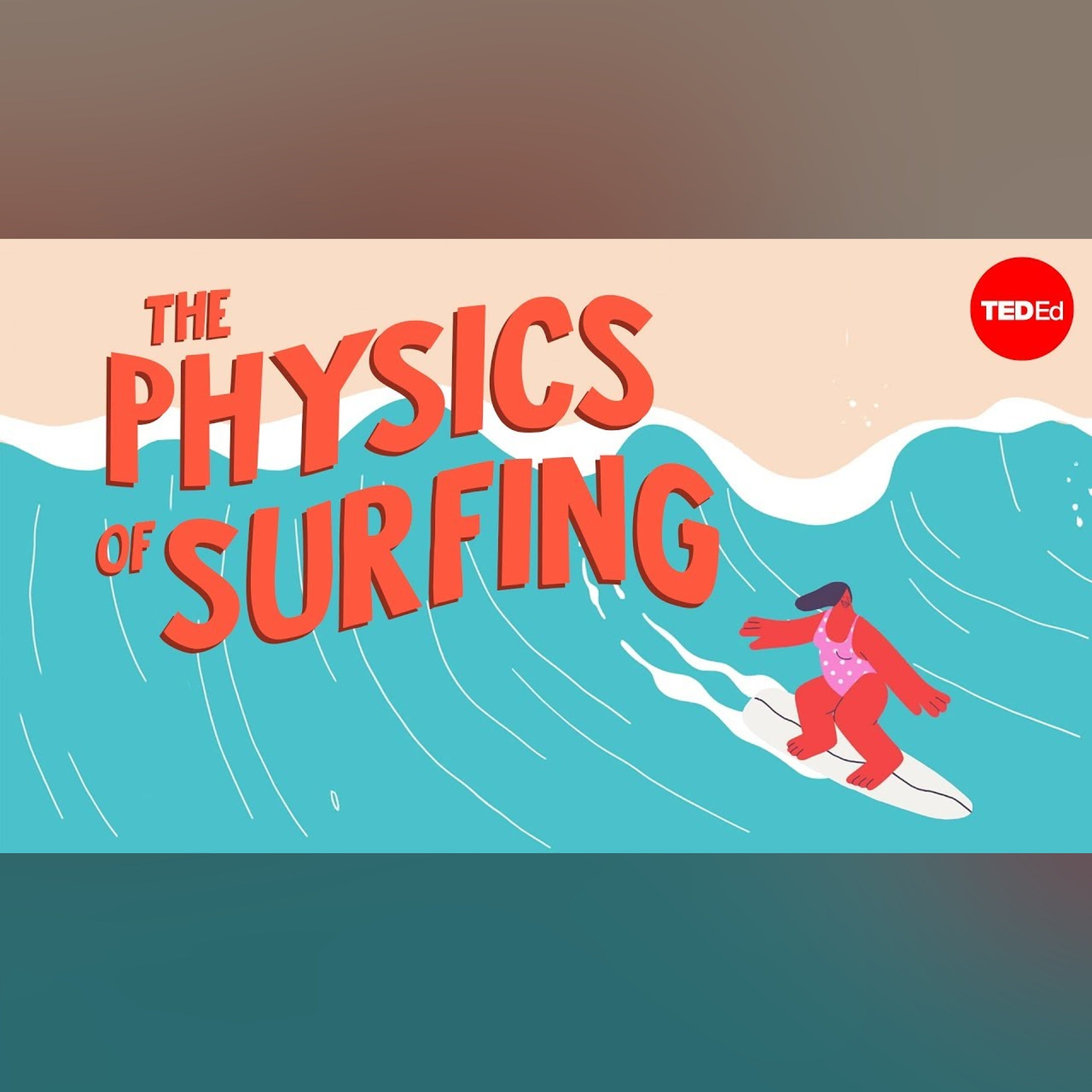
Wondering how you can catch the perfect wave? Dive into the fascinating and complex physics of surfing. Uploaded 11-03-19 -- Whether or not you realize it, surfers are masters of complicated physics. The science of surfing begins as soon as a board first hits the water. Surfers may not be thinking about weather patterns in the Pacific, tectonic geology or fluid mechanics, but the art of catching the perfect wave relies on all these things and more. Nick Pizzo dives into the gnarly physics that make surfing possible. Lesson by Nick Pizzo, directed by Wonderlust. Sign up for our newsletter: http://bit.ly/TEDEdNewsletter Support us on Patreon: http://bit.ly/TEDEdPatreon Find us on Twitter: http://bit.ly/TEDEdTwitter Peep us on Instagram: http://bit.ly/TEDEdInstagram View full lesson: https://ed.ted.com/lessons/the-physics-of-surfing-nick-pizzo Thank you so much to our patrons for your support! Without you this video would not be possible! Pavel Zalevskiy, Yankai Liu, Duo Xu, Ghassan Alhaz