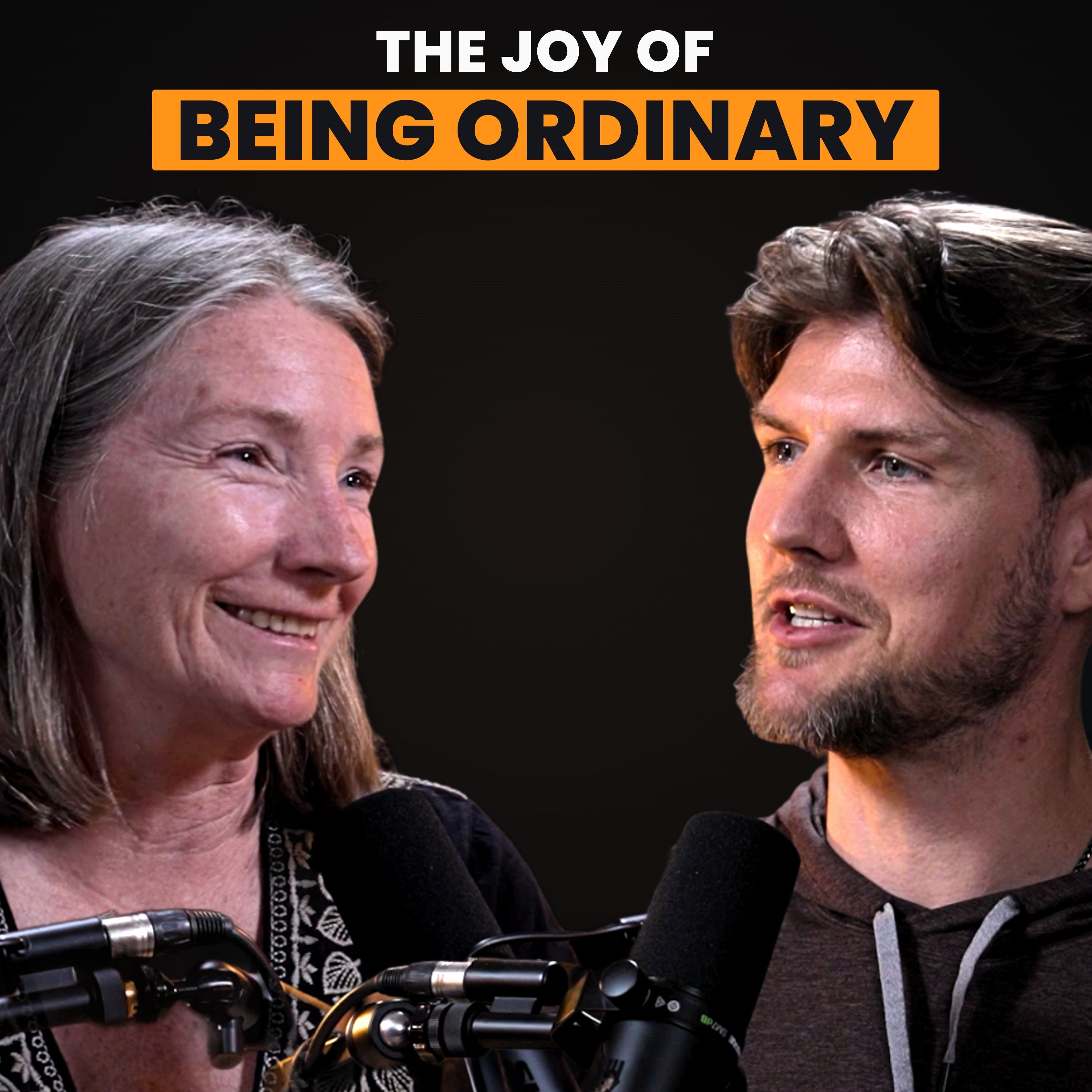
Many of us carry a quiet terror of being ordinary. While it can drive us toward constant achievement, it also makes us feel uniquely broken, or leave us feeling like no one ever truly gets us. In this episode, Brett sits down with Tara to explore the three faces of the need to be special, where they come from, and what becomes possible when we let the trap door drop out beneath them. They explore why this pattern is at its heart a relational wound, why the strategies that protected us as kids leave us profoundly isolated as adults, and how welcoming our ordinariness can paradoxically open us to an extraordinariness we've been missing all along. Together, they explore: The three faces of needing to be special: superlative achievement, unique brokenness, and I'm-just-different How to recognize this pattern in yourself Why this is fundamentally a relational wound, and a beautiful protection a young mind devised The way family stories and school culture can pass this pattern down How the p
"Why can't I get any movement in my life?" Joe hears the real question underneath and asks him to do something unusual: say everything the voice in his head says, out loud, to Joe, using Joe's name. Then Joe answers back. What follows shows three ways to relate to a voice you can't shut off — respond to it, fact-check it, and notice it hasn't worked in 40 years. → If the voice in your head is always bracing, judging, and rehearsing, the Connection Course is three weeks of live practice in relating to yourself, and everyone else, differently: https://yt.artofaccomplishment.com/rapid-coachinginner-critic → A game based on rapid coaching, try it here: https://yt.artofaccomplishment.com/game-rapid-coaching Hosted by Simplecast, an AdsWizz company.
Many people with high empathy experience it as a burden, like getting overwhelmed in crowds, losing themselves in others' emotions, feeling exhausted by social situations. But what if empathy itself isn't the problem? In this episode, Joe and Alexa explore how to turn empathy from something that drains you into one of your greatest superpowers. Joe draws distinctions between empathy, sensitivity, and porousness, and traces how childhood dynamics can shape how we use (and overuse) our empathetic capacity. They explore why the path forward isn't to shut empathy down but to develop the self-referencing, boundary-setting, and clarity that lets it flow without catching. Together, they explore: The important distinction between empathy, sensitivity, and porousness Why highly empathetic people often feel the thing underneath the thing (the fear beneath the anger) The question that cuts through confusion: "Is this mine or is this someone else's?" How your empathy shows you exactly where your u