Li-FT Power CEO Francis MacDonald joins Trevor Hall on Mining Stock Daily to discuss the company's transition from lithium exploration toward mine development and potential production. The conversation focuses on Li-FT's binding option agreement to acquire the former Renard diamond mine in Quebec, where existing infrastructure and processing facilities could significantly reduce capital requirements for the nearby Adina Lithium Project. MacDonald outlines the potential economic advantages of repurposing Renard, the company's goal of achieving first lithium concentrate production in 2030, and upcoming feasibility milestones. The discussion also covers new drill results from the Yellowknife Lithium Project in the Northwest Territories, plans for an initial economic assessment, and how Li-FT is prioritizing capital across its growing portfolio of lithium assets.
How divided government, state regulation, and local opposition to data centers could reshape America’s AI industry. The US midterm elections delivered surprising results. But beyond the immediate political consequences, what do they mean for AI companies, data centers, and the future of American artificial intelligence? In this solo episode of Beginner’s Guide to AI, I examine why sweeping national AI regulation may remain unlikely while political pressure moves to states, governors, utility regulators, and local communities. Texas offers an important case. New restrictions on data-center development could respond to concerns about electricity, water, pollution, and property rights. This does not necessarily mean the end of new data centers. It could mean longer approval processes, higher costs, environmental requirements, and more serious negotiations with affected communities. ️ Key questions in this episode: Will divided government preserve the federal status quo? Could state regula
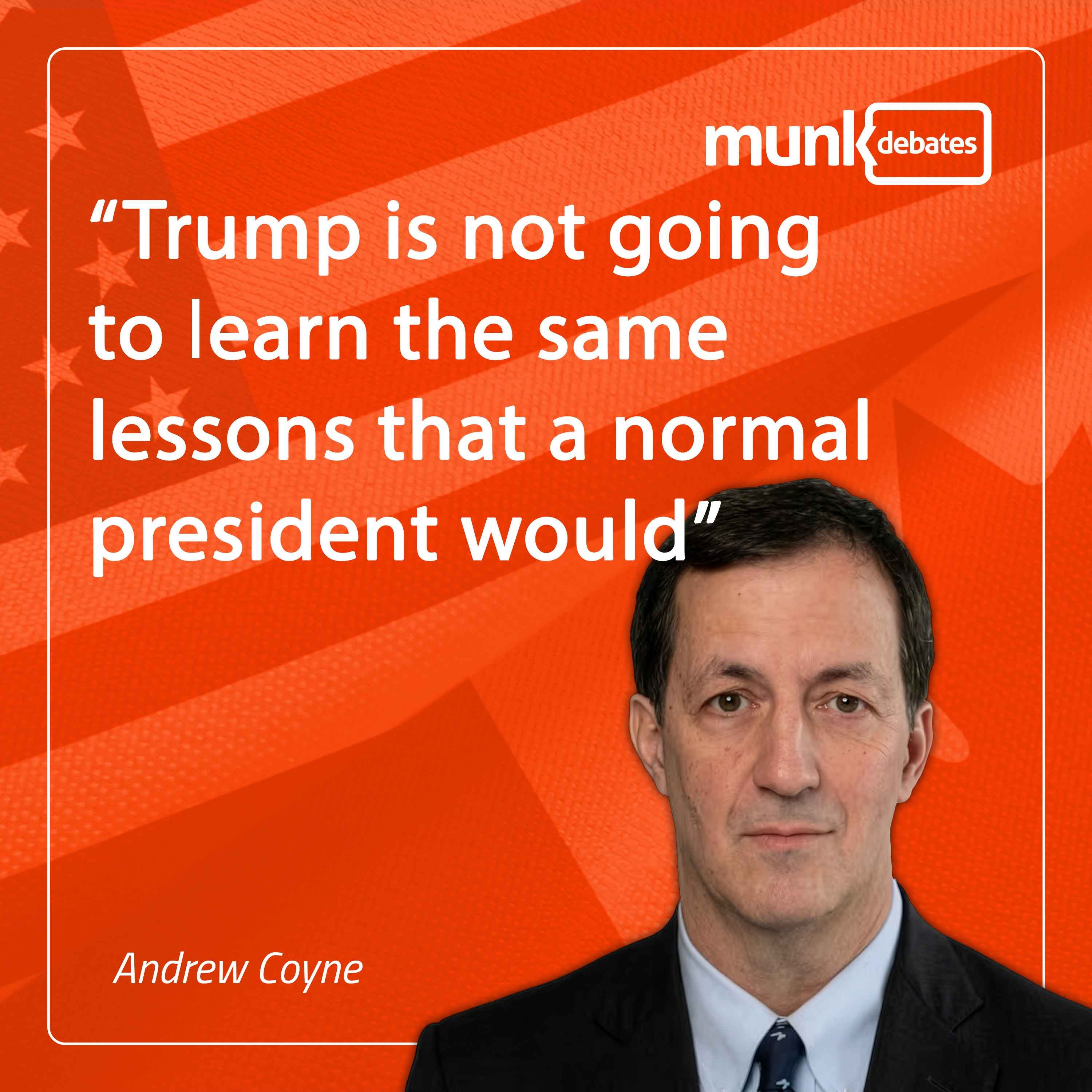
Andrew joins Rudyard to break down the U.S. election results and what they mean for the future of the Trump presidency—and for Canada. As a lame-duck president, will Trump moderate his behaviour or become even more extreme? Is Canada's hand in trade negotiations stronger today than it was 24 hours ago? And with Democrats seeking greater control over tariff policy, what might this mean for the Canada-U.S. trade relationship? Rudyard and Andrew then turn to the future of the Republican Party and Trumpism. Can Republicans rebuild, or will the movement endure beyond Trump? Andrew is less optimistic about the prospect of meaningful change, warning that “whatever succeeds Trump can still be very problematic.” Finally, they examine the role of big money in American politics. With deep-pocketed donors—particularly tech figures like Elon Musk—facing a rebuke at the polls, is there an opening for campaign finance reform? Go to www.munkdebates.com to sign up. Hosted on Acast.
Thursday 5th November 2026 Phil and NAB’s Ray Attrill, unpack a dramatic risk-on session across global financial markets following a decisive Democratic sweep in the US midterm elections. With the prospect of less in the way of military action in the Middle east crude dipped below US$94 a barrel for the first time since late September. This, combined with the US Treasury’s quarterly refunding announcement tweaking issuance guidance, fueled a powerful rally in sovereign debt that sent US 10-year Treasury yields down 7 basis points and French 10-year yields tumbling 18 basis points. Global equity markets surged in response, whilst the US dollar weakened, lifting the Australian dollar back above 70.2 US cents. Domestically, while stronger-than-expected Australian household spending data for September (+0.6%) highlighted ongoing consumer resilience ahead of a speech from RBA Assistant Governor Andrew Hauser, across the Tasman, New Zealand’s labour market surprised on the downside, with Q3
Every year, economists, property analysts and media commentators tell us where interest rates, house prices and rents are heading next. Some forecasts will be broadly correct, many will miss the mark, and almost none will anticipate the unexpected events that eventually shape our markets. Yet property investors continue searching for certainty, which is understandable when they are committing hundreds of thousands of dollars and taking on debt that may last for decades. The danger begins when a forecast designed to describe one possible future is treated as a promise. In today's show, I want to explain why precise property forecasts can create false confidence, why dramatic boom and crash predictions receive far more attention than they deserve, and how our own cognitive biases can make us vulnerable to them. I'll explain why, after more than 50 years of investing, I prefer to have expectations rather than forecasts. Expectations give me direction, while a Strategic Property Plan provi
Eiichiro Oda is a relentlessly obsessive creative genius who has devoted nearly every waking hour of his adult life to building one of the most extraordinary fictional universes ever imagined. Made possible by: Ramp: https://ramp.com (https://ramp.com/) AppLovin: https://applovin.com (https://applovin.com/) Vanta: https://vanta.com/founders
Martha MacCallum joins Brian to break down the historic midterm election results, from Abdul El-Sayed's radical victory speech in Michigan to Byron Donalds' crucial win in Florida. They also analyze the White House's foreign policy struggles with Iran, the impact of gas prices on the electorate, and why returning to America's founding principles is vital.
A historic political earthquake hits Washington and Austin as the 2026 midterms trigger a massive Democratic wave, flipping the House, the Senate, and the crown jewel of conservative politics: Texas. Brian Kilmeade breaks down the fallout from Donald Trump's reaction, the failure at the pump, and the foreign policy conflicts driving voters away. Plus, an all-star lineup joins to dissect what went wrong and where Republicans go from here, capped by an inspiring and raw conversation with NFL legend Terry Bradshaw on faith, resilience, and mental health. FEATURED GUESTS Rich Lowry – National Review Dr. Kevin Roberts – Heritage Foundation President Karl Rove – Republican Strategist Terry Bradshaw – FOX Sports Analyst, Author of “Looking For Terry” Martha MacCallum – ‘The Story’ Anchor
Guerrero v. Johnson Docket No. 25-1003 Argued: 11/4/26 Lower Court: U.S. Court of Appeals for the Fifth Circuit Cert Granted: 6/15/26 Question Presented The Anti-Terrorism and Effective Death Penalty Act of 1996 (AEDPA) prohibits successive habeas applications by state prisoners with only narrow exceptions, including for claims that “rel[y] on a new rule of constitutional law, made retroactive to cases on collateral review by the Supreme Court, that was previously unavailable.” 28 U.S.C. § 2244(b)(2)(A). Near-identical language allows federal prisoners to file a successive habeas motion that contains “a new rule of constitutional law, made retroactive to cases on collateral review by the Supreme Court, that was previously unavailable.” Id. § 2255(h)(2). The courts of appeals are divided over whether claims rely on “a new rule . . . that was previously unavailable” when a claim based on the rule could have been raised in an earlier federal habeas petition but would not have succeeded. T
Featuring James Wrigley from First Financial. Looking to GROW your wealth: https://henderson.com.au/ Keen to START/SCALE your portfolio: https://calendly.com/jackhendersonproperty/15min Listen to EXPERT advice: https://open.spotify.com/show/7CWEEu0rCWgtxeSOak65Hm I'm Jack Henderson, Founder and Director of Henderson Advocacy - one of Australia's fastest growing wealth creation firms. In 2015, I purchased my first property at 18 years old and over the past decade, have grown my portfolio to over $70 million in assets. My journey has been all about pushing past fear and taking big risks. At 15, I left school without a clear plan because I knew the traditional path wasn’t for me. That decision led me to work in construction and eventually into real estate, where I found a chance to build something real. By 18, I bought my first property. Was it risky? Absolutely, but it was worth it. Real growth happens when you don’t let fear stop you.
In this special live event recording in Adelaide, Julia Gillard chairs an exceptional panel to discuss how we can all join together to fight misogyny. Julia is joined by Ben Vasiliou, CEO of The Man Cave, Chanel Contos, CEO of Teach Us Consent and Professor Michelle Ryan, Director of the Global Institute of Women’s Leadership at ANU. The panel delves into how misogyny affects and constrains both men and women who feel forced to conform to particular gender stereotypes, and how vital it is that we join forces on research, advocacy and outreach. Show notes: To learn more about the Global Institute for Women’s Leadership visit https://giwl.anu.edu.au/ To learn more about the work of The Man Cave visit https://themancave.life/ To learn more about the work of Teach Us Consent visit https://www.teachusconsent.com/ Hosted on Acast. See acast.com/privacy (https://acast.com/privacy) for more information.
What if the next financial crisis is already hiding inside your 401(k)? Nearly $500 BILLION in AI-related debt. Rising default concerns on Wall Street. And the same tech giants fueling this boom are sitting at the top of millions of Americans' retirement portfolios. But here's what most people don't realize: You don't have to own a single AI stock to be exposed. In this video, Taylor Kenney reveals where the hidden risks are building, how they could spread through the financial system, and why the warning signs look disturbingly familiar to 2008. Questions on Protecting Your Wealth with Gold & Silver? Schedule a Strategy Call Here ️ https://calendly.com/itmtrading/podcast or Call 866-349-3310 STAY IN TOUCH WITH US ⬇️ Schedule a Strategy Session: 866-349-3310 Email us at [email protected] Official Homepage http://www.itmtrading.com (http://www.itmtrading.com/) ITM Trading Twitter: https://twitter.com/itmtrading (https://www.youtube.com/redirect?event=video_description&q=https%3A%2
Residential investors can wait for the market to do the hard work. Commercial investors who want growth usually have to build it themselves. Victor Kumar reveals the levers that lift a property's value and how recovering a few thousand dollars in outgoings can add six figures to a valuation. Buying a commercial property is the start. What you do next shapes its value. In Part 5 of the Post Budget Guide to Commercial Property Investing, Phil Tarrant and Victor Kumar of Right Property Group ask how you actively improve a property's income and value once you own it. Victor breaks down why commercial value is a function of its income, and how rent, lease length, tenant quality, recoverable outgoings, and vacancy can each move a valuation. They run through the strategies behind improving a commercial valuation: buying dependable income and holding, restructuring leases, repositioning the tenant mix, upgrading the building, and subdividing without disturbing a single tenant. They then analys
Scott Wapner and the Investment Committee discuss the post-midterm playbook with stocks surging. Bill Baruch details his latest trades. Calls of the Day include debates on Lockheed Martin and Edwards Lifesciences. Mike Santoli reacts to the latest market moves. The Futures Trade highlights the pop in gold prices. Investment Committee Disclosures (https://cnb.cx/3HSe4EV) Hosted by Simplecast, an AdsWizz company.
Democrats have flipped the House and the Senate (https://www.cnbc.com/2026/11/03/midterm-elections-2026-live-updates.html) in a “blue tsunami” that swept the nation (https://www.cnbc.com/2026/11/04/2026-midterms-investments.html). Pollster and strategist Frank Luntz shares his own exit polling data and considers the motivating factors for many Republicans who voted Democrat in the midterms. Luntz argues, the votes were more a rejection of the GOP than they were an embrace of the left. Then, one Democrat fresh off his reelection win: Maryland Governor Wes Moore. Considered a potential candidate for the 2028 election, Governor Moore discusses the future of the Democratic Party and the hopes of “exhausted” voters. Plus, CNBC’s Megan Cassella reports from Washington, and Robert Frank reports on the voter consensus on taxing the wealthy. Megan Cassella - 11:14 Frank Luntz- 24:29 Gov. Wes Moore - 38:35 In this episode: Frank Luntz, @FrankLuntz (https://x.com/FrankLuntz) Gov. Wes Moore, @iamw
Will Gosse, CEO of BresicWhitney, leads a team of more than 200 people at just 33. Last financial year, the business sold approximately 1,400 properties worth $3.5 billion. Having started as a sales associate and spent nearly 13 years with the business, Will shares his journey into leadership, how he navigates self-doubt, and why earning trust matters more than being liked. We unpack how BresicWhitney is using AI to connect buyers with properties, what it takes to deliver a better customer experience, and how Will balances leading a major real estate business with being a dad to young twins. For anyone in real estate, this is a conversation about leading through change, staying grounded and building a business that gives people a reason to choose you.
Democrats delivered a stronger-than-expected performance in the midterms. Our Head of Public Policy Research Ariana Salvatore examines what the results could mean for Washington’s policy priorities, the balance of political power and the investment landscape. ----- Transcript ----- Ariana Salvatore: Welcome to Thoughts on the Market. I’m Ariana Salvatore, Head of Public Policy Research at Morgan Stanley. Today, I'll be talking about the results of the U.S. midterm elections: what the Democratic party's stronger than expected performance means for Washington, and how investors should be thinking about the implications. It's Wednesday, November 4th, at 10am in New York. Yesterday's elections delivered a much stronger result for Democrats than most had anticipated. Beyond the headline outcomes, Democrats expanded their margins in traditionally Republican areas and demonstrated a level of competitiveness in places that would've seemed unlikely just a few months ago. But for investors, the
Goldman Sachs President and COO John Waldron says clients have a cautiously optimistic outlook and the surge in M&A is a sign of that confidence. In the Exchanges podcast, he also discusses opportunities in asset and wealth management and how AI can help the firm serve clients better. Key takeaways: The momentum in M&A should continue: Corporate M&A could rise 30% to 35% in 2026, supported by strong pipelines for dealmaking and companies pursuing both scale and sharper strategic focus. Investors are optimistic about economic growth in the US and Asia: While economic expansion in Europe is more muted, Waldron says the environment there is constructive and may be better than “the narrative suggests.” Firm strategy, recent acquisitions, and AI are important to the firm: Waldron says targeted acquisitions are building strength and capabilities in asset management, and discusses AI use at the firm. This episode was recorded on November 3, 2026. The material provided is intended for informat
In this episode of America’s Frontlines: Are foreign diplomats becoming targets of intimidation in Iran? Colonel Denny and Matt examine France's allegations that Iranian security agents harassed and intimidated a senior French diplomat in Tehran. They discuss the growing tensions between Paris and Tehran, the protections afforded to diplomats under international law, and the troubling questions this incident raises about diplomatic immunity and the safety of foreign representatives operating in increasingly hostile environments. Why is Europe urging families to prepare to survive for at least 72 hours without outside assistance? Colonel Denny and Matt explore the European Union's emergency preparedness initiative and the growing recognition that ordinary citizens may need to be self-sufficient during the early stages of a crisis. They also examine reports of increased Chinese and Russian military activity near Japan, significant changes in Pentagon leadership amid tensions with Iran, a
Retire Right is brought to you by Tallowwood Wealth Advice. Specialist retirement financial advisers. In this Q&A Glen and financial adviser Nathan Fradley discuss: retiring at 63 with a younger spouse still working: should we live off our cash or top up super? valuation risk in super: what to know about private credit, private equity and unlisted assets why would a private credit fund get frozen? would you keep a small home loan as protection against scammers? exiting a large property portfolio at retirement can a market crash help you get more into pension phase under the transfer balance cap? We may also change the names of questioners for privacy. Hosted on Acast.
In this episode Glen chats with Rachel who has a young family, two investment properties and a dream of a bigger home on some land. She wants to know whether to keep investing for the next three to five years before selling down to upgrade, or to act sooner and carry a bit more debt. Need a mortgage broker? Need to review your personal insurances? Apply to be a guest! https://apply.moneypodcast.com.au/ Join our Facebook community: https://bit.ly/m3fbgroup Watch us on Youtube:https://www.youtube.com/@m3.podcast We may also change the names of questioners for privacy. Hosted on Acast.
The race toward $1 MILLION Bitcoin is taking a bipartisan turn as Republican Byron Donalds wins Florida's governor race and Democrat James Talarico wins Texas's U.S. Senate race. Both have demonstrated support for Bitcoin, while Texas has already allocated $10 MILLION to its Strategic Bitcoin Reserve and invested $5 MILLION in Bitcoin ETF exposure. Meanwhile, President Trump's Strategic Bitcoin Reserve and Senator Cynthia Lummis's BITCOIN Act, proposing the accumulation of 1 MILLION BTC, reveal how government Bitcoin policy could evolve. Could competition between states, Washington, and Wall Street accelerate Bitcoin's journey toward $1 MILLION and beyond? Bitcoin News Alerts breaks down the latest developments and what they could mean for the future of BTC. Prefer video?
Heather Rae El Moussa is showing houses on Selling Sunset and flipping them on the flip-off. Her and her husband, Tarek, are the ultimate real estate power couple. Today, Heather joins Money Rehab to tell us: Some of the wildest stories from flipping About her house getting burglarized while she was gone The hidden tax of sharing your life on social media And Where she would invest money in a house before flipping it ----------------------- MORE FROM NICOLE LAPIN: Youtube: / @moneyrehabshow Instagram: / moneyrehab ️ TikTok: / nicolelapin Nicole's website: https://nicolelapin.com OTHER THINGS WE DO: Private Wealth Collective: https://privatewealthcollective.com The Money School: https://themoneyschool.com