J3U Coach & 9x Coach's Award Winner https://www.instagram.com/lacey_pruitt APR Health Solutions Peptides: www.aprhealthsolutions.com - code nyle Optimize HRT Clinic: https://members.optimize-hp.com - code nyle Merch: https://www.aykons.com/nyle Please share this episode if you liked it. To support the podcast, the best cost-free way is to subscribe and please rate the podcast 5* wherever you find your podcasts. Thanks for watching. To be part of any Q&A, follow trensparentpodcast or nylenayga on instagram and watch for Q&A prompts on the story https://www.instagram.com/trensparentpodcast/ Huge Supplements (Protein, Pre, Defend Cycle Support, Utilize GDA, Vital, Astragalus, Citrus Bergamot): https://www.hugesupplements.com/discount/NYLE YoungLA Clothes: https://www.youngla.com/discount/nyle Code ‘nyle’ to support the podcast Let's chat about the Podcast: Instagram: https://www.instagram.com/trensparentpodcast/ TikTok: https://www.tiktok.com/@transparentpodcast Personalized Bodybuilding
How many times have you decided that this time will be different? New week, new routine, new promises to yourself. And then life happens, motivation disappears, and somehow you're back at the beginning again. I think we've got discipline all wrong. We've made it into this rather miserable exercise in self-punishment. Something reserved for people with extraordinary willpower, perfect morning routines and an apparently endless appetite for doing things they don't want to do. But the natural world tells a very different story. Birds migrate. Animals carve paths through forests. Trees know when to surrender their leaves and when to begin again. None of them are waiting for a Monday morning or a sudden burst of motivation. This week on 9 Lives, we're looking at discipline through a slightly stranger lens. Seven laws, a little neuroscience, some wisdom from the animal kingdom, and the forgotten power of ritual. We'll explore why habits become automatic, how our surroundings shape our behavi
What happens when two teachers respond completely differently to the same pupil's behaviour - and both believe they're doing the right thing? One teacher follows the school's behaviour policy and issues a warning. Another offers additional support because they believe the pupil is struggling. So who's right? And how can school leaders create consistency without taking away teachers' professional judgement? In this week's episode of School Behaviour Secrets, you'll learn why consistency doesn't necessarily mean treating every child identically, and how schools can distinguish between purposeful adaptations and staff simply doing their own thing. You'll discover: The important differences between fairness, sameness and consistency. When different responses to the same behaviour can both be appropriate. What school leaders should standardise across classrooms, while allowing for individual pupil needs. A practical staff meeting activity to help teachers develop a shared approach to behavi
Adam Savage walks through two spectacular examples of profound scientific discoveries that came from simple, creative methods anyone could have followed -- Eratosthenes' calculation of the Earth's circumference around 200 BC and Hippolyte Fizeau's measurement of the speed of light in 1849.
Are we all really 'a bit OCD'? Or is obsessive-compulsive disorder something far more complex than the way we often talk about it? In Part 1 of Figuring It Out, Dr Alex George and research scientist Dr Kathryn Bates explore what OCD really is, why it's so much more than being tidy or organised, and what living with intrusive thoughts and compulsions can actually feel like. They unpack the cycle of obsessive thoughts, anxiety and compulsive behaviours, why it can be so difficult to break, and what the science tells us about the causes of OCD, from genetics and brain circuits to life experiences. They also explore why using the term 'OCD' casually can be harmful, the different ways the condition can show up, and what support and treatments are available. No lectures. No easy answers. Just two people trying their best to figure it out. Part One tackles the Big Question. Part Two answers a real dilemma sent in by a listener. Produced by Kathryn Bates We'd love to hear from you. Email us at
In tonight’s sleep hypnosis, we revisit a calming session from the archive, guided by Jessica. Float along a peaceful river as you reflect on change, letting go and the transitions life asks us to move through with greater acceptance. Jayni will be back soon with a brand new sleep hypnosis Want more Sleep Magic? Join Team Magic & Enjoy: • 2 bonus episodes each month • Ad-free listening To subscribe Apple Podcasts: Join directly via the show page All other listeners: Subscribe via Supercast Spread the Magic Stay Connected Follow Sleepiest and join the Team Magic community: Instagram: @sleepiestapp TikTok: @sleepiestapp Need help with your listening experience? Reach out to Team Magic via [email protected]. About Sleep Magic Sleep Magic Looking for the brands featured on the show? You’ll find all the latest sponsor links and offers here:
In which John Green teaches you about the Great Depression. So, everybody knows that the Great Depression started with the stock market crash in 1929, right? Not exactly. The Depression happened after the stock market crash, but wasn't caused by the crash. John will teach you about how the depression started, what Herbert Hoover tried to do to fix it, and why those efforts failed. Hey teachers and students - Check out CommonLit's free collection of reading passages and curriculum resources to learn more about the events of this episode. The Roaring Twenties ended with The Great Depression, a period of soul-searching for the United States dealing with a failing middle class: https://www.commonlit.org/texts/the-great-depression The issues of the Great Depression were made more difficult by the agricultural crisis known as the Dust Bowl: https://www.commonlit.org/texts/excerpt-from-on-drought-conditions Learn more about the Great Depression in episode #28 of Crash Course Black American Hi
What does it take to live in the center of worldly power and culture without letting Babylon change who you are? In the Book of Daniel, four Hebrew youths are carried away captive, stripped of their names, and pressured to assimilate. Instead of bowing, they purposed in their hearts to stand true—proving that when you refuse to worship the idols of your day, the Savior Himself will walk with you through the fire. Summary: In this inspiring study of the Book of Daniel, we follow the remarkable life and apocalyptic visions of a prophet who lived through the entire seventy-year Babylonian exile into the reign of Cyrus of Persia. Contemporaries with Ezekiel in the camps, Jeremiah in Jerusalem, and Lehi in the Arabian wilderness, Daniel and his companions show how disciples can flourish in enemy territory without ever compromising their covenants. Resisting Babylonification: In Daniel 1, Babylon targets the rising generation, changing their names and offering the king's meat and wine. We ex
So today Craig is going to look at political ideology in America. We're going to focus on liberals and conservatives and talk about the influencers of both of these viewpoints. Now, it's important to remember that political ideologies don't always perfectly correspond with political parties, and this correspondence becomes less and less likely over time. So, sure we can say that Democrats tend to be liberal and Republicans tend to be conservative, but we're not going to be talking about political parties in this episode. It's also important to note, that there are going to be a lot of generalizations here, as most peoples' ideologies fall on a spectrum, but we're going to try our best *crosses fingers* to summarize the most commonly held viewpoints for each of these positions as they are used pretty frequently in discussions of American politics. Produced in collaboration with PBS Digital Studios: http://youtube.com/pbsdigitalstudios Support is provided by Voqal: http://www.voqal.org (
Let the day go, and settle in for one long, gentle journey into the earliest ages of humanity. Tonight: three prophets, three peoples, and one message. Nuh (AS), who called his people by night and by day for nine and a half centuries, and built a ship far from any sea. Hud (AS), sent to the mighty people of Ad and their city of towering pillars. And Salih (AS), sent to the people of Thamud, who carved their homes out of the mountains, and were given a camel as a sign from Allah. A story about patience, sincere advice, and a Lord who is near and answers: the Almighty, and the Most Merciful. ⏱ CHAPTERS 0:00 Settling in 2:23 The Man Who Never Stopped Calling 7:36 By Night and by Day 13:31 A Ship on Dry Land 17:29 The Flood 23:36 Peace upon the Mountain 29:09 The People of the Towering Pillars 35:19 The Cloud That Was Not Rain 40:44 The Carvers of the Mountains 45:50 The She-Camel of Allah 49:32 The Night Plot and the Mighty Cry 56:01 One Message 1:00:24 Closing reflection & bedtime sunnah
You’ve probably heard of mRNA, thanks to the COVID-19 vaccine. But what is mRNA exactly? In this episode of Crash Course Biology, we learn about the role of messenger RNA in living things and how it decodes our DNA instruction manual through transcription. Introduction: mRNA Vaccines 00:00 Messenger RNA 1:21 Transcription 3:48 Processing & Splicing 5:05 The Central Dogma 7:00 Alternative Splicing 8:39 Review & Credits 10:46 This series was produced in collaboration with HHMI BioInteractive, committed to empowering educators and inspiring students with engaging, accessible, and quality classroom resources. Visit https://BioInteractive.org/CrashCourse (https://biointeractive.org/CrashCourse) for more information. Are you an educator looking for what NGSS Standards are covered in this episode? Check out our Educator Standards Database for Biology here: https://www.thecrashcourse.com/biologystandards Check out our Biology playlist here: https://www.youtube.com/playlist?list=PL8dPuuaLjXtPW_
Based on Acts 9:36–42 and various supporting biblical passages, this narrative highlights the inspiring life and legacy of Tabitha, a devoted disciple from Joppa also recognized as Dorcas. Known widely for her generosity toward the impoverished and her constant creation of handmade garments for vulnerable widows, her sudden illness and tragic passing deeply devastated her community. Gifts & Purpose: What God Placed Within Us An exploration of the gifts, abilities, and purpose woven into human lives through biblical stories and Scripture. From people who struggled to recognize their calling to those who discovered their gifts in unexpected circumstances, this series looks at how God works through different individuals, the meaning of our talents, and the role purpose plays in the stories of our lives. Every contribution counts. Thank you for being part of our journey!
Samuel's story demonstrates that growth involves listening, learning, guidance and responsibility. He started as a young servant who did not understand who was calling him. He eventually became a recognised prophet in Israel. Reflection question: Are you giving yourself enough time, guidance and discipline to understand the direction your life is taking? Central message: Discovering your direction is a process. Remain teachable, seek wisdom and be willing to respond when responsibility comes. Gifts & Purpose: What God Placed Within Us An exploration of the gifts, abilities, and purpose woven into human lives through biblical stories and Scripture. From people who struggled to recognize their calling to those who discovered their gifts in unexpected circumstances, this series looks at how God works through different individuals, the meaning of our talents, and the role purpose plays in the stories of our lives. Every contribution counts. Thank you for being part of our journey!
Gifts & Purpose: What God Placed Within Us An exploration of the gifts, abilities, and purpose woven into human lives through biblical stories and Scripture. There are moments when people have the ability to do something meaningful but hesitate because of fear. You might have an idea but fear criticism. You might qualify for an opportunity but doubt whether you are capable. You might recognise a problem but wait for someone else to address it. Deborah's story challenges the assumption that having an ability is enough. Sometimes an ability comes with the responsibility to act. Deborah was already serving as a judge. She was not waiting for someone to give her permission to occupy a meaningful role. You were given something. The question is: What are you doing with it? Every contribution counts. Thank you for being part of our journey!
Luke 16:10 teaches about faithfulness in small responsibilities. Before constantly demanding more, consider how well you are managing what is currently in your hands. The feeding of the five thousand reveals Jesus' miraculous provision and points to His identity. It also gives us an opportunity to reflect on how we view limited resources and the importance of making what is available useful. Gifts & Purpose: What God Placed Within Us An exploration of the gifts, abilities, and purpose woven into human lives through biblical stories and Scripture. From people who struggled to recognize their calling to those who discovered their gifts in unexpected circumstances, this series looks at how God works through different individuals, the meaning of our talents, and the role purpose plays in the stories of our lives. Reflection question: What are constantly saying you do not have, while overlooking what is already available to you? Central message: Do not dismiss what you have simply because i
God specifically called Bezalel by name and filled him with the Spirit of God, giving him wisdom, understanding, knowledge and skill in craftsmanship. He was also given the ability to teach others. Think about that for a moment. Bezalel's assignment involved designing, building, carving and creating. His craftsmanship was not presented as an insignificant ability. It was an important part of the work God had instructed Moses to accomplish. Bezalel teaches us that a person's contribution is not determined by how visible their work is. God specifically appointed and equipped him for a task that required creativity, technical ability and craftsmanship. Reflection question: What ability have you been overlooking simply because it does not look like somebody else's gift? Central message: Your gift does not have to look like someone else's to be valuable. Recognise it, develop it and use it responsibly. Every contribution counts. Thank you for being part of our journey!
View full lesson: http://ed.ted.com/lessons/the-fundamentals-of-space-time-part-3-andrew-pontzen-and-tom-whyntie Uploaded 22-05-14 View part 1: http://ed.ted.com/lessons/the-fundamentals-of-space-time-part-1-andrew-pontzen-and-tom-whyntie View part 2: http://ed.ted.com/lessons/the-fundamentals-of-space-time-part-2-andrew-pontzen-and-tom-whyntie In the first two lessons of this series on space-time, we've dealt with objects moving at constant speeds, with straight world lines, in space-time. But what happens when you throw gravity into the mix? In this third and final lesson, CERN scientists Andrew Pontzen and Tom Whyntie explore what gravity means for space-time -- or rather, what space-time means for gravity. Lesson by Andrew Pontzen and Tom Whyntie, animation by Giant Animation Studios.
We picture trafficking as a stranger in a van, but many child victims are trafficked by the people who are supposed to protect them: a parent, an uncle, a grandparent. In this episode, we look at how familial trafficking works, why it stays hidden for years, and why victims so rarely identify what happened to them as trafficking. We explore the psychology of loyalty, shame, and survival that keeps children silent. We also cover the warning signs teachers, doctors, and neighbors miss, and what it takes to finally break the cycle.
Next stop in our tour of your sensory systems? VISION. With a little help from an optical illusion, we take a look inside your eyes to try to figure out how your sense of vision works -- and how it can be tricked. Pssst... we made flashcards to help you review the content in this episode! Find them on the free Crash Course App! Download it here for Apple Devices: https://apple.co/3d4eyZo Download it here for Android Devices: https://bit.ly/2SrDulJ Chapters: Introduction: Optical Illusions 00:00 How Does Light Work? 1:31 Structure of the Eye 2:31 Layers of the Eye: Fibrous, Vascular, and Inner Layers 3:33 The Retina 4:56 Rods and Cones 6:07 How do Optical Illusions Work? 7:15 Review 8:33 Credits 9:14 *** Thanks to the following Patrons for their generous monthly contributions that help keep Crash Course free for everyone forever: Mark Brouwer, Jan Schmid, Steve Marshall, Anna-Ester Volozh, Sandra Aft, Brad Wardell, Christian Ludvigsen, Robert Kunz, Jason, A Saslow, Jacob Ash, Jeffrey Th
We don’t always say exactly what we mean, and yet we’re still pretty good at understanding each other. That’s because we don’t just use meaning to figure out what’s going on, we also use context. This episode of Crash Course Linguistics is all about pragmatics, the area of linguistics that deals with context. We’ll cover the four main assumptions we make about context in language, also known as Grice’s Maxims, as well as the ways that languages can use grammar to convey politeness, and the different types of conversational styles within and between languages. Want even more linguistics? Check out the Lingthusiasm podcast, hosted by the writers of Crash Course Linguistics: https://lingthusiasm.com/ Carefree by Kevin MacLeod Link: https://incompetech.filmmusic.io/song/3476-carefree License: http://creativecommons.org/licenses/by/4.0/ *** Watch our videos and review your learning with the Crash Course App! Download here for Apple Devices: https://apple.co/3d4eyZo Download here for Android
JOIN THE TIME AND LIFE MASTERY PROGRAMME HERE Before we begin this week, I would like to share some important information. I will be retiring my Time and Life Mastery course on the 16th of November. Well, I say “retiring”, but what is actually happening is that it is changing. It will no longer be offered as a standalone course, but will become a fully supported programme with two live training sessions where you get help in discovering what you want, and access to me to guide you through the exercises. The programme will run twice a year in January and November, and this will begin next January. Outside of those times, only those of you registered in the programme will have access to the materials. And, the good news: before Time and Life Mastery goes into shutdown next week, you can join and save $170.00 off the normal price. Right now, you can get Time and Life Mastery for just $125.00. This includes the course, the materials, and the live training sessions in two months’ time (yes,
In which Hank blows our minds with the different kinds of solids out there and talks about why they're all different and have different properties. Today, you'll learn about amorphous and crystalline solids, types of crystalline solids, types of crystalline atomic solids, properties of each type of solid, and that the properties depend on the bond types. Pssst... we made flashcards to help you review the content in this episode! Find them on the free Crash Course App! Download it here for Apple Devices: https://apple.co/3d4eyZo Download it here for Android Devices: https://bit.ly/2SrDulJ -- Table of Contents Amorphous and Crystalline Solids 1:27 Types of Crystalline Solids 4:07 Types of Crystalline Atomic Solids 5:17 Properties of Each Type of Solid 4:16 Properties Depend on Bond Types 6:17 -- Crash Course is on Patreon! Want to find Crash Course elsewhere on the internet? Facebook - http://www.facebook.com/YouTubeCrashCourse Twitter - http://www.twitter.com/TheCrashCourse Instagram -
You don't need to plan an exotic trip to find creative inspiration. Just look up, says Gavin Pretor-Pinney, founder of the Cloud Appreciation Society. As he shares charming photos of nature's finest aerial architecture, Pretor-Pinney calls for us all to take a step off the digital treadmill, lie back and admire the beauty in the sky above. Uploaded 16-08-13 Talk by Gavin Pretor-Pinney.
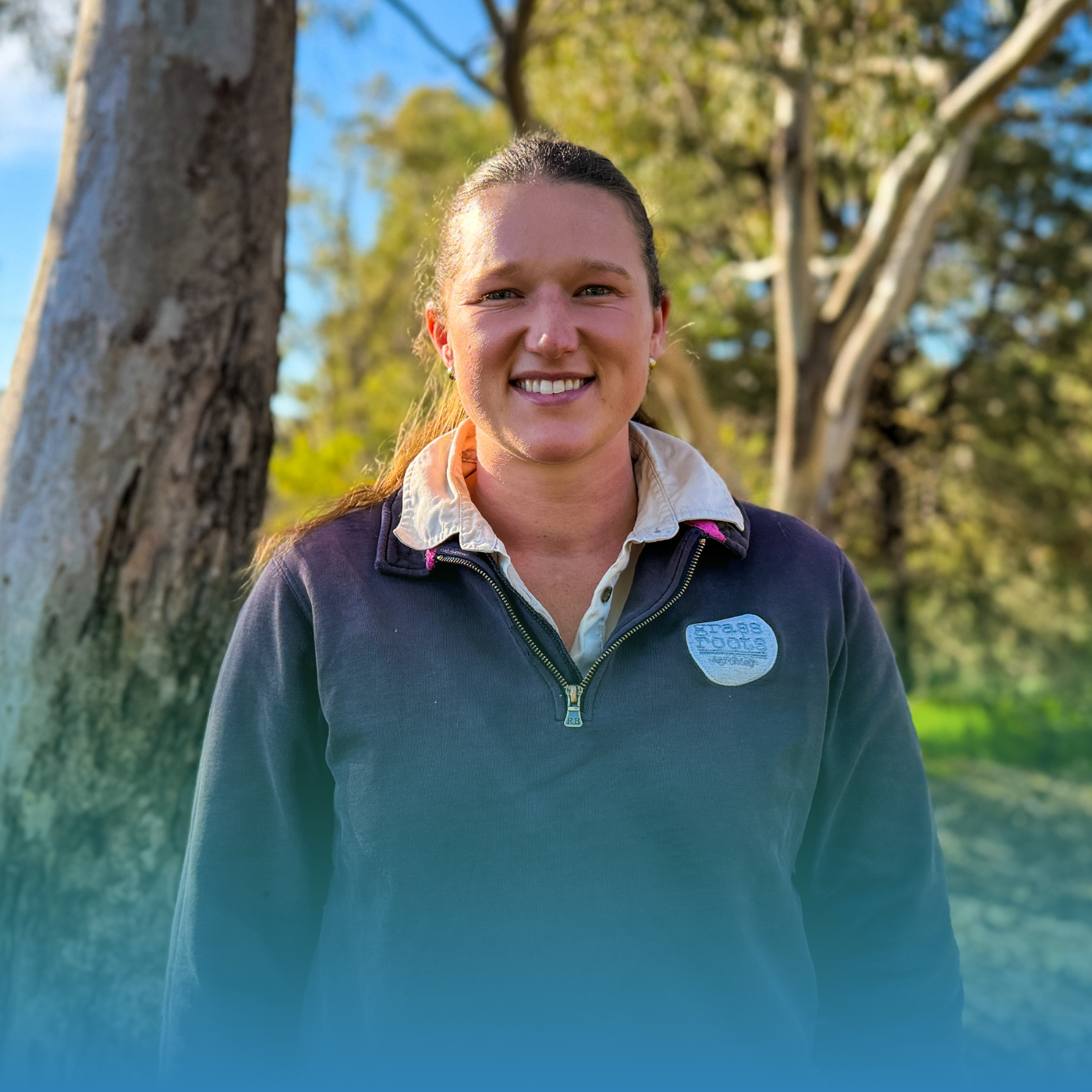
For Jessica Zieltjes, agriculture was always part of life. Growing up in a farming family that moved from New Zealand to the New South Wales grain belt, she developed an early interest in crops, farming systems and the people behind them. But finding the right career path wasn't straightforward. After exploring roles in cotton, rice, seed production and research agronomy, Jess eventually found her place with Grassroots Agronomy, where she works directly with growers across the Riverina. In this conversation, she shares the experiences that shaped her career, the importance of following your instincts, and why being farmer-facing was the key to finding work she genuinely loves. Jess also discusses the value of mentorship, learning through experience, and building confidence as a young agronomist. The conversation explores farming systems research, the role of pulses in crop rotations, emerging technologies such as optical spot spraying, and the power of strong communication across the g