In this first installment of CLEAR’s 2026 awards series, host Line Dempsey speaks with two award recipients whose work demonstrates how thoughtful regulatory reform can strengthen public protection. Dr. Yousra Alatiq of the Saudi Commission for Health Specialties discusses the transformation of healthcare qualification review into a structured, risk-informed governance function—one that has brought greater consistency to decisions across 41 professional titles, supported the review of nearly 50,000 qualifications, and reduced decision timelines from several months to 25–50 working days. The episode also features representatives of Utah’s Division of Professional Licensing and Office of Professional Licensure Review, who explain how the creation of a statewide Massage Establishment Registry is helping address illicit massage businesses and human trafficking by shifting regulatory attention toward establishment owners and those profiting from exploitation, strengthening oversight, and en
Just because Steve Ballmer, Mark Walter and Vivek Ramaswamy are rich... doesn't mean they're always that smart. And just because investigating them is hard... doesn't mean the truth can't still prevail. Onstage at the University of Maryland, Pablo and the daytime TV legend (turned podcaster himself) Maury Povich discuss the Clippers saga, the Lakers sale, the reporting chops of Tim Tebow, the making of a modern independent newsroom... and that $15,000 mechanical bird. • Subscribe to "On Par with Maury Povich" (https://pod.link/1803175670) • Submit your confidential tips (https://www.pablo.show/tips) to Pablo (Pablo Torre Finds Out is brought to you by Apple Card.) Hosted on Acast.
The Supreme Court considers whether a federal prisoner can sue a prison medical worker personally for money damages over allegedly denied medical care. After an assault at a federal detention center in Honolulu in 2021, Watanabe says he had severe back pain and that Nielsen refused his request to go to a hospital. His complaint describes repeated requests for more care and a broken-tailbone diagnosis months later. He sued under the Eighth Amendment, alleging deliberate indifference to his medical needs. His claim invokes Bivens, a court-recognized damages remedy against federal officials for certain constitutional violations, and Carlson versus Green, which applied it to prison medical care. The district court dismissed his claim, but the Ninth Circuit reinstated it. The question here is whether this kind of suit may proceed, not whether the medical worker has been proved liable. Nielsen will ask the Court to reject the suit and reconsider its damages precedents; Watanabe will contend
Hub Headlines features audio versions of the best commentaries and analysis published daily in The Hub. Enjoy listening to original and provocative takes on the issues that matter while you are on the go. 0:21 - Is Canada’s runaway big-government bureaucracy finally under control? (https://thehub.ca/2026/11/09/is-canadas-runaway-big-government-bureaucracy-finally-under-control/) by Alicia Planincic 5:09 - Carney called the Indian Act ‘racist.’ Now, calls to abolish it are growing. What’s next? (https://thehub.ca/2026/11/09/carney-called-the-indian-act-racist-now-calls-to-abolish-it-are-growing-whats-next/) by Karen Restoule This program is narrated by automated voices. https://tinyurl.com/3a7zpd7e (Apple) https://tinyurl.com/y8akmfn7 (Spotify) Watch The Hub on YouTube: https://www.youtube.com/@TheHubCanada The Hub on X: https://x.com/thehubcanada?lang=en CREDITS: Pouya Daneshpajooh – Producer & Editor Hosted on Acast.
Working from home, a new study in the journal Science says, leaves employees lonelier, sadder, and more likely to be depressed. So does that mean everybody get back to your office desks so morale improves? The authors looked at rates of mental distress among people in jobs that could be done remotely or not before and after the COVID-19 pandemic, and concluded that remote work is responsible for about a third of the overall increase, with the worst results for people who live alone. But before-and-after is not cause-and-effect. Isolation is real. Chaining everyone to a desk for friendship is not the only fix. Chapters: 00:01:44 Announcements 00:02:27 Retcon: Immigrants work in every occupation; occupational crowding; sports betting scandals 00:07:21 Terms & Conditions: Procedural; remotable vs. non-remotable jobs 00:10:00 Big Pilcrow: Does Work From Home Make Us Sad? 00:37:21 Executive Orders: News alerts; more brass! 00:38:28 Spiritual Sponsors: Animal conservation workers; Andrew Bir
In der zweiten Jahreshälfte 2026 hat Irland den Vorsitz im Rat der Europäischen Union inne und koordiniert damit die Arbeit der Regierungen der 27 EU-Mitgliedstaaten. Die Landwirtschaft spielt für Irlands Wirtschaft eine entscheidende Rolle. Deshalb setzt das Land auf Wissen und Innovation im Agrarsektor. Die Ratspräsidentschaft bietet die Gelegenheit, diese Schwerpunkte auch auf europäischer Ebene voranzubringen. Darum geht es in Folge 74 von „Nahrung für Europa“. Wir reisen nach Johnstown Castle im Südosten Irlands. Dort investiert die irische Agrarberatungsorganisation Teagasc in landwirtschaftliche Wissens- und Innovationssysteme – kurz AKIS –, um Ernährungssicherheit mit ökologischer Nachhaltigkeit zu verbinden. Die Teagasc-Forscherin Bridget Lynch stellt uns die Arbeit rund um AKIS in Johnstown Castle vor. Karen Daly, Leiterin der Umweltabteilung, erläutert, wie Irland dieses Fachwissen in Europa und darüber hinaus verbreitet. Außerdem sprechen wir mit Ute Ally von der Generaldir
For this latter half of 2026, Ireland holds the presidency of the Council of the European Union — guiding the work of the EU’s twenty-seven national governments. With farming so crucial to the economy, Ireland prioritises knowledge and innovation in agriculture — and so, the presidency has been a chance to share these priorities with fellow Member States. This is the focus of episode 74 of Food for Europe. We travel to Johnstown Castle in southeast Ireland, where the country’s farm advisory service Teagasc is investing in agricultural knowledge and innovation — AKIS — to ensure food security is allied to environmental sustainability. Teagasc researcher Bridget Lynch takes us through the organisation’s AKIS-focused work at Johnstown Castle, while head of the environmental department Karen Daly discusses what Ireland is doing to disseminate that expertise throughout Europe and beyond. And we hear from Ute Ally from the European Commission’s directorate-general for agriculture and rural d
The Federal Circuit hears Blaze Mobile’s appeals over two patents for processing payments through a phone. The disputed claims divide the work among a phone app, a remote management server that authenticates the user, and a transaction server that processes the payment. After reexamining the patents, the Patent Office rejected their claims, and Blaze appealed. One distinction to keep in mind is checking a user’s identity versus approving a purchase: can the same PIN do both jobs under these claims? The argument also concerns which server must perform each function, and whether combining earlier technologies would supply the claimed arrangement. In Re Blaze Mobile, Inc. (No. 25-1485) — U.S. Court of Appeals for the Federal Circuit, argued November 9, 2026. Sources: Argument audio — official Federal Circuit recording for consolidated appeals 25-1484 and 25-1485; the 25-1485 recording reviewed here; complete argument with gentle volume balancing, no noise filtering or speech reconstructio
What if cybersecurity was the reason public sector teams could say yes to AI, rather than no? In this episode, we speak with Satpal Biant from Palo Alto Networks about how government can adopt AI and modernise securely without adding friction for staff. Drawing on 27 years in technology and the UK public sector, Satpal explains why adopting AI is a business problem as well as an IT problem, and why organisations need a flexible way to secure AI from many different vendors. He discusses how a secure enterprise browser can make bring-your-own-device and contractor access simpler and cheaper, and how private 5G and edge computing could transform smart cities, social housing and the emergency services. He also covers practical ways to protect legacy systems, from virtual patching for today’s threats to quantum-safe security for tomorrow’s. Finally, he makes the case for the biggest mindset shift he’s seeing among public sector CISOs and CIOs: simplification. Want to learn more about securi
From student demonstrations in France to youth-led movements elsewhere in the world, growing unrest reflects mounting concerns about inequality, public services, and the future of younger generations. In this episode of International Horizons, John Torpey is joined by sociologists Jean Beaman and Ida Susser to examine the connections between France's student protests, the Yellow Vests, and broader movements challenging state violence and social exclusion. They discuss the changing nature of political solidarity and the growing struggle to defend the promises of the welfare state. Hosted by Simplecast, an AdsWizz company.
Today we explain one of the most controversial Supreme Court decisions in modern history; the case that defined campaign donations as speech and therefore protected under the First Amendment, regardless of who made them. This episode (first produced in 2022) explains the history of the case, PACs, Super PACs, the ruling, the effect of the decision on our campaign system, as well as some common misconceptions. Our guides through the case are Professor Jeff Bone from Saint Joseph's University, Maggie Severns from Grid, and Professor Hye Young You from New York University.
Olivia Julianna thought she’d be up until 2 a.m. waiting for Texas election results. Then the early vote came in from Denton County. She joins the full crew to tell the story of the moment she knew James Talarico was going to win and break down how he and Gina Hinojosa reached different voters, why the Republican redraw backfired, and how Tejano star Bobby Pulido turned a jab about singing at quinceañeras into a campaign strategy. The guys also dig into the races that got buried under the Senate headlines, including why the Texas State Board of Education matters to kids outside the state. Plus, what Democrats need to do to keep the voters they just won over and why Olivia wants Talarico glued to his Senate seat when the 2028 presidential chatter starts. Also, Rob Sand’s skateboard video, Trump’s baffling George Washington crypto comparison, and a debate over what Democrats should do first with their new majority. Do they pursue impeachment or put bills on health care and tariffs on Tru
The Federal Circuit hears V L Collective’s appeal in a patent dispute with Netflix. The patent concerns keeping different media files, such as video and audio, synchronized. After the patent was asserted against Netflix, both Netflix and a separate organization called Unified Patents challenged it at the Patent Trial and Appeal Board. Unified’s case knocked out several patent claims, but two survived that challenge. In Netflix’s case, the Board later found all of the challenged claims unpatentable, including those two. V L Collective will contend that Netflix’s relationship with Unified should bind it to the earlier proceeding and bar Netflix’s challenge to claims already reviewed; Netflix will defend the Board’s decision to let its case proceed. The court will also examine whether the Board correctly matched the patent’s requirements to an older media-synchronization system. VL Collective IP, LLC v. Netflix, Inc. (No. 25-1525) — U.S. Court of Appeals for the Federal Circuit, argued No
You can help support what we do at TWiT by joining Club TWiT. You'll get ad-free versions of our shows, access to the Club TWiT Discord, chapter markers, in-app transcripts, and custom programming such as Stacy's Book Club, Mikah's Crafting Corner, Off By One with Jeff Atwood, and the AI Users Group. Join today! (https://twit.tv/clubtwit)
Should the midterm elections, the president, Congress, or the political direction of the country change whether you pursue Air Force Special Warfare or join the military at all? Aaron, Trent, and Peaches address the questions they are already getting from candidates and make the argument that Washington probably matters far less to your daily military experience than you think. If election results are enough to derail your plan, the guys argue that politics may simply be giving you a more respectable excuse for fear, hesitation, or uncertainty about committing to the pipeline. The conversation turns toward the things candidates can actually control. Your running, Zone 2 cardio, mobility, water confidence, strength, preparation, and ability to show up ready matter a hell of a lot more than the latest political headline. Aaron argues that candidates who keep waiting for the perfect administration, perfect military culture, or perfect moment are likely to remain on the sidelines when real
Sarah Isgur and David French discuss bypassing the Electoral College through the National Popular Vote Compact, review the Department of Justice’s criminal investigation into the Dobbs decision leak, and break down the fight between the Berkeley Homeless Union and the City of Berkeley trying to clear out homeless encampments. But first, Sarah defends her online take of how you can confirm a Supreme Court justice before a current justice retires. The Agenda: –Don’t hitchhike, except when it’s really important –Sarah’s most right-wing take ever (https://x.com/whignewtons/status/2118371814485496144) –Dr. Akhil Amar on the Electoral College (https://supreme.findlaw.com/legal-commentary/how-to-achieve-direct-national-election-of-the-president-without-amending-the-constitution.html) –What exactly was the crime in the Dobbs decision leak? –Berkeley’s homeless encampments (https://cdn.ca9.uscourts.gov/datastore/opinions/2026/10/26/26-842.pdf) and Judge Patrick Bumatay’s dissent (https://cdn.ca
The Federal Circuit hears Medytox's appeal in a dispute over the bacteria used to make botulinum toxin products. Medytox accused a rival manufacturer, Hugel, of wrongfully taking its bacterial culture and sought action against imported products at the United States International Trade Commission. An administrative law judge rejected the claim, and the Commission agreed that Medytox had not proved that its property had been converted. The earlier trade-secret allegations had already been removed from the investigation; the issue now is the alleged wrongful taking of property. Medytox will ask the court to overturn the Commission's finding, while the Commission will defend it. As you listen, keep the burden of proof in view: questioning a rival's story is not the same as proving that it took property that belonged to you. Medytox, Inc. v. ITC (No. 25-1262) — U.S. Court of Appeals for the Federal Circuit, argued November 9, 2026. Sources: Argument audio — official Federal Circuit recordin
The Supreme Court considers who must pay a landowner's legal costs when a private pipeline company uses federal power to take property rights. W B I Energy Transmission went to federal court to obtain a right of way across North Dakota land for a natural-gas pipeline. After years of litigation, the company and landowners settled the value of that right of way, but left the owners' legal fees unresolved. A federal district judge awarded the owners those fees under North Dakota law; the Eighth Circuit set that award aside, applying the federal compensation standard instead. The landowners will argue that giving a private company power to take property does not erase state-law protections governing what owners are paid. The company, supported here by the federal government, will argue that it received the federal taking power together with the federal compensation rule, which ordinarily excludes legal fees. Listen for the difference between the constitutional minimum paid for property and
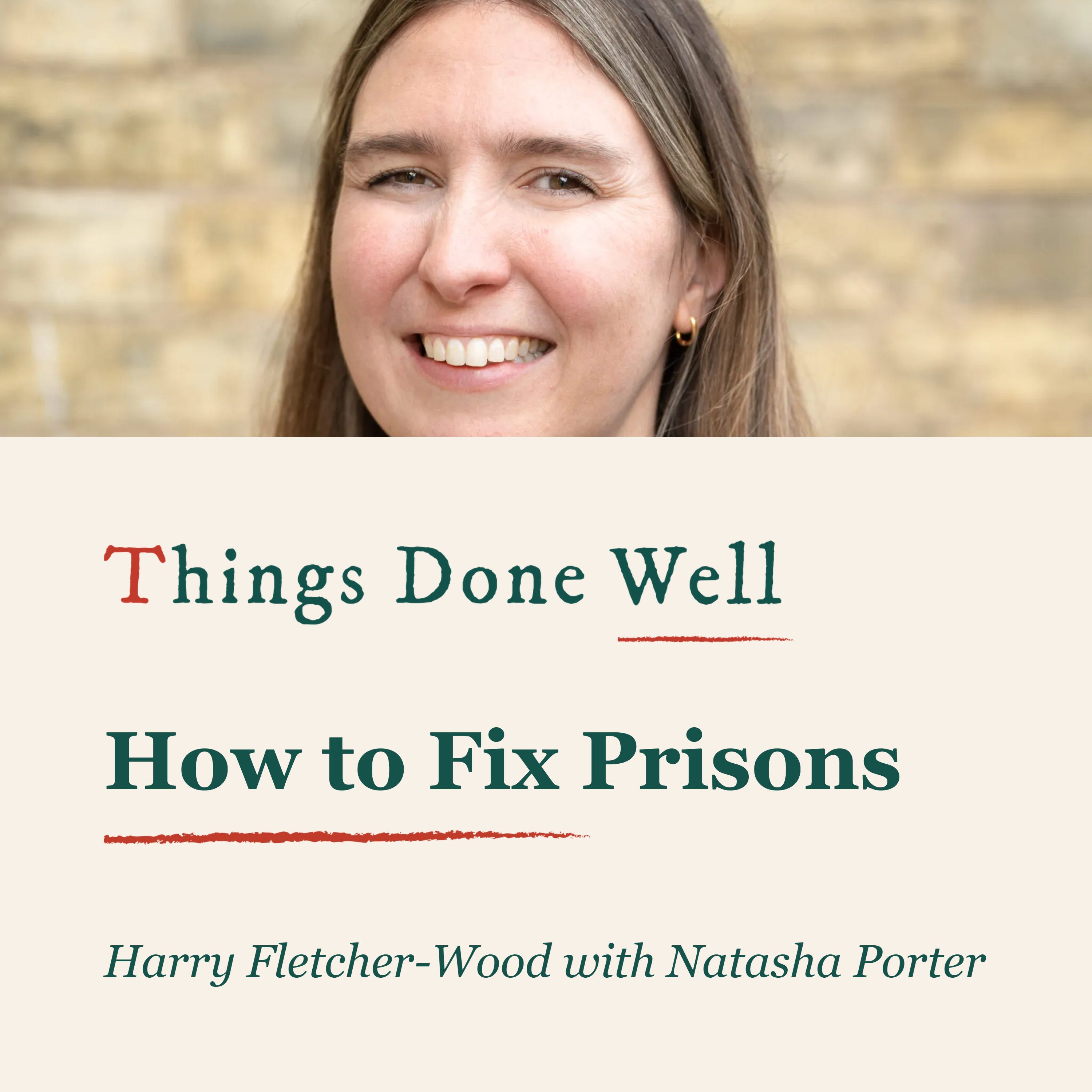
We launch Things Done Well with an interview with Natasha Porter OBE (https://www.linkedin.com/in/natasha-porter-obe-6146b796?originalSubdomain=uk). Having helped set up King Solomon Academy (https://kingsolomonacademy.org/), a transformational London school, she was part of the Coates Review (https://www.gov.uk/government/publications/unlocking-potential-a-review-of-education-in-prison) into education in prisons. Based on a recommendation from the review, she created Unlocked Graduates (https://unlockedgrads.org.uk/). Over a decade, the charity has placed over 900 prison officers, trained custodial managers, and is now helping to run better prison wings. Natasha explains what’s wrong with prisons and how we can improve them. She describes how Vanguard Wings in tough London prisons have cut violence in half. She also reflects on how you launch a startup dependent on government, and explains why government procurement rules and inflexibility mean Unlocked will be closing this month. We
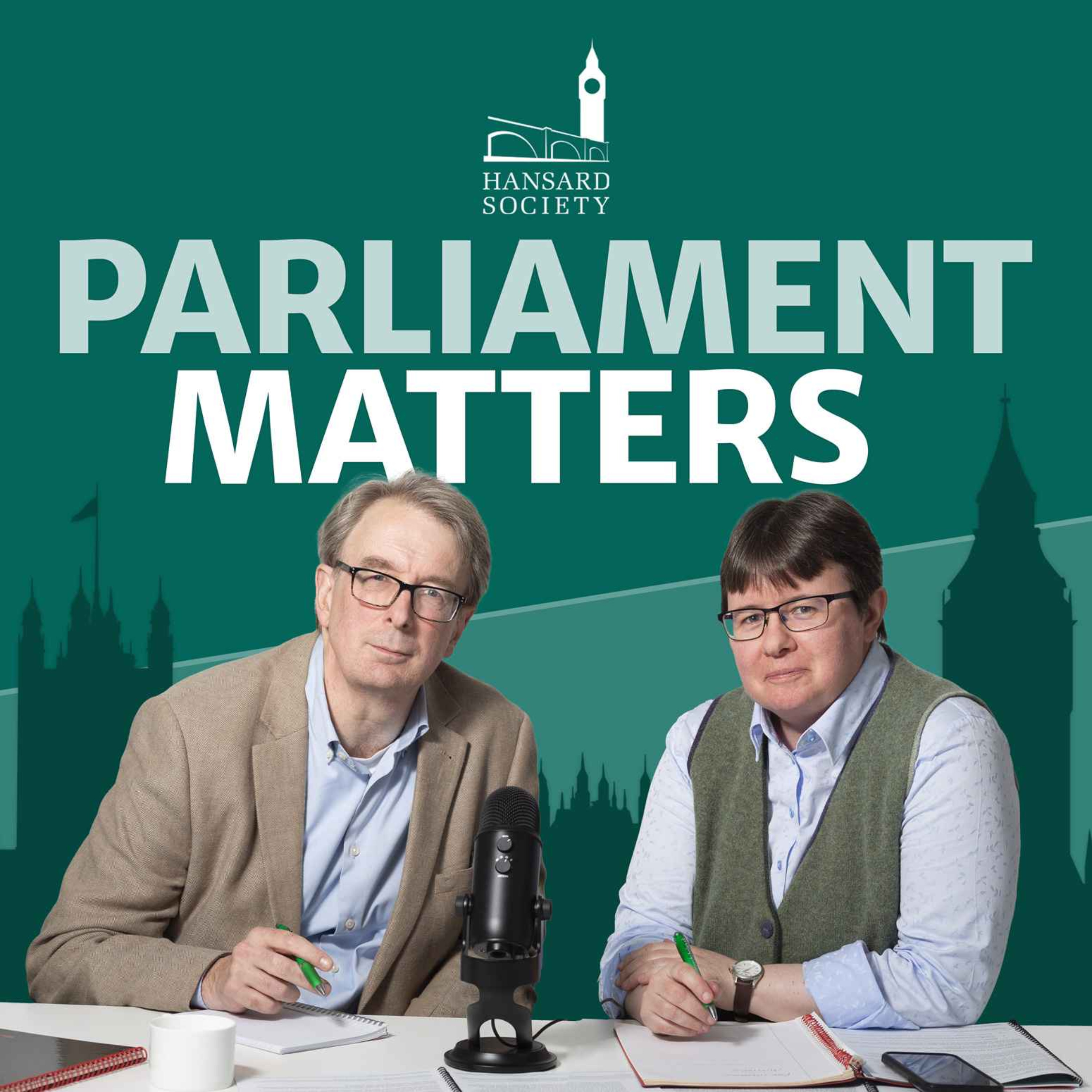
How do you turn a campaign into law when some of the world’s richest companies are determined to stop you? Filmmaker and crossbench peer Baroness Beeban Kidron joins us to discuss the art of legislating for the digital world. From protecting children online to defending creators’ copyright against AI companies, she explains how she built support, won amendments and persuaded reluctant ministers to act. But winning a vote is only part of the battle. Kidron contrasts her experience of the children’s privacy code with Ofcom’s implementation of the Online Safety Act, arguing that Parliament needs stronger powers to hold regulators to its intentions. She also describes Big Tech’s tactics for resisting regulation, the pressure to back down during parliamentary “ping-pong”, and why she rejects the claim that technology moves too fast for lawmakers. Her new book is Users: How Big Tech Took Control and How to Fight Back. ___ Chapters 00:00 Introduction 01:00 From filmmaking to campaigning 04:00
The Seventh Circuit hears Mason's appeal from federal gun and drug convictions arising from a search of a Madison bedroom. Police were investigating a violent incident and went to an address linked to Mason, who was on supervision. In the bedroom, they found a gun and drugs; a laboratory later detected his DNA on the gun and drug packaging. The dispute brings together two questions: what allowed police to enter and search that room, and whether the items they found proved that he possessed them. USA v. Jeramie J. Mason (No. 25-2701) — U.S. Court of Appeals for the Seventh Circuit, argued November 9, 2026. Sources: Argument audio — official Seventh Circuit recording, November 9, 2026; original court audio, with ordinary final normalization and peak protection only: Independent case account — U.S. Attorney’s Office, Western District of Wisconsin, September 24, 2025:
The Federal Circuit hears a patent battle between Natera and Care D X over blood tests used to monitor organ transplants. Natera accused Care D X of using its patented methods for measuring small amounts of one person's DNA mixed with another's. A jury found one Natera patent infringed and awarded about ninety-six million dollars in damages. The judge later invalidated the asserted claims in both patents at trial because their written descriptions did not adequately disclose the claimed inventions. Natera will argue that the jury had enough evidence to find the inventions disclosed; Care D X will argue that listing separate pieces does not describe the combined method. Two different questions will recur: whether the patent described the claimed combination, and whether DNA-analysis methods qualify for patent protection at all. Natera, Inc. v. CareDx, Inc. (No. 24-1894) — U.S. Court of Appeals for the Federal Circuit, argued November 9, 2026. Sources: Argument audio — official Federal C
EDITOR'S NOTE: While modern-day Veterans Day in the United States honors and thanks all living American military veterans who served honorably in the U.S. Armed Forces, it was born out of the commemoration of the armistice signed between the Allied nations and Germany, which took effect at the 11th hour of the 11th day of the 11th month in 1918. It originally honored both living and deceased veterans. The National Cemetery Administration (NCA), fulfills the nation's commitment to permanently honor its military veterans. Wars are costly affairs. It costs money to raise and train and equip militaries. The cost to rebuild societies after the destruction of battle is tremendous. But most costly is the staggering human cost of war. And so as we approach Memorial Day in the United States it's only fitting that this episode examines how the nation memorializes and honors those who have died in service to their country. A BETTER PEACE welcomes Kate Clarke Lemay to examine the history and signi
The Federal Circuit hears a patent dispute between Never-Search and Google, Apple, and Microsoft over interactive digital maps. Never-Search sued the companies, claiming that their mapping products infringed its patents. The patents describe features such as updating information about places, moving icons on a map, and displaying information about selected locations. The appeal follows a district judge's decision to dismiss the patent claims as ineligible for protection. Never-Search will argue that these are concrete improvements to digital mapping, while the companies will defend the ruling that the claims merely computerize familiar information-handling tasks. Listen also for whether the judge could treat a few patent claims as representative of others with additional features. Never-Search, Inc. v. Google LLC (No. 25-1585) — U.S. Court of Appeals for the Federal Circuit, argued November 9, 2026. Sources: Argument audio — official Federal Circuit recording, November 9, 2026; complet