Menopause is not the end of your sexual life if you know how to handle it. Kimberly Ann Johnson is a sexological bodyworker, birth doula, and author of The Fourth Trimester, whose new book Erotic Seasons maps what happens to a woman’s body across menstruation, mothering, perimenopause, and the years beyond. The question driving this conversation: what does a man gain from understanding the seasons of the woman he loves? Kimberly pushes back on the trauma language that’s become ubiquitous and often weakening. She talks about hot sex and warm sex, why the parts of the body women battle hardest are the ones that make them female, and why “calm down” is often the opposite of what a woman needs. If you’ve ever felt the ground shifting in a long relationship and couldn’t name what was being asked of you, this is that conversation. Free Gift: Download an exclusive additional chapter from Erotic Seasons entitled “The Body and the Belly” at kimberlyannjohnson.com/erotic-seasons (https://kimberl
Kevin Frazier, Director of the AI Innovation and Law Program at the University of Texas School of Law and a senior editor at Lawfare, speaks with Roberto Tallarita, assistant professor at Harvard Law School, about Anthropic's recently filed s-1 and its experiment in corporate governance. They discuss its current status as a public benefit corporation, its decision to create and empower a body of financially disinterested trustees, and its current unique class structure. Drawing on Tallarita’s research on stakeholder governance and unequal voting rights, the two also discuss what would make a commitment to safety precautions durable even when in stark tension with profit. Tallarita lays out some of his thoughts on what could come next for Anthropic in his recent article “Profit and Mission in Anthropic’s IPO (https://rtall.substack.com/p/profit-and-mission-in-anthropics).” Frazier also has recently written an analysis of Anthropic’s post-IPO governance (https://www.transformernews.ai/p/
Alex Partridge, host of the popular ADHD Chatter podcast, talks plainly about his evolving understanding of his later-in-life ADHD diagnosis — and, most importantly, what he's learned about living with the real pain of rejection sensitive dysphoria (RSD). Resources: Rejection Sensitive Dysphoria Free Download: Understanding Rejection Sensitive Dysphoria (https://www.additudemag.com/download/rejection-sensitive-dysphoria-treatment-symptoms/?src=podcast) Read: 7 Surprising Signs of RSD (https://www.additudemag.com/slideshows/symptoms-of-rsd-adhd/?src=podcast) Read: How Does RSD Really, Actually Feel? (https://www.additudemag.com/rsd-rejection-sensitive-dysphoria-experiences/?src=podcast) Read: Shame: The Devil on My Shoulder (https://www.additudemag.com/rejection-sensitive-dysphoria-adhd-anxiety-depression/?src=podcast) Access the video and slides for podcast episode #628 here: https://www.additudemag.com/webinar/alex-partridge-ladbible-unilad-adhd-rsd/ This episode is brought to you by
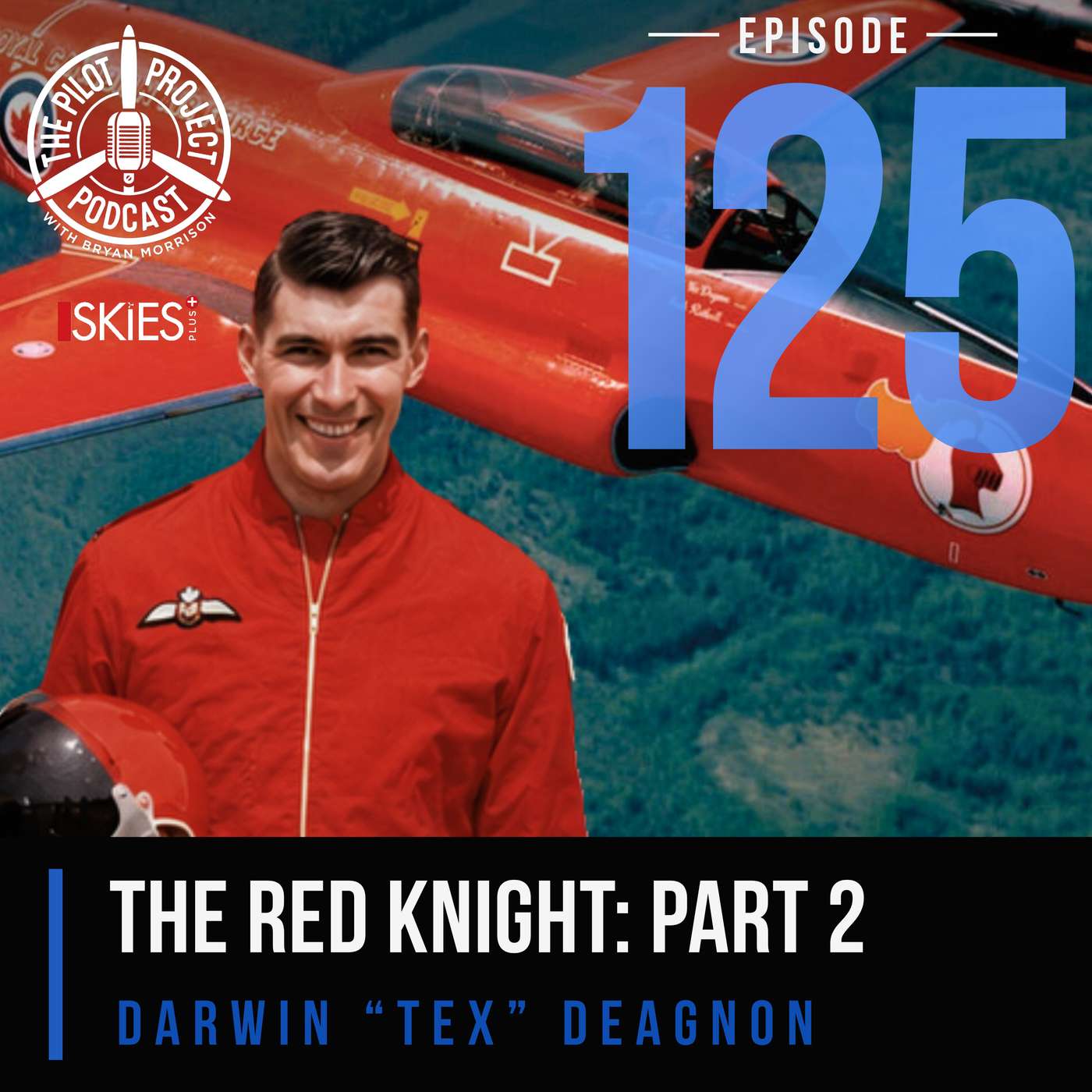
What happens when a jet's landing gear fails, and how do you know when it's finally time to hang up your flying helmet after a lifetime in aviation? In Part 2 of our conversation with former Royal Canadian Air Force Red Knight Darwin “Tex” Deagnon, we follow his remarkable journey beyond the F-86 Sabre and the airshow circuit. Tex takes us into the cockpit of the supersonic T-38 Talon, recounting a dramatic emergency landing with his nose gear stuck up, and reflects on instructing American pilots returning from the Vietnam War. We explore his leadership roles in the RCAF and the decision to retire from military service at just 40 years old. But his flying career was far from over. From operating C-47 Dakotas in the Canadian Arctic and flying corporate aircraft around the world to navigating the mountains of British Columbia, working on the film *Alive*, and transitioning to the Airbus A320, Tex's career would eventually span 38 aircraft types and more than 24,000 flying hours. We also
Full Patreon Show Only Available on Patreon: This week on a Tuesday Raytreon teaser! Ray returns and we immediately get sidetracked by a porn-star coworker, a dead man’s ashes, and a deeply unnecessary investigation into scat. Then Ray considers becoming Dopey’s new engineer, we check out his healing skin-cancer surgery scar, and he tells me about Mary Woronov’s incredible stories of amphetamines, Warhol, and the mole people. PLUS: new studio gear, Heart Attack Doug’s health struggles, cartoons for comfort, and the strange joy of finding out someone you know listens to Dopey. We’re saving the big news for Patreon—join us at patreon.com/dopeypodcast for the rest! Hosted by Simplecast, an AdsWizz company.
You’re Not in Trouble is OUT NOW! Purchase your copy HERE (http://geni.us/YoureNotInTrouble). For the first time ever, I’m in the hot seat on my own podcast! And the person asking the questions? Dr. Ari Tuckman, whose books I read long before I became an ADHD coach and who I now get to call my friend. (How cool is that?!) Ari interviews me about my new book, You’re Not in Trouble: The ADHD Guide to Building Healthy, Connected Relationships. We get into why so many of us with ADHD feel like we’re always one mistake away from being in trouble, how that feeling follows us into our closest relationships, and what it looks like to ask for what we need without apologizing for needing it.
New to Primally Pure? Shop here: https://bit.ly/4zDrXlX What if everything you've been told about diet, weight loss, and longevity isn't actually making you healthier? In this episode of Grounded Wellness, Bethany sits down with Dave Asprey, bestselling author, host of The Human Upgrade podcast, and pioneer of the modern biohacking movement, to challenge conventional health advice and explore what it really takes to optimize our energy, metabolism, and longevity. From intermittent fasting and weight loss to mitochondrial health, blood sugar, and the surprising relationship between light exposure and our circadian rhythms, Dave shares his perspective on some of the biggest mistakes people make when trying to improve their health. They also discuss the rise of “junk light,” why Dave believes sunlight is essential for healthy aging, and his favorite simple, affordable biohacks for improving sleep, energy, and longevity without overcomplicating your routine. Whether you're curious about fa
Tuesday Talks: How to Beat the Post-Party Blues | Episode 134 Ever come home from an incredible swinger event and feel like someone popped your bubble? You're not alone! In this episode of Tuesday Talks, a couple writes in about the amazing time they have at lifestyle events, from the excitement and connections to the freedom of being surrounded by like-minded people. But once they return home to everyday life, the high fades and the post-event blues kick in. How do you go from an unforgettable lifestyle weekend back to the reality of work, responsibilities, and your regular routine? Dan and Lacy share their own experiences with the post-swinger event blues and offer practical advice for navigating that emotional comedown, staying connected as a couple, and keeping a little of that lifestyle magic alive long after the party ends. Because sometimes the hardest part of an amazing lifestyle event is going home! - The Swing Nation - Main Website (https://theswingnation.net/) - Swinger Soci
Collagen marshmallows are now a thing. So are collagen crisps. If neither appeals, you can stir collagen powder into your morning coffee. Social media is full of products promising to replenish the collagen we lose as we age. The claims extend beyond firmer skin and fewer wrinkles to healthier joints and improved gut health. But what happens to collagen when we eat it? And can these products persuade our bodies to make more? Hosts Katie Edwards and Dan Baumgardt are joined by Joan Chang, a collagen researcher and senior lecturer at the University of Manchester, who explains why the answer is more complicated than a scoop of powder and how collagen really works in the body. Hosts: Katie Edwards and Dan Baumgardt Executive Producer: Gemma Ware Editing and mixing: Anouk Millet Artwork: Alice Mason
The Neuroscience of Addiction, Breaking Bad Habits, Childhood Trauma, Psychedelic Healing, Loneliness & Emotional Recovery Host Dave Asprey sits down with Luke Storey, host of The Life Stylist Podcast and author of A Horse Named Lonesome, to explore the science of addiction, loneliness, childhood trauma, emotional healing, psychedelics, brain chemistry, and the surprising relationship between human connection and happiness. Drawing on nearly three decades of recovery from drug addiction, Luke explains why overcoming substance abuse doesn't necessarily resolve the emotional patterns behind it, how unresolved trauma can shape relationships and behavior, and why having fewer, deeper friendships may lead to greater fulfillment. Luke shares his journey from childhood trauma and early substance use to long-term sobriety, revealing why he continued struggling with codependency, unhealthy relationships, and self-destructive patterns even after 20 years without addictive drugs. He discusses his
The UK Health Security Agency has launched a major study to find out what level of forever chemicals the average person in the UK has in their bodies. With results not expected until 2027, we speak to the UKHSA’s Dr Edward Wynne-Evans and Professor Tony Fletcher from the London School of Hygiene and Tropical Medicine about what is and is not known about per- and polyfluoroalkyl substances (PFAS) and their potential impacts on our health. And, with the help of Damian Bailey, professor of physiology and biochemistry at the University of South Wales, Laura hits the gym to work out if more of us are ditching cardio and aerobic exercise in favour of strength training, what that could mean for our health decades down the line. Then with fines set to be introduced on buses for people playing music and videos out loud on their phones, we look at whether spending more of our lives wearing headphones and earphones is changing not just what we hear, but how we hear. Presenter: Laura Foster Produc
Today's Scripture: John 8:2–11 What happens when our certainty that we're right causes us to lose sight of another person's humanity? In a powerful encounter with a woman publicly humiliated by religious leaders, Jesus demonstrates a remarkable kind of strength. His response challenges the cruelty we sometimes justify in the name of righteousness—and offers a different way to confront wrongdoing. We explore: Why moral certainty can sometimes lead to cruelty How Jesus confronts public humiliation without becoming cruel The subtle ways we justify dehumanizing people we disagree with What it means to stand for truth without losing compassion Go Deeper: Episode 176 (https://www.dralisoncook.com/podcasts/my-reflections-on-love-in-an-age-of-violence-plus-dr-stephen-macchia-on-intimacy-with-god-in-a-noisy-world): Love in the Age of Violence (https://www.dralisoncook.com/podcasts/i-shouldnt-feel-angry--exploring-the-violence-that-shapes-our-family-stories-how-to-heal-with-lisa-jo-baker) Episod
Get Dr. Vonda's insights Want to understand what's happening in your body — and what to do next? Each week, Dr. Vonda shares science-backed guidance on strength, bone health, muscle, and longevity — the same way she speaks to her patients. Clear. Practical. No noise. Your body can't heal faster than biology allows. But it can be ready. And the years you spend training may be quietly preparing you for the hardest season of your life. Juliet "JStar" Starrett, world champion whitewater athlete, co-founder and CEO of The Ready State, and co-author of Built to Move. We talked about why durability beats longevity and how the muscle she built in her 30s carried her through cancer. She explains why pain is a request for change, not a reason to stop. Because the goal isn't just living longer. It's having a body that can say yes to adventure. What we explore: - How decades of training build resilience for surgery and illness. - Why durability matters more than longevity. - Why your 30s are prime
On the Dry Land by Lord Dunsany — A Gentle Short Fable of Love & Old Age for Sleep & Insomnia | Books at Bedtime Drift off with On the Dry Land by Lord Dunsany, a short, tender and beautifully written fable about love and a long life, read aloud by Martin Hewlett on Books at Bedtime, the sleep story series from Calming Anxiety. The gorgeous night hangs over the marshes, with all its wandering bands of nomad stars, and the first pale light of dawn is rising in the east. For many years, Love has led a man up and down through those perilous marshes. Now, as they reach the safety of dry land at last, Love looks at his companion and sees in the dawn light that his hair has turned white. The old man sits down wearily on the grass, and Love tells him, "I will leave you now." The old man makes no answer, and only weeps softly. So Love, grieved in his careless little heart, tries to comfort him the only way he knows, by telling him that he was never worth missing at all. He is foolish, he says,
Hello Beautiful, I'm so grateful you're here with me Self-doubt can whisper so convincingly that you forget it's only a voice—not the truth of who you are. This empowering meditation helps quiet anxious thinking, release limiting beliefs, and reconnect you with confidence and self-trust. You are far more capable than fear would have you believe. Love, Katie TAKE THE FREE QUIZ! ♀️What kind of meditator are you? Take the free quiz & discover your meditation style now! Want an ad-free meditation experience?
What if the reason you don't feel like yourself isn't only your thyroid or your hormones? In this episode, I'm joined by Luke Storey, host of The Life Stylist podcast and author of the new book, A Horse Named Lonesome, to unpack what happens when pain shapes us, and what we reach for so we don't have to feel what's underneath. For Luke, that was drugs, alcohol, and relationships. For many of us, it's the nightly glass of wine, overworking, controlling everything, or chasing the next diet or supplement. We also get into the loneliness at the heart of Luke's book, and why he believes it's less about a shortage of people and more about disconnection from ourselves. Luke shares why some of the most powerful health tools are free, why he calls it bioharmonizing instead of biohacking, and how he found gratitude for the hardest parts of his past without pretending they were good. And I share why I believe you're not successful despite what you've been through, but because of it. What you'll l
Sometimes the strangest things on Earth...Are happening just below its surface. From tunnels carved by giant sloths to desperate attempts to stop the dead from rising again - these are the weird and wonderous tales of the sea beasts, hidden cities and impossible creatures that lurk beneath us. Thank you to our experts who contributed to this episode: Austin Rogers, Sabina Magliocco, Greg Jackson, Brandy Shillace, Mitch Horowitz, Kathleen Tracy, Cord Whitaker, Don Wildman, Joseph Dituri, Rebecca Lieb, Hakeen Oluseyi, David Mizejewski, Sami Jarroush, Jason Horton, Ramy Romany, and Kavitha Davidson.
This week's program is an encore presentation featuring a C-SPAN interview with Eric Sevareid that was recorded in his Georgetown home 37 years ago in 1989. Sevareid was a war correspondent with CBS Radio starting in 1939. He spent a total of 38 years with the network. When CBS News with Walter Cronkite went to 30 minutes in 1963, Eric Sevaride would end each newscast with a two-minute analysis and commentary. Some refer to him as "The Grey Eminence." The Cronkite evening news audience in those days was close to 30 million viewers a night. Today the program is watched by around 4 million people. The American population has increased by 100 million people since 1989.
Are you getting enough sleep but still waking up exhausted? Do you struggle to fall asleep, wake up throughout the night, or find yourself fighting to stay awake during the day? You're certainly not alone. Millions of Americans struggle with sleep disorders, and many don't realize there's an underlying condition affecting their rest. In this episode of Off the Couch Psychology Podcast, Dr. Jerry Cunningham explores the fascinating world of sleep disorders, including insomnia, sleep apnea, narcolepsy, restless legs syndrome, nightmares, and more. You'll discover how these conditions can affect your mood, memory, relationships, and everyday performance. We'll also explore how sleep disorders are diagnosed and what treatments, including Cognitive Behavioral Therapy for Insomnia (CBT-I), can help you reclaim your nights and improve your days. Could your exhaustion be telling you something you've been overlooking? And what if the solution involves more than simply going to bed earlier? Befo
From the brothels of Cologne to the beach clubs of Turkey, Necati “Neco” Arabaci built a criminal empire on sex trafficking, extortion, drugs, and spectacular brutality. Starting out as a nightclub bouncer, the Turkish-German gangster rose to become the godfather of Cologne’s red-light district, commanding an army of enforcers and making millions from prostitution. But even a nine-year prison sentence and deportation to Turkey couldn't stop him. Instead, Arabaci joined the Hells Angels, built an international network, and launched a bloody power struggle for control of Europe's most notorious motorcycle club, all while supposedly banned from setting foot in Germany. Now, after decades of dodging authorities across Europe, the gangster once dubbed the “Godfather of Cologne” has finally been sentenced to 15 years in a Turkish prison. Danny and Sean trace the extraordinary rise and possible fall of one of Europe's most feared, and strangest, crime bosses.
Today we explain one of the most controversial Supreme Court decisions in modern history; the case that defined campaign donations as speech and therefore protected under the First Amendment, regardless of who made them. This episode (first produced in 2022) explains the history of the case, PACs, Super PACs, the ruling, the effect of the decision on our campaign system, as well as some common misconceptions. Our guides through the case are Professor Jeff Bone from Saint Joseph's University, Maggie Severns from Grid, and Professor Hye Young You from New York University.
Today, I’m joined by Dr. Tony Nader (https://drtonynader.com/), a physician and neuroscientist who leads the global Transcendental Meditation (TM) organization. Dr. Nader’s story is remarkable—what started as a short sabbatical from his MIT neuroscience research turned into decades at the forefront of exploring consciousness and the mind-body connection. Episode Timestamps: Introduction of guest and episode theme: caring, carrying, and aging ... 00:00:00 Mind, happiness, fulfillment, and physiological longevity ... 00:04:23 Biohacking’s recognition of nervous system and stress ... 00:07:34 Caring as an evolutionary trait and its biological effects ... 00:11:02 Carrying vs. caring: burnout and learning conscious care ... 00:14:39 Empathy, chronic stress, and physiological costs of over-carrying ... 00:17:44 Practical approaches: conscious caring, holding space, and self-care ... 00:21:19 Small acts of kindness, connection, and behavioral contagion ... 00:35:36 Digital connections, overs
She was one of MGM's biggest stars, a celebrated actress widely regarded as one of the most beautiful women in the world. But Ava Gardner was never entirely comfortable with the image that made her famous. From a tobacco farm in North Carolina to the heights of Hollywood stardom, Gardner's rise began almost by accident, after a photograph of her caught the attention of MGM. With The Killers, Mogambo, and The Night of the Iguana, she proved herself a formidable actress, even as her extraordinary beauty threatened to overshadow her talent. Her turbulent marriages to Mickey Rooney, Artie Shaw, and Frank Sinatra kept her in the headlines, while her struggles with alcohol and growing frustrations with the studio system complicated both her career and her personal life. This week, we're exploring the extraordinary life of Ava Gardner — from her unlikely discovery and MGM superstardom to her eventual departure from Hollywood for a new life in Spain and, later, London. Along the way, we'll exp
What happens in the gap between your last baby and your first hot flash? Dr. Mary Claire Haver sits down with Dr. Fran Haydanek — board-certified OB/GYN and the science communicator behind Paging Dr. Fran — to connect the dots most women are never shown. They unpack “reproductive hormone sensitivity”: why women whose brains react to hormone fluctuations with PMS, PMDD, or postpartum depression face a dramatically higher risk of depression in perimenopause — in the largest study to date, almost 13-fold — and why that history sits unread in your own chart. They also get practical about diagnosis: why there’s no blood test for perimenopause, the conditions that mimic it — iron deficiency (and the new ferritin guidelines), thyroid disease, sleep apnea, diabetes — and what your pregnancy history predicts about your future health, from gestational diabetes to preeclampsia and heart disease. Because knowing your own history means you never have to be blindsided by symptoms that were completel