Listen through the publisher, then discuss the episode here or arrange an in-person Roundtable. Your city determines where to meet.
Roundtables are designed for groups of four, with a shared subject and room for everyone to speak. Come for discussion, with no dating expectation.
The UK Health Security Agency has launched a major study to find out what level of forever chemicals the average person in the UK has in their bodies. With results not expected until 2027, we speak to the UKHSA’s Dr Edward Wynne-Evans and Professor Tony Fletcher from the London School of Hygiene and Tropical Medicine about what is and is not known about per- and polyfluoroalkyl substances (PFAS) and their potential impacts on our health. And, with the help of Damian Bailey, professor of physiology and biochemistry at the University of South Wales, Laura hits the gym to work out if more of us are ditching cardio and aerobic exercise in favour of strength training, what that could mean for our health decades down the line. Then with fines set to be introduced on buses for people playing music and videos out loud on their phones, we look at whether spending more of our lives wearing headphones and earphones is changing not just what we hear, but how we hear. Presenter: Laura Foster Producer: Imogen Harper Assistant Producer: Tabitha Taylor Buck Editor: Ilan Goodman Sound engineer: Tim Heffer Production coordinator: Stu Laws The show was made by the BBC Audio's Science Unit in collaboration with The Open University.
Episode information is provided by the publisher. Listening takes place on the publisher’s service.
When should artists get paid in a world with AI music? Artificial intelligence is changing how music gets made - and how musicians get paid. AI is letting people clone artists’ voices, create completely new songs as fake collaborations, generate lyrics in seconds, even produce full tracks just by typing in a few words. It’s all causing some to say AI will be “the death of music.” Technology causes turning points in history. And I think we’re in one right now for music. The stakes are high: If we get this wrong, we could jeopardize how human musicians make money and art. But if we get it right, we have an opportunity to leap ahead in how we as humans get to express ourselves. To really understand what’s happening with AI music, you need to understand how the music industry ALREADY works - and how it could be changing. In this video, I took a deep dive into that topic with the help of two people right in the thick of it: The artist Grimes and CEO of Spotify Daniel Ek. Chapters: 00:00 Wha
Fear has a way of quietly taking control of your life. It convinces you to stay where you are, avoid difficult conversations, delay decisions, tolerate situations you know aren’t good for you, and settle for a life that is far smaller than the one you are capable of living. In this episode of The Strong Life Project, we explore how fear impacts your thinking, your relationships, your career, your leadership, and ultimately your ability to live a meaningful life. Fear doesn’t always look like panic. Sometimes it looks like procrastination, overthinking, making excuses, people pleasing, avoiding conflict, or constantly waiting for the perfect moment. The problem is that every time you allow fear to make a decision for you, you reinforce the belief that you are incapable of handling what comes next. Over time, this creates a pattern of avoidance that undermines confidence, resilience, emotional strength, and personal growth. Learning to manage fear doesn’t mean becoming fearless. It means
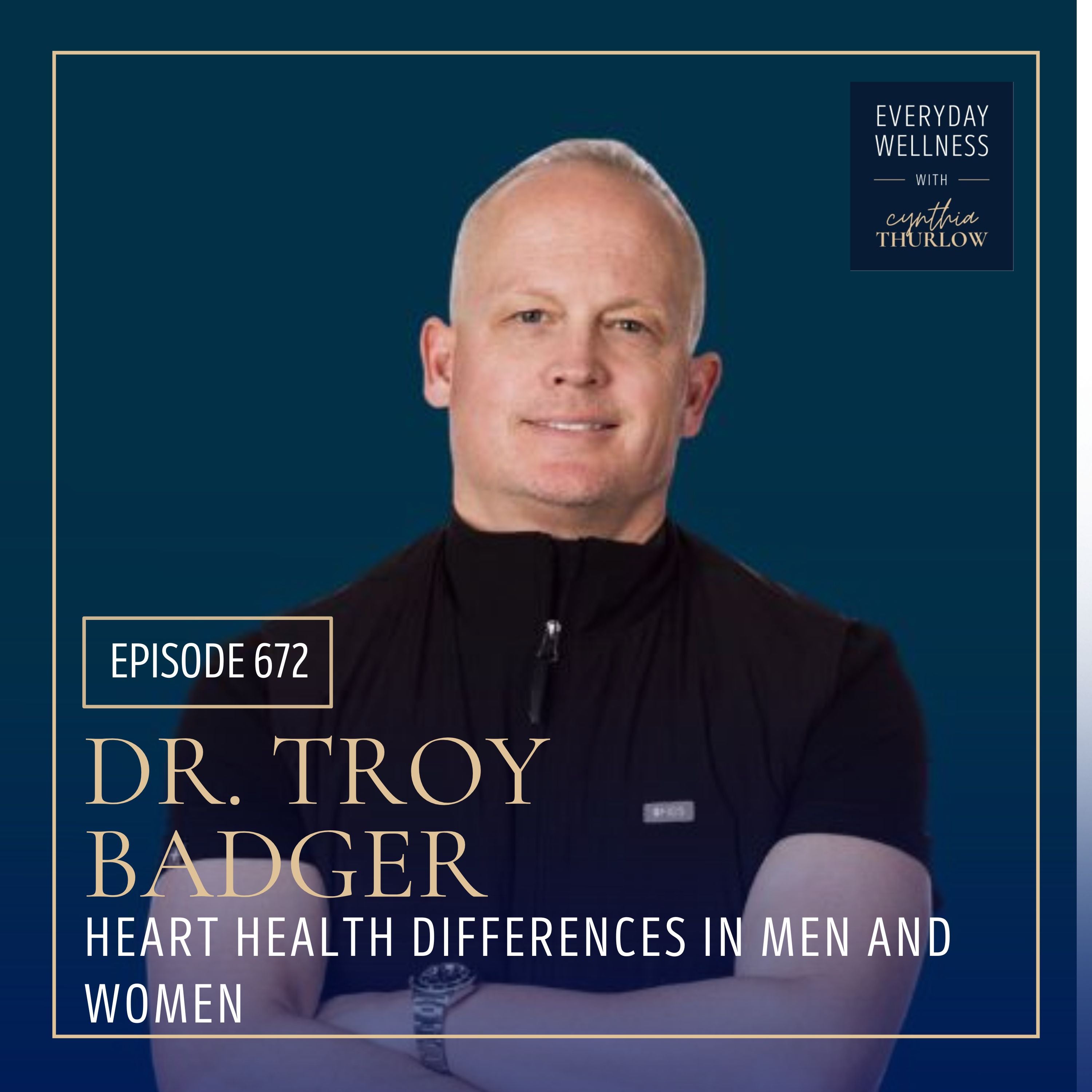
Today, I’m honored to connect with Dr. Troy Badger. He is a board-certified cardiologist and interventionalist and the founder of Cardiostrong, a concierge preventive cardiology clinic in Provo, Utah, focused on reducing cardiovascular risk, optimizing metabolic health, and improving strength and cardiorespiratory fitness for executives and athletes. In today’s conversation, we discuss Dr. Badger’s gender- and age-specific approach to heart health, including treatment differences for men and women, and diagnoses such as INOCA, SCAD, vasospastic disease, and Takotsubo. We examine emotions and their influence on heart health, coronary ischemia and cardiomyopathies, labs and diagnostics, how Dr. Badger assesses risk in his patients, and the differences between a CAC and a CCTA. Dr. Badger also shares the labs he finds essential for all patients and discusses the role of VO2 Max, cardiovascular training, and lifestyle—specifically nutrition, the use of GLP-1 drugs, and a multidisciplinary
Today, Mel is doing something she's never done before on The Mel Robbins Podcast. She's bringing members of her team into the studio for live coaching with world-renowned communications expert Vinh Giang. Vinh is known for teaching millions of people online how to stop sounding insecure, speak more clearly, and get people to listen when you talk. And when you hear him coaching today, it will be like he’s coaching you. One person freezes when they're put on the spot. Another can't stop interrupting people. Someone else has great ideas but stays quiet because they're afraid of being judged. Does any of that sound familiar? And Vinh isn't just giving advice. He's coaching real people through practical exercises, right there in the studio, so you can hear the difference and start making those same changes in your own life. As Mel says, put yourself in their shoes. As Vinh works with each person, you'll recognize things you struggle with, too. You'll learn: -What to do when your mind goes b
I Ate 1000 Sardines in a Month, Video: https://youtu.be/_Th54GWd8WY How Sardines Supercharged my Metabolism, Letter: https://staycuriousmetabolism.substack.com/p/the-weird-anti-insulin-hormone-that?r=40ekz2 Omega-6/3 Ratio Can Be Misleading, Letter: https://staycuriousmetabolism.substack.com/p/how-we-got-omega-fat-wrong-this-will?r=40ekz2 Best Omega-3 for the Brain, Letter: https://staycuriousmetabolism.substack.com/p/why-omega-3-supplements-dont-work?r=40ekz2 If you want to get your Omega-3 via Omega Quant, click on this link: https://omegaquant.com/ref/864 Fatty Acid Research Institute: https://www.faresinst.org (https://www.faresinst.org/) Description: In this conversation, I sit down with Professor William Harris, one of the world’s leading experts on omega-3 and omega-6 fatty acids, to cut through confusion around fish oil, seed oils, cardiovascular health, and brain health. We break down what omega-3 and omega-6 fats actually are, why their chemistry matters, and how they’re conv
If you're training hard but feeling wiped, eating a restricted diet for your gut, or just never hungry after a tough workout, you might not be getting the protein you need. This episode breaks down how much you really need and how to get it without upsetting your gut. YOU'LL TAKEAWAY: Macronutrients and calories 101, and how restrictive diets throw off your balance How your body digests protein, and why it matters before workouts The many roles of protein, from enzymes and iron storage to post-workout appetite How much protein you need, plus 3 easy low FODMAP ways to boost it — RESOURCES & LINKS MENTIONED: ⤵️ Want high touch coaching support for IBS & fuelling performance? Apply for coaching. (http://gutfitnutrition.com/apply) Free Training: How to Control IBS So You Can Fuel Your Training Without a Lifelong Low FODMAP Diet (https://gutfitnutrition.com/heal-ibs-training-live) Supporting your immune system when you're sick (Ep. 70) (https://open.spotify.com/episode/5bCto0jWLcbC5hQW4hrH6
If you need an operation in the future, there's a good chance a robot could be involved. Around 70,000 robot-assisted surgeries are performed every year in England. But the plan is for that number to grow to half a million surgeries by the year 2035. In the recent budget, the UK government announced £100 million would be spent speeding up the rollout of robots across operating theatres in England. Those in favour say it is better for patients and surgeons – but why is that and how strong is the evidence? And with robotic systems costing millions of pounds, is this a good use of NHS funds? Laura Foster dons her scrubs and is invited into an operating theatre at Southmead Hospital in Bristol to witness a robotic surgery and speaks to surgeons and patients about how it works. Then a panel of experts, including Nuha Yassin from the Royal College of Surgeons England, Professor John McGrath from the NHS England Robotic Surgery steering committee and general practitioner and director of the C
Women with endometriosis often spend years searching for answers. On average, it can take around a decade to get a diagnosis. So could a new generation of tests, which are far less invasive than what's available today, help cut that wait from years to days? Inside Health is looking at what those tests involve and how well they might work in the real world. We'll also hear from one couple about their difficult journey to starting a family - and explore why many queer couples still face huge hurdles when trying to access fertility treatment here in the UK. And as the clocks go back, Laura looks at why a change of just one hour can result in 'social jet lag' or 'first class sleep'. Why are the first few days the hardest - and what we can do to make 'falling back' into autumn and 'springing forward' in March easier on our bodies? Presenter: Laura Foster Producer: Gerry Holt Editor: Ilan Goodman Production coordinator: Stu Laws Sound engineer: Sue Maillot The show was made by the BBC’s Audi
Schools should explain the purpose of a rule before punishing students for breaking it.
Share your view, then see how readers voted. No sign-in required. This poll is shared across stories.
Do you agree or disagree?
Common Quandary
A Common Quandary to discuss
Another conversation to explore, separate from this news story.
Your coworker bends a dumb rule to help people. Do you report it?
An underpaid coworker quietly bends a company rule to help colleagues receive benefits they were technically denied. No customer is harmed, but the records are inaccurate and you are asked to certify them.
Where should loyalty end when a rule seems unjust?