Listen through the publisher, then discuss the episode here or arrange an in-person Roundtable. Your city determines where to meet.
Roundtables are designed for groups of four, with a shared subject and room for everyone to speak. Come for discussion, with no dating expectation.
If you need an operation in the future, there's a good chance a robot could be involved. Around 70,000 robot-assisted surgeries are performed every year in England. But the plan is for that number to grow to half a million surgeries by the year 2035. In the recent budget, the UK government announced £100 million would be spent speeding up the rollout of robots across operating theatres in England. Those in favour say it is better for patients and surgeons – but why is that and how strong is the evidence? And with robotic systems costing millions of pounds, is this a good use of NHS funds? Laura Foster dons her scrubs and is invited into an operating theatre at Southmead Hospital in Bristol to witness a robotic surgery and speaks to surgeons and patients about how it works. Then a panel of experts, including Nuha Yassin from the Royal College of Surgeons England, Professor John McGrath from the NHS England Robotic Surgery steering committee and general practitioner and director of the Centre for Evidence and Values in Healthcare at St Andrews University, Dr Margaret McCartney, discuss the pros and cons of the technology. Presenter: Laura Foster Producer: Imogen Harper and Gerry Holt Editor: Ilan Goodman Sound engineer: Mary Stone Production coordinator: Stu Laws The show was made by the BBC Audio's Science Unit in collaboration with The Open University.
Episode information is provided by the publisher. Listening takes place on the publisher’s service.
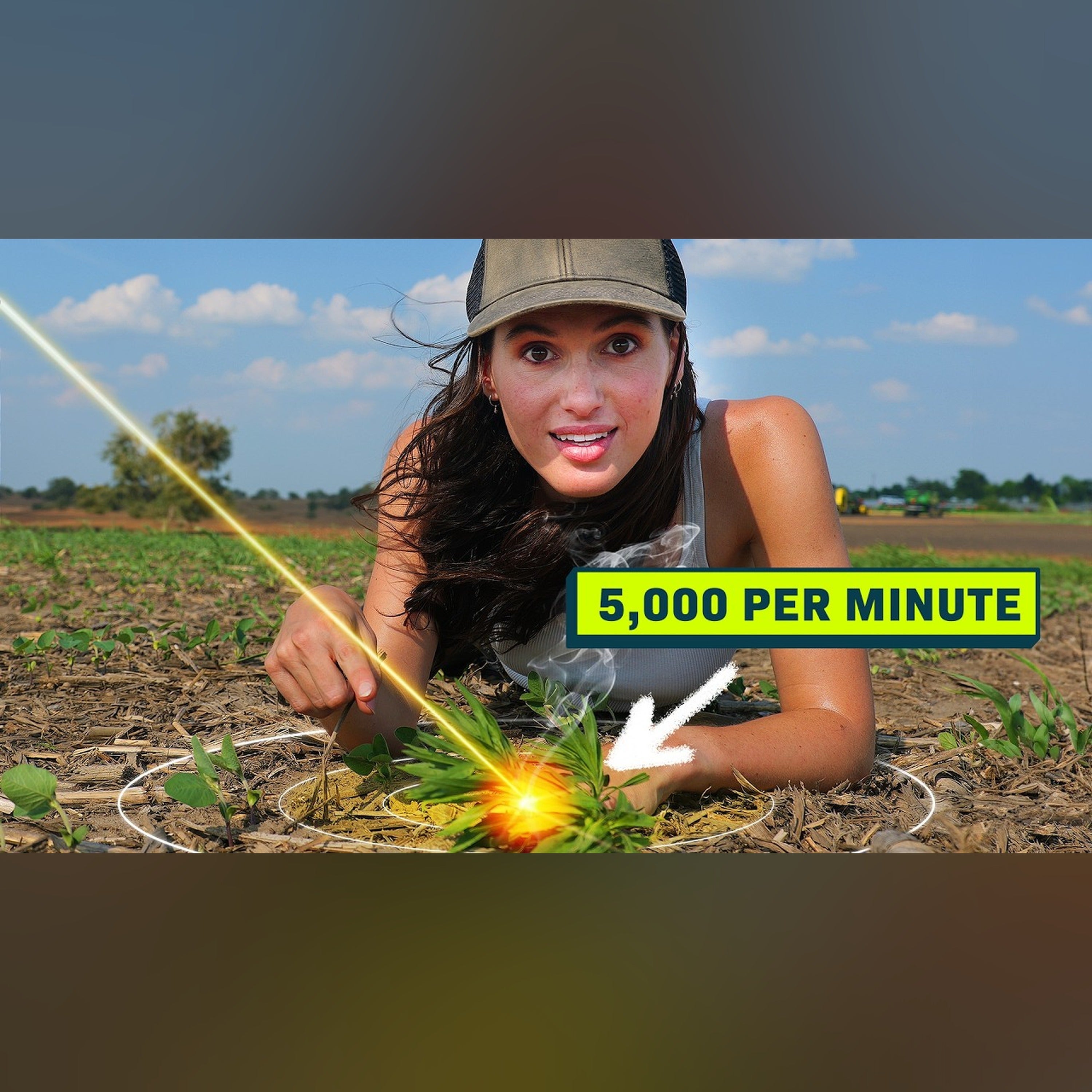
Growing food doesn’t look like I thought… Learn more about Dropbox for teams: https://www.dropbox.com/cleo Thanks Dropbox for sponsoring this video! Right now, we’re living through one of the most pivotal moments in food history… and most people have no idea it’s happening. Experts are calling the “Fourth Agricultural Revolution” and it’s here because we’re facing a big problem: The world’s population is rising, so experts say we’ll need to increase food output to catch up with our current population and feed those new people. But we’ve got to do it in ways that actually protect the Earth long term. Right now, farmers are in a fight to feed the world. So let me show you some of the coolest machines they’re using to do it… Chapters: 0:00 What’s the fourth agricultural revolution? 01:15 Why do we need more food? 1:54 Where does farming tech get tested? 3:00 What were the first 3 agricultural revolutions? 3:58 How do we feed billions more people… better? 4:31 How do farmers grow more food
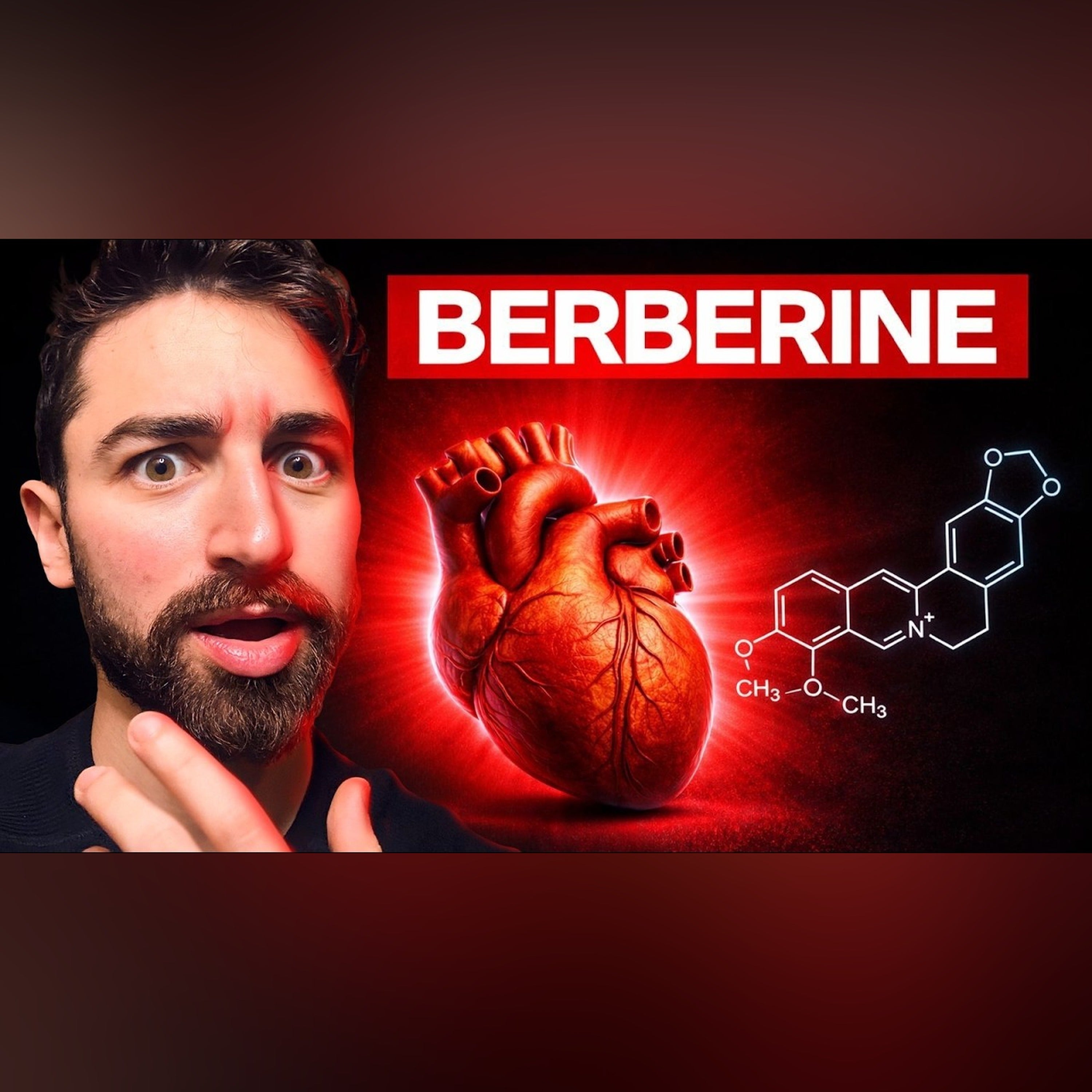
For extra nuances, all the references and early access to data like these, see the best-selling science letter: https://staycuriousmetabolism.substack.com/p/how-berberine-lowers-cholesterol?r=40ekz2 In this video, we unpack the stunning mechanism behind berberine, the yellow plant alkaloid that increases LDL receptors not by starving the liver of cholesterol, but by stabilizing the blueprint that cells use to builds them. It’s a twist in human biochemistry that reshaped how I think about cholesterol manipulation — and it might reshape how you do too. Then I’ll take you inside my own high-stakes N=1 experiment Hundred Health Link: https://www.hundred.com/STAYCURIOUS Discount Code: STAYCURIOUS50 knocks $50 off membership As a scientific advisor at Hundred Health, I candidly hold a small equity stake in the company. I’ve chosen to partner with Hundred Health because I genuinely believe it has the potential to be a disruptive force for good in personalized healthcare. It’s a tool unlike an
PBS Member Stations rely on viewers like you. To support your local station, go to: http://to.pbs.org/DonateSPACE ↓ More info below ↓ Uploaded 10-08-20 The second in our two event series about Theories of Everything! Watch the first one: https://www.youtube.com/watch?v=_izocEgArtQ Please subscribe to Brian Keating's YouTube Channel to watch one-on-one interviews with the guest speakers and more: https://www.youtube.com/DrBrianKeating Existing Theories of Everything have not yet produced experimental evidence that solves the fundamental challenges facing physics. That lack of progress has opened up a sea of controversy, from disagreements about the very necessity of TOEs, to questioning the cost/benefit of mega-billion dollar particle accelerators in search of them, to the emergence of competing TOEs from physicists outside of the academic community. In this 90 minute chat we dive into the existential questions around TOEs. Special thanks to Brian Keating, Lee Smolin, Sabine Hossenfelde
November 21, 2026 On November 22, 1963, President John F. Kennedy and First Lady Jacqueline Kennedy were visiting Texas, They hoped to heal a rift in the Democratic Party, as the white supremacists who made up the base of the party’s southern wing loathed the Kennedy administration for its support for Black rights, That base was furious about the administration’s backing of James Meredith, the first Black American to enroll at the University of Mississippi, By going to Dallas, Kennedy hoped to mend some fences in the state Democratic Party, The President's motorcade began with high spirits, Lady Bird Johnson thought, when she heard three shots, that it “must be firecrackers or some sort of celebration,” The Secret Service, knowing what had happened, rushed the motorcade to a hospital, When Vice President Johnson and Lady Bird were told that the President was dead, officials rushed LBJ away, In the confusion - in addition to the murder, it wasn't clear how extensive the plot was against
Explore what makes polio so dangerous, what is causing the 21st century resurgence of cases, and how we can eradicate the disease. -- In 1952, polio was everywhere: killing or paralyzing roughly half a million people annually. Yet just 10 years later, paralytic polio cases in the US dropped by 96% and we were on track to get rid of polio for good. But in recent years, the virus started striking back. So, what’s behind these recent spikes? Explore the dangers of poliovirus and the possibility of eradicating this deadly disease. Directed by Anton Bogaty. This video made possible in collaboration with Gates Ventures Learn more about how TED-Ed partnerships work: https://bit.ly/TEDEdPartner A special thanks to Ananda Bandyopadhyay, Amber Zeddies, and Kathleen O'Reilly who provided information and insights for the development of this video. Support Our Non-Profit Mission ---------------------------------------------- Support us on Patreon: http://bit.ly/TEDEdPatreon Check out our merch: htt
For nearly a year, a group of friends regularly explored the abandoned buildings of Taunton State Hospital in Massachusetts. They'd been through nearly every part of the property, but one basement remained a mystery, sealed behind a chained and padlocked door. Eventually, curiosity got the better of them. Armed with bolt cutters and flashlights, six friends made their way into the dark basement. At the far end, they discovered disturbing markings and what appeared to be bloodstains. Then one of them claimed something had touched her—and things quickly became terrifying. A piercing screech, flashlights suddenly going dark, and a frightening encounter with shadowy figures sent the group scrambling for the exit. They had spent months exploring the hospital without experiencing anything like it. Had they finally encountered something paranormal, or was there a reason that basement had been locked away? #RealGhostStoriesOnline #TauntonStateHospital #HauntedAsylum #AbandonedHospital #ShadowF
The UK Health Security Agency has launched a major study to find out what level of forever chemicals the average person in the UK has in their bodies. With results not expected until 2027, we speak to the UKHSA’s Dr Edward Wynne-Evans and Professor Tony Fletcher from the London School of Hygiene and Tropical Medicine about what is and is not known about per- and polyfluoroalkyl substances (PFAS) and their potential impacts on our health. And, with the help of Damian Bailey, professor of physiology and biochemistry at the University of South Wales, Laura hits the gym to work out if more of us are ditching cardio and aerobic exercise in favour of strength training, what that could mean for our health decades down the line. Then with fines set to be introduced on buses for people playing music and videos out loud on their phones, we look at whether spending more of our lives wearing headphones and earphones is changing not just what we hear, but how we hear. Presenter: Laura Foster Produc
Women with endometriosis often spend years searching for answers. On average, it can take around a decade to get a diagnosis. So could a new generation of tests, which are far less invasive than what's available today, help cut that wait from years to days? Inside Health is looking at what those tests involve and how well they might work in the real world. We'll also hear from one couple about their difficult journey to starting a family - and explore why many queer couples still face huge hurdles when trying to access fertility treatment here in the UK. And as the clocks go back, Laura looks at why a change of just one hour can result in 'social jet lag' or 'first class sleep'. Why are the first few days the hardest - and what we can do to make 'falling back' into autumn and 'springing forward' in March easier on our bodies? Presenter: Laura Foster Producer: Gerry Holt Editor: Ilan Goodman Production coordinator: Stu Laws Sound engineer: Sue Maillot The show was made by the BBC’s Audi
Public spaces should allow peaceful disagreement while preventing intimidation.
Share your view, then see how readers voted. No sign-in required. This poll is shared across stories.
Do you agree or disagree?
Common Quandary
A Common Quandary to discuss
Another conversation to explore, separate from this news story.
You spot your friend's partner on a dating app. Do you send the screenshot?
While browsing a dating app, you see the long-term partner of a close friend. The profile looks active, but you have no way to know whether it is current, permitted, fake, or simply forgotten.
When does loyalty require sharing uncertain information?