Send us Fan Mail (https://www.buzzsprout.com/242918/fan_mail/new) What happens when one spouse is neurotypical and the other is neurodivergent, or when both spouses have different neurodivergent needs? Rebecca sits down with Dr. Stephanie Holmes, co-author of Uniquely Us, to explore the realities of neurodiverse marriage, including emotional regulation, mental load, accommodations, gender expectations, and why traditional Christian marriage advice can sometimes make things harder. Together, they unpack how couples can extend grace without enabling, take responsibility without sacrificing themselves, and build a marriage that works for the actual people in it—not some imaginary version of Christian marital perfection! BARE MARRIAGE ANNOUNCEMENTS Preorder Fawn (https://amzn.to/3Vz6lI4), Sheila's New Book OurSpanish Site (https://baremarriage.com/espanol/) is live! TO SUPPORT US: And check out our Merch, (https://sheilawraygregoire.com/shop/) or any of our courses (https://sheilawraygrego
This is a Grave Talks CLASSIC EPISODE! PART TWO In Virginia Beach, Virginia, the Ferry Plantation House stands as one of the area’s most historically rich—and paranormally active—sites. While it’s unclear exactly when reports of spirits first began, stories of unexplained activity have followed the home throughout the 20th century and well into the present day. The house is believed to be occupied by as many as eleven distinct spirits, each tied to different periods of its long history. Among the most well-known are Henry, believed to have been enslaved on the property, and Erik, a young boy said to have died inside the home. Visitors and investigators report footsteps, voices, apparitions, and interactions that suggest the house is anything but empty. Cody Green, Vice President of Friends of the Ferry Plantation House and Paranormal Director, explores the history of Ferry Plantation House and the many spirits believed to remain there. Find out more about the house at ferryplantation.o
E47. Cats kill billions of birds every year, but where does that number come from, and does the cat on your couch count? Dr. Pete Marra, dean of the Earth Commons at Georgetown University and co-author of Cat Wars, unpacks the science behind one of the most heated fights in bird conservation. Want to go deeper? Pick up Pete’s book, Cat Wars: The Devastating Consequences of a Cuddly Killer, co-written with Chris Santella. In this episode, you'll hear about: How one lighthouse keeper's cat and her offspring caused the extinction of a bird almost as soon as it was discovered Whether that little bell on a cat's collar actually does anything Why New Zealand and Australia are making some of the toughest calls in conservation Galapagos Petrel audio contributed by Robert J. Tomkins, ML20313 Floreana Mockingbird audio contributed by Robert I. Bowman, ML85455
Hosted by Chris Beckett & Shane Ludtke, two amateur astronomers in Saskatchewan who enjoy teaching astronomy classes and showing the public views through their telescopes. [email protected] In this episode we cover the very active Leonid Meteor Shower peaking on the night of November 17–18, 2026, produced by dust from comet 55P/Tempel-Tuttle with fast meteors. Explore expert guidance on tracking celestial events alike Venus pairing with Spica, lots of deep sky clusters plus the latest astronomical highlights and observational tips for stargazers of all levels. In this episode, we are looking ahead to the night skies for the month of November. We break down the key celestial highlights—from planetary conjunctions and meteor showers to prime targets for deep-sky observers and double star enthusiasts. The Planets This Month Mercury: Extremely low in the east-northeast (ENE), best viewed after mid-month. Venus: Extremely low in the east-southeast (ESE) morning twilight all month. M
Sea level rise is not just something to fear in a distant future, where the sea encroaches daily into a given space. Instead, it starts today, with new floods happening with each new centimeter increase, forcing a portion of the 50% of the human population living close to the coast. ALL TIME HIGH Sea Levels recorded in Newport Beach: Kelvin Wave and King Tides flood Homes : r/collapse (https://www.reddit.com/r/collapse/comments/1xgiusn/all_time_high_sea_levels_recorded_in_newport/) Huntington Beach and Laguna Beach are being overtaken by the ocean due to global warming. : r/collapse (https://www.reddit.com/r/collapse/comments/1xm8rf8/huntington_beach_and_laguna_beach_are_being/) Thwaites is a runaway climate disaster. New studies show how. | Grist (https://grist.org/science/thwaites-runaway-climate-disaster-new-studies-show/) The world’s biggest cities are sinking. Is yours one of them? | Scientific American (https://www.scientificamerican.com/article/the-worlds-biggest-cities-are-sink
This week's midterm elections saw a seismic shift that will likely shape the policy debates in Washington over the next two years. But will the message sent by the voters have any impact on the Trump administration's efforts to undermine science and public health? Hosts Chris Dall and Dr. Michael Osterholm discuss the midterm results in this week’s episode. They’ll also talk about the ongoing measles outbreaks in the United States, examine the concerns about the potential for the Ebola outbreak to spread beyond Africa, dive into a new CDC report on antimicrobial resistance threats, and answer a listener's question about giving infants a first measles shot at six months. Plus, stick around to hear the latest installment of This Week in Public Health History. Links: As measles soars in Pennsylvania, some parents are vaccinating their babies early (CIDRAP) More than a quarter of Americans have misrepresented symptoms to get antibiotics, surveys show (CIDRAP) Postcards from IDWeek: Infecti
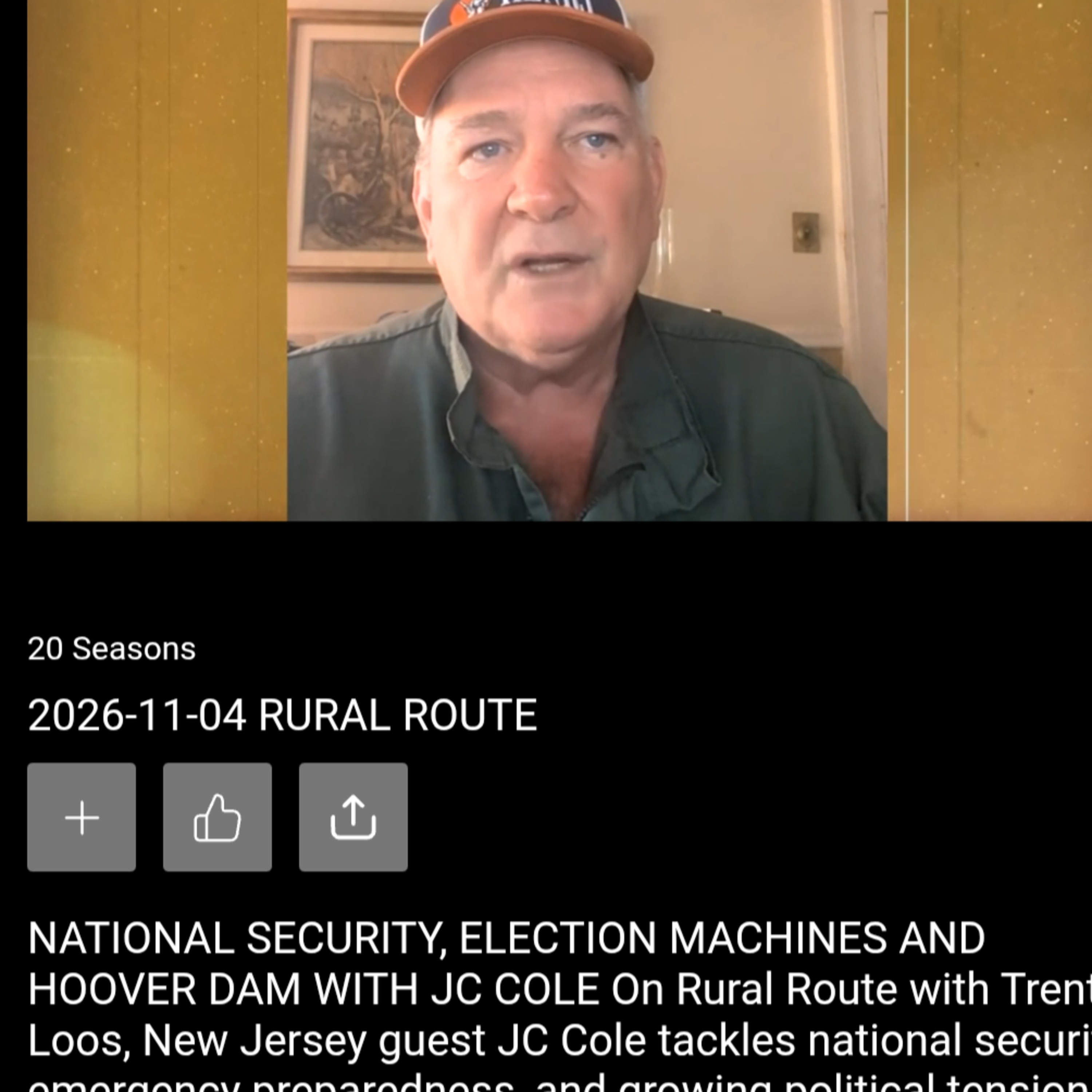
NATIONAL SECURITY, ELECTION MACHINES AND HOOVER DAM WITH JC COLE On Rural Route with Trent Loos, New Jersey guest JC Cole tackles national security, emergency preparedness, and growing political tensions across America. JC explains how the Commander-in-Chief could end the COVID national emergency…
Manufacturing accounts for 8% of UK GDP directly. Counting its supply chains and the spending of the people it employs, that figure rises to 23%, according to a 2024 Oxford Economics study for the Manufacturing Technologies Association (MTA). Yet the sector pays some of the highest energy costs in Europe and relies heavily on imported materials. It also struggles to recruit, held back by an image that no longer matches the modern factory floor. At the same time, many workshops are sitting partly idle. Xometry’s 2027 Manufacturing Outlook report found that 37% of smaller manufacturers are carrying spare capacity, against 11% of larger ones. Meanwhile buyers still contend with slow quotation processes and fragile single-source supply chains. Engineering teams are shrinking, and the time lost to sourcing carries a cost that unit price alone does not show. In this episode, MTA president Stewart Lane describes the pressures on British manufacturing, including the wait for clarity on defence
Today's Crash Course Chemistry takes a historical perspective on the creation of the science, which didn't really exist until a super-smart, super-wealthy Frenchman put the puzzle pieces together - Hank tells the story of how we went from alchemists to chemists, who understood the law of conservation of mass as proposed by a decapitated aristocrat, and explains how we came to have a greater understanding of how chemical compounds work and eventually a complete understanding of what atoms and molecules are. Watch this video in Spanish on our Crash Course en Español channel here: https://youtu.be/HxDjcseTj6s Pssst... we made flashcards to help you review the content in this episode! Find them on the free Crash Course App! Download it here for Apple Devices: https://apple.co/3d4eyZo Download it here for Android Devices: https://bit.ly/2SrDulJ Table of Contents Alchemists to Chemists 01:07 Law of Conservation of Mass 03:25 Decapitated Aristocrat 04:11 Chemical Compounds 05:44 Atoms and Mol
Jerry Hatfield earned his PhD in agricultural climatology from Iowa State University and worked at UC Davis before spending his career with USDA's Agricultural Research Service. He led the National Laboratory for Agriculture and the Environment in Ames, Iowa, for about 25 years. He has written nearly 500 research papers and was inducted into the ARS Science Hall of Fame in 2014. Since retiring in 2020, Jerry has worked as a freelance agricultural scientist, helping farmers improve production while protecting soil, water, and air. He studies how water, carbon, and gas exchange interact in the soil, using CO2 flux measurements and instruments built to measure CO2 inside crop canopies. He uses a "four R's" framework for water management: retain, redistribute, reduce, and remove. In this episode, John and Jerry discuss: Why water is the first thing to change as you build soil health, before carbon and then nutrients. How bare soil can lose three-quarters of a one-inch rain to evaporation,
In which Jacob Clifford and Adriene Hill teach you about Economic Systems and Macroeconomics. So, economics is basically about choices. We'll look at some of the broadest economic choices when we talk about the difference between planned economies and market economies. We'll get into communism, socialism, command economies, and capitalism. We'll look at how countries choose the kind of system they're going to use (spoiler alert: many end up with mixed economies). We'll also look into how individuals make economic choices. Crash Course is now on Patreon! Thanks to the following Patrons for their generous monthly contributions that help keep Crash Course free for everyone forever: Mark Brouwer, Jan Schmid, Anna-Ester Volozh, Robert Kunz, Jason A Saslow, Christian Ludvigsen, Chris Peters, Brad Wardell, Beatrice Jin, Roger C. Rocha, Eric Knight, Jessica Simmons, Jeffrey Thompson, Elliot Beter, Today I Found Out, James Craver, Ian Dundore, Jessica Wode, SR Foxley, Sandra Aft, Jacob Ash, Ste
A government by the people, for the people sounds like a good idea. But is democracy really all it’s cracked up to be? In this episode of Crash Course Political Theory, we’ll learn democracy has had its fair share of critics, past and present. And even those in favor of the idea don’t necessarily agree on what democracy should be. Crash Course Political Theory #1 Introduction: Democracy or Tyranny 00:00 Critiquing Democracy 00:34 The History of Democracy 02:33 Forms of Democracy 03:13 Challenges of Democracy 05:47 Radical Democracy & Agonism 08:27 Review & Credits 11:03 Sources: https://docs.google.com/document/d/1u5zJCbVA0xCurLbQwWzcxXEdlqXAPpAyYVS1quwKIis/edit?usp=sharing *** Support us for $5/month on Patreon to keep Crash Course free for everyone forever! https://www.patreon.com/crashcourse Or support us directly: https://complexly.com/support Join our Crash Course email list to get the latest news and highlights: https://mailchi.mp/crashcourse/email Get our special Crash Course Ed
And now we return to blood vessels. In this episode, we start discussing what blood pressure is, how it can become "high", and what that means for our health. One of the more interesting points is that your body has ways of dealing with high blood pressure, but they're not ways we want our bodies to operate on a full-time basis. And why can't we butter our bacon? WHY!?!?! Pssst... we made flashcards to help you review the content in this episode! Find them on the free Crash Course App! Download it here for Apple Devices: https://apple.co/3d4eyZo Download it here for Android Devices: https://bit.ly/2SrDulJ Chapters: Introduction: High Blood Pressure 00:00 Cardiac Output - How Blood Flows 1:36 Blood Pressure & Resistance 2:17 Blood Flow Formula 3:07 Short Term Blood Pressure Regulation 3:54 Long Term Blood Pressure Regulation 5:44 Chronic High Blood Pressure 6:22 Review 8:15 Credits 8:42 *** Crash Course is now on Patreon! Thanks to the following Patrons for their generous monthly contri
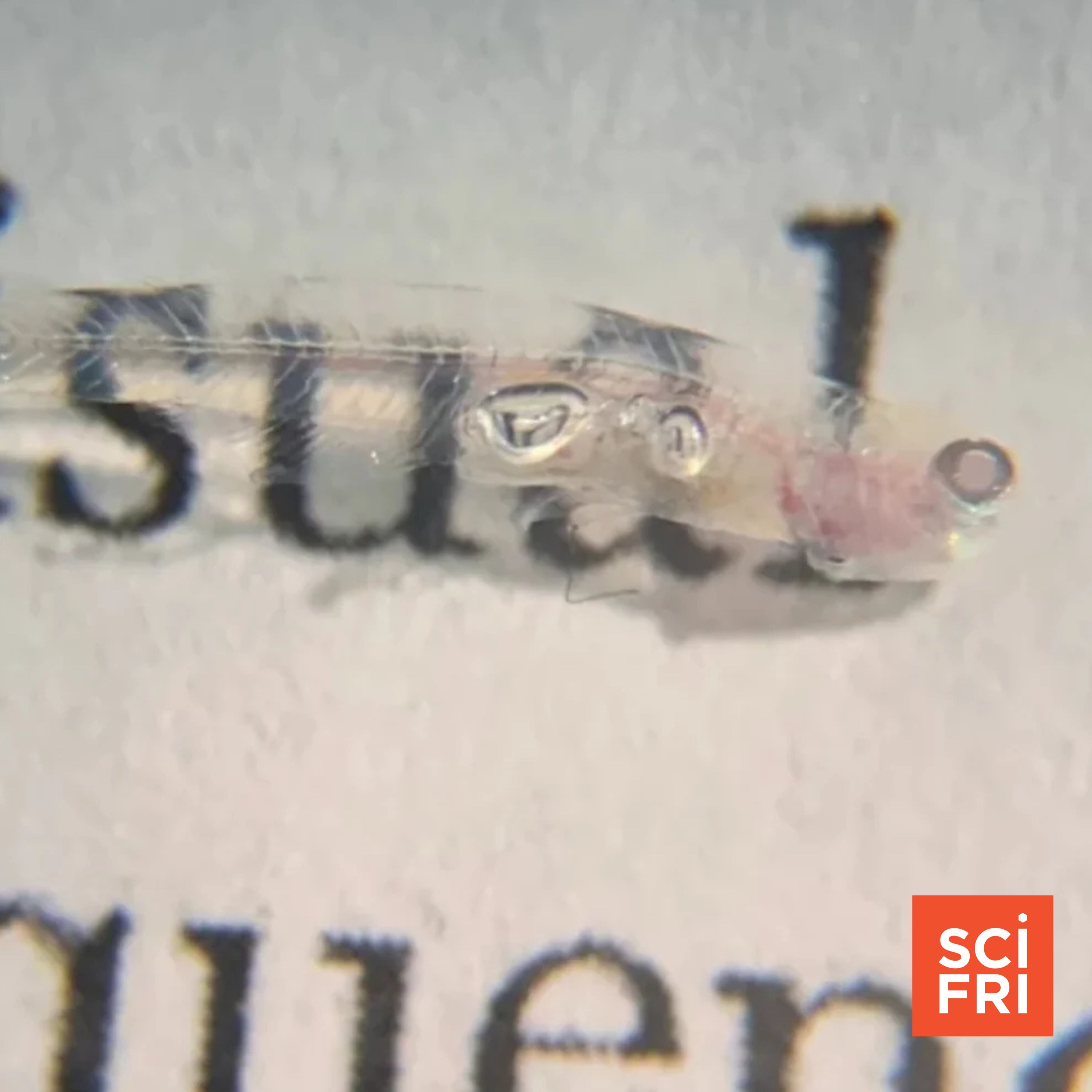
Move over, Drosophila. Step aside, C. elegans. Scientists are working to establish a new model organism. It’s a tiny species of glassfish (https://www.sciencefriday.com/segments/meet-the-tiny-see-through-fish/) called Danionella cerebrum, and its claim to fame is that it's almost completely transparent and can regrow parts of its body, including its brain. Scientists studying the nervous system, regeneration, and more are increasingly interested in this species. So what can we learn from this fish? And can it teach us anything about our own brains? Flora dives into this with biologists Deniz Atabay and Alejandro Sánchez Alvarado. Guests: Dr. Kutay Deniz Atabay is a postdoc at MIT’s Whitehead Institute for Biomedical Research in Cambridge, Massachusetts. He studies neurodevelopment and regeneration. Dr. Alejandro Sánchez Alvarado is the president and chief scientific officer of the Stowers Institute for Medical Research in Kansas City. Transcripts for each episode are available within 1
View full lesson: http://ed.ted.com/lessons/the-science-of-attraction-dawn-maslar Uploaded 08-05-14 Romantic chemistry is all about warm, gooey feelings that gush from the deepest depths of the heart...right? Not quite. Actually, the real boss behind attraction is your brain, which runs through a very quick, very complex series of calculations when assessing a potential partner. Dawn Maslar explores how our five senses contribute to this mating game, citing some pretty wild studies along the way. Lesson by Dawn Maslar, animation by TOGETHER.
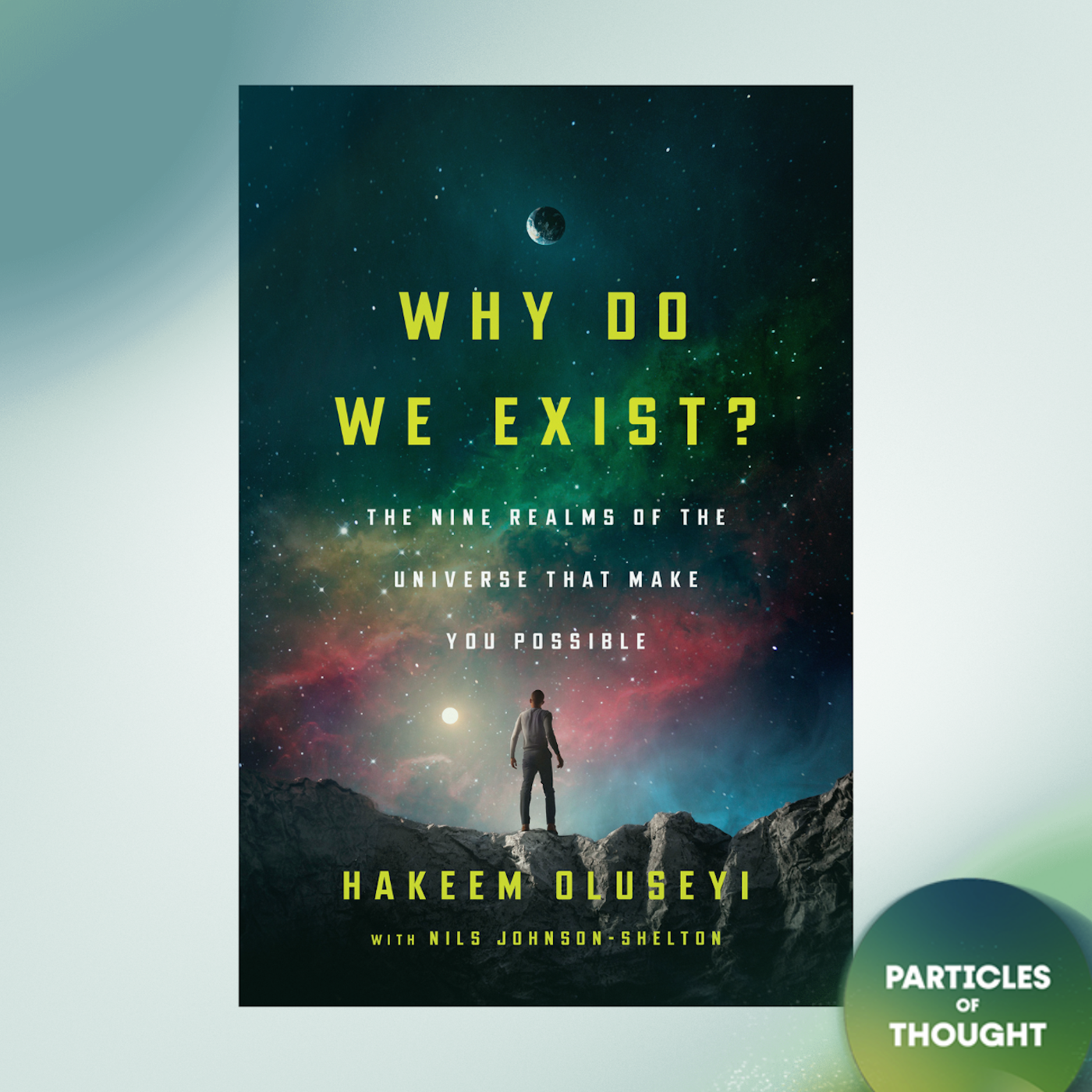
Hakeem Oluseyi, astrophysicist and host of Particles of Thought, takes the hot seat as NOVA Remix host and Senior Producer Caitlin Saks interviews him about his new book, Why Do We Exist? The Nine Realms of the Universe That Make You Possible. Hakeem tells his personal story of being a poor kid from the deep South who found Einstein in an encyclopedia and ended up at Stanford. Then he walks through the book's nine realms, argues that Pluto and the Moon are planets, estimates life in our galaxy, explains time and the pre-Big Bang universe, and shares why energy and imagination are humanity's best bets. Learn more about NOVA (https://www.pbs.org/wgbh/nova/) and visit our YouTube (https://www.youtube.com/channel/UCjHz5SVHeMT0AViCYZvsGDA) channel. Guest Bio: Hakeem Oluseyi is host of Particles of Thought, an astrophysicist, author, STEM educator, multi-patented inventor, science journalist, TV personality, science communicator, and inspirational speaker. His research is based on “hacking s
Discover how writing about our ancestors can strengthen our sense of identity, deepen gratitude, and help us find meaning in our own lives. Summary: What happens when we take time to imagine the lives of the people who came before us? We hear from artist Mi’Jan Celie Tho-Biaz about a writing practice that helped her feel closer to her ancestors and discover new perspectives on her own life, dreams, and independence. Then, psychologist Susan Moore shares the research on how exploring our family history can deepen self-understanding, strengthen our sense of connection, and give us a greater sense of meaning. How To Do This Practice: Choose an Ancestor: Think of a parent, grandparent, or someone from generations past. Set Aside Five Minutes: Find a quiet place and begin writing freely about this person. Imagine Their Life: Write about what they looked like, where they lived, and what their daily life might have been like. Get Curious: Imagine their relationships, challenges, joys, and exp
Before he won a Fields Medal for his pioneering work balancing randomness and order, Yu Deng had to achieve equilibrium in his own life. The article Amid Life’s Chaos, a Meticulous Mathematician Finds Stability (https://www.quantamagazine.org/yu-deng-wins-the-fields-medal-2026-for-his-work-on-the-random-data-problem-20260723/) first appeared on Quanta Magazine.
We all know the Moon is a satellite of our lovely Earth, but what if the Moon had a moon of its own? Would it be a Moon Moon? This week, Julian moons—that is, daydreams and fantasizes—about a universe where our Moon has a cute wee little moon moon of its own, and gets into the science of whether such a thing could actually exist. Could it be? Could we see?! Just how many moons can one moon have? Find out in this episode! QUESTIONS Julian: "What if the moon had a moon?" from Patrick Do you have an absurd question? Maybe it's a silly idea that popped into your head, a shower thought about the nature of reality, or a ridiculous musing about your favorite food? Whatever your question, we want to answer it—tell us! HOW TO ASK A QUESTION ️ Submit on our website: thatsabsurdshow.com/ask (https://thatsabsurdshow.com/ask) ☎️ Leave a voicemail: (302) TAPE-SHO [+1-302-827-3746] E-mail questions to hello at thatsabsurdshow.com (http://thatsabsurdshow.com/) If we use your question we’ll give you a
Hakeem Oluseyi, astrophysicist and host of Particles of Thought, takes the hot seat as NOVA Remix host and Senior Producer Caitlin Saks interviews him about his new book, Why Do We Exist? The Nine Realms of the Universe That Make You Possible. Hakeem tells his personal story of being a poor kid from the deep South who found Einstein in an encyclopedia and ended up at Stanford. Then he walks through the book's nine realms, argues that Pluto and the Moon are planets, estimates life in our galaxy, explains time and the pre-Big Bang universe, and shares why energy and imagination are humanity's best bets. Learn more about NOVA (https://www.pbs.org/wgbh/nova/) and visit our YouTube (https://www.youtube.com/channel/UCjHz5SVHeMT0AViCYZvsGDA) channel. Guest Bio: Hakeem Oluseyi is host of Particles of Thought, an astrophysicist, author, STEM educator, multi-patented inventor, science journalist, TV personality, science communicator, and inspirational speaker. His research is based on “hacking s
AI is moving finance from reconciling what happened last month to helping decide what the business should do next. Figma CFO Praveer Melwani argues that the best finance teams are becoming builders themselves, automating repetitive work so they can spend more time understanding customers, running experiments, and shaping strategy. Praveer joins a16z’s Seema Amble and Ivan Makarov to share what that shift looks like inside Figma, from collections and expense analysis to M&A diligence, where the corp dev team now uses AI to prototype products and simulate how Figma leaders might challenge an investment memo. They discuss why AI “slop” is a real risk, how Figma decides what to build versus buy, and why successful internal experiments eventually need a centralized systems layer to turn one-off agents into reliable infrastructure. They also get into what this means for hiring the next generation of finance leaders. Praveer’s bar isn’t simply whether someone can use AI. It’s whether they can
This week, we’re bringing you an episode from our friends at Weirdly Helpful (https://podcasts.apple.com/us/podcast/weirdly-helpful-formerly-the-best-advice-show/id1507811918), a podcast we love. And we’re talking about… shenanigans! High-spirited, mischievous activities, as defined by Miriam-Webster. As many of us are gearing up for a season of family gatherings, which are sometimes filled with long car trips, long travel delays, and long multicourse dinners, we thought we’d inject this time with some… FUN! Some pranks! Some shenanigans! First, Lulu wonders if animals engage in shenanigans: why do chimps tickle each other? Why do octopuses shoot bubbles across the water? Why do dolphins balance seaweed on their snouts for no reason? Are these shenanigans? Then, host Zak Rosen and artist Rebecca Garza-Bortman (https://www.rebeccabortman.com/) share the family shenanigans their listeners called in with, rating each one on a scale from “shenanigan” to “shenananananagan.” You’ll hear abou
What does it mean to build wealth as an individual investor in today’s society, especially as gains continue to get concentrated into smaller groups of VCs or institutional investors? Robinhood’s CEO and co-founder Vlad Tenev has a vision that can be summed up in one word: Ownership. In this episode, Sarah Guo chats with Vlad to get a closer look at how Robinhood has evolved from a simple app to buy stocks at zero commission into a global conglomerate that allows customers to own across a wide variety of surfaces and asset classes. Vlad explains how Robinhood is helping users extend ownership amidst the current economy and ongoing AI revolution through Trump accounts, tokenization of privates, and newer product offerings like Robinhood Chain, Agentic Trading, and Agentic Credit Card. He also talks about how his new mathematical superintelligence startup, Harmonic, is revolutionizing the field and how he hopes it will decentralize new discoveries and inventions. Vlad and Sarah also disc
In which John Green teaches you about some of the colonies that were not in Virginia or Massachusetts. Old New York was once New Amsterdam. Why they changed it, I can say; ENGLISH people just liked it better that way, and when the English took New Amsterdam in 1643, that's just what they did. Before the English got there though, the colony was full of Dutch people who treated women pretty fairly and allowed free Black people to hold jobs. John also discusses Penn's Woods, also known as Pennsylvania. Pennsylvania was (briefly) a haven of religious freedom, and William Penn dealt relatively fairly with the natives his colony displaced. Of course, as soon as Penn died, the colonist started abusing the natives immediately. We venture as far south as the Carolina colonies, where the slave labor economy was taking shape. John also takes on the idea of the classless society in America, and the beginning of the idea of the American dream. It turns out that in spite of the lofty dream that ever