The New CFO: How AI Is Rewriting the Finance Function | Figma CFO Praveer Melwani
51 min
Listen through the publisher, then discuss the episode here or arrange an in-person Roundtable. Your city determines where to meet.
Roundtables are designed for groups of four, with a shared subject and room for everyone to speak. Come for discussion, with no dating expectation.
AI is moving finance from reconciling what happened last month to helping decide what the business should do next. Figma CFO Praveer Melwani argues that the best finance teams are becoming builders themselves, automating repetitive work so they can spend more time understanding customers, running experiments, and shaping strategy. Praveer joins a16z’s Seema Amble and Ivan Makarov to share what that shift looks like inside Figma, from collections and expense analysis to M&A diligence, where the corp dev team now uses AI to prototype products and simulate how Figma leaders might challenge an investment memo. They discuss why AI “slop” is a real risk, how Figma decides what to build versus buy, and why successful internal experiments eventually need a centralized systems layer to turn one-off agents into reliable infrastructure. They also get into what this means for hiring the next generation of finance leaders. Praveer’s bar isn’t simply whether someone can use AI. It’s whether they can understand the business, interrogate the output, communicate clearly, and use automation without outsourcing their thinking. Resources: Figma:https://www.figma.com/ You Need a New CFO: https://www.a16z.news/p/you-need-a-new-cfo Follow Praveer Melwani on LinkedIn: https://www.linkedin.com/in/praveer-melwani/ Follow Seema Amble on X:https://x.com/seema_amble Follow Ivan Makarov on X:https://x.com/IvanoMakSF Stay Updated: Find a16z on YouTube: YouTube (https://www.youtube.com/@a16z) Find a16z on X (https://x.com/a16z) Find a16z onLinkedIn (https://www.linkedin.com/company/a16z) Follow our host: https://twitter.com/eriktorenberg For more details please see a16z.com/disclosures. Hosted by Simplecast, an AdsWizz company.
Episode information is provided by the publisher. Listening takes place on the publisher’s service.
We dive deep into the 7 Core Values that transform not just leadership—but life. From integrity to courage, this message reminds us that success isn’t just about performance. It’s about principle. When your values lead, your results follow. Key Topics From This Motivational speech: Why integrity is the foundation for trust and influence How responsibility shifts you from blame to power Why discipline is the difference between vision and results How humility unlocks wisdom and real leadership Why adaptability is essential for growth in uncertain times How generosity builds impact, not just income Why courage is required to move before you're ready This Jim Rohn motivational speech isn’t about hype—it’s about the habits and values that hold you up when motivation fades. If your results feel unstable, start with your values. Because when those are clear, your actions have direction, your leadership has depth, and your business has backbone. These values don’t shift under pressure—they lea
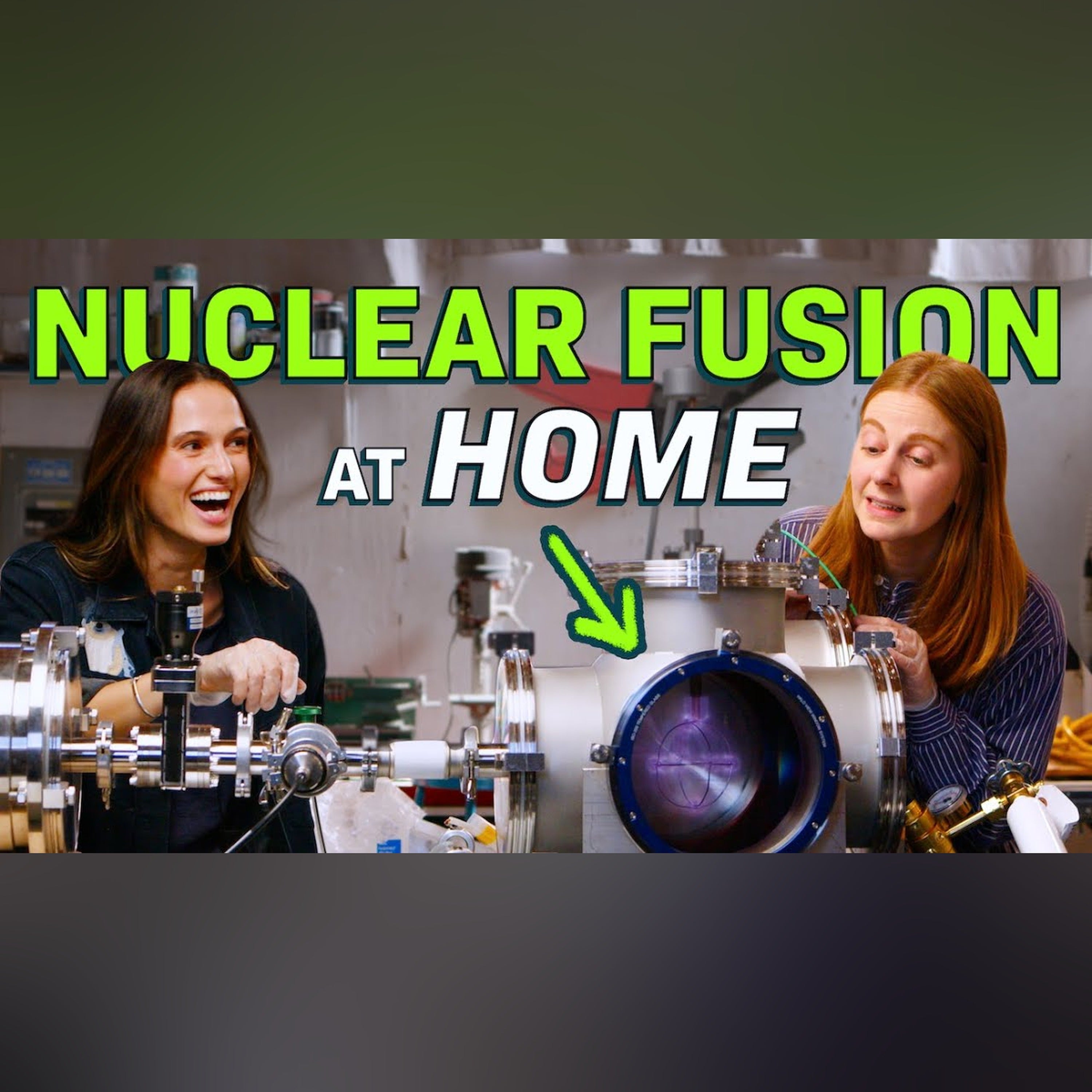
We attempted nuclear fusion. In Simone’s workshop. Disclaimer: This build was supervised by experts at Helion. Do not try this at home. I still can’t believe this video really happened. Back in May, I interviewed Helion CEO David Kirtley. I was trying to understand nuclear fusion: Is nuclear fusion possible now? How does fusion actually work? And most importantly, is nuclear fusion the future? Then, at the end of the interview, I asked David about headlines I’d seen about people building nuclear fusion devices in their backyards - what were they doing? “Oh,” David replied, “you can build one.” What followed is the biggest adventure yet on Huge If True. Together with the team at Helion and my friend fellow YouTuber Simone Giertz, we BUILT A NUCLEAR FUSION DEVICE to show how nuclear fusion works, what the big remaining challenges are, and how it might help us all in the future. Then, the last step was to try to turn it on… WATCH "FUSION, EXPLAINED: PART 1" HERE: https://youtu.be/piPbnKdv
Everyone is saying the same thing: higher rates are depressing the usual AI buy-the-dip mentality. Investors supposedly became less enthusiastic because the Federal Reserve is, in its view, tightening, bond yields are or were rising, and so the discount rate applied to future profits is becoming more painful. Or something. That explanation isn’t just incomplete, it’s dead wrong. Eurodollar University's Money & Macro Analysis ---------------------------------------------------------------------------------- That’s exactly what Monetary Metals does. No selling. No trading. Just more gold every month. Check it out here: https://monetary-metals.com/snider ---------------------------------------------------------------------------------- We need to confront our biggest challenge, but hardly anyone knows what it truly is or how to do it. Eurodollar University Live in February 2027 will change all that. Join us and fight for America's future. Start with the next generation. ------------------
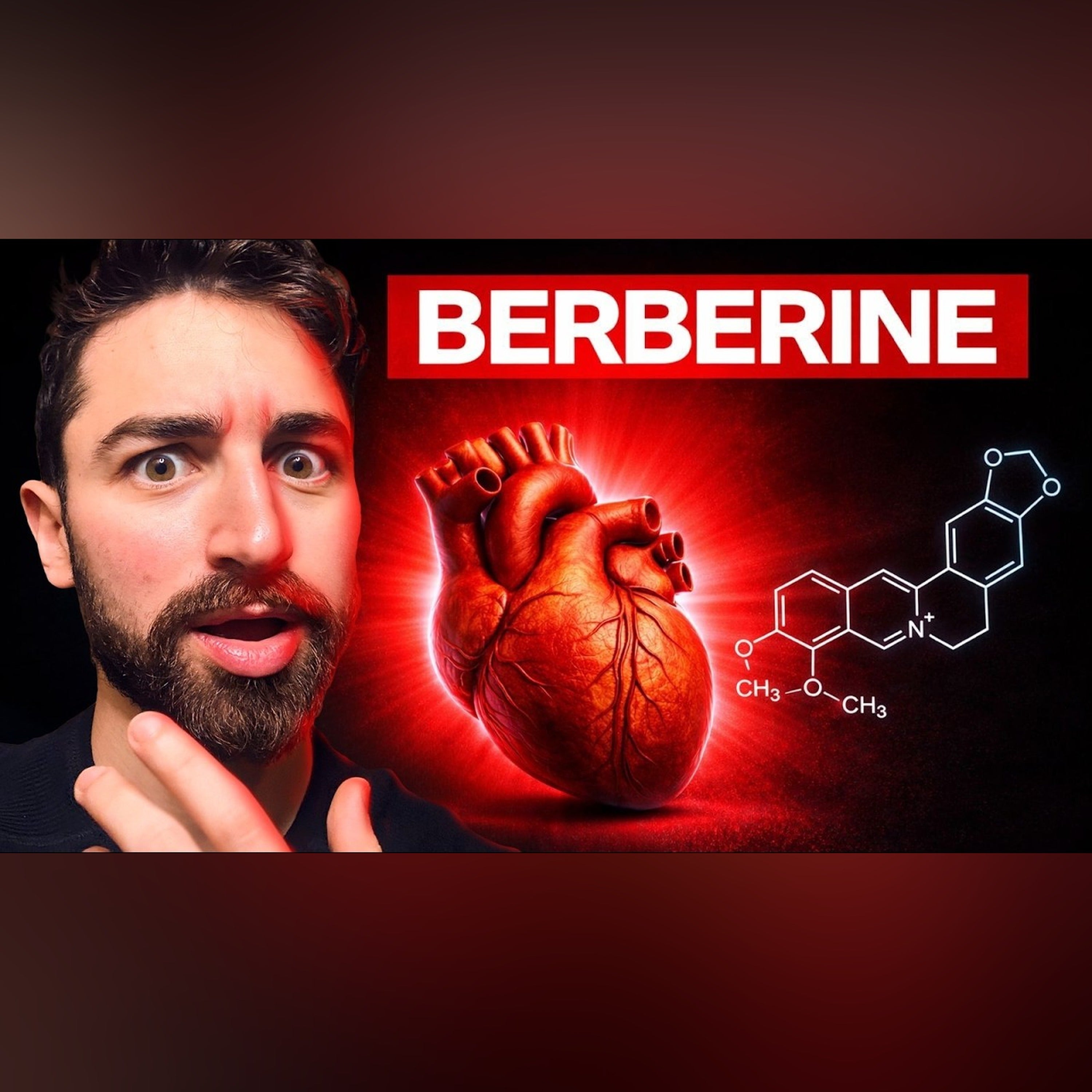
For extra nuances, all the references and early access to data like these, see the best-selling science letter: https://staycuriousmetabolism.substack.com/p/how-berberine-lowers-cholesterol?r=40ekz2 In this video, we unpack the stunning mechanism behind berberine, the yellow plant alkaloid that increases LDL receptors not by starving the liver of cholesterol, but by stabilizing the blueprint that cells use to builds them. It’s a twist in human biochemistry that reshaped how I think about cholesterol manipulation — and it might reshape how you do too. Then I’ll take you inside my own high-stakes N=1 experiment Hundred Health Link: https://www.hundred.com/STAYCURIOUS Discount Code: STAYCURIOUS50 knocks $50 off membership As a scientific advisor at Hundred Health, I candidly hold a small equity stake in the company. I’ve chosen to partner with Hundred Health because I genuinely believe it has the potential to be a disruptive force for good in personalized healthcare. It’s a tool unlike an
Sometimes all you need to identify a bird is a single feather. Because collecting bird feathers is prohibited in the U.S. to protect birds from poachers, start by taking a photo with a common object for scale. Then you can use online resources like the iNaturalist app or Featherbase website to help you solve the mystery. Keep your prime suspect in mind when you’re back where you found the feather and you might get to see the bird itself — feathers and all. More info and transcript at BirdNote.org (https://www.birdnote.org/podcasts/birdnote-daily/what-if-you-only-have-feather). Want more BirdNote? BirdNote is a nonprofit. Hosted by Simplecast, an AdsWizz company.
The FIRST Unleash the Power Within of 2022 just wrapped and we had 26,000 households from 151 countries around the world STEP UP and JOIN TOGETHER for one of our largest events in history! Uploaded 23-03-22 Here are some highlights from the week. Enjoy this video for a peek inside our virtual stadium It’s such a privilege to spend time with such DRIVEN, COMMITTED, LOVING SOULS all coming here with a hunger to GROW. For me, getting to hear your goals and witness each of you creating a unique life for yourselves, your loved ones, and your communities is deeply moving. We grow so we have MORE to GIVE, and the truth is, the world is a better, more beautiful and kind place because of people like YOU. If you’ve never experienced an Unleash the Power Within, it can be hard to imagine the HUMAN POTENTIAL and the RAW ENERGY⚡️ that converge over these four days and nights. It's electrifying to feel people from every walk of life, every background, every stage of life UNITE to find a deeper meani
What if your AI agent could find the people you should know before you even start looking? Cosign is building a professional network around reputation and trusted recommendations, and now agents can use that network too. MTS host Sophia Dew sits down with a16z’s David Booth and Cosign’s Bella Nazzari to discuss what they’ve learned since launching Cosign, why traditional profiles often miss the operators doing the most important work, and how the Cosign Awards are surfacing talent through the people willing to vouch for them. They also explore an emerging behavior: people connecting their agents to Cosign to continuously find relevant people, lists, and opportunities, and what professional networking could look like when both humans and their agents participate. Resources: Follow David Booth: https://x.com/davidbooth Follow Bella Nazzari: https://x.com/nazzari Follow Sophia Dew: https://x.com/sophiadew Learn more about Cosign:https://cosign.co/ Connect your agent to Cosign:https://cosi
David Heinemeier Hansson thinks the agent era is reopening a window in computing that has been closed for decades: the chance to build a new operating system people actually want to use. DHH joins a16z General Partners Martin Casado and Anish Acharya to explain why he’s building Omarchy, an agent-first Linux distribution designed around a computer that users can modify simply by asking. They discuss why the command lines, config files, and detailed error messages that once made Linux intimidating now make it unusually well suited to agents, and why DHH believes software development has become cheap enough to challenge decades-old platform lock-in. But if code is becoming abundant, what still matters? DHH argues that taste, craft, and the willingness to obsess over the final 2% become more important, not less. The conversation moves from tiny teams wielding the productive capacity of thousands of people to open models, competition at the frontier, and the return of hacker, demo, and pse
The question isn’t simply whether humanity should race toward superintelligence or stop. Nick Bostrom argues the harder challenge is preserving the ability to slow down when safety falls behind, without turning a temporary pause into permanent technological stagnation. a16z’s Eddy Lazzarin and Elena Burger sit down with Bostrom to revisit the ideas he helped bring into the mainstream, now that increasingly capable AI systems actually exist. They discuss why alignment may become harder as models grow more situationally aware, which capability improvements may carry more risk than others, and why Bostrom favors “pacing the frontier” rather than committing to a broad or indefinite pause. They also examine the cost of waiting. Bostrom argues that safely developed superintelligence could radically extend human lifespans and address problems from disease to poverty, meaning delay carries risks of its own. From there, the conversation turns to Deep Utopia, governance, the possibility of post-
Equipment rules should preserve fair competition even when they limit innovation.
Share your view, then see how readers voted. No sign-in required. This poll is shared across stories.
Do you agree or disagree?
Common Quandary
A Common Quandary to discuss
Another conversation to explore, separate from this news story.
An outsider becomes famous cooking another culture's food. Appreciation or taking over?
A chef becomes known for food from a culture outside their own after years of study with respected cooks. The restaurant is successful, while small businesses run by people from that culture struggle for attention.
When does appreciation become taking opportunity from the people who created a tradition?