This week Craig Benzine discusses bureaucracies. Bureaucracies tend to be associated with unintelligible rules and time-wasting procedures, but they play an important, though controversial, role in governing. From the FDA to the EPA, these agencies were established to help the government manage and carry out laws much more efficiently - to bring rule-making and enforcement closer to the experts. But the federal bureaucracy (which is part of the executive branch) has a lot of power and sometimes acts like Congress in creating regulations and like the courts through administrative adjudications. It's all a bit problematic for that whole "separation of powers" thing. So we'll talk about that too, and the arguments for and against increased federal bureaucracy. Support is provided by Voqal: http://www.voqal.org (http://www.voqal.org/) Chapters: Introduction: Craig does paperwork 00:00 What is bureaucracy? 0:51 What do bureaucrats do? 1:34 Bureaucracy & division of powers 2:19 Bureaucracy &
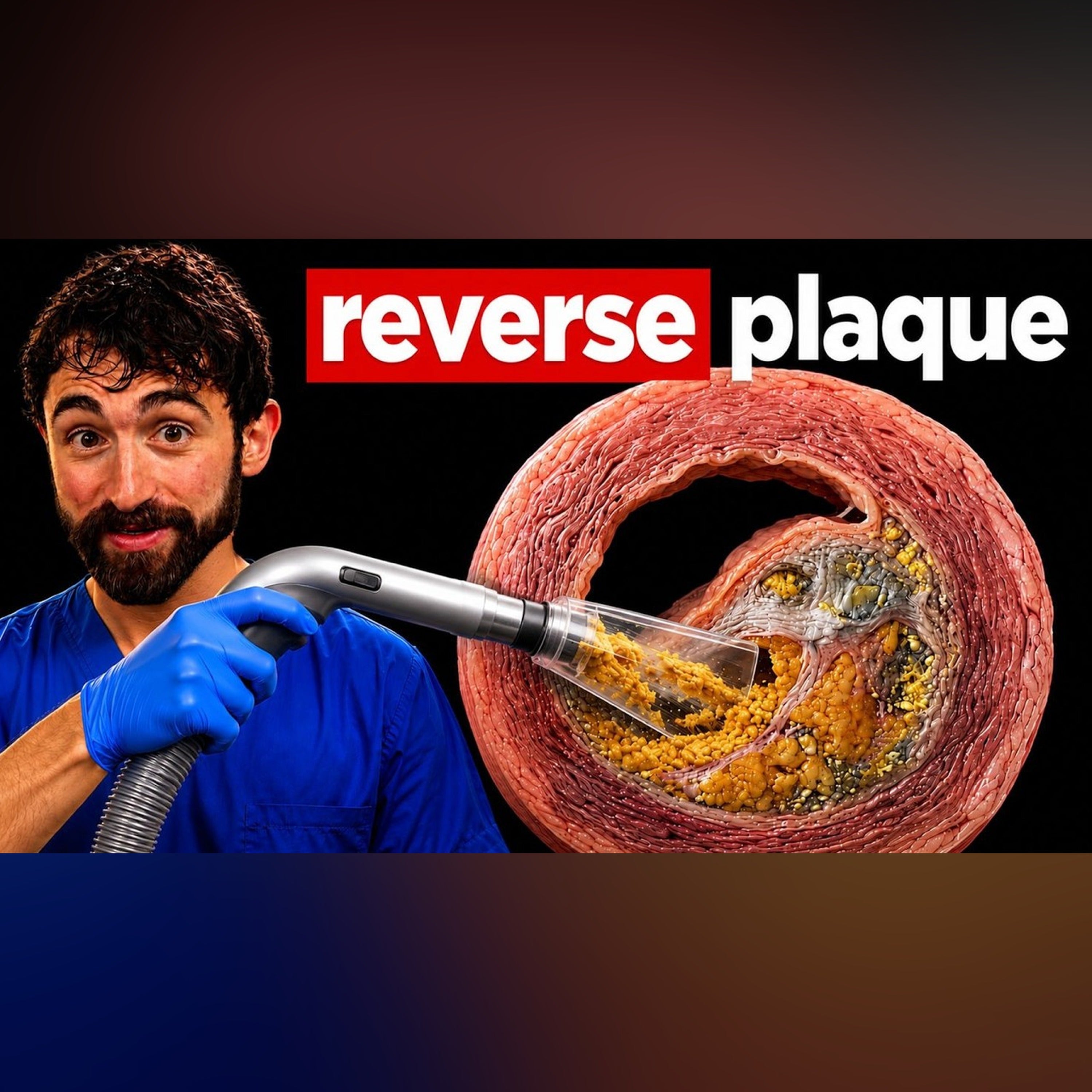
For the written companion, including references and extra nuances, check out StayCurious Metabolism: https://staycuriousmetabolism.substack.com/p/how-to-reverse-atherosclerosis-in?r=40ekz2 Link: https://www.winnowlabs.com/STAYCURIOUS25 Microplastics and Heart Health Letter: https://staycuriousmetabolism.substack.com/p/microplastics-in-my-heart-its-worse?r=40ekz2 Microplastics and Brain Health Letter: https://staycuriousmetabolism.substack.com/p/this-graph-changed-how-i-think-about?r=40ekz2 Sleep Video: https://youtu.be/cgnfJtLc_pY GLP-1 Masterclass Letter: https://youtu.be/a_vJYkb_Rjk Exercise for the Brain Video: https://youtu.be/b7jss3R5E50 Pinealon Letter: https://staycuriousmetabolism.substack.com/p/why-im-trying-this-peptide-for-sleep?r=40ekz2 Nattokinase Letter: https://staycuriousmetabolism.substack.com/p/nattokinase-the-heart-health-supplement?r=40ekz2 TUDCA Letter: https://staycuriousmetabolism.substack.com/p/can-tudca-protect-from-atherosclerosis?r=40ekz2 Chapters 0:00 – Two
So today Craig is going to talk about where our political opinions come from. Of course, most people’s politics are grounded in their ideologies, but there are also other external influences such as the government itself, interest groups, and the media. So we're going to talk about how these influencers factor into the overall public opinion and how their roles have changed over time. Now this stuff may seem like common sense, but it’s important to know where our opinions come from, especially when you consider how quickly the media landscape is changing. Produced in collaboration with PBS Digital Studios: http://youtube.com/pbsdigitalstudios Support is provided by Voqal: http://www.voqal.org (http://www.voqal.org/) All attributed images are licensed under Creative Commons by Attribution 4.0 Want to find Crash Course elsewhere on the internet? Facebook - http://www.facebook.com/YouTubeCrashC... Twitter - http://www.twitter.com/TheCrashCourse Tumblr - http://thecrashcourse.tumblr.com (h
Have you ever been to a Demolition Derby? Then you have an idea of how molecular collisions happen. In this episode, Hank talks about collisions between molecules and atoms, activation energy, writing rate laws, equilibrium expressions, reactions mechanics, and rate-determining steps. And funnel cakes are AWESOME! Pssst... we made flashcards to help you review the content in this episode! Find them on the free Crash Course App! Download it here for Apple Devices: https://apple.co/3d4eyZo Download it here for Android Devices: https://bit.ly/2SrDulJ -- Table of Contents Collisions Between Molecules and Atoms 0:00 Activation Energy 1:32 Writing Rate Laws 3:28 Rate Laws and Equilibrium Expressions 5:30 Reaction Mechanisms 8:06 Rate-Determining Steps 7:04 Crash Course is on Patreon! Want to find Crash Course elsewhere on the internet? Facebook - http://www.facebook.com/YouTubeCrashCourse Twitter - http://www.twitter.com/TheCrashCourse Instagram - https://www.instagram.com/thecrashcourse/ CC
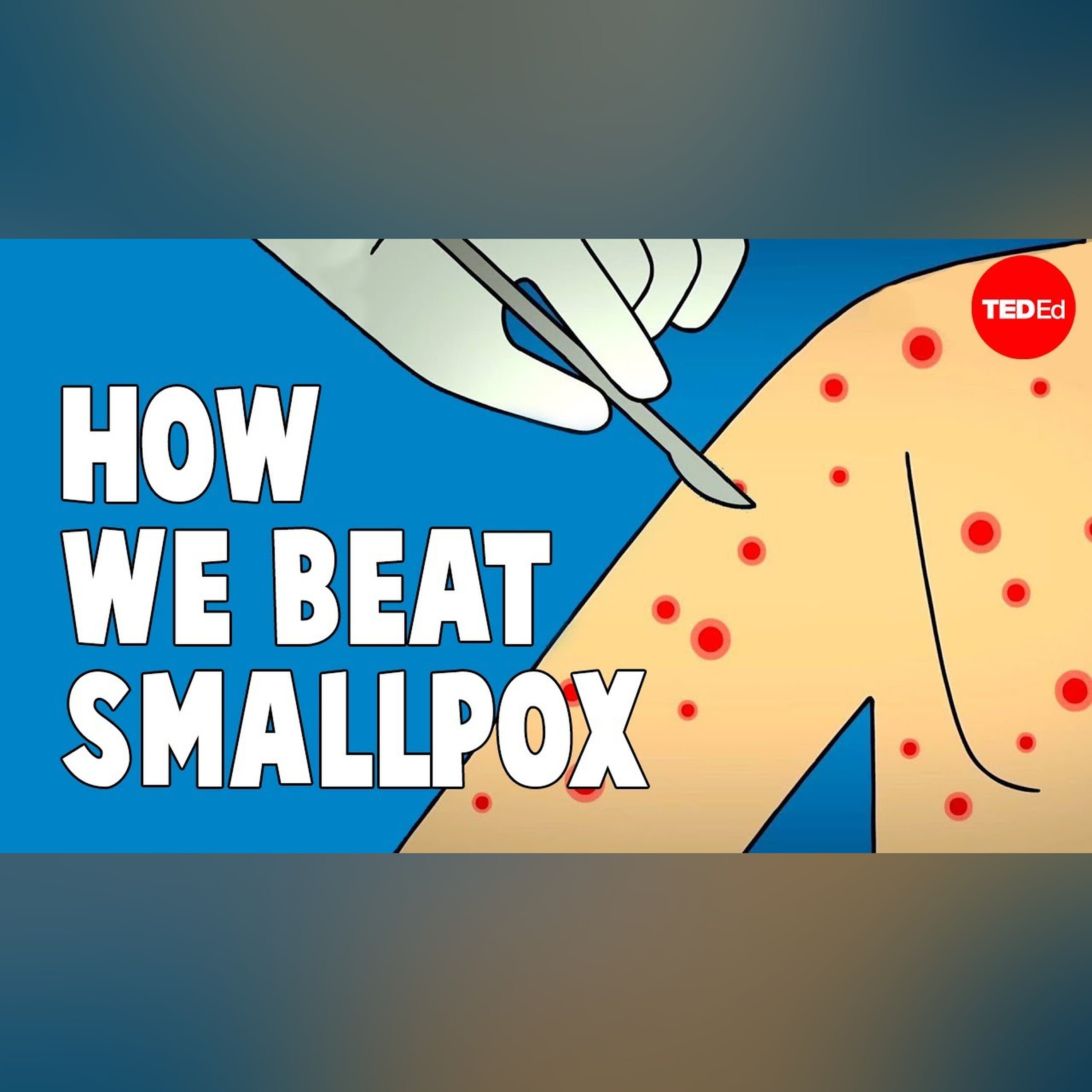
View full lesson: http://ed.ted.com/lessons/how-we-conquered-the-deadly-smallpox-virus-simona-zompi Uploaded 28-10-13 For 10,000 years, humanity suffered from the scourge of smallpox. The virus killed almost a third of its victims within two weeks and left survivors horribly scarred. But Simona Zompi commends the brave souls -- a Buddhist nun, a boy, a cow, a dairymaid and physician Edward Jenner -- who first stopped the spread of this disastrous disease, to make us smallpox-free today. Lesson by Simona Zompi, animation by Augenblick Studios.
There are countless types of plants and animals on Earth, but how do they work? In this episode of Crash Course Biology, we’ll take a bird’s eye view of how multicellular life functions, including how it’s organized, how it regulates itself to maintain homeostasis, and the big question: Why are these living things so wildly complex? Introduction: Bizarre Beasts 00:00 Multicellular Organization 1:16 Cell Specialization 3:34 Why We Aren't Unicellular 4:37 Cons of Multicellularity 5:53 Dr. Rebeca Gerschman 6:44 Homeostasis 8:24 Review & Credits 11:09 This series was produced in collaboration with HHMI BioInteractive, committed to empowering educators and inspiring students with engaging, accessible, and quality classroom resources. Visit https://BioInteractive.org/CrashCourse (https://biointeractive.org/CrashCourse) for more information. Are you an educator looking for what NGSS Standards are covered in this episode? Check out our Educator Standards Database for Biology here: https://www.
The letters in a word don’t always match the sounds they represent, and people can pronounce words in different ways. Lucky for us, linguists have tools to help understand and communicate speech sounds. In this episode of Crash Course Linguistics, we’ll begin our discussion of phonetics, the study of speech sounds, by talking about consonants, and we’ll also get an introduction to the International Phonetic Alphabet, or IPA. Want even more linguistics? Check out the Lingthusiasm podcast, hosted by the writers of Crash Course Linguistics: https://lingthusiasm.com/ Check out Monstrum on Storied: https://youtu.be/KIGmsxBMnjA *** Watch our videos and review your learning with the Crash Course App! Download here for Apple Devices: https://apple.co/3d4eyZo Download here for Android Devices: https://bit.ly/2SrDulJ Crash Course is on Patreon! Thanks to the following patrons for their generous monthly contributions that help keep Crash Course free for everyone forever: Catherine Conroy, Patty L
Is your injury rate telling you next to nothing about fatality risk?For years, 'safety' has been measured by counting what went wrong - e.g. recordables, TRIFR, LTIFR. But serious injuries and fatalities, or SIFS, haven't followed the same consistent downward trend. This raises the question: are we measuring the 'wrong' thing? This video unpacks a 2026 study from Bayona, Hallowell and others who analysed 999 field assessments from 31 utility & construction companies, testing whether two short-term measures predicted serious harm potential. The measures were:a) Pre-job safety brief (PJSB) quality: evaluating the engagement and thoroughness of pre-task discussionsb) High-energy control assessment (HECA): the proportion of high-energy hazards with a direct control in place. They found:1) Companies with better pre-job briefs tended towards better energy controls2) Each 1-point increase in HECA was associated with ~3% fewer expected SIFsThey also found that better pre-job briefs were linked
Welcome to Crash Course Art History! Over the next 22 episodes, Sarah Urist Green will explore the hidden stories behind artworks. We’ll make connections across time and space, unlock the secrets of the past, and look ahead to the art of the future. Episode 1 premieres on April 11. Key texts cited include: Art History Volume 1, 6th edition by Marilyn Stokstad and Michael W. Cothren (2018), Art History Volume 2, 6th edition by Marilyn Stokstad and Michael W. Cothren (2018), Smarthistory: Reframing Art History, edited by Dr. Lauren Kilroy-Ewbank. Sources: https://docs.google.com/document/d/1GW2NKzhpMNMmRyAFJVhFJG9cSfUOMRL-QrcWuHcWcIA/edit?usp=sharing *** Crash Course is on Patreon! Thanks to the following patrons for their generous monthly contributions that help keep Crash Course free for everyone forever: Leah H., David Fanska, Andrew Woods, DL Singfield, Ken Davidian, Stephen Akuffo, Toni Miles, Steve Segreto, Kyle & Katherine Callahan, Laurel Stevens, Burt Humburg, Perry Joyce, Scott
Our changing climate affects all genders - with extreme weather events, heat, drought and flooding putting pressure on the lives and wellbeing of entire communities. Yet the United Nations says that women and girls bear a disproportionate share of the burden and that by 2050, climate change may push up to 158 million more women and girls into poverty,16 million more than the total number of men and boys. So why exactly are women and girls more affected by climate change? And how can we build a better future? In this episode, Hosts Graihagh Jackson and Esme Stallard talk to Mary Robinson, former Chair of The Elders, former President of Ireland and former UN High Commissioner for Human Rights and Envoy on Climate Change. Producers: Graihagh Jackson, Diane Richardson and Grace Braddock Sound Mix: Ben Andrews and Tom Brignell Editor: Simon Watts Picture Credit: Getty, Imtiyaz Shaikh/Anadolu Agency.
Explore the ancient methods of growing glaciers, the homemade bodies of ice used as water sources, and how they can be used to combat climate change. Uploaded 04-04-19 -- In the 13th century, Genghis Khan embarked on a mission to take over Eurasia, swiftly conquering countries and drawing them into his empire. But, legend has it that there was one obstacle that even he couldn’t overcome: a towering wall of ice, grown by locals across a mountain pass. M Jackson explores the ancient methods of growing glaciers and how they can be used to combat climate change. Lesson by M Jackson, directed by Artrake Studio. Sign up for our newsletter: http://bit.ly/TEDEdNewsletter Support us on Patreon: http://bit.ly/TEDEdPatreon Find us on Twitter: http://bit.ly/TEDEdTwitter Peep us on Instagram: http://bit.ly/TEDEdInstagram View full lesson: https://ed.ted.com/lessons/how-to-grow-your-own-glacier-m-jackson Thank you so much to our patrons for your support! Without you this video would not be possible!
Earth may not be the Universe’s best home for life. We compare archipelago worlds, waterworlds, ocean moons, red dwarfs, rogue planets, and more to ask where life is most likely to begin, flourish, and become intelligent. Checkout Gods & Monsters: https://nebula.tv/curiousarchive/gods-and-monsters?ref=isaacarthur SFIA Merchandise: https://isaac-arthur-shop.fourthwall.com/ ️ Support us on Patreon: https://www.patreon.com/IsaacArthur Reddit Community: https://www.reddit.com/r/IsaacArthur/ Follow on Twitter / X: https://twitter.com/Isaac_A_Arthur SFIA Discord Server: https://discord.gg/53GAShE Credits: Where in the Universe Is Life Most Likely? Written, Produced & Narrated by: Isaac Arthur Music by Epidemic Sound: http://nebula.tv/epidemic Select imagery/video supplied by Getty Images
In which John Green teaches you about American involvement in World War I, which at the time was called the Great War. They didn't know there was going to be a second one, though they probably should have guessed, 'cause this one didn't wrap up very neatly. So, the United States stayed out of World War I at first, because Americans were in an isolationist mood in the early 20th century. That didn't last though, as the affronts piled up and drew the US into the war. Spoiler alert: the Lusitania was sunk two years before we joined the war, so that wasn't the sole cause for our jumping in. It was part of it though, as was the Zimmerman telegram, unrestricted submarine warfare, and our affinity for the Brits. You'll learn the war's effects on the home front, some of Woodrow Wilson's XIV Points, and just how the war ended up expanding the power of the government in Americans' lives. Hey teachers and students - Check out CommonLit's free collection of reading passages and curriculum resource
Bacteria often get a bad rap, but they’re some of our best partners in science and medicine! In this episode, we’ll explore what bacteria are doing with their DNA — including how they can trade it around. We’ll learn about chromosomes and plasmids, gene expression and recombinant DNA, and how E. coli are used to make insulin. Introduction: The Microbiome 00:00 Prokaryotes & DNA 1:33 Plasmids & Horizontal Gene Transfer 2:44 Insulin 4:49 Gene Expression 6:30 Dr. Rebecca Lancefield 7:54 Review & Credits 9:05 This series was produced in collaboration with HHMI BioInteractive, committed to empowering educators and inspiring students with engaging, accessible, and quality classroom resources. Visit https://BioInteractive.org/CrashCourse (https://biointeractive.org/CrashCourse) for more information. Are you an educator looking for what NGSS Standards are covered in this episode? Check out our Educator Standards Database for Biology here: https://www.thecrashcourse.com/biologystandards Check o
Building a skyscraper? Forget about steel and concrete, says architect Michael Green, and build it out of ... wood. As he details in this intriguing talk, it's not only possible to build safe wooden structures up to 30 stories tall (and, he hopes, higher), it's necessary. Uploaded 16-08-13 Talk by Michael Green.
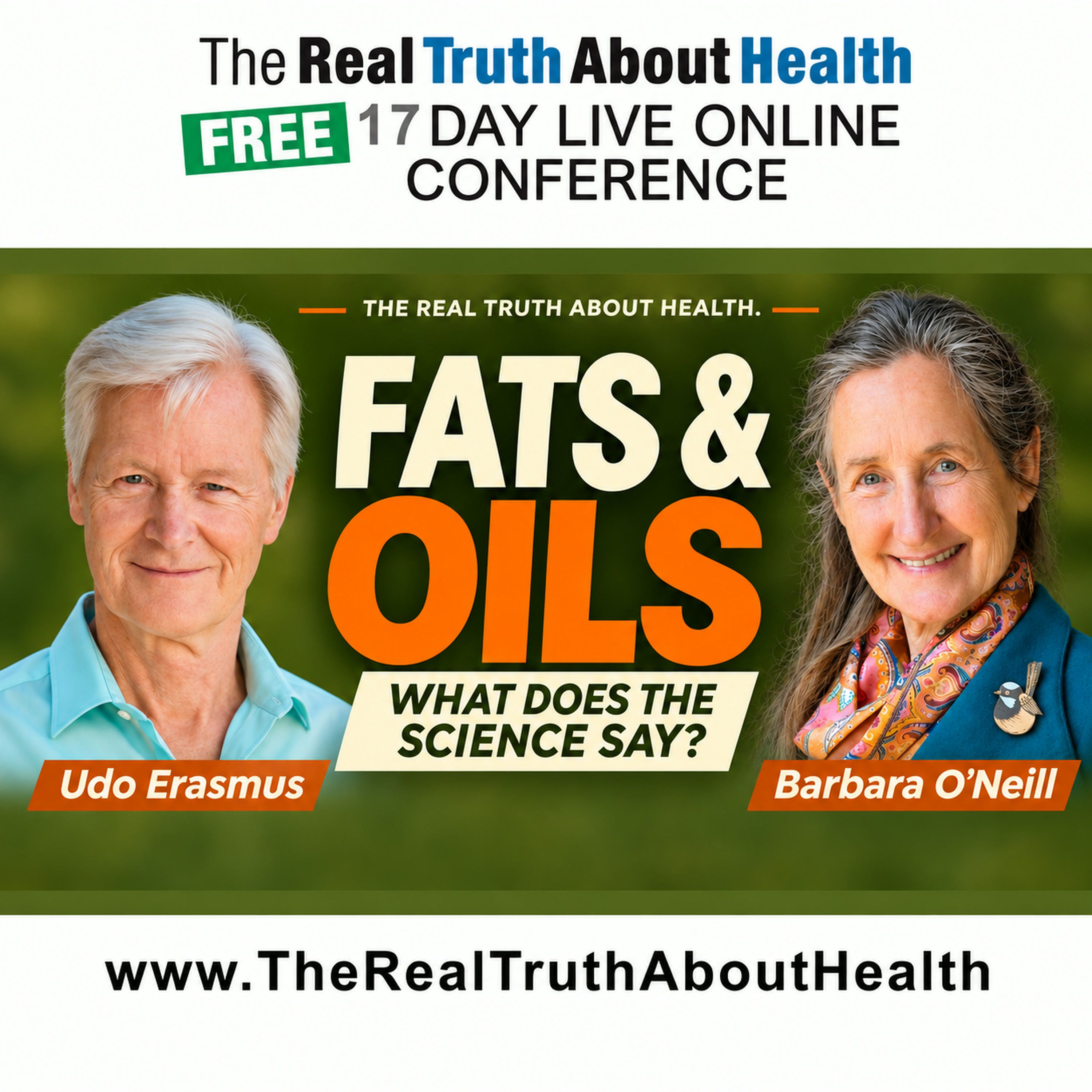
Fats / Oils: Are These Good or Bad for My Health? What the Best Science Says Udo Erasmus and Barbara O'Neill examine whether fats and oils help or harm health, and what the best science suggests. Learn how oil quality, processing, omega balance, and dietary fat choices may influence inflammation, metabolism, heart health, and longevity. #HealthyFats #Nutrition #Omega3
In which John Green teaches you about the Gilded Age and its politics. What, you may ask, is the Gilded Age? The term comes from a book by Mark Twain and Charles Dudley Warner titled, "The Gilded Age." You may see a pattern emerging here. It started in the 1870s and continued on until the turn of the 20th century. The era is called Gilded because of the massive inequality that existed in the United States. Gilded Age politics were marked by a number of phenomena, most of them having to do with corruption. On the local and state level, political machines wielded enormous power. John gets into details about the most famous political machine, Tammany Hall. Tammany Hall ran New York City for a long, long time, notably under Boss Tweed. Graft, kickbacks, and voter fraud were rampant, but not just at the local level. Ulysses S. Grant ran one of the most scandalous presidential administrations in U.S. history, and John will tell you about two of the best-known scandals, the Credit Mobilier sc
Uploaded 24-04-18 View full lesson: https://ed.ted.com/lessons/the-rise-and-fall-of-the-assyrian-empire-marian-h-feldman Before the sun never set on the British Empire; before Genghis Khan swept the steppe; before Rome extended its influence to encircle the Mediterranean Sea; there was ancient Assyria. Considered by historians to be the first true empire, Assyria’s innovations laid the groundwork for every superpower that has followed. Marian H Feldman details the rise and fall of the Assyrian Empire. Lesson by Marian H Feldman, animation by Naghmeh Farzaneh. Thank you so much to our patrons for your support! Without you this video would not be possible! Ricki Daniel Marbun, James Bruening, Ricardo Diaz, Danny Romard, Mariana Ortega, Leen Mshasha, Hector Quintanilla, Raheem , Roman Pinchuk, Soma Ali, Ai Ejima, Barbara Younker, Ojas Kapoor, Maurice Castonguay, Ryan Hooker, Benjamin Chan, Dominick Biolsi, Pi Guanghui, Terry Minion, and Rob Johnson.
In this episode, Hank talks about how nutty our world is via Buffers! He defines buffers and their compositions and talks about carbonate buffering systems in nature, acid rain, pH of buffers, and titration. Plus, a really cool experiment using indicators to showcase just how awesome buffers are. Pssst... we made flashcards to help you review the content in this episode! Find them on the free Crash Course App! Download it here for Apple Devices: https://apple.co/3d4eyZo Download it here for Android Devices: https://bit.ly/2SrDulJ -- Table of Contents Nature is Nutty 0:00 Carbonate Buffering and Acid Rain 0:35 Definition of Buffers 1:47 Composition of Buffers 2:26 pH of Buffers 3:33 Titration 7:43 Carbonate Buffering in Nature 7:12 - Crash Course is on Patreon! Want to find Crash Course elsewhere on the internet? Facebook - http://www.facebook.com/YouTubeCrashCourse Twitter - http://www.twitter.com/TheCrashCourse Instagram - https://www.instagram.com/thecrashcourse/ CC Kids: http://www.
Discover what causes acid rain, and how scientists were able to largely eliminate this major environmental threat. Uploaded 13-04-21 -- In 1963, scientists studying Hubbard Brook Experimental Forest made a shocking discovery. Their most recent rainfall samples were nearly 100 times more acidic than usual; which could destroy the area’s ecosystems in a matter of decades. What was causing this deadly rainfall? And what could be done to stop it? Joseph Goffman details how scientists transformed this major threat into a minor issue. Lesson by Joseph Goffman, directed by Nick Hilditch. Support Our Non-Profit Mission ---------------------------------------------- Support us on Patreon: http://bit.ly/TEDEdPatreon Check out our merch: http://bit.ly/TEDEDShop ---------------------------------------------- Connect With Us ---------------------------------------------- Sign up for our newsletter: http://bit.ly/TEDEdNewsletter Find us on Twitter: http://bit.ly/TEDEdTwitter Peep us on Instagram: ht
A police officer working the night shift in a small rural community received a call about an elderly woman wandering through a snow-covered field in nothing but a thin white nightgown. Concerned that she might be confused or in danger, he went to investigate. He quickly spotted the woman and began following her footprints through the snow, calling out as he tried to catch up. She never acknowledged him, but he continued after her, determined to make sure she was safe. Then he noticed something that stopped him in his tracks. The footprints he'd been following simply ended. There were no tracks leading away, and when he looked up, the woman had vanished. For an officer who was skeptical of ghosts, it was an encounter that proved difficult to explain. Had he been following a frightened woman who somehow disappeared—or something that was never really there? #RealGhostStoriesOnline #TrueGhostStories #WomanInWhite #GhostlyApparition #PoliceGhostStories #ParanormalEncounters #CanadianGhostSt
This is a Grave Talks CLASSIC EPISODE! PART TWO As a young boy, Bob Cranmer felt an inexplicable pull toward a massive, unsettling house in his Pittsburgh neighborhood. The home felt wrong, even from the outside — and yet, it fascinated him. Years later, that same house would become his family’s dream home: a sprawling 7,000-plus square-foot property with a dark reputation few truly understood. What followed was not a typical haunting. Bob eventually chronicled these events in his book "The Demon of Brownsville Road," detailing the house’s disturbing history, the toll it took on his family, and the extreme steps required to reclaim their safety. The involvement of the Catholic Church and formal exorcisms marked a turning point, but not without lasting consequences. This is the story of a house that seemed to choose its owner — and the terrifying cost of discovering why. #TheGraveTalks #DemonOfBrownsvilleRoad #BobCranmer #DemonicHaunting #TrueParanormal #HauntedHouse #Exorcism #RealGhos
Dr. Al Grauer hosts. Dr. Albert D. Grauer ( @Nmcanopus (https://twitter.com/Nmcanopus) ) is an observational asteroid hunting astronomer. Dr. Grauer retired from the University of Arkansas at Little Rock in 2006. travelersinthenight.org (http://travelersinthenight.org/) From May & June 2026. Today's 2 topics: - However, according to a recent research project, the Rubin Observatory will discover but not give an adequate warning time for objects destined to hit the Earth. To provide time to take action to deflect an incoming object we will need to rely on ground based telescopes used by my Catalina Sky Survey teammates and other asteroid hunting groups as well as NASA's NEO Surveyor satellite when it is launched. - A start up company Reflect Orbital is proposing to launch 50,000 satellite mirrors by 2035 to illuminate solar panels on Earth all night long. This would be devastating for human sleep cycles, birds, insects, plants and many of the biological systems of organisms on which we a
Cotton is everywhere in our modern world, and it became a hugely important crop in the 19th century United States. Cotton was a huge economic boon to the US, and much of that wealth was built on the backs of enslaved laborers. And cotton didn't only benefit the states where slavery was legal. While cotton was mainly grown in the southern states, much of that cotton was processed in northern textile mills. Today we'll learn about the growth of the cotton industry, who benefitted from it, and who was left out. Clint's book, How the Word is Passed is available now! https://bookshop.org/a/3859/9780316492935 VIDEO SOURCES -Edward E. Baptist, The Half Has Never Been Told: Slavery and the Making of American Capitalism. New York: Basic Books, 2014. -Sven Beckert, Empire of Cotton: A Global History. New York: Penguin Books, 2014. -Eugene Dattel, Cotton and Race in the Making of America: The Human Costs of Economic Power. Lanham, MD: Ivan R Dee, 2009. -Adam Rothman, Slave Country: American Expan