E112: Stop Counting Injuries and Measure Control Quality Instead: SIF Prevention (QUICKISODE)
7 min
Listen through the publisher, then discuss the episode here or arrange an in-person Roundtable. Your city determines where to meet.
Roundtables are designed for groups of four, with a shared subject and room for everyone to speak. Come for discussion, with no dating expectation.
Is your injury rate telling you next to nothing about fatality risk?For years, 'safety' has been measured by counting what went wrong - e.g. recordables, TRIFR, LTIFR. But serious injuries and fatalities, or SIFS, haven't followed the same consistent downward trend. This raises the question: are we measuring the 'wrong' thing? This video unpacks a 2026 study from Bayona, Hallowell and others who analysed 999 field assessments from 31 utility & construction companies, testing whether two short-term measures predicted serious harm potential. The measures were:a) Pre-job safety brief (PJSB) quality: evaluating the engagement and thoroughness of pre-task discussionsb) High-energy control assessment (HECA): the proportion of high-energy hazards with a direct control in place. They found:1) Companies with better pre-job briefs tended towards better energy controls2) Each 1-point increase in HECA was associated with ~3% fewer expected SIFsThey also found that better pre-job briefs were linked to ** more ** reported SIFS, but does this represent better reporting, or something else? Ref: Bayona et al. (2026), Journal of Safety Research, 98, 175–189. Study: https://doi.org/10.1016/j.jsr.2026.06.007Support the channel: #SafetyScience #SIF #SeriousInjuryPrevention #HOP #SafetyLeadership #ConstructionSafety
Episode information is provided by the publisher. Listening takes place on the publisher’s service.
For a written breakdown, early access to content like this, and extra nuances, see the associated StayCurious Metabolism newsletter: https://open.substack.com/pub/staycuriousmetabolism/p/stop-chasing-8-hours-of-sleep?r=40ekz2&utm_campaign=post&utm_medium=web&showWelcomeOnShare=true (https://open.substack.com/pub/staycuriousmetabolism/p/stop-chasing-8-hours-of-sleep?r=40ekz2&showWelcomeOnShare=true) Pinealon Letter: https://staycuriousmetabolism.substack.com/p/why-im-trying-this-peptide-for-sleep?r=40ekz2 No Sleep Letter: https://staycuriousmetabolism.substack.com/p/what-if-you-didnt-need-to-sleep-this?r=40ekz2 Deep Sleep Masterclass: https://staycuriousmetabolism.substack.com/p/how-to-help-your-brain-clean-itself?r=40ekz2 I review several gamma entrainment devices in the Deep Sleep letter, along with the evidence supporting this tool. The only device I have personal experience with is Gamma Light Therapy, which was developed based on some of the early Nature research and is also one of
If an asteroid is coming for Earth… what would we really do? Have a coffee with me! Try Cometeer with code CLEO for $20 off your Discovery Box on http://cometeer.com/cleo Imagine, it’s 2034, and a rock the size of a mountain, far off in our solar system is on a direct impact course for Earth. How would we know? And what would we actually DO about it? In this video, we play out a fictional asteroid headed for Earth – with help from my friend and former NASA engineer Mark Rober and rare access into a remote facility where they discover NEW asteroids – to show you all the real science and tech we would use to defend our planet if an asteroid is about to hit Earth! [SPOILER] Our rock was published in the Minor Planet Electronic Circular (MPEC) here! MPEC 2025-K125 : 2025 KS6 Chapters: 00:00 Did an asteroid hit Earth? 01:00 What happens if an asteroid is headed towards Earth? 01:52 Is that Mark Rober? 03:26 How big was the asteroid that killed the dinosaurs? 04:30 What happens when an aster
Fear has a way of quietly taking control of your life. It convinces you to stay where you are, avoid difficult conversations, delay decisions, tolerate situations you know aren’t good for you, and settle for a life that is far smaller than the one you are capable of living. In this episode of The Strong Life Project, we explore how fear impacts your thinking, your relationships, your career, your leadership, and ultimately your ability to live a meaningful life. Fear doesn’t always look like panic. Sometimes it looks like procrastination, overthinking, making excuses, people pleasing, avoiding conflict, or constantly waiting for the perfect moment. The problem is that every time you allow fear to make a decision for you, you reinforce the belief that you are incapable of handling what comes next. Over time, this creates a pattern of avoidance that undermines confidence, resilience, emotional strength, and personal growth. Learning to manage fear doesn’t mean becoming fearless. It means
Thanks to LastPass for sponsoring PBS DS. You can check out LastPass by going to https://lastpass.onelink.me/HzaM/2019Q3JulyPBSspace Uploaded 18-07-19 PBS Member Stations rely on viewers like you. To support your local station, go to: http://to.pbs.org/DonateSPACE Our universe started with the big bang. But only for the right definition of “our universe”. And of “started” for that matter. In fact, probably the Big Bang is nothing like what you were taught. A hundred years ago we discovered the beginning of the universe. Observations of the retreating galaxies by Edwin Hubble and Vesto Slipher, combined with Einstein’s then-brand-new general theory of relativity, revealed that our universe is expanding. And if we reverse that expansion far enough – mathematically, purely according to Einstein’s equations, it seems inevitable that all space and mass and energy should once have been compacted into an infinitesimally small point – a singularity. It’s often said that the universe started wi
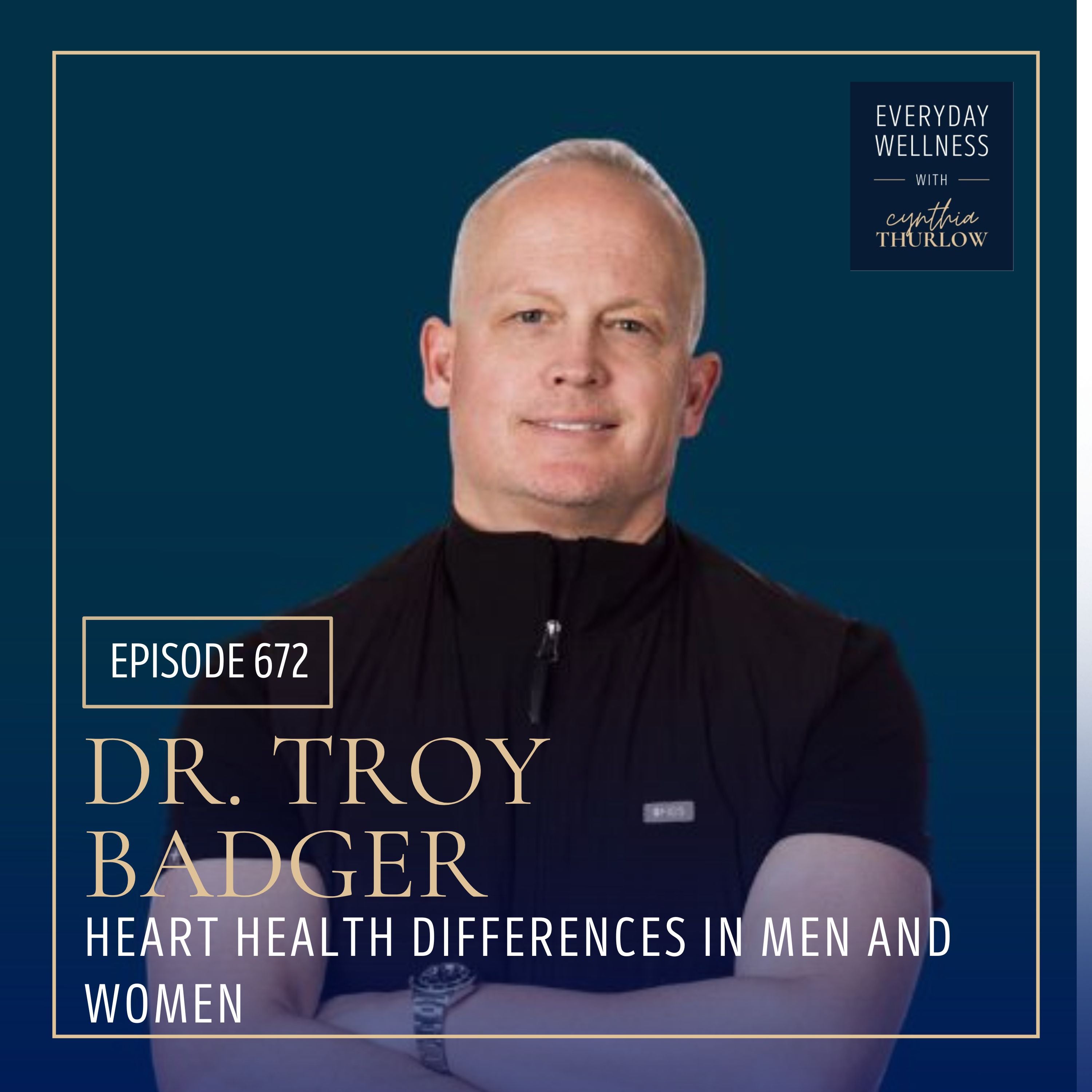
Today, I’m honored to connect with Dr. Troy Badger. He is a board-certified cardiologist and interventionalist and the founder of Cardiostrong, a concierge preventive cardiology clinic in Provo, Utah, focused on reducing cardiovascular risk, optimizing metabolic health, and improving strength and cardiorespiratory fitness for executives and athletes. In today’s conversation, we discuss Dr. Badger’s gender- and age-specific approach to heart health, including treatment differences for men and women, and diagnoses such as INOCA, SCAD, vasospastic disease, and Takotsubo. We examine emotions and their influence on heart health, coronary ischemia and cardiomyopathies, labs and diagnostics, how Dr. Badger assesses risk in his patients, and the differences between a CAC and a CCTA. Dr. Badger also shares the labs he finds essential for all patients and discusses the role of VO2 Max, cardiovascular training, and lifestyle—specifically nutrition, the use of GLP-1 drugs, and a multidisciplinary
She'd never believed in ghosts. In fact, the idea that a house could be haunted had never crossed her mind. So when a coworker asked her to housesit and care for two dogs while the family was away, she happily agreed. What could possibly go wrong? But over the next four nights, strange things began happening. Doors wouldn't stay closed, lights seemed to turn themselves on and off, and the dogs became increasingly interested in something she couldn't see. She was convinced there had to be a reasonable explanation, even wondering whether someone had gotten into the house. When the homeowners returned, she told them everything, expecting them to be just as concerned as she was. Instead, their reaction caught her completely off guard. Had this lifelong skeptic just spent four nights in a haunted house without knowing it? #RealGhostStoriesOnline #TrueGhostStories #HauntedHouse #HauntedHousesitting #DogsAndGhosts #ParanormalEncounters #AnimalIntuition #UnexplainedActivity #GhostStories #Skep
Most disasters start long before the explosion - years earlier, inside the organisations and systems designed to prevent them. In this episode, I unpack Nick Pidgeon and Michael O'Leary's excellent article 'Man-Made Disasters: Why technology and organizations (sometimes) fail', which expands Barry Turner's classic Man-Made Disaster theory. I cover: a) disaster incubation - how vulnerability quietly grows for years b) various concepts like rigidities of belief, decoy phenomena & the variable disjunction of information c) systemic uncertainty - when we can't even 'see' a hazard right in front of us d) safety imagination and the challenge of proceduralising to safety e) safety subcultures as both a resource for navigating risk but also blinding us to it Main ref: Pidgeon, N., & O’Leary, M. (2000). Man-made disasters: why technology and organizations (sometimes) fail. Safety Science, 34(1–3), 15–30. Support the channel: https://buymeacoffee.com/benhutchinson
Platforms should explain their content-removal decisions using publicly available rules.
Share your view, then see how readers voted. No sign-in required. This poll is shared across stories.
Do you agree or disagree?
Common Quandary
A Common Quandary to discuss
Another conversation to explore, separate from this news story.
The best garden plot has been abandoned for months. Who gets to take it?
Garden plots have a three-year waiting list. One member's plot has gone untended for months and messages go unanswered, but other gardeners know they recently faced serious health problems.
How long should a shared resource remain reserved out of compassion?