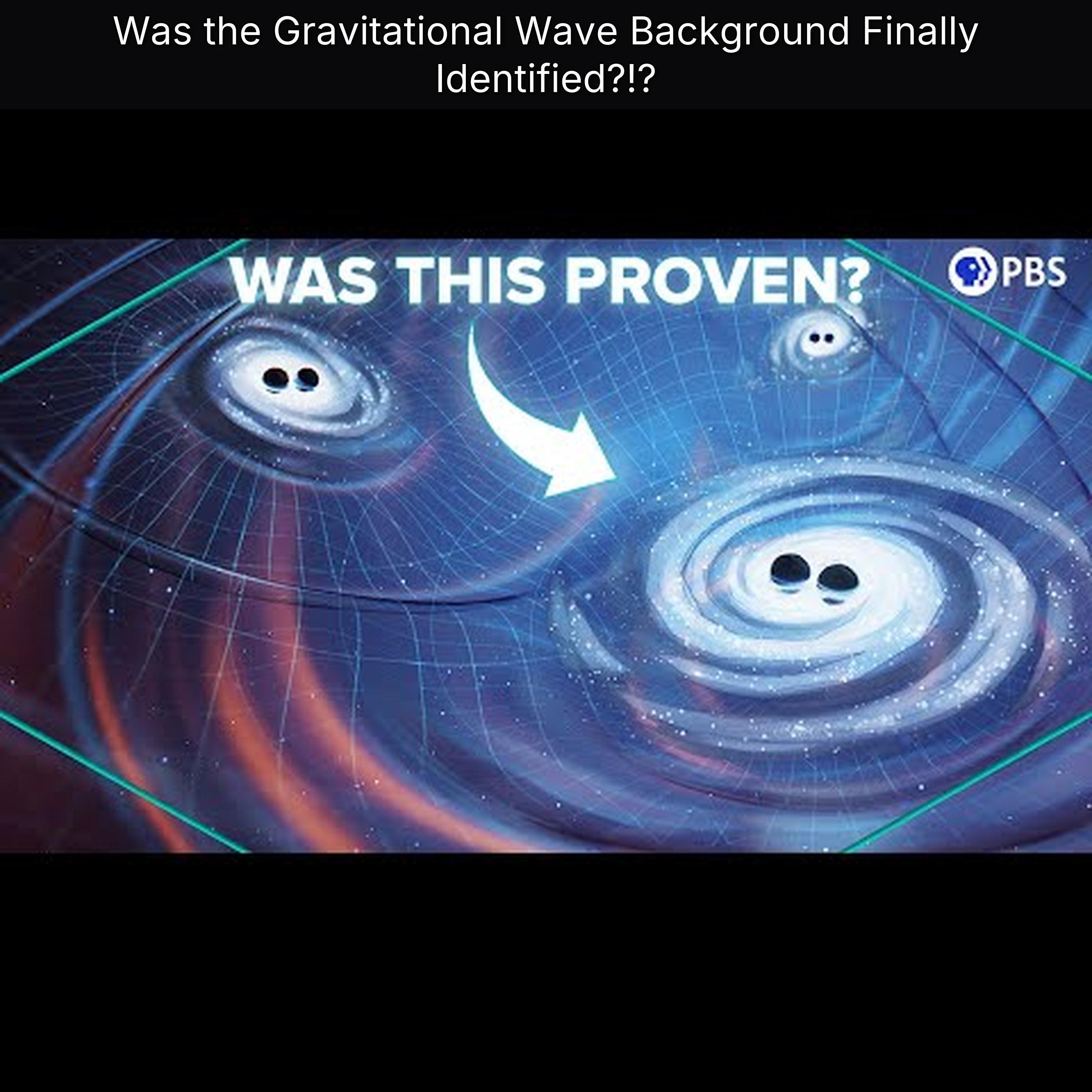
Learn More About Opera One: https://opr.as/Opera-browser-PBS-Space-Time PBS Member Stations rely on viewers like you. To support your local station, go to: http://to.pbs.org/DonateSPACE Sign Up on Patreon to get access to the Space Time Discord! A few weeks ago a large team of gravitational wave astronomers announced something pretty wild. The moderately confident detection of pervasive ripples in the fabric of space time that presumably fills the cosmos, detected by watching for subtle connections between the signals from rapidly spinning cores of dead stars in our galactic neighborhood. In other words, the gravitational wave background has probably been detected using a pulsar timing array. Thumbnail Image Illustration Credit: Olena Shmahalo for NANOGrav Check out the Space Time Merch Store Sign up for the mailing list to get episode notifications and hear special announcements! Search the Entire Space Time Library Here: https://search.pbsspacetime.com/ Hosted by Matt O'Dowd Written
Work-life balance, says Nigel Marsh, is too important to be left in the hands of your employer. Marsh lays out an ideal day balanced between family time, personal time and productivity -- and offers some stirring encouragement to make it happen. (Filmed at TEDxSydney.) Uploaded 08-08-13 Talk by Nigel Marsh.
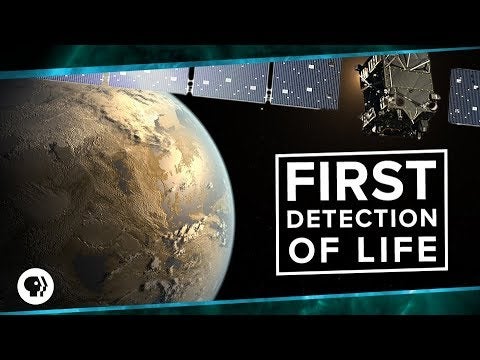
Viewers like you help make PBS (Thank you ) . Support your local PBS Member Station here: https://to.pbs.org/DonateSPACE Uploaded 24-08-17 What does life look like from space? LegalZoom is not a law firm or a substitute for the advice of an attorney. You can further support us on Patreon at https://www.patreon.com/pbsspacetime Get your own Space Time tshirt at http://bit.ly/1QlzoBi Tweet at us! @pbsspacetime Facebook: facebook.com/pbsspacetime Email us! pbsspacetime [at] gmail [dot] com Comment on Reddit: http://www.reddit.com/r/pbsspacetime Help translate our videos! https://www.youtube.com/timedtext_cs_... Previous Episode: In 1990, an experiment conceived by Carl Sagan was performed using using the Galileo spacecraft. The purpose? To detect life on a planet based on measurements by a space probe. The experiment was successful, and abundant life was unequivocally confirmed. That planet? The Earth. Now, a quarter century later, we’re on the verge of conducting that same experiment on
Thank you to CuriosityStream for supporting PBS. For more information go to https://curiositystream.thld.co/PBSSPACETIME Uploaded 10-11-21 Check Out @PBSVitals here: https://youtu.be/FOL0Hs8UcNs What if there is no such thing as dark matter? What if our understanding of gravity is just wrong? New work is taking another shot at that Einstein guy. Let’s see if we’ve finally scored a hit with Modified Newtonian Dynamics aka MOND. Sign Up on Patreon to get access to the Space Time Discord! Check out the Space Time Merch Store Sign up for the mailing list to get episode notifications and hear special announcements! Hosted by Matt O'Dowd Written by Matt O'Dowd Post Production by Leonardo Scholzer, Yago Ballarini, Pedro Osinski, Adriano Leal and Stephanie Faria GFX Visualizations: Ajay Manuel Directed by Andrew Kornhaber Assistant Producer: Setare Gholipour Executive Producers: Eric Brown and Andrew Kornhaber End Credits Music by J.R.S. Schattenberg: https://www.youtube.com/user/MultiDroideka
☀️ HARNESSING THE POWER OF THE SUN — THE SCIENCE BEHIND C60 EVO! What happens when scientists recreate extraordinary, sun-like temperatures inside a laboratory to produce one of the most fascinating carbon molecules ever studied? Michael Jaco welcomes Patty Greer and Chris Burres back to Unleashing Intuition for a fascinating behind-the-scenes look at C60 Evo, the technology used to produce ESS60, and the science behind this unique carbon molecule. Chris takes us inside the laboratory to explain the intense temperatures, specialized production methods, and purification processes involved in creating ESS60 — C60 Evo's proprietary form of Carbon 60. The conversation explores the relationship between antioxidants, mitochondria, cellular energy, and oxidative stress, along with why C60 Evo combines ESS60 with carefully selected extra virgin olive oil. Patty and Chris also share their perspectives on wellness, personal experiences, and the growing interest in carbon-based technology. Inside
View full lesson: http://ed.ted.com/lessons/how-to-build-a-fictional-world-kate-messner Uploaded 09-01-14 Why is J.R.R. Tolkien's Lord of the Rings trilogy so compelling? How about The Matrix or Harry Potter? What makes these disparate worlds come alive are clear, consistent rules for how people, societies -- and even the laws of physics -- function in these fictional universes. Author Kate Messner offers a few tricks for you, too, to create a world worth exploring in your own words. Lesson by Kate Messner, animation by Avi Ofer.
View full lesson: http://ed.ted.com/lessons/curiosity-discovery-and-gecko-feet-robert-full The scientific method is widely used to make many scientific discoveries, but Robert Full suggests the possibility of finding world-changing results with less formulaic approaches. In his TEDYouth Talk, Full describes the unlikely way he studied gecko's feet and how these beneficial discoveries could eventually save lives. Talk by Robert Full.
Take the PBS Annual Fan Survey: https://to.pbs.org/pbssurvey2023d PBS Member Stations rely on viewers like you. To support your local station, go to:http://to.pbs.org/DonateSPACE Sign Up on Patreon to get access to the Space Time Discord! The holy grail of theoretical physics is to come up with a quantum theory of gravity. But after a century of trying we really have no idea how close we are, or it it's even possible. But we shouldn't feel bad because it turns out that the universe is doing everything it its power to make this as difficult as possible. Or it's telling us that it isn't. Should we take the hint? Check out the Space Time Merch Store Sign up for the mailing list to get episode notifications and hear special announcements! Search the Entire Space Time Library Here: https://search.pbsspacetime.com/ Hosted by Matt O'Dowd Written by Christopher Pollack & Matt O'Dowd Post Production by Leonardo Scholzer, Yago Ballarini & Stephanie Faria Directed by Andrew Kornhaber Associate Pr
PBS Member Stations rely on viewers like you. To support your local station, go to:http://to.pbs.org/DonateSPACE Sign Up on Patreon to get access to the Space Time Discord! We tend to imagine there are connectings between things that we don’t understand. Quantum mechanics and consciousness, aliens and pyramids, black holes and dark matter, dark matter and dark energy, dark energy and black holes. Usually there’s no real relationship whatsoever, but this last pair—black holes and dark energy being the same thing—has received some recent hype in the press. Let’s see if it might actually be true. Episodes Referenced Companion Playlist: Check out the Space Time Merch Store Sign up for the mailing list to get episode notifications and hear special announcements! Search the Entire Space Time Library Here: https://search.pbsspacetime.com/ Hosted by Matt O'Dowd Written by Matt O'Dowd Post Production by Leonardo Scholzer, Yago Ballarini, & Stephanie Faria Directed by Andrew Kornhaber Associate
Two more defections from OpenAI-Greg Brockman on extended sabbatical-What is going on at OpenAI??? Episode release date: 6 Aug 2024 Core Ideas: Metamodernism: Narratives and emergence view of reality - Reduce suffering - Increase prosperity - Increase understanding mantra: Seek knowledge. DISCLAIMER: This is a community-driven show. --- Keywords: gpt, agi, cognitive ai, prompt engineering, ai development
Dig into what makes head lice so difficult to get rid of, and the effectiveness of our most common treatments. -- For as long as humans have had lice, we’ve fought hard to get rid of them. Nit combs, the fine-tooth brushes used to remove lice and their sticky eggs, have been found among the ancient remains of cultures across the globe. Today it’s estimated we spend billions of dollars each year treating infestations. So why are lice so difficult to get rid of? Nazzy Pakpour digs into these stubborn insects. Lesson by Nazzy Pakpour, directed by Oksana Kurmaz. Support Our Non-Profit Mission ---------------------------------------------- Support us on Patreon: http://bit.ly/TEDEdPatreon Check out our merch: http://bit.ly/TEDEDShop ---------------------------------------------- Connect With Us ---------------------------------------------- Sign up for our newsletter: http://bit.ly/TEDEdNewsletter Find us on Twitter: http://bit.ly/TEDEdTwitter Peep us on Instagram: http://bit.ly/TEDEdInstag
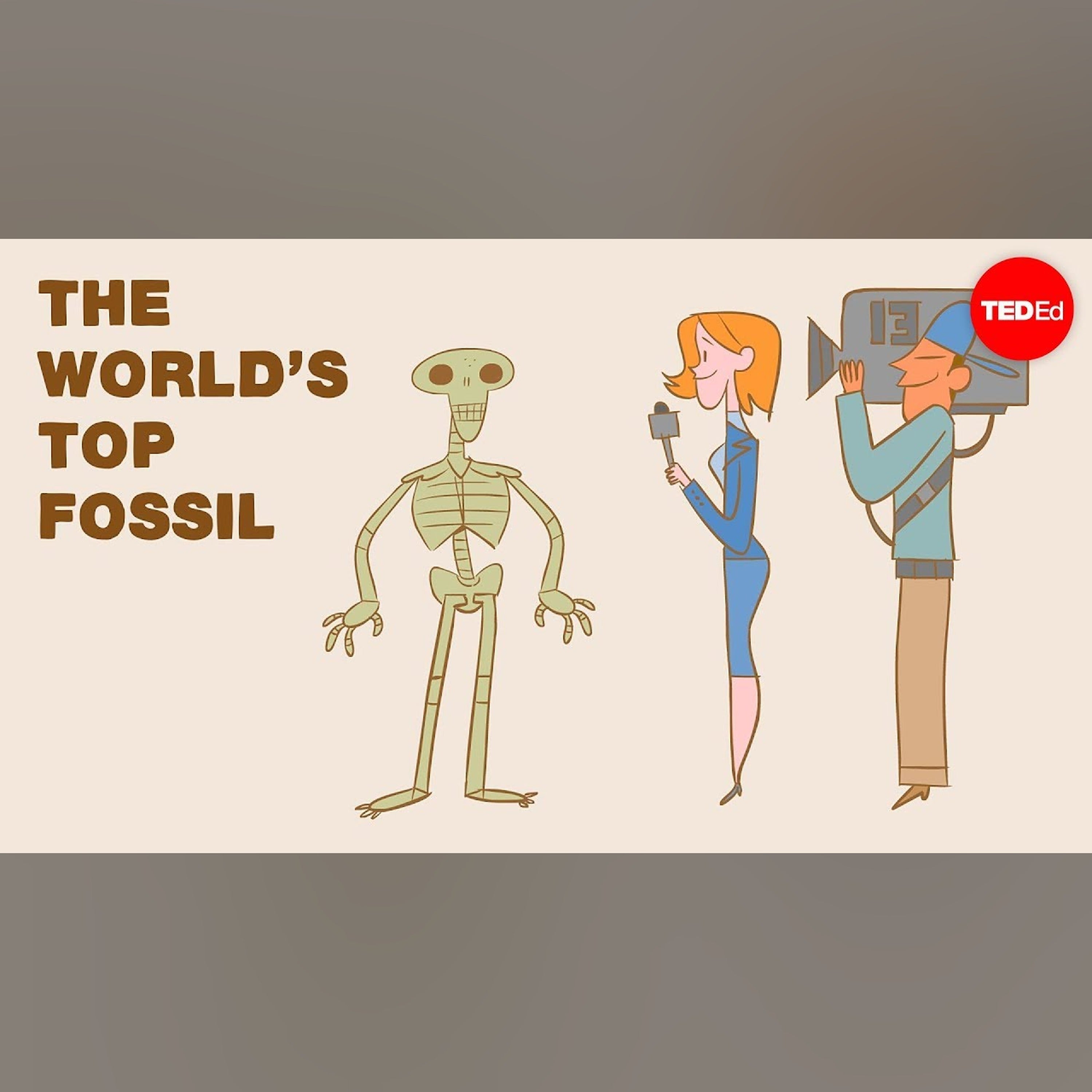
View full lesson: http://ed.ted.com/lessons/how-to-fossilize-yourself-phoebe-a-cohen Uploaded 06-01-14 You can aspire to great things in life, but how about in death? Could you be one of the world's greatest fossils many years from now? To ensure being found by a future paleontologist, you'll need to die in a highly specific way (think within tree sap or on the bottom of the ocean floor), and nature takes care of the rest. Phoebe A. Cohen details the steps your body must take to find future fame as a fossil. Lesson by Phoebe A. Cohen, animation by Anton Bogaty.
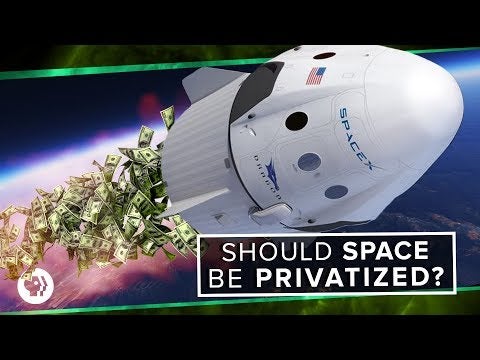
Viewers like you help make PBS (Thank you ) . Support your local PBS Member Station here: https://to.pbs.org/DonateSPACE Uploaded 07-03-18 Will the future of space exploration be guided by public or private entities? Which is better? Learn more about CuriosityStream at https://curiositystream.com/spacetime You can further support us on Patreon at https://www.patreon.com/pbsspacetime Get your own Space Time tshirt at http://bit.ly/1QlzoBi Tweet at us! @pbsspacetime Facebook: facebook.com/pbsspacetime Email us! pbsspacetime [at] gmail [dot] com Comment on Reddit: http://www.reddit.com/r/pbsspacetime Help translate our videos! https://www.youtube.com/timedtext_cs_panel?tab=2&c=UC7_gcs09iThXybpVgjHZ_7g (https://www.youtube.com/timedtext_cs_panel?c=UC7_gcs09iThXybpVgjHZ_7g&tab=2) Previous Episodes: The Trebuchet Challenge Death of the Sun On February 8th 2018, the eyes of the world once again fixed upon Cape Canaveral. This time, people watched with anticipation as SpaceX launched its new
BONUS QUESTION STARTS AT 22:03 Watch the video here (with no ads) or on YouTube: https://youtu.be/rcj39PJq6ko Scott Manley’s Starship Flight 15 coverage: https://www.youtube.com/watch?v=uwGBBAv8PBI Vote for the best story here: https://www.youtube.com/@frasercain/posts SpaceX finally catches Starship, Euclid’s first big data release is out, a compelling new explanation for Little Red Dots, and a way to rule out a type of dark matter. And on Space Bites+, China is planning on sending a lander to Callisto. 00:00 Intro 00:17 Starship Catch https://www.universetoday.com/articles/baby-shes-back-spacex-catches-a-starship-from-orbit-for-first-time https://www.universetoday.com/articles/spacex-launches-starship-but-passes-up-booster-catch-for-safetys-sake 05:37 Euclid’s First Big Release https://www.universetoday.com/articles/euclids-first-data-release-a-stepping-stone-to-its-3d-map-of-the-sky 08:39 No GPS? No Problem! https://www.universetoday.com/articles/navigating-lunar-orbit-using-nothing
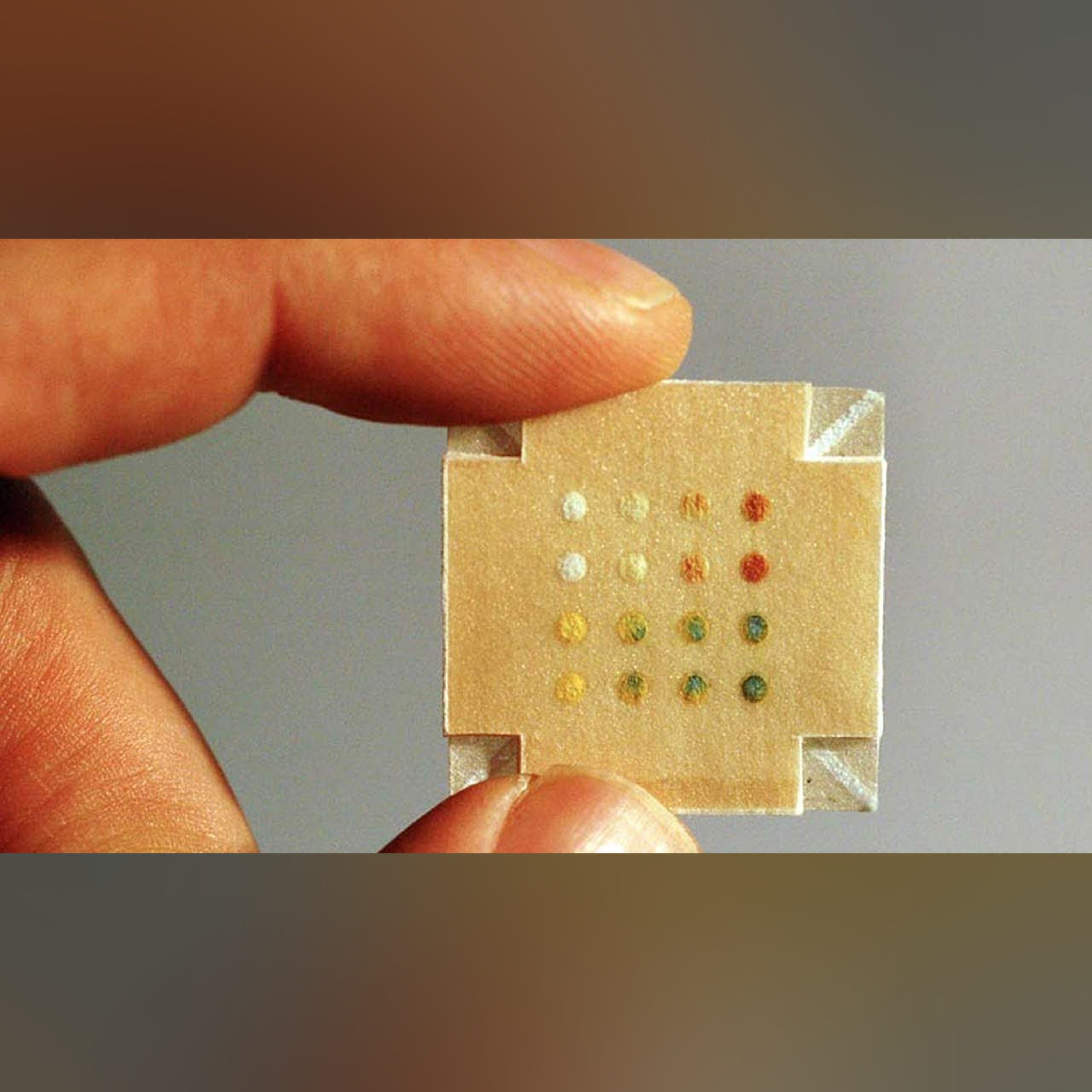
Traditional lab tests for disease diagnosis can be too expensive and cumbersome for the regions most in need. George Whitesides' ingenious answer is a foolproof tool that can be manufactured at virtually zero cost. (Filmed at TEDxBoston.) Uploaded 08-08-13 Talk by George Whitesides.
PBS Member Stations rely on viewers like you. To support your local station, go to: http://to.pbs.org/DonateSPACE ↓ More info below ↓ Uploaded 06-06-19 Carl Sagan’s famous words: “We are star stuff” refers to a mind-blowing idea – that most atomic nuclei in our bodies were created in the nuclear furnace and the explosive deaths of stars that lived in the ancient universe. In recent years it’s become clear that the truth is even more mind-blowing. Many heavy elements - includes most precious metals - were produced in an even more spectacular event: the collision of neutron stars. In fact, according to a recent study most of the Earth’s supply of these elements was created in a single neutron star merger that took place near our Sun’s birth nebula 80 million years ago before Earth formed. Check out the new Space Time Merch Store! Support Space Time on Patreon #theuniverse #astrophyics #spacetime Hosted by Matt O'Dowd Written by Matt O'Dowd Graphics by Leonardo Scholzer Directed by Andrew
Thanks to LastPass for sponsoring PBS DS. You can check out LastPass by going to https://lastpass.onelink.me/HzaM/2019Q3JulyPBSspace Uploaded 18-07-19 PBS Member Stations rely on viewers like you. To support your local station, go to: http://to.pbs.org/DonateSPACE Our universe started with the big bang. But only for the right definition of “our universe”. And of “started” for that matter. In fact, probably the Big Bang is nothing like what you were taught. A hundred years ago we discovered the beginning of the universe. Observations of the retreating galaxies by Edwin Hubble and Vesto Slipher, combined with Einstein’s then-brand-new general theory of relativity, revealed that our universe is expanding. And if we reverse that expansion far enough – mathematically, purely according to Einstein’s equations, it seems inevitable that all space and mass and energy should once have been compacted into an infinitesimally small point – a singularity. It’s often said that the universe started wi
View full lesson: http://ed.ted.com/lessons/how-big-is-the-ocean-scott-gass Uploaded 24-06-13 While the Earth's oceans are known as five separate entities, there is really only one ocean. So, how big is it? As of 2013, it takes up 71% of the Earth, houses 99% of the biosphere, and contains some of Earth's grandest geological features. Scott Gass reminds us of the influence humans have on the ocean and the influence it has on us. Lesson by Scott Gass, animation by Sandro Katamashvili.
Launch, Scale & Monetize Your Newsletter with Beehiiv! Start today by visiting www.beehiiv.com?via=fellow (https://www.beehiiv.com/?via=fellow) Run Your Agency on Autopilot – White Label CRM, Funnels, and Automations in One Platform for Success. Claim 2-week free trail now www.gohighlevel.com/protrial?fp_ref=fg (https://www.gohighlevel.com/protrial?fp_ref=fg) Mark Tilbury firmly believes that anyone who learns the skill sets of a millionaire can become a millionaire, ANYONE. Mark Tilbury left school at 16 with no qualifications and no money. Now he runs a multi-million dollar business & has grossed over 50 million. He has the house of his dreams and most importantly, the freedom to spend time with his family. Now Mark wants to help you become financially free as well. Follow the podcast and turn on notifications! Follow @MarkTilbury on Tiktok, YouTube, Twitter & IG Disclaimer: All content rights belong to Mark Tilbury. This Podcast is fan-made. No copyright infringement intended. -----
Eddie Hall, who won the World’s Strongest Man in 2017 and who set the world Deadlift at 1102 lbs (500kg) has started a carnivore diet! In this video, I’ll breakdown what Eddie eats, explain how he’s losing weight on 10,000 Calories per day, discuss loose stools on carnivore, and more. Amendments (i) On the solid vs liquid butter mini-experiment, people have noted butter will melt at body temperature. Of course, this is true. However, it's also true of all common fat sources, including tallow, lard and coconut oil. The idea is to control for fatty acids; thus, a comparison of olive oil versus ribeye steak would not be a good way to test the solid/liquid effect. There are alternatives, e.g. ribeye steak vs lean filet plus melted tallow; although even this is complicated by the fact the variable of distinction is the food matrix, more than the solid/liquid state. It's possible - maybe probable - that I misunderstood Shawn in our conversation and he meant that fatty meat, which is solid, w
The Manhattan Project for AI Has Begun - Cold War 2.0 Core Ideas: Metamodernism: Narratives and emergence view of reality - Reduce suffering - Increase prosperity - Increase understanding mantra: Seek knowledge. DISCLAIMER: This is a community-driven show. ------------ Keywords: heuristic imperatives, artificial intelligence, tech singularity, ai ethics, ai research, cognitive ai
What could our future look like if we harness our technology to create a sustainable world? Take a look at the possibilities. -- Faced with the realities of current crises, it’s easy to assume our world is headed in a bleak direction. But there’s good reason to be hopeful— with developments in science and technology, a positive future is more viable than ever before. So, what if the future was awesome? Iseult Gillespie explores what three cities could look like in 100 years if we harness the tools we have at our disposal. Lesson by Iseult Gillespie, directed by Devin Clark, Augenblick Studios. This video made possible in collaboration with Speed & Scale Learn more about how TED-Ed partnerships work: https://bit.ly/TEDEdPartner Support Our Non-Profit Mission ---------------------------------------------- Support us on Patreon: http://bit.ly/TEDEdPatreon Check out our merch: http://bit.ly/TEDEDShop ---------------------------------------------- Connect With Us ---------------------------
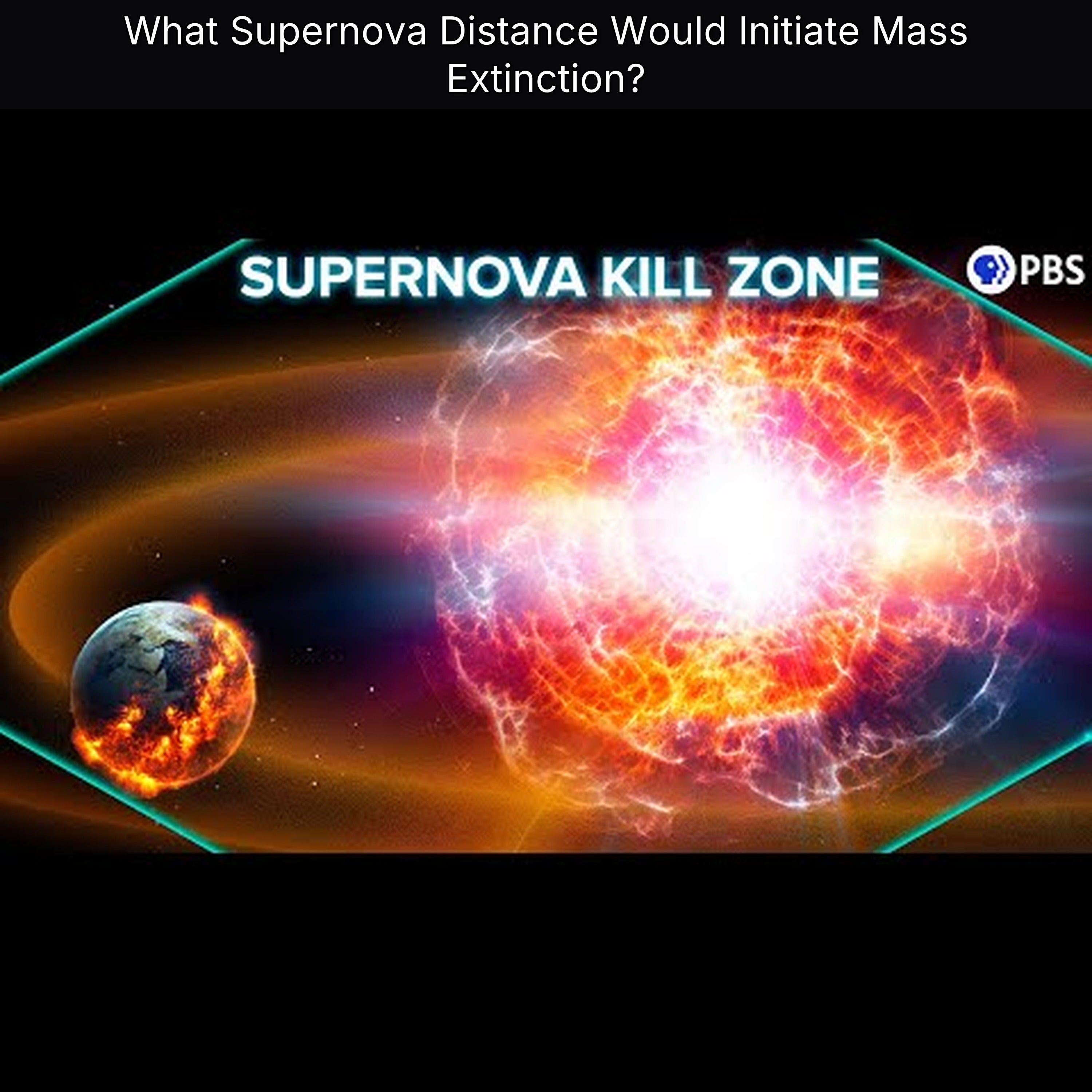
Thank you to Brilliant for Supporting PBS. To learn more go to https://brilliant.org/SpaceTime/ PBS Member Stations rely on viewers like you. To support your local station, go to:http://to.pbs.org/DonateSPACE Sign Up on Patreon to get access to the Space Time Discord! The deaths of massive stars results in one of the most beautiful and violent events in the universe: the supernova. They are so luminous we can see them here on Earth and historical records show that we can even see them into the day. But supernovas release deadly and violent radiation that could destroy our atmosphere. So how far away do these supernova have to be for humanity to be safe? And when will the next supernova occur Check out the Space Time Merch Store Sign up for the mailing list to get episode notifications and hear special announcements! Search the Entire Space Time Library Here: https://search.pbsspacetime.com/ Hosted by Matt O'Dowd Written by Matt O'Dowd Post Production by Leonardo Scholzer, Yago Ballarin