We’re going back to the lab! So far we’ve learned some important lab techniques that organic chemists might use day to day, like chromatography and proton NMR, but there are even more to learn. In this episode of Crash Course Organic Chemistry, we’ll introduce some new lab techniques such as distillation and recrystallization and apply them to everything we’ve been learning about EAS reactions. And we’ll do some synthesis problems! Episode Sources: Gilbert, J. C., & Martin, S. F. (2015). Experimental organic chemistry: a miniscale & microscale approach. Cengage Learning. Series Sources: Brown, W. H., Iverson, B. L., Ansyln, E. V., Foote, C., Organic Chemistry; 8th ed.; Cengage Learning, Boston, 2018. Bruice, P. Y., Organic Chemistry, 7th ed.; Pearson Education, Inc., United States, 2014. Clayden, J., Greeves, N., Warren., S., Organic Chemistry, 2nd ed.; Oxford University Press, New York, 2012. Jones Jr., M.; Fleming, S. A., Organic Chemistry, 5th ed.; W. W. Norton & Company, New York,
In this episode, Hank welcomes you to the new age, to the new age, welcome to the new age. Here he'll talk about transmutation among elements, isotopes, calculating half-life, radioactive decay, and spontaneous fission. Pssst... we made flashcards to help you review the content in this episode! Find them on the free Crash Course App! Download it here for Apple Devices: https://apple.co/3d4eyZo Download it here for Android Devices: https://bit.ly/2SrDulJ -- Table of Contents Radioactivity Transmutation Among Elements and Isotopes Calculating Half-Life Radioactive Decay Spontaneous Fission -- Crash Course is on Patreon! Want to find Crash Course elsewhere on the internet? Facebook - http://www.facebook.com/YouTubeCrashCourse Twitter - http://www.twitter.com/TheCrashCourse Instagram - https://www.instagram.com/thecrashcourse/ CC Kids: http://www.youtube.com/crashcoursekids
There are lots of ways that evolution happens, and natural selection is just one of them. In this episode of Crash Course Biology, we’ll find out how this process works and shapes traits in all living things —from ginkgo trees to howler monkeys. We’ll also learn how extra-grippy toes help some lizards survive hurricanes. Chapters: How Spiders Stay Alive 00:00 What's Natural Selection? 1:50 Requirements for Natural Selection 3:41 Environmental Effects 5:40 Types of Natural Selection 7:39 Evolutionary Trade-Offs 9:23 Artificial Selection 10:34 Review & Credits 11:35 This series was produced in collaboration with HHMI BioInteractive, committed to empowering educators and inspiring students with engaging, accessible, and quality classroom resources. Visit https://BioInteractive.org/CrashCourse (https://biointeractive.org/CrashCourse) for more information. Are you an educator looking for what NGSS Standards are covered in this episode? Check out our Educator Standards Database for Biology h
Sleep better with Pillow: https://pillow.app/bettersleep Experience soothing pink noise designed to enhance deep sleep, meditation, and relaxation by creating a calming ambient soundscape that blocks distractions and promotes peaceful rest. Perfect for calming the mind, reducing stress, and improving focus anytime you need tranquility. This episode includes AI-generated content.
Trace the history and evolution of beer, from its first known existence 13,000 years ago to the modern beverage we know today. -- Today, there are over 100 distinct beer varieties, from pilsners and bocks, to porters, stouts, and IPAs. The oldest evidence of beer brewing dates back 13,000 years, but experts believe the drink developed independently across the world. So, how did ancient civilizations brew beer, and how did their methods develop into the beverage we know today? Malcolm Purinton traces the evolution of beer. Lesson Malcolm Purinton, directed by Anton Bogaty. Support Our Non-Profit Mission ---------------------------------------------- Support us on Patreon: http://bit.ly/TEDEdPatreon Check out our merch: http://bit.ly/TEDEDShop ---------------------------------------------- Connect With Us ---------------------------------------------- Sign up for our newsletter: http://bit.ly/TEDEdNewsletter Find us on Twitter: http://bit.ly/TEDEdTwitter Peep us on Instagram: http://bit.
Social media is full of claims about how farmers raise and grow food, but how much of it holds up? Michelle Miller, a former Iowa corn and soybean farmer known online as Farm Babe, talks about common agriculture myths, regenerative practices and the data, genetics and autonomous tools shaping farms today. This podcast was produced for Bayer by Scientific American Custom Media, a division separate from the magazine’s board of editors.
RFK Jr. has spent his time as Health Secretary overseeing sweeping changes to America's public health infrastructure — firing vaccine advisors, cutting childhood vaccine recommendations, gutting NIH research grants, and quietly funding a questionable trial in Guinea-Bissau. Now that Democrats have won both the House and the Senate, the leash may finally be tightening. Host Dr. Kaveh Hoda brings together virologist Dr. Angie Rasmussen, ER physician and addiction medicine specialist Taylor Nichols, and UCSF vaccine law professor Dorit Reiss for a deep dive into Kennedy's record, the legal mechanics of impeachment, the corruption angles Congress might pursue, and what it will realistically take to undo the damage. Plus: why measles is back, how the Guinea-Bissau hepatitis B trial fits Kennedy's broader agenda, and what the next 6–12 months could look like for public health in America. Hosted on Acast.
Whether in a desert, the savanna, or a tropical rainforest, plants have an important role in the ecological processes of Earth’s biomes. In this episode of Crash Course Botany, we’ll explore these different living locales, the effects of climate change on them, and how our photosynthetic friends make the world go ‘round. Chapters: Backpacking Across Earth 00:00 Types of Biomes 1:16 Plants' Role in Biomes 2:23 How Climate Change Affects Biomes 4:36 Is Planting Trees the Answer? 8:28 Protecting Earth's Biomes 10:22 Review & Credits 11:26 Sources: https://docs.google.com/document/d/1PB6WdUJcABAccO-U-t6ic7WbfP2z0Pr5P9a8HMr6zh4/edit?usp=sharing *** Crash Course is on Patreon! Thanks to the following patrons for their generous monthly contributions that help keep Crash Course free for everyone forever: David Fanska, Andrew Woods, Tawny Whaley, Sean Saunders, DL Singfield, Ken Davidian, Stephen Akuffo, Toni Miles, Steve Segreto, Kyle & Katherine Callahan, Laurel Stevens, Burt Humburg, Aziz Y,
The Neuroscience of Addiction, Breaking Bad Habits, Childhood Trauma, Psychedelic Healing, Loneliness & Emotional Recovery Host Dave Asprey sits down with Luke Storey, host of The Life Stylist Podcast and author of A Horse Named Lonesome, to explore the science of addiction, loneliness, childhood trauma, emotional healing, psychedelics, brain chemistry, and the surprising relationship between human connection and happiness. Drawing on nearly three decades of recovery from drug addiction, Luke explains why overcoming substance abuse doesn't necessarily resolve the emotional patterns behind it, how unresolved trauma can shape relationships and behavior, and why having fewer, deeper friendships may lead to greater fulfillment. Luke shares his journey from childhood trauma and early substance use to long-term sobriety, revealing why he continued struggling with codependency, unhealthy relationships, and self-destructive patterns even after 20 years without addictive drugs. He discusses his
The Milky Way is our neighborhood in the universe. It’s a galaxy and there are many others out there. Galaxies contain gas, dust, and billions of stars or more. They come in four main shapes: elliptical, spiral, peculiar, and irregular. Galaxies can collide, and grow in size by eating each other. Check out the Crash Course Astronomy poster here: http://store.dftba.com/products/crashcourse-astronomy-poster -- Chapters: Introduction: Galaxies 00:00 Spiral Galaxies 3:00 Elliptical Galaxies 5:22 Galactic Collisions 6:18 Peculiar Galaxies 8:46 Irregular Galaxies 9:29 Review 11:08 -- PBS Digital Studios: http://youtube.com/pbsdigitalstudios Follow Phil on Twitter: https://twitter.com/badastronomer Want to find Crash Course elsewhere on the internet? Facebook - http://www.facebook.com/YouTubeCrashCourse Twitter - http://www.twitter.com/TheCrashCourse Tumblr - http://thecrashcourse.tumblr.com (http://thecrashcourse.tumblr.com/) Support CrashCourse on Patreon: http://www.patreon.com/crashcourse
Vaccines save millions of lives each year but, to work, most need to be kept cold throughout their journey, from the factory where they’re made to the clinic where they’re given. This relies on what’s known as the cold chain, a global network of fridges, freezers and icepacks. The chain is not only expensive to maintain, it’s incredibly vulnerable to breaking. In low- and middle- income countries, in particular, transport delays, power cuts and equipment failures often cause vaccines to spoil before they reach the people who need them. An urgent quest in public health has been to find a way to stabilise vaccines, at room temperature, so that they no longer need this cold chain. This occurred to Asel Sartbaeva, during a routine visit to the GP with her newborn daughter. Originally from Kyrgyzstan and now Associate Professor of Chemistry at Bath University, Asel investigates silica-based materials. Not a typical background for someone working on vaccines, but it gave her a fresh perspect
The UK Health Security Agency has launched a major study to find out what level of forever chemicals the average person in the UK has in their bodies. With results not expected until 2027, we speak to the UKHSA’s Dr Edward Wynne-Evans and Professor Tony Fletcher from the London School of Hygiene and Tropical Medicine about what is and is not known about per- and polyfluoroalkyl substances (PFAS) and their potential impacts on our health. And, with the help of Damian Bailey, professor of physiology and biochemistry at the University of South Wales, Laura hits the gym to work out if more of us are ditching cardio and aerobic exercise in favour of strength training, what that could mean for our health decades down the line. Then with fines set to be introduced on buses for people playing music and videos out loud on their phones, we look at whether spending more of our lives wearing headphones and earphones is changing not just what we hear, but how we hear. Presenter: Laura Foster Produc
Second Bite: We're bringing back one of our most popular episodes of Bite Back with Abbey Sharp! As part of our Second Bite series, we're revisiting some of our favourite conversations from the archives. This episode was originally released on an earlier date, but the discussion is just as relevant today! In this episode of Bite Back with Abbey Sharp, I will be talking to Dr Emily Contois, an Associate Professor at the University of Tulsa specializing in how identities are formed at the vital intersection of food, the body, and ideas about health. She is the author of “Diners, Dudes, and Diets: How Gender and Power Collide in Food Media and Culture” and co-editor of “Food Instagram: Identity, Influence, and Negotiation”. Today we will be diving into the intersection of gender norms and food choices. We will discuss how women are socialized to choose light dainty foods like salad whereas men are encouraged to eat hearty meals like steak and potatoes. We will be discussing the sneaky way
In which John Green forgets his lines, is interrupted by airplanes, ad-libs some jokes, and Stan proves himself ignorant of pop culture. Crash Course is on Patreon! Want to find Crash Course elsewhere on the internet? Facebook - http://www.facebook.com/YouTubeCrashCourse Twitter - http://www.twitter.com/TheCrashCourse Instagram - https://www.instagram.com/thecrashcourse/ CC Kids: http://www.youtube.com/crashcoursekids
Scientists have identified three promising quantum materials that could make lightweight dark matter easier to detect. Their unusual electronic properties may amplify incredibly faint signals, potentially offering a thousandfold boost in sensitivity and a new way to distinguish cosmic signals from background noise. This episode includes AI-generated content.
What if the key to detecting alien intelligence came from watching fireflies? Researchers have developed a new model inspired by how these insects communicate through distinctive flashes in crowded environments. The approach simulates unusual radio pulses designed to stand out against the natural signals of cosmic objects such as pulsars, offering a fresh strategy in the search for extraterrestrial intelligence. This episode includes AI-generated content.
Dave Chapman and Linley Dixon take the stage at Churchtown Dairy to examine the science and systems behind the future of organic farming. Dave contrasts what he calls the “science of death” with a science that works through living systems, using biological control as an example of what becomes possible when agriculture learns from ecology rather than trying to overpower it. Linley brings that argument into the institutions that produce agricultural knowledge, asking what happens when public research disappears and private industry increasingly determines which questions get studied. Their talks ultimately become a call to defend organic not only in the field, but in science, policy, and public life. To find a Real Organic farm near you, please visit: https://www.realorganicproject.org/directory (https://https//www.realorganicproject.org/directory) We believe that the organic standards, with their focus on soil health, biodiversity, and animal welfare were written as they should be, but
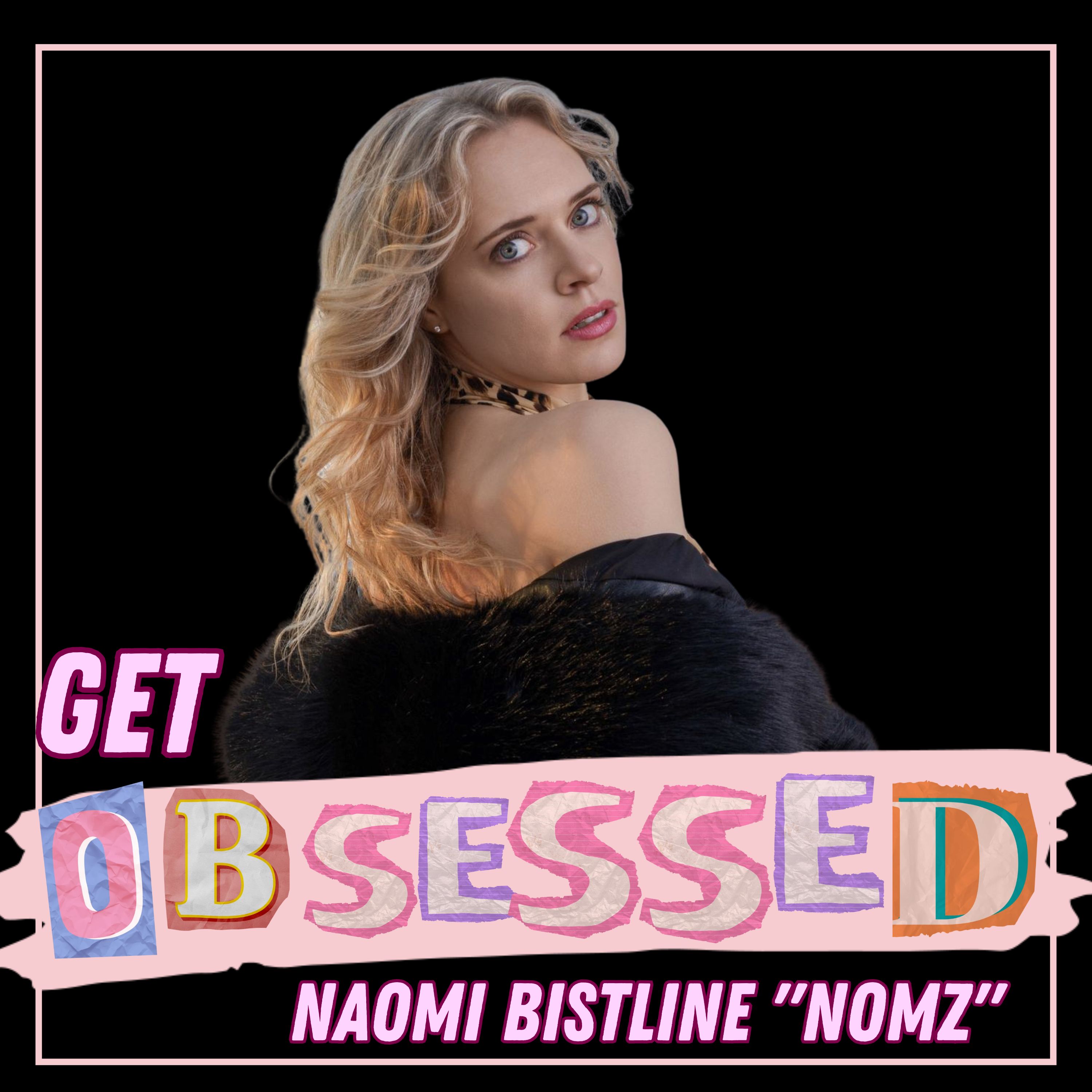
In this episode of the Get Obsessed podcast, Julie Lokun and Mika sit down with Naomi “Nomz” Bistline, who was raised in the FLDS and later appeared in the Netflix documentary Trust Me: The False Prophet, to talk about growing up in a high control society and how she reclaimed her own story. Naomi explains what the FLDS is, why she now sees it as a cult rather than a church, and how obedience, separation from family, and assigned relationships shaped her childhood. She describes being told at 19 that she belonged to Samuel Bateman, how his control wore down her sense of self, and why victims sometimes move closer to the person who poses the greatest threat. She also shares the events that led to her arrest, her nearly two years in pretrial detention, and her testimony against Sam. Naomi calls prison both the best and worst thing that ever happened to her. It gave her space to think for herself, to read over 300 books, and to discover music. The conversation closes with her life today,
Dig into the incredible fighting, feeding, and flying capabilities of hummingbirds. Uploaded 08-04-21 -- In just a matter of seconds, hummingbirds can perform astonishing aerial acrobatics, eat lunch in midair, pollinate a flower, even escape threats while upside-down. And they can do this all while achieving sustained hovering flight— an aerial feat no other bird can perform. How do they do it? Kristiina J. Hurme and Alejandro Rico-Guevara explore the incredible flying capabilities of hummingbirds. Lesson by Kristiina J. Hurme and Alejandro Rico-Guevara, directed by Lisa Vertudaches. Support Our Non-Profit Mission ---------------------------------------------- Support us on Patreon: http://bit.ly/TEDEdPatreon Check out our merch: http://bit.ly/TEDEDShop ---------------------------------------------- Connect With Us ---------------------------------------------- Sign up for our newsletter: http://bit.ly/TEDEdNewsletter Find us on Twitter: http://bit.ly/TEDEdTwitter Peep us on Instagram
Sometimes the strangest things on Earth...Are happening just below its surface. From tunnels carved by giant sloths to desperate attempts to stop the dead from rising again - these are the weird and wonderous tales of the sea beasts, hidden cities and impossible creatures that lurk beneath us. Thank you to our experts who contributed to this episode: Austin Rogers, Sabina Magliocco, Greg Jackson, Brandy Shillace, Mitch Horowitz, Kathleen Tracy, Cord Whitaker, Don Wildman, Joseph Dituri, Rebecca Lieb, Hakeen Oluseyi, David Mizejewski, Sami Jarroush, Jason Horton, Ramy Romany, and Kavitha Davidson.
In this final episode of Crash Course Chemistry, Hank takes us on a tour of The Global Carbon Cycle and how it all works. From Carbon Fixation to Redox Reactions, it's all contained within! Pssst... we made flashcards to help you review the content in this episode! Find them on the free Crash Course App! Download it here for Apple Devices: https://apple.co/3d4eyZo Download it here for Android Devices: https://bit.ly/2SrDulJ -- Table of Contents The Carbon Cycle 0:51 Carbon Fixation 2:55 Cellular & Macroscopic Respiration in Living Things 4:59 Deposition in Limestone & Fossil Fuels 6:27 Redox Reactions Everywhere 4:27 Excessive Use of Fossil Fuels = Possible End of Humanity 7:45 -- Crash Course is on Patreon! Want to find Crash Course elsewhere on the internet? Facebook - http://www.facebook.com/YouTubeCrashCourse Twitter - http://www.twitter.com/TheCrashCourse Instagram - https://www.instagram.com/thecrashcourse/ CC Kids: http://www.youtube.com/crashcoursekids
Pavel joins me to unpack Donald Trump’s UFO comments on 60 Minutes. I’ve gone back through his interviews since 2019 to see how his F-22 story has changed and what to make of those four words about a secret UFO programme: “I haven’t heard that.” We also listen to Jake Barber’s Stockholm remarks about the egg-shaped object he says he lifted by helicopter. Which parts did he witness himself, what was he told afterwards, and how much do Skywatcher’s unfulfilled promises affect how we hear him now? Check out - https://opensourcereality.org/ Spotify: https://open.spotify.com/show/7wnXUAQ3vwdsX1BoyaEvjZ Buy Me a Coffee: https://www.buymeacoffee.com/ThatUFOPodcast Connect with the show: Twitter: @UFOUAPAM Facebook, Instagram & YouTube: That UFO Podcast YouTube: YouTube.com/c/ThatUFOPodcast (https://youtube.com/c/ThatUFOPodcast) Email: [email protected] All links: https://linktr.ee/ufouapam Official Website: ThatUFOPodcast.com (https://thatufopodcast.com/) Thanks for listening, Andy
View full lesson: http://ed.ted.com/lessons/why-neutrinos-matter-silvia-bravo-gallart Uploaded 28-04-15 Elementary particles are the smallest known building blocks in the universe—and the neutrino is one of the smallest of the small. These tiny neutrinos can tell us about the furthest reaches and most extreme environments of the universe ... but only if we can catch them. Sílvia Bravo Gallart details how the IceCube telescope in Antarctica is working to do just that. Lesson by Sílvia Bravo Gallart, animation by Steff Lee.
Cells need energy to power the chemical reactions that keep their microscopic cities running, and most of that energy comes from a chemical called ATP. In this episode of Crash Course Biology, we’ll learn how our cells use energy, what an enzyme’s role is in chemical reactions, and what makes a reaction exergonic or endergonic. Chapters: Cellular Cities 00:00 What Is Energy? 1:18 The Laws of Thermodynamics 2:22 ATP 4:07 Chemical Reactions 6:42 Enzymes 9:13 Metabolic Pathways 11:04 Review & Credits 12:09 This series was produced in collaboration with HHMI BioInteractive, committed to empowering educators and inspiring students with engaging, accessible, and quality classroom resources. Visit https://BioInteractive.org/CrashCourse (https://biointeractive.org/CrashCourse) for more information. Are you an educator looking for what NGSS Standards are covered in this episode? Check out our Educator Standards Database for Biology here: https://www.thecrashcourse.com/biologystandards Check out