From a single-celled common ancestor, evolution has brought us all of Life’s Greatest Hits — including butterflies, beetles, bacteria, and human beings. In this episode of Crash Course Biology, we’ll learn how evolution explains life’s unity and diversity. Along the way, we’ll explore the fishy origins of a giraffe’s neck, and find out what a cat’s paw and your own arm have in common. Chapters: Where Whales Came From 00:00 What Is Evolution? 1:41 Genetic Mutations 3:30 Adaptations & Trade-offs 5:10 Evidence of Evolution 7:58 Unicellularity vs. Multicellularity 10:23 Did Humans Evolve From Monkeys? 11:36 Review & Credits 12:30 This series was produced in collaboration with HHMI BioInteractive, committed to empowering educators and inspiring students with engaging, accessible, and quality classroom resources. Visit https://BioInteractive.org/CrashCourse (https://biointeractive.org/CrashCourse) for more information. Are you an educator looking for what NGSS Standards are covered in this e
Chris and Xand van Tulleken continue their conversation with Katherine Whitcroft, ear, nose, and throat surgeon at Sheffield Children's Hospital and co-director of the Sheffield Chemosensory Research Lab. Together, they hear what drew her to the nose, and further explore nasal polyps. They look at nose reshaping procedures, and the medical and aesthetic reasons behind them. If you'd like to share your thoughts on this or any other topic covered on the podcast, you can email us at [email protected] Presenters: Drs Chris and Xand van Tulleken Guest: Katherine Whitcroft Producer: Maia Miller-Lewis Researcher: Grace Revill Executive Producer: Rami Tzabar Visual Producer: Leon Gower Technical Lead: Reuben Huxtable Digital Lead: Richard Berry Composer: Phoebe McFarlane Sound Design: Melvin Rickarby At the BBC: Assistant Commissioner: Greg Smith Commissioning Editor: Rhian Roberts A Loftus Media production for BBC Radio 4.
Robert Greene, author of The 48 Laws of Power, Mastery, and The Laws of Human Nature, nearly died of a stroke in 2018. It left him unable to type, so he spent the next seven years writing his new book, The Law of the Sublime, by hand. Michael speaks with Robert about what coming close to death did to his mind, why he believes humans need transcendent experiences as much as food and shelter, how comfort and old grudges keep our world small, and the everyday rituals he uses to wake back up to it. They discuss: (00:00) Cold open (00:59) The stroke (04:56) What nearly dying does to you (07:12) The book he waited 20 years to write (12:16) What is the sublime? (15:31) Finding amazement in his backyard (24:26) A need as deep as food (28:26) The lost rites of passage (33:18) How to make your own rituals (36:49) 40 minutes of meditation a day (45:37) What boredom is good for (50:31) How adults can slow down (53:36) Why nature matters (58:58) Choose discomfort (1:02:48) Death and the afterlife (
Welcome to What's Up Docs?, the podcast where doctors and identical twins Chris and Xand van Tulleken explore the ideas shaping our health and wellbeing. In this episode, they turn their attention to the nose, an organ we use with every breath but rarely stop to think about. Joined by Miss Katherine Whitcroft, ear, nose, and throat surgeon at Sheffield Children's Hospital and co-director of the Sheffield Chemosensory Research Lab, Chris and Xand explore how the nose is built and what it does for us, why we produce so much mucus and where it goes, and why our noses run when we cry or eat spicy food. The conversation also covers how our sense of smell changes across our lives, the most common things that go wrong with the nose, and what the evidence says about treatments such as nasal sprays. If you want to get in touch, you can email us at [email protected]. Presenters: Drs Chris and Xand van Tulleken Guest: Miss Katherine Whitcroft Producer: Maia Miller-Lewis Researcher: Grace Revi
Have you ever felt like you don't really deserve your success? Maybe you got a promotion, landed a great job, or accomplished something impressive, but instead of feeling proud, you worry that you've somehow fooled everyone into thinking you're more capable than you really are. You wonder if it's only a matter of time before someone figures out you don't know what you're doing. That's often called imposter syndrome, and it can affect even highly successful, accomplished people. But here's an interesting twist: What if feeling like an imposter isn't necessarily a bad thing? What if those feelings of self-doubt are actually a sign that you're challenging yourself, growing, and doing something that matters to you? According to Dr. Jill Stoddard, the goal isn't necessarily to eliminate self-doubt but to stop letting it dictate what you do. She is a mental health care provider and author of the book Imposter No More: Overcome Self-Doubt and Imposterism to Cultivate a Successful Career (http
Physicists have recreated key aspects of the Schwinger effect using ultracold rubidium atoms, offering a new way to study how strong electric fields can generate matter–antimatter pairs. Their experiment also revealed unexpected patterns in particle creation, opening new possibilities for exploring quantum field theory in the laboratory. This episode includes AI-generated content.
How did enormous black holes emerge so quickly in the early universe? Observations from the James Webb Space Telescope suggest that dense, ancient star clusters may have provided the ideal conditions for creating massive black hole seeds. Researchers are exploring how these environments could explain the rapid growth of supermassive black holes and shed light on the mysterious objects known as little red dots. The findings offer a new perspective on one of astronomy’s biggest unanswered questions. This episode includes AI-generated content.
Just how small are atoms? And what's inside them? The answers turn out to be astounding, even for those who think they know. This fast-paced animation uses spectacular metaphors (imagine a blueberry the size of a football stadium!) to give a visceral sense of the building blocks that make our world. Lesson by Jonathan Bergmann, animation by Cognitive Media.
In this episode: Raised garden beds Advice on lining treated-pine vegetable beds, including food-safe PE, LDPE or PVC options and contacting Modbox about food-grade liners. Lilly pilly beetle How to manage recurring beetle damage on lilly pillies, including the discussion of Eco-Neem and Eco-Oil, regular feeding and improving soil health. Building better vegetable beds Do you need every soil additive on the market? Keith discusses the importance of building a healthy, nutrient-rich soil rather than overcomplicating the process with too many products. Pruning camellias How much can you safely reduce an established camellia? Advice includes staged pruning and cutting above dormant buds to encourage new growth. Growing strawberries When to feed, how to maintain productive plants and how to propagate new plants from the first and second runners. High-pH bore water A useful discussion about testing total dissolved solids (TDS), managing irrigation and improving soil conditions where bore wa
In a clearing where an ancient Mayan city once stood, the Montezuma Oropendola perches and sings. His courtship display is astonishing: he swings by his feet and sings, his tail describing a golden pendulum – the very source of his name in Spanish – oropendola. ¡Esuche este episodio en BirdNote en Español (https://www.birdnote.org/podcasts/birdnote-en-espanol/oropendola-de-moctezuma)! BirdNote is supported by The Cornell Lab of Ornithology (https://allaboutbirds.org/), dedicated to conserving Earth’s biodiversity through education and science. More info and transcript at BirdNote.org (https://www.birdnote.org/podcasts/birdnote-daily/montezuma-oropendola-golden-pendulum). Want more BirdNote? BirdNote is a nonprofit. Hosted by Simplecast, an AdsWizz company.
SpaceX Daily Falcon 9 lifts a classified payload from Vandenberg tonight while new medium-lift vehicles near first flights. Top News Falcon 9 targets Monday evening liftoff from Vandenberg for USSF-627 The mission carries a classified United States Space Force payload and is scheduled for 7:07 PM PST on November 9 from SLC-4E, inside a window that runs until 11:03 PM PST. Booster B1103 flies its seventh mission and will land on the droneship Of Course I Still Love You. ... Sources: nasaspaceflight.com (https://www.nasaspaceflight.com/2026/11/launch-preview-11092026/) · teslanorth.com (https://teslanorth.com/2026/11/09/spacex-grok-hardware-debris-inspection-accuracy/) · ad-hoc-news.de (https://www.ad-hoc-news.de/boerse/news/unternehmensnachrichten/spacex-wins-nasa-nod-for-lunar-comms-as-starship-s-business-case-takes-shape/70481610) · thedefensepost.com (https://thedefensepost.com/2026/11/09/russia-military-comms-ukraine/) · firstpost.com (https://www.firstpost.com/vantage/pakistan-air-
Starship Flight 15 Preview: The First Ship Catch Attempt aims to catch an orbital Ship at the tower for the first time. Segment 1 — The Open Starship Flight 15 is the first flight on which SpaceX plans to catch both stages at the tower — the Super Heavy booster on the way back, and then, more than twenty hours later, the Ship itself after it has reached orbit. That second catch has never been tried. ... Sources: spacex.com (https://www.spacex.com/launches/starship-flight-15) · thespaceroad.com (https://thespaceroad.com/articles/how-to-watch-starship-flight-15/) · en.wikipedia.org (https://en.wikipedia.org/wiki/Starship_flight_15) Chapters: 0:00 Introduction 5:28 The Engineering Angle 12:37 The Counterpoint 19:00 Closing Enjoyed this episode? Full show notes, transcript & sources: read the episode page (https://nerranetwork.com/blog/spacex/ep158.html)
Four seconds of awkwardness or $7,000 in regret? Lawyer Leo Mann reveals how to spot (and strike) contract traps before you sign on the dotted line. Full show notes and resources can be found here: jordanharbinger.com/1412 (https://jordanharbinger.com/1412) What We Discuss with Leo Mann: Why the most boring, “standard” contract language is often the most dangerous — and how four stacked psychological traps (social awkwardness, a decision that feels already made, the authority gap, and manufactured confusion) keep smart people from reading what they sign. How a salesperson’s verbal promises can vanish the moment you sign, thanks to integration (or merger) clauses — and why anything you were told out loud needs to be written into the contract before your pen ever touches the paper. What employees should know about invention assignment agreements and non-competes — from listing preexisting side projects (even ideas) on the PIIA schedule to negotiating more consideration, a shorter term, a
Tonight we have unsettling faceless entities, phantom music, mysterious zooming lights and much more. Keep it spooky and enjoy! Season 21 Episode 53 of Monsters Among Us Podcast, true paranormal stories of ghosts, cryptids, UFOs and more, told by the witnesses themselves. SHOW NOTES: Tonight's Sponsor - Quince - Luxury essentials, honestly priced & sustainably made - Visit Quince.com/mau (https://quince.com/mau) for free shipping and 365-day returns. MAU Merch Shop - https://www.monstersamonguspodcast.com/shop MAU Discord - https://discord.gg/ybjc9KUagY Monsters Among Us Junior on Spotify - SpaceX info - https://www.spacex.com/launches Music from tonight's episode: White Bat Audio Songs: Ophelia Malibu
In this episode of Crash Course Biology, we’ll learn about the ways population genetics reveals how groups of living things evolve—by comparing genetic similarities and differences. We’ll discover the most genetically diverse species of all (hint: it’s not us), find out why “race” isn’t the biologically valid category we’ve made it out to be, and learn there’s much more in our DNA that we share than that sets us apart. Chapters: Population Genetics 00:00 Genetic Diversity 2:34 Levels of Genetic Diversity 3:56 Melanin Variation 5:57 Clines & Ancestry 8:13 Race & Society 8:51 Review & Credits 11:32 This series was produced in collaboration with HHMI BioInteractive, committed to empowering educators and inspiring students with engaging, accessible, and quality classroom resources. Visit https://BioInteractive.org/CrashCourse (https://biointeractive.org/CrashCourse) for more information. Are you an educator looking for what NGSS Standards are covered in this episode? Check out our Educator
BDSM has become increasingly visible in popular culture, but how much do people really understand about dominance and submission? Being dominant doesn't necessarily mean being aggressive or controlling, just as being submissive doesn't mean being weak or powerless. In fact, healthy power exchange often looks very different from what we see in the media. In this episode, we're separating fact from fiction and exploring the real psychology of kink. My guest is Shelby Devlin (https://www.shelbydevlin.com/), a sex and intimacy coach, educator, and author specializing in BDSM, kink, and fetish. With over twenty years of experience in the BDSM community, she blends academic expertise with hands-on practice as a coach and instructor at the Somatica Institute. She is author of the new book The Pleasure Protocol: A Contemporary Guide to BDSM. (https://link.amazon/B09jEPhVx) Some of the specific topics we cover include: What does popular culture get wrong about kink? What separates a skilled dom
Today Hank explains the skeletal system and why astronauts Scott Kelly and Mikhail Kornienko are out in space studying it. He talks about the anatomy of the skeletal system, including the flat, short, and irregular bones, and their individual arrangements of compact and spongy bone. He'll also cover the microanatomy of bones, particularly the osteons and their inner lamella. And finally, he will introduce the process of bone remodeling, which is carried out by crews of osteocytes, osteoblasts, and osteoclasts. Pssst... we made flashcards to help you review the content in this episode! Find them on the free Crash Course App! Download it here for Apple Devices: https://apple.co/3d4eyZo Download it here for Android Devices: https://bit.ly/2SrDulJ Chapters: Introduction: Astronaut Bones 00:00 Structure of the Skeletal System: Axial & Appendicular Bones 2:33 Bone Shapes: Long, Short, Flat, and Irregular 3:11 Internal Bone Structure 3:47 Osteons and Their Lamellae 5:05 Osteoblasts and Osteoc
In which John Green teaches you about what is often called the Reagan Era. Mainly, it covers the eight years during which a former actor who had also been governor of the state of California was president of the United States. John will teach you about Reagan's election victory over the hapless Jimmy Carter, tax cuts, Reagan's Economic Bill of Rights, union-busting, and the Iran-Contra among other things. Learn about Reagan's domestic and foreign policy initiatives, and even a little about Bonzo the Chimp. Hey teachers and students - Check out CommonLit's free collection of reading passages and curriculum resources to learn more about the events of this episode. Ronald Reagan signaled a shift to conservative values on the role of government, discussed in his "Time for Choosing" Speech: https://www.commonlit.org/texts/from-a-time-for-choosing-speech America turned to President Reagan for comfort in times of tragedy, including following the Challenger Disaster: https://www.commonlit.org/
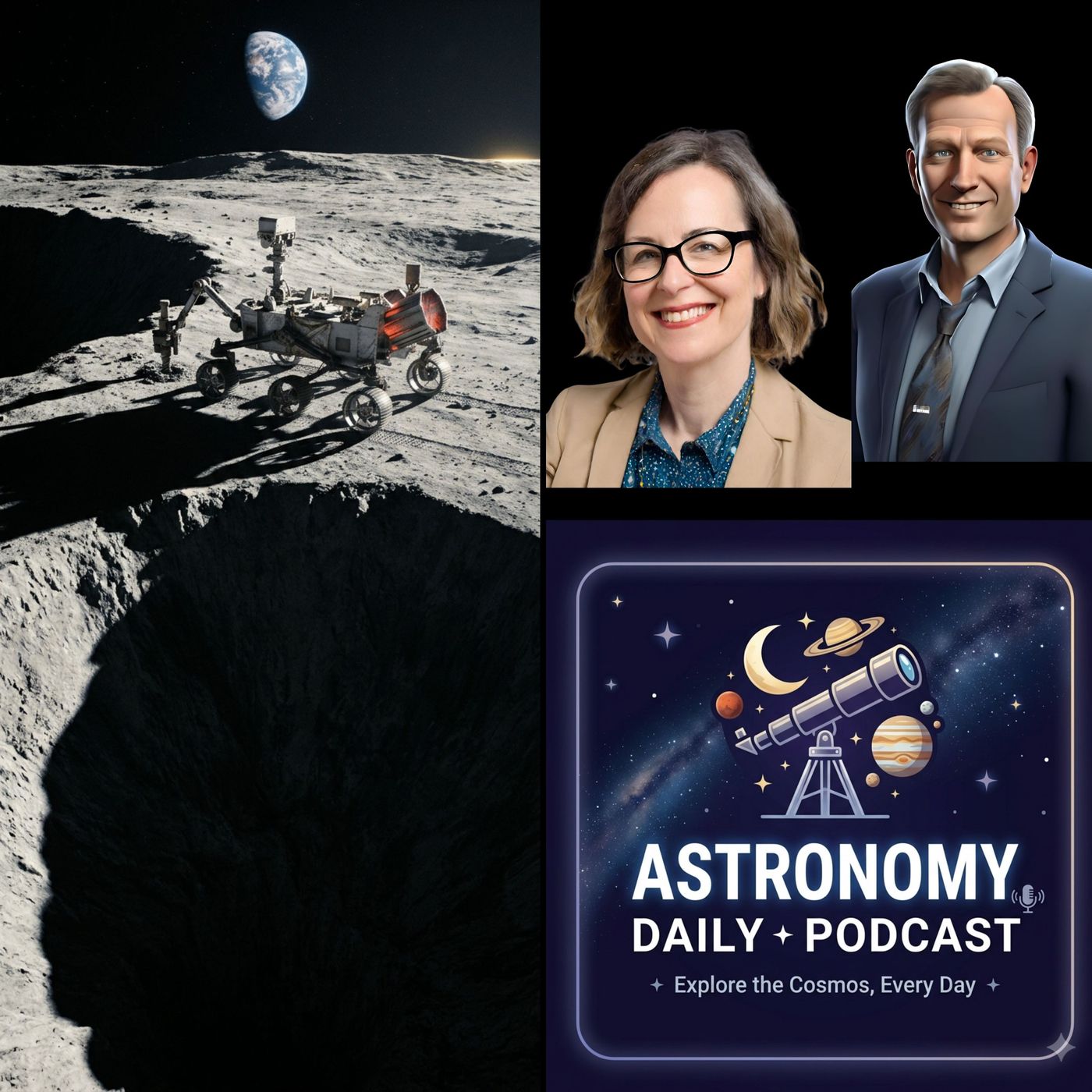
Show notes NASA turns Curiosity's spare test-bed rover into PROMISE, a nuclear-powered rover bound for the Moon's south pole, as part of a sweep of Moon Base awards. Plus: a theory of 'gravitational reconnection' hidden in Einstein's equations, a record 9.7-picokelvin quantum gas aboard China's Tiangong space station, ESCAPADE's twin burns over southern Australia, and a both-hemispheres skywatch. NASA's PROMISE rover and the Moon Base awards NASA Release 26-095 (7 Nov 2026) and PROMISE mission page. JPL is converting the duplicate Curiosity test-bed rover, powered by a flight-spare MMRTG, for a late-2028 launch and an 18-month mission at the lunar south pole. Blue Origin: $94M base + $140M option to deliver it on Mark 1. Also: eight CLPS 2 companies ($10B maximum, 10 years), CLPS 1 raised to $4.2B, six VADR task orders (~$1.3B), a 2028 Starship cislunar communications demo. https://www.nasa.gov/news-release/nasa-awards-moon-base-transportation-technology-science-projects/ https://www.n
In partnership with Frontiers Science House, we bring you the next installment of our Why? series. Today, we tackle one of science's most hotly debated fields and ask: Why geoengineering? What do we mean by it? Can reflecting the sun really help improve the climate? And what are the arguments for and against it? We hear from Martin Stew, science correspondent for ITV News; Dakota Gruener, CEO of Reflective, which aims to accelerate sunlight-reflection research; and Mark Maslin at University College London and David Keith at the University of Chicago, who put geoengineering on trial. Like this podcast?
As the nights draw in, many of us can experience low mood. But for a small proportion of people a more intense depression develops through the winter months. It’s a phenomenon that since the 1980s has been labelled seasonal affective disorder, or Sad, and can be debilitating for sufferers. To find out more about the latest scientific understanding of Sad, Ian Sample speaks to Russell Foster, professor of circadian neuroscience at the University of Oxford. He explains what scientists think the mechanism for the condition could be and what the evidence says about the best way to tackle it. • In the UK and Ireland, Samaritans can be contacted on freephone 116 123. In the US, you can call or text the 988 Suicide & Crisis Lifeline at 988 or chat at 988lifeline.org. In Australia, the crisis support service Lifeline is 13 11 14. Other international helplines can be found at befrienders.org.
Battery factories can now produce roughly twice the storage cells the world installs each year, yet cell prices rose in 2026. Lithium, tariffs and sourcing rules, not manufacturing costs, now decide what a battery costs and where it can be sold. Iola Hughes, Head of Research at Benchmark Mineral Intelligence, returns to Transmission to explain what is really moving the global battery market, from Chinese factory lines to US tariff schedules. They cover: Why a storage cell costs around $50/kWh in China, while US prices are ticking up, and why there's no longer one global battery price. What China's anti-involution campaign means for an industry with 6 to 6.5 TWh of cell capacity running at around 50% utilisation. Why over 1 GWh of sodium-ion storage projects were cancelled this year, and why new chemistries must beat where lithium-ion will be in five years, not where it is today. How Bulgaria installed over 5 GWh of battery storage this year and overtook Germany, as average project size
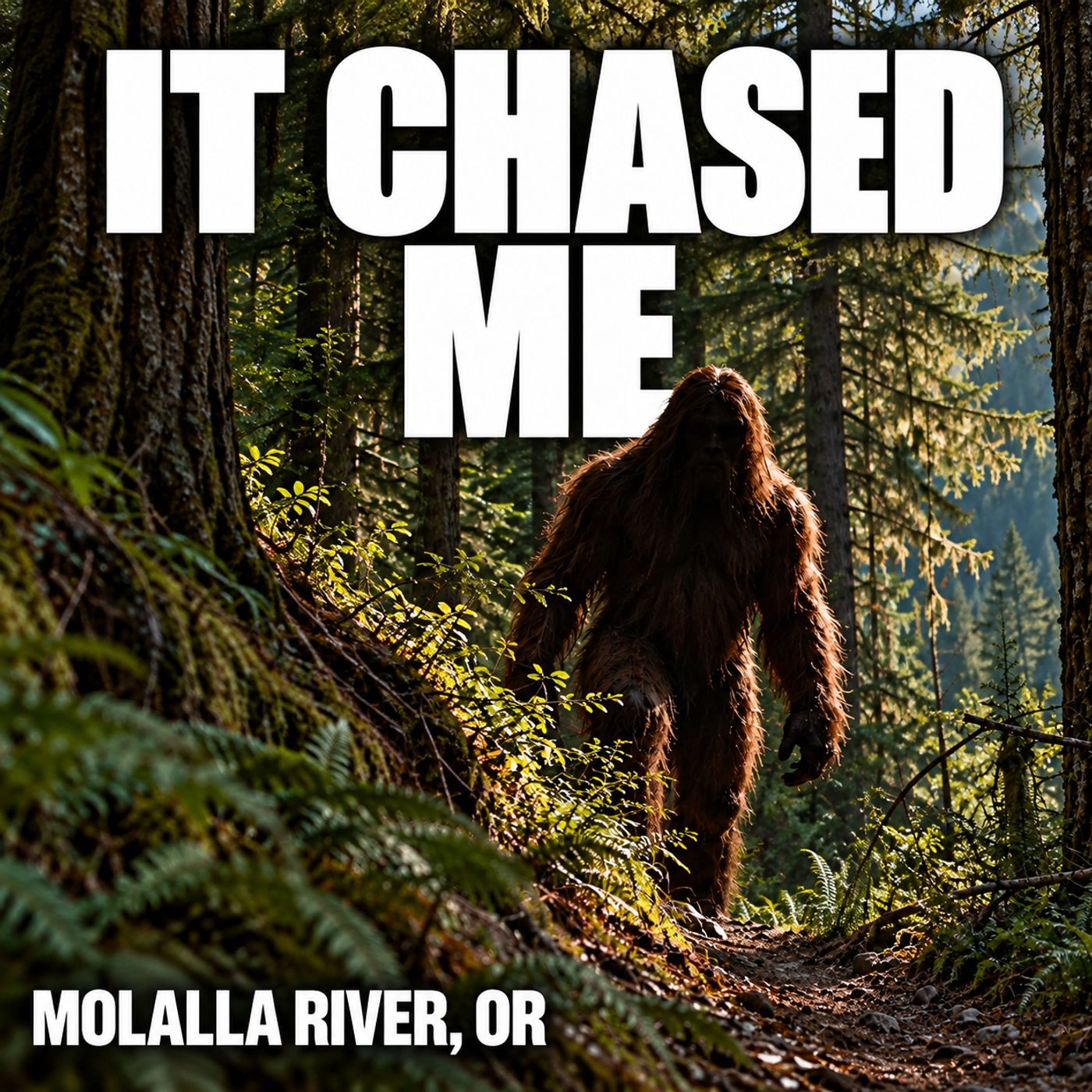
Every time Ed answered the screams, they sounded closer to camp. Then the woods went silent. Deep in Oregon’s Molalla River Corridor, Ed says something came crashing through the trees, emerged just feet away, and stared at him. When he ran for his truck, it followed. His escape ended with a friend firing warning shots. On this episode of Bigfoot Society, Ed recounts the repeated encounters that drew him back to a remote campsite his group called “Bigfoot Camp.” He describes exchanging calls with something on the mountainside, watching three figures bend a tree toward the ground, and hearing a scream during a hunting trip that he says made the ground vibrate beneath him. What had he been calling into camp—and what happened when it finally reached him? Hear Ed’s firsthand account of Bigfoot encounters in the Oregon woods and the pursuit he still struggles to remember in full. Originally released as Episode 580 on 11/6/24. Get the free Bigfoot hotspots report: https://bit.ly/bfsreport Fol
Why, why, why does our education system look so similar to the way it did 50 years ago? Millions of students were failing then, as they are now -- and it's because we're clinging to a business model that clearly doesn't work. Education advocate Geoffrey Canada dares the system to look at the data, think about the customers and make systematic shifts in order to help greater numbers of kids excel. Uploaded 16-08-13 Talk by Geoffrey Canada.