In this episode of Science Quickly, we cover a tragic measles death that highlights the dangers of declining vaccination rates, examine a wave of cyberattacks that are turning supermarket freezers into heaters and investigate one of science’s most important questions: Do cats fart? From public health threats to cybersecurity risks to feline flatulence, it’s a week of science news that’s equal parts alarming and absurd. Recommended Reading: New York’s first measles death in 30 years is an omen of worse to come (https://www.scientificamerican.com/article/new-yorks-first-measles-death-in-30-years-is-an-omen-of-worse-to-come/) Hackers are turning supermarket freezers into heaters (https://www.scientificamerican.com/article/how-hackers-are-turning-grocery-store-freezers-into-heaters/) Do cats fart? An investigation into the mysteries of feline flatulence (https://www.scientificamerican.com/article/do-cats-fart-an-investigation-into-the-mysteries-of-feline-flatulence/) Our theme music was co
Sleep better with Pillow: https://pillow.app/bettersleep Experience gentle continuous rainfall sounds crafted to soothe your mind, enhance deep sleep, and support relaxation and meditation with calming ambient noise. Perfect for peaceful rest, focus, and easing insomnia naturally. This episode includes AI-generated content.
Keeping good colony records has always sounded easier than it actually is. Gloves, propolis, weather, time pressure, and multiple colonies can quickly turn detailed notes into a few marks on a brick—or nothing at all. In this episode, Jeff and Becky welcome back HiveTracks founder Dr. James Wilkes and co-founder Max Rünzel for an update on how the longtime beekeeping platform is changing. HiveTracks now allows beekeepers to talk through an inspection while the app converts those observations into organized colony records. James and Max explain how voice input, photographs, weather, bloom data, land use, and colony history can provide the context needed to make AI tools more useful to individual beekeepers. They also look ahead to what Max calls "community intelligence": using regional information to help beekeepers recognize changing conditions such as earlier swarming, shifts in bloom timing, or other seasonal signals. The conversation explores why an AI tool with access to your actua
Until recently, many teachers only got one word of feedback a year: "satisfactory." And with no feedback, no coaching, there's just no way to improve. Bill Gates suggests that even great teachers can get better with smart feedback -- and lays out a program from his foundation to bring it to every classroom. Uploaded 16-08-13 Talk by Bill Gates.
Visit https://whyfileslovesgold.com, text FILES to 638257, or call (888) 949-9172. -Get your free, 30-second personalized assessment today at https://pdsdebt.com/BASEMENT -Download Cash App today. Click here to get started: https://click.cash.app/ui6m/re0kp2pw #CashAppPartner Bitcoin services by Block, Inc. See the Bitcoin disclosures at cash.app/legal/podcast. Cassie Coppersmith spent years buying and selling gold mines before she walked away to chase a different kind of treasure. Now she travels to the world’s oldest megalithic sites, asking the questions few others will. Cassie joins AJ to unpack what LiDAR scans uncovered beneath Angkor: geometric mound fields, mile-long spirals, and a water network that behaves like a machine. She explains why Cambodia’s finest stonework sits at the bottom, and why the carbon dates refuse to match the official story. From lathe-turned pillars in India to the giants lining Easter Island’s ancient road, the same pattern keeps appearing. Then there’s
Harley Pasternak, MSc nutritionist, is a five-time New York Times best-selling author and celebrity personal trainer with more than 30 years in health and fitness. Does getting in shape really require longer workouts and more fitness data? Celebrity trainer Harley Pasternak joins Dr. Mike T Nelson to discuss short strength sessions, practical nutrition, daily steps, sleep, and the simple habits he prioritizes over fitness trends. Expect to learn how to coach unusual diet preferences without losing trust, why Harley favors short strength sessions, what goes into a useful hotel gym, how he builds steps and meals gradually, where fitness data can become a distraction, and his perspective on protein, fiber and supplement decisions, and much more. Connect with Harley: Website (https://harleypasternak.com/) Instagram (https://www.instagram.com/harleypasternak/) Episodes you'll enjoy next: Building a Fitness Empire: Business Lessons, Zone 2 & Recovery Trends with Don Saladino — #403 (https://
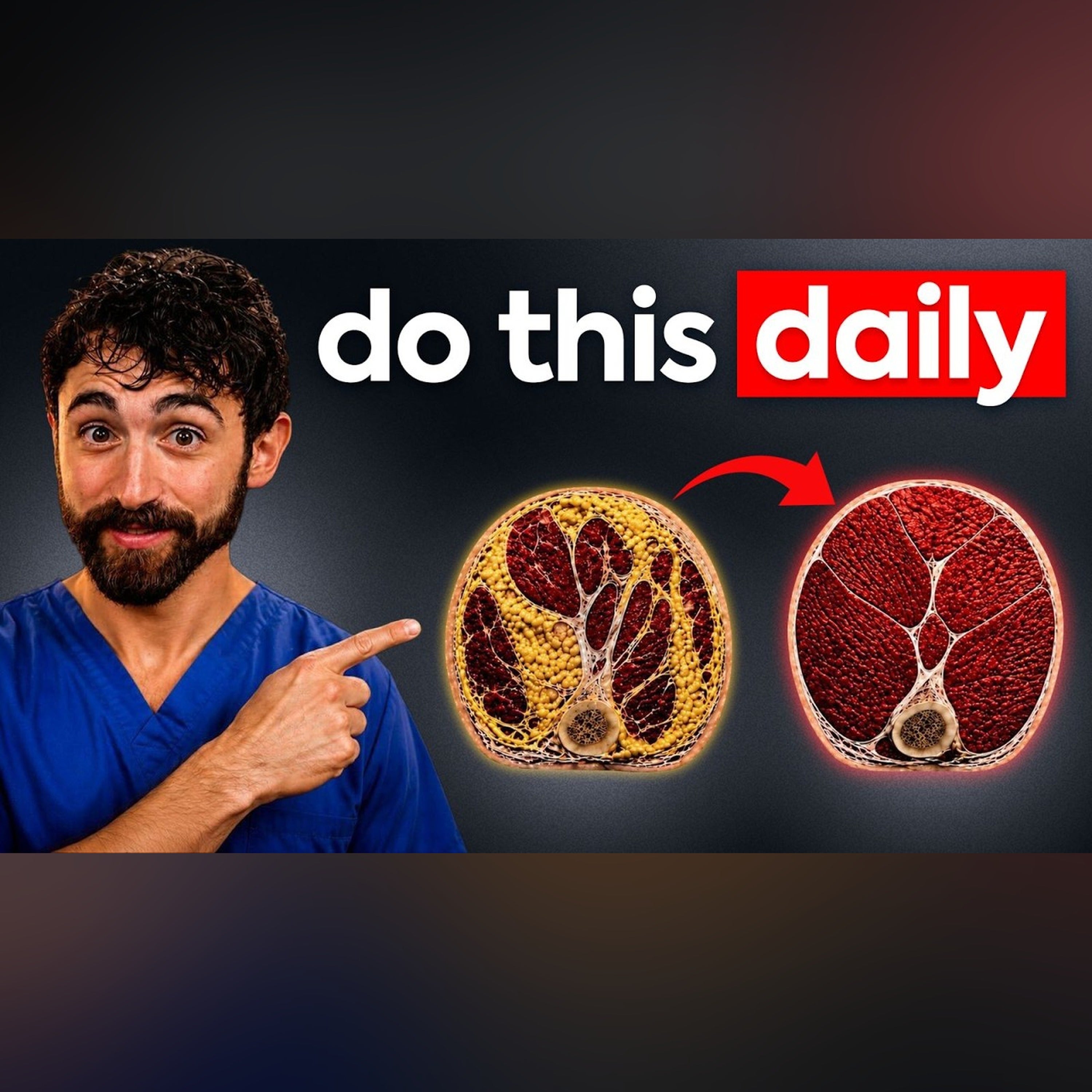
For all the references, additional nuances, and early access to content like this, check out the associated StayCurious Metabolism newsletter: https://staycuriousmetabolism.substack.com/p/scientists-just-discovered-how-exercise?r=40ekz2 Exercise Non-Responder Letter: https://staycuriousmetabolism.substack.com/p/why-your-workouts-arent-working-its?r=40ekz2 Sleep Masterclass Video: https://youtu.be/cgnfJtLc_pY SS-31 Letter: https://staycuriousmetabolism.substack.com/p/the-fda-approved-peptide-for-mitochondrial?r=40ekz2 MOTS-C Letter: https://staycuriousmetabolism.substack.com/p/mots-c-the-mitochondrial-peptide?r=40ekz2 Wolverine Stack Letter: https://staycuriousmetabolism.substack.com/p/can-peptides-regrow-the-heart-the?r=40ekz2 Thymus and Longevity Letter: https://staycuriousmetabolism.substack.com/p/the-most-overlooked-organ-in-aging?r=40ekz2 5-Amino-1MQ Letter: https://staycuriousmetabolism.substack.com/p/the-metabolic-leak-that-might-be?r=40ekz2 If you want to try 5-Amino-1MQ, here’s
In this episode, we talk about Silicon Valley's namesake and how network solids are at the heart of it all. Hank also discusses Solid-State Semiconductors, N-Type and P-Type Semiconductors, Diodes, Transistors, Computer Chips, and Binary Code. All from the same thing that makes up sand! Pssst... we made flashcards to help you review the content in this episode! Find them on the free Crash Course App! Download it here for Apple Devices: https://apple.co/3d4eyZo Download it here for Android Devices: https://bit.ly/2SrDulJ -- Table of Contents Silicon Network Solids 1:25 Network Arrangements 1:52 Solid-State Semiconductors 5:08 N-Type and P-Type Semiconductors 5:11 Diodes and Transistors 6:10 Computer Chips and Binary Code 7:43 -- Crash Course is on Patreon! Want to find Crash Course elsewhere on the internet? Facebook - http://www.facebook.com/YouTubeCrashCourse Twitter - http://www.twitter.com/TheCrashCourse Instagram - https://www.instagram.com/thecrashcourse/ CC Kids: http://www.youtu
Researchers at TU Wien have developed a promising approach to make quantum communication far more reliable. By applying time-reversal symmetry and engineering how light travels through a waveguide, their simulations suggest that single photons could be absorbed with nearly perfect efficiency, overcoming a major limitation in qubit-to-qubit transfers. The technique could help pave the way for more efficient quantum computers and communication networks. This episode includes AI-generated content.
What if the search for alien intelligence could be guided by predicting where extraterrestrial civilizations might choose to send a message? Researchers at the SETI Institute are applying game theory to identify potential cosmic communication hotspots, using a strategy that could help focus radio telescope observations. Their approach offers a new way to tackle one of astronomy's biggest unanswered questions: where and when should we listen? This episode includes AI-generated content.
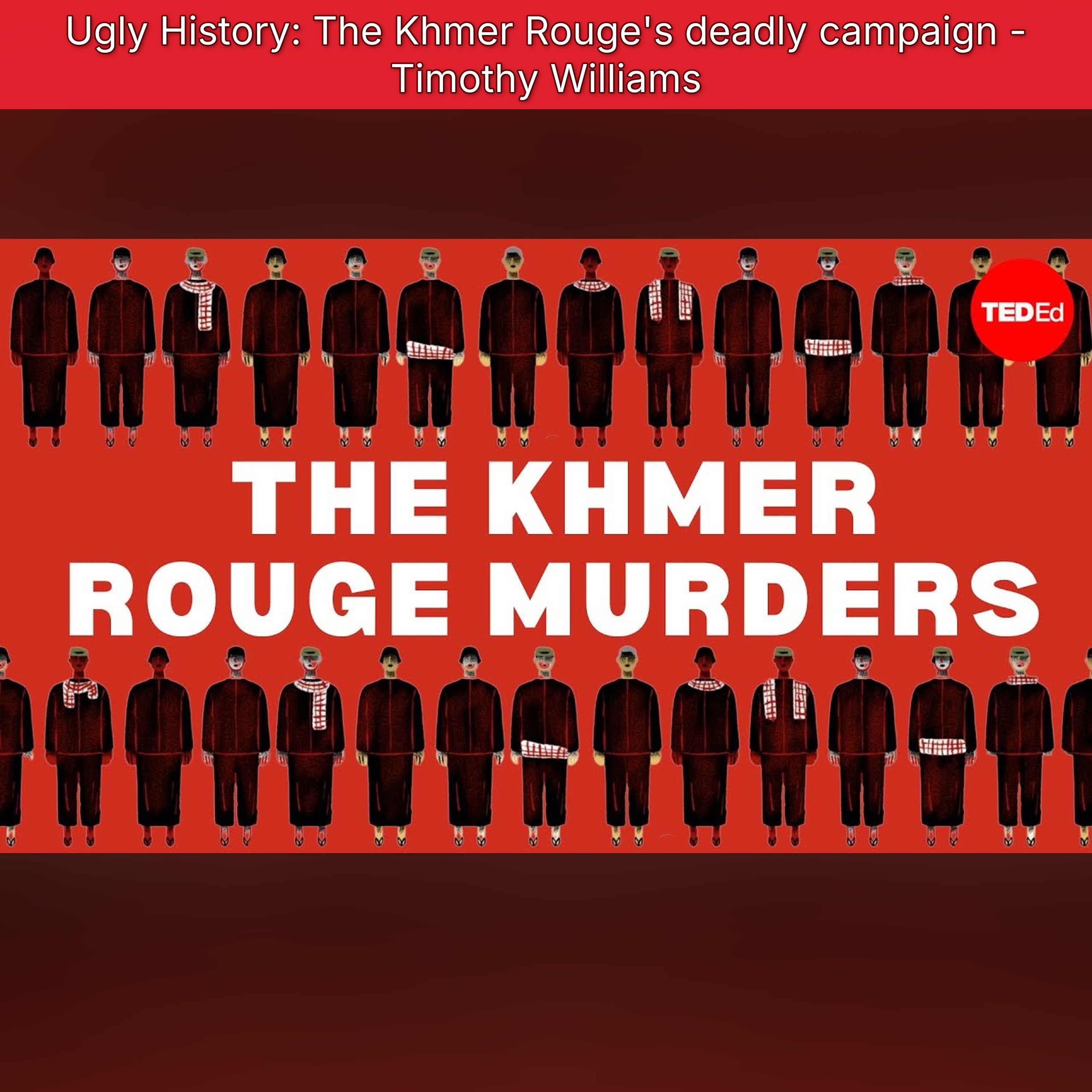
Dig into the era of the Khmer Rouge in Cambodia, which perpetuated a genocide that killed a quarter of the country’s population. -- From 1975 to 1979, the Communist Party of Kampuchea ruled Cambodia with an iron fist, perpetrating a genocide that killed one fourth of the country’s population. Roughly one million people were executed as suspected political enemies or due to their ethnicities, and another million died of starvation, disease, or overwork. How did this happen? Timothy Williams details the rise of the Khmer Rouge. Lesson by Timothy Williams, directed by Héloïse Dorsan-Rachet. Support Our Non-Profit Mission ---------------------------------------------- Support us on Patreon: http://bit.ly/TEDEdPatreon Check out our merch: http://bit.ly/TEDEDShop ---------------------------------------------- Connect With Us ---------------------------------------------- Sign up for our newsletter: http://bit.ly/TEDEdNewsletter Find us on Twitter: http://bit.ly/TEDEdTwitter Peep us on Instag
Science has some really weird, wonderful ideas. Some of them are hard to prove in fact, but Emily St. John Mandel does a great job of playing with them in fiction — in works like Station Eleven, Sea of Tranquility, and her newest novel, Exit Party. Guest: Emily St. John Mandel (https://www.emilymandel.com/), author Watch us on Netflix! (https://www.netflix.com/title/83045846) For show transcripts, go to https://drive.google.com/drive/folders/1bMXuLuyy3zTLCnblKVWUBq4Gd84PY8sGvox.com/unxtranscripts (http://vox.com/unxtranscripts) http://vox.com/unxtranscriptshttps://drive.google.com/drive/folders/1bMXuLuyy3zTLCnblKVWUBq4Gd84PY8sGFor more, go to https://www.vox.com/unexplainablevox.com/unexplainable (http://vox.com/unexplainable)https://www.vox.com/unexplainable And please email us! [email protected] We read every email. Thank you!
In this episode of Talk Nerdy, Cara is joined by public health expert, (https://www.terryadirimmd.com/publications) physician, former Senior Federal Health Official (https://www.terryadirimmd.com/about-me), and author, Terry Admirim MD, MPH. They discuss her newest book, The Prepared Patient: Your Guide to Surviving the Health Care System (https://www.press.jhu.edu/books/title/54208/prepared-patient?srsltid=AfmBOop9iWfPThn7SO80XKFe2wARXrCmhclRSMOvtaZD2vmfMby_zK2G). Follow Terry: @TerryAdirimMD (https://bsky.app/profile/terryadirimmd.bsky.social)
View full lesson: http://ed.ted.com/lessons/what-really-happens-to-the-plastic-you-throw-away-emma-bryce Uploaded 21-04-15 We’ve all been told that we should recycle plastic bottles and containers. But what actually happens to the plastic if we just throw it away? Emma Bryce traces the life cycles of three different plastic bottles, shedding light on the dangers these disposables present to our world. Lesson by Emma Bryce, animation by Sharon Colman.
National Geographic filmmaker Bertie Gregory returns to All Creatures Podcast to share the story behind Wolves Up Close, filmed in the bitter cold around Hudson Bay. He shares what seven years following Kona’s pack taught him about how wolves lead and hunt, and recounts a close encounter with a polar bear. Chris and Bertie explore why we love dogs yet fear wolves, how wolf kills feed other wildlife, and what it takes for people and wolves to coexist. Wolves Up Close premiered November 6 in the U.S. on National Geographic, Disney+ and Hulu. Timeline 00:00 Welcome Back Bertie 00:50 Why Wolves Fascinate 02:49 Meet Kuna The Leader 05:15 Tracking Wolves Arctic 07:40 Pack Size Ebb Flow 09:05 Wolves At The Lodge 09:45 Polar Bear Close Call 11:31 Fear Respect Experience 13:35 Coexist With Wolves 16:23 Ecosystem Benefits Kill 18:22 Future Projects Tease 19:36 Which Animal Reborn 20:32 Endurance Moose Hunt 21:50 Wild Places Reflection 24:16 Favorite Moments Recap 25:28 Where To Watch Follow 27:1
On a clear night, the sky is filled with stars — far more than most of us can see. But there's a surprisingly simple trick that can help you spot more of them, even without a telescope. It's something experienced stargazers routinely do, and it can make a remarkable difference in what you see when you look up. https://science.nasa.gov/solar-system/how-to-find-good-places-to-stargaze/ Your DNA holds an astonishing amount of information about you. It can reveal your ancestry, help solve crimes, identify long-lost relatives, and even offer clues about your future health. DNA technology is also being used in ways you might never imagine, from detecting food fraud to protecting endangered species. But as powerful as genetic testing has become, it raises some fascinating questions. How much can your DNA really tell you? How reliable are the results? And what happens when a DNA test reveals something you wish you didn't know? Turi King, a leading authority on DNA and genetic research and a me
Can you REALLY launch someone across the border using a giant slingshot?! Kari and Tory revisit one of MythBusters' wildest experiments, revealing the dangerous equipment failures, behind-the-scenes chaos, and why launching Buster 200 yards proved nearly impossible! Click the "Join" button on this episode or on our homepage! Thank you to our sponsors! Thank you, Uncommon Goods! Thank you, Perplexity! Start your free trial of Perplexity Computer today at http://www.PPLX.ai/mythfits (http://www.pplx.ai/mythfits) and experience the next phase of AI. Thank you, Cash App! Download Cash App today and make your money work for you. Click here to get started: https://click.cash.app/ui6m/co9cz5qj #CashAppPartner ○ Cash App is a financial services platform, not a bank. Banking services provided by Cash App’s bank partner(s). Prepaid debit cards issued by Sutton Bank, Member FDIC. Cash App Visa® Debit Flex Cards issued by Sutton Bank, Member FDIC, and The Bancorp Bank, N.A., pursuant to a license
The guys talk about some of the more notable animal-related headlines from the past several weeks, including a former actor who snuck into a tiger's enclosure, an elderly fisherman who fell victim to a hungry alligator, and many more. ~ Rocket Money - Let Rocket Money help you find and cancel unwanted subscriptions, monitor your spending, and lower your bills—join at https://RocketMoney.com/CLAW Mint Mobile - Get your new wireless plan for $15/month at https://mintmobile.com/tooth LMNT - drinklmnt.com/tooth Quince - Get free shipping on your order and 365-day returns at https://quince.com/tooth Miracle Brand - Upgrade your sleep with Miracle Made! ~ To advertise on the show, contact us! Patreon - https://www.patreon.com/c/toothandclawpodcast ~~ Tooth & Claw is brought to you by QCODE. For the latest updates on the show and all things wildlife, follow us at toothandclawpod.com and social: Instagram: @ToothandClawPodcast Twitter: @ToothandClawPod Wes: @GrizKid Jeff: @jefe_larson Mike: @m
Scientists have demonstrated that altermagnets, a new class of magnetic materials, can transmit information through electrical currents despite having no overall magnetic field. The discovery confirms an important theoretical prediction and could open new possibilities for faster, denser digital memory. However, making these materials work reliably at room temperature remains a key challenge. This episode includes AI-generated content.
Astronomers have measured the age of VVV CL001, a faint globular cluster hidden behind dense clouds of dust near the center of the Milky Way. Infrared observations and the Hubble Space Telescope helped identify 155 cluster stars, revealing an estimated age of 13.4 billion years. That places this ancient stellar group remarkably close to the age of the universe itself. If future observations confirm the result, VVV CL001 could raise important questions about how early the Milky Way—and its oldest stars—actually formed. This episode includes AI-generated content.
Picture three machines in your next operation. One watches the laparoscopic feed and flags the zone that is not safe to divide. One reads the chart and has the op note and a plain-language patient summary done before you close. One works quietly in the background and has the ICU bed request queued before anyone asks. Notice that none of them hands you a percentage. In the series finale, Drs. Mason Pearce, Tyler Loftus, and Dan Hashimoto trace surgical AI from the NSQIP risk calculator to computer vision, large language models, and agentic systems: which of these is already in operating rooms, which is arriving fast, which is still mostly promise, and how a surgeon without a machine learning degree stays in control of all three. Hosts: Mason Pearce, MD, General Surgery Resident and Clinical Informatics Fellow, University of South Florida; Behind the Knife Education Fellow Tyler J. Loftus, MD, PhD, Acute Care Surgeon and Associate Professor of Surgery; Program Director, General Surgery R
Giant Leap returns with Season 2! Audio only, available here on your podcast app. Humankind is a curious species. Curiosity is what drove us from the cover of the trees, that led us across continents and oceans, and propelled us beyond the earthy grasp of our planet’s gravity into the dark unknown above. To interrogate, to question to pursue a glimpse truth… there is nothing more human that to wonder why? and what? and how? Our species is unique in its quest for answers. In this season, we posit many questions: Could the collision of two satellites create enough debris to trap us on Earth? Did dinosaurs have feathers? Can invasive species ever be a good thing? What is lightning? On Giant Leap we ask questions — big and small, and then find the scientists and experts who have devoted their lives to seeking answers. That’s Giant Leap, Season two available here November 13th. Hosted on Acast.
Learn the techniques and tricks that pyramid schemes use to recruit new members and how to avoid being fooled yourself. Uploaded 02-04-19 -- In 2004, a nutrition company offered a life-changing opportunity to earn a full-time income for part-time work. There were only two steps to get started: purchase a $500 kit and recruit two more members. By 2013, the company was making $200 million. There was just one problem -- the vast majority of members earned less than they paid in. Stacie Bosley explains what a pyramid scheme is and how to spot one. Lesson by Stacie Bosley, directed by Wooden Plane Productions. Sign up for our newsletter: http://bit.ly/TEDEdNewsletter Support us on Patreon: http://bit.ly/TEDEdPatreon Find us on Twitter: http://bit.ly/TEDEdTwitter Peep us on Instagram: http://bit.ly/TEDEdInstagram View full lesson: https://ed.ted.com/lessons/how-to-spot-a-pyramid-scheme-stacie-bosley Thank you so much to our patrons for your support! Without you this video would not be possib
Why do you feel drained after sitting at a desk all day? Matt explores the unsettled science of mental fatigue. Popular ideas like running out of brain glucose are debunked. Instead of an empty fuel tank, the culprit may be a "full ashtray." Research links mental exhaustion to a build-up of glutamate in the prefrontal cortex. This byproduct makes thinking feel costly, explaining why we make impulsive, low-effort choices by 5 PM. How do we combat this brain drain? Matt reveals that lack of sleep sabotages your motivation to think, not your capacity. To restore focus, real breaks are essential, while quick fixes like breakfast and hydration offer limited cognitive benefits for adults. Finally, we uncover the truth about coffee: your caffeine hit might just be curing withdrawal, not boosting your brain. Tune in to learn how to protect your mental stamina. Please note that Matt is not a medical doctor, and none of the content in this podcast should be considered medical advice in any way,