What happens when a parent who has spent much of their own childhood in care finds themselves raising children while carrying unprocessed trauma, poverty, instability and loss? In this powerful episode of Messy Social Work, Rich and Tim are joined by Azariah Hope, lived experience consultant, trainer, advocate and mother of four, alongside Rebecca Carr-Hopkins, social worker, trainer and attachment specialist. Azariah shares her remarkable and deeply moving story: growing up in and out of care under Section 20 arrangements, experiencing abuse, multiple foster placements, becoming a mother at fifteen, losing two children to care proceedings and adoption, and eventually finding a path towards recovery and reunification through intensive therapeutic support. Together, the conversation explores: The reality of growing up in care and moving between twelve foster placements Trauma, survival strategies and the hidden impact of childhood adversity Teenage parenthood and the search for love, be
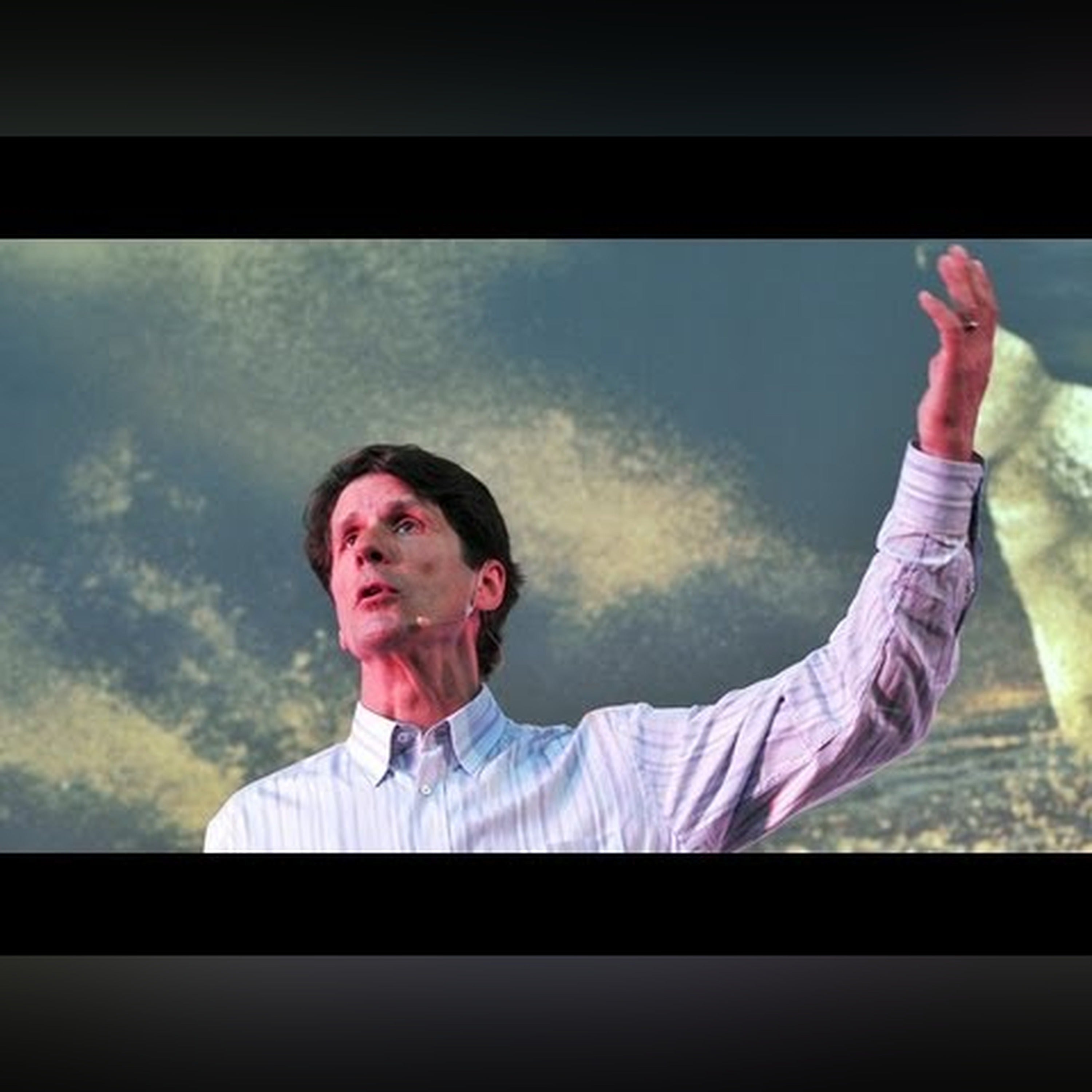
View full lesson: http://ed.ted.com/lessons/marcus-du-sautoy-symmetry-reality-s-riddle Uploaded 17-08-13 The world turns on symmetry -- from the spin of subatomic particles to the dizzying beauty of an arabesque. But there's more to it than meets the eye. Here, Oxford mathematician Marcus du Sautoy offers a glimpse of the invisible numbers that marry all symmetrical objects. Oxford's newest science ambassador Marcus du Sautoy is also author of The Times' Sexy Maths column. He'll take you footballing with prime numbers, whopping symmetry groups, higher dimensions and other brow-furrowers. Talk by Marcus du Sautoy.
Who shapes the UFO stories we hear, and who stands to benefit from them? On this episode of the Let’s Get Freaky Podcast, we sit down with Los Angeles-based animator and filmmaker Christopher Graybill to discuss his documentary Saucers, Spooks and Kooks. The film explores the overlap between UFOs, intelligence agencies and high strangeness. Christopher also recounts a UFO he saw while working on the documentary itself. Christopher brings a filmmaker’s perspective to the conversation. His credits include Birds of Prey, Dave Made a Maze and The Death of Superman Lives: What Happened?, along with animated projects such as Big Mouth, Beavis and Butt-Head Do the Universe and X-Men ’97. We explore the possibility of deliberate UFO deception. Could powerful interests use UFO stories to distract from other activities or profit from public fascination? How can we tell when prominent voices in the UFO community are following the evidence and when they might be advancing someone else’s agenda, kn
View full lesson: http://ed.ted.com/lessons/why-batteries-die-adam-jacobson Uploaded 21-05-15 Batteries are a triumph of science—they allow smartphones and other technologies to exist without anchoring us to an infernal tangle of power cables. Yet even the best batteries will diminish daily, slowly losing capacity until they finally die. Why does this happen, and how do our batteries even store so much charge in the first place? Adam Jacobson gives the basics on batteries. Lesson by Adam Jacobson, animation by FOX Animation Domination High-Def.
Should you go to college in the age of AI?Episode release date: 28 Sep 2023Spreading awareness about the works of some of the leading educators in the AI revolution. Core Ideas: Metamodernism: Narratives and emergence view of reality - Reduce suffering - Increase prosperity - Increase understanding mantra: Seek knowledge. ELABORATE: Add depth and detail to understanding, weaving comprehensive and nuanced explanations.DISCLAIMER: This is a community-driven show. -----Should you go to college in the age of AI?Episode release date: 28 Sep 2023Spreading awareness about the works of some of the leading educators in the AI revolution. Core Ideas: Metamodernism: Narratives and emergence view of reality - Reduce suffering - Increase prosperity - Increase understanding mantra: Seek knowledge. ELABORATE: Add depth and detail to understanding, weaving comprehensive and nuanced explanations.DISCLAIMER: This is a community-driven show. ------------- Keywords: heuristic imperatives, post labor econo
In today's Crash Course Astronomy, Phil takes a look at the explosive history of our cosmic backyard. We explore how we went from a giant ball of gas to the system of planets and other celestial objects we have today. This episode is sponsored by Squarespace: http://www.squarespace.com/crashcourse Check out the Crash Course Astronomy solar system poster here: http://store.dftba.com/products/crashcourse-astronomy-poster -- Chapters: Introduction 00:00 Geocentrism vs Heliocentrism 0:51 Makeup of the Solar System 2:38 Is Pluto a Planet? 3:14 Our Solar System 4:24 How Our Solar System Formed 5:36 Planet Formation Depends on Distance to Sun 7:14 Review 8:57 -- PBS Digital Studios: http://youtube.com/pbsdigitalstudios Follow Phil on Twitter: https://twitter.com/badastronomer Crash Course is on Patreon! Want to find Crash Course elsewhere on the internet? Facebook - http://www.facebook.com/YouTubeCrashCourse Twitter - http://www.twitter.com/TheCrashCourse Instagram - https://www.instagram.com
World War I was a total war for millions of people in Europe. Many men were enlisted in the fighting, but the war work had implications for the daily lives of a huge number of Europeans. Women entered the workforce in huge numbers, and for a lot of people, the battles raged through their towns, cities, and even their homes. In addition to learning about the homefronts of the war, we're going to look at how the war ended, and how the Paris Peace Conference and the treaties that resulted did little to heal the societal wounds of the war, and in many ways set the stage for the next big war. Sources -Akin, Yigit. “War, Women, and the State: The Politics of Sacrifice in the Ottoman Empire during the First World War,” Journal of Women’s History. Vol. 26, No. 3 (Fall 2014). -Gerwarth, Robert. The Vanquished: Why the First World War Failed to End. New York: Farrar, Straus, and Giroux, 2016. -Hunt, Lynn et al. Making of the West: Peoples and Cultures, 5th ed. Boston: Bedford St. Martin’s, 2016.
What would it take for hackers to shut down America—and how close have they come? This week on Ninjas Are Butterflies, we dig into power grid vulnerabilities and the unsettling possibility of a nationwide blackout. Then, before the world knew him as the Unabomber, Ted Kaczynski was a teenage Harvard student caught up in a controversial psychological experiment. Where does MKUltra enter the story? The questions only get darker. Plus, the strange case of Teddy Kyle Smith takes us deep into the Alaskan wilderness, where a violent encounter and chilling local folklore leave plenty to unravel. Cyberattacks, true crime, and unexplained mysteries, all on Episode 220. Thanks to Our Sponsors: Go to https://butcherbox.com/NINJAS to get $20 off across your first two boxes, plus new users get their choice of filet mignon, NY strip or Ribeye PLUS bacon in every box for the lifetime of their subscription — with free shipping always. #ad Download Cash App today and make your money work for you. Sheat
Life in 20 years - My 2044 Predictions - AGI, Fusion, Biotech, Quantum - Milestones and Impacts!Episode release date: 22 Feb 2024Spreading awareness about the works of some of the leading educators in the AI revolution. Core Ideas: Metamodernism: Narratives and emergence view of reality - Reduce suffering - Increase prosperity - Increase understanding mantra: Seek knowledge. ELABORATE: Add depth and detail to understanding, weaving comprehensive and nuanced explanations.DISCLAIMER: This is a community-driven show. ----Life in 20 years - My 2044 Predictions - AGI, Fusion, Biotech, Quantum - Milestones and Impacts!Episode release date: 22 Feb 2024Spreading awareness about the works of some of the leading educators in the AI revolution. Core Ideas: Metamodernism: Narratives and emergence view of reality - Reduce suffering - Increase prosperity - Increase understanding mantra: Seek knowledge. ELABORATE: Add depth and detail to understanding, weaving comprehensive and nuanced explanations.D
Enslaved people resisted their condition in a range of different ways. Oftentimes those ways were small and personal. There were also times when that resistance took on larger, more dramatic forms, like with slave uprisings and rebellions. Today, we'll learn about the Stono Rebellion, which was an uprising led by enslaved people in South Carolina in 1784. We'll also talk about ways that enslaved people resisted in general and methods like enforced illiteracy used by those who sought to keep people in bondage. Clint's book, How the Word is Passed is available now! https://bookshop.org/a/3859/9780316492935 Sources and References Ira Berlin, Many Thousands Gone: The First Two Centuries of Slavery in North America (Cambridge: The Belknap Press of Harvard University Press, 1998. Winthrop Jordan, White Over Black: American Attitudes Toward the Negro, 1550-1812 (Chapel Hill: University of North Carolina Press, 1968, reprinted in 2012) Peter Wood, Black Majority: Negroes in Colonial South Caro
Editor's Summary by Linda Brubaker, MD, and Preeti Malani, MD, MSJ, Deputy Editors of JAMA, and Gregory Curfman, MD, Executive Editor of JAMA, the Journal of the American Medical Association, for articles published from November 7-13, 2026. Related Content: Audio Highlights (https://jamanetwork.com/journals/jama/fullarticle/10.1001/jama.2025.16129)
View full lesson: http://ed.ted.com/lessons/james-balog-time-lapse-proof-of-extreme-ice-loss Uploaded 17-08-13 Photographer James Balog shares new image sequences from the Extreme Ice Survey, a network of time-lapse cameras recording glaciers receding at an alarming rate, some of the most vivid evidence yet of climate change. Talk by James Balog.
JAMA Medical News Director Jennifer Abbasi and Associate Managing Editor Kate Schweitzer discuss "In an Effort to Reduce Hypertension, Salt Substitutes Come to the Table." Related Content: In an Effort to Reduce Hypertension, Salt Substitutes Come to the Table (https://jamanetwork.com/journals/jama/fullarticle/10.1001/jama.2026.23873)
Datacentres, high fuel prices, and the cost of living crisis were some defining issues for the US electorate in the recent US midterm elections, but why didn’t politicians link these concerns to the environment and climate change? Associate Professor of Political Science at Ohio University, Dr. Nancy Manring Ph.D, joins Bertie to discuss framing of climate issues and environmental politics in the United States - the central theme of her latest book ‘A World of Wounds: Rebuilding a Bipartisan Environmental Movement and Cultivating Hope.’ Nancy applies her background in environmental conflict and environmental dispute resolution to first unpack why environmental politics is currently so divisive in the US, claiming “the partisan divide has been purposely constructed by conservatives and ultimately is an artificial construction.” Listen to Nancy explain why she believes American politicians are missing an opportunity to strengthen the salience of environmental politics: “I would argue tha
Unless it’s Christmas Eve, that chain of lights moving across the sky is probably not Santa’s sleigh but Starlink’s low earth orbit satellites (LEOs). To meet demand for ubiquitous, instantaneous, and uninterrupted communication, our internet infrastructure now extends into outer space. This talk explores who owns it, who has to clean up after it, and its impact on terrestrial politics. We’ll also take a look at how a new interplanetary internet might help shape the future of space exploration, to Mars and beyond. This lecture was recorded by Professor Victoria Baines on 25th of September 2026 at Barnard’s Inn Hall, London. Professor Victoria Baines FBCS is a leading authority in the field of online trust, safety and cybersecurity. She frequently contributes to major broadcast media outlets on digital ethics, cybercrime and the misuse of emerging technologies, including Extended Reality and Artificial Intelligence. Her areas of research include electronic surveillance, cybercrime futur
Professors Czerski and Lintott investigate how ocean Earth compares and differs from the other planets we’ve found, and how water worlds in many forms may be more common than expected. Using Lovelock’s framing of a biosphere, we consider life on these worlds, and explain what this thinking about the Universe can tell us about our own planet. This lecture was recorded by Professor Helen Czerski and Chris Lintotton 14th of October 2026 at Barnard’s Inn Hall, London. Helen Czerski is a physicist and oceanographer with a passion for science, sport, books, creativity, hot chocolate and investigating the interesting things in life. She is a Professor at the Department of Mechanical Engineering at University College London and her research focus is the physics of breaking waves and bubbles at the ocean surface. These bubbles change underwater sound and light, help transfer gases from ocean to atmosphere (helping the ocean breathe) and also eject ocean material into the air. She has spent mont
Following on from last year’s lecture at the Festival of Musical Ideas, Professors Lintott and Mermikides will present, demonstrate and critique the idea of ‘astro sonification’, using sound and music to represent the astronomical patterns seen in the sky. A particular focus will be on representations of the diverse exoplanet systems now found around other stars, and on musical representations (historical and contemporary) of the worlds of our Solar System. This lecture was recorded by Ronald Hutton and Chris Lintott on 25th Sept 2026 at Barnard's Inn Hall, London Milton Mermikides is a composer, guitarist, technologist, academic and educator in a wide range of musical styles and has collaborated with artists and scientists as diverse as Evelyn Glennie, Tim Minchin, Pat Martino, Peter Zinovieff, John Williams and Brian Eno. Son of a CERN nuclear physicist, he was raised with an enthusiasm for both the arts and sciences, an eclecticism which has been maintained throughout his teaching,
Of all the components of the environment around British prehistoric monuments, the sky is the one that has changed least across the millennia. This, and the fact that some of the most famous of these monuments were clearly aligned on heavenly bodies, should make the study of the relationship between those structures and celestial features a central concern to the archaeologists investigating them. Indeed, scholars have emerged for well over a century who have addressed that concern, but they have tended to come from outside the community of professional archaeology and to have had a fraught interaction with, or even an estrangement from, it. This lecture is designed to show why this is so, and why is it really a British phenomenon, and to ask whether things are likely to be different in the future. This lecture was recorded by Professor Kate Hill on 25th of September 2026 at Barnard’s Inn Hall, London. Professor Hutton is Professor of History at the University of Bristol. He took degre
Professor Lintott explains how we connect the many different ways of observing the sky with attempts to understand the nature of what is seen. This lecture was recorded by Chris Lintott on September 25th 2026 at Barnards Inn, London. Professor Chris Lintott is a Professor of Astrophysics at the University of Oxford, and a Research Fellow at New College. Having been educated at Magdalene College, Cambridge and University College London, his research now ranges from understanding how galaxies form and evolve, to using machine learning to find the most unusual things in the Universe, to predicting the properties of visiting interstellar asteroids. He was the founder of the Zooniverse citizen science platform, which provides opportunities for more than two million online volunteers to contribute to scientific research, and which was the topic of his first book, 'The Crowd and the Cosmos’. His latest book is ‘Our Accidental Universe’. Professor Lintott is best known for presenting the BBC's
Finetune a perfect email generator in GPT-3 - take any input and generate a great emailEpisode release date: 24 Jul 2022Spreading awareness about the works of some of the leading educators in the AI revolution. Core Ideas: Metamodernism: Narratives and emergence view of reality - Reduce suffering - Increase prosperity - Increase understanding mantra: Seek knowledge. ELABORATE: Add depth and detail to understanding, weaving comprehensive and nuanced explanations.DISCLAIMER: This is a community-driven show. ------------------Finetune a perfect email generator in GPT-3 - take any input and generate a great emailEpisode release date: 24 Jul 2022Spreading awareness about the works of some of the leading educators in the AI revolution. Core Ideas: Metamodernism: Narratives and emergence view of reality - Reduce suffering - Increase prosperity - Increase understanding mantra: Seek knowledge. ELABORATE: Add depth and detail to understanding, weaving comprehensive and nuanced explanations.DISCL
Welcome to Crash Course World History Office Hours! John Green and Cathy Keller answer your questions on the Russian Revolution, discuss the origin of nation states, and talk about the best way to approach studying history. Check them out here: https://info.flipgrid.com/ 00:00 Introduction 06:02 Causes and effects of the Russian revolution 15:55 Who was Genghis Khan and how was he able to get so much territory? 20:56 How did the Cold War start? 28:17 Kwame Nkrumah and Ghana in African decolonization and the Cold War 31:03 The differences between the Aztecs, Incas, and Mayans 36:09 Ataturk and the origin of nation-states 41:05 What's the best way to look back on history? 44:05 Tips for studying World History 48:24 Why didn't the silk road stretch all the way across Europe? 50:53 Favorite books on history 56:16 Outro Crash Course Study Skills: https://www.youtube.com/watch?v=IhuwS5ZLwKY&list=PL8dPuuaLjXtNcAJRf3bE1IJU6nMfHj86W (https://www.youtube.com/watch?list=PL8dPuuaLjXtNcAJRf3bE1IJU6
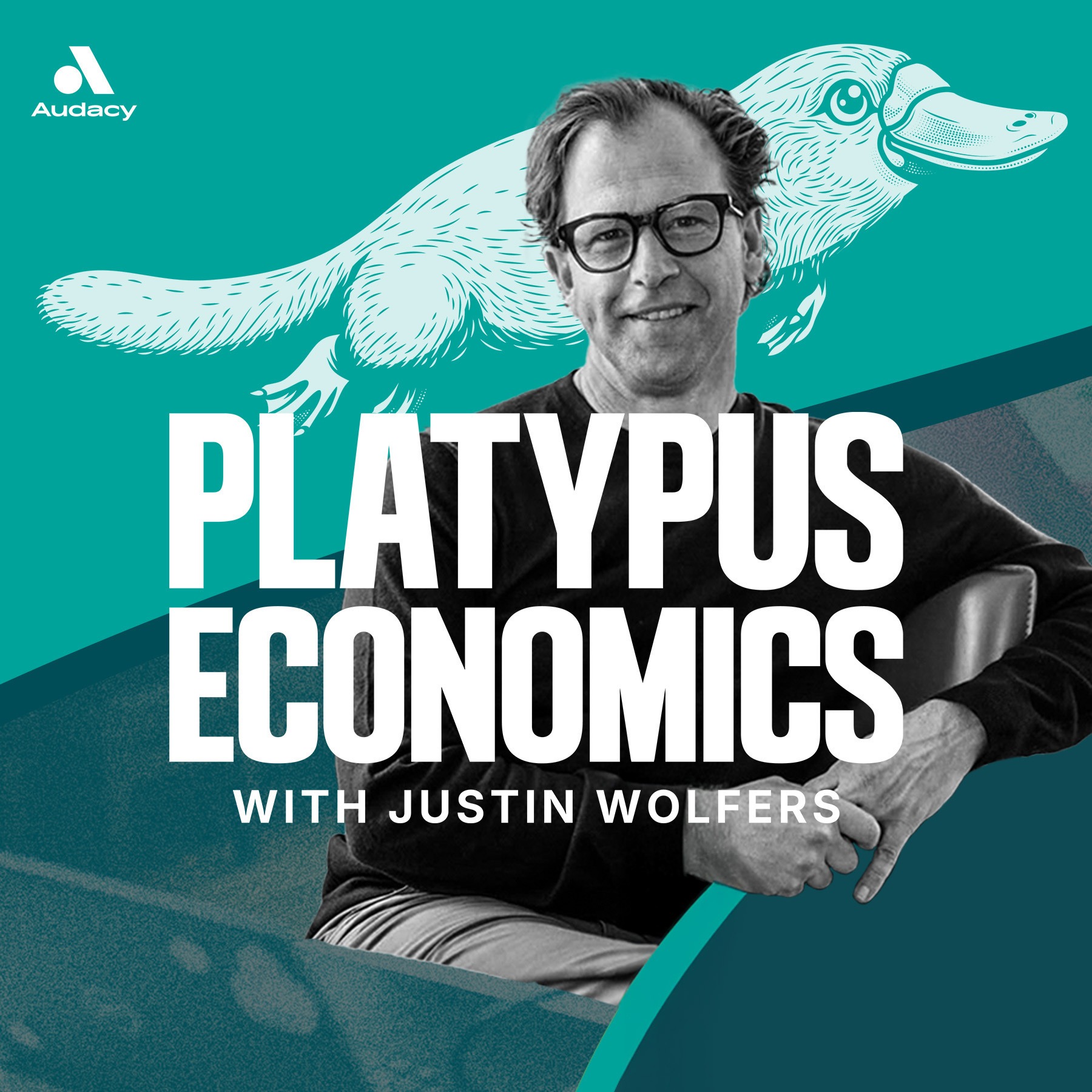
Why can Nvidia stock fall even when its chips haven't changed? Justin Wolfers explains how leadership risk, succession planning, and corporate governance shape expectations of future profits. Using Nvidia stock as the case study, he shows why knowing a risk exists isn't the same as knowing what happens when it materializes. If you own shares through a mutual fund or 401(k), a board's planning failures can affect the value of your retirement savings. He also tackles the idea that a market decline is “just a paper loss”: shares represent a claim on future profits, not simply pieces of paper moving around Wall Street. You'll learn how concentrated corporate power raises questions about prices, efficiency, and political influence—and why antitrust law distinguishes being a monopoly from illegally monopolizing a market. The breaking-news allegations and loss estimates discussed in this recording have not been independently verified and should not be treated as established facts. Diversify y
One last round of Hank's many struggles with words on the set of Anatomy & Physiology. *** Crash Course is on Patreon! Thanks to the following Patrons for their generous monthly contributions that help keep Crash Course free for everyone forever: Mark, Eric Kitchen, Jessica Wode, Jeffrey Thompson, Steve Marshall, Moritz Schmidt, Robert Kunz, Tim Curwick, Jason A Saslow, SR Foxley, Elliot Beter, Jacob Ash, Christian, Jan Schmid, Jirat, Christy Huddleston, Daniel Baulig, Chris Peters, Anna-Ester Volozh, Ian Dundore, Caleb Weeks -- Want to find Crash Course elsewhere on the internet? Facebook - http://www.facebook.com/YouTubeCrashCourse Twitter - http://www.twitter.com/TheCrashCourse Tumblr - http://thecrashcourse.tumblr.com (http://thecrashcourse.tumblr.com/) Support Crash Course on Patreon: http://patreon.com/crashcourse CC Kids: http://www.youtube.com/crashcoursekids
Let's build an ACOG (artificial cognitive entity) - Part 5: preparing to actEpisode release date: 11 Jul 2022Spreading awareness about the works of some of the leading educators in the AI revolution. Core Ideas: Metamodernism: Narratives and emergence view of reality - Reduce suffering - Increase prosperity - Increase understanding mantra: Seek knowledge. ELABORATE: Add depth and detail to understanding, weaving comprehensive and nuanced explanations.DISCLAIMER: This is a community-driven show. ------------------------------Let's build an ACOG (artificial cognitive entity) - Part 5: preparing to actEpisode release date: 11 Jul 2022Spreading awareness about the works of some of the leading educators in the AI revolution. Core Ideas: Metamodernism: Narratives and emergence view of reality - Reduce suffering - Increase prosperity - Increase understanding mantra: Seek knowledge. ELABORATE: Add depth and detail to understanding, weaving comprehensive and nuanced explanations.DISCLAIMER: Thi