In this episode, Clint Smith details his experience as a teenager in New Orleans when Hurricane Katrina made landfall in 2005. The widespread devastation of Hurricane Katrina was a result of faulty levees and a fumbled response by FEMA, and it hit Black residents the hardest. Today, we'll take a closer look at the structural racism that made this disaster so catastrophic. Clint's book, How the Word is Passed is available now! https://bookshop.org/books/how-the-word-is-passed-a-reckoning-with-the-history-of-slavery-across-america/9780316492935 VIDEO SOURCES Modern Racism and Modern Discrimination: The Effects of Race, Racial Attitudes, and Context on Simulated Hiring Decisions - John B. McConahay Jed Horne, Breach of Faith: Hurricane Katrina and the Near Death of a Great American City (New York: Random House, 2006). D’Ann R. Penner and Keith C. Ferdinand, Overcoming Katrina: African American Voices from the Crescent City and Beyond (London, U.K.: Palgrave Macmillan, 2009). Jeremy Levitt
How does our knowledge grow? It turns out there are some different ideas about that. Schemas, Four-Stage Theory of Cognitive Development, and Vygotsky's Theory of Scaffolding all play different roles but the basic idea is that children think about things very differently than adults. Hank explains in today's episode of Crash Course Psychology. Want more videos about psychology? Check out our sister channel SciShow Psych at https://www.youtube.com/scishowpsych! -- Chapters: Introduction: Cognitive Development 00:00 Maturation 1:23 Jean Piaget's Theory of Cognitive Development 1:45 Schemas 2:39 Assimilation & Accommodation 3:03 Sensorimotor Stage of Cognitive Development 3:37 Preoperational Stage of Cognitive Development 4:37 Concrete Operational Stage of Cognitive Development 6:40 Formal Operational Stage of Cognitive Development 7:06 Reception of Piaget's Four-Step Model 7:20 Vygotsky's Theory of Scaffolding 7:48 Review & Credits 8:58 -- Crash Course is on Patreon! Want to find Crash C
Barack Obama was the first Black man elected President in the United States in 2008. In this episode, Clint Smith will explore the early life, political career, presidential campaign, and legislative milestones of Barack Obama. Clint's book, How the Word is Passed, is available now! https://bookshop.org/books/how-the-word-is-passed-a-reckoning-with-the-history-of-slavery-across-america/9780316492935 Crash Course is on Patreon! Thanks to the following patrons for their generous monthly contributions that help keep Crash Course free for everyone forever: Katie, Hilary Sturges, Austin Zielman, Tori Thomas, Justin Snyder, DL Singfield, Amelia Ryczek, Ken Davidian, Stephen Akuffo, Toni Miles, Steve Segreto, Kyle & Katherine Callahan, Laurel Stevens, Stacey Gillespie (Stacey J), Burt Humburg, Allyson Martin, Aziz Y, DAVID MORTON HUDSON, Perry Joyce, Scott Harrison, Mark & Susan Billian, Alan Bridgeman, Rachel Creager, Breanna Bosso, Matt Curls, Jonathan Zbikowski, Jennifer Killen, Sarah & Na
Hank describes the structure and function of your lymphatic system and how it supports your cardiovascular and immune systems. He'll explain how your lymphatic system collects, filters, and returns interstitial fluid back into your bloodstream, and how your lymph nodes and lymph organs activate your immune system to fight off infections. Pssst... we made flashcards to help you review the content in this episode! Find them on the free Crash Course App! Download it here for Apple Devices: https://apple.co/3d4eyZo Download it here for Android Devices: https://bit.ly/2SrDulJ Chapters: Introduction: Airport Security 00:00 The Lymphatic System Structure 2:09 Origins of the Lymphatic System: Capillary Beds 3:12 Lymphatic Vessels 3:47 What Does the Lymphatic System Do? 5:05 Lymph Nodes 6:04 Mucosa-Associated Lymphoid Tissues (MALTs) 6:59 Review 8:04 *** Crash Course is on Patreon! Thanks to the following Patrons for their generous monthly contributions that help keep Crash Course free for ever
From the cars that take us downtown to the airplanes that fly us across the globe, transportation is one of the most visible and personal ways we are impacting the Earth’s climate. In this episode of Crash Course Climate and Energy, we’ll explore the benefits and challenges of electric vehicles, and look at some of the ways we’re trying to decarbonize much larger modes of transportation. Chapters: Introduction: Decarbonizing Transportation 00:00 Greenhouse Gas Emissions from Transportation 1:00 Electric Vehicles 3:13 Designing Pedestrian-Friendly Cities 7:19 Reducing Emissions From Trucks, Ships, & Planes 9:52 Review & Credits 12:58 Sources: *** Crash Course is on Patreon! Thanks to the following patrons for their generous monthly contributions that help keep Crash Course free for everyone forever: Saad Alhamidi, Katie, Austin Zielman, Tori Thomas, Justin Snyder, DL Singfield, Amelia Ryczek, Ken Davidian, Stephen Akuffo, Toni Miles, Steve Segreto, Kyle & Katherine Callahan, Laurel Stev
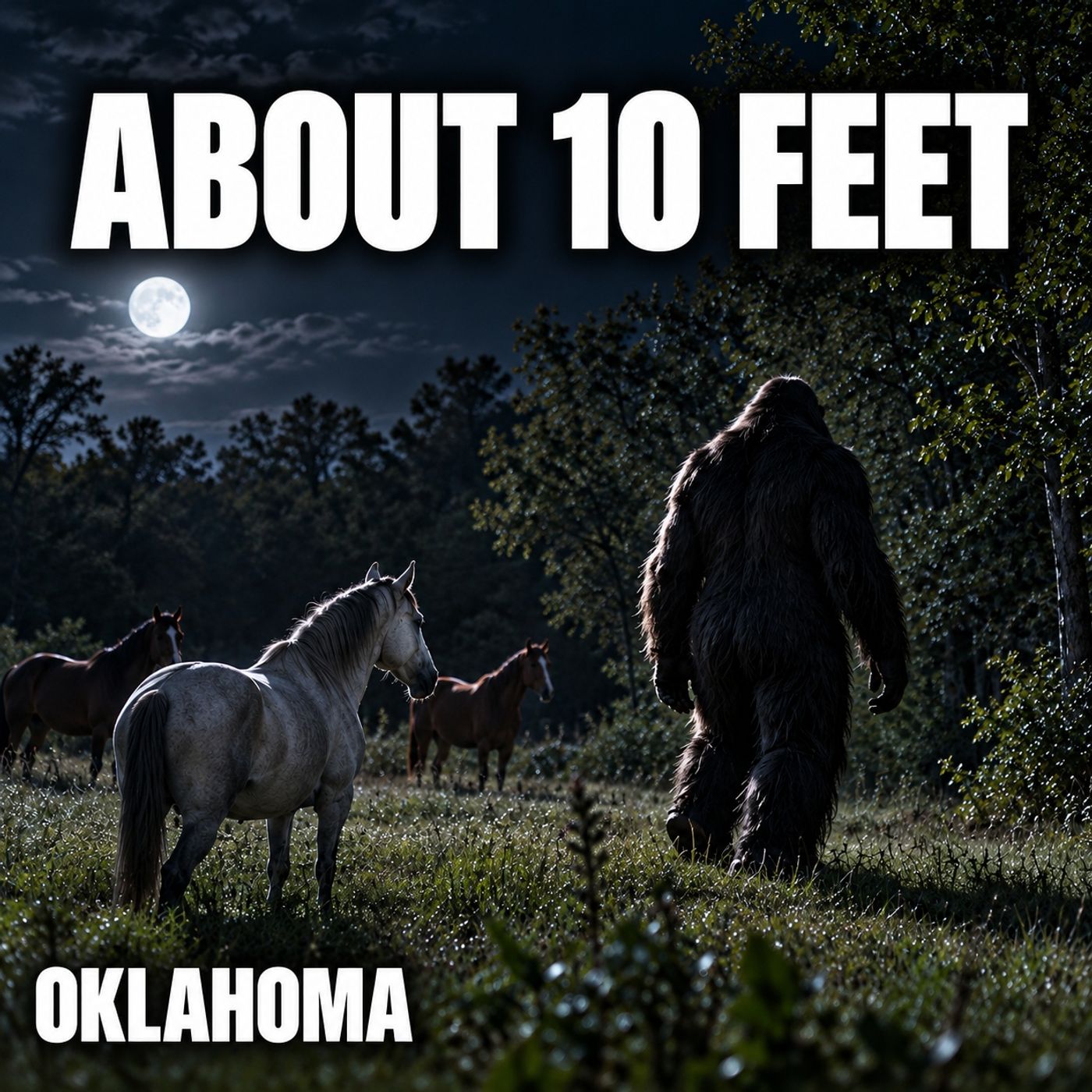
Something was crawling toward her horses. Then it stood up. Watching from her Oklahoma home around midnight, Carrie noticed a small, dark shape creeping through the pasture. It moved almost flat against the ground. When it rose to its feet, she estimated it stood nine to ten feet tall. In this episode of Bigfoot Society, Carrie shares that encounter alongside a daylight sighting with her young niece and strange chattering that followed her boat along a riverbank. An Oregon log-truck driver also describes what happened after he imitated a Bigfoot call above Myrtle Point: the forest fell silent, grunts approached, and trees began swaying. Other callers recount a childhood encounter in Maine and reported Sasquatch activity inside an Oklahoma campground. What was moving through Carrie’s pasture—and why was it approaching her horses that way? Listen to the witnesses describe what they experienced. Get the free Bigfoot hotspots report: https://bit.ly/bfsreport Follow Jeremiah's cancer health
Professional musicians share what makes for great, memorable lyrics, their writing process, and where they get inspiration from. -- "Think Like A Musician" connects you with working musicians who want to help the music-curious and music-passionate hone and share the gift of music with the world. Part interview, part animated course, our second season "Think Like A Songwriter" features artists sharing their insight on the ins and outs of fine-tuning your songwriting and crafting timeless, memorable music. Each episode features free supplemental learning materials developed by Education Through Music (https://etmonline.org) (https://etmonline.org)/) — a nonprofit with over 30 years of experience developing classroom-adaptable curriculum for music educators. Directed by Kozmonot Animation Studio. A special thanks to the musicians who provided their insights and expertise for this video. You can check out their pages here: Support Our Non-Profit Mission ------------------------------------
In which John Green teaches you MORE about To Kill a Mockingbird. In this installment, John teaches you about race, class, and gender in the American south, as seen through the eyes of Scout and Harper Lee. John will talk about how Scout learns about these aspects of the social order as she interacts with the people of the town, learns from Calpurnia, watches the trial of Tom Robinson, and endures the attack of Bob Ewell. You'll also learn a little bit about Demi Moore and Mila Kunis, and John will ask just who is the Mockingbird, anyway? Not that he'll answer that, but he'll ask it. Consider supporting local bookstores by purchasing your books through our Bookshop affiliate link https://bookshop.org/shop/complexly or at your local bookseller. Crash Course is on Patreon! Want to find Crash Course elsewhere on the internet? Facebook - http://www.facebook.com/YouTubeCrashCourse Twitter - http://www.twitter.com/TheCrashCourse Instagram - https://www.instagram.com/thecrashcourse/ CC Kids:
Bird and bat droppings might not sound precious, but guano was once so prized it shaped agriculture, trade and even warfare. Professor Adam Rutherford and Jessica Fostekew explore the surprising story of this pongy but remarkable substance, joined by ecologist Kate Jones, ornithologist Tim Birkhead and comedian Zoe Lyons. From vast seabird colonies off the coast of Peru to bat-filled caves in the tropics, they discover how guano became one of humanity's most valuable natural resources, powering farming booms, helping to drive the production of gunpowder and sustaining entire ecosystems. Along the way they uncover why seagulls may be as dastardly as they seem with their targeted 'drops', what scientists can learn from ancient 'poo cores' and whether it's weird to have never spotted a bat. Most importantly, they discover why nature's least glamorous resource may be one of its most important. Producer: Mel Brown A BBC Studios Production
It’s one thing to say a business is carbon neutral. It’s another to be able to truly account for that carbon at all stages of the production process. In this episode of Crash Course Climate and Energy, we’ll take a look at efforts to count all those greenhouse gas emissions, reduce them, and capture the ones we can’t avoid. Chapters: Introduction: Carbon Neutrality 00:00 Defining Biofuels 1:05 Ethanol 2:09 Carbon Accounting & Greenwashing 3:22 Cellulosic Biofuels 6:24 Carbon Capture 7:38 Storing & Using Carbon 10:42 The Future of Carbon Emissions 11:38 Review & Credits 12:20 Sources: https://docs.google.com/document/d/1rRJ-L9TLNfPwPfzn3LdjDEw-wHtThwTfDUe2rDtFXQQ/edit?usp=sharing *** Crash Course is on Patreon! Thanks to the following patrons for their generous monthly contributions that help keep Crash Course free for everyone forever: Saad Alhamidi, Katie, Austin Zielman, Tori Thomas, Justin Snyder, DL Singfield, Amelia Ryczek, Ken Davidian, Stephen Akuffo, Toni Miles, Steve Segreto,
It’s time for molecular analysis! On this episode of Crash Course Organic Chemistry, we’re learning about mass spectrometry and infrared spectroscopy through the lens of a forensic investigation. Put on your lab coats, and let’s solve this mystery! Episode Sources: Silverstein, R. M., Webster, F. X., Kiemle, D. J., & Bryce, D. L (2007). Spectrometric identification of organic compounds, 8th ed., Hoboken, NJ: John Wiley & Sons, Inc. Spectra for pseudoephedrine: BioRad/Sadtler Data Collection, Bio-Rad Laboratories, Philadelphia, PA (US), Spectra ID: BR125952 Spectra for methamphetamine: Kunalan, V., Daeid, N. N, Kerr, W. J., Buchanan, H. A. S., McPherson, A. R., “Characterization of Route Specific Impurities Found in Methamphetamine Synthesized by the Leuckart and Reductive Amination Methods,” Anal Chem, 2009, 81, 7342-7348. Other spectra reproduced with permission from: SDBSWeb : https://sdbs.db.aist.go.jp/ (National Institute of Advanced Industrial Science and Technology, 6/9/2020. Ser
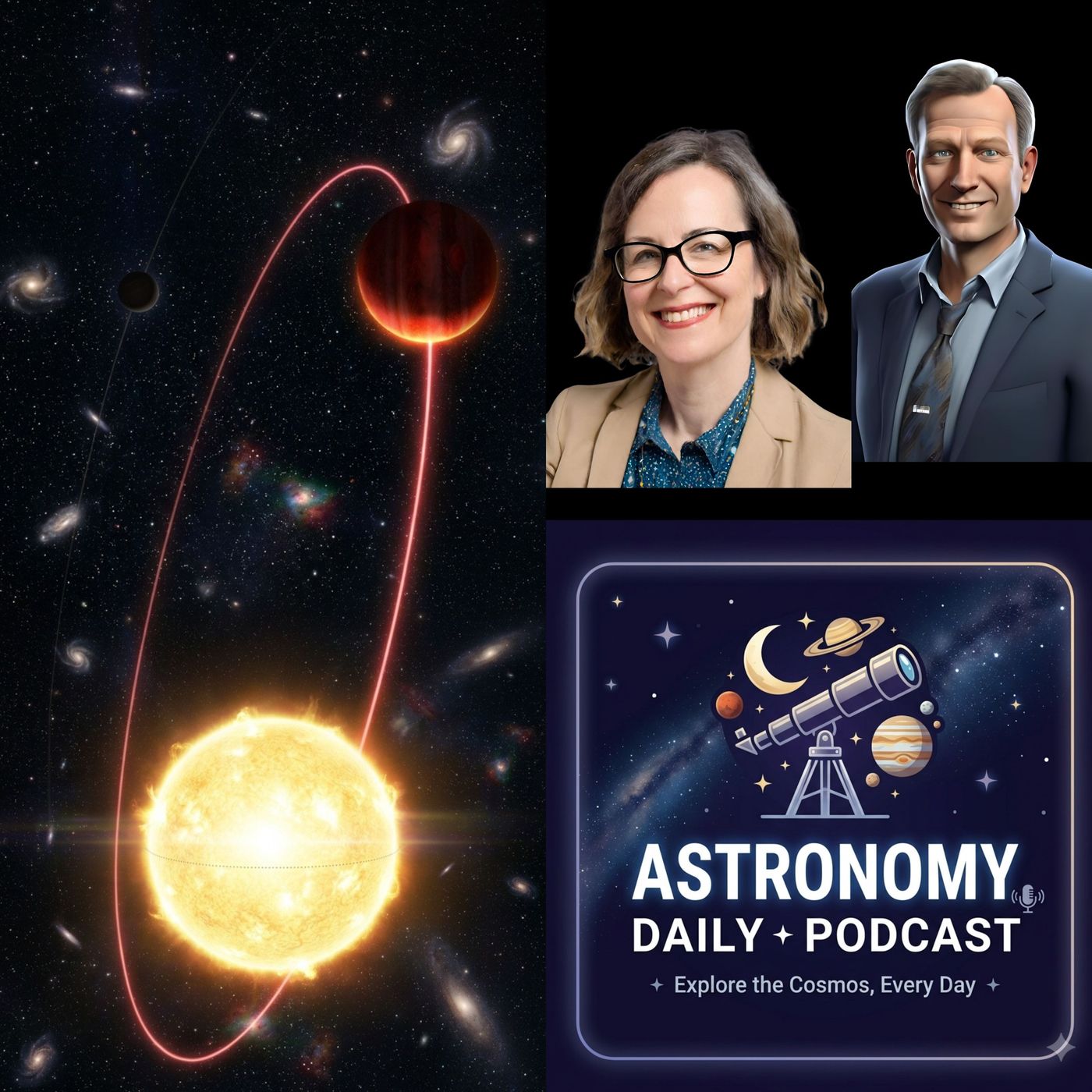
Show notes A hot Jupiter called TOI-2535 b has become the first planet around a single star seen to stop transiting, tipped out of line by an unseen neighbour. Plus: why Uranus and Neptune have scrambled magnetic fields, MeerKAT measuring how cosmic hydrogen clusters, Euclid's first big data release, ESCAPADE heading for Mars, Starship Flight 15's double-catch attempt, the 2026 ozone hole, and a both-hemispheres sky with Mars and Jupiter 1.2 degrees apart. The planet that stopped transiting. TOI-2535 b, an 8.24-day hot Jupiter ~1,000 light-years away, ran up to ~6 hours early or late and its transits shortened and faded over seven years of TESS data until they vanished in 2026. A hidden companion of at least Saturn mass, likely in resonance on a tilted orbit, is making both orbits precess. Transits should return in 30–50 years. Yee, Petigura et al., The Astrophysical Journal Letters, 9 Nov 2026. Ice giants' scrambled magnetic fields. Dynamo models with electrical conductivity rising wi
Remember that guy from 300? What was his name? ARG!!! It turns out our brains make and recall memories in different ways. In this episode of Crash Course Psychology, Hank talks about the way we do it, what damaging that process can do to us, and that guy... with the face and six-pack... Want more videos about psychology? Check out our sister channel SciShow Psych at https://www.youtube.com/scishowpsych! -- Chapters: Introduction: Memory 00:00 Accessing Memory: Recall, Recognition, and Relearning 1:44 How Memory is Stored 2:48 Working Memory 4:24 Explicit Memory 4:56 Implicit Memory 5:19 Types of Long-Term Memory: Procedural & Episodic 6:12 Mnemonics, Chunking, and Memory Tricks 6:59 Shallow vs. Deep Processing 7:28 The Importance of Memory 8:33 Review & Credits 9:06 -- Crash Course is on Patreon! Want to find Crash Course elsewhere on the internet? Facebook - http://www.facebook.com/YouTubeCrashCourse Twitter - http://www.twitter.com/TheCrashCourse Instagram - https://www.instagram.com
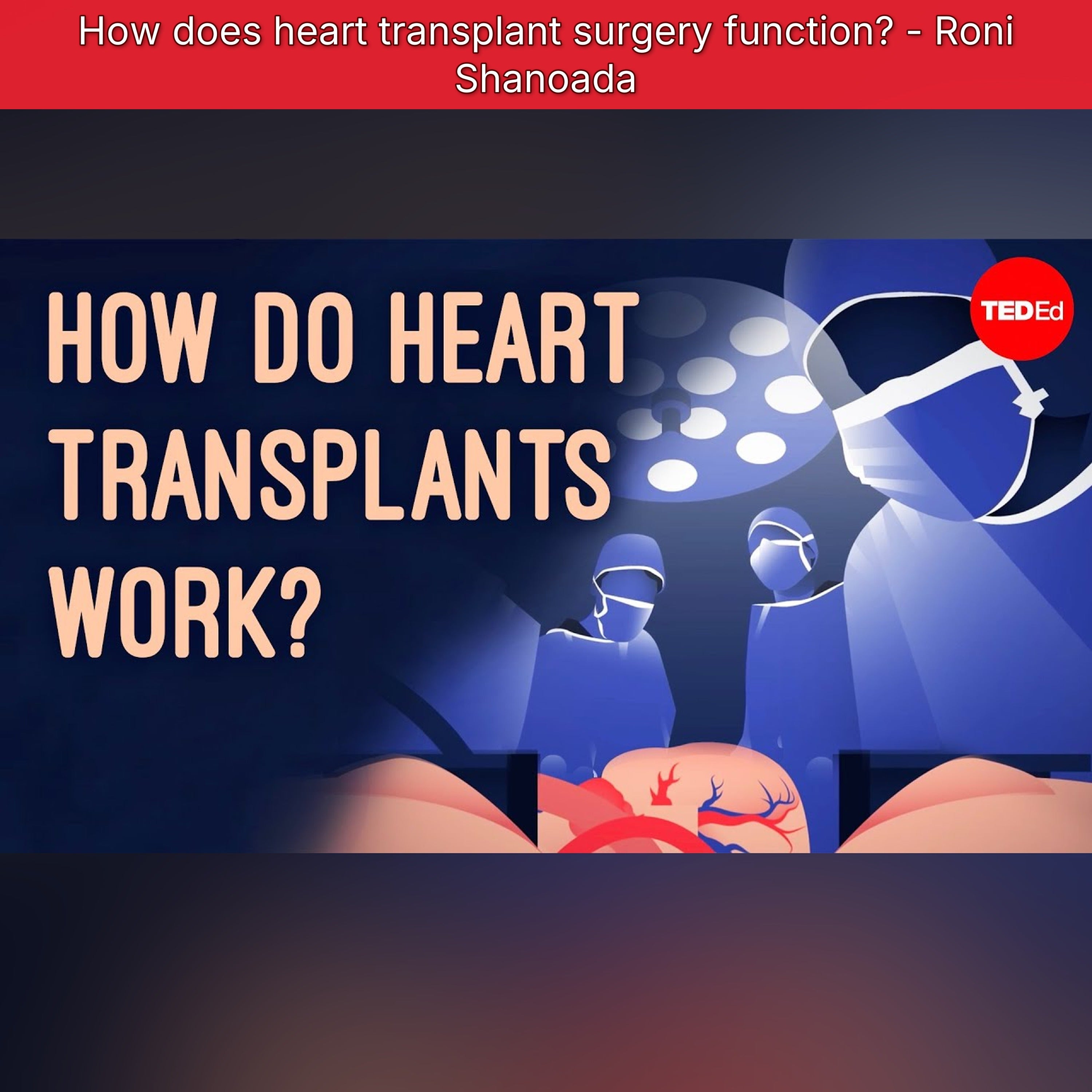
Dig into the science of how heart transplants happen, how donors are matched and find out how this complex surgery saves lives. -- Your heart beats more than 100,000 times a day. In just a minute, it pumps over five liters of blood throughout your body. But unlike skin and bones, the heart has a limited ability to repair itself. So if this organ is severely damaged, there’s often only one medical solution: replacing it. Roni Shanoada explores how this complex and intricate procedure works. Lesson by Roni Shanoada, directed by Alexia Roider, Zedem Media. Support Our Non-Profit Mission ---------------------------------------------- Support us on Patreon: http://bit.ly/TEDEdPatreon Check out our merch: http://bit.ly/TEDEDShop ---------------------------------------------- Connect With Us ---------------------------------------------- Sign up for our newsletter: http://bit.ly/TEDEdNewsletter Find us on Twitter: http://bit.ly/TEDEdTwitter Peep us on Instagram: http://bit.ly/TEDEdInstagram -
Everyone in town knew the legend of the railroad tunnel. After dark, people said a tall man dressed in dark clothing sometimes appeared near the far end, standing with his back turned. And according to the story, if he ever turned around, you were supposed to leave. One summer night, three thirteen-year-old friends decided to walk through the tunnel for themselves. Partway through, one of them noticed a man standing beneath one of the yellow lights. Then he slowly turned toward them and smiled. The girls turned back. Seconds later, footsteps began following them through the tunnel, matching their pace until all three were running. For years, they assumed the man had chased them. Then one of them finally admitted that she had looked back. #GhostStories #UrbanLegend #HauntedTunnel #Paranormal #LocalLegend #GhostEncounter #HauntedPlaces #Unexplained #ParanormalStory #ShadowPerson # Folklore #Hauntings Love real ghost stories? Want even more? Want even more? Stay connected with us on socia
This is a Grave Talks CLASSIC EPISODE! Growing up, Christina Westervelt never had to wonder whether the paranormal was real. Her father’s unwavering passion for ghosts, hauntings, and unexplained phenomena made the supernatural part of everyday life, not something distant or abstract. What started as curiosity — tagging along, listening, watching — slowly became something deeper. As Christina grew older, that early exposure evolved into a serious pursuit of understanding. She wasn’t content with surface-level explanations or dramatic stories. Each investigation raised the same persistent questions: who was involved, what happened, where it occurred, and why it still seemed to linger. Instead of providing closure, every answer seemed to open the door to new uncertainties. Her journey reflects a reality familiar to many who stay in the field long enough — the more you learn, the less simple the paranormal becomes. Rather than offering neat conclusions, it presents layers of history, emot
The organic certification body, the Soil Association, is withdrawing from the farmed salmon sector. They cite high fish mortality and welfare and environmental standards. The farms can still be certified, but not to the higher standards The Soil Association says it represents. DEFRA has announced that it’s imposing a national housing order across England for all poultry and captive birds in flocks of more than 50. It’s also declared an England-wide Avian Influenza Prevention Zone taking effect immediately with mandatory biosecurity measures for all bird keepers, to help reduce the risk of the disease spreading. The government has vetoed plans for what would have Britain’s biggest solar farm. The Botley West solar farm was planned for three sites in Oxfordshire much of it on the Blenheim Estate. The £800 million pound project would have been capable of powering some 330,000 homes, according to the developers but there’s been strong and heated local opposition. The government decision fo
Our solar system is filled with millions of leftovers – the chunks of rock and ice that weren’t incorporated into the planets and moons. The icy ones are known as comets, while the rocky ones are asteroids. But there’s not that much difference between them. They have similar ingredients, but in different amounts. How we classify them has more to do with where they were born and how close they get to the Sun. The planets formed from a disk of material that encircled the infant Sun. Small grains of ice and rock stuck together to make larger bodies. These larger objects then stuck together to make the planets and some of their moons. In the outer solar system, it was cold enough for these building blocks to contain a lot of ice. But closer to the Sun it was hotter, so the building blocks consisted mainly of rock and metal. The outer planets kicked many of the leftovers deeper into space. One of them occasionally falls toward the Sun. Solar energy vaporizes some of the ice, releasing some
Have you noticed that ADHD seems to be everywhere these days? More and more people are talking about it, and diagnoses are on the rise. But does that mean more of us are actually developing ADHD, or are we simply getting better at recognising something that has always been there? We often associate ADHD with childhood hyperactivity, but the condition is more complex, and growing awareness is prompting more people to seek a diagnosis. So what distinguishes ADHD from everyday traits, and what’s happening in the brain? In this episode of Change Your Mind, health journalists Cat de Lange and Helen Thomson explore the science of ADHD. They discuss how it can affect attention, motivation and emotional regulation, why it may be missed in girls and women, and how hormonal changes could influence symptoms. Joining them is neuroscientist Professor Ellie Dommett of King’s College London. Together, they look at what research can tell us about ADHD, the role of medication, and what evidence suggest
Fiber is more than a number on a pet food label. In this episode, nutrition scientist Samantha Koziol explores the different types of fiber, what pet food labels leave out, how fiber properties influence GI health, and how to implement fiber supplementation in practice. Contact us: [email protected] Where to find us: Website: CliniciansBrief.com/Podcasts (https://www.cliniciansbrief.com/podcasts) YouTube: Youtube.com/@clinicians_brief (https://youtube.com/@clinicians_brief) Facebook: Facebook.com/CliniciansBrief (https://facebook.com/CliniciansBrief) LinkedIn: LinkedIn.com/showcase/CliniciansBrief/ (https://linkedin.com/showcase/CliniciansBrief/) X: @cliniciansbrief (https://twitter.com/cliniciansbrief) Instagram: @clinicians.brief (https://www.instagram.com/clinicians.brief/) The Team: Beth Molleson, DVM - Host Taylor Argo- Producer, Sound Editing, & Project Manager, Brief Studio
In which John Green teaches you about Iran's Revolutions. Yes, revolutions plural. What was the the1979 Iranian Revolution about? It turns out that Iran has a pretty long history of unrest in order to put power in the hands of the people, and the most recent revolution in 1979 was, at least at first, not necessarily about creating an Islamic state. It certainly turned out to be about that, but it was initially just about people who wanted to get rid of an oppressive regime. Listen up as John teaches you about Iran's long history of revolution. Correction: When discussing the 1979 Islamic Republic referendum, we used the phrase 'free and open election,' which may have overstated the case. In reality, the full legitimacy of the election has been called into question. Citation 1: Caryl, Christian. Strange Rebels: 1979 and the Birth of the 21st Century. New York, Basic Books. 2014, p. 11 Citation 2: Axworthy, Michael, Revolutionary Iran: A History of the Islamic Republic. Oxford U. Press.
What is globalization? Is globalization a good thing or not. Well, I have an answer that may not surprise you: It's complicated. This week, Jacob and Adriene will argue that globalization is, in aggregate, good. Free trade and globalization tend to provide an overall benefit, and raises average incomes across the globe. The downside is that it isn't good for every individual in the system. In some countries, manufacturing jobs move to places where labor costs are lower. And some countries that receive the influx of jobs aren't prepared to deal with it, from a regulatory standpoint. Anyway, Jacob and Adriene can explain the whole thing to you in 10 minutes. *** Crash Course is on Patreon! Thanks to the following Patrons for their generous monthly contributions that help keep Crash Course free for everyone forever: Mark, Eric Kitchen, Jessica Wode, Jeffrey Thompson, Steve Marshall, Moritz Schmidt, Robert Kunz, Tim Curwick, Jason A Saslow, SR Foxley, Elliot Beter, Jacob Ash, Christian, Ja
Our warming planet isn’t just a threat to future generations; it’s a threat to us right now. If we don’t mitigate it, the continued rise in global temperature will have ripple effects throughout ecosystems and communities. In this episode of Crash Course Climate and Energy, we’ll look at how climate change has already affected our planet, and what the future might hold. Chapters: Introduction: Climate Change 00:00 Global Warming 1:03 Extreme Weather Events 2:08 Climate Models 4:29 Climate Change's Ripple Effects 6:54 Feedback Loops 10:22 The Future of Climate Change 11:16 Review & Credits 12:43 Sources: *** Crash Course is on Patreon! Thanks to the following patrons for their generous monthly contributions that help keep Crash Course free for everyone forever: Saad Alhamidi, Katie, Austin Zielman, Tori Thomas, Justin Snyder, DL Singfield, Amelia Ryczek, Ken Davidian, Stephen Akuffo, Toni Miles, Steve Segreto, Kyle & Katherine Callahan, Laurel Stevens, Burt Humburg, Allyson Martin, Aziz
Madeleine Finlay and co-host Ian Sample discuss the three science stories you need to know about this week, including an alternative to BMI for diagnosing obesity which could ‘prevent misdiagnosis for millions’. Also on the agenda: an update from this year’s Cop climate conference in Turkey, and a study that claims to have found the key to better conversations with the help of a concept from physics.