Featuring perspectives from Dr Sagar Lonial and Dr Paul G Richardson, including the following topics: Multiple Myeloma (0:00) Introduction: ESMO 2026; Recent FDA Approvals (1:53) Chimeric Antigen Receptor T-Cell Therapy — Dr Lonial (2:46) Bispecific Antibodies — Dr Lonial (19:16) Antibody-Drug Conjugates — Dr Richardson (37:08) Up-Front Treatment; Cereblon E3 Ligase Modulators — Dr Richardson (50:10) CME information and select publications (https://researchtopractice.com/activity/integrating-new-advances-into-community-oncology-practice-6/)
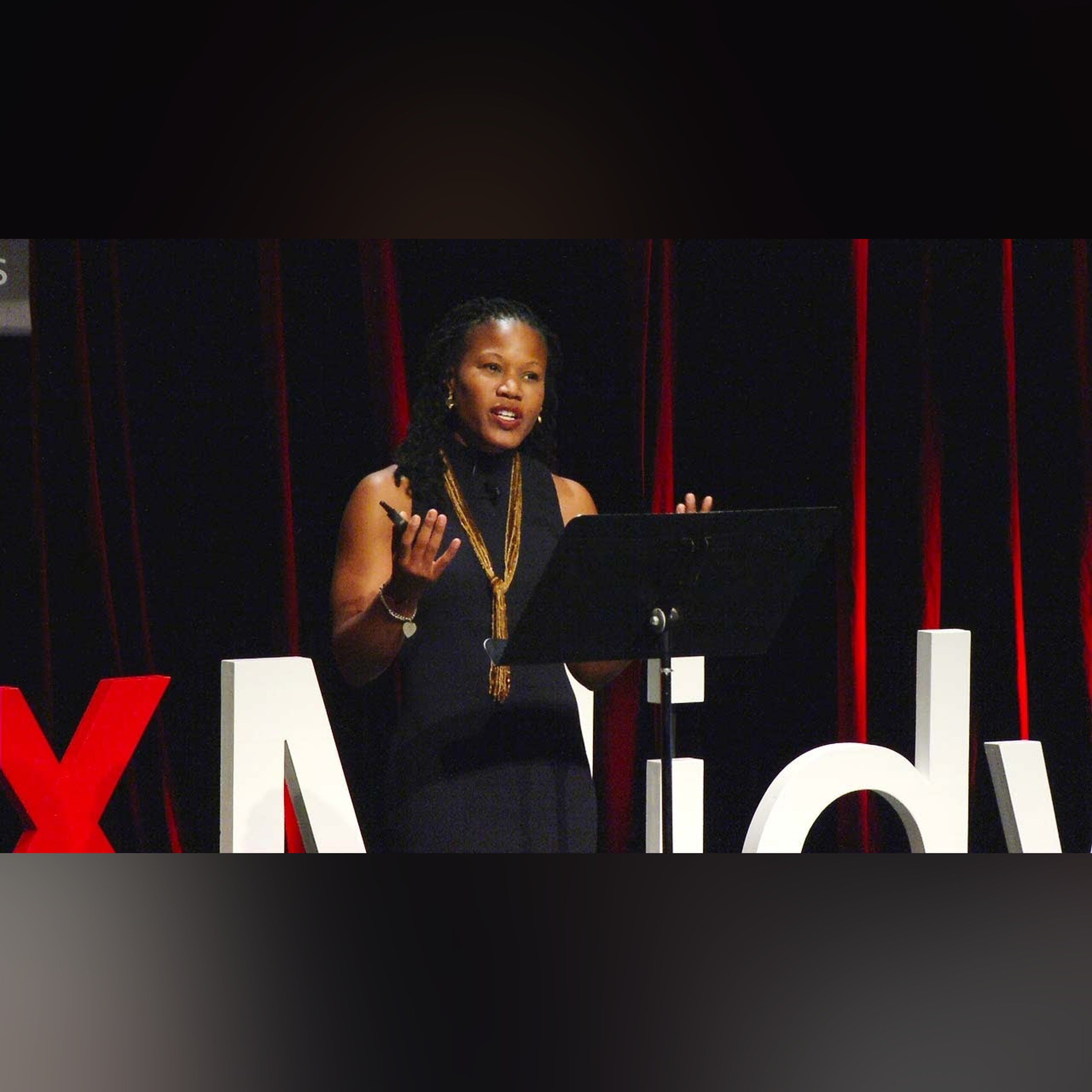
The future of green is local -- and entrepreneurial. In her talk, Majora Carter brings us the stories of three people who are saving their own communities while saving the planet. Call it "hometown security." (Filmed at TEDxMidWest.) Uploaded 25-07-13 Talk by Majora Carter.
How can a weather satellite see Ramadan, Christmas and a blackout? Dr. Miguel Román joins Krishna Choudhary to explain NASA's Black Marble: nightly maps of the lights on Earth, from a single band on the VIIRS instrument, processed to account for moonlight, airglow, clouds and atmospheric effects. It began as a calibration job on a brand-new satellite and an "anomaly" that followed the lunar calendar. Román traces how a small NASA team turned it into open data now used for energy access, disaster response and urban growth: Puerto Rico before and after Hurricane Maria, why LEDs can make satellite maps look darker, the 30-meter Black Marble HD, and a John Deere tractor seen from space. Recorded in Washington, D.C., on September 28, 2026, before the Golden Goose Awards ceremony. Román is Deputy Director for Atmospheres and Data Systems at NASA Goddard Space Flight Center and a member of the Black Marble team, recognized with a 2026 Golden Goose Award. Part of our Golden Goose series. CHAPT
Most UAP probably aren’t alien spacecraft. A physics professor says so himself, and in these slides one UFO photo turns out to be a seagull while a colleague’s analysis of crash debris found more Earth dirt than he expected. I sit down with Kevin Knuth, a physics professor at the University at Albany, who walks me through his slides on one question, how anomalous is anomalous when it comes to UAP. He answers it with energy and power, because some sightings leave enough data to work out how much power a UAP would need. I push back on whether every sensor is giving a true signal, not an artifact or a hallucination, and the debate carries over to my podcast conversation with Kevin. What you’ll hear: A radar return that is also visible puts a bound on the dielectric constants. Systematic error can’t be estimated without knowing the true value, so the acceleration comes out as a probability distribution. At 99.9% efficiency, a craft drawing 1,000 gigawatts would still shed about a gigawatt
The shape of molecules is super important to life as we know it. In this episode of Crash Course Organic Chemistry we’re learning about stereochemistry and how to identify molecules as chiral or achiral. And as always, we’ll be doing a lot of practice! Episode Sources: “THINK BIG! Must the molecules of life always be Left-Handed or Right-Handed?” Smithsonian Magazine. Spinoff 2004 - “A NATURAL WAY TO STAY SWEET”, NASA. Series Sources: Brown, W. H., Iverson, B. L., Ansyln, E. V., Foote, C., Organic Chemistry; 8th ed.; Cengage Learning, Boston, 2018. Bruice, P. Y., Organic Chemistry, 7th ed.; Pearson Education, Inc., United States, 2014. Clayden, J., Greeves, N., Warren., S., Organic Chemistry, 2nd ed.; Oxford University Press, New York, 2012. Jones Jr., M.; Fleming, S. A., Organic Chemistry, 5th ed.; W. W. Norton & Company, New York, 2014. Klein., D., Organic Chemistry; 1st ed.; John Wiley & Sons, United States, 2012. Louden M., Organic Chemistry; 5th ed.; Roberts and Company Publishers
You may think you know all about hypnosis from the movies. Zoolander, The Manchurian Candidate, etc... but there's a whole lot more going on. In this episode of Crash Course Psychology, Hank tells us about some of the many altered states of consciousness, including hypnosis. Want more videos about psychology? Check out our sister channel SciShow Psych at https://www.youtube.com/scishowpsych -- Chapters: Introduction: Hypnosis & Altered States of Consciousness 00:00 Facts & Fallacies About Hypnosis 2:00 How does hypnosis work? 3:05 Drug Tolerance & Neuroadaptation 4:49 Psychoactive Drugs 5:51 Depressants 6:28 Stimulants 7:35 Hallucinogens/Psychedelics 9:04 Non-Drug Induced Hallucinations 9:33 Review & Credits 10:32 -- Crash Course is on Patreon! Want to find Crash Course elsewhere on the internet? Facebook - http://www.facebook.com/YouTubeCrashCourse Twitter - http://www.twitter.com/TheCrashCourse Instagram - https://www.instagram.com/thecrashcourse/ CC Kids: http://www.youtube.com/cras
The adventure continues! Episode 3: Ethic and Hedge must sabotage the furnace-bots to get to the first artifact. Can they find a way out? Uploaded 18-11-19 -- This is episode 3 of our animated series “Think Like A Coder.” This 10-episode narrative follows a girl, Ethic, and her robot companion, Hedge, as they attempt to save the world. The two embark on a quest to collect three artifacts and must solve their way through a series of programming puzzles. Lesson by Alex Rosenthal, directed by Kozmonot Animation Studio. Supported by Endless: https://endlessnetwork.com (https://endlessnetwork.com/) A special thank you to the programmers who assisted in the development of this series: Eric Wastl, Sara Kladky, Ryan Harvey, Dan Bernier, Eden Girma, Matt Gruskin, and James Griffith. And thanks to Eric Wastl, whose puzzle from the 2017 Advent of Code inspired the challenge in this episode. http://bit.ly/AdventOfCode7 Sign up for our newsletter: http://bit.ly/TEDEdNewsletter Support us on Patreon
This is a Grave Talks CLASSIC EPISODE! PART TWO What happens when your life begins with a near-death experience—and the strange never stops? For Sister Keeyah Lynn Frances, the supernatural has always been part of her reality. As a child, her “imaginary friend” wasn’t imaginary at all, and the connection she shared with the unseen world soon spiraled into something darker — a demonic infestation inside her own home. But where fear once ruled, faith eventually took root. Now a Catholic Mystic and Reiki Master, Sister Keeyah channels her experiences into helping others confront what lurks in the shadows. She reveals how a lifetime of haunting led her to the Holy Order of St. Michael the Archangel and the NESPR Order of Exorcists. This is not just a story of survival — it’s a story of spiritual warfare, redemption, and the power of light against the darkest forces. #TrueGhostStory #Exorcism #CatholicMystic #DemonicHaunting #DarkForces #SpiritualWarfare #RealExorcist #HauntedChildhood #Rei
This is a Grave Talks CLASSIC EPISODE! As a child, Christie Williams was drawn to the unknown, fueled by late-night television and the quiet thrill of unanswered questions. Shows like Unsolved Mysteries, hosted by Robert Stack, didn’t just entertain her — they planted the idea that some mysteries refuse to stay buried. That fascination followed her into adulthood, evolving into hands-on paranormal investigation, the ownership of a haunted home, and eventually a museum filled with objects said to carry their own histories and energies. Over time, Christie noticed patterns that raised an unsettling question: when haunted objects are placed inside an already active space, does the activity intensify? Her experiences suggest the answer isn’t simple. Objects tied to trauma, memory, or unresolved emotion don’t always remain passive. Within a space already charged with paranormal activity, they can seem to interact, amplify, or even provoke responses that feel intentional. Christie’s story ex
In this episode, we sit down with Dr Kate Cherrell, an award-winning paranormal historian, writer, broadcaster and investigator. Kate is a UK-based expert specialising in paranormal history, Victorian Spiritualism, death traditions, British folklore and high strangeness. She is the author of the Gothic novel Begotten (2025) and the forthcoming non-fiction book Buried England (2026). A former cemetery worker and creator of the long-running blog Burials and Beyond, Kate has appeared on programmes including Haunted Homecoming (with Jack Osbourne and Jonathan Ross), Unexplained: Caught on Camera, Weird Britain, The Yorkshire Exorcist II and the BBC’s Paranormal: Britain’s Last Witch. In 2025, she received the GPN Top Investigator award. Kate’s fascination with the unexplained began long before her academic and media career. She grew up in a haunted house where paranormal activity was frequent. After her family stripped the wallpaper, the activity intensified dramatically. Heavy footsteps e
Featuring perspectives from Dr Sagar Lonial and Dr Paul G Richardson, including the following topics: Multiple Myeloma (0:00) Introduction: ESMO 2026; Recent FDA Approvals (1:53) Chimeric Antigen Receptor T-Cell Therapy — Dr Lonial (2:46) Bispecific Antibodies — Dr Lonial (19:16) Antibody-Drug Conjugates — Dr Richardson (37:08) Up-Front Treatment; Cereblon E3 Ligase Modulators — Dr Richardson (50:10) CME information and select publications (https://researchtopractice.com/activity/integrating-new-advances-into-community-oncology-practice-6/)
Sam Harris speaks with Jonah Goldberg about the aftermath of the midterm elections. They discuss Trump's 60 Minutes interview, Trump's claims of election fraud, JD Vance's autopsy of the Republican defeat, corruption and the pardon power, the prospects for impeachment, Stephen Miller, the 2028 field, the Democrats and the far left, trolling and the collapse of norms, the tech oligarchs, and other topics.
Today we’re going to talk about borders. Borders can bring people together, evoke passion and war, divide, conquer, and solidify power. We’re going to focus on the tyranny of the map which is what happens when those in power draw boundaries in ways that conflict with how people in that place want to be grouped. We’ll look at the repercussions of the Berlin Conference of 1884 on boundaries within Africa, take a closer look at continued political unrest in Mali, and look at how this can even happen at a local level like when gerrymandering occurs within a US state. [Sources] In general CIA Factbook: https://www.cia.gov/library/publications/resources/the-world-factbook/docs/one_page_summaries.html Getis, Bjelland, and Getis. Introduction to Geography, 15 ed. McGraw-Hill Education. 2017. ISBN: 978-1-259-57000-1 Gregory, Derek, Ron Johnston, Geraldine Pratt, Michael Watts, and Sarah Whatmore, eds. 2009. The Dictionary of Human Geography. 5th ed. Willey-Blackwell. ISBN: 978-1-4051-3288-6 Cra
After weeks of discussion of human reproduction, today we arrive at the main event: THE SEX. Hank explains the four phases of the human sexual response, how fertilization happens, and how different contraceptive methods work. Pssst... we made flashcards to help you review the content in this episode! Find them on the free Crash Course App! Download it here for Apple Devices: https://apple.co/3d4eyZo Download it here for Android Devices: https://bit.ly/2SrDulJ Chapters: Introduction 00:00 Four Phases of Human Sexual Response Cycles 0:53 Fertilization 3:01 Contraceptive Methods 6:59 Review 8:58 *** Crash Course is on Patreon! Thanks to the following Patrons for their generous monthly contributions that help keep Crash Course free for everyone forever: Mark, Eric Kitchen, Jessica Wode, Jeffrey Thompson, Steve Marshall, Moritz Schmidt, Robert Kunz, Tim Curwick, Jason A Saslow, SR Foxley, Elliot Beter, Jacob Ash, Christian, Jan Schmid, Jirat, Christy Huddleston, Daniel Baulig, Chris Peters,
When you eat a salad for lunch, you’re digging into a giant pile of plant organs. That’s right—plants are made up of organs, only theirs follow a totally different set of rules from our own. In this episode of Crash Course Botany, we’ll explore what it takes to build a plant, including roots, leaves, and stems, and how one little tomato went all the way to the U.S. Supreme Court. Chapters Introduction: Plant Organs 00:00 Stem Cells & Meristems 1:12 Stems 3:19 Leaves 4:32 Roots 6:55 Fruits & Vegetables 9:36 Review 14:23 Extra Credit 15:57 Sources: https://docs.google.com/document/d/1PB6WdUJcABAccO-U-t6ic7WbfP2z0Pr5P9a8HMr6zh4/edit?usp=sharing Check out Women of Earth from PBS Terra here: https://youtube.com/playlist?list=PLnNZYWyBGJ1GtO7rajhe7u7dj-PegxDc5 *** Crash Course is on Patreon! Thanks to the following patrons for their generous monthly contributions that help keep Crash Course free for everyone forever: Tawny Whaley, Sean Saunders, Katie, Tori Thomas, DL Singfield, Ken Davidian
Mark Mazzetti, three-time Pulitzer Prize-winning investigative journalist and Washington correspondent for The New York Times, joins Clearer Than Truth to examine how intelligence agencies have evolved and how they shape American foreign policy. Drawing on more than two decades of reporting on national security, Mazzetti discusses the CIA's transformation into a paramilitary force after September 11, the limits of congressional oversight, and the intelligence and political dynamics behind America's involvement in the war with Iran. He also explores the relationship between Israeli and American strategic objectives, the intelligence failures leading up to October 7, and the growing role of artificial intelligence in intelligence gathering and military targeting. Looking ahead, Mazzetti considers whether intelligence agencies can learn from their failures and what happens when technological capabilities advance faster than human judgment. 00:00 Introduction: Mark Mazzetti 00:43 How the C
Explore the eye-opening science of LASIK: corrective laser eye surgery that focuses on reshaping the cornea to fix blurry vision. Uploaded 19-11-19 -- In 1948, Spanish ophthalmologist Jose Ignacio Barraquer Moner was fed up with glasses. He wanted a solution for blurry vision that fixed the eye itself, without relying on external aids. The surgery he eventually devised was called “keratomileusis,” and his technique focused on reshaping the cornea— what we now know as LASIK. So how does laser eye surgery actually work? Dan Reinstein explains. Lesson by Dan Reinstein, directed by Hype CG. Educator's website: https://www.londonvisionclinic.com (https://www.londonvisionclinic.com/) Animator's website: https://www.hype.cg (https://www.hype.cg/) Sign up for our newsletter: http://bit.ly/TEDEdNewsletter Support us on Patreon: http://bit.ly/TEDEdPatreon Find us on Twitter: http://bit.ly/TEDEdTwitter Peep us on Instagram: http://bit.ly/TEDEdInstagram View full lesson: https://ed.ted.com/lessons
Why is an understanding of the history of alchemy key to an appreciation of the history of chemistry? With us to answer this question is Kit Chapman. Kit is a science journalist and academic at Falmouth University. He was an editor for Chemistry World and is widely published in journals and news outlets such as Nature and The New Scientist. Kit is the author of the 2019 book Superheavy: Making and Breaking the Periodic Table and the 2022 book Racing Green: How Motorsport Science Can Save the World. Today we discuss his latest book, The Age of Alchemy: The Secret History of Chemistry from Ancient Magic to Modern Science, published by Greystone Books, and the recipient of the 2026 Royal Society Trivedi Science Book Prize.
Explore the science of how in vitro fertilization (IVF) works and how it helps people struggling with infertility have babies. Uploaded 07-05-15 -- Infertility affects 1 in 8 couples worldwide. But in the last 40 years, more than 5 million babies have been born using in vitro fertilization (IVF). How does it work? Nassim Assefi and Brian A. Levine detail the science behind making a baby in a lab. Lesson by Nassim Assefi and Brian A. Levine, animation by Kozmonot Animation Studio. Support Our Non-Profit Mission ---------------------------------------------- Support us on Patreon: http://bit.ly/TEDEdPatreon Check out our merch: http://bit.ly/TEDEDShop ---------------------------------------------- Connect With Us ---------------------------------------------- Sign up for our newsletter: http://bit.ly/TEDEdNewsletter Find us on Twitter: http://bit.ly/TEDEdTwitter Peep us on Instagram: http://bit.ly/TEDEdInstagram ---------------------------------------------- Keep Learning ---------------
In which John Green continues to teach you about Mary Shelley's Frankenstein. You'll learn about romantic vs Romantic, the latter of which is a literary movement. John will also look at a few different critical readings of Frankenstein, and you'll learn about Victor's motivations. We'll also look a little bit at the moral limitations of science, if there are any. Consider supporting local bookstores by purchasing your books through our Bookshop affiliate link https://bookshop.org/shop/complexly or at your local bookseller. Crash Course is on Patreon! Want to find Crash Course elsewhere on the internet? Facebook - http://www.facebook.com/YouTubeCrashCourse Twitter - http://www.twitter.com/TheCrashCourse Instagram - https://www.instagram.com/thecrashcourse/ CC Kids: http://www.youtube.com/crashcoursekids
In which John looks at what it even means to live in a global age, as we've been talking about Europe's role in the gobal community for 47 episodes now. But, pedantry aside, the world is more connected than ever, and that has had effects in Europe. Today we'll investigate how trade, communications, and disease have changed the continent. Sources -Ault, Julia E. “Defending God’s Creation? The Environment in State, Church and Society in the German Democratic Republic, 1975–1989.” German History 37 (June 2019): 205–26 -Bess, Michael. Light-Green Society: Ecology and Technological Modernity in France, 1960-2000. Chicago: University of Chicago Press, 2003. -Murdock, Caitlin E. “Public Health in a Radioactive Age: Environmental Pollution, Popular Therapies, and Narratives of Danger in the Federal Republic of Germany, 1949–1970.” Central European History 52 (March 2019): 45–64. -Smith, Bonnie G. Europe in the Contemporary World, 1900 to the Present, 2nd ed. London: Bloomsbury, 2020. Watch our
To order Suicidal Empathy: https://lnk.to/SuicidalEmpathy _______________________________________ If you appreciate my work and would like to support it: _______________________________________ This clip was posted on November 11, 2026 on my YouTube channel as THE SAAD TRUTH_2125: https://youtube.com/shorts/GFWJthxtmnE _______________________________________ I count on my fans to support my efforts. You can donate via Patreon, PayPal, and/or SubscribeStar. _______________________________________ Dr. In addition to his scientific work, Dr. _______________________________________
At first glance, plant and animal cells have a lot in common: they’re both highly organized, keep their DNA tucked away in an envelope, and are kinda juicy inside. But plant cells have evolved some wild features that set them apart from animal cells. In this episode of Crash Course Botany, we’ll ask: are plants more than the sum of their cells? Chapters: The Discovery of Cells 00:00 Plant & Animal Cell Similarities 1:31 Plant & Animal Cell Differences 3:46 Plant Hormones 6:53 Auxin 9:29 Plant Cell Theories 10:40 Review & Credits 11:42 Sources: https://docs.google.com/document/d/1PB6WdUJcABAccO-U-t6ic7WbfP2z0Pr5P9a8HMr6zh4/edit?usp=sharing *** Crash Course is on Patreon! Thanks to the following patrons for their generous monthly contributions that help keep Crash Course free for everyone forever: Tawny Whaley, Sean Saunders, Katie, Tori Thomas, DL Singfield, Ken Davidian, Stephen Akuffo, Toni Miles, Steve Segreto, Kyle & Katherine Callahan, Laurel Stevens, Burt Humburg, Aziz Y, Perry Jo
In this episode: 00:45 How extreme climatic events threaten cacti Research Article: Pillet et al. (https://www.nature.com/articles/s41586-026-11265-1) 11:08 Research Highlights Nature: Cholera bacterium’s good deed: inspiring a glue with rare properties (https://www.nature.com/articles/d41586-026-03630-x) Nature: First-of-its-kind planetary wreckage holds clues to our Solar System’s fate (https://www.nature.com/articles/d41586-026-03537-7) 13:41 Testing a new way to define obesity Research Article: Pan et al. (https://www.nature.com/articles/s41586-026-11237-5) Nature: Move over BMI: new obesity definition is better for predicting your health Hosted on Acast.