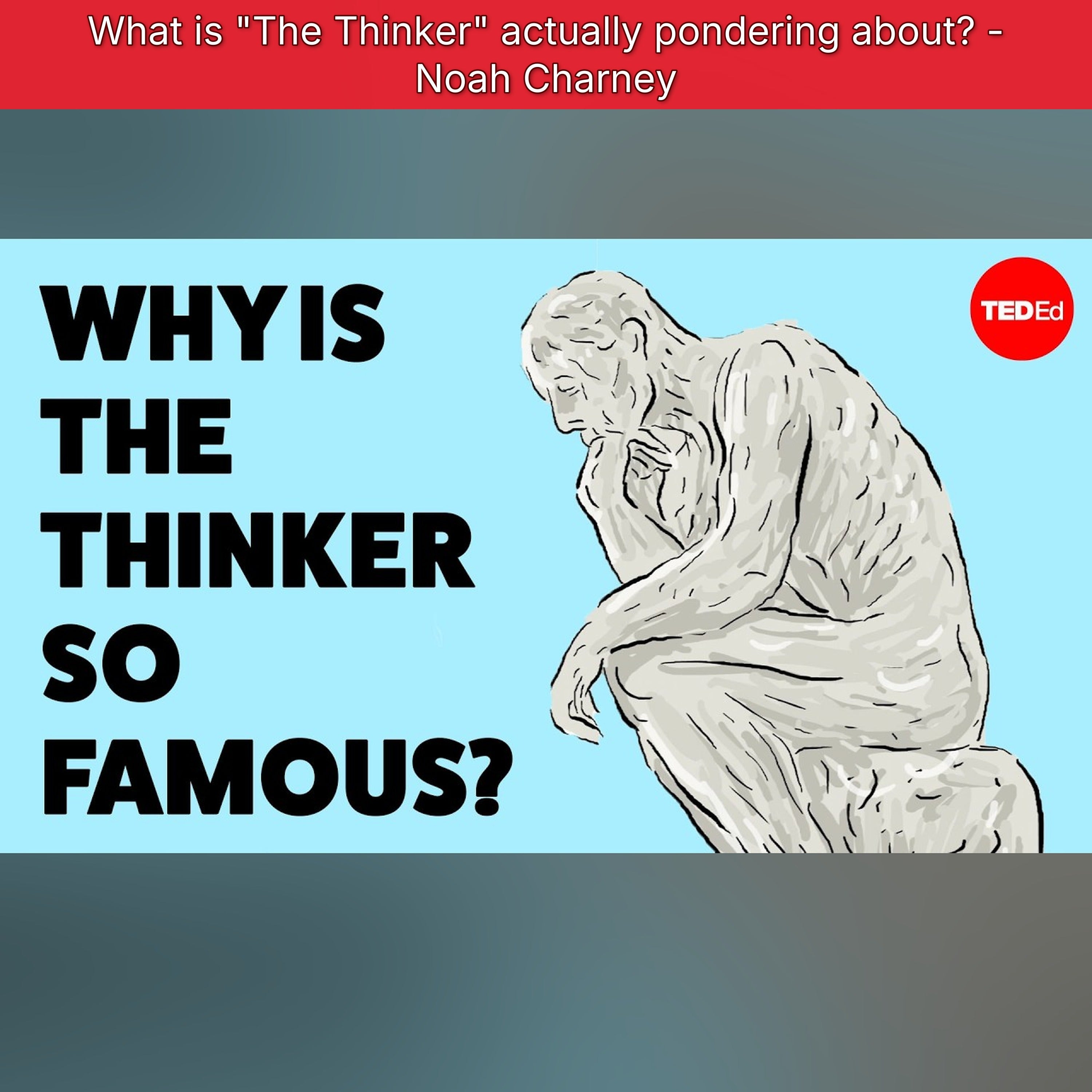
Get to know Auguste Rodin’s infamous sculpture “The Thinker,” and find out who was the inspiration for this masterpiece. -- Contrary to popular belief, "The Thinker" sculpture isn’t just a universal symbol of eternal contemplation. French sculptor Auguste Rodin intended it to represent a specific person— and fit into a much larger piece featuring the fiery pits of Hell. So, who was "The Thinker," and what was he actually thinking? Noah Charney digs into the secrets of this infamous work of art. Lesson by Noah Charney, directed by Avi Ofer. Support Our Non-Profit Mission ---------------------------------------------- Support us on Patreon: http://bit.ly/TEDEdPatreon Check out our merch: http://bit.ly/TEDEDShop ---------------------------------------------- Connect With Us ---------------------------------------------- Sign up for our newsletter: http://bit.ly/TEDEdNewsletter Find us on Twitter: http://bit.ly/TEDEdTwitter Peep us on Instagram: http://bit.ly/TEDEdInstagram ---------------
Today, Hank answers the question, "Why do we use lotion?" We'll take a look at your integumentary system and all the hard work it does to protect you from and help you interact with the world around you. Pssst... we made flashcards to help you review the content in this episode! Find them on the free Crash Course App! Download it here for Apple Devices: https://apple.co/3d4eyZo Download it here for Android Devices: https://bit.ly/2SrDulJ Chapters: Introduction: Why Do We Use Lotion? 00:00 Protective & Sensory Functions of the Integumentary System 1:23 More Functions: removing waste, storing blood, and regulating body temperature 2:16 Skin Discoloration: Cyanosis, Jaundice, and Erythema 3:46 Melanin, Vitamin D, and Skin Tone 4:39 How Does Hair Conditioner Work? 5:40 How Do Hair, Skin, and Nails Grow? 6:17 Types of Sweat Glands: Eccrine, Apocrine, Mammary, and Ceruminous 6:55 Sebaceous (Oil) Glands 8:17 Review 9:05 Credits 9:33 Crash Course is on Patreon! Want to find Crash Course elsewh
Even though it might seem like our bodies are on autopilot, there is a whole lot happening inside us to keep things moving. In this episode of Crash Course Biology, we’ll learn that our cells are in constant communication, reminding each other—and themselves—to perform important functions like breathing, walking, or even sleeping. Chapters: Behind the Scenes 00:00 Cell Communication 2:00 How Cells Respond to Signals 4:19 Platypus Reproduction 5:24 Types of Signaling 6:52 Review & Credits 9:40 This series was produced in collaboration with HHMI BioInteractive, committed to empowering educators and inspiring students with engaging, accessible, and quality classroom resources. Visit https://BioInteractive.org/CrashCourse (https://biointeractive.org/CrashCourse) for more information. Are you an educator looking for what NGSS Standards are covered in this episode? Check out our Educator Standards Database for Biology here: https://www.thecrashcourse.com/biologystandards Check out our Biolog
In this full November 2–8 recap, 44% of treated patients in Vir's hepatitis delta trial met the Phase 3 primary endpoint, with an important difference in when the comparison groups were measured. CVS plans to separate its retail pharmacies and MinuteClinic from Aetna and Caremark, subject to conditions. Alex and Maya also examine HOVON 150 in IDH1-mutated leukemia, FDA's Zolgensma safety investigation, cardiovascular data and the week's deals and manufacturing news — and what the evidence does and does not show. Alex Mercer and Maya Patel host.
In this episode of Lung Cancer Considered, host Dr. Narjust Florez is joined by Dr. Urvi Shah and Dr. Krystle Zuniga to explore the critical role of nutrition in lung cancer care. The discussion highlights current evidence on nutrition and cancer outcomes, practical strategies to support patients during treatment and survivorship, and common misconceptions fueled by misinformation. Together, they emphasize the importance of integrating evidence-based nutrition guidance into oncology practice to improve patient well-being and quality of life. Guests: Urvi Shah, MD, MS, DipABLM Hematologist, Oncologist, and Physician Scientist Memorial Sloan Kettering Cancer Center All Social: @UrviShahMD Krystle Zuniga, PhD, RD, CSO Owner, Cancer Nutrition HQ Assistant Professor of Instruction, Department of Nutritional Sciences University of Texas Austin Social: @cancernutritionhq
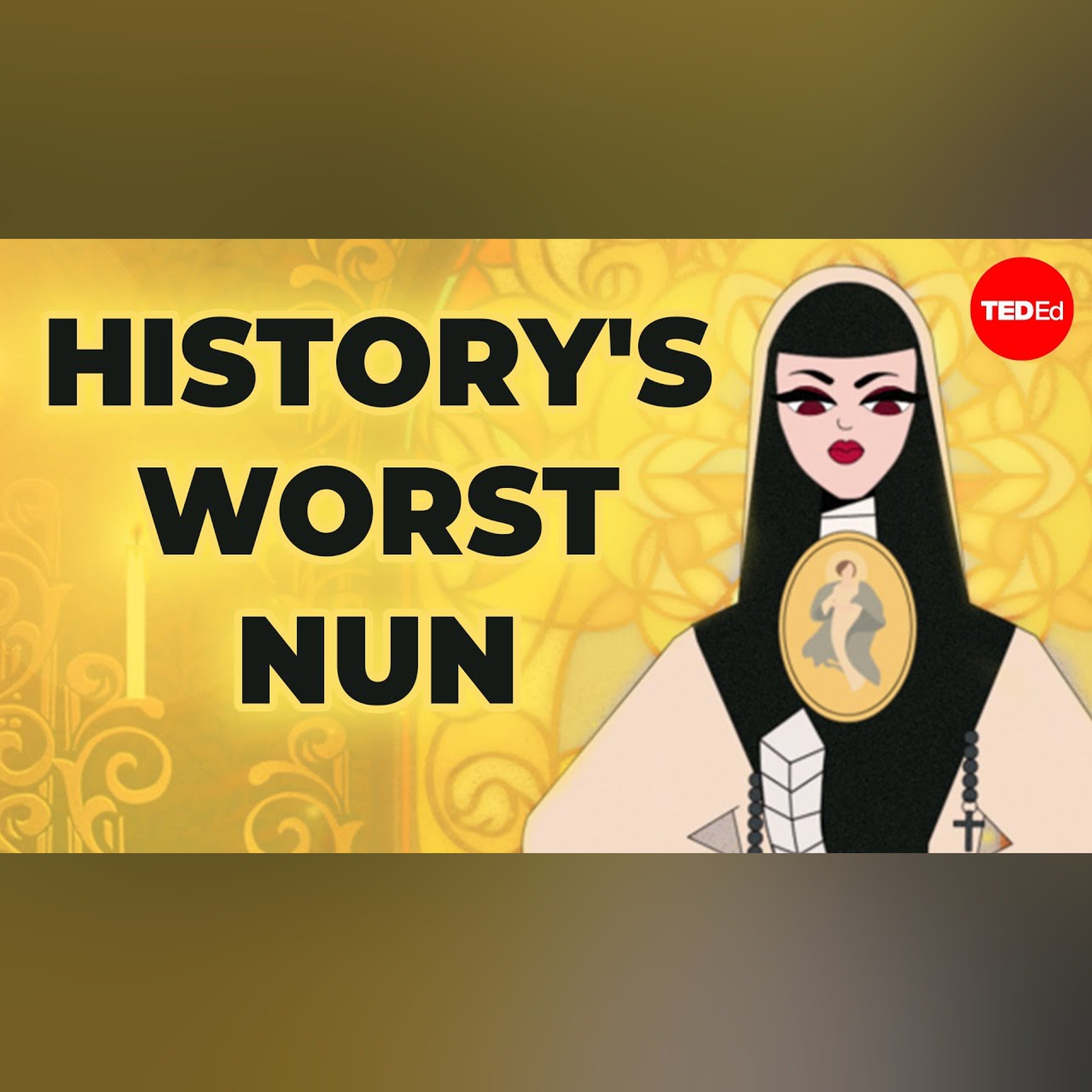
Get to know the life of Mexican nun, poet and scholar, Sor Juana Inés de la Cruz, who was censored by the Church for her critical writings. Uploaded 21-11-19 -- Juana Ramírez de Asbaje sat before a panel of prestigious theologians, jurists, and mathematicians. They had been invited to test Juana’s knowledge with the most difficult questions they could muster. But she successfully answered every challenge, from complicated equations to philosophical queries. Who was this impressive woman? Theresa Yugar details the life of the Mexican poet and scholar. Lesson by Theresa Yugar, directed by Wow-How Studio. Animator's website: https://www.wow-how.com (https://www.wow-how.com/) Sign up for our newsletter: http://bit.ly/TEDEdNewsletter Support us on Patreon: http://bit.ly/TEDEdPatreon Find us on Twitter: http://bit.ly/TEDEdTwitter Peep us on Instagram: http://bit.ly/TEDEdInstagram View full lesson: https://ed.ted.com/lessons/history-s-worst-nun-theresa-a-yugar Thank you so much to our patrons
It's the final Crash Course Chemistry Outtakes episode. Enjoy as Hank struggles to say all the things! -- Crash Course is on Patreon! Want to find Crash Course elsewhere on the internet? Facebook - http://www.facebook.com/YouTubeCrashCourse Twitter - http://www.twitter.com/TheCrashCourse Instagram - https://www.instagram.com/thecrashcourse/ CC Kids: http://www.youtube.com/crashcoursekids
Before moving on from Jupiter to Saturn, we’re going to linger for a moment on Jupiter’s moons. There are 67 known moons, 4 of which are the huge ones that we want to explore in greater detail. Ganymede is the largest - larger, in fact, than any other moon in the solar system and the planet Mercury! Callisto, orbiting the farthest out, is smaller but quite similar to Ganymede in many ways. Io, meanwhile, is most noteworthy for its tremendous volcanic activity. There’s also water on Ganymede and Europa! This episode was brought to you by Squarespace http://www.squarespace.com/crashcourse Check out the Crash Course Astronomy solar system poster here: http://store.dftba.com/products/crashcourse-astronomy-poster -- Chapters: Introduction: Jupiter's Moons 00:00 Ganymede: Jupiter's Largest Moon 1:15 Callisto: Jupiter's Second Largest Moon 2:15 Io: Volcanoes! 2:59 Europa: The Ocean Moon 4:48 The Habitable Zone 7:05 Jupiter's Other Moons 7:49 Review 9:33 -- PBS Digital Studios: http://youtube.
Whether we’re talking about tigers, trees, or tarantulas, evolution happens at the level of the population. In this episode of Crash Course Biology, we’ll find out how natural selection, gene flow, genetic drift, and other processes drive changes in populations. We’ll learn about the Hardy-Weinberg equation, how your alleles make you uniquely you, and how some tigers changed their stripes. Chapters: When Black Bears Are White 00:00 Genes & Alleles 1:37 Natural Selection 3:33 Genetic Drift 4:26 Gene Flow 8:22 The Hardy-Weinberg Equation 10:02 Review & Credits 11:14 This series was produced in collaboration with HHMI BioInteractive, committed to empowering educators and inspiring students with engaging, accessible, and quality classroom resources. Visit https://BioInteractive.org/CrashCourse (https://biointeractive.org/CrashCourse) for more information. Are you an educator looking for what NGSS Standards are covered in this episode? Check out our Educator Standards Database for Biology h
View full lesson: http://ed.ted.com/lessons/let-s-talk-about-dying-peter-saul We can't control if we'll die, but we can "occupy death," in the words of Dr. Peter Saul. He calls on us to make clear our preferences for end of life care -- and suggests two questions for starting the conversation. (Filmed at TEDxNewy.) Talk by Peter Saul.
Sickeningly Sweet: Protecting Your Child from High-Sugar, Ultra Processed Foods, and the Rise in Pediatric Chronic Disease Meryl Fury, MS, RN, examines how high-sugar and ultra-processed foods may contribute to the rise in pediatric chronic disease. Learn how parents can better protect children’s health through food awareness, nutrition choices, and prevention-focused daily habits. #ChildrensHealth #Sugar #ProcessedFoods
Some scientists believe we are in the middle of Earth’s sixth mass extinction: a big, precarious game of Jenga that involves every ecosystem on the planet. In this episode of Crash Course Biology, we’ll see how conservation biology aims to restore habitat and preserve biodiversity. Along the way, we’ll see how environmental damage impacts human communities, and learn about wolves’ return to Yellowstone National Park. Chapters: Introduction to Conservation Biology 00:00 Human Impact 3:10 Environmental Injustices 5:32 Restoration Ecology 6:53 Conservation 9:21 Review & Credits 12:19 Special thanks to Linus Obenhaus for additional video editing support on this episode! This series was produced in collaboration with HHMI BioInteractive, committed to empowering educators and inspiring students with engaging, accessible, and quality classroom resources. Visit https://BioInteractive.org/CrashCourse (https://biointeractive.org/CrashCourse) for more information. Are you an educator looking for
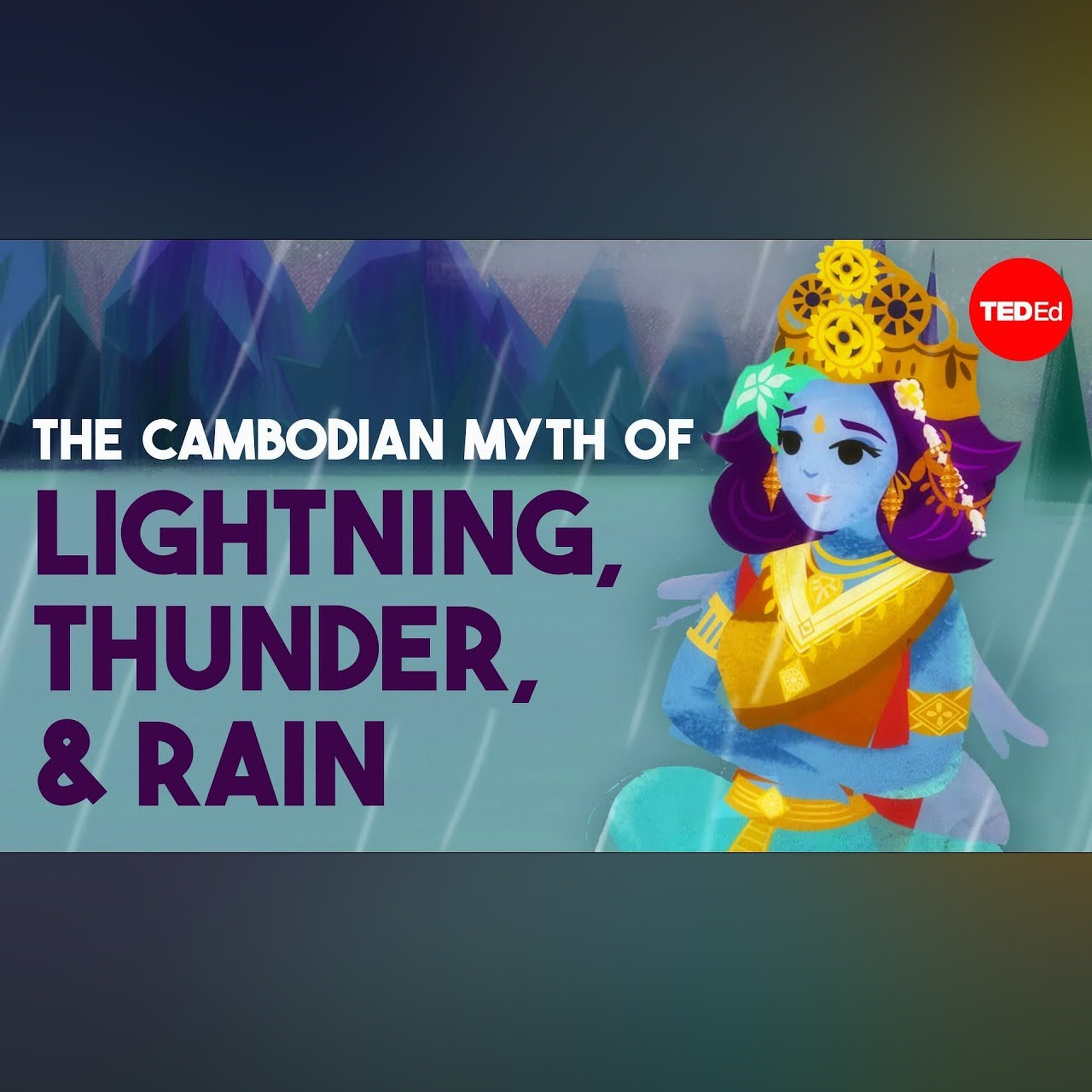
Uploaded 10-04-18 View full lesson: https://ed.ted.com/lessons/the-cambodian-myth-of-lightning-thunder-and-rain-prumsodum-ok "Moni Mekhala Ream Eyso" is the most sacred dance drama in Cambodia. It is performed every year in the buong suong ceremony, and explains the origins of lightning, thunder and rain according to the Khmer people. Prumsodun Ok tells this empowering tale that still enlightens our world today. Lesson by Prumsodun Ok, animation by Silvia Prietov. Thank you so much to our patrons for your support! Without you this video would not be possible! Michelle Stevens-Stanford, Phyllis Dubrow, Eunsun Kim, Philippe Spoden, Samantha Chow, Armando Ello, Ayala Ron, Manognya Chakrapani, Simon Holst Ravn, Doreen Reynolds-Consolati, Rakshit Kothari, Melissa Sorrells, Antony Lee, Husain Mohammad, Côme Vincent, Astia Rizki Safitri, alessandra tasso, Gerald Onyango, Katrina Harding, Ezgi Yersu, Katie Dean, Kin Lon Ma, Carsten Tobehn, Boris Langvand, Jeremy Fryd, Charlene You, Carolyn Cor
Organic reactions are kind of like carefully choreographed fight scenes, and nucleophilic attack is a key move. This episode of Crash Course Organic Chemistry is all about nucleophiles and electrophiles, or what happens at those molecular hot spots we’ve been talking about. We’ll also learn about what IR spectra can tell us about reactions, and how cyanide is more than just a poison from mystery stories. Let’s get to it organophiles! Series Sources: Brown, W. H., Iverson, B. L., Ansyln, E. V., Foote, C., Organic Chemistry; 8th ed.; Cengage Learning, Boston, 2018. Bruice, P. Y., Organic Chemistry, 7th ed.; Pearson Education, Inc., United States, 2014. Clayden, J., Greeves, N., Warren., S., Organic Chemistry, 2nd ed.; Oxford University Press, New York, 2012. Jones Jr., M.; Fleming, S. A., Organic Chemistry, 5th ed.; W. W. Norton & Company, New York, 2014. Klein., D., Organic Chemistry; 1st ed.; John Wiley & Sons, United States, 2012. Louden M., Organic Chemistry; 5th ed.; Roberts and Com
Ever feel like there's an international team of bad guys changing all of the easily remembered chemical names and turning them into test-failing, number-infused, pain-in-the-neck names? Well... you're not wrong. IUPAC exists, but try to keep in mind that they're doing it for the greater good. In this episode, Hank talks about IUPAC, prefixes, suffixes, ranking, numbers for carbon chains, and cis or trans double bonds. Pssst... we made flashcards to help you review the content in this episode! Find them on the free Crash Course App! Download it here for Apple Devices: https://apple.co/3d4eyZo Download it here for Android Devices: https://bit.ly/2SrDulJ Common Functional Groups: http://en.wikipedia.org/wiki/Functional_group#Table_of_common_functional_groups (http://en.wikipedia.org/wiki/Functional_group) -- Table of Contents IUPAC 0:00 Every Organic Compound Has Only One Name 1:02 Prefixes 2:16 Suffixes 2:47 Ranking Functional Groups 4:18 Lowest Possible Numbers for Carbon Chains 1:54 Ci
Kayla Barnes-Lentz follows an intensive, highly structured daily protocol designed by a team of scientists to optimise every aspect of her health. She believes this carefully curated lifestyle could help her live to 150 years or more. While her routine may not be realistic for everyone, the insights behind it could benefit us all. Today, Kayla joins Dr Federica Amati to break longevity down into five fundamental pillars. Together, they explore the science behind each one, how Kayla puts them into practice, and how you can start strengthening your own pillars today. Get our brand-new app and Gut Health Test designed by world-leading gut health and nutrition scientists to build healthy eating habits Join ZOE (https://zoe.com/buymembership) Follow ZOE onInstagram (https://www.instagram.com/zoe/). Books by our ZOE Scientists The Food For Life Cookbook (https://amzn.to/4amfIMX) Food For Life by Prof. Tim Spector (https://amzn.to/4amZinu) Ferment by Prof. Tim Spector (https://amzn.to/4hU1Df5
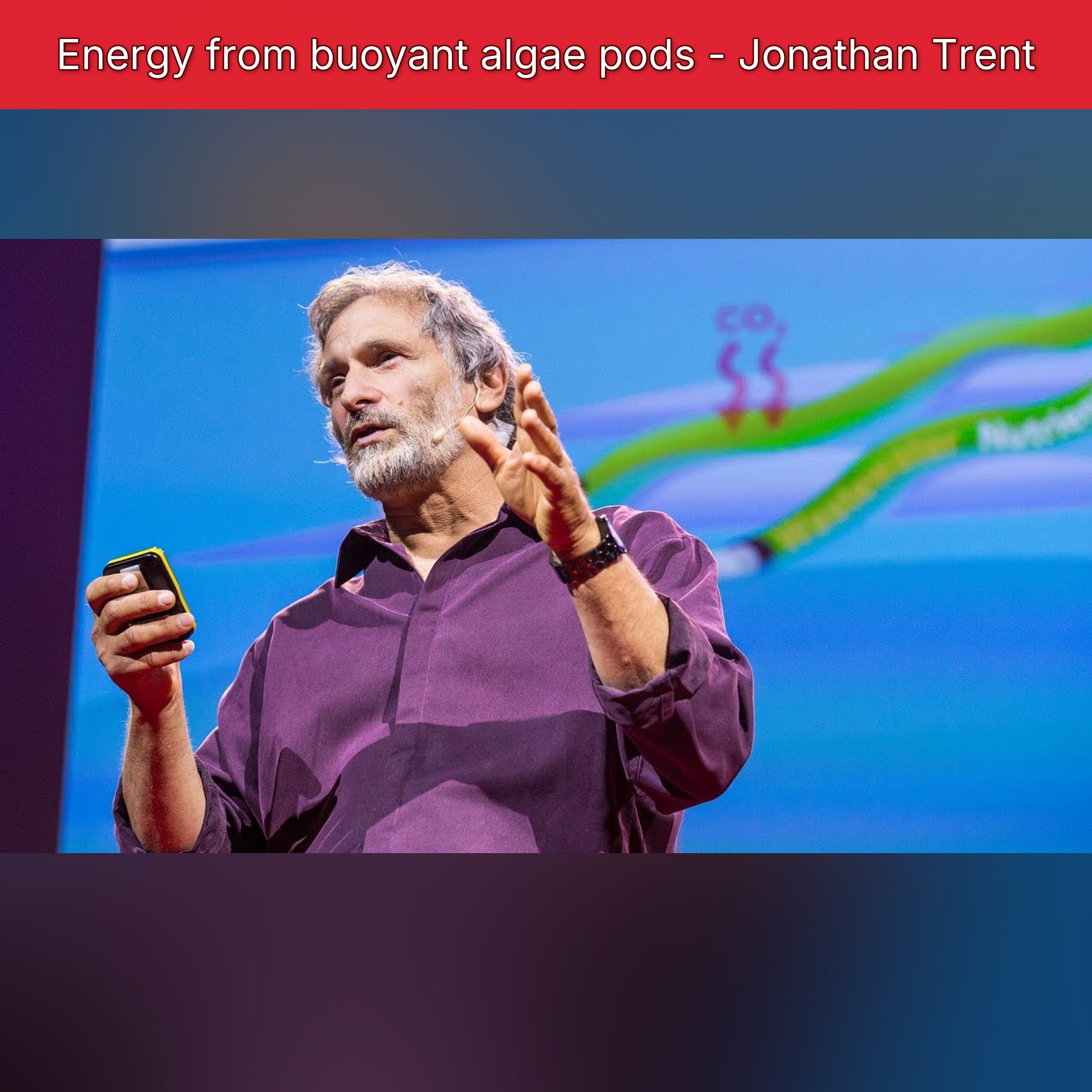
Call it "fuel without fossils": Jonathan Trent is working on a plan to grow new biofuel by farming micro-algae in floating offshore pods that eat wastewater from cities. Hear his team's bold vision for Project OMEGA (Offshore Membrane Enclosures for Growing Algae) and how it might power the future. Talk by Jonathan Trent.
What if some children arrive in this world carrying memories of a life that ended before they were born? For decades, researchers at the University of Virginia have investigated children who describe people, places, and events they seemingly shouldn't know anything about. In some cases, their accounts have been linked to actual people who died years earlier. But new research raises an even more intriguing question. Could the circumstances of someone's death have something to do with how quickly they return? By examining hundreds of reported past-life cases, researchers identified a curious pattern involving sudden or unexpected deaths and the time between one person's death and another child's birth. The findings don't prove reincarnation, but they add another question to an already mysterious subject. Could these children genuinely remember another lifetime? And if so, what happens between one life and the next? #RealGhostStoriesOnline #Reincarnation #PastLifeMemories #PastLives #Life
This is a Grave Talks CLASSIC EPISODE! PART TWO Award-winning filmmaker, author, and historian Larry Eissler III joins The Grave Talks to discuss his latest documentary projects centered on one of the most famous and controversial paranormal cases in American history—the Watseka Wonder. Larry shares insight into The Séance and The Séance: Bloodlines, both filmed on location at the historic Roff House, where the original events took place. Working with paranormal investigators and psychic mediums, the films combine historical documentation with modern séance work in an effort to better understand what happened there. The Watseka Wonder dates back to the late 1870s, when teenage girl Lurancy Vennum fell ill and claimed the spirit of a deceased girl, Mary Roff, had taken control of her body. She spoke as Mary, recognized her family, and lived for weeks as someone else entirely. No clear explanation has ever emerged—and nearly 150 years later, the case continues to raise unsettling questio
Sand is everywhere. Beaches. Rivers. Deserts full of powdery dunes. How could we possibly run out? Journalist Vince Beiser has dug deep into the past century — and more — of human construction and found one tiny grain at its foundation: sand. In apartments and eyeglasses, in computer chips and cleaning equipment. The hunt for sand has reshaped coastlines, spawned black markets, and launched beach “heists.” And, some of them, possibly, could have been avoided, if the Romans had bothered to write down their own lost recipe for concrete. Guest: Vince Beiser, journalist and author of The World in a Grain: The Story of Sand and How It Transformed Civilization Support Are We Doomed?, get bonus episodes, and more: https://doompod.com/support/ (https://doompod.com/support/%20) Watch animated episodes on Youtube! https://www.youtube.com/@arewedoomedpod Also mentioned this episode: Are We Going the Way of the Roman Empire? (https://pod.link/1893359212/episode/cHJ4XzE2ODU3X2EyNjAzYmNmLTcxZDYtNGM1
Paul Hill, Ralph Wilkins and Dr. Jenifer "Dr. Dust" Millard host. Damien Phillips, John Wildridge and Dustin Ruoff produce. Recorded in 2018. Paul, Ralph & Jeni interview Libby Jackson OBE FRAeS, former manager of human exploration program and microgravity of the UK Space Agency. She's currently Head of Space for the London Science Museum. We talk to Libby about being weightless, the value of space research and the most inspiring tales of following your dreams as we chat about her first book "A Galaxy of Her Own: Amazing Stories of Women in Space"! From small steps to giant leaps, A Galaxy of Her Own tells fifty stories of inspirational women who have been fundamental to the story of humans in space, from scientists to astronauts to some surprising roles in between. From Ada Lovelace in the nineteenth century, to the women behind the Apollo missions, from the astronauts breaking records on the International Space Station to those blazing the way in the race to get to Mars, A Galaxy of
In Episode #1043, Dr. Guru Banavar (Founding CTO of Viome) joins Jon Krohn for a technical masterclass on the biology inside your gut. Viome has assembled what Guru calls the largest dataset on human biology ever collected, roughly 100 quadrillion nucleotides of RNA from people in more than 150 countries, and uses it to tell individuals which foods help them and which harm them. Before Viome, Guru was the first VP to lead IBM's Watson AI team, and he holds a PhD in computer science from the University of Utah. In this episode, he explains why RNA rather than DNA holds the key to chronic disease, how a continuous-glucose study of 1,100 people became a predictive model for your blood sugar, why keto dieters come out biologically older than vegetarians, and what makes computational biology such a rare skill. Additional materials: www.superdatascience.com/1043 (https://www.superdatascience.com/1043) Interested in sponsoring a SuperDataScience Podcast episode? In this episode you will learn
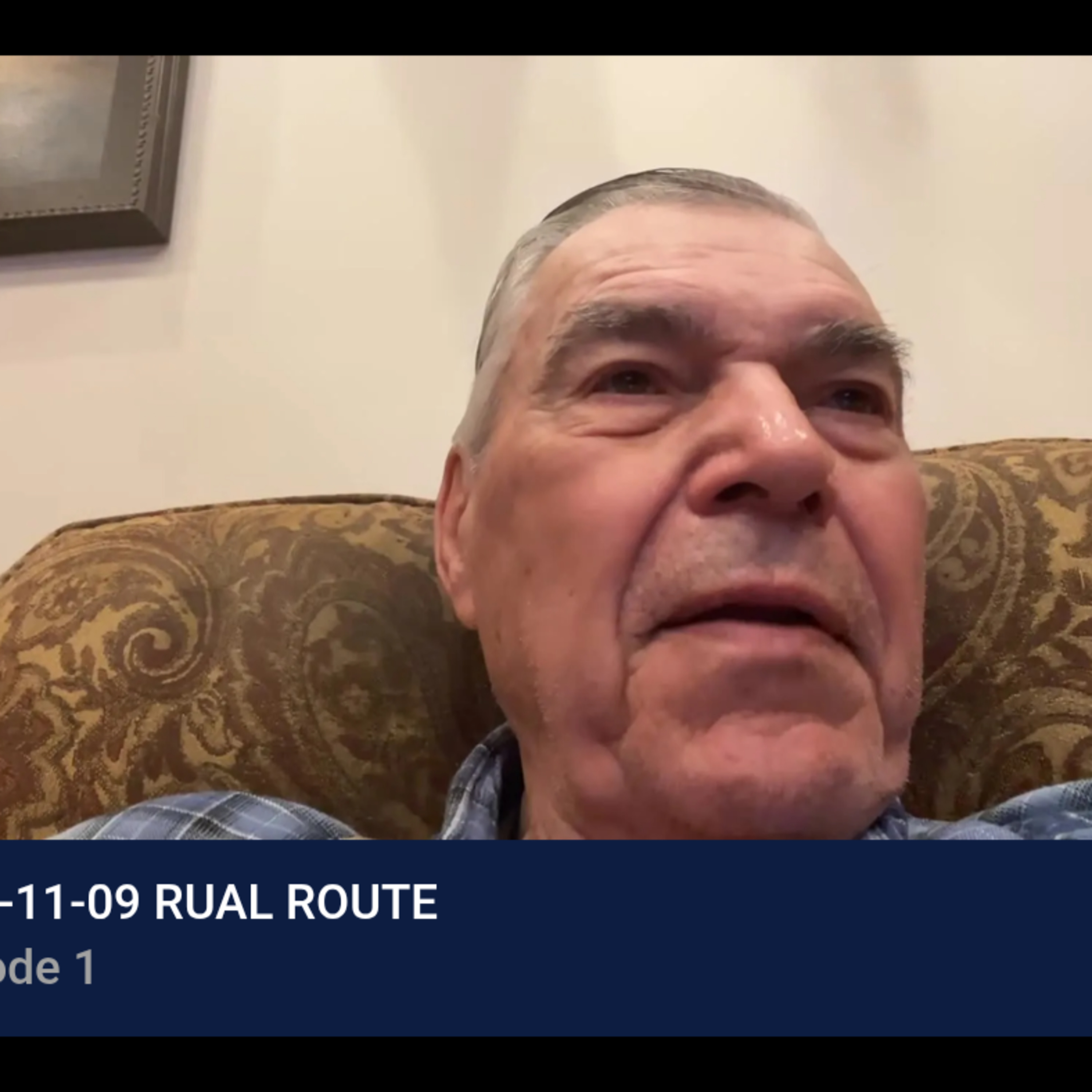
SHEEP BREEDING, SOLAR PANELS AND FEDERAL OVERREACH WITH HANK VOGLER Nevada sheep rancher Hank Vogler joins Trent Loos on Rural Route for a hard-hitting look at sheep breeding, federal overreach, and the future of American ranching. Hank breaks down artificial insemination techniques, including PMS
In which John Green teaches you about the end of the Cold War and the presidency of George H.W. Bush. It was neither the best of times nor the worst of times. On the domestic front, the first president Bush inherited the relative prosperity of the later Reagan years and watched that prosperity evaporate. That was about all the interest Bush 41 had, domestically, so let's move to foreign policy, which was a bigger deal at this time. The biggie was the end of the Cold War, which is the title of the video, so you know it's important. The collapse of the Soviet Union was the biggest deal of Bush's term, and history has assigned the credit to Ronald Reagan. We give the guy a break and say that he helped. He was certainly an expert in foreign policy, having been an envoy to China, ambassador to the United Nations, and head of the CIA. Bush also oversaw the first Gulf War, which was something of a success, in that the primary mission was accomplished, and the vast majority of the troops were