Today we’re going to talk about the forces that affect a country’s stability. We’ll take a closer look at Costa Rica, Venezuela, Cuba, and Brazil and examine how the cohesiveness of these Latin American countries varies dramatically even though they are in a region with similar characteristics. As you’ll see, a country is like a figure skater, and maintaining peace and stability is much like a pair performing a “death spiral” balancing the forces attempting to pull a country apart and keep it together. Sources General CIA Factbook: https://www.cia.gov/library/publications/resources/the-world-factbook/docs/one_page_summaries.html Getis, Bjelland, and Getis. Introduction to Geography, 15 ed. McGraw-Hill Education. 2017. ISBN: 978-1-259-57000-1 Gregory, Derek, Ron Johnston, Geraldine Pratt, Michael Watts, and Sarah Whatmore, eds. 2009. The Dictionary of Human Geography. 5th ed. Willey-Blackwell. ISBN: 978-1-4051-3288-6 For a free and open source option for Intro to Human Geography: For a
We continue our look at your bones and skeletal system, skipping over the silly kid's song in favor of a more detailed look at your axial and appendicular skeleton. This episode also talks about the structural and functional classifications of your joints and the major types of body movement that they facilitate. Pssst... we made flashcards to help you review the content in this episode! Find them on the free Crash Course App! Download it here for Apple Devices: https://apple.co/3d4eyZo Download it here for Android Devices: https://bit.ly/2SrDulJ Chapters: Introduction: Joints 00:00 Axial Bones: Cranial, Facial, Vertebrae, & Thoracic Cage 2:02 Appendicular Bones: Limbs & Pelvis 3:05 Types of Joints 3:33 Functional Classification of Joints: Synarthroses, Amphirthroses, Diarthroses 3:59 Structural Classification of Joints: Fibrous, Cartilaginous, Synovial 4:32 Types of Synovial Joints 5:37 Plane Joints - Gliding Movements 6:02 Hinge Joints - Angular Movements: Flexion, Extension, & Hyper
Many people worldwide are at-the-ready with their champagne bottles and party plans. When the Dictator Tot finally succumbs to the blood clot (or whatever), is celebrating anyone's death a moral thing? We discuss on the show.
Listen ad-free (https://www.patreon.com/c/conspirituality) Matthew speaks with Maria Bernardes, a volunteer in Lula's digital army, about how Nossa Senhora Aparecida, Brazil's Black Marian patron, became a flashpoint in the 2026 presidential runoff. The conflict pit Catholic, multiracial universalism against the racist neo-Pentecostal church to which the Bolsonaro father and son have given themselves, in the hope that Christofascism would lead them to power. In our segment last Thursday we discussed how Worker’s Party propaganda director Andre Janones staged an assault to capture the green-and-yellow colours back from the right wing. This is a deeper version of that story, in which the Bolsonaro gang attempted to defame the Black Virgin of Brazil as transgressive, subhuman, corrupt, and disgusting. It did not work. Maria Bernardes is a Brazilian voice actress, improv performer and anti-fascism activist, now based in Barcelona. Show Notes Maria Bernardes (https://www.mariabernardes.com/
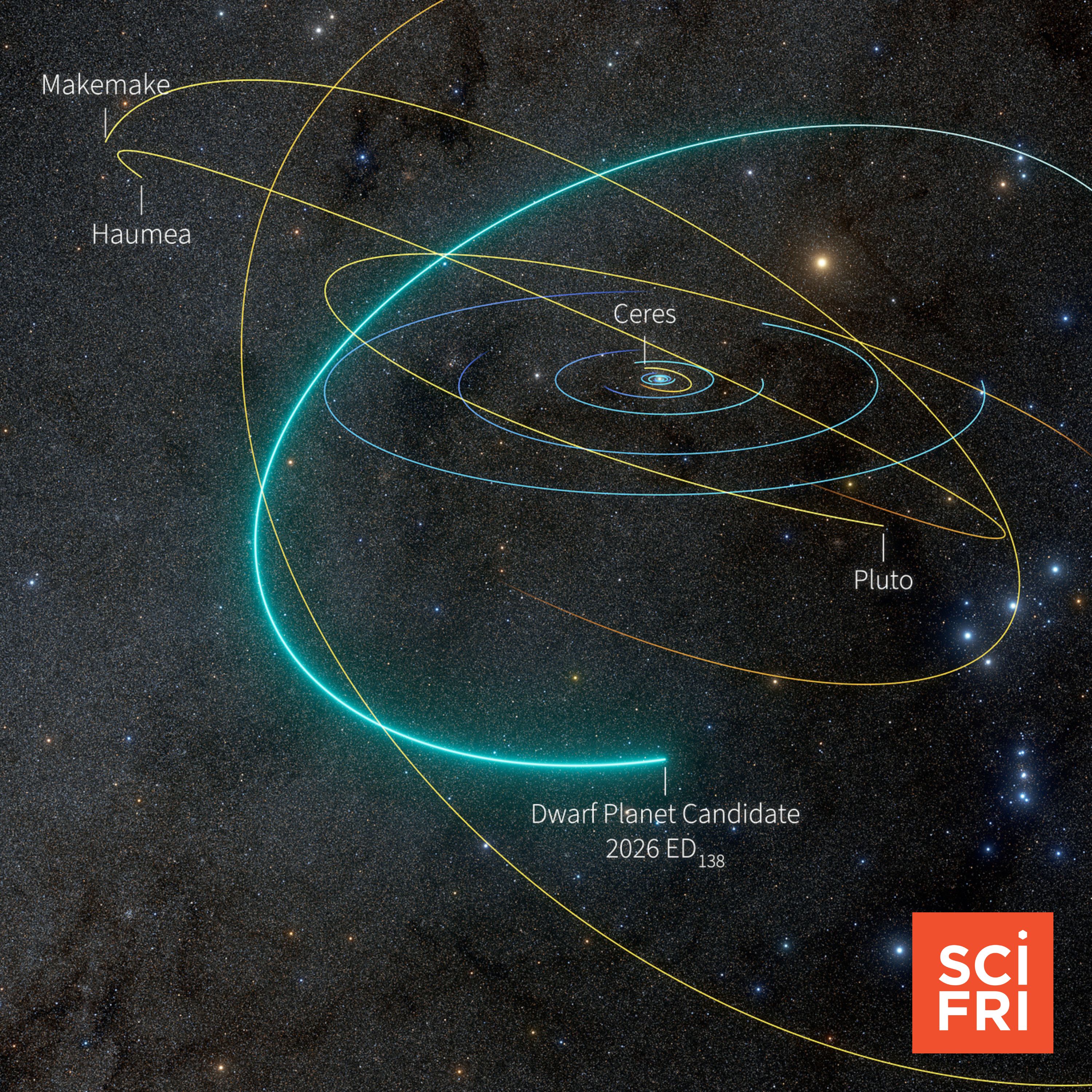
Move over Pluto, a new dwarf planet just dropped. Scientists announced that they’ve likely discovered a tiny new planet (https://rubinobservatory.org/news/rubin-first-dwarf-planet-candidate) beyond Neptune, in the far-out ring of icy and rocky bits called the Kuiper Belt. The possible dwarf planet (https://www.sciencefriday.com/segments/new-dwarf-planet-needs-a-name/) was spotted by the Vera C. Rubin Observatory. Flora talks with Matthew Holman, the astrophysicist who made the discovery. One more thing: The new dwarf planet is currently called 2026 ED138. We think the name needs a little work. What would you call it? Give us a ring at 877-472-4374. Guest: Dr. Matthew Holman is a senior astrophysicist at the Center for Astrophysics | Harvard & Smithsonian. Transcripts for each episode are available within 1-3 days at sciencefriday.com (https://www.sciencefriday.com/segments/new-dwarf-planet-needs-a-name/). Got a science question that’s keeping you up at night? Call us: 877-472-4374 Host
View full lesson: http://ed.ted.com/lessons/how-languages-evolve-alex-gendler Uploaded 27-05-14 Over the course of human history, thousands of languages have developed from what was once a much smaller number. How did we end up with so many? And how do we keep track of them all? Alex Gendler explains how linguists group languages into language families, demonstrating how these linguistic trees give us crucial insights into the past. Lesson by Alex Gendler, animation by Igor Coric.
After over a century of studying introspection in humans and animals, researchers are beginning to explore the phenomenon in unlikely new subjects: large language models. These systems, which are based on mathematical structures called neural networks, excel at cognitive tasks that until recently seemed exclusive to humans. Can they introspect as well? On this episode of The Quanta Podcast, host Samir Patel speaks with staff writer Ben Brubaker about “injecting” thoughts into LLM neural networks — and what researchers are doing to map out AI’s capacity for introspection. This topic was covered in a recent story (https://www.quantamagazine.org/new-research-tests-whether-ai-models-know-their-own-thoughts-20261104/) for Quanta Magazine.
FIFA wants teams to use "AI coaches," colleges are incorporating LLMs into student sports journalism, and that's just the beginning of the ways AI boosters are infiltrating athletics. Sports journalist and professor Shireen Ahmed joins Alex and Emily for a closer look at what's lost when we cede sports knowledge to genAI. Shireen Ahmed (https://www.shireenahmed.com/) is an award-winning, multiplatform sports journalist who works at the intersections of race, gender, culture and politics. She's a co-host of the Burn It All Down podcast (https://www.burnitalldownpod.com/), and teaches journalism and sport media at Toronto Metropolitan University. References: "This Will Be The First World Cup Ever With AI Coaches On The Sidelines" (https://www.forbes.com/sites/johnkoetsier/2026/06/04/this-will-be-the-first-world-cup-ever-with-ai-coaches-on-the-sidelines/) "WSU turns to artificial intelligence to assist sports communications" (https://www.spokesman.com/stories/2026/oct/07/wsu-turns-to-arti
NBC News correspondent Chloe Melas joins me to share her experience living with ulcerative colitis for 15 years, a journey she kept private until releasing her new book, The Girl's Guide to Guts, co-written with Judy Batalion. We talk about the differences between IBD and IBS, what blood in the stool might mean, and why one study found that women waited more than twice as long as men to get a diagnosis. Chloe explains her flare plan, how she manages fiber with apples and psyllium, and what it was like to go over ten years without a normal bowel movement. We also discuss colon cancer in adults under 50, celiac disease, diverticulitis, colonoscopy prep, and traveling when your gut is unpredictable. I also explain how essential amino acids help feed the cells that produce the gut's protective mucus. If you’re dealing with bloating, urgency, or bleeding, this conversation can help you recognize when it’s time to call a GI doctor. Thank you to our sponsors: Ladder: free 7-day trial, no cred
We’re going back to the lab! So far we’ve learned some important lab techniques that organic chemists might use day to day, like chromatography and proton NMR, but there are even more to learn. In this episode of Crash Course Organic Chemistry, we’ll introduce some new lab techniques such as distillation and recrystallization and apply them to everything we’ve been learning about EAS reactions. And we’ll do some synthesis problems! Episode Sources: Gilbert, J. C., & Martin, S. F. (2015). Experimental organic chemistry: a miniscale & microscale approach. Cengage Learning. Series Sources: Brown, W. H., Iverson, B. L., Ansyln, E. V., Foote, C., Organic Chemistry; 8th ed.; Cengage Learning, Boston, 2018. Bruice, P. Y., Organic Chemistry, 7th ed.; Pearson Education, Inc., United States, 2014. Clayden, J., Greeves, N., Warren., S., Organic Chemistry, 2nd ed.; Oxford University Press, New York, 2012. Jones Jr., M.; Fleming, S. A., Organic Chemistry, 5th ed.; W. W. Norton & Company, New York,
In this episode, Hank welcomes you to the new age, to the new age, welcome to the new age. Here he'll talk about transmutation among elements, isotopes, calculating half-life, radioactive decay, and spontaneous fission. Pssst... we made flashcards to help you review the content in this episode! Find them on the free Crash Course App! Download it here for Apple Devices: https://apple.co/3d4eyZo Download it here for Android Devices: https://bit.ly/2SrDulJ -- Table of Contents Radioactivity Transmutation Among Elements and Isotopes Calculating Half-Life Radioactive Decay Spontaneous Fission -- Crash Course is on Patreon! Want to find Crash Course elsewhere on the internet? Facebook - http://www.facebook.com/YouTubeCrashCourse Twitter - http://www.twitter.com/TheCrashCourse Instagram - https://www.instagram.com/thecrashcourse/ CC Kids: http://www.youtube.com/crashcoursekids
There are lots of ways that evolution happens, and natural selection is just one of them. In this episode of Crash Course Biology, we’ll find out how this process works and shapes traits in all living things —from ginkgo trees to howler monkeys. We’ll also learn how extra-grippy toes help some lizards survive hurricanes. Chapters: How Spiders Stay Alive 00:00 What's Natural Selection? 1:50 Requirements for Natural Selection 3:41 Environmental Effects 5:40 Types of Natural Selection 7:39 Evolutionary Trade-Offs 9:23 Artificial Selection 10:34 Review & Credits 11:35 This series was produced in collaboration with HHMI BioInteractive, committed to empowering educators and inspiring students with engaging, accessible, and quality classroom resources. Visit https://BioInteractive.org/CrashCourse (https://biointeractive.org/CrashCourse) for more information. Are you an educator looking for what NGSS Standards are covered in this episode? Check out our Educator Standards Database for Biology h
Sleep better with Pillow: https://pillow.app/bettersleep Experience soothing pink noise designed to enhance deep sleep, meditation, and relaxation by creating a calming ambient soundscape that blocks distractions and promotes peaceful rest. Perfect for calming the mind, reducing stress, and improving focus anytime you need tranquility. This episode includes AI-generated content.
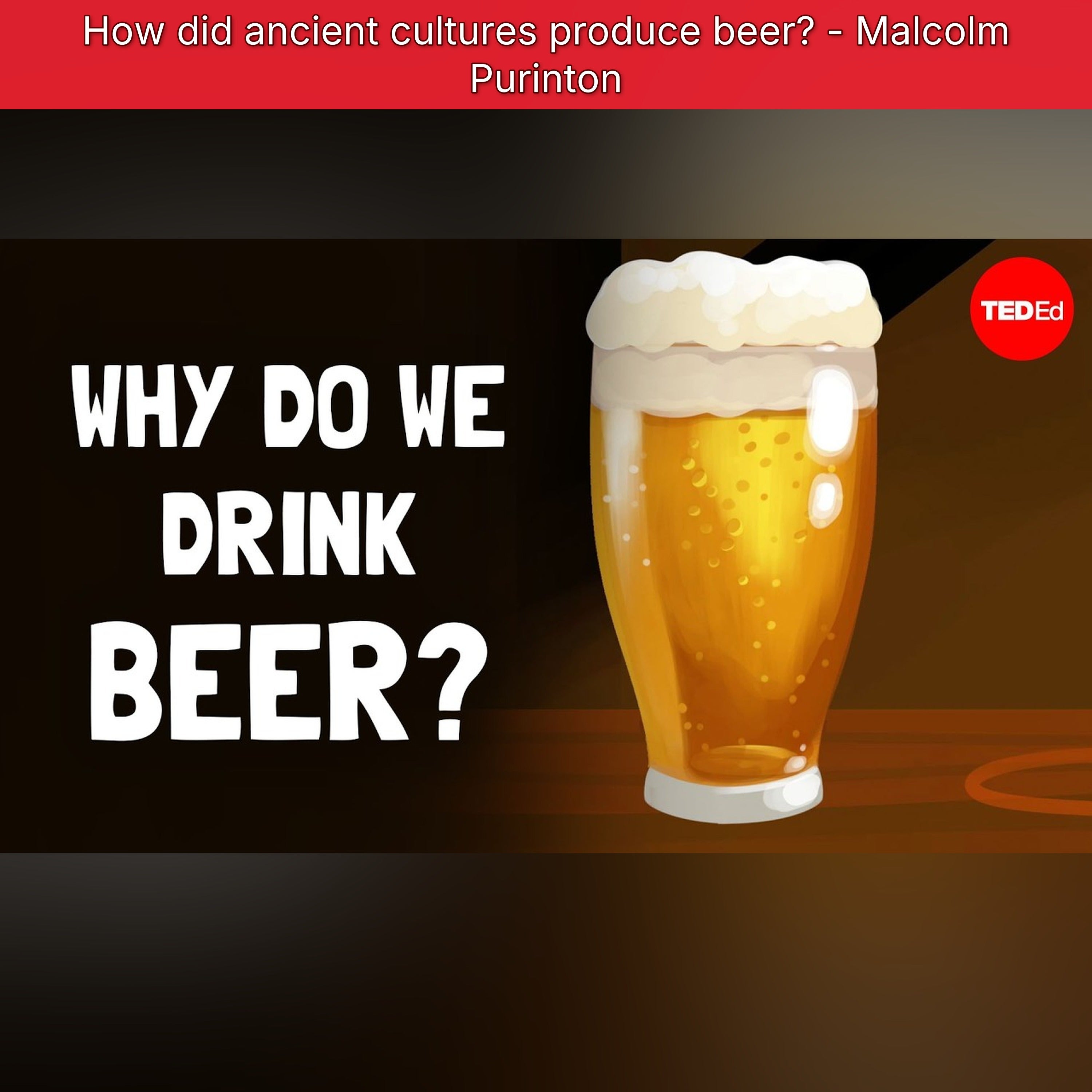
Trace the history and evolution of beer, from its first known existence 13,000 years ago to the modern beverage we know today. -- Today, there are over 100 distinct beer varieties, from pilsners and bocks, to porters, stouts, and IPAs. The oldest evidence of beer brewing dates back 13,000 years, but experts believe the drink developed independently across the world. So, how did ancient civilizations brew beer, and how did their methods develop into the beverage we know today? Malcolm Purinton traces the evolution of beer. Lesson Malcolm Purinton, directed by Anton Bogaty. Support Our Non-Profit Mission ---------------------------------------------- Support us on Patreon: http://bit.ly/TEDEdPatreon Check out our merch: http://bit.ly/TEDEDShop ---------------------------------------------- Connect With Us ---------------------------------------------- Sign up for our newsletter: http://bit.ly/TEDEdNewsletter Find us on Twitter: http://bit.ly/TEDEdTwitter Peep us on Instagram: http://bit.
Social media is full of claims about how farmers raise and grow food, but how much of it holds up? Michelle Miller, a former Iowa corn and soybean farmer known online as Farm Babe, talks about common agriculture myths, regenerative practices and the data, genetics and autonomous tools shaping farms today. This podcast was produced for Bayer by Scientific American Custom Media, a division separate from the magazine’s board of editors.
RFK Jr. has spent his time as Health Secretary overseeing sweeping changes to America's public health infrastructure — firing vaccine advisors, cutting childhood vaccine recommendations, gutting NIH research grants, and quietly funding a questionable trial in Guinea-Bissau. Now that Democrats have won both the House and the Senate, the leash may finally be tightening. Host Dr. Kaveh Hoda brings together virologist Dr. Angie Rasmussen, ER physician and addiction medicine specialist Taylor Nichols, and UCSF vaccine law professor Dorit Reiss for a deep dive into Kennedy's record, the legal mechanics of impeachment, the corruption angles Congress might pursue, and what it will realistically take to undo the damage. Plus: why measles is back, how the Guinea-Bissau hepatitis B trial fits Kennedy's broader agenda, and what the next 6–12 months could look like for public health in America. Hosted on Acast.
Whether in a desert, the savanna, or a tropical rainforest, plants have an important role in the ecological processes of Earth’s biomes. In this episode of Crash Course Botany, we’ll explore these different living locales, the effects of climate change on them, and how our photosynthetic friends make the world go ‘round. Chapters: Backpacking Across Earth 00:00 Types of Biomes 1:16 Plants' Role in Biomes 2:23 How Climate Change Affects Biomes 4:36 Is Planting Trees the Answer? 8:28 Protecting Earth's Biomes 10:22 Review & Credits 11:26 Sources: https://docs.google.com/document/d/1PB6WdUJcABAccO-U-t6ic7WbfP2z0Pr5P9a8HMr6zh4/edit?usp=sharing *** Crash Course is on Patreon! Thanks to the following patrons for their generous monthly contributions that help keep Crash Course free for everyone forever: David Fanska, Andrew Woods, Tawny Whaley, Sean Saunders, DL Singfield, Ken Davidian, Stephen Akuffo, Toni Miles, Steve Segreto, Kyle & Katherine Callahan, Laurel Stevens, Burt Humburg, Aziz Y,
The Neuroscience of Addiction, Breaking Bad Habits, Childhood Trauma, Psychedelic Healing, Loneliness & Emotional Recovery Host Dave Asprey sits down with Luke Storey, host of The Life Stylist Podcast and author of A Horse Named Lonesome, to explore the science of addiction, loneliness, childhood trauma, emotional healing, psychedelics, brain chemistry, and the surprising relationship between human connection and happiness. Drawing on nearly three decades of recovery from drug addiction, Luke explains why overcoming substance abuse doesn't necessarily resolve the emotional patterns behind it, how unresolved trauma can shape relationships and behavior, and why having fewer, deeper friendships may lead to greater fulfillment. Luke shares his journey from childhood trauma and early substance use to long-term sobriety, revealing why he continued struggling with codependency, unhealthy relationships, and self-destructive patterns even after 20 years without addictive drugs. He discusses his
The Milky Way is our neighborhood in the universe. It’s a galaxy and there are many others out there. Galaxies contain gas, dust, and billions of stars or more. They come in four main shapes: elliptical, spiral, peculiar, and irregular. Galaxies can collide, and grow in size by eating each other. Check out the Crash Course Astronomy poster here: http://store.dftba.com/products/crashcourse-astronomy-poster -- Chapters: Introduction: Galaxies 00:00 Spiral Galaxies 3:00 Elliptical Galaxies 5:22 Galactic Collisions 6:18 Peculiar Galaxies 8:46 Irregular Galaxies 9:29 Review 11:08 -- PBS Digital Studios: http://youtube.com/pbsdigitalstudios Follow Phil on Twitter: https://twitter.com/badastronomer Want to find Crash Course elsewhere on the internet? Facebook - http://www.facebook.com/YouTubeCrashCourse Twitter - http://www.twitter.com/TheCrashCourse Tumblr - http://thecrashcourse.tumblr.com (http://thecrashcourse.tumblr.com/) Support CrashCourse on Patreon: http://www.patreon.com/crashcourse
Vaccines save millions of lives each year but, to work, most need to be kept cold throughout their journey, from the factory where they’re made to the clinic where they’re given. This relies on what’s known as the cold chain, a global network of fridges, freezers and icepacks. The chain is not only expensive to maintain, it’s incredibly vulnerable to breaking. In low- and middle- income countries, in particular, transport delays, power cuts and equipment failures often cause vaccines to spoil before they reach the people who need them. An urgent quest in public health has been to find a way to stabilise vaccines, at room temperature, so that they no longer need this cold chain. This occurred to Asel Sartbaeva, during a routine visit to the GP with her newborn daughter. Originally from Kyrgyzstan and now Associate Professor of Chemistry at Bath University, Asel investigates silica-based materials. Not a typical background for someone working on vaccines, but it gave her a fresh perspect
The UK Health Security Agency has launched a major study to find out what level of forever chemicals the average person in the UK has in their bodies. With results not expected until 2027, we speak to the UKHSA’s Dr Edward Wynne-Evans and Professor Tony Fletcher from the London School of Hygiene and Tropical Medicine about what is and is not known about per- and polyfluoroalkyl substances (PFAS) and their potential impacts on our health. And, with the help of Damian Bailey, professor of physiology and biochemistry at the University of South Wales, Laura hits the gym to work out if more of us are ditching cardio and aerobic exercise in favour of strength training, what that could mean for our health decades down the line. Then with fines set to be introduced on buses for people playing music and videos out loud on their phones, we look at whether spending more of our lives wearing headphones and earphones is changing not just what we hear, but how we hear. Presenter: Laura Foster Produc
Second Bite: We're bringing back one of our most popular episodes of Bite Back with Abbey Sharp! As part of our Second Bite series, we're revisiting some of our favourite conversations from the archives. This episode was originally released on an earlier date, but the discussion is just as relevant today! In this episode of Bite Back with Abbey Sharp, I will be talking to Dr Emily Contois, an Associate Professor at the University of Tulsa specializing in how identities are formed at the vital intersection of food, the body, and ideas about health. She is the author of “Diners, Dudes, and Diets: How Gender and Power Collide in Food Media and Culture” and co-editor of “Food Instagram: Identity, Influence, and Negotiation”. Today we will be diving into the intersection of gender norms and food choices. We will discuss how women are socialized to choose light dainty foods like salad whereas men are encouraged to eat hearty meals like steak and potatoes. We will be discussing the sneaky way
In which John Green forgets his lines, is interrupted by airplanes, ad-libs some jokes, and Stan proves himself ignorant of pop culture. Crash Course is on Patreon! Want to find Crash Course elsewhere on the internet? Facebook - http://www.facebook.com/YouTubeCrashCourse Twitter - http://www.twitter.com/TheCrashCourse Instagram - https://www.instagram.com/thecrashcourse/ CC Kids: http://www.youtube.com/crashcoursekids
Scientists have identified three promising quantum materials that could make lightweight dark matter easier to detect. Their unusual electronic properties may amplify incredibly faint signals, potentially offering a thousandfold boost in sensitivity and a new way to distinguish cosmic signals from background noise. This episode includes AI-generated content.