What if the key to detecting alien intelligence came from watching fireflies? Researchers have developed a new model inspired by how these insects communicate through distinctive flashes in crowded environments. The approach simulates unusual radio pulses designed to stand out against the natural signals of cosmic objects such as pulsars, offering a fresh strategy in the search for extraterrestrial intelligence. This episode includes AI-generated content.
Dave Chapman and Linley Dixon take the stage at Churchtown Dairy to examine the science and systems behind the future of organic farming. Dave contrasts what he calls the “science of death” with a science that works through living systems, using biological control as an example of what becomes possible when agriculture learns from ecology rather than trying to overpower it. Linley brings that argument into the institutions that produce agricultural knowledge, asking what happens when public research disappears and private industry increasingly determines which questions get studied. Their talks ultimately become a call to defend organic not only in the field, but in science, policy, and public life. To find a Real Organic farm near you, please visit: https://www.realorganicproject.org/directory (https://https//www.realorganicproject.org/directory) We believe that the organic standards, with their focus on soil health, biodiversity, and animal welfare were written as they should be, but
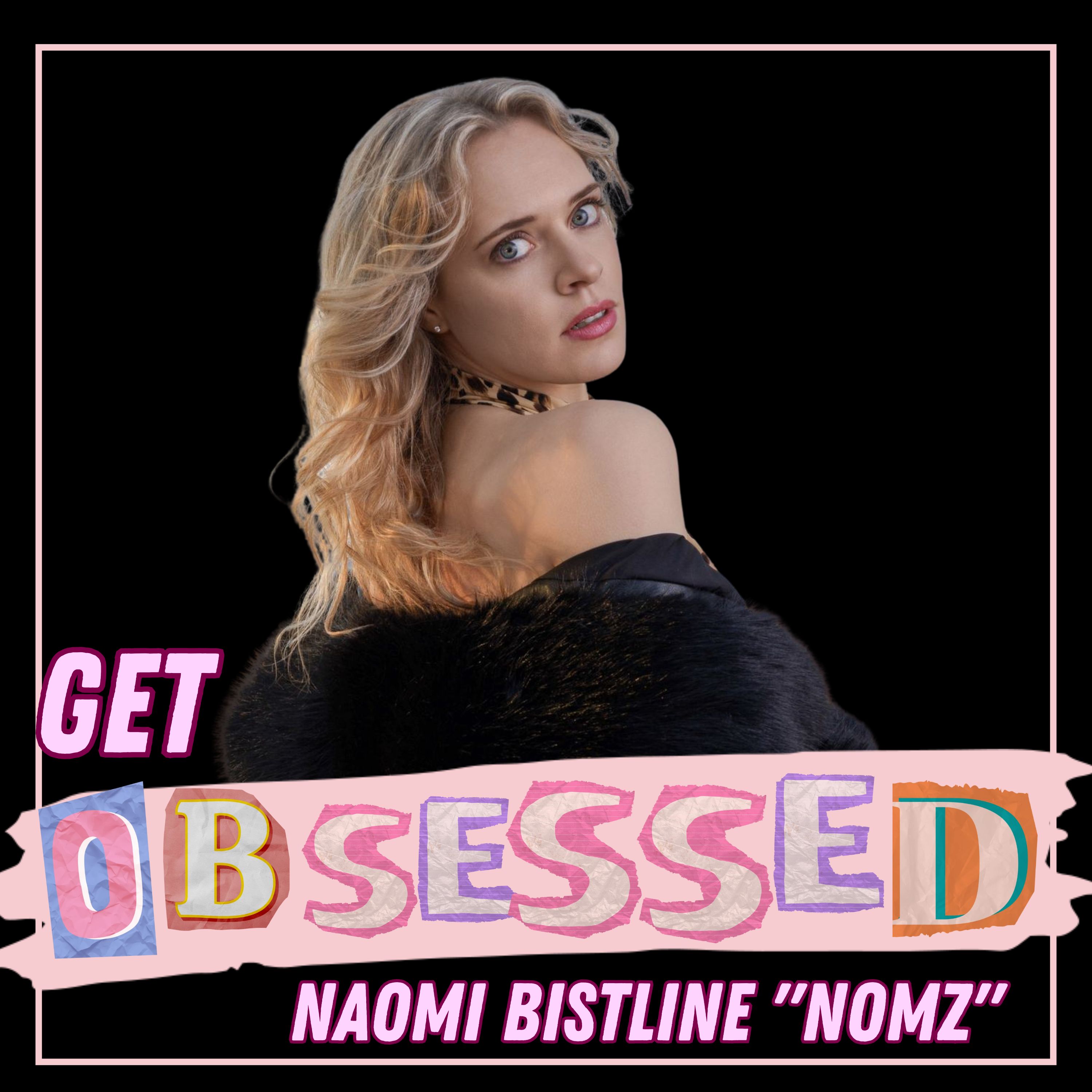
In this episode of the Get Obsessed podcast, Julie Lokun and Mika sit down with Naomi “Nomz” Bistline, who was raised in the FLDS and later appeared in the Netflix documentary Trust Me: The False Prophet, to talk about growing up in a high control society and how she reclaimed her own story. Naomi explains what the FLDS is, why she now sees it as a cult rather than a church, and how obedience, separation from family, and assigned relationships shaped her childhood. She describes being told at 19 that she belonged to Samuel Bateman, how his control wore down her sense of self, and why victims sometimes move closer to the person who poses the greatest threat. She also shares the events that led to her arrest, her nearly two years in pretrial detention, and her testimony against Sam. Naomi calls prison both the best and worst thing that ever happened to her. It gave her space to think for herself, to read over 300 books, and to discover music. The conversation closes with her life today,
Dig into the incredible fighting, feeding, and flying capabilities of hummingbirds. Uploaded 08-04-21 -- In just a matter of seconds, hummingbirds can perform astonishing aerial acrobatics, eat lunch in midair, pollinate a flower, even escape threats while upside-down. And they can do this all while achieving sustained hovering flight— an aerial feat no other bird can perform. How do they do it? Kristiina J. Hurme and Alejandro Rico-Guevara explore the incredible flying capabilities of hummingbirds. Lesson by Kristiina J. Hurme and Alejandro Rico-Guevara, directed by Lisa Vertudaches. Support Our Non-Profit Mission ---------------------------------------------- Support us on Patreon: http://bit.ly/TEDEdPatreon Check out our merch: http://bit.ly/TEDEDShop ---------------------------------------------- Connect With Us ---------------------------------------------- Sign up for our newsletter: http://bit.ly/TEDEdNewsletter Find us on Twitter: http://bit.ly/TEDEdTwitter Peep us on Instagram
Sometimes the strangest things on Earth...Are happening just below its surface. From tunnels carved by giant sloths to desperate attempts to stop the dead from rising again - these are the weird and wonderous tales of the sea beasts, hidden cities and impossible creatures that lurk beneath us. Thank you to our experts who contributed to this episode: Austin Rogers, Sabina Magliocco, Greg Jackson, Brandy Shillace, Mitch Horowitz, Kathleen Tracy, Cord Whitaker, Don Wildman, Joseph Dituri, Rebecca Lieb, Hakeen Oluseyi, David Mizejewski, Sami Jarroush, Jason Horton, Ramy Romany, and Kavitha Davidson.
In this final episode of Crash Course Chemistry, Hank takes us on a tour of The Global Carbon Cycle and how it all works. From Carbon Fixation to Redox Reactions, it's all contained within! Pssst... we made flashcards to help you review the content in this episode! Find them on the free Crash Course App! Download it here for Apple Devices: https://apple.co/3d4eyZo Download it here for Android Devices: https://bit.ly/2SrDulJ -- Table of Contents The Carbon Cycle 0:51 Carbon Fixation 2:55 Cellular & Macroscopic Respiration in Living Things 4:59 Deposition in Limestone & Fossil Fuels 6:27 Redox Reactions Everywhere 4:27 Excessive Use of Fossil Fuels = Possible End of Humanity 7:45 -- Crash Course is on Patreon! Want to find Crash Course elsewhere on the internet? Facebook - http://www.facebook.com/YouTubeCrashCourse Twitter - http://www.twitter.com/TheCrashCourse Instagram - https://www.instagram.com/thecrashcourse/ CC Kids: http://www.youtube.com/crashcoursekids
Pavel joins me to unpack Donald Trump’s UFO comments on 60 Minutes. I’ve gone back through his interviews since 2019 to see how his F-22 story has changed and what to make of those four words about a secret UFO programme: “I haven’t heard that.” We also listen to Jake Barber’s Stockholm remarks about the egg-shaped object he says he lifted by helicopter. Which parts did he witness himself, what was he told afterwards, and how much do Skywatcher’s unfulfilled promises affect how we hear him now? Check out - https://opensourcereality.org/ Spotify: https://open.spotify.com/show/7wnXUAQ3vwdsX1BoyaEvjZ Buy Me a Coffee: https://www.buymeacoffee.com/ThatUFOPodcast Connect with the show: Twitter: @UFOUAPAM Facebook, Instagram & YouTube: That UFO Podcast YouTube: YouTube.com/c/ThatUFOPodcast (https://youtube.com/c/ThatUFOPodcast) Email: [email protected] All links: https://linktr.ee/ufouapam Official Website: ThatUFOPodcast.com (https://thatufopodcast.com/) Thanks for listening, Andy
View full lesson: http://ed.ted.com/lessons/why-neutrinos-matter-silvia-bravo-gallart Uploaded 28-04-15 Elementary particles are the smallest known building blocks in the universe—and the neutrino is one of the smallest of the small. These tiny neutrinos can tell us about the furthest reaches and most extreme environments of the universe ... but only if we can catch them. Sílvia Bravo Gallart details how the IceCube telescope in Antarctica is working to do just that. Lesson by Sílvia Bravo Gallart, animation by Steff Lee.
Cells need energy to power the chemical reactions that keep their microscopic cities running, and most of that energy comes from a chemical called ATP. In this episode of Crash Course Biology, we’ll learn how our cells use energy, what an enzyme’s role is in chemical reactions, and what makes a reaction exergonic or endergonic. Chapters: Cellular Cities 00:00 What Is Energy? 1:18 The Laws of Thermodynamics 2:22 ATP 4:07 Chemical Reactions 6:42 Enzymes 9:13 Metabolic Pathways 11:04 Review & Credits 12:09 This series was produced in collaboration with HHMI BioInteractive, committed to empowering educators and inspiring students with engaging, accessible, and quality classroom resources. Visit https://BioInteractive.org/CrashCourse (https://biointeractive.org/CrashCourse) for more information. Are you an educator looking for what NGSS Standards are covered in this episode? Check out our Educator Standards Database for Biology here: https://www.thecrashcourse.com/biologystandards Check out
From a single-celled common ancestor, evolution has brought us all of Life’s Greatest Hits — including butterflies, beetles, bacteria, and human beings. In this episode of Crash Course Biology, we’ll learn how evolution explains life’s unity and diversity. Along the way, we’ll explore the fishy origins of a giraffe’s neck, and find out what a cat’s paw and your own arm have in common. Chapters: Where Whales Came From 00:00 What Is Evolution? 1:41 Genetic Mutations 3:30 Adaptations & Trade-offs 5:10 Evidence of Evolution 7:58 Unicellularity vs. Multicellularity 10:23 Did Humans Evolve From Monkeys? 11:36 Review & Credits 12:30 This series was produced in collaboration with HHMI BioInteractive, committed to empowering educators and inspiring students with engaging, accessible, and quality classroom resources. Visit https://BioInteractive.org/CrashCourse (https://biointeractive.org/CrashCourse) for more information. Are you an educator looking for what NGSS Standards are covered in this e
Chris and Xand van Tulleken continue their conversation with Katherine Whitcroft, ear, nose, and throat surgeon at Sheffield Children's Hospital and co-director of the Sheffield Chemosensory Research Lab. Together, they hear what drew her to the nose, and further explore nasal polyps. They look at nose reshaping procedures, and the medical and aesthetic reasons behind them. If you'd like to share your thoughts on this or any other topic covered on the podcast, you can email us at [email protected] Presenters: Drs Chris and Xand van Tulleken Guest: Katherine Whitcroft Producer: Maia Miller-Lewis Researcher: Grace Revill Executive Producer: Rami Tzabar Visual Producer: Leon Gower Technical Lead: Reuben Huxtable Digital Lead: Richard Berry Composer: Phoebe McFarlane Sound Design: Melvin Rickarby At the BBC: Assistant Commissioner: Greg Smith Commissioning Editor: Rhian Roberts A Loftus Media production for BBC Radio 4.
Robert Greene, author of The 48 Laws of Power, Mastery, and The Laws of Human Nature, nearly died of a stroke in 2018. It left him unable to type, so he spent the next seven years writing his new book, The Law of the Sublime, by hand. Michael speaks with Robert about what coming close to death did to his mind, why he believes humans need transcendent experiences as much as food and shelter, how comfort and old grudges keep our world small, and the everyday rituals he uses to wake back up to it. They discuss: (00:00) Cold open (00:59) The stroke (04:56) What nearly dying does to you (07:12) The book he waited 20 years to write (12:16) What is the sublime? (15:31) Finding amazement in his backyard (24:26) A need as deep as food (28:26) The lost rites of passage (33:18) How to make your own rituals (36:49) 40 minutes of meditation a day (45:37) What boredom is good for (50:31) How adults can slow down (53:36) Why nature matters (58:58) Choose discomfort (1:02:48) Death and the afterlife (
Welcome to What's Up Docs?, the podcast where doctors and identical twins Chris and Xand van Tulleken explore the ideas shaping our health and wellbeing. In this episode, they turn their attention to the nose, an organ we use with every breath but rarely stop to think about. Joined by Miss Katherine Whitcroft, ear, nose, and throat surgeon at Sheffield Children's Hospital and co-director of the Sheffield Chemosensory Research Lab, Chris and Xand explore how the nose is built and what it does for us, why we produce so much mucus and where it goes, and why our noses run when we cry or eat spicy food. The conversation also covers how our sense of smell changes across our lives, the most common things that go wrong with the nose, and what the evidence says about treatments such as nasal sprays. If you want to get in touch, you can email us at [email protected]. Presenters: Drs Chris and Xand van Tulleken Guest: Miss Katherine Whitcroft Producer: Maia Miller-Lewis Researcher: Grace Revi
Have you ever felt like you don't really deserve your success? Maybe you got a promotion, landed a great job, or accomplished something impressive, but instead of feeling proud, you worry that you've somehow fooled everyone into thinking you're more capable than you really are. You wonder if it's only a matter of time before someone figures out you don't know what you're doing. That's often called imposter syndrome, and it can affect even highly successful, accomplished people. But here's an interesting twist: What if feeling like an imposter isn't necessarily a bad thing? What if those feelings of self-doubt are actually a sign that you're challenging yourself, growing, and doing something that matters to you? According to Dr. Jill Stoddard, the goal isn't necessarily to eliminate self-doubt but to stop letting it dictate what you do. She is a mental health care provider and author of the book Imposter No More: Overcome Self-Doubt and Imposterism to Cultivate a Successful Career (http
Physicists have recreated key aspects of the Schwinger effect using ultracold rubidium atoms, offering a new way to study how strong electric fields can generate matter–antimatter pairs. Their experiment also revealed unexpected patterns in particle creation, opening new possibilities for exploring quantum field theory in the laboratory. This episode includes AI-generated content.
How did enormous black holes emerge so quickly in the early universe? Observations from the James Webb Space Telescope suggest that dense, ancient star clusters may have provided the ideal conditions for creating massive black hole seeds. Researchers are exploring how these environments could explain the rapid growth of supermassive black holes and shed light on the mysterious objects known as little red dots. The findings offer a new perspective on one of astronomy’s biggest unanswered questions. This episode includes AI-generated content.
Just how small are atoms? And what's inside them? The answers turn out to be astounding, even for those who think they know. This fast-paced animation uses spectacular metaphors (imagine a blueberry the size of a football stadium!) to give a visceral sense of the building blocks that make our world. Lesson by Jonathan Bergmann, animation by Cognitive Media.
In this episode: Raised garden beds Advice on lining treated-pine vegetable beds, including food-safe PE, LDPE or PVC options and contacting Modbox about food-grade liners. Lilly pilly beetle How to manage recurring beetle damage on lilly pillies, including the discussion of Eco-Neem and Eco-Oil, regular feeding and improving soil health. Building better vegetable beds Do you need every soil additive on the market? Keith discusses the importance of building a healthy, nutrient-rich soil rather than overcomplicating the process with too many products. Pruning camellias How much can you safely reduce an established camellia? Advice includes staged pruning and cutting above dormant buds to encourage new growth. Growing strawberries When to feed, how to maintain productive plants and how to propagate new plants from the first and second runners. High-pH bore water A useful discussion about testing total dissolved solids (TDS), managing irrigation and improving soil conditions where bore wa
In a clearing where an ancient Mayan city once stood, the Montezuma Oropendola perches and sings. His courtship display is astonishing: he swings by his feet and sings, his tail describing a golden pendulum – the very source of his name in Spanish – oropendola. ¡Esuche este episodio en BirdNote en Español (https://www.birdnote.org/podcasts/birdnote-en-espanol/oropendola-de-moctezuma)! BirdNote is supported by The Cornell Lab of Ornithology (https://allaboutbirds.org/), dedicated to conserving Earth’s biodiversity through education and science. More info and transcript at BirdNote.org (https://www.birdnote.org/podcasts/birdnote-daily/montezuma-oropendola-golden-pendulum). Want more BirdNote? BirdNote is a nonprofit. Hosted by Simplecast, an AdsWizz company.
SpaceX Daily Falcon 9 lifts a classified payload from Vandenberg tonight while new medium-lift vehicles near first flights. Top News Falcon 9 targets Monday evening liftoff from Vandenberg for USSF-627 The mission carries a classified United States Space Force payload and is scheduled for 7:07 PM PST on November 9 from SLC-4E, inside a window that runs until 11:03 PM PST. Booster B1103 flies its seventh mission and will land on the droneship Of Course I Still Love You. ... Sources: nasaspaceflight.com (https://www.nasaspaceflight.com/2026/11/launch-preview-11092026/) · teslanorth.com (https://teslanorth.com/2026/11/09/spacex-grok-hardware-debris-inspection-accuracy/) · ad-hoc-news.de (https://www.ad-hoc-news.de/boerse/news/unternehmensnachrichten/spacex-wins-nasa-nod-for-lunar-comms-as-starship-s-business-case-takes-shape/70481610) · thedefensepost.com (https://thedefensepost.com/2026/11/09/russia-military-comms-ukraine/) · firstpost.com (https://www.firstpost.com/vantage/pakistan-air-
Starship Flight 15 Preview: The First Ship Catch Attempt aims to catch an orbital Ship at the tower for the first time. Segment 1 — The Open Starship Flight 15 is the first flight on which SpaceX plans to catch both stages at the tower — the Super Heavy booster on the way back, and then, more than twenty hours later, the Ship itself after it has reached orbit. That second catch has never been tried. ... Sources: spacex.com (https://www.spacex.com/launches/starship-flight-15) · thespaceroad.com (https://thespaceroad.com/articles/how-to-watch-starship-flight-15/) · en.wikipedia.org (https://en.wikipedia.org/wiki/Starship_flight_15) Chapters: 0:00 Introduction 5:28 The Engineering Angle 12:37 The Counterpoint 19:00 Closing Apple Podcasts shows new listeners the stars from only a handful of SpaceX Daily ratings so far, so each one counts. If the show is worth your morning, open it in Apple Podcasts, scroll to Ratings & Reviews and tap a star. Rate SpaceX Daily on Apple Podcasts (https://po
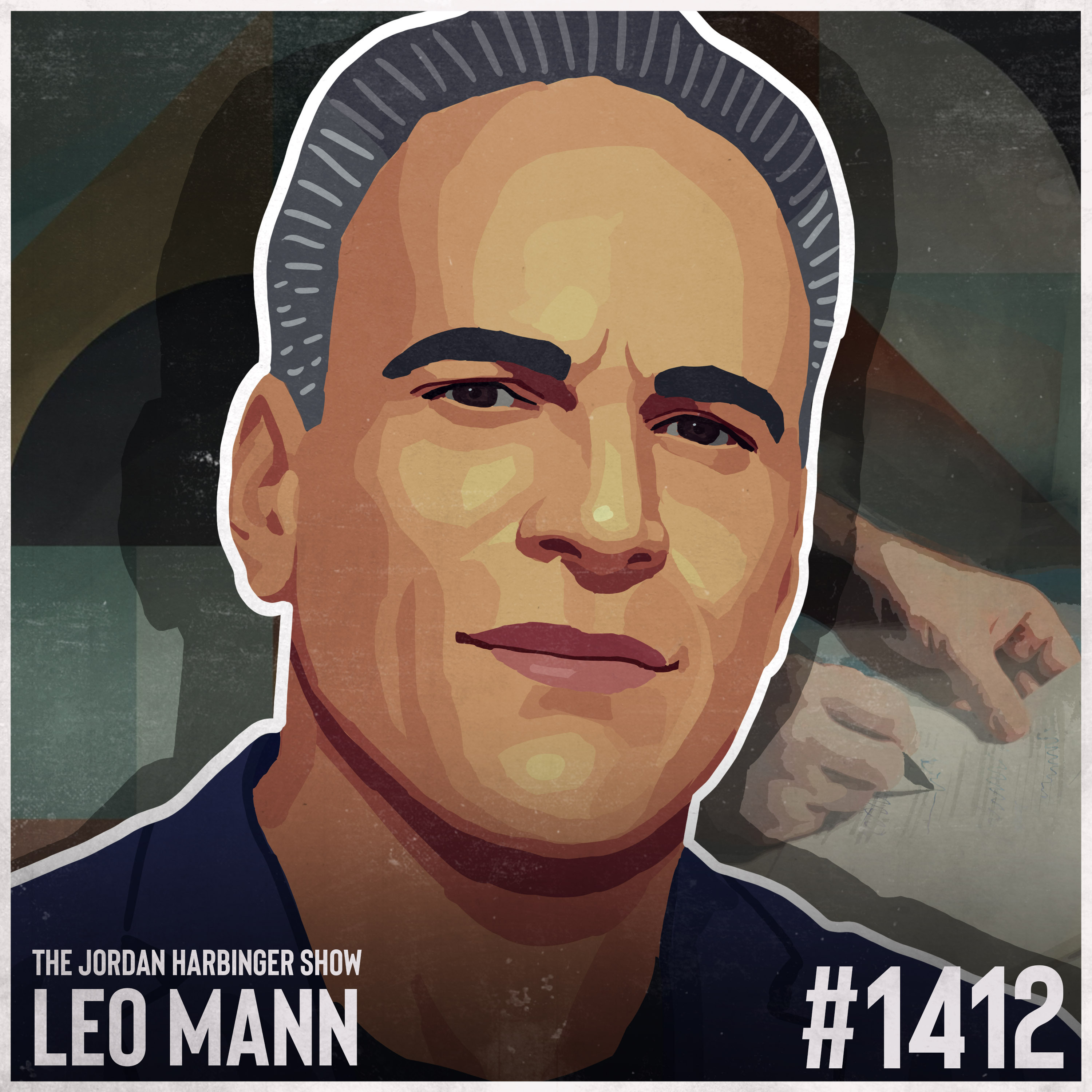
Four seconds of awkwardness or $7,000 in regret? Lawyer Leo Mann reveals how to spot (and strike) contract traps before you sign on the dotted line. Full show notes and resources can be found here: jordanharbinger.com/1412 (https://jordanharbinger.com/1412) What We Discuss with Leo Mann: Why the most boring, “standard” contract language is often the most dangerous — and how four stacked psychological traps (social awkwardness, a decision that feels already made, the authority gap, and manufactured confusion) keep smart people from reading what they sign. How a salesperson’s verbal promises can vanish the moment you sign, thanks to integration (or merger) clauses — and why anything you were told out loud needs to be written into the contract before your pen ever touches the paper. What employees should know about invention assignment agreements and non-competes — from listing preexisting side projects (even ideas) on the PIIA schedule to negotiating more consideration, a shorter term, a
Tonight we have unsettling faceless entities, phantom music, mysterious zooming lights and much more. Keep it spooky and enjoy! Season 21 Episode 53 of Monsters Among Us Podcast, true paranormal stories of ghosts, cryptids, UFOs and more, told by the witnesses themselves. SHOW NOTES: Tonight's Sponsor - Quince - Luxury essentials, honestly priced & sustainably made - Visit Quince.com/mau (https://quince.com/mau) for free shipping and 365-day returns. MAU Merch Shop - https://www.monstersamonguspodcast.com/shop MAU Discord - https://discord.gg/ybjc9KUagY Monsters Among Us Junior on Spotify - SpaceX info - https://www.spacex.com/launches Music from tonight's episode: White Bat Audio Songs: Ophelia Malibu
In this episode of Crash Course Biology, we’ll learn about the ways population genetics reveals how groups of living things evolve—by comparing genetic similarities and differences. We’ll discover the most genetically diverse species of all (hint: it’s not us), find out why “race” isn’t the biologically valid category we’ve made it out to be, and learn there’s much more in our DNA that we share than that sets us apart. Chapters: Population Genetics 00:00 Genetic Diversity 2:34 Levels of Genetic Diversity 3:56 Melanin Variation 5:57 Clines & Ancestry 8:13 Race & Society 8:51 Review & Credits 11:32 This series was produced in collaboration with HHMI BioInteractive, committed to empowering educators and inspiring students with engaging, accessible, and quality classroom resources. Visit https://BioInteractive.org/CrashCourse (https://biointeractive.org/CrashCourse) for more information. Are you an educator looking for what NGSS Standards are covered in this episode? Check out our Educator