Listen through the publisher, then discuss the episode here or arrange an in-person Roundtable. Your city determines where to meet.
Roundtables are designed for groups of four, with a shared subject and room for everyone to speak. Come for discussion, with no dating expectation.
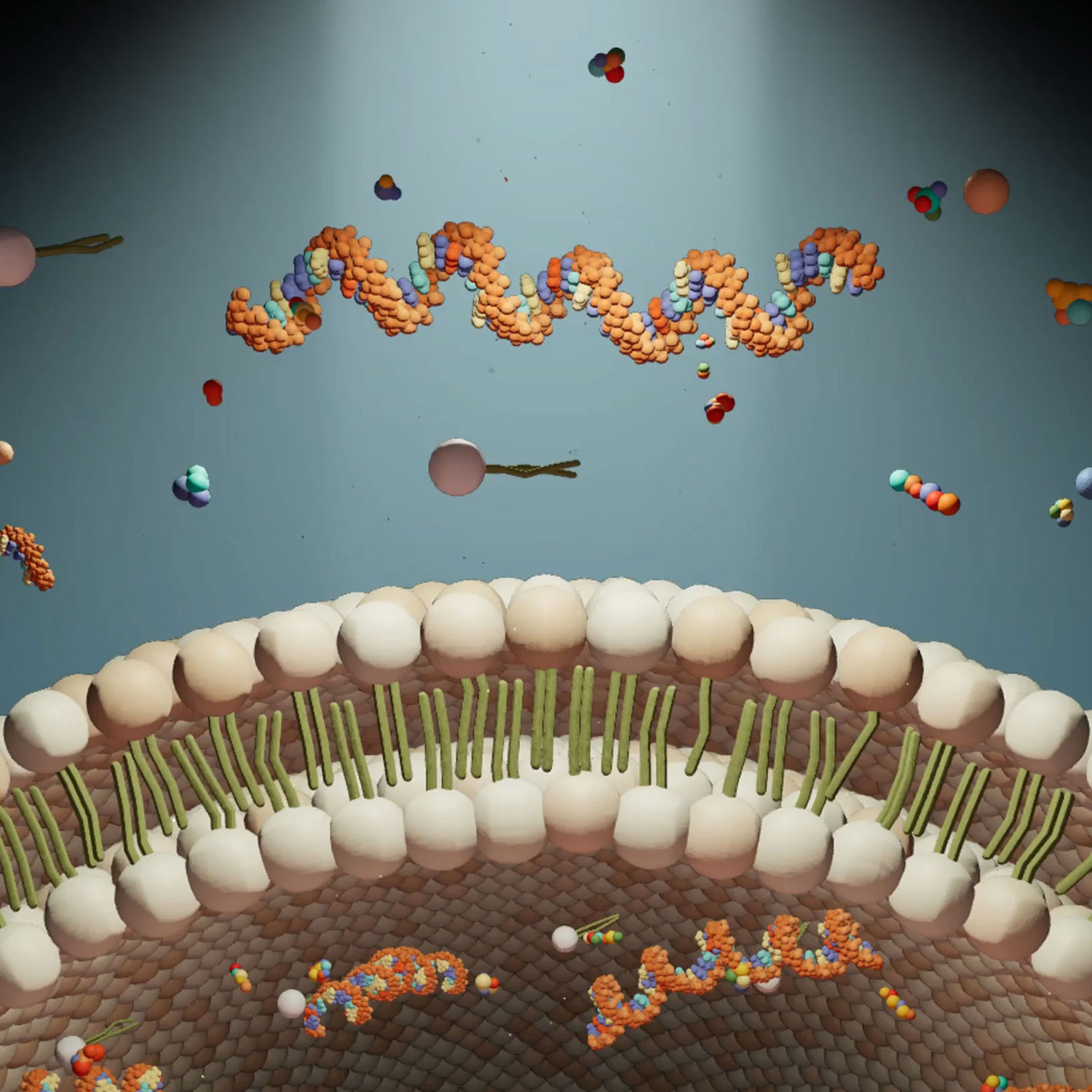
After over a century of studying introspection in humans and animals, researchers are beginning to explore the phenomenon in unlikely new subjects: large language models. These systems, which are based on mathematical structures called neural networks, excel at cognitive tasks that until recently seemed exclusive to humans. Can they introspect as well? On this episode of The Quanta Podcast, host Samir Patel speaks with staff writer Ben Brubaker about “injecting” thoughts into LLM neural networks — and what researchers are doing to map out AI’s capacity for introspection. This topic was covered in a recent story (https://www.quantamagazine.org/new-research-tests-whether-ai-models-know-their-own-thoughts-20261104/) for Quanta Magazine.
Episode information is provided by the publisher. Listening takes place on the publisher’s service.
In Brought to You By: How Corporations Warped the Truth, Conned the Public, and Broke Democracy (https://bookshop.org/a/12343/9781639736331), Amy Westervelt exposes the plot hidden within the familiar story of science denial. Over the last century, Big Industry has built a vast apparatus of think tanks, lobbyists, sponsored university labs, and obliging news networks to con the public and fool decision-makers, poisoning the informational ecosystem and warping the nature of truth along the way. With her signature wit and incisiveness, Westervelt introduces the masterminds of corporate misinformation: Herb Schmertz, the public relations pioneer who made Mobil “the thinking man's oil company;” Richard Edelman, the PR guy who helped the dairy industry vilify oat milk; David Petraeus, the disgraced spy chief using counter-insurgency tactics to discredit climate science; and many more. She shows how these company men have worked to usher in an era of unprecedented corporate control. Only by
Fear has a way of quietly taking control of your life. It convinces you to stay where you are, avoid difficult conversations, delay decisions, tolerate situations you know aren’t good for you, and settle for a life that is far smaller than the one you are capable of living. In this episode of The Strong Life Project, we explore how fear impacts your thinking, your relationships, your career, your leadership, and ultimately your ability to live a meaningful life. Fear doesn’t always look like panic. Sometimes it looks like procrastination, overthinking, making excuses, people pleasing, avoiding conflict, or constantly waiting for the perfect moment. The problem is that every time you allow fear to make a decision for you, you reinforce the belief that you are incapable of handling what comes next. Over time, this creates a pattern of avoidance that undermines confidence, resilience, emotional strength, and personal growth. Learning to manage fear doesn’t mean becoming fearless. It means
I Ate 1000 Sardines in a Month, Video: https://youtu.be/_Th54GWd8WY How Sardines Supercharged my Metabolism, Letter: https://staycuriousmetabolism.substack.com/p/the-weird-anti-insulin-hormone-that?r=40ekz2 Omega-6/3 Ratio Can Be Misleading, Letter: https://staycuriousmetabolism.substack.com/p/how-we-got-omega-fat-wrong-this-will?r=40ekz2 Best Omega-3 for the Brain, Letter: https://staycuriousmetabolism.substack.com/p/why-omega-3-supplements-dont-work?r=40ekz2 If you want to get your Omega-3 via Omega Quant, click on this link: https://omegaquant.com/ref/864 Fatty Acid Research Institute: https://www.faresinst.org (https://www.faresinst.org/) Description: In this conversation, I sit down with Professor William Harris, one of the world’s leading experts on omega-3 and omega-6 fatty acids, to cut through confusion around fish oil, seed oils, cardiovascular health, and brain health. We break down what omega-3 and omega-6 fats actually are, why their chemistry matters, and how they’re conv
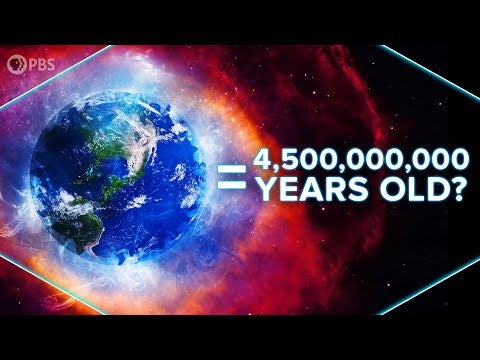
PBS Member Stations rely on viewers like you. To support your local station, go to: http://to.pbs.org/DonateSPACE ↓ More info below ↓ Uploaded 07-04-20 Sign Up on Patreon to get access to the Space Time Discord! Sign up for the mailing list to get episode notifications and hear special announcements! Check out the Space Time Merch Store In astronomy we talk about billions of years like it’s no big deal. But how can we be sure about timescales so far beyond the capacity for human intuition? Our discovery of what we now call deep time is very recent - as recent as our discovery of the true spatial vastness of our universe. And it came as scientists tried to measure the age of the Earth. What they found was as shocking and humbling as anything seen through the telescope. Hosted by Matt O'Dowd Written by Dan Falk and Matt O'Dowd Graphics by Leonardo Scholzer, Yago Ballarini, and Pedro Osinski Directed by: Andrew Kornhaber Executive Producers: Eric Brown and Andrew Kornhaber End Credits Mus
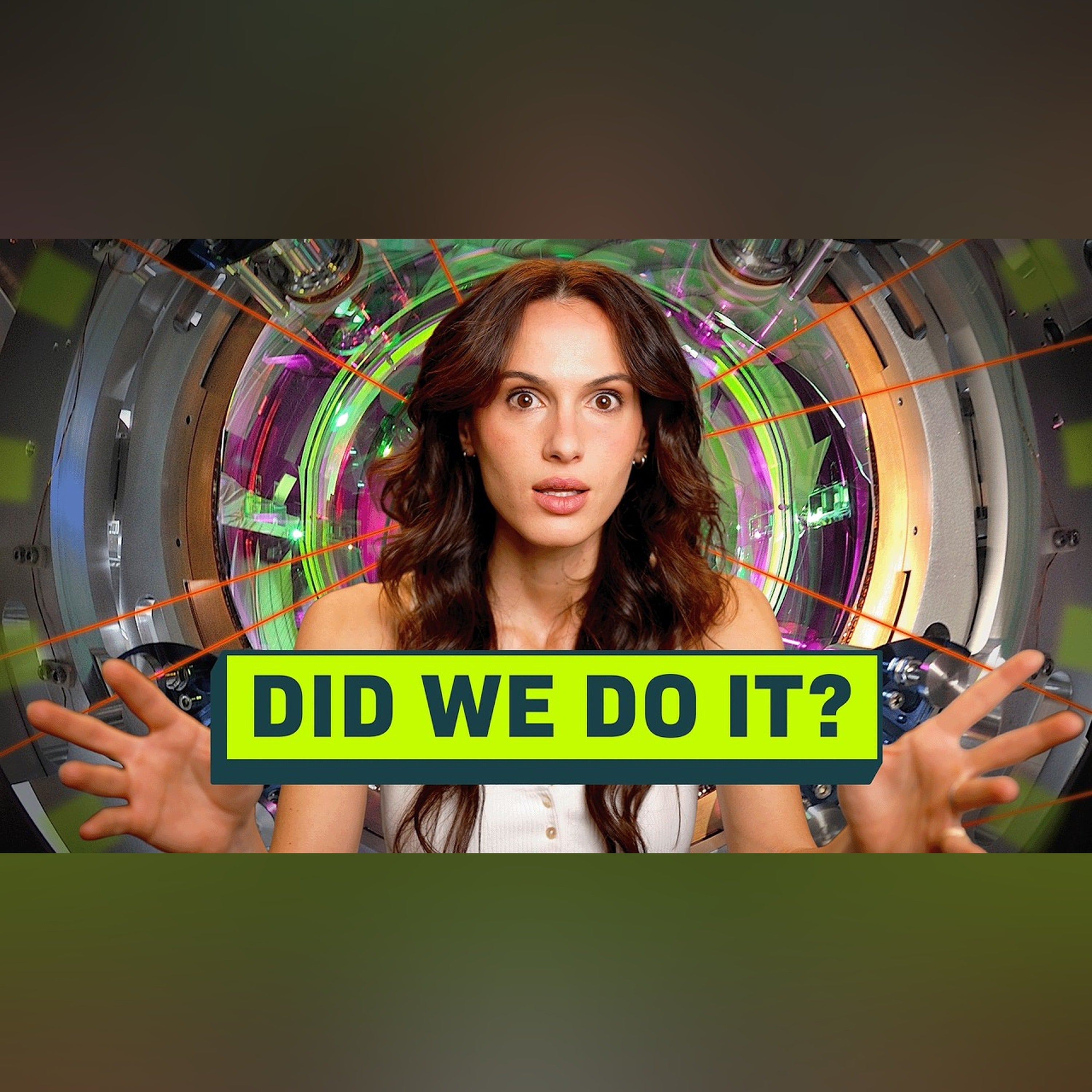
This machine found something scientists thought was impossible… If you want to talk to Mico, go to this link: https://bit.ly/CleoAbram-Copilot In the middle of the desert, miles from any city, are two HUGE concrete tubes. They’re part of a giant machine running the most precise experiment humans have ever built… Each tube is 4 kilometers long, and inside there’s a big metal pipe. And at the end of each pipe, scientists place some of the smoooooothest mirrors ever made. And then they fire a powerful laser that gets split down each tube, bouncing it back and forth… building up more and more power… until… they bring those beams back together… to discover something that just 100 years ago scientists thought was impossible to find! Finding it took hundreds of scientists and over a billion dollars. But what did we find?? And what’s the cutting edge we’re finding NOW that makes those scientists want to build… AN EVEN BIGGER ONE? Let me show you… Chapters 00:00 What's the most precise experime
Scientists have developed a powerful computational method that could dramatically expand the world of two-dimensional materials. By examining thousands of crystal structures, researchers have uncovered promising candidates with unusual electronic and magnetic properties. The discovery could open new possibilities for next-generation electronics, spintronics, and nanotechnology, revealing how much potential remains hidden in materials we already know. This episode includes AI-generated content.
How did life begin? For researchers, pursuing an answer has been something of a saga. For decades, scientists have weathered sociological and scientific strife that challenged the fundamental approach to understanding the origins of life. Done arguing over which type of molecule started it all, a new wave of researchers are deconstructing what life is, does, and could be — and are even trying to create it themselves. On this episode of The Quanta Podcast, host Samir Patel speaks with writer Yasemin Saplakoglu on this new, deeply collaborative and interdisciplinary era, and what it could mean for understanding life on Earth and elsewhere. This topic was covered in a recent story (https://www.quantamagazine.org/the-evolving-story-of-how-chemistry-became-biology-20261112/) for Quanta Magazine.
Before he won a Fields Medal for his pioneering work balancing randomness and order, Yu Deng had to achieve equilibrium in his own life. The article Amid Life’s Chaos, a Meticulous Mathematician Finds Stability (https://www.quantamagazine.org/yu-deng-wins-the-fields-medal-2026-for-his-work-on-the-random-data-problem-20260723/) first appeared on Quanta Magazine.
The French mathematician Nicolas de Condorcet was a passionate believer in democracy, but he also discovered a frustrating paradox within it: A majority can sometimes vote itself into a logical loop. Mathematicians have now found that this “logical loop” maps onto a strange topological shape: the Klein bottle, a surface with no distinct inside or outside. On this episode of The Quanta Podcast, host Samir Patel speaks with writer Alex Stone about this new connection between this centuries-old voting paradox and the Klein bottle — and how it illustrates just how difficult it is to translate a group of individual preferences into a single choice. This topic was covered in a recent story (https://www.quantamagazine.org/how-voting-is-like-a-klein-bottle-20261026/) for Quanta Magazine.
Supporters should be consulted before major changes in their club's ownership or location.
Share your view, then see how readers voted. No sign-in required. This poll is shared across stories.
Do you agree or disagree?
Common Quandary
A Common Quandary to discuss
Another conversation to explore, separate from this news story.
Rich parents want to buy their public-school class an art teacher. Should the school say no?
Parents at a well-resourced public school raise enough money for art teachers and smaller classes. Nearby schools cannot raise comparable amounts, widening differences within the same district.
Can helping your own community become unfair to the larger one?