Listen through the publisher, then discuss the episode here or arrange an in-person Roundtable. Your city determines where to meet.
Roundtables are designed for groups of four, with a shared subject and room for everyone to speak. Come for discussion, with no dating expectation.
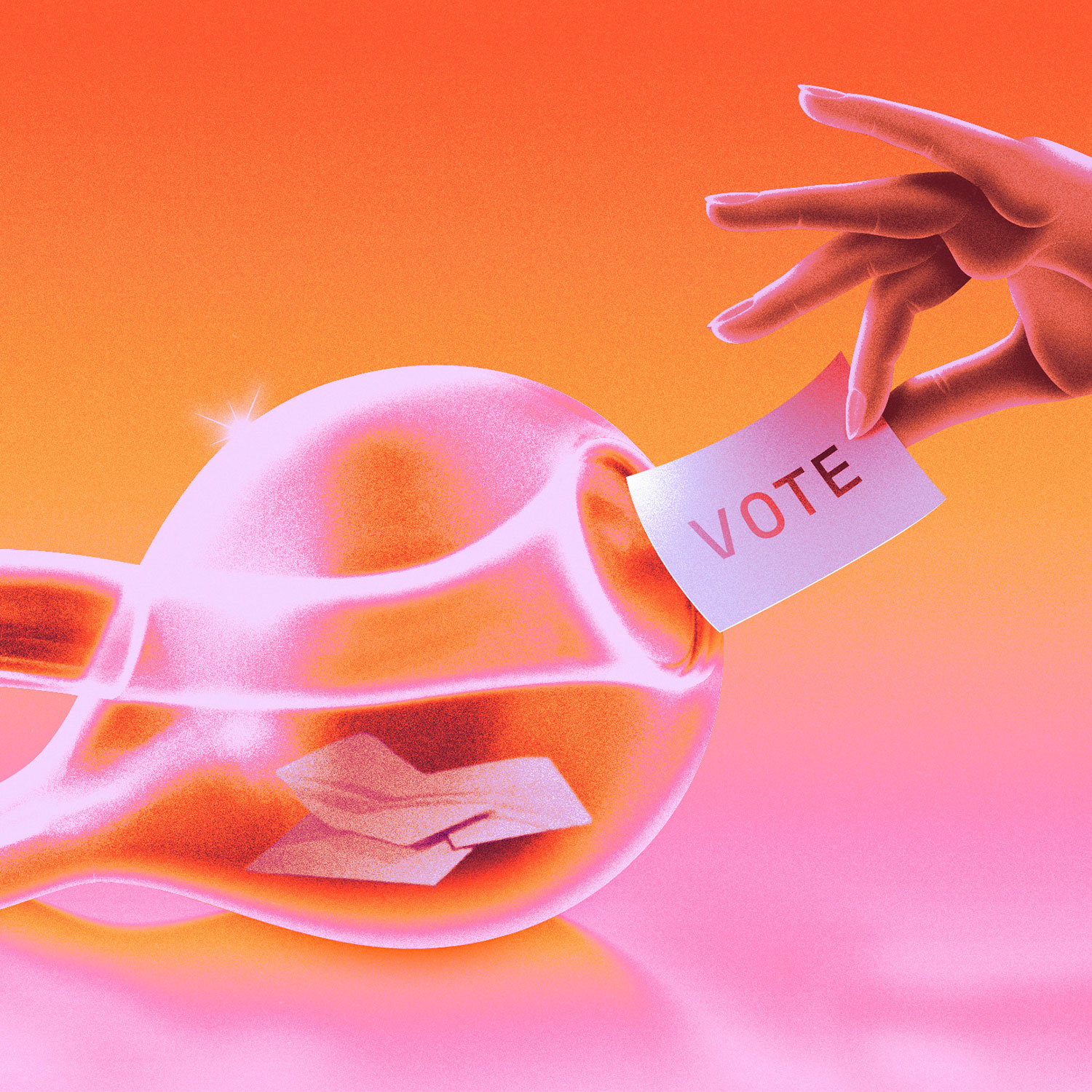
The French mathematician Nicolas de Condorcet was a passionate believer in democracy, but he also discovered a frustrating paradox within it: A majority can sometimes vote itself into a logical loop. Mathematicians have now found that this “logical loop” maps onto a strange topological shape: the Klein bottle, a surface with no distinct inside or outside. On this episode of The Quanta Podcast, host Samir Patel speaks with writer Alex Stone about this new connection between this centuries-old voting paradox and the Klein bottle — and how it illustrates just how difficult it is to translate a group of individual preferences into a single choice. This topic was covered in a recent story (https://www.quantamagazine.org/how-voting-is-like-a-klein-bottle-20261026/) for Quanta Magazine.
Episode information is provided by the publisher. Listening takes place on the publisher’s service.
In Brought to You By: How Corporations Warped the Truth, Conned the Public, and Broke Democracy (https://bookshop.org/a/12343/9781639736331), Amy Westervelt exposes the plot hidden within the familiar story of science denial. Over the last century, Big Industry has built a vast apparatus of think tanks, lobbyists, sponsored university labs, and obliging news networks to con the public and fool decision-makers, poisoning the informational ecosystem and warping the nature of truth along the way. With her signature wit and incisiveness, Westervelt introduces the masterminds of corporate misinformation: Herb Schmertz, the public relations pioneer who made Mobil “the thinking man's oil company;” Richard Edelman, the PR guy who helped the dairy industry vilify oat milk; David Petraeus, the disgraced spy chief using counter-insurgency tactics to discredit climate science; and many more. She shows how these company men have worked to usher in an era of unprecedented corporate control. Only by
One evening, a mother was putting her three-year-old son to bed, just as she'd done countless times before. She read him a story, rubbed his back, and waited for him to fall asleep. But for no apparent reason, she suddenly became overwhelmed by sadness. The feeling was so intense that she began to cry. Later that night, she woke to the unmistakable sounds of someone playing with her son's favorite building blocks. When she went to investigate, she found him sound asleep and his toys put away. But something in the room wasn't quite as she'd left it. Over the following nights, that same unexplained sadness returned. It wasn't until she thought about the time of year, and a heartbreaking loss she'd experienced a decade earlier, that she began to wonder whether these strange occurrences might be connected. Could someone she'd lost have found a way to visit? #RealGhostStoriesOnline #TrueGhostStories #SpiritVisitations #AfterDeathCommunication #SignsFromBeyond #ChildSpirit #ParanormalEncount
A kiss can be wonderful. It can create an instant connection, spark romance, or make you feel closer to someone. But a kiss can also have the opposite effect — and sometimes ruin everything. So what makes kissing so powerful, and why can one kiss make such a difference? There's some fascinating science behind it. https://www.scientificamerican.com/article/why-we-kiss/ We spend an enormous amount of time worrying about what's going to change. What's next? What's coming? How do we prepare? But what if we're paying attention to the wrong things? Some of the most important forces shaping our lives never change, and understanding them may be far more valuable than trying to predict the future — something humans are notoriously bad at. Morgan Housel, partner at The Collaborative Fund and author of Same as Ever: A Guide to What Never Changes (https://amzn.to/3SwWn6u) (https://amzn.to/3SwWn6u)), joins me to explain why the things that stay the same may be the most important things to understan
This is a Grave Talks CLASSIC EPISODE! Preserving history is one thing. Preserving it while uncovering ghostly activity is something else entirely. Saving the Old Properties is a nonprofit dedicated to rescuing endangered historic buildings across Indiana. Founded by Richard Allen and Dann Allen, the organization restores architectural treasures that might otherwise be lost to time. But as walls are opened and floors are lifted, something else often emerges—stories, energy, and sometimes spirits that never left. Joining us are Richard Allen, General Manager Kate Thornberg, and Historian Ted Martin, who share what it’s like to breathe life back into centuries-old structures—while encountering unexplained phenomena within their walls. From shadow figures and strange sounds to the emotional weight that lingers in historic spaces, this conversation explores where preservation meets the paranormal—and how history and hauntings often occupy the same foundation. For more information on Saving
Sign up for our newsletter and never miss an animation: http://bit.ly/TEDEdNewsletter Uploaded 16-01-14 View full lesson: http://ed.ted.com/lessons/the-infinite-hotel-paradox-jeff-dekofsky Want more? Try to solve the buried treasure riddle: https://www.youtube.com/watch?v=tCeklW2e6_E The Infinite Hotel, a thought experiment created by German mathematician David Hilbert, is a hotel with an infinite number of rooms. Easy to comprehend, right? Wrong. What if it's completely booked but one person wants to check in? What about 40? Or an infinitely full bus of people? Jeff Dekofsky solves these heady lodging issues using Hilbert's paradox. Lesson by Jeff Dekofsky, animation by The Moving Company Animation Studio.
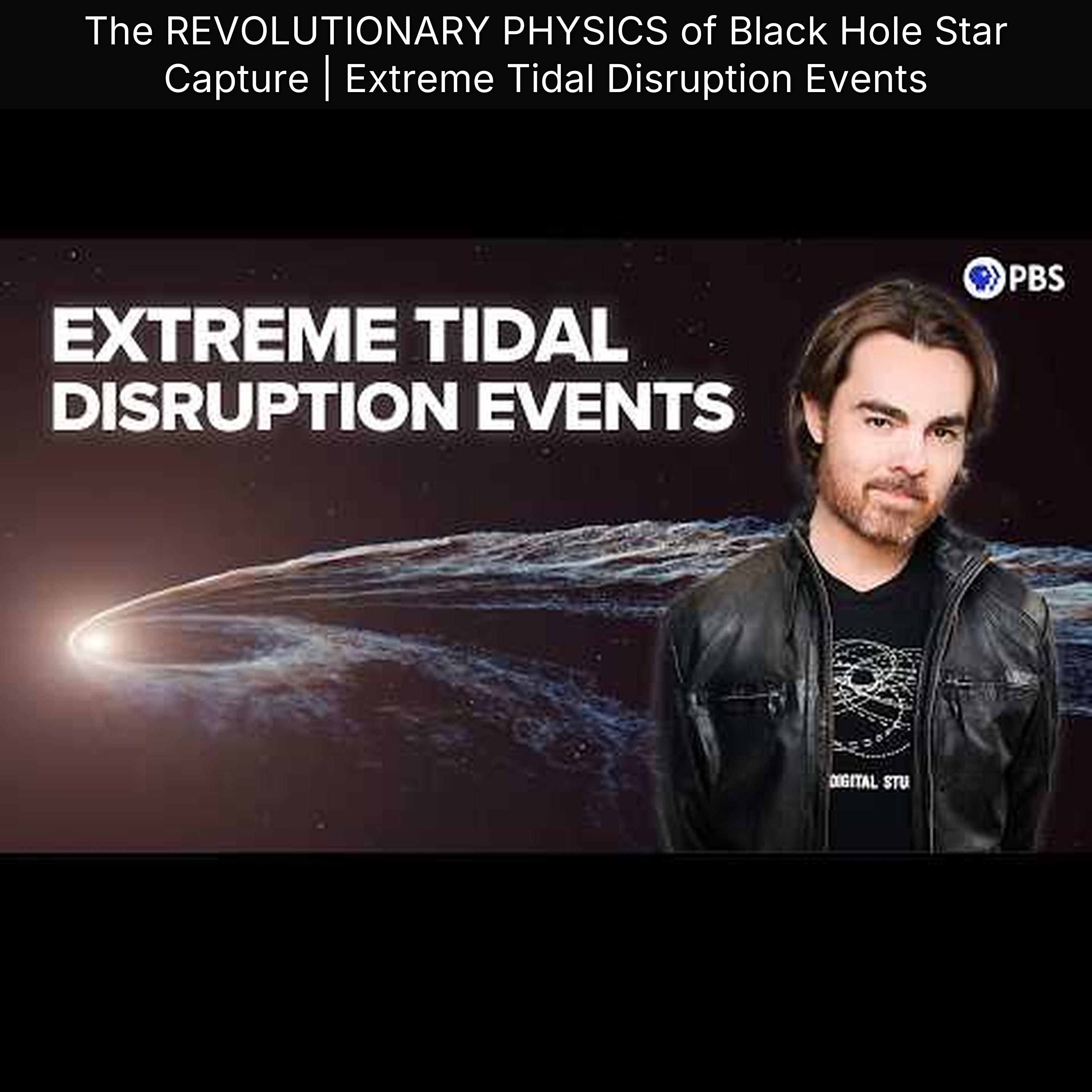
PBS Member Stations rely on viewers like you. To support your local station, go to:http://to.pbs.org/DonateSPACE Sign Up on Patreon to get access to the Space Time Discord! If you track the motion of individual stars in the ultra-dense star cluster at the very center of the Milky Way you’ll see that they swing in sharp orbits around some vast but invisible mass—that’s the Sagittarius A* supermassive black hole. These are perilous orbits, and sometimes a star wanders just a little too close to that lurking monster, leading to its utter destruction in the spectacular phenomenon known as a tidal disruption event. We’ve never seen a TDE in the Milky Way, but we’ve seen them in distant galaxies—and we now know how to spot stellar destructions so extreme that they reveal properties of the black hole itself. Check out the Space Time Merch Store Search the Entire Space Time Library Here: https://search.pbsspacetime.com/ Hosted by Matt O'Dowd Written by Matt Caplan, Andy Santarelli & Matt O'Dow
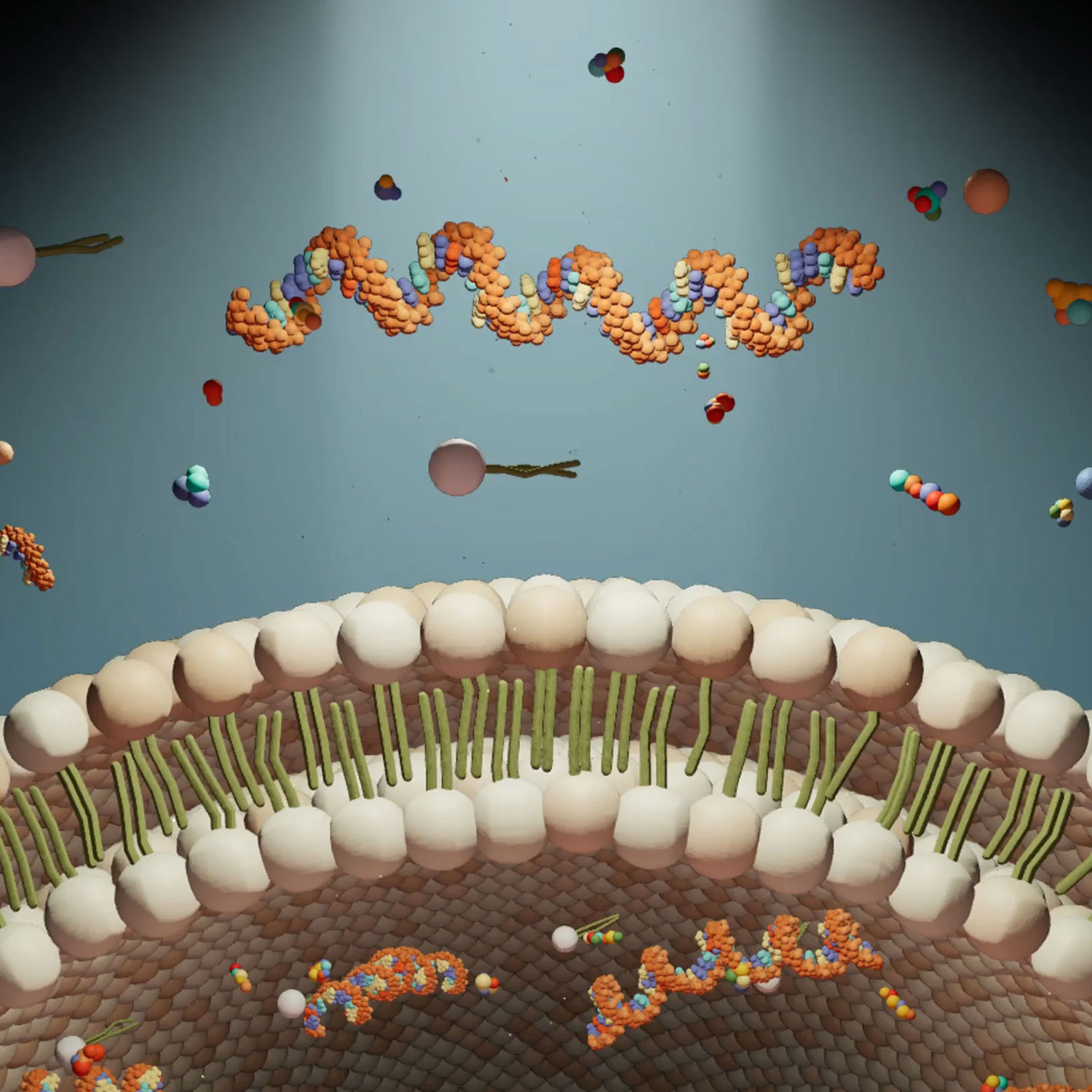
How did life begin? For researchers, pursuing an answer has been something of a saga. For decades, scientists have weathered sociological and scientific strife that challenged the fundamental approach to understanding the origins of life. Done arguing over which type of molecule started it all, a new wave of researchers are deconstructing what life is, does, and could be — and are even trying to create it themselves. On this episode of The Quanta Podcast, host Samir Patel speaks with writer Yasemin Saplakoglu on this new, deeply collaborative and interdisciplinary era, and what it could mean for understanding life on Earth and elsewhere. This topic was covered in a recent story (https://www.quantamagazine.org/the-evolving-story-of-how-chemistry-became-biology-20261112/) for Quanta Magazine.
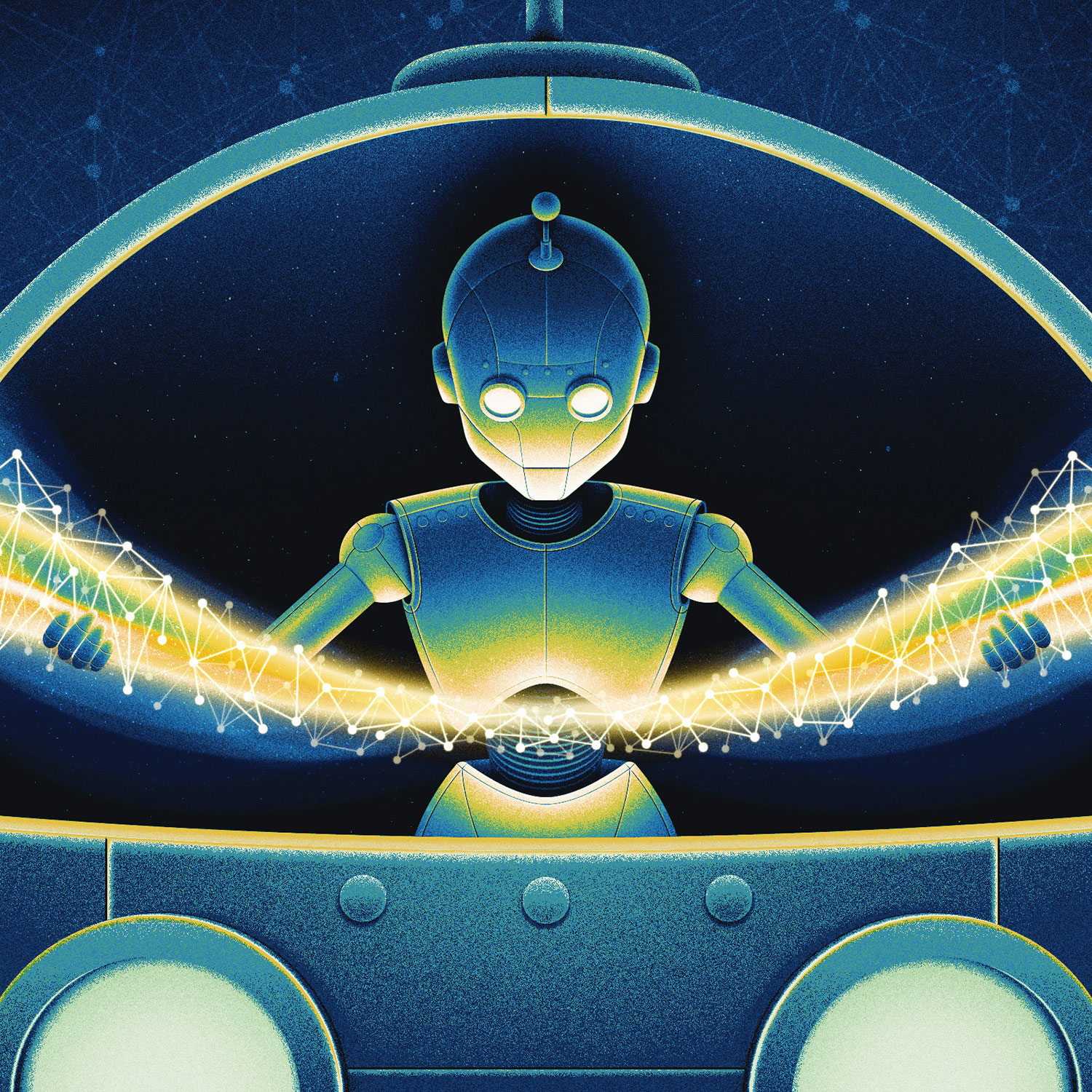
After over a century of studying introspection in humans and animals, researchers are beginning to explore the phenomenon in unlikely new subjects: large language models. These systems, which are based on mathematical structures called neural networks, excel at cognitive tasks that until recently seemed exclusive to humans. Can they introspect as well? On this episode of The Quanta Podcast, host Samir Patel speaks with staff writer Ben Brubaker about “injecting” thoughts into LLM neural networks — and what researchers are doing to map out AI’s capacity for introspection. This topic was covered in a recent story (https://www.quantamagazine.org/new-research-tests-whether-ai-models-know-their-own-thoughts-20261104/) for Quanta Magazine.
Before he won a Fields Medal for his pioneering work balancing randomness and order, Yu Deng had to achieve equilibrium in his own life. The article Amid Life’s Chaos, a Meticulous Mathematician Finds Stability (https://www.quantamagazine.org/yu-deng-wins-the-fields-medal-2026-for-his-work-on-the-random-data-problem-20260723/) first appeared on Quanta Magazine.
People should be able to challenge automated decisions that affect their opportunities.
Share your view, then see how readers voted. No sign-in required. This poll is shared across stories.
Do you agree or disagree?
Common Quandary
A Common Quandary to discuss
Another conversation to explore, separate from this news story.
Your friend asks for an honest review after every date. Do their dates deserve privacy?
A close friend sends detailed post-date reports and expects your advice about every message, kiss, and awkward silence. One recent date is someone you know professionally, who would be embarrassed to learn how much you have heard.
Where does friendship's need for advice become gossip about an unsuspecting person?