Listen through the publisher, then discuss the episode here or arrange an in-person Roundtable. Your city determines where to meet.
Roundtables are designed for groups of four, with a shared subject and room for everyone to speak. Come for discussion, with no dating expectation.
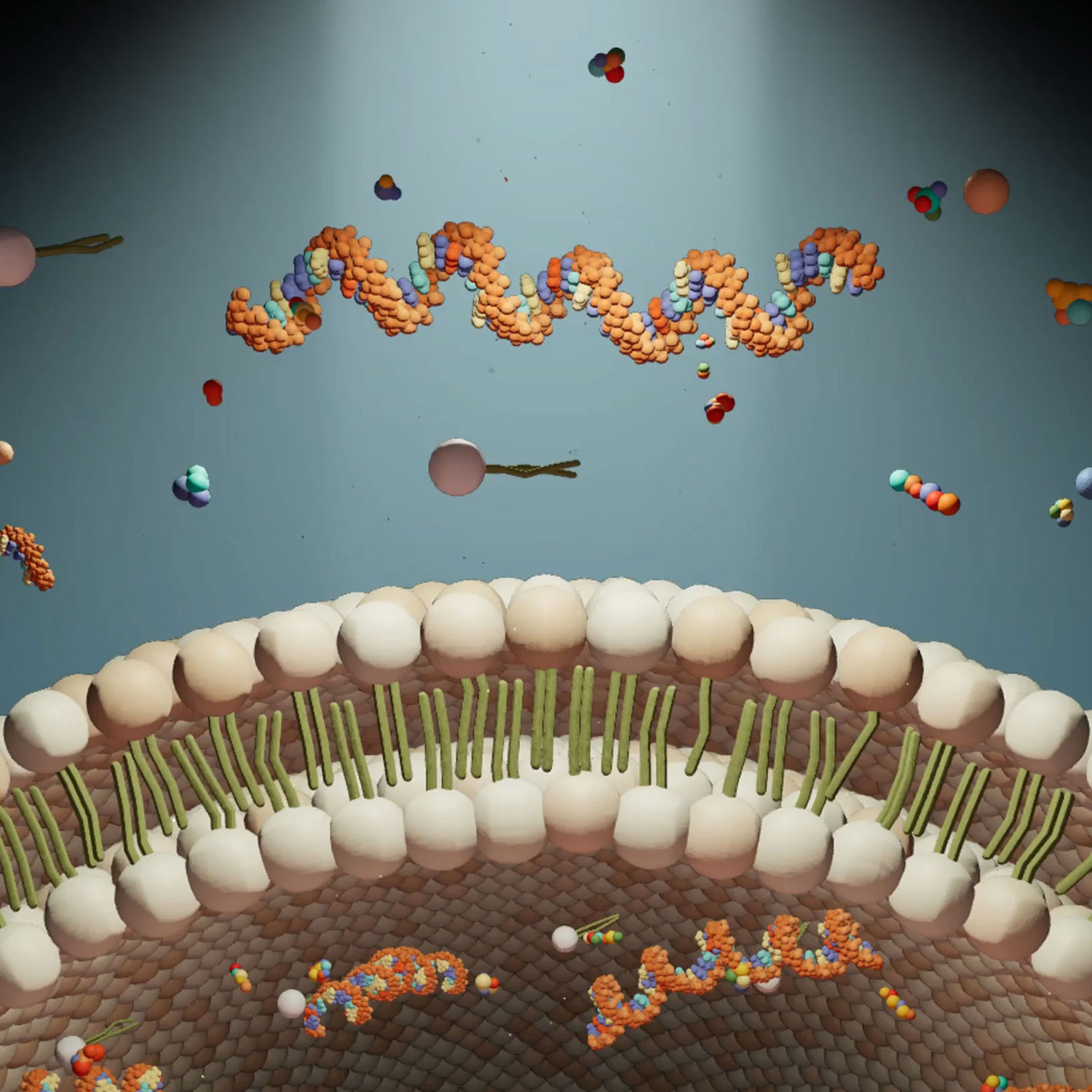
How did life begin? For researchers, pursuing an answer has been something of a saga. For decades, scientists have weathered sociological and scientific strife that challenged the fundamental approach to understanding the origins of life. Done arguing over which type of molecule started it all, a new wave of researchers are deconstructing what life is, does, and could be — and are even trying to create it themselves. On this episode of The Quanta Podcast, host Samir Patel speaks with writer Yasemin Saplakoglu on this new, deeply collaborative and interdisciplinary era, and what it could mean for understanding life on Earth and elsewhere. This topic was covered in a recent story (https://www.quantamagazine.org/the-evolving-story-of-how-chemistry-became-biology-20261112/) for Quanta Magazine.
Episode information is provided by the publisher. Listening takes place on the publisher’s service.
Where on Earth did life begin? Explore the hydrothermal vents in Earth’s crust as simple compounds gave way to complex life. Uploaded 26-08-19 -- Billions of years ago, simple organic compounds assembled into more complex coalitions that could grow and reproduce. At the time, Earth had widespread volcanic activity and a hostile atmosphere that made it almost devoid of a suitable environment for living things. So where did life begin? Luka Wright searches for the cradle of life that gave rise to the billions of species that inhabit our planet. Lesson by Luka Seamus Wright, directed by Nick Hilditch. Sign up for our newsletter: http://bit.ly/TEDEdNewsletter Support us on Patreon: http://bit.ly/TEDEdPatreon Find us on Twitter: http://bit.ly/TEDEdTwitter Peep us on Instagram: http://bit.ly/TEDEdInstagram View full lesson: https://ed.ted.com/lessons/the-mysterious-origins-of-life-on-earth-luka-seamus-wright Thank you so much to our patrons for your support! Without you this video would not
Thanks to Brilliant for supporting PBS. Learn more at: https://brilliant.org/spacetime Uploaded 17-12-19 PBS Member Stations rely on viewers like you. To support your local station, go to: http://to.pbs.org/DonateSPACE What if every single black hole that formed in our universe sparked the big bang of a new universe? Cosmological natural selection proposes exactly this - but even better, it claims to be able to test the hypothesis. Sign Up on Patreon to get access to the Space Time Discord! Check out the Space Time Merch Store Physicists have been struggling for some time to figure out why our universe is so comfy. Why, for example, are the fundamental constants - like the mass of the electron or the strength of the forces - just right for the emergence of life? Tweak them too much and life, stars, galaxies, the universe as we know it wouldn’t exist. In recent episodes we explored one possible explanation for this - the anthropic principle and the idea of the multiverse. If there are c
If you appreciate nuanced science and learning about human metabolism, check out StayCurious Metabolism, now a Top Overall Best-Seller in Science globally: https://staycuriousmetabolism.com (https://staycuriousmetabolism.com/) Start by checking out the Heart Health Archives. Papers: Seven Years of 700 Cholesterol Without Coronary Atherosclerosis: https://www.mdpi.com/2079-9721/14/5/168 Lipid Energy Model: https://pubmed.ncbi.nlm.nih.gov/35629964/ Oreo vs Statin Paper: https://pubmed.ncbi.nlm.nih.gov/38276308/ Cholesterol Code Movie: https://cholesterolcodemovie.com (https://cholesterolcodemovie.com/) Description For seven years, I’ve been living with cholesterol levels that most doctors would say should have killed me by now — not just high, but astronomical — and I did it intentionally because I believe there’s something fundamentally misunderstood about cholesterol, heart disease, and people like me that modern medicine doesn’t understand. If I’m right, the implications could challen
What can this human-like robot really do? You might know Atlas, the famous robot that does parkour and throws heavy objects in Boston Dynamics’ popular YouTube videos. I visited Boston Dynamics to challenge Atlas to a little friendly competition, to see what this robot can REALLY do. I wanted to answer a question I’ve had since I was a kid: When are all the robots coming? Like C-3PO! The Iron Giant! Sonny from “I, Robot”! Human-like machines that can help people do more than we can by ourselves. For most of my life, humanoid robots have seemed pretty far away. But recently? Not so much. Tesla with Optimus, Boston Dynamics with Atlas, NASA with Valkyrie, startups like Figure and many more are all making huge leaps in this field. In this video, we take you to the cutting edge of humanoid robots, to show you what they can actually do right now… and what you can expect in the robot future that’s coming. Chapters: 00:00 What is a humanoid robot? 01:16 Is Boston Dynamics Atlas real? 02:31 Wh
This is a Grave Talks CLASSIC EPISODE! For Melissa Clevenger, the spirit world has never been a distant mystery—it has been a lifelong reality. Since the age of five, Melissa has been able to see and hear spirits. But her early encounters weren’t comforting or controlled. The voices didn’t ask permission. The apparitions didn’t wait for understanding. What began as terrifying childhood experiences slowly evolved into something she could manage—and eventually embrace. As she matured, the chaos of those early years transformed into meaningful communication, guiding her toward a deeper understanding of her abilities and the messages coming through. Today, Melissa shares her journey from fear to purpose, reflecting on what it means to live with heightened sensitivity and dedicate her life to connecting the living with those who have passed on. On this episode of The Grave Talks, we explore the reality of growing up with psychic abilities, the challenges of navigating unseen energies, and t
One evening, a mother was putting her three-year-old son to bed, just as she'd done countless times before. She read him a story, rubbed his back, and waited for him to fall asleep. But for no apparent reason, she suddenly became overwhelmed by sadness. The feeling was so intense that she began to cry. Later that night, she woke to the unmistakable sounds of someone playing with her son's favorite building blocks. When she went to investigate, she found him sound asleep and his toys put away. But something in the room wasn't quite as she'd left it. Over the following nights, that same unexplained sadness returned. It wasn't until she thought about the time of year, and a heartbreaking loss she'd experienced a decade earlier, that she began to wonder whether these strange occurrences might be connected. Could someone she'd lost have found a way to visit? #RealGhostStoriesOnline #TrueGhostStories #SpiritVisitations #AfterDeathCommunication #SignsFromBeyond #ChildSpirit #ParanormalEncount
After over a century of studying introspection in humans and animals, researchers are beginning to explore the phenomenon in unlikely new subjects: large language models. These systems, which are based on mathematical structures called neural networks, excel at cognitive tasks that until recently seemed exclusive to humans. Can they introspect as well? On this episode of The Quanta Podcast, host Samir Patel speaks with staff writer Ben Brubaker about “injecting” thoughts into LLM neural networks — and what researchers are doing to map out AI’s capacity for introspection. This topic was covered in a recent story (https://www.quantamagazine.org/new-research-tests-whether-ai-models-know-their-own-thoughts-20261104/) for Quanta Magazine.
Before he won a Fields Medal for his pioneering work balancing randomness and order, Yu Deng had to achieve equilibrium in his own life. The article Amid Life’s Chaos, a Meticulous Mathematician Finds Stability (https://www.quantamagazine.org/yu-deng-wins-the-fields-medal-2026-for-his-work-on-the-random-data-problem-20260723/) first appeared on Quanta Magazine.
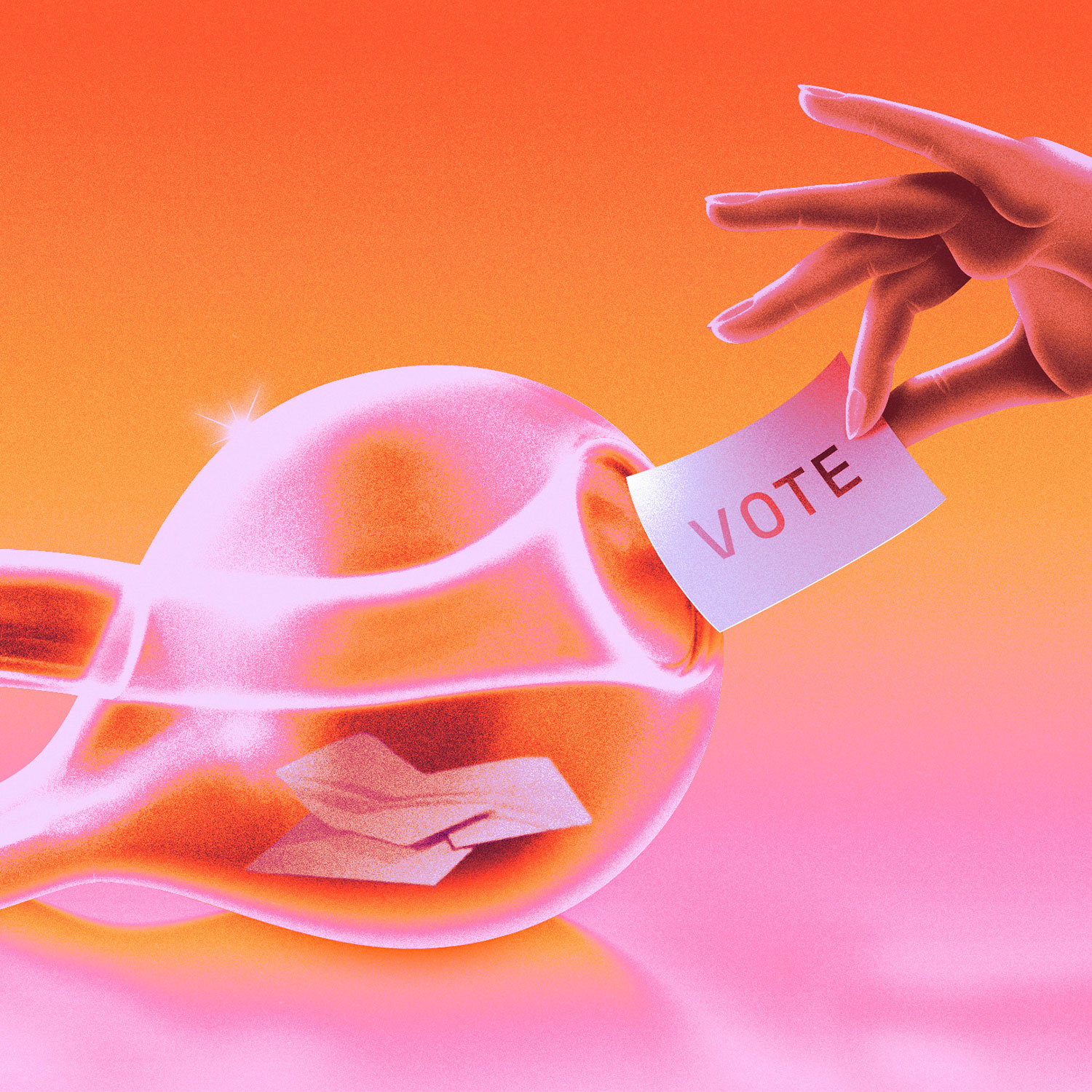
The French mathematician Nicolas de Condorcet was a passionate believer in democracy, but he also discovered a frustrating paradox within it: A majority can sometimes vote itself into a logical loop. Mathematicians have now found that this “logical loop” maps onto a strange topological shape: the Klein bottle, a surface with no distinct inside or outside. On this episode of The Quanta Podcast, host Samir Patel speaks with writer Alex Stone about this new connection between this centuries-old voting paradox and the Klein bottle — and how it illustrates just how difficult it is to translate a group of individual preferences into a single choice. This topic was covered in a recent story (https://www.quantamagazine.org/how-voting-is-like-a-klein-bottle-20261026/) for Quanta Magazine.
Welcoming newcomers involves responsibilities for both receiving communities and new arrivals.
Share your view, then see how readers voted. No sign-in required. This poll is shared across stories.
Do you agree or disagree?
Common Quandary
A Common Quandary to discuss
Another conversation to explore, separate from this news story.
Your friend spent five years writing a terrible novel. What do you say?
A close friend asks for your candid opinion of a novel they have spent five years writing. You find it confusing and unlikely to be published, but writing it has given them purpose during a difficult period.
Is kindness sometimes a reason to withhold an honest judgment?