Week in Review | Vir's Hepatitis Delta Result & CVS Split Plan: Full Recap
49 min
Listen through the publisher, then discuss the episode here or arrange an in-person Roundtable. Your city determines where to meet.
Roundtables are designed for groups of four, with a shared subject and room for everyone to speak. Come for discussion, with no dating expectation.
In this full November 2–8 recap, 44% of treated patients in Vir's hepatitis delta trial met the Phase 3 primary endpoint, with an important difference in when the comparison groups were measured. CVS plans to separate its retail pharmacies and MinuteClinic from Aetna and Caremark, subject to conditions. Alex and Maya also examine HOVON 150 in IDH1-mutated leukemia, FDA's Zolgensma safety investigation, cardiovascular data and the week's deals and manufacturing news — and what the evidence does and does not show. Alex Mercer and Maya Patel host.
Episode information is provided by the publisher. Listening takes place on the publisher’s service.
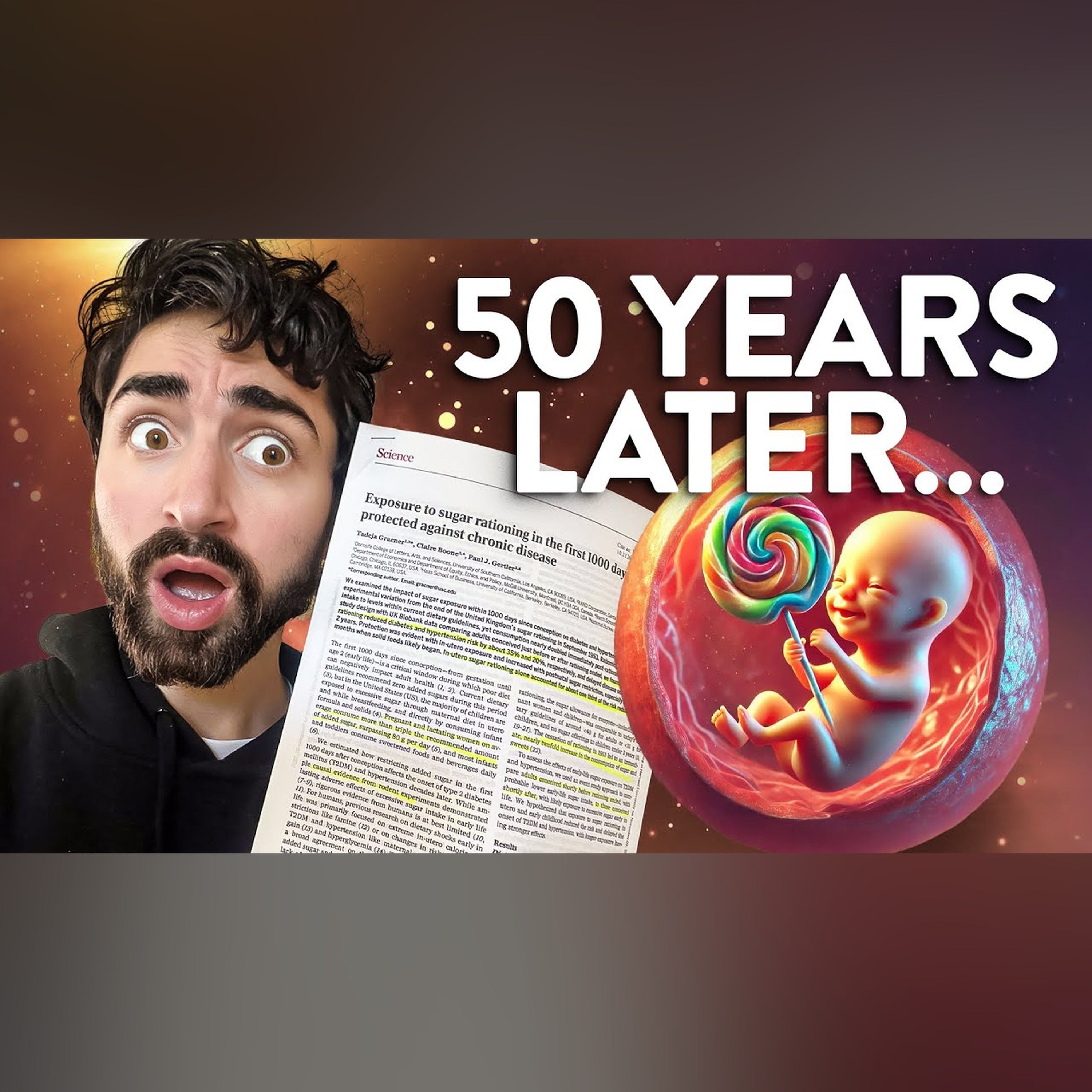
A major new study finds that early life exposure to sugar, in utero and during the first two years of life, seriously impacts later life risk of obesity, diabetes and high blood pressure. This study takes advantage of a historic event, sugar rationing in post-WWII UK, to perform a long-term natural experiment. We review the data and solutions. Chapters 0:00 – New Study on Early Life Exposure to Sugar 0:40 – A Natural Sugar Rationing Experiment 2:24 – Low Sugar in Early Life Protected Against Disease Later in Life 4:08 – What are the Mechanisms 4:37 – Sizing up the Problem with Current Sugar Statistics 5:49 – What are the Solutions? 6:55 – The Healthiest Sugar 8:06 – Free Recipes 8:52 – Let’s Put Metabolism Back in Medicine Allulose Video: https://youtu.be/pr93EsEV2bM Brownie Video: https://youtu.be/vhXvWzuPk-8 RxSugar Brownie Mix: https://rxsugar.com/products/rxsugar-keto-brownie-mix Discount Code, NICK20 Recipes Keto Brownie Truffles: https://ketodietapp.com/Blog/lchf/keto-chocolate-b
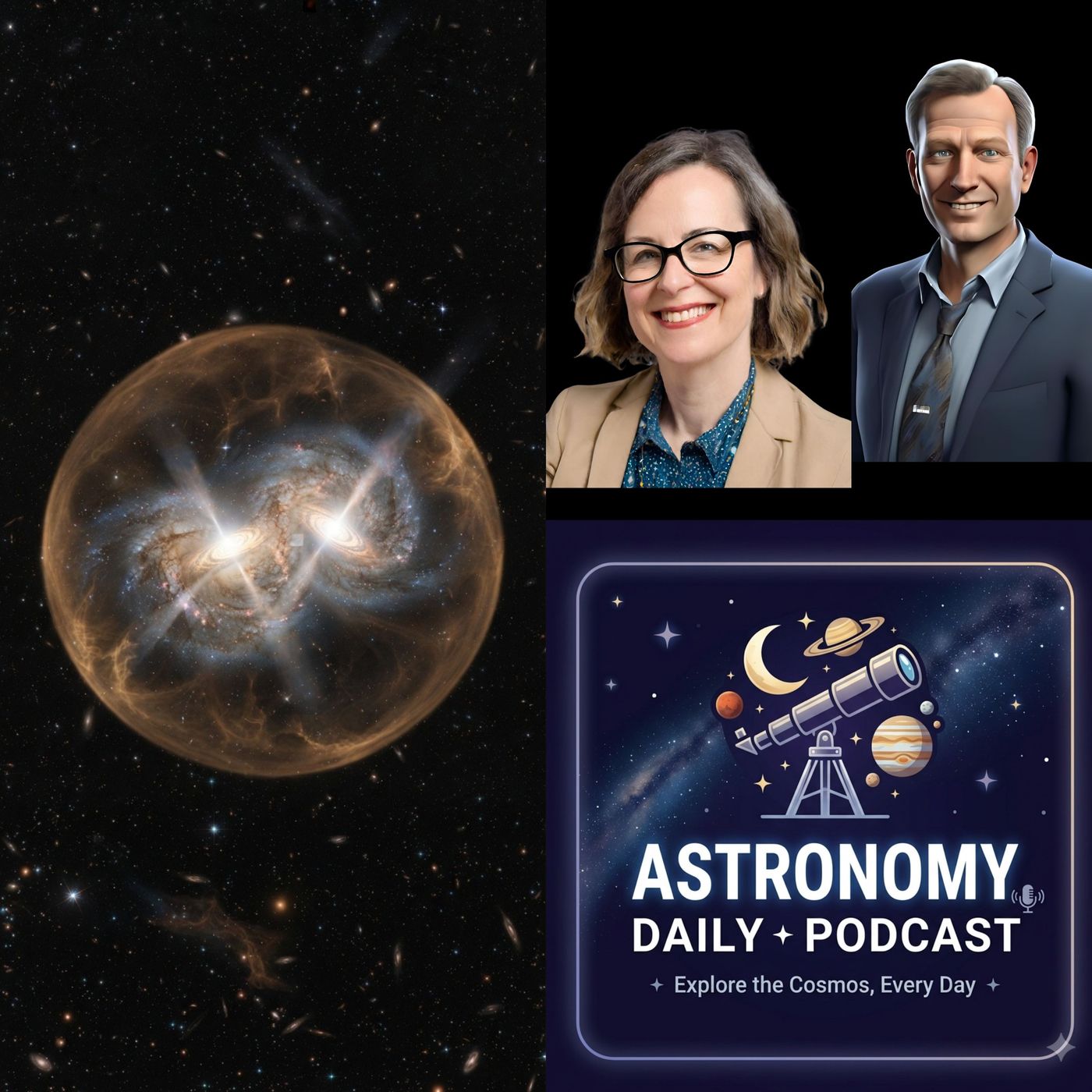
Eleven billion years ago two quasars blazed side by side, and this week astronomers weighed the invisible gas around them by the shadow it casts on the cosmic microwave background. There is 3.6 times more heat in it than gravity can explain. Plus a triple star 28 light-years away that 'should not exist', a pulsar found in ten hours with an algorithm borrowed from cryptography, The Week That Was, and the weekend sky from both hemispheres. In this episode Lead: Hot bubble around the dual quasar J1549+1245 at z = 2.37, measured with ALMA via the thermal Sunyaev–Zel'dovich effect (Hall, Zakamska et al., Nature Astronomy, 18 Nov 2026). Fresh item: Welopōʻai, the closest known triple with two white dwarfs, 28 light-years away (Artigau et al., A&A, 19 Nov 2026). Week That Was: Starship Flight 15 ship catch, CSIRO GenDIReCT and M87, SN 2026ahvu, failed supernovae in gravitational waves (E230); Voyager 1 one light-day, Beta Pictoris ices, heavy-oxygen water, Roman alignment (E231); Terra ends,
Puzzle through this classic ethical dilemma and decide: is community safety more important than individual privacy? -- Your government has introduced a plan to address record-breaking rates of traffic tickets and deadly hovercar accidents. They propose assigning “driver credit scores” to every citizen, but would need to install cameras and microphones in every vehicle. While it would make the roads safer, is this undeniable benefit worth the cost to drivers’ privacy? Michael Vazquez and Sarah Stroud investigate. Lesson by Michael Vazquez and Sarah Stroud, directed by Jeff Le Bars, JetPropulsion.space. This video made possible in collaboration with the Parr Center for Ethics Learn more about how TED-Ed partnerships work: https://bit.ly/TEDEdPartner Support Our Non-Profit Mission ---------------------------------------------- Support us on Patreon: http://bit.ly/TEDEdPatreon Check out our merch: http://bit.ly/TEDEDShop ---------------------------------------------- Connect With Us ------
THE SEARCH FOR THE ULTIMATE RED LIGHT THERAPY IS OVER! After decades of exploring wellness technologies, Michael Jaco sits down with Rob Rene, founder of Exodus Strong, to explore the Red Light+ Total Body Reset system, the science behind red and near-infrared light, and why this technology has become such an important part of their wellness conversation. Rob's remarkable personal journey—including surviving five near-death experiences—inspired his mission to develop practical wellness tools that people can incorporate into their everyday lives. Discover the full-body Red Light+ Mat, designed for convenient 20-minute sessions, and the portable Red Light+ Wand, created for targeted use on areas such as the knees, shoulders, hands, and lower back. Michael and Rob discuss the technology, personal experiences, and how red light therapy may support a daily wellness routine. BLACK FRIDAY–CYBER MONDAY LISTENER EXCLUSIVE! This is your opportunity to explore Exodus Strong's special holiday offe
This truck is going to the moon. So we put it to the test… Get an exclusive 15% discount on Saily data plans. Use code CLEO at checkout. Download Saily app or go to https://saily.com/cleo This is the world’s first “space truck.” It’s going to the moon to help us go farther, faster, and discover places we’ve never been… Because humans are about to go back to the moon for the first time in 50 years! And no one but its builders have ever driven it… until today. In this video I'm going to put this brand new space truck to the test in a series of 5 challenges. And I've invited someone who knows a thing or two about challenges: YouTube daredevil and host of Challenge Accepted… Michelle Khare! Let’s go. Chapters: 0:00 This is the world’s first space truck 0:38 Introducing Michelle Khare! 01:04 What is a space truck? 01:52 How do astronauts drive? 02:21 First impressions! 02:47 Moon truck v normal truck 04:47 How fast can you drive on the moon? 05:18 Will we crash? 08:36 Can we break the lunar
This is a Grave Talks CLASSIC EPISODE! PART TWO Built in 1901 in the small railroad town of Wymore, Nebraska, the Haunted Stephenson Building has carried more than a century of stories within its walls. Located in the heart of downtown near the railroad line that built the town, the structure was part of the early business district and reportedly served over the years as a dance hall, saloon, gambling space, and possibly even a brothel — the kind of place where money flowed, tempers flared, and secrets were buried. Today, it operates as a paranormal investigation site and oddities museum, attracting those who want to see if the rumors are true. Visitors consistently report footsteps pacing on empty upper floors, whispers captured in silent rooms, cold air that moves against logic, and shadow figures that vanish the moment you focus on them. Owner Christie Ayers joins us to discuss the building’s layered past and the unsettling question at the center of it all: are these simply echoes o
FDA again declines to approve Capricor’s Duchenne drug deramiocel, and Capricor disputes the agency’s reading of HOPE-3. Merck reports better overall survival with Kelun’s sacituzumab tirumotecan in advanced gastroesophageal cancer, while progression-free survival missed and the survival gain remains undisclosed. The roundup covers AstraZeneca’s sonesitatug vedotin priority review, PMV’s rezatapopt ovarian cancer data, Erasca’s ERAS-0015 pancreatic cancer plans and Germany’s ruling on Merck’s Keytruda SC. Also covered are Savara’s molgramostim review delay, J&J’s Tremfya (guselkumab) findings in axial psoriatic arthritis, CMS’s Medicare Advantage Part B proposal and FDA’s new biologics safety council. Delayed edition for Friday, November 20, 2026. Alex Mercer and Maya Patel host. Get the daily rundown in your inbox — subscribe at thepharmacloseout.com (https://thepharmacloseout.com/).
Delayed edition for Thursday, November 19, 2026. Celldex says it is ending barzolvolimab development in atopic dermatitis after its Phase 2 trial missed the primary itch endpoint. Revolution Medicines reports single-arm data for Rasonque (daraxonrasib) plus chemotherapy in first-line metastatic pancreatic cancer; a separate randomized study is designed to show what the drug adds. The roundup covers Pyxis Oncology’s Phase 1 micvotabart pelidotin data in head and neck cancer, the AbbVie–DISCO oncology discovery deal and Recursion’s proposed REC-4881 trial in familial adenomatous polyposis. Johnson & Johnson files to expand Caplyta (lumateperone) to manic or mixed episodes in bipolar I disorder, Novartis raises three peak sales forecasts, and a US biotech commission assesses China’s pharma competitiveness. Alex Mercer and Maya Patel host. Get the daily rundown in your inbox — subscribe at thepharmacloseout.com (https://thepharmacloseout.com/).
Pfizer commits $330 million upfront to license three autoimmune CAR-T programs from Starna Therapeutics before human trials — the lead in this delayed November 18 edition. Sanofi’s Infilbray (venglustat) is the first FDA-approved treatment for neurological symptoms of type 3 Gaucher disease, with clearer trial evidence for cognition than for movement alone. Regeneron reports FDA approval of Livsayis (cemdisiran), dosed every 12 weeks for AChR-positive adults with generalized myasthenia gravis. The roundup covers Biogen’s diranersen follow-up in early Alzheimer’s disease, Merck’s halt to Phase 3 nemtabrutinib in chronic lymphocytic leukemia and small lymphocytic lymphoma, and the FDA’s plan to expand review sharing for overseas filings. Alex Mercer and Maya Patel host. Get the daily rundown in your inbox — subscribe at https://thepharmacloseout.com (https://thepharmacloseout.com/).
Employees should usually have a say in whether their work requires office attendance.
Share your view, then see how readers voted. No sign-in required. This poll is shared across stories.
Do you agree or disagree?
Common Quandary
A Common Quandary to discuss
Another conversation to explore, separate from this news story.
Someone you love asks, “Do you think I’ll be okay?” What if you do not?
A relative with a poor prognosis asks whether you think they will recover. They seem to need reassurance, but you believe the odds are very low and do not want to spend the remaining time pretending.
Can preserving hope justify saying more than you believe?