Daily Roundup | Pfizer’s $330M Upfront CAR-T Bet & Infilbray Approved for Type 3 Gaucher Neurologic Symptoms
12 min
Listen through the publisher, then discuss the episode here or arrange an in-person Roundtable. Your city determines where to meet.
Roundtables are designed for groups of four, with a shared subject and room for everyone to speak. Come for discussion, with no dating expectation.
Pfizer commits $330 million upfront to license three autoimmune CAR-T programs from Starna Therapeutics before human trials — the lead in this delayed November 18 edition. Sanofi’s Infilbray (venglustat) is the first FDA-approved treatment for neurological symptoms of type 3 Gaucher disease, with clearer trial evidence for cognition than for movement alone. Regeneron reports FDA approval of Livsayis (cemdisiran), dosed every 12 weeks for AChR-positive adults with generalized myasthenia gravis. The roundup covers Biogen’s diranersen follow-up in early Alzheimer’s disease, Merck’s halt to Phase 3 nemtabrutinib in chronic lymphocytic leukemia and small lymphocytic lymphoma, and the FDA’s plan to expand review sharing for overseas filings. Alex Mercer and Maya Patel host. Get the daily rundown in your inbox — subscribe at https://thepharmacloseout.com (https://thepharmacloseout.com/).
Episode information is provided by the publisher. Listening takes place on the publisher’s service.
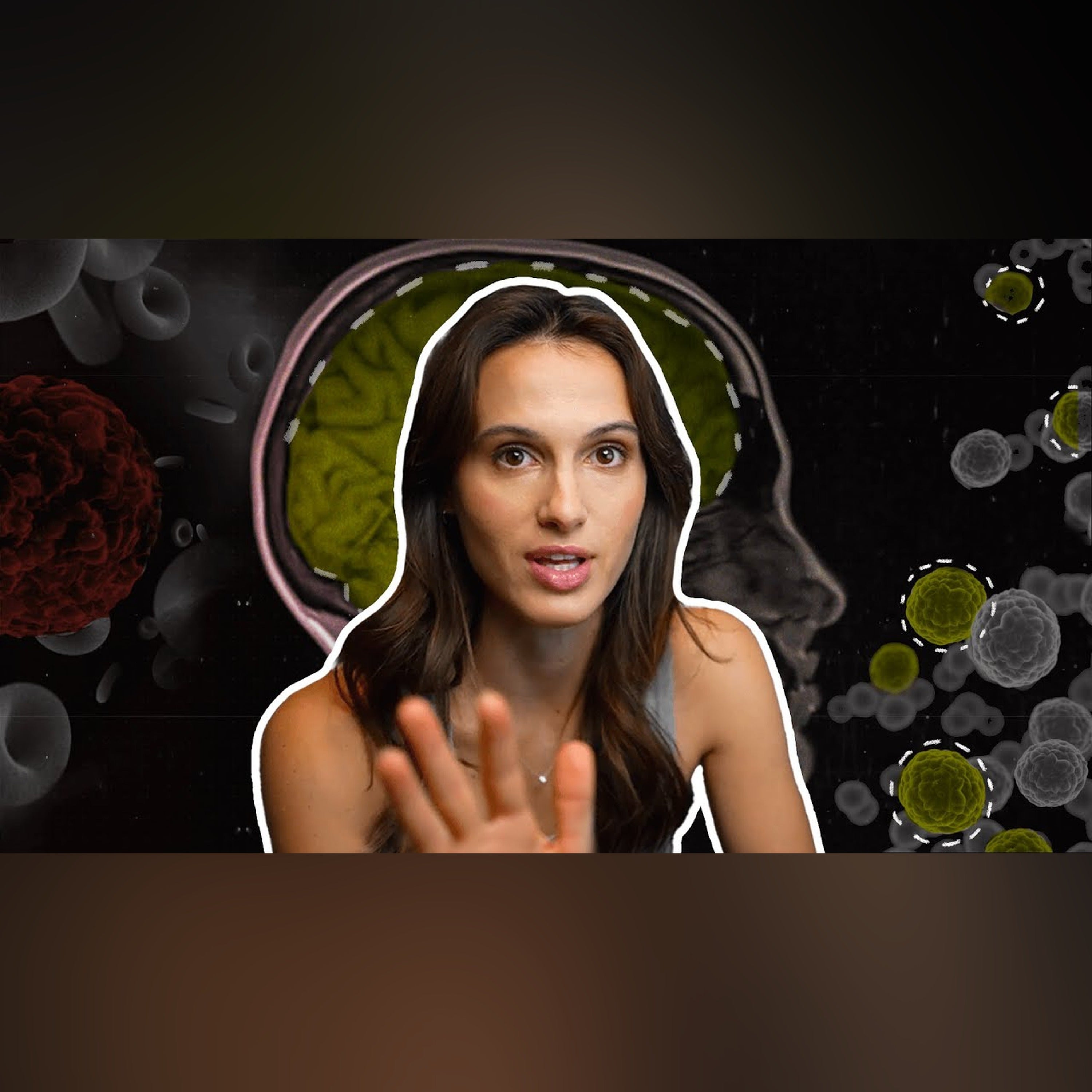
For additional nuances, references, and early access to content, see the StayCurious Metabolism Newsletter: https://staycuriousmetabolism.substack.com/p/hijacking-cancer-to-kill-alzheimers?r=40ekz2 Check out this link to access our StayCurious Brain Health Archives: https://staycuriousmetabolism.substack.com/p/brainhealth Omega-3 and Brain Health Video: https://youtu.be/B-kEn0FukXM To try the Accentrate Omega Max supplement containing LPC-DHA, click here: https://www.fenixhealthscience.com/staycurious Lithium Brain Health Video: https://youtu.be/Hcz0Eyp1LE4 NAD+ Brain Health Letter: https://staycuriousmetabolism.substack.com/p/never-get-alzheimers-disease-the?r=40ekz2 A new paper published in Cell reveals an unexpected biological connection between cancer and Alzheimer’s disease—one that challenges long-held assumptions about both. In this video, MD-PhD neuroscientist Nick Norwitz walks through the actual data behind the study, showing how proteins secreted by cancer cells reduced amyl
In today's brief: Lake Erie, 1957: a newly released Air Force report says two boys saw a humming, bell-shaped craft near the Enrico Fermi Atomic Plant. Skinwalker Ranch: owner Brandon Fugal calls the new files landmark and recalls a daylight saucer over the mesa. Warship footage: a 20-second 2020 infrared clip shows a light crossing a US Navy ship in the Middle East, with no Pentagon assessment. Martha's Vineyard, 1957: a spiked, nickel-coloured object that the Air Force put down to a radar-reflector balloon. Loch Ness: reported sightings jump to 15 this year, up from six in 2025. The Book of Miracles: a 16th-century manuscript of comets, blood rain and multiple suns heads to auction at Christie's. Quick hits: a 1952 file blames the saucer wave on temperature inversions; more Pentagon UFO files are on the way. Every story and source: https://believepod.com/ufo-paranormal-news-22-november-2026/ New episodes every morning. Keep your eyes on the sky. Sources: FOX 2 Detroit: https://www.fo
Learn More About Anydesk: https://anydesk.com/spacetime Sign Up on Patreon to get access to the Space Time Discord! Imagine a world where humanity masters every planetary resource available to it—our first step on the famous Kardeshev scale of technological advancement. How distant is that step? Will we even become a true Type-1 civilization, and how can we get there? Check out the Space Time Merch Store PBS Member Stations rely on viewers like you. To support your local station, go to:http://to.pbs.org/DonateSPACE Search the Entire Space Time Library Here: https://search.pbsspacetime.com/ Hosted by Matt O'Dowd Written by Richard Dyer & Matt O'Dowd Post Production by Leonardo Scholzer, Yago Ballarini & Stephanie Faria Directed by Andrew Kornhaber Associate Producer: Bahar Gholipour Executive Producer: Andrew Kornhaber Executive in Charge for PBS: Maribel Lopez Director of Programming for PBS: Gabrielle Ewing Assistant Director of Programming for PBS: John Campbell Spacetime is a produc
"Curing cancer," explained. We’re not looking for a “cure for cancer” anymore. Cancer is hundreds of diseases, so we’re really in a multi front fight against all of them. Cancer is a problem for us today in a way it wasn’t for previous generations. But, luckily, we also have more and more ways to fight back. I started this episode with endless questions: What is cancer? What causes it? How do we treat cancer? What are the symptoms? Why are some cancers easier to treat than others? Why is cancer so hard to cure? Why do so many people die of cancer? What I found is an incredible, complex, inspiring effort to treat and stop an insidious killer. In this video, we dive deep into how we treat cancer today. But I also found that we may not be helping the greatest number of people we can. In this episode of Huge If True, I want to make the case that while we have made enormous strides in the fight against cancer we have also largely ignored one of the single best ways to save the most lives. I
Sign up for our newsletter and never miss an animation: http://bit.ly/TEDEdNewsletter Uploaded 14-01-19 View full lesson: https://ed.ted.com/lessons/the-truth-about-electroconvulsive-therapy-ect-helen-m-farrell In 1982, a young nurse was suffering from severe, unrelenting depression. She couldn’t work, socialize or concentrate. One controversial treatment changed everything: after two courses of electroconvulsive therapy (ECT) her symptoms lifted. So what exactly is electroconvulsive therapy and why is it so stigmatized? Helen M. Farrell details the history and evolution of ECT. Lesson by Helen Farrell, directed by Artrake Studio. Thank you so much to our patrons for your support! Without you this video would not be possible! Dan Paterniti, Jerome Froelich, Tyler Yoshizumi, Martin Stephen, Justin Carpani, Faiza Imtiaz, Khalifa Alhulail, Tejas Dc, Benjamin and Shannon Pinder, Srikote Naewchampa, Sage Curie, Exal Enrique Cisneros Tuch, Ana Maria, Vignan Velivela, Ahmad Hyari, eden sher,
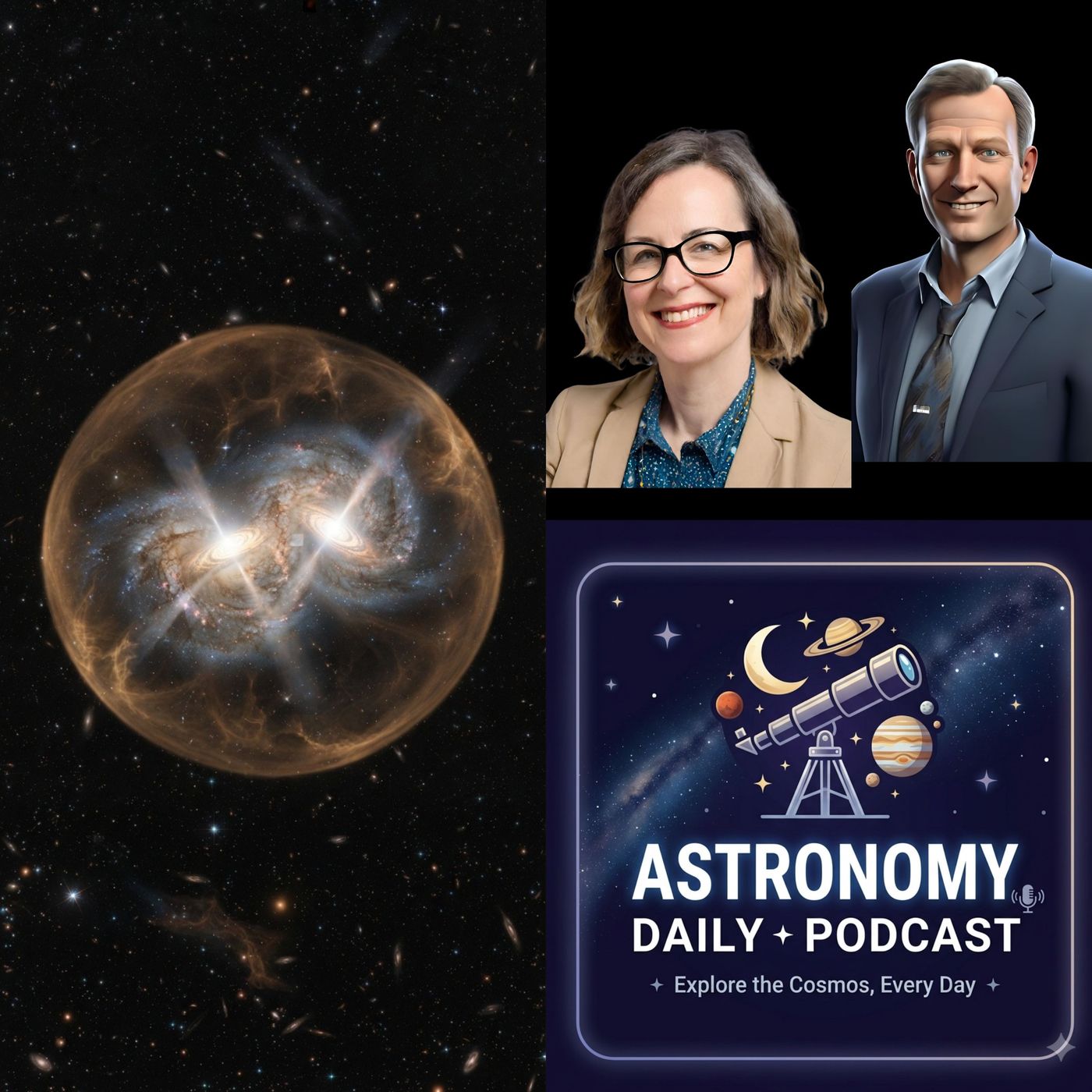
Eleven billion years ago two quasars blazed side by side, and this week astronomers weighed the invisible gas around them by the shadow it casts on the cosmic microwave background. There is 3.6 times more heat in it than gravity can explain. Plus a triple star 28 light-years away that 'should not exist', a pulsar found in ten hours with an algorithm borrowed from cryptography, The Week That Was, and the weekend sky from both hemispheres. In this episode Lead: Hot bubble around the dual quasar J1549+1245 at z = 2.37, measured with ALMA via the thermal Sunyaev–Zel'dovich effect (Hall, Zakamska et al., Nature Astronomy, 18 Nov 2026). Fresh item: Welopōʻai, the closest known triple with two white dwarfs, 28 light-years away (Artigau et al., A&A, 19 Nov 2026). Week That Was: Starship Flight 15 ship catch, CSIRO GenDIReCT and M87, SN 2026ahvu, failed supernovae in gravitational waves (E230); Voyager 1 one light-day, Beta Pictoris ices, heavy-oxygen water, Roman alignment (E231); Terra ends,
FDA again declines to approve Capricor’s Duchenne drug deramiocel, and Capricor disputes the agency’s reading of HOPE-3. Merck reports better overall survival with Kelun’s sacituzumab tirumotecan in advanced gastroesophageal cancer, while progression-free survival missed and the survival gain remains undisclosed. The roundup covers AstraZeneca’s sonesitatug vedotin priority review, PMV’s rezatapopt ovarian cancer data, Erasca’s ERAS-0015 pancreatic cancer plans and Germany’s ruling on Merck’s Keytruda SC. Also covered are Savara’s molgramostim review delay, J&J’s Tremfya (guselkumab) findings in axial psoriatic arthritis, CMS’s Medicare Advantage Part B proposal and FDA’s new biologics safety council. Delayed edition for Friday, November 20, 2026. Alex Mercer and Maya Patel host. Get the daily rundown in your inbox — subscribe at thepharmacloseout.com (https://thepharmacloseout.com/).
Delayed edition for Thursday, November 19, 2026. Celldex says it is ending barzolvolimab development in atopic dermatitis after its Phase 2 trial missed the primary itch endpoint. Revolution Medicines reports single-arm data for Rasonque (daraxonrasib) plus chemotherapy in first-line metastatic pancreatic cancer; a separate randomized study is designed to show what the drug adds. The roundup covers Pyxis Oncology’s Phase 1 micvotabart pelidotin data in head and neck cancer, the AbbVie–DISCO oncology discovery deal and Recursion’s proposed REC-4881 trial in familial adenomatous polyposis. Johnson & Johnson files to expand Caplyta (lumateperone) to manic or mixed episodes in bipolar I disorder, Novartis raises three peak sales forecasts, and a US biotech commission assesses China’s pharma competitiveness. Alex Mercer and Maya Patel host. Get the daily rundown in your inbox — subscribe at thepharmacloseout.com (https://thepharmacloseout.com/).
SELLAS reports median survival of 24.0 months with its vaccine versus 14.7 with investigator-chosen care in REGAL, a Phase 3 trial in later-remission AML; we unpack the filing stakes and topline limits. Isomorphic Labs raises $5 billion to move AI drug discovery toward human trials. We examine GSK's Nuvalent-derived Nelkarmi (neladalkib) approval for previously treated ALK-positive lung cancer and new details in the existing FDA rejection letter for Summit's ivonescimab. The roundup covers Beren's Lembaz (adrabetadex) in infantile-onset Niemann-Pick type C, Novartis' Cosentyx (secukinumab) in polymyalgia rheumatica, and Helus' investigational HLP003 depression results—with evidence limits and safety tradeoffs. Alex Mercer and Maya Patel host.
Users should have access to human review when a platform restricts their account.
Share your view, then see how readers voted. No sign-in required. This poll is shared across stories.
Do you agree or disagree?
Common Quandary
A Common Quandary to discuss
Another conversation to explore, separate from this news story.
Scientists can edit mosquitoes until a deadly disease disappears. Who gets to say yes?
Scientists can potentially release modified mosquitoes whose genes would spread through wild populations and sharply reduce a deadly disease. The ecological effects could cross borders and may be impossible to reverse.
Who may authorize an irreversible change intended to save lives?