A midterm wave just flipped Washington. George Knapp calls it a blue tsunami. The members most outspoken on UAP still held their seats, including Reps. Anna Paulina Luna, Eric Burlison, Tim Burchett, and Jared Moskowitz. The question now is who owns the issue. Matt Laslo of Ask a Pol UAP maps what the new majority could mean. He notes that Rep. Mike Turner, the congressman for Wright-Patterson Air Force Base, is out, and they discuss Turner as a gatekeeper for major contractors there. Incoming Oversight chair Rep. Robert Garcia listed other priorities and did not mention UAP, and Laslo says Garcia had forgotten about the Secrets Task Force. Jeremy Corbell says he has read that Rep. Andre Carson is planning a House UAP Select Committee to replace it, and Laslo says Carson would like to chair it and has been pressing AARO for the rest of its historic report. They also look at black-triangle footage PURSUE said it could not find. Corbell says the trail, if the videos exist, runs through A
In this calm and sleepy facts episode, we explore the quiet timekeeper hidden inside every human body: the body clock. We begin deep in the brain, where a tiny cluster of about twenty thousand cells, no bigger than a grain of rice, keeps time for the whole body and resets itself each morning with the light. From there we follow its gentle rhythm as melatonin rises in the evening, body temperature softly falls through the night, and tiny clocks in the heart, liver, and nearly every cell quietly keep time together. Along the way, we meet the curious people who uncovered this hidden rhythm, from an eighteenth century scientist who watched a mimosa plant open and close in total darkness to explorers who lived for weeks deep inside caves without any clocks at all, and the scientists whose discovery of clock genes earned the 2017 Nobel Prize. We also learn why some people are early birds and others are night owls, why jet lag happens, and how flowers, bees, butterflies, and coral reefs keep
Dig into the false cause fallacy, which assumes that one event causes another, and learn how to distinguish between correlation and causation. Uploaded 10-08-20 -- It’s 1843, and a debate is raging about one of the most common killers of women: childbed fever— no one knows what causes it. One physician has observed patients with inflammation go on to develop childbed fever, and therefore believes the inflammation causes the fever. What's the problem with this argument? Elizabeth Cox explores the false cause fallacy and how to dissect claims with skepticism. Lesson by Elizabeth Cox, directed by TOGETHER. Animator's website: https://wearetogether.ca/ Sign up for our newsletter: http://bit.ly/TEDEdNewsletter Support us on Patreon: http://bit.ly/TEDEdPatreon Find us on Twitter: http://bit.ly/TEDEdTwitter Peep us on Instagram: http://bit.ly/TEDEdInstagram View full lesson: https://ed.ted.com/lessons/can-you-outsmart-the-fallacy-that-fooled-a-generation-of-doctors-elizabeth-cox Thank you so
This is a Grave Talks CLASSIC EPISODE! For Joni Mayhan, the paranormal didn’t begin with ghost stories or investigations. It began in childhood. From her earliest memories, strange shadows moved across her bedroom walls, disembodied voices echoed through quiet rooms, and an unexplained ringing filled the silence around her. Adults dismissed it as imagination, and over time, Joni tried to ignore the experiences and push them aside. But the paranormal had no intention of letting her go. In her late teens, the activity returned stronger than ever after moving into a home haunted by what seemed to be the hostile spirit of an old man. The presence made it painfully clear that the living were not welcome, forcing Joni to confront the terrifying reality that something unseen had followed her for years. That experience launched a lifelong search to understand spirits, hauntings, and why certain entities seemed drawn to her. #TheGraveTalks #Spirits #Apparition #GhostStories #Paranormal #Haunted
On the night of November 2, 1957, police in Levelland, Texas, began receiving a series of strange calls from motorists traveling the dark roads outside town. Different witnesses described brightly glowing objects—some oval or egg-shaped, others more like brilliant lights—appearing close to the roadway. Even stranger, several reported that their engines sputtered or died and their headlights went dark when the objects came near, only to return to normal after they moved away. Before the night was over, law enforcement officers had gone looking for the objects themselves, and some reported seeing unexplained lights of their own. The Air Force eventually blamed unusual weather and electrical conditions. Years later, one of Project Blue Book’s own scientific consultants said he believed they may have dismissed the case too quickly. #LevellandUFO #UFO #UFOHistory #ProjectBlueBook #LevellandTexas #CloseEncounter #Unexplained #UFOCase #Paranormal Love real ghost stories? Want even more? Want
How often do you allow someone else’s behaviour, opinions or decisions to dictate how you feel? One of the most important skills you can develop in life is emotional control. Yet so many people spend their days giving other people control over their emotional state. Someone makes a comment, criticises you, disagrees with you or […] The post EP 3890: They Can’t Make You Feel Anything (https://www.thestronglifeproject.com/the-strong-life-podcast/ep-3890-they-cant-make-you-feel-anything/) appeared first on The Strong Life Project (https://www.thestronglifeproject.com/).
Things have been getting more and more complicated here in Crash Course Organic Chemistry, and as we deal with more complex molecules, parts of molecules we don’t want to react will start reacting along with the parts that we do. Luckily, we have protecting groups, which act like a chemical disguise and help us control how molecules react. In this episode, we’ll look at what makes a good protecting group, as well as identify some good protecting groups for different functional groups. We’ll also see what role protecting groups play in the synthesis of penicillin! Series Penicillin References: Nicolaou, K. C., & Sorensen, E. J. (1996). Classics in total synthesis: targets, strategies, methods. John Wiley & Sons. Sheehan, J. C. (1982). The enchanted ring: the untold story of penicillin. Primary literature for Sheehan’s penicillin synthesis: Sheehan, J.C. & Izzo, P.T. J. Am. Chem. Soc. 1948, 70, 1985; Sheehan, J.C. & Izzo, P.T. J. Am. Chem. Soc. 1949, 71, 4059; Sheehan, J.C. & Bose A.K. J
Join our community and sign up to theBuilding Sciology Mailing List (https://dashboard.mailerlite.com/forms/1175293/137147665837196912/share) today. A high-performance envelope is only as reliable as its weakest junction. In this episode, host Jess Kismet catches up with Luke Davies—award-winning Tasmanian builder, carpenter by trade, author of The Dream Home, and co-founder of Davies Construction, Align Architecture & Interiors, Future Builder Co., and the Alfie AI platform. Luke walks through the practical evolution from standard residential building to executing award-winning certified Passive House projects (including a standout build hitting 0.18 ACH50). We unpack the legal and building physics traps of changing architectural details on site, how to correctly drain and vent wall cavities, how to select non-toxic finishes, and what it really takes to detail a 57% glazing-to-floor-area ratio in northern Tasmania. Key Discussion Points: Pre-Construction Education & The 6 Elements: Wh
Carrots get their orange-y color from, you guessed it, an organic chemical. This chemical, called beta carotene, gets its pigment from its conjugated electron system. We’ve talked some already about conjugation, but in this episode of Crash Course Organic Chemistry we’ll go even deeper and look at how conjugation stabilizes molecules and how p orbitals can overlap to form pi molecular orbitals of different energy levels. Plus we’ll learn what UV spectroscopy can show us about conjugated molecules. Episode Sources: Semba, R.D., 2012. On the ‘discovery’ of vitamin A. Annals of nutrition and metabolism, 61(3), pp.192-198. Webbook.nist.gov. 2021. 1,4-Pentadiene. [online] Available at: https://webbook.nist.gov/cgi/cbook.cgi?ID=C591935&Units=SI&Mask=8#Thermo-React (https://webbook.nist.gov/cgi/cbook.cgi?ID=C591935&Mask=8&Units=SI) Series Sources: Brown, W. H., Iverson, B. L., Ansyln, E. V., Foote, C., Organic Chemistry; 8th ed.; Cengage Learning, Boston, 2018. Bruice, P. Y., Organic Chemistr
So, we've been putting off a kind of basic question here. What is money? What is currency? How are the two different. Well, not to give away too much, but money has a few basic functions. It acts as a store of value, a medium of exchange, and as a unit of account. Money isn't just bills and coins. It can be anything that meets these three criteria. In US prisons, apparently, pouches of Mackerel are currency. Yes, mackerel the fish. Paper and coins work as money because they're backed by the government, which is an advantage over mackerel. So, once you've got money, you need finance. We'll talk about borrowing, lending, interest, and stocks and bonds. Also, this episode features a giant zucchini, which Adriene grew in her garden. So that's cool. Special thanks to Dave Hunt for permission to use his PiPhone video. this guy really did make an artisanal smartphone! https://www.youtube.com/watch?v=8eaiNsFhtI8 Crash Course is on Patreon! Thanks to the following Patrons for their generous mon
Discover the quirky creature known as the parrotfish, and the key role it plays in keeping coral reefs healthy and thriving. Uploaded 04-08-20 -- As the sun rises over a quiet coral reef, one animal breaks the morning silence. Named for its vibrant scales and beak-like teeth, the parrotfish devours a particularly crunchy breakfast: rocks. Why would any creature take bites out of the seafloor? Mike Gil explores how these quirky and flashy foragers play a key role in defending the essential coral reef ecosystem. Lesson by Mike Gil, directed by Franz Palomares. Sign up for our newsletter: http://bit.ly/TEDEdNewsletter Support us on Patreon: http://bit.ly/TEDEdPatreon Find us on Twitter: http://bit.ly/TEDEdTwitter Peep us on Instagram: http://bit.ly/TEDEdInstagram View full lesson: https://ed.ted.com/lessons/the-big-beaked-rock-munching-fish-that-protect-coral-reefs-mike-gil Thank you so much to our patrons for your support! Without you this video would not be possible! Jose Arcadio Valdes
There’s been plenty of talk about Halter across the sheep and beef industry. But how much more is it than simply "shifting" a mob of cows? Our guest this week, Toby Hurley, chats with Ferg to discuss how the technology is developing and the results customers are seeing in their productivity. Toby is Director of Product at Halter, where he has worked for almost six years after moving across from commercial litigation. He started as the company’s first product manager and led the pasture side of the business before taking on the wider product role. Halter began with virtual fencing, but their technology now gives farmers access to a much broader range of information about their livestock and pastures. Toby explains how and why that development has happened, and what farmers are starting to achieve with it. One Queensland beef operation has increased its breeding cow carrying capacity by 30% since adopting Halter. There are also some interesting flow-on effects for calf and lamb weaning w
This is a Grave Talks CLASSIC EPISODE! PART TWO Losing someone you love as a child can leave questions that never fully go away. The wish for one more moment, one more conversation, one more chance to see them again can stay with you for years. For eight-year-old Jon Kozuska, that impossible wish may have come true. Late one night inside his grandparents’ old Victorian home, Jon headed downstairs for a glass of water. As he reached the landing, he stopped cold. Walking past the bottom of the stairs was his grandfather—solid, full color, completely real. The only problem was that his grandfather had already passed away. That single encounter would stay with Jon for the rest of his life, sparking a fascination with the paranormal that grew from childhood ghost books into real-world investigations and experiments designed to uncover what may exist beyond death. #TheGraveTalks #GhostStories #Paranormal #Apparition #LifeAfterDeath #HauntedHouse #VictorianHouse #Supernatural #ParanormalPodca
This is a Grave Talks CLASSIC EPISODE! In the historic mining town of Victor, the Black Monarch Hotel stands as a place where the past never fully loosened its grip. Once a raucous saloon, casino, and brothel, the building was infamous in the early 1900s as “the finest gentleman’s club this side of the Mississippi.” Its walls have witnessed wealth and violence, indulgence and desperation — and, according to many, something far harder to explain. After a devastating fire in 1899, the structure was rebuilt and renamed, but whatever lingered from its earliest days never truly left. When Adam Zimmerli encountered the long-vacant building generations later, he saw more than decay. He saw an opportunity to restore its grandeur while honoring its strange and unsettled history. Today, the Black Monarch’s Victorian gothic décor, themed rooms, and reputation for unnerving encounters have made it one of the most talked-about haunted hotels in the West. Guests report unexplained sounds, shadowy fi
If nearly all your cells have the same DNA, why are muscle cells so different from skin cells? In this episode, we’ll learn how gene expression is regulated in eukaryotes, and how methylating DNA, modifying histones, and messing with translation not only leads to different types of cells, but allows cells to adapt to the world around them. Introduction: A Cellular Cookbook 00:00 Gene Regulation 1:18 Differential Gene Expression 2:36 Gene Regulation Strategies 3:58 Epigenetic Mechanisms 6:13 Review & Credits 9:22 This series was produced in collaboration with HHMI BioInteractive, committed to empowering educators and inspiring students with engaging, accessible, and quality classroom resources. Visit https://BioInteractive.org/CrashCourse (https://biointeractive.org/CrashCourse) for more information. Are you an educator looking for what NGSS Standards are covered in this episode? Check out our Educator Standards Database for Biology here: https://www.thecrashcourse.com/biologystandards
Even though you probably don't choose to spend a lot of time thinking about it, your pee is kind of a big deal. Today we're talking about the anatomy of your urinary system, and how your kidneys filter metabolic waste and balance salt and water concentrations in the blood. We'll cover how nephrons use glomerular filtration, tubular reabsorption, and tubular secretion to reabsorb water and nutrients back into the blood, and make urine with the leftovers. Pssst... we made flashcards to help you review the content in this episode! Find them on the free Crash Course App! Download it here for Apple Devices: https://apple.co/3d4eyZo Download it here for Android Devices: https://bit.ly/2SrDulJ Chapters: Introduction: Urinary System 00:00 What Do Kidneys Do? 1:25 Urinary System Structure 3:02 Nephrons 4:13 Glomerular Filtration 4:37 Tubular Reabsorption 5:14 Tubular Secretion 8:17 Urine 8:40 Review 9:10 *** Crash Course is on Patreon! Thanks to the following Patrons for their generous monthly
In this episode of Crash Course Chemistry, Hank goes over the ideas of keeping your life balance... well, your chemical life. Equilibrium is all about balance and today Hank discusses Chemical Equilibrium, Concentration, Temperature, and Pressure. Also, he'll chat about Le Chatalier's Principle and Fritz Haber. Pssst... we made flashcards to help you review the content in this episode! Find them on the free Crash Course App! Download it here for Apple Devices: https://apple.co/3d4eyZo Download it here for Android Devices: https://bit.ly/2SrDulJ -- TABLE OF CONTENTS Equilibrium = Balance: 0:19 Chemical Equilibrium: 1:25 Le Chatalier's Principle 4:37 Fritz Haber 5:31 -- Crash Course is on Patreon! Want to find Crash Course elsewhere on the internet? Facebook - http://www.facebook.com/YouTubeCrashCourse Twitter - http://www.twitter.com/TheCrashCourse Instagram - https://www.instagram.com/thecrashcourse/ CC Kids: http://www.youtube.com/crashcoursekids
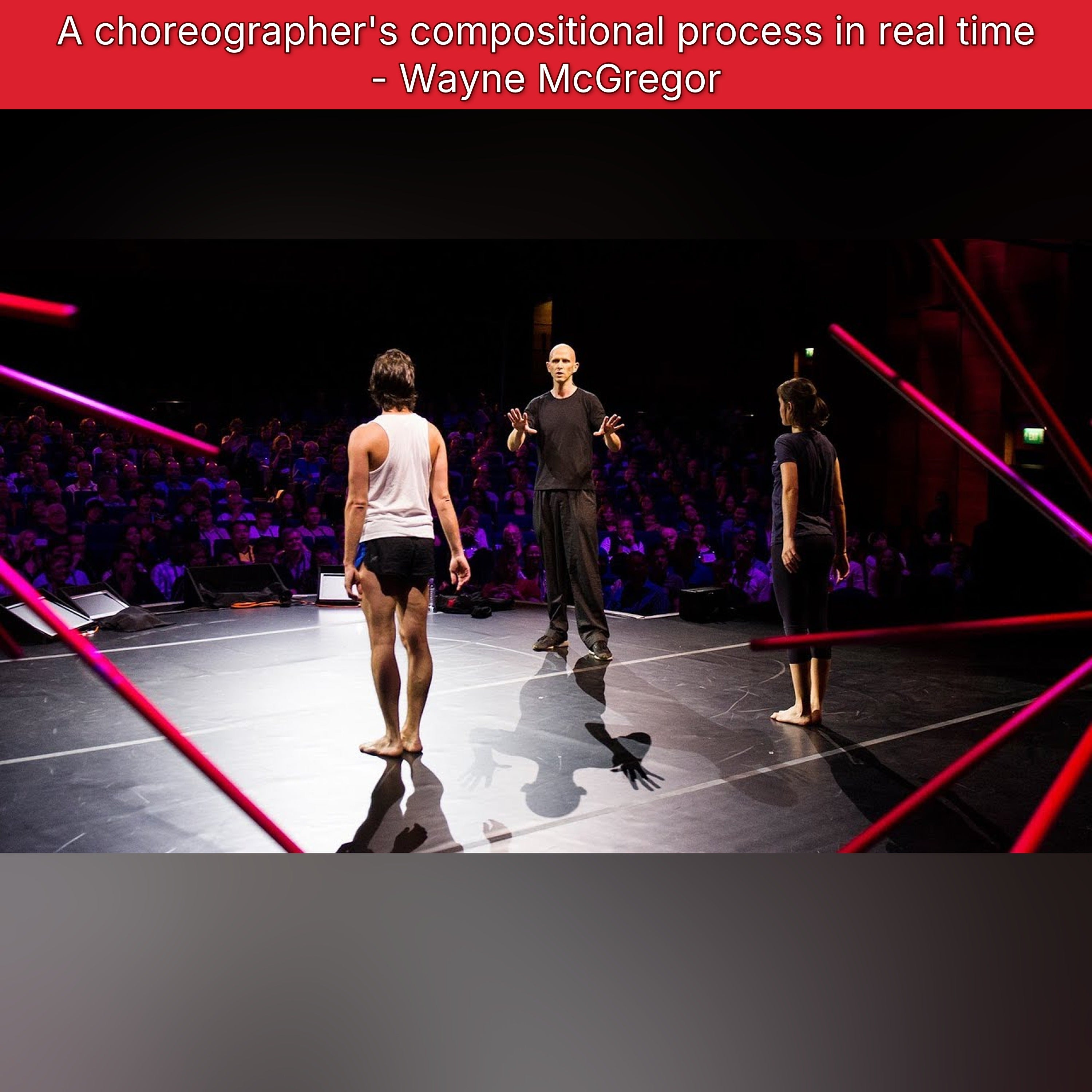
We all use our body on a daily basis, and yet few of us think about our physicality the way Wayne McGregor does. He demonstrates how a choreographer communicates ideas to an audience, working with two dancers to build phrases of dance, live and unscripted, on the TEDGlobal stage. Talk by Wayne McGregor.
View full lesson: http://ed.ted.com/lessons/how-to-spot-a-counterfeit-bill-tien-nguyen Uploaded 16-04-15 Authentic dollar bills are equipped with many security features to make them difficult to forge. But that doesn’t stop counterfeiters from trying to fool people with fakes. Luckily, anyone can help catch a counterfeit; all you need are a few simple tools and a bit of chemistry. Tien Nguyen details the chemistry behind counterfeit cash. Lesson by Tien Nguyen, animation by Lippy.
In which John Green teaches you about American women in the Progressive Era and, well, the progress they made. So the big deal is, of course, the right to vote women gained when the 19th amendment was passed and ratified. But women made a lot of other gains in the 30 years between 1890 and 1920. More women joined the workforce, they acquired lots of other legal rights related to property, and they also became key consumers in the industrial economy. Women also continued to play a vital role in reform movements. Sadly, they got Prohibition enacted in the US, but they did a lot of good stuff, too. The field of social work emerged as women like Jane Addams created settlement houses to assist immigrants in their integration into the United States. Women also began to work to make birth control widely available. You'll learn about famous reformers and activists like Alice Paul, Margaret Sanger, and Emma Goldman, among others. Hey teachers and students - Check out CommonLit's free collection
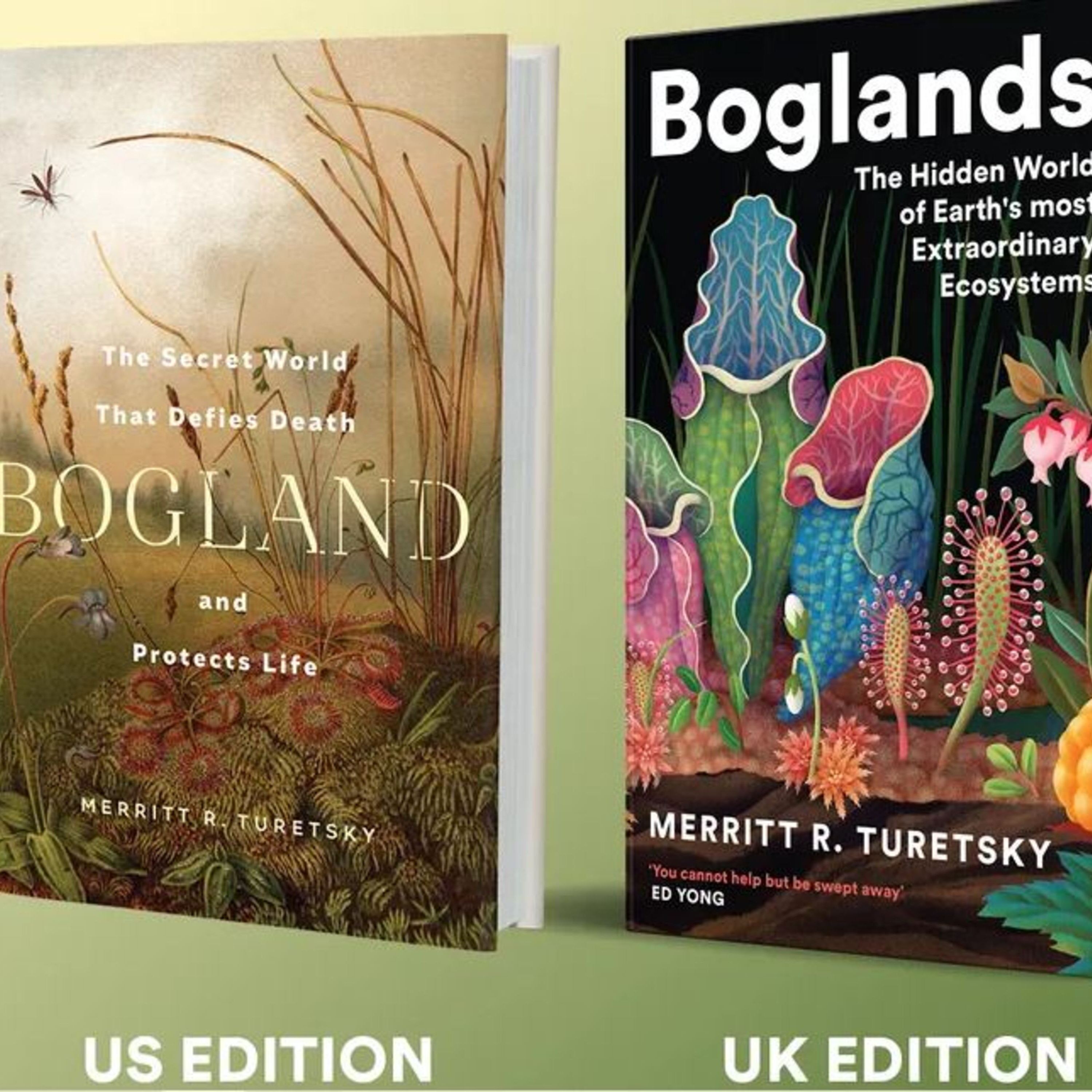
Bogs AKA peatlands are some of the most important ecosystems on our planet but they are all too often overlooked. Home to a bewildering diversity of life and millennia worth of peat stores, boglands are simply incredible ecosystems. These reasons and more are why Dr. Merritt Turetsky has devoted her life to understanding bogs, fighting for bogs, and singing their praises wherever and whenever she can. Today the Queen of Peat joins us to discuss her new book "Bogland" which is her love letter to bogs. Tune in and get a sense for just how special these ecosystems are and learn what you can do to protect them. This episode was produced in part by Claudia, 73315, Atis, Sarracenia, Chris, Gerald, Elise, Maggie, Mamie, A.J., Dallas, Channele, KC, Joe, Diane, Kim, Tanya, Neil, Matthew, April, Dana, Lilith, Sanza, Eva, Yellowroot, Wisewren, Nadia, Heidi, Blake, Josh, Laure, R.J., Carly, Lucia, Dana, Sarah, Lauren, Strych Mind, Linda, Sylvan, Austin, Sarah, Ethan, Elle, Steve, Cassie, Chuck, Aa
In organic chemistry, different reactions can take place at vastly different speeds. To better understand whether a reaction actually will happen, and how useful that reaction is, we need to understand thermodynamics and kinetics. In this episode of Crash Course Organic Chemistry, we’ll review some important concepts from general chemistry, learn how to draw energy diagrams, go over the difference between an intermediate and a transition state, and get an introduction to catalysts. Series Sources: Brown, W. H., Iverson, B. L., Ansyln, E. V., Foote, C., Organic Chemistry; 8th ed.; Cengage Learning, Boston, 2018. Bruice, P. Y., Organic Chemistry, 7th ed.; Pearson Education, Inc., United States, 2014. Clayden, J., Greeves, N., Warren., S., Organic Chemistry, 2nd ed.; Oxford University Press, New York, 2012. Jones Jr., M.; Fleming, S. A., Organic Chemistry, 5th ed.; W. W. Norton & Company, New York, 2014. Klein., D., Organic Chemistry; 1st ed.; John Wiley & Sons, United States, 2012. Loude
Science fiction is full of superpowered mutants, but in reality, mutations are much more diverse and complex. Sometimes, they can change someone’s entire body, and other times, we don’t notice them at all! In this episode, we’ll unpack what mutations are, how they work (including substitutions and frameshift mutations), and how scientists are learning to control mutations using tools like CRISPR/Cas9 and gene therapy. Introduction: Mutations Outside the Movies 00:00 What Are Mutations? 1:20 What Determines Mutations' Effects? 3:10 Types of Mutations 4:16 Positive, Negative, or Neutral? 7:43 Gene Therapy & CRISPR 8:23 Pharmacogenomics 10:59 Review & Credits 11:58 This series was produced in collaboration with HHMI BioInteractive, committed to empowering educators and inspiring students with engaging, accessible, and quality classroom resources. Visit https://BioInteractive.org/CrashCourse (https://biointeractive.org/CrashCourse) for more information. Are you an educator looking for what
View full lesson: http://ed.ted.com/lessons/the-strengths-and-weaknesses-of-acids-and-bases-george-zaidan-and-charles-morton Uploaded 24-10-13 Vinegar may have a powerful smell, but did you know it's actually a weak acid? In the chemical economy, acids actively give away their protons while bases actively collect them -- but some more aggressively than others. George Zaidan and Charles Morton use the currency of subatomic particles to explain this unseen exchange. Lesson by George Zaidan and Charles Morton, animation by Karrot Animation