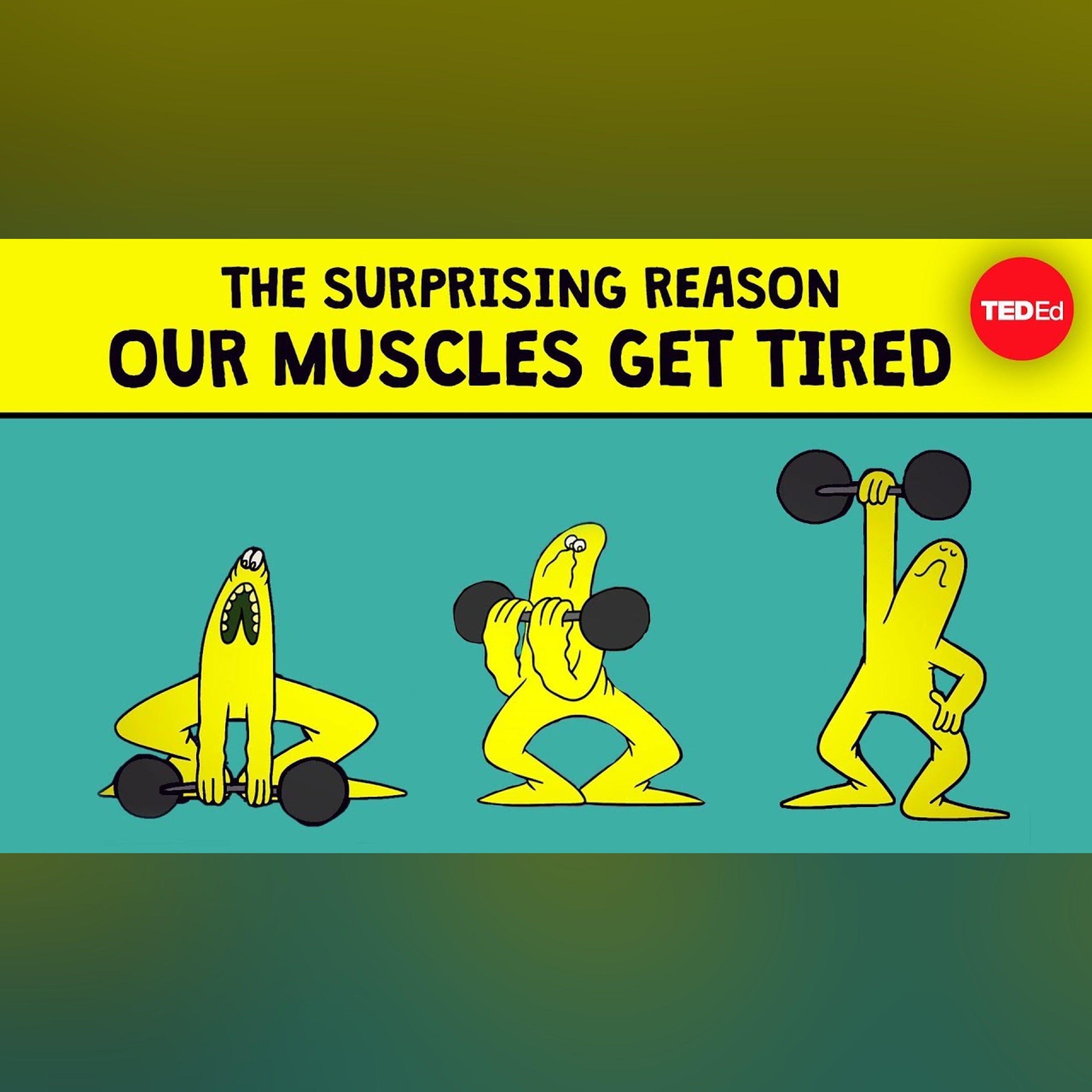
Why do our muscles get tired and sore after exercise? Explore how our muscles function, and how you can exercise longer without experiencing muscle fatigue. Uploaded 18-04-19 -- You're lifting weights. The first time feels easy, but each lift takes more and more effort until you can’t continue. Inside your arms, the muscles responsible for the lifting have become unable to contract. What’s going on? Christian Moro explains how exactly our muscles operate, and what causes them to become fatigued. Lesson by Christian Moro, directed by Nichola Latzgo. Sign up for our newsletter: http://bit.ly/TEDEdNewsletter Support us on Patreon: http://bit.ly/TEDEdPatreon Find us on Twitter: http://bit.ly/TEDEdTwitter Peep us on Instagram: http://bit.ly/TEDEdInstagram View full lesson: https://ed.ted.com/lessons/the-surprising-reason-our-muscles-get-tired-christian-moro Thank you so much to our patrons for your support! Without you this video would not be possible! Felipe Hoff, Kyanta Yap, Lewis Westbur
After two mysterious crashes and two visits from the police, a coffee shop manager began to consider a different explanation. What do you do when the suspect might be a ghost? When you're alone in a coffee shop before sunrise and hear an enormous crash from the kitchen, calling the police seems like a perfectly reasonable thing to do. But what happens when the officers arrive and there's nobody there? Four days later, the same terrifying crash sent the opening manager running outside to call 911 again. This time, the police couldn't find a single thing out of place. Not one fallen pan, not one overturned shelf, and certainly no intruder. As strange noises continued and other employees admitted they'd heard them too, the manager began to suspect the coffee shop might have an unseen occupant. But how exactly do you report a ghost to the police—and what happens when you have to call them twice? #RealGhostStoriesOnline #HauntedCoffeeShop #WorkplaceHaunting #GhostlyNoises #ParanormalActivit
Is war ever justified, and how could we tell if it were? In this episode of Crash Course Political Theory, we tackle Just War Theory through the lens of one of the most contentious conflicts in the past few decades: the Iraq War. Crash Course Political Theory #4 Introduction: The Iraq War 00:00 Just War Theory 0:56 Just Cause & Intention 1:43 Nationhood & Success 4:26 Proportionality & the Last Resort 5:38 Jus in Bello 7:30 Challenges to Just War Theory 9:54 Review & Credits 11:13 Sources: https://docs.google.com/document/d/1u5zJCbVA0xCurLbQwWzcxXEdlqXAPpAyYVS1quwKIis/edit?usp=sharing *** Support us for $5/month on Patreon to keep Crash Course free for everyone forever! https://www.patreon.com/crashcourse Or support us directly: https://complexly.com/support Join our Crash Course email list to get the latest news and highlights: https://mailchi.mp/crashcourse/email Get our special Crash Course Educators newsletter: http://eepurl.com/iBgMhY Thanks to the following patrons for their gene
Today’s episode of ID The Future comes from our sister podcast Mind Matters News, a production of Discovery Institute’s Walter Bradley Center for Natural and Artificial Intelligence. Mind Matters regularly explores the nature of intelligence, the origin of information, and the things that make us uniquely human, all concepts that are central to the theory of intelligent design. Enjoy today’s offering of Mind Matters News! When we are asked to point to heaven, we point up. But that’s not where heaven is. That’s outer space. Today on the Mind Matters News podcast, host Robert J. Marks shares a lecture he recently gave in his Baylor University course Multidimensional Signal Analysis entitled “Where is Heaven?” The speculative talk approaches the concept of multiple dimensions from mathematical and theological angles to ask whether heaven might exist in dimensions beyond the ones we can perceive. Source (https://idthefuture.com/2286/)
In which John Green concludes the Crash Course Literature mini-series with an examination of the poetry of Emily Dickinson. Sure, John explores the creepy biographical details of Dickinson's life, but he also gets into why her poems have remained relevant over the decades. John discusses Dickinson's language, the structure of her work, and her cake recipes. He also talks about Dickinson's famously eccentric punctuation, which again ends up relating to her cake recipes. Also, Dickinson's coconut cake recipe is included. Also, here are links to some of the poems discussed in the video: Faith is a Fine Invention: http://www.poetryfoundation.org/poem/177763 I Heard a Fly Buzz--When I Died: http://www.poetryfoundation.org/poem/174972 Before I Got My Eye Put Out: http://www.poetryfoundation.org/poem/182805 Consider supporting local bookstores by purchasing your books through our Bookshop affiliate link https://bookshop.org/shop/complexly or at your local bookseller. Crash Course is on Patreo
To get some of the old episodes heard. ~~~ The southeast of England is our destination tonight as we meet Sid in Essex, and he has a few UFO sightings that he’s going to be sharing with us from around his county. In addition, Sid grew up with a psychic medium for a Mother, so his whole life he’s been around the paranormal, and has had numerous experiences seeing, hearing, and communicating with spirits. MORE ON THIS EPISODE SHARE YOUR ENCOUNTER Apply to be a guest: Record Your Encounter: SUPPORT UFO CHRONICLES PODCAST Ko-fi: Podcast Merchandise: Follow and subscribe on X: All podcast links: Keep Watching The Skies.
[email protected] Bigfoot Horror Stories - https://sl1nk.com/81kwxy6 Enter the world of terrifying Bigfoot encounters, unexplained sightings, and frightening experiences deep in the wilderness. These stories will make you think twice about walking alone in the woods.
View full lesson: http://ed.ted.com/lessons/making-a-ted-ed-lesson-animation Ever wondered how a TED-Ed animation is made? Go behind-the-scenes of "How do cancer cells behave differently from healthy ones" with educator George Zaidan, animation director Biljana Labovic, and animator Lisa LaBracio.
Few family names have become as closely associated with wealth and financial influence as the Rothschilds. Their story began in 18th-century Frankfurt, where Mayer Amschel Rothschild built a banking business that his five sons would expand across Europe's major financial centers. This episode follows the rise of the Rothschild dynasty through generations of banking, business alliances, political connections, and family traditions. Discover how the family established branches in London, Paris, Vienna, Naples, and Frankfurt, building an international network during an era of wars, revolutions, and rapid economic change. A particularly intriguing part of their history lies in their approach to marriage. In the 19th century, some Rothschild relatives married within the extended family, helping preserve wealth and strengthen connections between different branches of the dynasty. These arrangements reflected the social conventions and inheritance concerns of their time, though they also rais
Fall asleep to this quiet science story. A Boring Science For Sleep episode about What Really Powers the Brightest Quasars. What Really Powers the Brightest Quasars Settle in for a quiet exploration of What Really Powers the Brightest Quasars. This episode follows A Star That Wasn't; Plates, Moon and Spectra; Gravity Turned Into Light; When the Mass Shrank; Winds, Neighbours and Fading Lights. Listen closely or let the details drift past. If you enjoy this quiet science bedtime pace, you might also like Psalms for Sleep on Spotify — same quiet rhythm, different night. Search Spotify for Psalms for Sleep.
Political corruption, election integrity, government accountability, and a growing battle for justice in Vermont! Michael Jaco welcomes Kevin Hoyt back to Unleashing Intuition Secrets for an explosive discussion examining allegations of misconduct involving Vermont's political establishment, law enforcement, and judicial system. Kevin shares information he says raises serious questions about election integrity in Bennington, Vermont, including approximately 300 names identified during his review of voting records. He challenges authorities to investigate the discrepancies and explains why he believes the problems extend far beyond one community. The conversation also covers new developments involving Daniel Banyai, his ongoing property dispute, and a $10,000 reward Kevin discusses in connection with a separate personal-injury allegation. Michael and Kevin examine concerns about child exploitation, alleged misconduct by public officials, and an unusual Arabic-language website Kevin disc
Teddy Schleifer is a New York Times reporter who covers billionaires and their influence on politics. Schleifer joins Big Technology Podcast to discuss what the Democrats’ midterm sweep means for the AI buildout. Tune in to hear why voters are turning against data centers and how much a Democratic Congress can do to slow their construction with Trump still in the White House. We also cover the prospect of tech CEOs facing subpoenas, what the election means for Elon Musk, and California’s proposed billionaire tax. Hit play for an emergency episode on what happens when Silicon Valley embraces a president and voters give the other party control of Congress.
Sacred texts mean different things to different religions—sometimes they’re essential to belief and practice, and other times, not much importance is placed on them at all. In this episode of Crash Course Religions, we dive into the different ways religious texts are used, debated, and venerated across various traditions. Introduction: The Religious Leader Boys' Club 00:00 Religious Texts as Historical Documents 0:48 Negotiating Religious Texts 4:20 The Bible & The Qur'an 6:42 Daoist, Hindu & Sikh Texts 8:35 Review & Credits 10:02 *** Support us for $5/month on Patreon to keep Crash Course free for everyone forever! https://www.patreon.com/crashcourse Or support us directly: https://complexly.com/support Join our Crash Course email list to get the latest news and highlights: https://mailchi.mp/crashcourse/email Get our special Crash Course Educators newsletter: http://eepurl.com/iBgMhY Thanks to the following patrons for their generous monthly contributions that help keep Crash Course
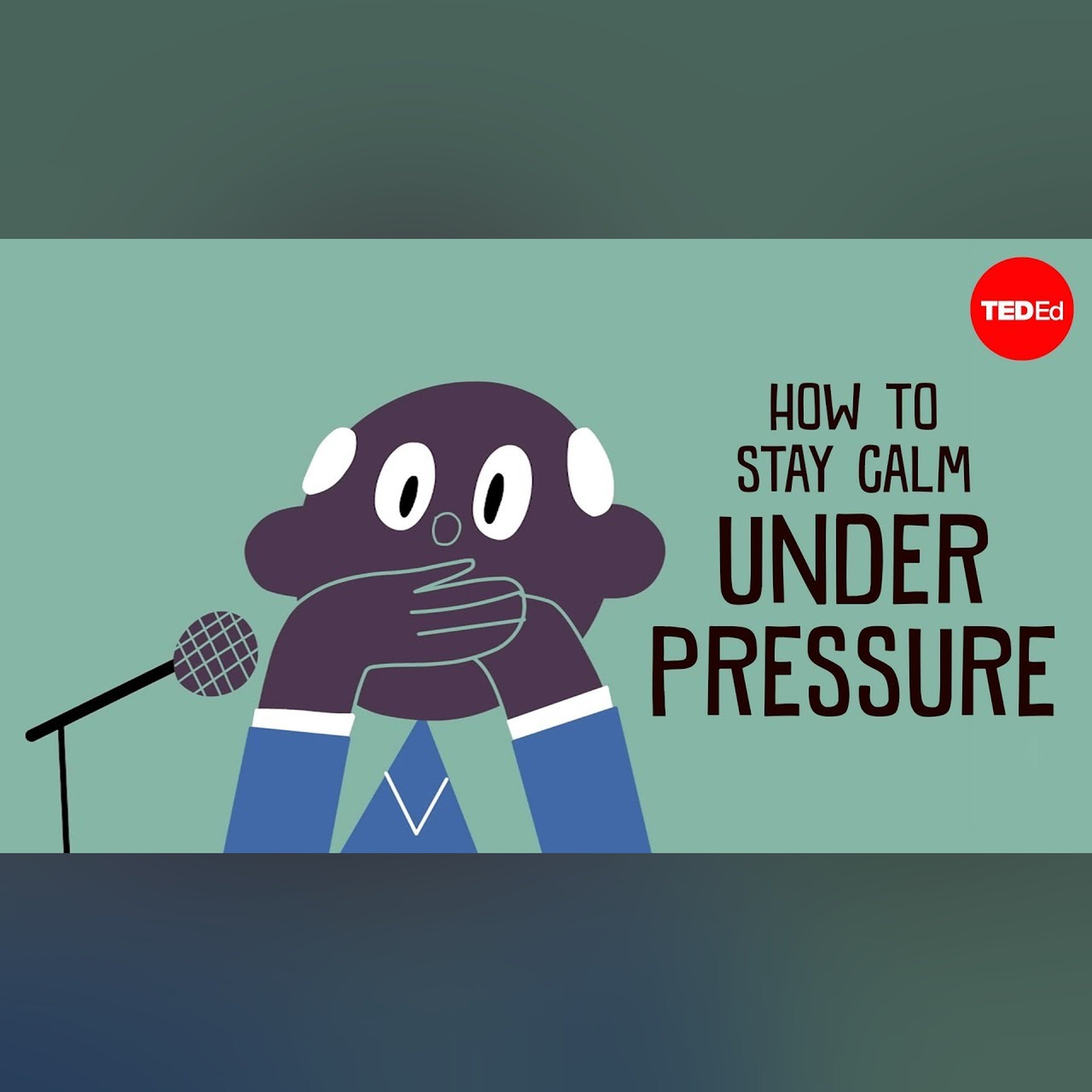
Download a free audiobook version of "The Boys on the Boat" and support TED-Ed's nonprofit mission: https://adbl.co/2Lf9Pa2 Uploaded 21-05-18 Check out our full book recommendation: http://bit.ly/2IDVLsY View full lesson: https://ed.ted.com/lessons/how-to-avoid-choking-under-pressure-noa-kageyama-and-pen-pen-chen Your favorite athlete closes in for a win; the crowd holds its breath, and at the crucial moment ... she misses the shot. That competitor just experienced the phenomenon known as “choking,” where despite months, even years, of practice, a person fails right when it matters most. Why does this happen, and what can we do to avoid it? Noa Kageyama and Pen-Pen Chen explain why we choke under pressure. Lesson by Noa Kageyama and Pen-Pen Chen, animation by Olesya Shchukina. Thank you so much to our patrons for your support! Without you this video would not be possible! Mehmet Sencer KARADAYI, Christian Kurch, SungGyeong Bae, Luis Felipe Ruiz Langenscheidt, Joe Huang, Rohan Gupta, Se
Sadhguru explains the science and significance of lighting lamps on Deepavali – the festival of lights. He speaks about how lighting lamps using certain substances enhances the akash or ether, which is supportive for one's health, overall wellbeing and perception. Sadhguru App (Download): https://onelink.to/sadhguru__app Inner Engineering Link: isha.co/ieo-podcast
Has your child suddenly become more emotional, more withdrawn, or just not themselves since the clocks went back? Is homework taking longer? Are morning more of a struggle? If so, today’s episode is meant for you. Last time, I spoke about the November Wobble - that very real shift that many children experience when the days get shorter, and activities that naturally refill their emotional bucket begin to disappear. Today, I break down the science in simple terms, exploring how reduced daylight affects sleep, mood, motivation, concentration, emotional regulation and resilience. What looks like laziness or a bad attitude is often biology rather than behaviour. I will share five practical strategies you can start using now to help your child understand what fills and empties their emotional bucket. Whether you’re parenting a toddler, primary‑school child, teenager, or neurodivergent child, this episode will help you understand what’s really happening, and give you simple, realistic ways t
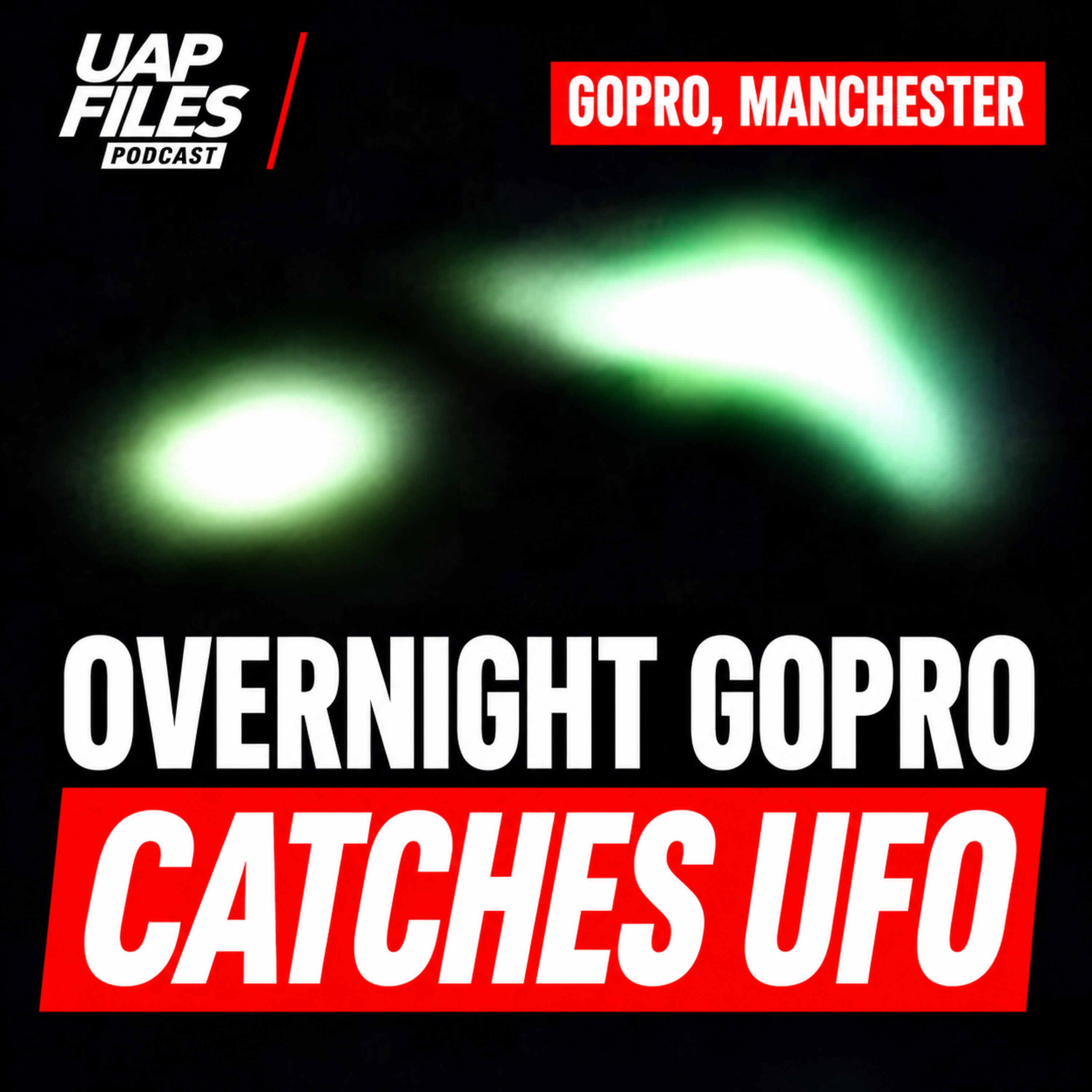
Gareth Ogden from @SkywatchMCR dug an old GoPro Hero 7 out of a drawer, stuck it on a tripod in his backyard in Manchester, pointed it at the sky and forgot about it. The next morning he found something in the corner of the frame. In this clip from UAP Files Podcast S3E44, Gareth tells me how he got into skywatching and talks me through his GoPro and infrared footage.In this clip:• Where his interest started: a UFO book at school and the Zamora case• The 2017 New York Times article that got him looking again, and buying an infrared camera• The night the skies finally cleared, and setting up the GoPro on a whim• Spotting two dots in the bottom corner, then a flash, then a triangle shape• His GoPro settings, and why he leaves it running overnight• His newest infrared footage: two lights at 3am that drift, dim and disappear, which he says isn’t how satellites usually behave• Why backyard skywatchers with cheap kit matterIn the full episode I go through why stars, planets, satellites and s
Hank wraps up Crash Course Ecology by taking a look at the growing fields of conservation biology and restoration ecology, which use all the moves we've learned about in the past eleven weeks, and applies them to protecting ecosystems and to cleaning up the messes that we've already made. Table of Contents 1) Types of Diversity 3:00 2) Conservation Biology 4:12 A) Small Population Conservation 4:26 B) Declining Population Conservation 5:50 3) Restoration Ecology 7:06 A) Structural Restoration 7:30 B) Bioremediation 7:48 C) Biological Augmentation 8:03 References: Crash Course is on Patreon! Want to find Crash Course elsewhere on the internet? Facebook - http://www.facebook.com/YouTubeCrashCourse Twitter - http://www.twitter.com/TheCrashCourse Instagram - https://www.instagram.com/thecrashcourse/ CC Kids: http://www.youtube.com/crashcoursekids
Every week, around three undersea internet cables get damaged badly enough to need urgent repair... and the culprit usually isn’t sabotage. Submarine cables carry more than 99% of the world’s international data, from your video calls to global financial transactions. Yet they lie on the ocean floor, where fishing gear and dragging ship anchors cause huge amounts of the damage. In this episode of The Rest Is Science, Professor Hannah Fry and Michael Stevens (Vsauce) investigate the hidden network of underwater cables holding the internet together, and the problems that come with running it across the bottom of the ocean. How do you lay a cable across an entire ocean? What happens when one breaks miles below the surface? And in the age of satellites, why are we still relying on cables on the seabed? ------------------- A company limited by guarantee. Registered address: 2 Redman Place, London, E20 1JQ. ------------------- ------------------- Video Producer: Adam Thornton + Oli Oakley + J
In the final part of Meet the Most Haunted Team, the team return to Denbigh asylum, where a corridor collapsed minutes before they were due to walk down it live on air. They also share the funniest moments they’ve ever had in the dark, from Darren fleeing Fred through the tunnels to something very unexpected in the Bones Room at Bamburgh Castle. The team also discusses: Is it simply easier not to believe than to believe? Is the paranormal an inconvenient truth? And is the world finally ready for it? Listen, and decide for yourself. [email protected] | @paranormalactivitypod Early episodes + exclusive bonus content: paranormalpod.co.uk A Create Podcast Hosted on Acast. See acast.com/privacy (https://acast.com/privacy) for more information.
Listen ad-free (https://www.patreon.com/c/conspirituality) For the moment, a sigh of relief ripples across America, perhaps even across the world. Seats that have not gone Democrat in decades did so across the country on Tuesday. Voters appear to have finally rejected MAGA. But from our perspective, a cult leader can only lie, cheat, and do the opposite of what he promised his followers he'd do, for so long. His now betrayed populist appeals to affordability and avoiding endless foreign wars appear to have been the final straws. Not January 6, not election tampering, not pulling out of global climate agreements, not the Ukraine-aid fiasco, not his criminal indictments, not even the actions of proto-fascist ICE thugs—the price of gas. Well, we'll take it. For now. We debrief and decompress from a night when the polling data over-delivered instead of delivering a gut-punch. Derek looks at the MAHA implications, Matthew notices a trend toward progressive populists reclaiming of patriotic
Join #TeamSeas! Together, we're going to raise $30M to remove 30M pounds of plastic and trash from our ocean, rivers and beaches. Learn more and get involved here: https://bit.ly/3mrdV3J Uploaded 10-09-20 Trace the history of the invention of plastic, and how the material ushered in what became known as the plastics century. -- For centuries, billiard balls were made of ivory from elephant tusks. But when excessive hunting caused elephant populations to decline, they began to look for alternatives. John Wesley Hyatt took up the challenge. In five years, he invented a new material called celluloid, which would become known as the first plastic. Trace the history of the material that ushered in the “plastics century.” Directed by Sharon Colman. Animator's website: http://www.sharoncolman.com/ Sign up for our newsletter: http://bit.ly/TEDEdNewsletter Support us on Patreon: http://bit.ly/TEDEdPatreon Find us on Twitter: http://bit.ly/TEDEdTwitter Peep us on Instagram: http://bit.ly/TEDEdIn
Working the graveyard shift at a veterinary hospital was usually pretty uneventful. With few people around and little to do between prescriptions, one college student occasionally found himself dozing off. But one night, he was awakened by an old printer that had suddenly started running on its own. When he checked what it had printed, he found a message that seemed intended specifically for him. Then things became even stranger. Something appeared to be moving above the ceiling tiles, following him wherever he went. When he retreated to another room, the unexplained footsteps followed, accompanied by icy drafts and a radio that kept cutting out. Even stepping outside didn't put an end to the activity. But when he finally told another hospital employee what had happened, the man's surprisingly casual response raised an entirely new question. Had someone been having a little fun with the new guy? #RealGhostStoriesOnline #TrueGhostStories #HauntedHospital #VeterinaryHospitalGhost #Gravey
This is a Grave Talks CLASSIC EPISODE! PART TWO Standing along the Delaware River in Philadelphia, Fort Mifflin is one of the last intact Revolutionary War battlefields in the United States—and the city’s only remaining fort. Commissioned in 1771, the site has endured centuries of conflict, serving roles in the American Revolution, the Civil War, and even World War II. In 1777, Fort Mifflin became the scene of a brutal British assault that left hundreds dead or wounded. That violence, layered with decades of military use and loss, has earned the fort a reputation as one of the most haunted locations in America. Reports of shadow figures, disembodied voices, unexplained movement, and full-body apparitions have drawn investigators and visitors from around the world. Beth Beatty, Executive Director of Fort Mifflin, explores the fort’s long and often violent history—and the paranormal experiences that continue to be reported within its walls. From documented hauntings to unanswered questio