In which John Green teaches you about the post-World War II breakup of most of the European empires. As you'll remember from previous installments of Crash Course, Europeans spent several centuries sailing around the world creating empires, despite the fact that most of the places they conquered were perfectly happy to carry on alone. After World War II, most of these empires collapsed. This is the story of those collapses. In most places, the end of empire was not orderly, and violence often ensued. While India was a (sort of) shining example of non-violent change, in places like The Congo, Egypt, Rwanda, Vietnam, Cambodia, and Laos, things didn't go smoothly at all. John brings you all this, plus pictures of Sea Monkeys. Sadly, they don't look anything like those awesome commercials in the comic books. Chapters: Introduction: Decolonization 00:00 What Happens When Empires Fall? 0:33 Post-WWII Decolonization 2:24 Decolonization in India 3:14 Mohandas K. Gandhi 3:47 An Open Letter to H
Why do we like who we like? In this episode of Crash Course Sex Ed, we explore the many facets and variations of sexual orientation, and trace the history of homosexuality to the modern day LGBTQIA+ community. Introduction: My First Crush 00:00 Sexual Orientation 0:41 The History of Sexual Orientation 2:02 Dr. Anonymous 2:59 Homosexuality & Genetics 4:42 Homosexuality & Evolution 5:42 The LGBTQIA+ Community 6:39 Review & Credits 8:59 Sources: For more information on the topics in this episode, check out this resource from our partners at the Kinsey Institute (https://kinseyinstitute.org/): https://drive.google.com/drive/folders/1mSu0MerCwVUmNpya61JVIE4Wdsdkrgbk Read more about these topics here: Planned Parenthood - https://www.plannedparenthood.org/learn/sexual-orientation Cleveland Clinic - https://health.clevelandclinic.org/types-of-sexual-orientation Bedsider - https://www.bedsider.org/features/2488-questioning-your-sexuality-here-are-some-things-to-keep-in-mind *** Support us for
Death is what fungi are all about. By feasting on the deceased remains of almost all organisms on the planet, converting the organic matter back into soil from which new life will spring, they perform perhaps the most vital function in the global food web. Fungi, which thrive on death, make all life possible. Table of Contents 1) Biolography 02:07 2) Structure 04:53 3) The Decomposers 06:10 4) The Mutualists 06:38 5) The Predators 07:23 6) The Parasites 07:35 7) Reproduction 08:24 References http://www.oup.com/us/catalog/general/subject/Reference/Subjectareareference/?view=usa&ci=9780195367133 (http://www.oup.com/us/catalog/general/subject/Reference/Subjectareareference/?ci=9780195367133&view=usa) Crash Course is on Patreon! Want to find Crash Course elsewhere on the internet? Facebook - http://www.facebook.com/YouTubeCrashCourse Twitter - http://www.twitter.com/TheCrashCourse Instagram - https://www.instagram.com/thecrashcourse/ CC Kids: http://www.youtube.com/crashcoursekids
AI can help scientists write code, analyze data, and draft papers. But can it generate the ideas that lead to new discoveries? Richard Socher, former chief scientist at Salesforce, founder of You.com, and co-founder of Recursive, joins us to explore the move from AI assisting researchers to AI conducting research. Starting with AI improving AI, we examine what it takes to propose ideas, run experiments, and validate results, and how those capabilities could eventually accelerate discovery across biology, chemistry, and physics. The conversation covers Recursive’s reported results in model training and GPU kernel optimization, why fast verification matters, and how reward hacking complicates the search for real improvements. We also discuss the data and experimental infrastructure needed for broader scientific discovery, whether commercial incentives can keep increasingly capable systems aligned, and Richard’s vision for a “Eureka machine.” ️ Full show notes: https://twimlai.com/go/783.
Hank tries not to stress you out too much as he delves into the functions and terminology of your sympathetic nervous system. Pssst... we made flashcards to help you review the content in this episode! Find them on the free Crash Course App! Download it here for Apple Devices: https://apple.co/3d4eyZo Download it here for Android Devices: https://bit.ly/2SrDulJ Chapters: Introduction: Physiology of Stress 00:00 How Signals Travel to Effectors 1:48 Hormones & Neurotransmitters Communicate Stress 2:15 Preganglionic Fibers Release Acetylcholine (ACh) 3:42 Postganglionic Fibers Release Norepinephrine 4:34 Adrenal Glands Release Norepinephrine and Epinephrine as Hormones 5:10 Neurotransmitters vs. Hormones 6:01 How Norepinephrine Works: Alpha and Beta Receptors 6:29 Review 9:29 Credits 10:18 *** Thanks to the following Patrons for their generous monthly contributions that help keep Crash Course free for everyone forever: Mark Brouwer, Simun Niclasen, Brad Wardell, Roger C. Rocha, Jan Schmid
Is virginity really a thing? In this episode of Crash Course Sex Ed, we’ll bust virginity myths and learn why women have traditionally faced stronger pressure to remain virgins. We’ll explore the ways social scripts guide what we think about sex—but aren’t the final word on how we live our lives. Introduction: Like a Virgin 00:00 The History of Virginity 0:59 The Hymen 2:17 Culture & Sexual Scripts 4:10 Impacts of Sexual Scripts 5:43 Write Your Own Story 8:17 Review & Credits 8:57 Sources: For more information on the topics in this episode, check out this resource from our partners at the Kinsey Institute (https://kinseyinstitute.org/): https://drive.google.com/drive/folders/1mSu0MerCwVUmNpya61JVIE4Wdsdkrgbk Read more about these topics here: Planned Parenthood - https://www.plannedparenthood.org/learn/teens/sex/virginity Cleveland Clinic - https://my.clevelandclinic.org/health/body/22718-hymen Bedsider - https://www.bedsider.org/features/962-5-myths-about-virginity-busted *** Support
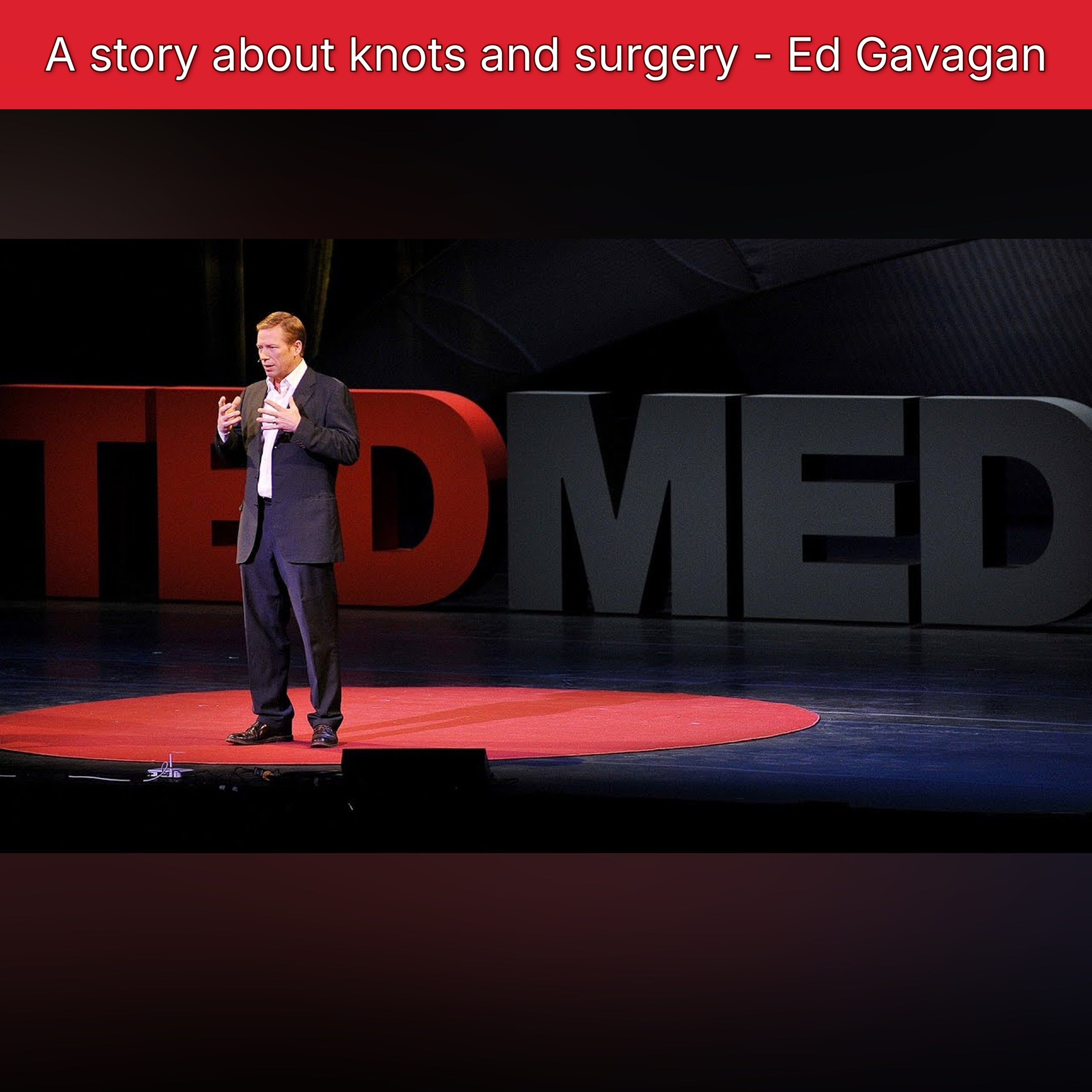
One day, Ed Gavagan was sitting on the subway, watching two young med students practicing their knots. And a powerful memory washed over him -- of one shocking moment that changed his life forever. An unforgettable story of crime, skill and gratitude. Talk by Ed Gavagan.
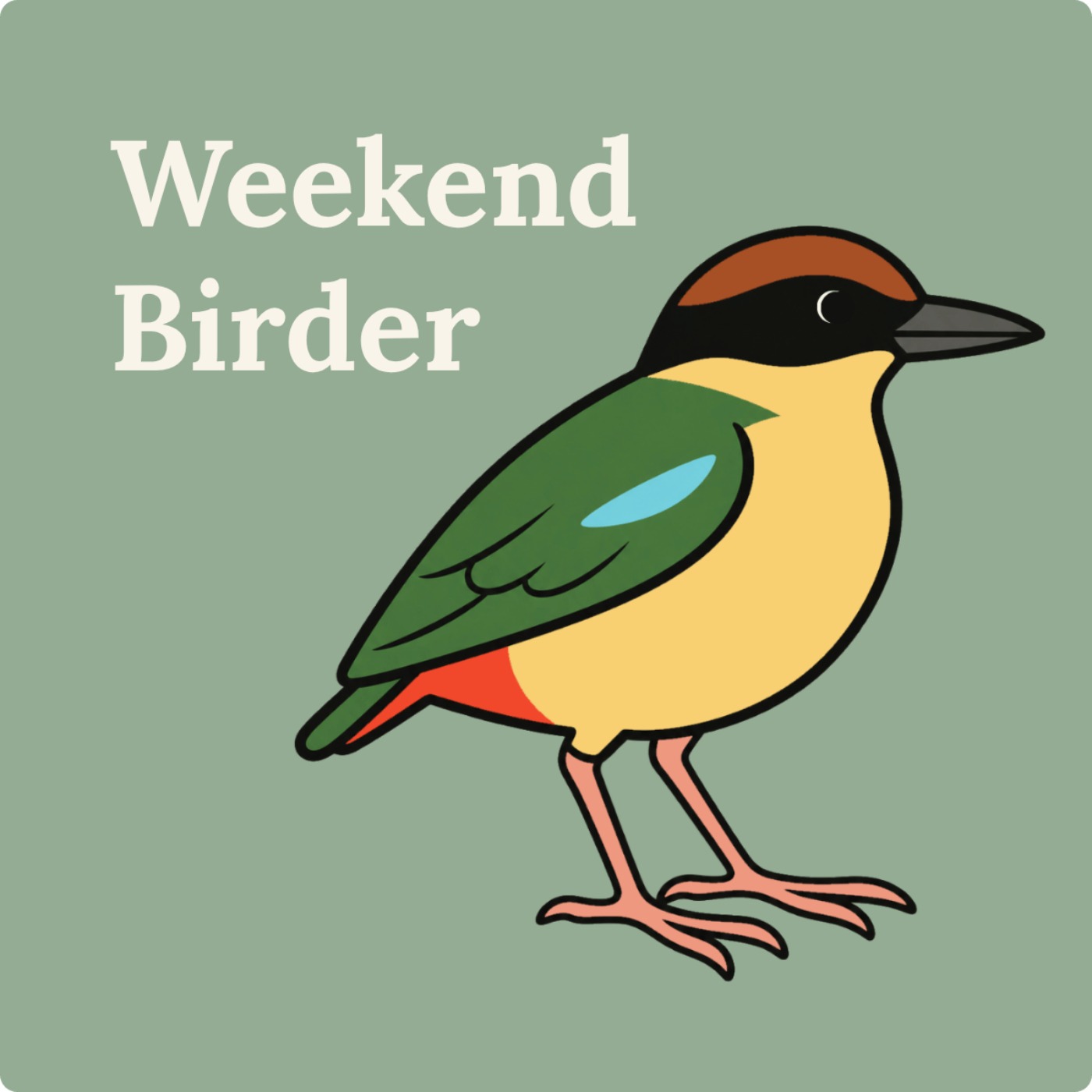
One look through binoculars changed how Rosie Morley sees the world. The creator of Rosie's Bird Files shares how birdwatching has led to new adventures and unexpected discoveries, including a colourful rainforest bird hiding in the middle of Brisbane. Birds featured: Noisy Pitta, Silvereye Episode illustration: Noisy Pitta Facebook - https://facebook.com/weekend.birder Theme music is Swing Joyful Tune by Audiosphere -- Hosted on Acast.
In which John Green teaches you about the Cold War, which was occasionally hot, but on average, it was just cool. In the sense of its temperature. It was by no means cool, man. After World War II, there were basically two big geopolitical powers left to divide up the world. And divide they did. The United States and the Soviet Union divvied up Europe in the aftermath of the war and then proceeded to spend the next 45 years fighting over the rest of the world. It was a great ideological struggle, with the US on the side of capitalism and profit, and the USSR pushing Communism, so-called. While both sides presented themselves as the good guy in this situation, the COLD reality is that there are no good guys. Both parties to the Cold War engaged in forcible regime changes, built up vast nuclear arsenals, and basically got up to dirty tricks. If you had to pick a bad guy though, we would point out that the USSR had no intention of bringing Laika the Cosmonaut Dog home alive. That poor dog
For most of human history, humans have fed ourselves by foraging, with a little bit of hunting when we were lucky—think more gatherer than hunter. Picking edible greens, nuts, fruits, roots, and mushrooms kept us alive before the advent of farming and, scientists think, helped make us who we are. So why did we stop eating wild foods? And how did an arrest in Central Park, Martha Stewart, and COVID make foraging cool again? Listen in this episode as we head out into the park to find dinner, explore the unexpected connections between foraging and ADHD, Jim Crow, and Grape Nuts, and enjoy a delicious wild feast full of flavors we've been missing out on.
Finally, after what seems like eons and eons, the end is nigh. We're talking not only about the end of Crash Course Big History but also the end of everything. The end of humanity and the end of the universe. John and Hank Green will teach you about what the future holds for humanity and the universe. Spoiler alert: in the long, long, long, long, long, long term, it doesn't look good. In the short term though, it's not too bad. But don't lose hope, there is an upside. You'll have to watch the video to find out. Learn more about Big History here: http://www.bighistoryproject.com (http://www.bighistoryproject.com/) Crash Course is on Patreon! Want to find Crash Course elsewhere on the internet? Facebook - http://www.facebook.com/YouTubeCrashCourse Twitter - http://www.twitter.com/TheCrashCourse Instagram - https://www.instagram.com/thecrashcourse/ CC Kids: http://www.youtube.com/crashcoursekids
Uploaded 31-05-18 View full lesson: https://ed.ted.com/lessons/why-is-it-so-hard-to-cure-als-fernando-vieira Amyotrophic Lateral Sclerosis (ALS), also called motor neuron disease and Lou Gehrig’s Disease, affects about two out of every 100,000 people worldwide. When a person has ALS, their motor neurons - the cells responsible for all voluntary muscle control in the body - lose function and die. Fernando G. Vieira shares what we know (and don't know) about ALS. Lesson by Fernando G. Vieira, animation by Artrake Studio. Thank you so much to our patrons for your support! Without you this video would not be possible! Jordan Tang, Christopher Jimenez, Juan, Tracey Tobkin, Sid, emily lam, Kathryn J Hammond, Elliot Poulin, Noel Situ, Oyuntsengel Tseyen-Oidov, Latora Slydell, Sydney Evans, Victor E Karhel, Bernardo Paulo, Eysteinn Guðnason, Andrea Feliz, Natalia Rico, Josh Engel, Bárbara Nazaré, Gustavo Mendoza, Zhexi Shan, Hugo Legorreta, PnDAA, Sandra Tersluisen, Ellen Spertus, Fabian Amels
Where there’s sex, there’s the possibility for STIs. In this episode of Crash Course Sex Ed, we unpack the most common sexually transmitted infections and how to prevent and treat them. Turns out, sexual responsibility is a lot easier than you think. Introduction: Not the End of the World 00:00 What's an STI? 0:27 Bacterial STIs & Barrier Methods 1:14 Viral STIs 4:02 HIV 6:04 Review & Credits 8:52 Sources: For more information on the topics in this episode, check out this resource from our partners at the Kinsey Institute (https://kinseyinstitute.org/): https://drive.google.com/drive/folders/1mSu0MerCwVUmNpya61JVIE4Wdsdkrgbk Read more about these topics here: Planned Parenthood - https://www.plannedparenthood.org/learn/stds-hiv-safer-sex Cleveland Clinic - https://my.clevelandclinic.org/health/diagnostics/std-testing Bedsider - https://www.bedsider.org/features/1097-let-s-talk-about-safer-sex *** Support us for $5/month on Patreon to keep Crash Course free for everyone forever! https:/
Hank gets into the dirty details about vascular plant reproduction: they use the basic alternation of generations developed by nonvascular plants 470 million years ago, but they've tricked it out so that it works a whole lot different compared to the way it did back in the Ordovician swamps where it got its start. Here's how the vascular plants (ferns, gymnosperms, and angiosperms) do it. Table of Contents 1) Sporophyte Dominance 01:55 2) Ferns 02:14 3) Gymnosperms 03:35 4) Angiosperms 05:33 5) Truth or Fail: Fruit Edition! 08:28 References: http://www.youtube.com/watch?v=AykzPemLs7Q&feature=relmfu (http://www.youtube.com/watch?feature=relmfu&v=AykzPemLs7Q) Crash Course is on Patreon! Want to find Crash Course elsewhere on the internet? Facebook - http://www.facebook.com/YouTubeCrashCourse Twitter - http://www.twitter.com/TheCrashCourse Instagram - https://www.instagram.com/thecrashcourse/ CC Kids: http://www.youtube.com/crashcoursekids
A Princeton mathematician says wormholes cannot survive Einstein's equations, and the AI apocalypse is absurd. A solution that vanishes under a small nudge is a ghost, not physics. Sergiu Klainerman is a mathematician at Princeton University. With Demetrios Christodoulou, he proved that empty spacetime is stable. We cover: What makes a solution of Einstein's equations physical, why slowly rotating black holes pass the stability test and wormholes fail it, why shocks form no matter how small the perturbation, whether AI can reproduce a landmark proof, and why he calls the AI singularity absurd. Mathematics is discovered, not invented. CHAPTERS 00:00 Are wormholes real? 08:38 What happens at an event horizon 12:06 God does not know about coordinates 17:32 What Maldacena would say about wormholes 21:48 Why extremal black holes matter 28:56 Einstein and the 1919 eclipse 33:52 Terry Tao and Fermat's Last Theorem 43:04 Can universities be reformed? 48:16 What to tell a 19-year-old 50:48 Kip
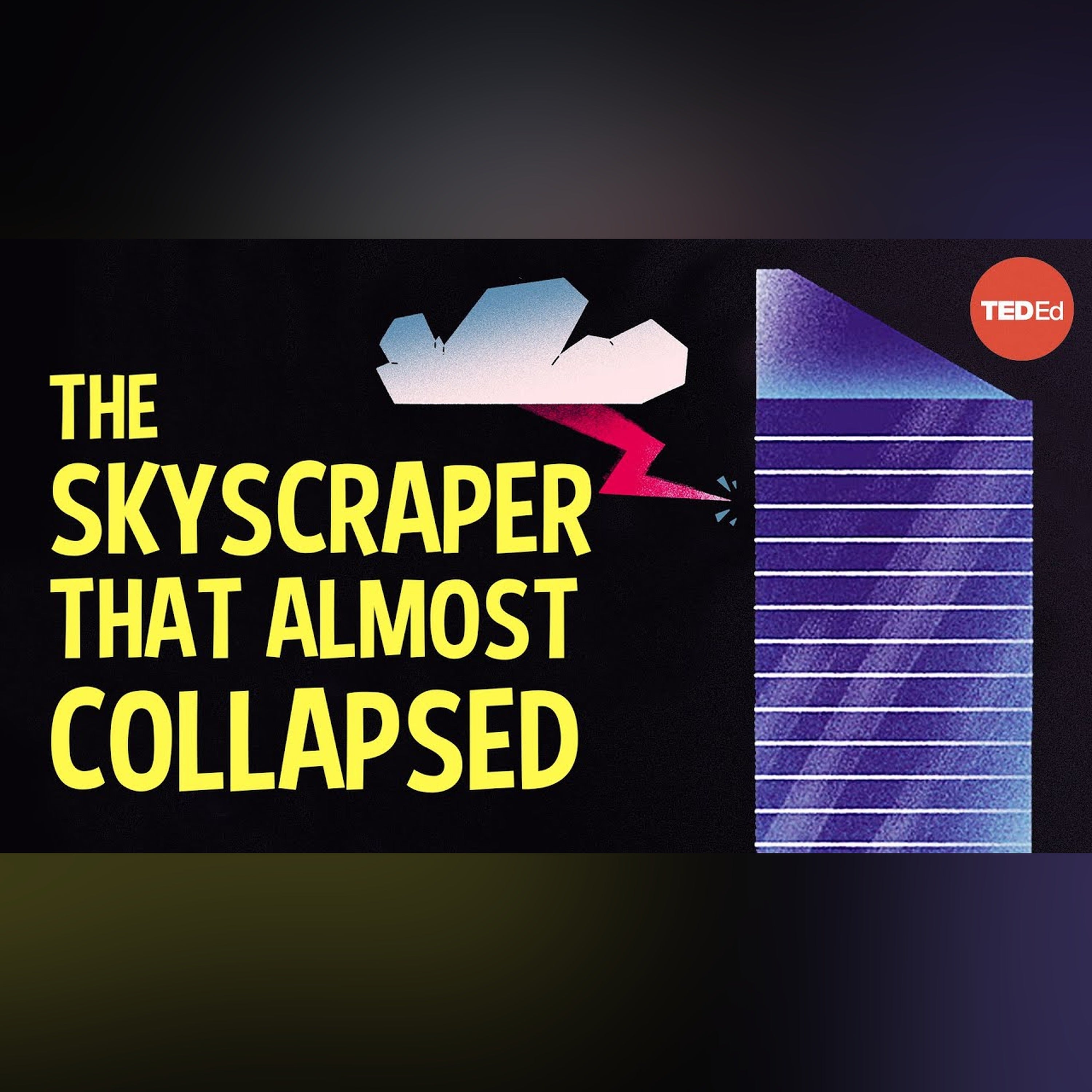
Dig into the unique engineering of New York City’s Citicorp Center tower, and the design flaw that threatened to topple it. Uploaded 06-05-21 -- In 1978, Diane Hartley was writing her undergraduate architecture thesis when she made a shocking discovery. After weeks of poring over the Citicorp Center’s building plans, she’d stumbled on an oversight that threatened to topple the 59-story tower into one of New York City’s most densely populated districts. Alex Gendler digs into the skyscraper’s potentially deadly mistake. Lesson by Alex Gendler, directed by Nicholas Paim, Alopra Studio. Support Our Non-Profit Mission ---------------------------------------------- Support us on Patreon: http://bit.ly/TEDEdPatreon Check out our merch: http://bit.ly/TEDEDShop ---------------------------------------------- Connect With Us ---------------------------------------------- Sign up for our newsletter: http://bit.ly/TEDEdNewsletter Find us on Twitter: http://bit.ly/TEDEdTwitter Peep us on Instagram:
Welcome to Crash Course Native American History! Over the next 24 episodes, Che Jim will introduce you to the deep, ongoing history of the Indigenous peoples who’ve called these lands home from time immemorial to today. Course Description: Over the course of 24 episodes, we’re going to learn about Native American history. Host Che Jim will teach you about the deep, ongoing history of Native peoples in what’s now known as the United States—from time immemorial to the Land Back movement. This content was developed with a team of Indigenous experts, and based on an introductory college-level curriculum. By the end of this course you should be able to: - Analyze the political and legal relationship between Native nations and the U.S. government - Develop an informed perspective on distinct Native cultures’ traditions, practices, and worldview - Draw connections between the past and present, in the continued existence and experiences of Native individuals and Native nations - Highlight key
This lecture was recorded by Professor Sir Jim Mallinson on 5th of October 2026 at Barnard’s Inn Hall, London. Jim Mallinson is the Boden Professor of Sanskrit at the University of Oxford and a Professorial Fellow at Balliol College. His research focuses on the history and current traditional practice of yoga and his primary methods are philology, ethnography and art history. Prof. Mallinson led the Haṭha Yoga Project (2015–2021), a six-person research project on the history of physical yoga funded by the European Research Council. The project’s core outputs are ten critical editions of Sanskrit texts on physical yoga and four monographs on its history and current practice. Together with Professor Jürgen Hanneder (University of Marburg), Prof. Mallinson led the Light on Hatha Yoga Project (2021–2024) which will result in a critical edition of the Haṭhapradīpikā. Prof. Mallinson’s publications include the following: The Khecarīvidyā of Ādinātha, a Critical Edition and Annotated Translat
There are so many different types of contraception to choose from. So…where do you start? In this episode of Crash Course Sex Ed, we’ll uncover the complicated history of birth control and many of the options available today—plus, why we still don’t have a male pill. Introduction: The Contraception Game 00:00 Egg + Sperm 0:57 Natural Methods 1:40 Barrier Methods 2:49 Hormonal Methods 3:31 The History of Birth Control Pills 4:51 Toward a Male Birth Control Pill 6:46 Emergency Contraception 8:42 Permanent Birth Control 9:45 Review 10:31 Condom Demonstration 10:58 Sources: For more information on the topics in this episode, check out this resource from our partners at the Kinsey Institute (https://kinseyinstitute.org/): https://drive.google.com/drive/folders/1mSu0MerCwVUmNpya61JVIE4Wdsdkrgbk Read more about these topics here: Planned Parenthood - https://www.plannedparenthood.org/learn/birth-control Cleveland Clinic - https://my.clevelandclinic.org/health/articles/11427-birth-control-opti
Today we wrap up the first half of our series on physical geography by taking a closer look at natural hazards - which are physical processes like heat waves and cyclones, earthquakes and volcanic eruptions, and floods and droughts. And when these natural events cause significant harm to humans, we call them natural disasters. So today we'll explore the ways geographers analyze and track these events, and take a closer look at the human impact of Hurricane Katrina in New Orleans and The Boxing Day Tsunami on the Andaman and Nicobar islands. Watch our videos and review your learning with the Crash Course App! Download here for Apple Devices: https://apple.co/3d4eyZo Download here for Android Devices: https://bit.ly/2SrDulJ Crash Course is on Patreon! Thanks to the following patrons for their generous monthly contributions that help keep Crash Course free for everyone forever: Shannon McCone, Amelia Ryczek, Ken Davidian, Brian Zachariah, Stephen Akuffo, Toni Miles, Oscar Pinto-Reyes, Eri
Hank introduces us to one of the most diverse and important families in the tree of life - the vascular plants. These plants have found tremendous success and their secret is also their defining trait: conductive tissues that can take food and water from one part of a plant to another part. Though it sounds simple, the ability to move nutrients and water from one part of an organism to another was an evolutionary breakthrough for vascular plants, allowing them to grow exponentially larger, store food for lean times, and develop features that allowed them to spread farther and faster. Plants dominated the earth long before animals even showed up, and even today hold the world records for the largest, most massive, and oldest organisms on the planet. Table of Contents 1) 3 Tissue Types 02:37 2) Primary Growth 03:04 3) Secondary Growth 03:28 4) Dermal Tissue 04:47 a) Epidermis 04:54 5) Parenchyma Cells 05:39 6) Vascular Tissue 05:58 7) Xylem 05:58 8) Collenchyma 07:10 9) Sclerenchyma 07:3
On November 26, 2020, trade unions in India reported that over 250 MILLION people took part in a strike. What could prompt such massive protest? Farming. Today, we’re going to take a closer look at GMOs, which are organisms whose DNA has been modified in a laboratory, and examine the impact of one GMO in particular, Bt Cotton, in the agrarian crisis in India. SOURCES GEOGRAPHY BOOKS Knox and Marston 2016: Human Geography Place and Regions in a Global Context. 7th Edition. Pearson FARMER SUICIDES Center for Human Rights and Global Justice, Every Thirty Minutes: Farmer Suicides, Human Rights, and the Agrarian Crisis in India (New York: NYU School of Law, 2011). SEEDSShiva, Vandana. 2016. Stolen Harvest: The Hijacking of the Global Food Supply. University of Kentucky Press UPOV US COTTON PRODUCTION US SUBSIDIES WTO MEMBERSHIP FREE TRADE Watch our videos and review your learning with the Crash Course App! Download here for Apple Devices: https://apple.co/3d4eyZo Download here for Android D
Back in 2021, we discussed the FDA approval of a combination GNRH antagonist (relagolix) with estradiol and norethindrone. This was originally approved to treat uterine fibroid related heavy menstrual bleeding. It is also now approved for endometriosis care. In theory, this should also be an effective contraceptive agent. However, the FDA label strictly cautions against its use for birth control. In this episode, we will discuss data from the recent ASRM 2026 annual conference that looked at this medication's ability to possibly function as hormonal contraception. But there is a catch. Listen in for details. 1. https://www.medscape.com/viewarticle/fibroid-drug-relugolix-may-act-contraceptive-2026a10015db 2. Myfembreehcp.com
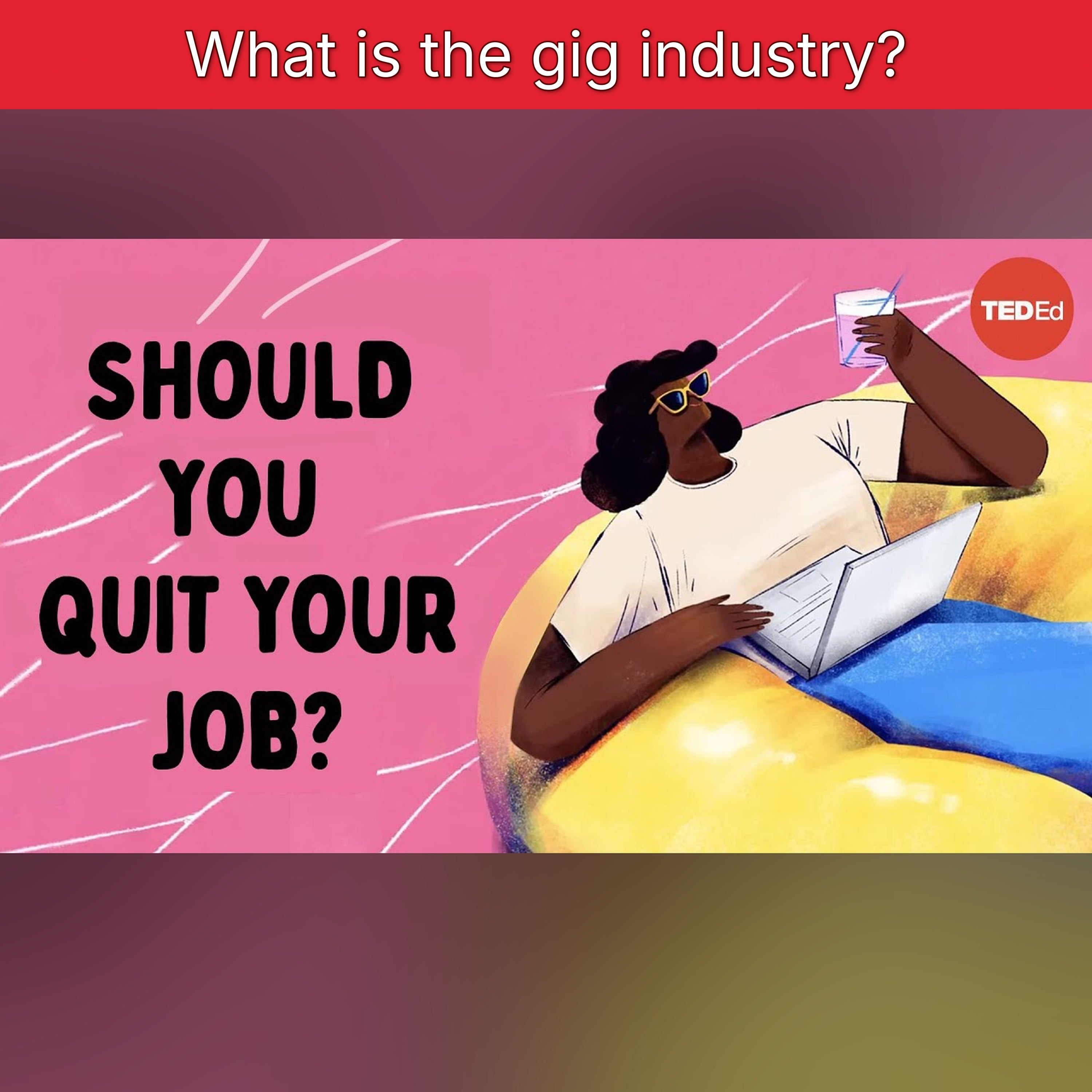
Explore the benefits and drawbacks of the gig economy, and find out the key factors of becoming a successful freelancer. -- A 2016 survey of freelancers in six countries found that those who freelance by choice– 70% of respondents– were happier than people in traditional jobs, specifically when it came to things like independence and flexibility in terms of where and when they work. So what does it take to be a successful freelancer? Explore the benefits and drawbacks of the gig economy. Directed by Christoph Sarow, AIM Creative Studios. This video made possible in collaboration with World Economic Forum Learn more about how TED-Ed partnerships work: https://bit.ly/TEDEdPartners Support Our Non-Profit Mission ---------------------------------------------- Support us on Patreon: http://bit.ly/TEDEdPatreon Check out our merch: http://bit.ly/TEDEDShop ---------------------------------------------- Connect With Us ---------------------------------------------- Sign up for our newsletter: h