Organic chemistry isn’t that different from an adventure game, with substrates as characters, nucleophiles as magic potions, and reaction conditions as different magical kingdoms. In this episode of Crash Course Organic Chemistry, we’ll learn the tricks to this game so that we can figure out which transformation, or mechanism, will occur when we combine any substrate with any nucleophile. Let’s go on an adventure! Music Used: Truth of the Legend by Kevin MacLeod Link: https://incompetech.filmmusic.io/song/4551-truth-of-the-legend License: https://filmmusic.io/standard-license Series Sources: Brown, W. H., Iverson, B. L., Ansyln, E. V., Foote, C., Organic Chemistry; 8th ed.; Cengage Learning, Boston, 2018. Bruice, P. Y., Organic Chemistry, 7th ed.; Pearson Education, Inc., United States, 2014. Clayden, J., Greeves, N., Warren., S., Organic Chemistry, 2nd ed.; Oxford University Press, New York, 2012. Jones Jr., M.; Fleming, S. A., Organic Chemistry, 5th ed.; W. W. Norton & Company, New Y
In which John Green teaches you about the Market Revolution. In the first half of the 19th century, the way people lived and worked in the United States changed drastically. At play was the classic (if anything in a 30-year-old nation can be called classic) American struggle between the Jeffersonian ideal of individuals sustaining themselves on small farms vs. the Hamiltonian vision of an economy based on manufacturing and trade. I'll give you one guess who won. Too late! It was Hamilton, which is why if you live in the United States, you probably live in a city and are unlikely to be a farmer. Please resist the urge to comment about this if you live in the country and/or are a farmer. Your anecdotal experience doesn't change the fact that most people live in cities. In the early 19th century, new technologies in transportation and communication helped remake the economic system of the country. Railroads and telegraphs changed the way people moved goods and information around. The long
After being haunted by an egregious error for over seven years, we are wading back into the nudibranch waters. We discuss what plankton actually is, purging your vowels, bunnies and sheep, stolen venom, detachable organs, learning in slugs, and so much more. Works Cited: "Getting to know nudibranchs (https://www.seattleaquarium.org/stories/getting-to-know-nudibranchs/)" - Seattle Aquarium "Social Predation by a Nudibranch Mollusc (https://academic.oup.com/iob/article/7/1/obaf017/8121398?login=false)" - K. Otter et al., Integrative Organismal Biology, April 2025 "Disposable penis and its replenishment in a simultaneous hermaphrodite (https://www.researchgate.net/publication/235620586_Disposable_penis_and_its_replenishment_in_a_simultaneous_hermaphrodite)" - Ayami Sekizawa et al., Biology Letters, April 2013 "Nudi Sex-Ed! (https://www.calacademy.org/blogs/project-lab/nudi-sex-ed)" - California Academy of Sciences "Cannibalism, self-cannibalism and autotomy in the non-indigenous nudibranc
What's the evidence that vaccines don't cause autism? Can brain oxygen deprivation lead to memory loss? Do babies bond with their dads as much as with their mums? Do parrots socialise like other animals? What does a percentage chance of rain in a weather forecast actually mean? How can we lip-read if we all sound different? Could the floating door in Titanic have supported both Rose and Jack, according to science? Dr Chris Smith and Relebogile Mabotja have the answers. Like this podcast?
Sleep better with Pillow: https://pillow.app/bettersleep Immerse yourself in calming lakeside campfire sounds combined with gentle ambient nature noise, perfect for deep sleep, meditation, and relaxation. Let this peaceful soundscape soothe your mind, ease anxiety, and create a tranquil atmosphere for restful sleep and focused calm. This episode includes AI-generated content.
Discover what colors are the most rare to see in nature, and how physics and evolution drive their scarcity. -- Plants, animals, or minerals found in nature bear almost every color imaginable. There are two factors that influence what hues you see in the wild: physics and evolution. So, which colors are you least likely to see in the natural world? Victoria Hwang explores one of nature’s rarest spectacles. Lesson by Victoria Hwang, directed by Tamara Bogovac, Artrake Studio. 2:33 - Image referenced from paper by Eric R. Dufresne, Heeso Noh, Vinodkumar Saranathan, Simon G. J. Mochrie, Hui Cao and Richard O. Prum, photograph of Plum-throated Cotinga (Cotinga maynana) by Thomas Valqui, https://rsc.li/3xyhxGu Support Our Non-Profit Mission ---------------------------------------------- Support us on Patreon: http://bit.ly/TEDEdPatreon Check out our merch: http://bit.ly/TEDEDShop ---------------------------------------------- Connect With Us ---------------------------------------------- Si
Practice more problem-solving at https://brilliant.org/TedEd/ Uploaded 01-09-20 -- It’s your first day at Magnificent Marigold’s Magical Macademy. But before you can learn your first spell you must get through the sorting ceremony. And the sorting hat has chosen you for a special challenge. The Macademy had 8 founders who established four houses, and there was once a mysterious fifth house. Can you figure out who founded what? Dan Katz and Alex Rosenthal show how. Lesson by Dan Katz and Alex Rosenthal, directed by Artrake Studio. Animator's website: https://www.artrake.com (https://www.artrake.com/) Sign up for our newsletter: http://bit.ly/TEDEdNewsletter Support us on Patreon: http://bit.ly/TEDEdPatreon Find us on Twitter: http://bit.ly/TEDEdTwitter Peep us on Instagram: http://bit.ly/TEDEdInstagram View full lesson: https://ed.ted.com/lessons/can-you-solve-the-sorting-hat-riddle-dan-katz-and-alex-rosenthal Thank you so much to our patrons for your support! Without you this video wou
Hosts Fran Chismar and Tom Knezick record live at the 2026 Perennial Plant Association National Symposium in East Lansing, Michigan. In Part 2 of this series, Tom and Fran sit down with with Angela Clelan (Sales and Support at New Moon Nursery) and Carl Hesselein (President, Pleasant Run Nursery) to discuss the role native plants are playing in the ornamental nursery industry on the East Coast. Topics include the current demand for native plants outside of native plant circles and how that demand has changed over the years, and what the forecast for native plants is in the future. Music by Egocentric Plastic Men, Outro music by Dave Bennett. Follow New Moon Nursery Here (https://newmoonnursery.com/). Follow Pleasant Run Nursery Here (https://www.pleasantrunnursery.com/). Join the Perennial Plant Association Here (https://perennialplant.org/). Have a question or a comment? Call (215) 346-6189. Follow Native Plants Healthy Planet – Website (https://www.nativeplantshealthyplanet.com/) / I
Passenger pigeons once blotted out North America’s skies. Within decades, they were gone. How did the continent’s most abundant bird vanish so fast and what can we learn from this? An episode swap from Points North.
Demons are fallen angels, right? The Gospels never say so. Jimmy Akin and Dom Bettinelli trace the Greek word daimon from Homer's gods and Hesiod's ghosts to the Church Fathers, and find who first called a demon a fallen angel. The post What Are Demons? (https://sqpn.com/2026/11/what-are-demons/) appeared first on StarQuest Media (https://sqpn.com/).
The Unexpected Elements team are science-maxxing, following the headline that “maxxing” has been named 2026’s word of the year by dictionary.com. Strap yourself in for tales of total commitment, including the longest running experiment, and the scientist who guarded it for 40 years but missed every single once-a decade magic moment. And we’ll be mini-maxing, with a tiny but mighty effort to build a molecule from the atom up. We meet a neuroscientist and 8 times world memory champion who shares tricks of the trade, and how any of us can start memory-maxxing and building up a cognitive reserve. Plus, we’ll be tackling the newest reporting of a 3 Body problem, unpicking the advantages of being even-handed, and fibre-maxxing and protein-maxxing are so 2026 – maybe it's time for moderation-maxxing. Presenter: Marnie Chesterton Producers: Dan Welsh with Ella Hubber, Robbie Wojciechowski, and Lucy Davies
This week I'm talking to Kathleen Marden about her book 'FORBIDDEN KNOWLEDGE : A Personal Journey from Alien Abduction to Spiritual Transformation'. KATHLEEN MARDEN’s amazing life as the niece of Betty and Barney Hill, the first scientifically investigated case of alien abduction, sent her on a lifelong search for the answers. Her personal struggle with the unknown has carried her through the twists, turns and glimpses of mysterious realities. Until now she has concealed her knowledge because certain powers threatened to stand in her way. The power of disinformation and ridicule runs deep in its mission to enforce pervasive ignorance and limit access to secret knowledge. Not only has she explored her own paranormal experiences, but she also talked to thousands of UFO contact experiencers, worked on three major studies with them, and became an advocate for these greatly ridiculed people. Her journey took her deep into archival research and experimentation. She gained access to files tha
Going out in the sun can work wonders for your mood, but unfortunately too much UV exposure can do serious damage to your DNA. This damage occurs through a type of organic reaction called a pericyclic reaction. In this episode of Crash Course Organic Chemistry, we’ll explore pericyclic reactions to see how the sun can both give us life, and hurt us, and also look at other important pericyclic reactions, such as the Diels-Alder reaction. Episode Sources: https://www.uni-kiel.de/grosse-forscher/index.php?nid=diels&lang=e (https://www.uni-kiel.de/grosse-forscher/index.php?lang=e&nid=diels) Ohashi, M., Jamieson, C.S., Cai, Y. et al. An enzymatic Alder-ene reaction. Nature 586, 64–69 (2020). https://doi.org/10.1038/s41586-020-2743-5 Further Reading on Pericyclic Reactions and the Woodward-Hoffman Rules: Fleming, I. (1977). Frontier orbitals and organic chemical reactions. Wiley. Series Sources: Brown, W. H., Iverson, B. L., Ansyln, E. V., Foote, C., Organic Chemistry; 8th ed.; Cengage Learn
Scientists Test Vibrating Mattress To Help Clear Alzheimer's-Related Proteins From The Brain Researchers at the University of Oulu in Finland tested a vibrating mattress combined with nitroglycerin, a blood-vessel-relaxing drug, in 29 healthy adults and found that blood levels of amyloid-beta 42 increased approximately 35% following the combined treatment. Published in Nature Communications, the study also identified MRI changes suggesting altered cerebrospinal fluid dynamics, potentially involving the glymphatic system and mechanosensitive Piezo1 ion channels. While the results suggest increased movement of brain-associated proteins into circulation, they do not establish that Alzheimer's plaques were removed or that cognition improved. Host Dave Asprey explores the potential of mechanical stimulation, nitric oxide signaling, and brain waste clearance as emerging approaches to neurodegenerative disease prevention, and why sleep and vascular health remain essential to protecting long-t
This week Craig is going to continue our discussion of due process. Technically, we started last week with the 4th amendment and search and seizure, but this week we’re going to look at the 5th and 6th amendments and how they ensure a fair trial. We’ll talk about some stuff you tend to hear a lot on tv, like your right to an attorney and a jury of your peers and also terms like “double jeopardy” and “pleading the fifth”. Now, this stuff can get pretty complicated, which is where lawyers come in handy, but it’s important to know your liberties to keep the police and other judicial officers in check. Produced in collaboration with PBS Digital Studios: http://youtube.com/pbsdigitalstudios Support is provided by Voqal: http://www.voqal.org (http://www.voqal.org/) All attributed images are licensed under Creative Commons by Attribution 2.0 Want to find Crash Course elsewhere on the internet? Facebook - http://www.facebook.com/YouTubeCrashC... Twitter - http://www.twitter.com/TheCrashCourse
Welcome to Crash Course Religions! Over the next 24 episodes, John Green will explore the history and culture of religions and how they offer frameworks for making sense of our lives — while being incredibly slippery things to pin down. We’ll discover how we define, debate, and contest what religion means, whether we’re personally religious or not. Episode 1 premieres on September 10, 2024. This content is based on an introductory university-level curriculum and the input of an advisory board of religious scholars. By the end of this course, you should be able to: *Use tools and concepts in the study of religion to understand religious practices and worldviews. *Unpack the history and culture of several major and minoritized religious traditions. *Analyze inter-religious and intra-religious connections, influences, and frictions. *Develop an informed historical perspective on contemporary religious issues and debates. *** Support us for $5/month on Patreon to keep Crash Course free for
Can quantum interference disappear and then return? Researchers have demonstrated that quantum coherence can revive in a small environment but becomes harder to recover as the system grows. By exploring how decoherence spreads through systems of up to eight qubits, the experiment offers new insights into quantum physics and the challenges of building reliable quantum computers. This episode includes AI-generated content.
Scientists at Columbia University have detected a subtle temperature pattern in the cosmic microwave background that reveals how gas moves inside galaxy clusters. By combining observations from 25 clusters, researchers uncovered new evidence linked to rotation and cosmic mergers, opening a promising way to investigate the dynamics of these enormous structures. This episode includes AI-generated content.
For this bonus episode, we’re sharing a favorite from No Small Endeavor, hosted by Lee C. Camp, a podcast exploring what it means to live a good life. Lee sat down with Real Organic Project co-director Linley Dixon to talk about the path that took her from academia into farming and activism, and why healthy soil became central to the way she thinks about food, community, and human flourishing. Linley also shares the story behind the Real Organic Project and why protecting the meaning of organic requires farmers and eaters to keep asking difficult questions about the food system. We hope you enjoy A Good Life Grows in Healthy Soil. To find a Real Organic farm near you, please visit: We believe that the organic standards, with their focus on soil health, biodiversity, and animal welfare were written as they should be, but that the current lack of enforcement of those standards is jeopardizing the ability for small farms who adhere to the law to stay in business. To read our weekly newsle
Venus fly traps, bladderworts and sundews, oh my! Learn about carnivorous plants and their predatory antics to lure, trap and digest prey. Uploaded 11-04-19 -- Around the world there are more than 600 plant species that supplement a regular diet of sunlight, water and soil with insects, frogs and even rats. Flies, tadpoles and beetles fall prey to the remarkable, predatory antics of carnivorous plants. What exactly are carnivorous plants and how do they trap their prey? Kenny Coogan dives into the world of these flesh-eating tricksters. Lesson by Kenny Coogan, directed by Lisa LaBracio. Sign up for our newsletter: http://bit.ly/TEDEdNewsletter Support us on Patreon: http://bit.ly/TEDEdPatreon Find us on Twitter: http://bit.ly/TEDEdTwitter Peep us on Instagram: http://bit.ly/TEDEdInstagram View full lesson: https://ed.ted.com/lessons/the-wild-world-of-flesh-eating-plants-kenny-coogan Thank you so much to our patrons for your support! Without you this video would not be possible! Antony
View full lesson: http://ed.ted.com/lessons/a-new-way-to-diagnose-autism-ami-klin Early diagnosis of autism spectrum disorder can improve the lives of everyone affected, but the complex network of causes make it incredibly difficult to predict. At TEDxPeachtree, Ami Klin describes a new early detection method that uses eye-tracking technologies to gauge babies' social engagement skills and reliably measure their risk of developing autism. (Filmed at TEDxPeachTree.) Talk by Ami Klin.
A Christmas tree farmer with dementia named Jay Hickey vanishes from his small town in rural New Hampshire. Jay's wife Patty never reports him missing. A tipster claims "a lot of strangeness is starting to emerge" – and they're right. From our colleagues on the Document team at New Hampshire Public Radio, the season three premiere of Bear Brook, A Private Matter, tells a story about family estrangement, the growing dementia crisis, and the legal gaps that leave vulnerable people behind. To listen to more of the new season, follow Bear Brook here:https://podcasts.apple.com/us/podcast/redhanded/id1250599915https://play.megaphone.fm/3gfaxmufro-bjytd5eobrg Visit the Bear Brook website (https://www.bearbrookpodcast.com/season-three) to find photos from Jason's reporting and transcripts of each episode. CONNECT WITH US Outside/In is made possible with listener support. Click here (http://patreon.com/cw/outsideinradio) to join our Patreon and get ad-free episodes of the podcast. No question i
Why do we find the young of other species cute? Finding baby humans adorable makes evolutionary sense, ensuring that we care for them properly. But what about babies of other species? Hannah and Dara go down a fluffy rabbithole of cuteness: pondering the science behind things that make us go 'ahhhh'; exploring the phenomenon of 'cute aggression'; and discovering there can be such a thing as cuteness overload. We also discover what Dara would look like as an elf, and what happens when you make Hannah scientifically less cute. Brace yourselves... If you have a scientific mystery for the team to investigate, contact them on [email protected]. Contributors: Anthony Little – Reader in Psychology at the University of Bath Daniel Mills – Emeritus Professor of Veterinary Behavioural Medicine at the University of Lincoln Chris Holliday – Senior Lecturer in Liberal Arts and Visual Cultures Education at King's College London Producer: Lucy Taylor Executive Producer: Sasha Feachem A BBC Studi
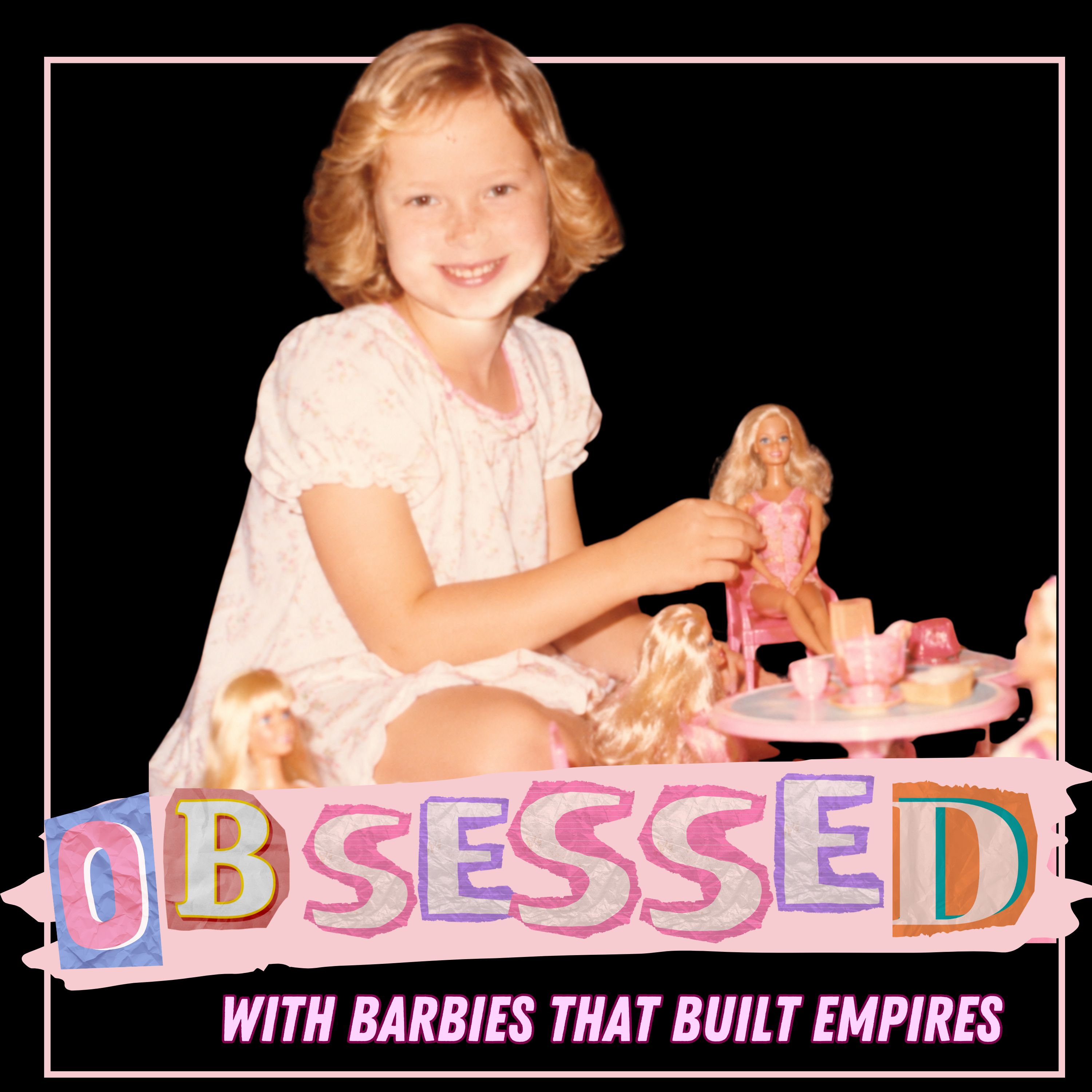
ulie Lokun shares how Barbie play shaped her confidence, career, and creativity, and how to reclaim the joy you had as a kid. What toy made you who you are? Primary Keywords: reclaim your inner child, imaginative play, personal growth, creative confidence, Julie Lokun, Get Obsessed Podcast, how to find joy again Secondary Keywords: Barbie and self-discovery, childhood play and identity, reinvention, women and ambition, career change confidence, creative burnout, personal development podcast, living your best life Episode Description Before she had a microphone, a law degree, or a single listener, Julie Lokun, JD had a shag carpet and a shoebox full of Barbies. She’d beg for five more minutes before dinner because Barbie was mid-scene: a board meeting, a breakup, and a gala, all on the same Saturday. Nobody understood the stakes like she did. In this solo episode of Get Obsessed, Julie goes back to that girl on the floor and finds something bigger than playtime. The bathtub became Malib