Listen through the publisher, then discuss the episode here or arrange an in-person Roundtable. Your city determines where to meet.
Roundtables are designed for groups of four, with a shared subject and room for everyone to speak. Come for discussion, with no dating expectation.
Why do we find the young of other species cute? Finding baby humans adorable makes evolutionary sense, ensuring that we care for them properly. But what about babies of other species? Hannah and Dara go down a fluffy rabbithole of cuteness: pondering the science behind things that make us go 'ahhhh'; exploring the phenomenon of 'cute aggression'; and discovering there can be such a thing as cuteness overload. We also discover what Dara would look like as an elf, and what happens when you make Hannah scientifically less cute. Brace yourselves... If you have a scientific mystery for the team to investigate, contact them on [email protected]. Contributors: Anthony Little – Reader in Psychology at the University of Bath Daniel Mills – Emeritus Professor of Veterinary Behavioural Medicine at the University of Lincoln Chris Holliday – Senior Lecturer in Liberal Arts and Visual Cultures Education at King's College London Producer: Lucy Taylor Executive Producer: Sasha Feachem A BBC Studios Production
Episode information is provided by the publisher. Listening takes place on the publisher’s service.
A kiss can be wonderful. It can create an instant connection, spark romance, or make you feel closer to someone. But a kiss can also have the opposite effect — and sometimes ruin everything. So what makes kissing so powerful, and why can one kiss make such a difference? There's some fascinating science behind it. https://www.scientificamerican.com/article/why-we-kiss/ We spend an enormous amount of time worrying about what's going to change. What's next? What's coming? How do we prepare? But what if we're paying attention to the wrong things? Some of the most important forces shaping our lives never change, and understanding them may be far more valuable than trying to predict the future — something humans are notoriously bad at. Morgan Housel, partner at The Collaborative Fund and author of Same as Ever: A Guide to What Never Changes (https://amzn.to/3SwWn6u) (https://amzn.to/3SwWn6u)), joins me to explain why the things that stay the same may be the most important things to understan
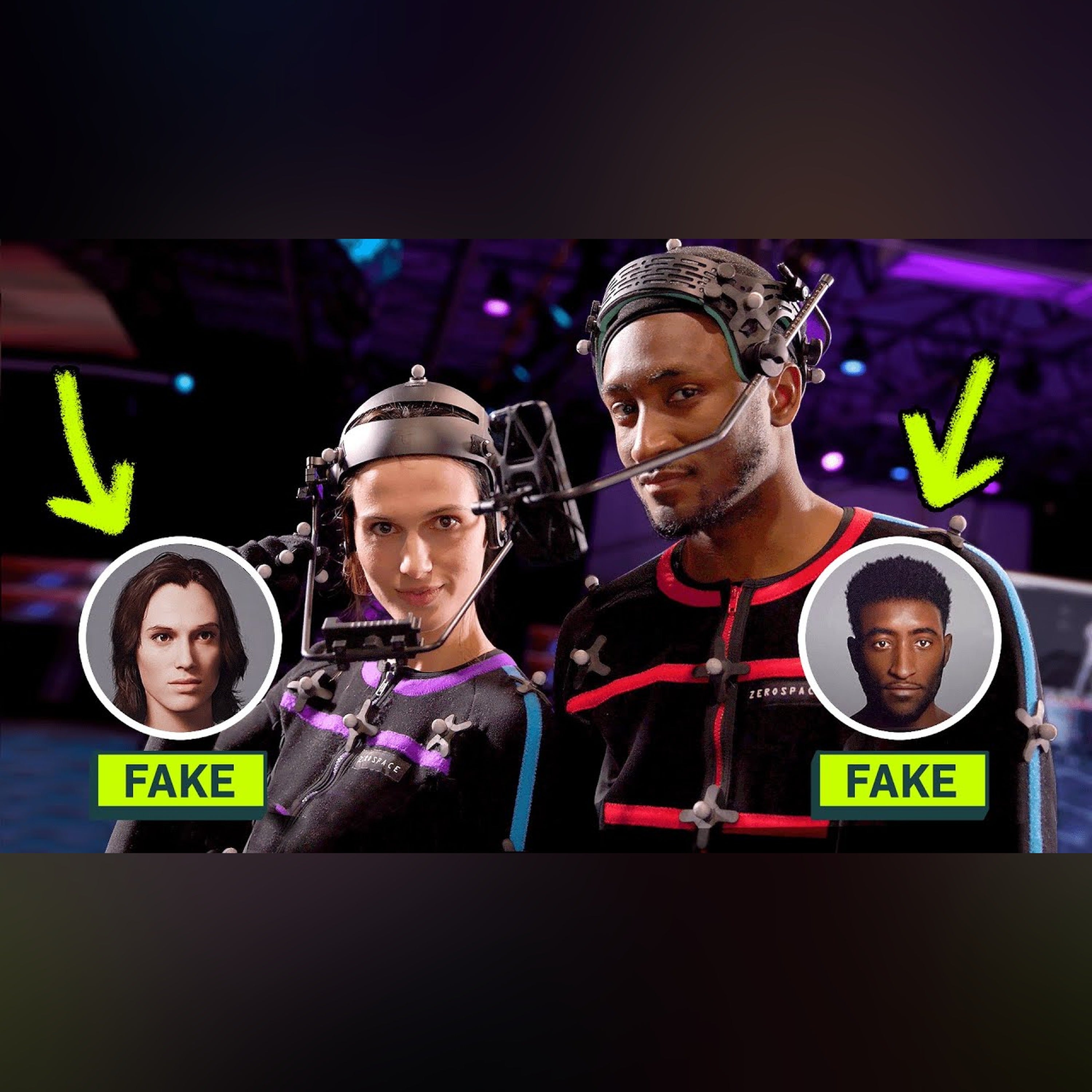
This new tech is changing how movies get made. So @mkbhd and I tested it out... Watch MKBHD's video: https://youtu.be/RM7SobH8ZO0 I’ve been obsessed with sci-fi movies since I was a kid. I love being transported to another world. But lately, I’ve been wondering: How do those worlds look so… REAL? The tech behind movies has exploded in complexity and realism, changing how stories come to life on screen. Luckily, at the same time, those tools are becoming more and more available to more people telling stories. It’s not just blockbusters like Avatar 2 or Avengers or Dune. It’s also smaller budget films like Everything Everywhere All at Once or even… YouTube creators? In this video, Marques Brownlee and I test out 3 movie-making tools that are changing how movies, shows, and maybe even YouTube videos (??) get made. We’re at ZeroSpace Studios in New York to show you how each of these crazy technologies work - and how you might be able to use them. Along the way, we hit big questions like: W
☀️ HARNESSING THE POWER OF THE SUN — THE SCIENCE BEHIND C60 EVO! What happens when scientists recreate extraordinary, sun-like temperatures inside a laboratory to produce one of the most fascinating carbon molecules ever studied? Michael Jaco welcomes Patty Greer and Chris Burres back to Unleashing Intuition for a fascinating behind-the-scenes look at C60 Evo, the technology used to produce ESS60, and the science behind this unique carbon molecule. Chris takes us inside the laboratory to explain the intense temperatures, specialized production methods, and purification processes involved in creating ESS60 — C60 Evo's proprietary form of Carbon 60. The conversation explores the relationship between antioxidants, mitochondria, cellular energy, and oxidative stress, along with why C60 Evo combines ESS60 with carefully selected extra virgin olive oil. Patty and Chris also share their perspectives on wellness, personal experiences, and the growing interest in carbon-based technology. Inside
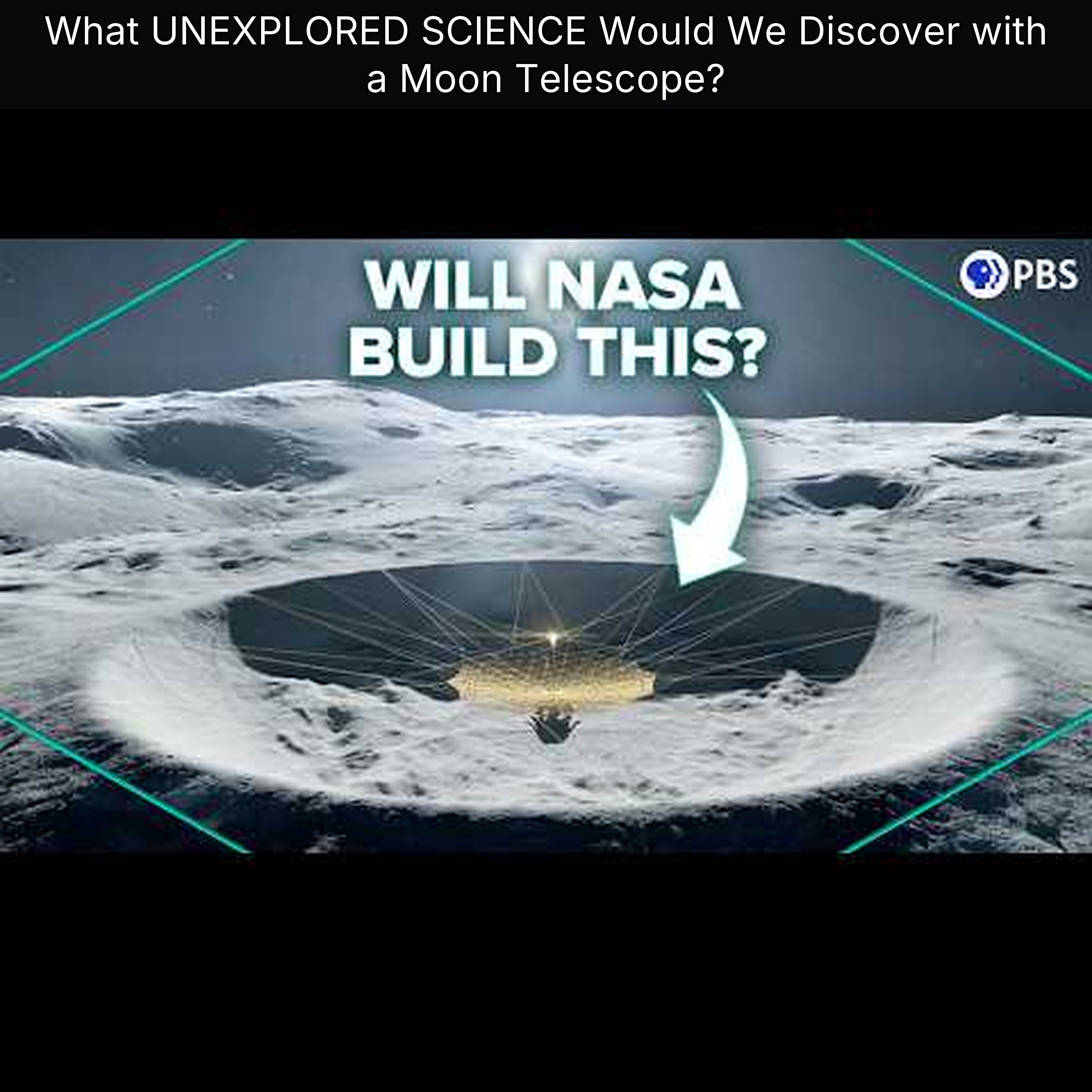
PBS Member Stations rely on viewers like you. To support your local station, go to:http://to.pbs.org/DonateSPACE Sign Up on Patreon to get access to the Space Time Discord! In order to see the faint light from objects in deepest space, astronomers go to the darkest places on the planet. In order to listen to their quite radio signals, they head as far from any radio-noisy humans as possible. But there’s nowhere on the earth, or even orbiting the Earth, that’s far enough to hear to the faint radio hum from the time before stars. In fact, we may need to build a giant radio telescope in the quietest place in the solar system—the far side of the moon. Check out the Space Time Merch Store Sign up for the mailing list to get episode notifications and hear special announcements! Search the Entire Space Time Library Here: https://search.pbsspacetime.com/ Hosted by Matt O'Dowd Written by Matt Caplan & Matt O'Dowd Post Production by Leonardo Scholzer, Yago Ballarini, Adriano Leal & Stephanie Far
Explore the science of the groundbreaking technology for editing genes, called CRISPR- Cas9, and how the tool could be used to cure diseases. Uploaded 24-01-19 -- From the smallest single-celled organism to the largest creatures on Earth, every living thing is defined by its genes. With recent advancements, scientists can change an organism’s fundamental features in record time using gene editing tools such as CRISPR. But where did this medical marvel come from and how does it work? Andrea M. Henle examines the science behind this new technology. Lesson by Andrea M. Henle, directed by Adam Wells. Sign up for our newsletter: http://bit.ly/TEDEdNewsletter Support us on Patreon: http://bit.ly/TEDEdPatreon Find us on Twitter: http://bit.ly/TEDEdTwitter Peep us on Instagram: http://bit.ly/TEDEdInstagram View full lesson: https://ed.ted.com/lessons/how-crispr-lets-you-edit-dna-andrea-m-henle Thank you so much to our patrons for your support! Without you this video would not be possible! Feli
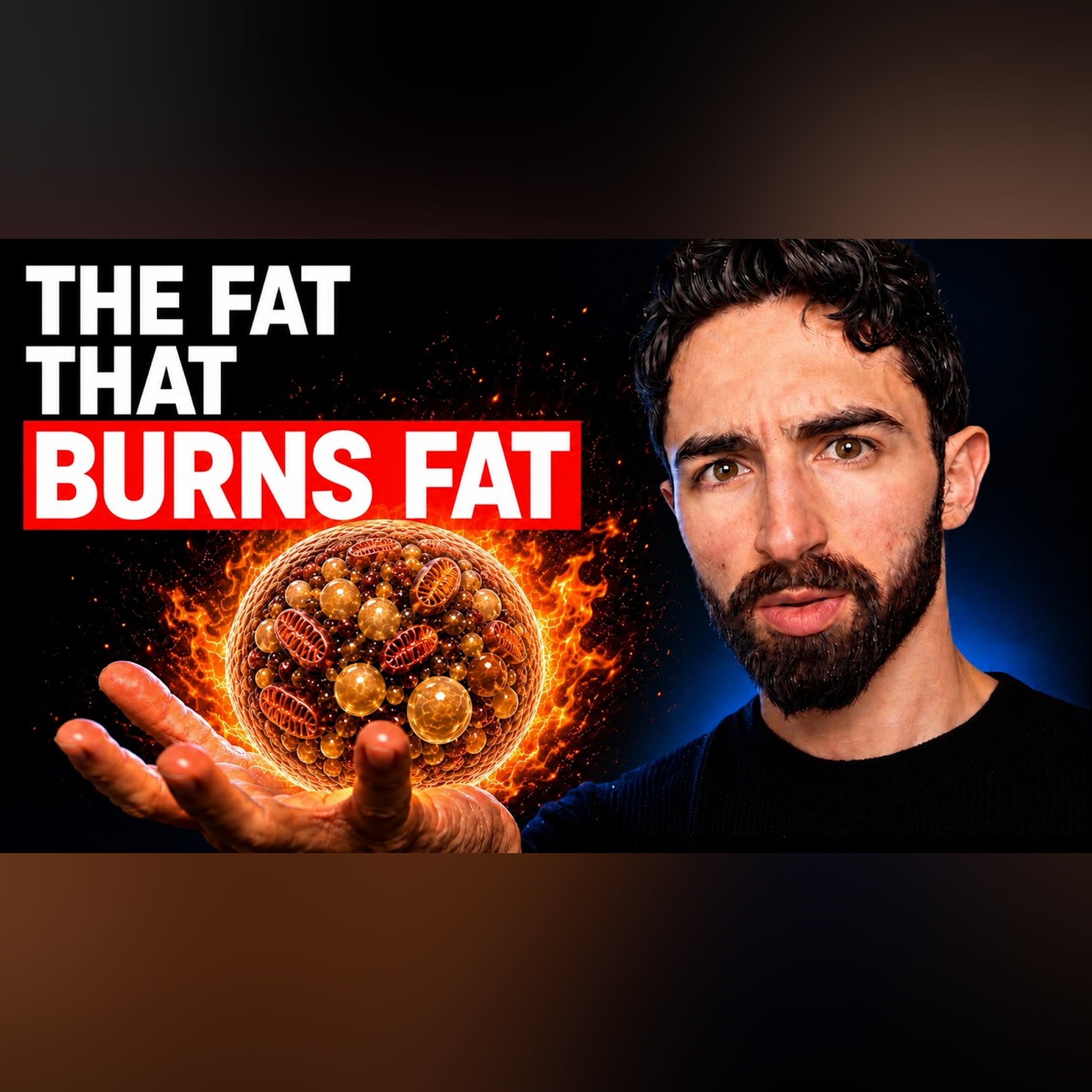
For a written breakdown, early access to content like this, and extra nuances, see the associated StayCurious Metabolism newsletter: https://open.substack.com/pub/staycuriousmetabolism/p/are-we-close-to-unlocking-the-secret?r=40ekz2&utm_campaign=post&utm_medium=web&showWelcomeOnShare=true (https://open.substack.com/pub/staycuriousmetabolism/p/are-we-close-to-unlocking-the-secret?r=40ekz2&showWelcomeOnShare=true) Winnow Microplastic Binding Probiotic: https://www.winnowlabs.com/STAYCURIOUS25 Microplastics Heart Health, Letter https://staycuriousmetabolism.substack.com/p/microplastics-in-my-heart-its-worse?r=40ekz2 Microplastics Brain Health, Letter: https://staycuriousmetabolism.substack.com/p/this-graph-changed-how-i-think-about?r=40ekz2 Nattokinase Video: https://youtu.be/LGQO227_Mto Description: What if you could burn hundreds of extra calories per day, without changing your exercise routine or activity? It sounds impossible. But controlled human trials suggest that simply lowering p
Fireworks have been lighting up our autumn skies for centuries - but what’s actually going on inside those dazzling bursts of colour, sound and stars? Hannah and Dara set out to discover the science behind the sparkle. From the chemistry that creates vivid reds, greens and blues, to the physics that launches shells high above our heads before exploding into perfectly planned patterns, they learn that every firework is a carefully choreographed feat of engineering. Along the way, they explore why some fireworks whistle while others crackle, trace the remarkable history of fireworks from ancient China to modern-day spectacles, and ponder whether drones and laser shows could one day replace the traditional fiery festivities. If you have a curious question for our team, get in touch via [email protected]. Contributors: Jackie Akhavan - Professor of Explosive Chemistry at Cranfield University John Withington - histroian broadcaster and author of ‘A History of Fireworks from Their Origi
New health services should prioritize communities with the poorest existing access.
Share your view, then see how readers voted. No sign-in required. This poll is shared across stories.
Do you agree or disagree?
Common Quandary
A Common Quandary to discuss
Another conversation to explore, separate from this news story.
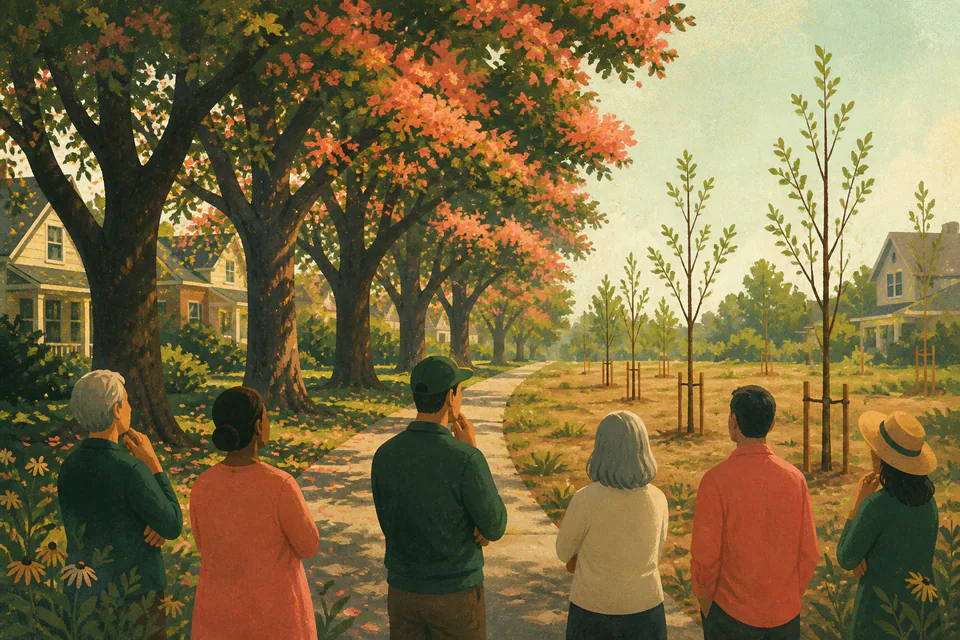
The prettiest trees on your street are ecological troublemakers. Do they come down?
A row of mature flowering trees defines a neighborhood and provides valuable shade. Ecologists identify them as invasive and recommend replacing them with native saplings that will take decades to grow.
How should visible community value be weighed against gradual ecological harm?