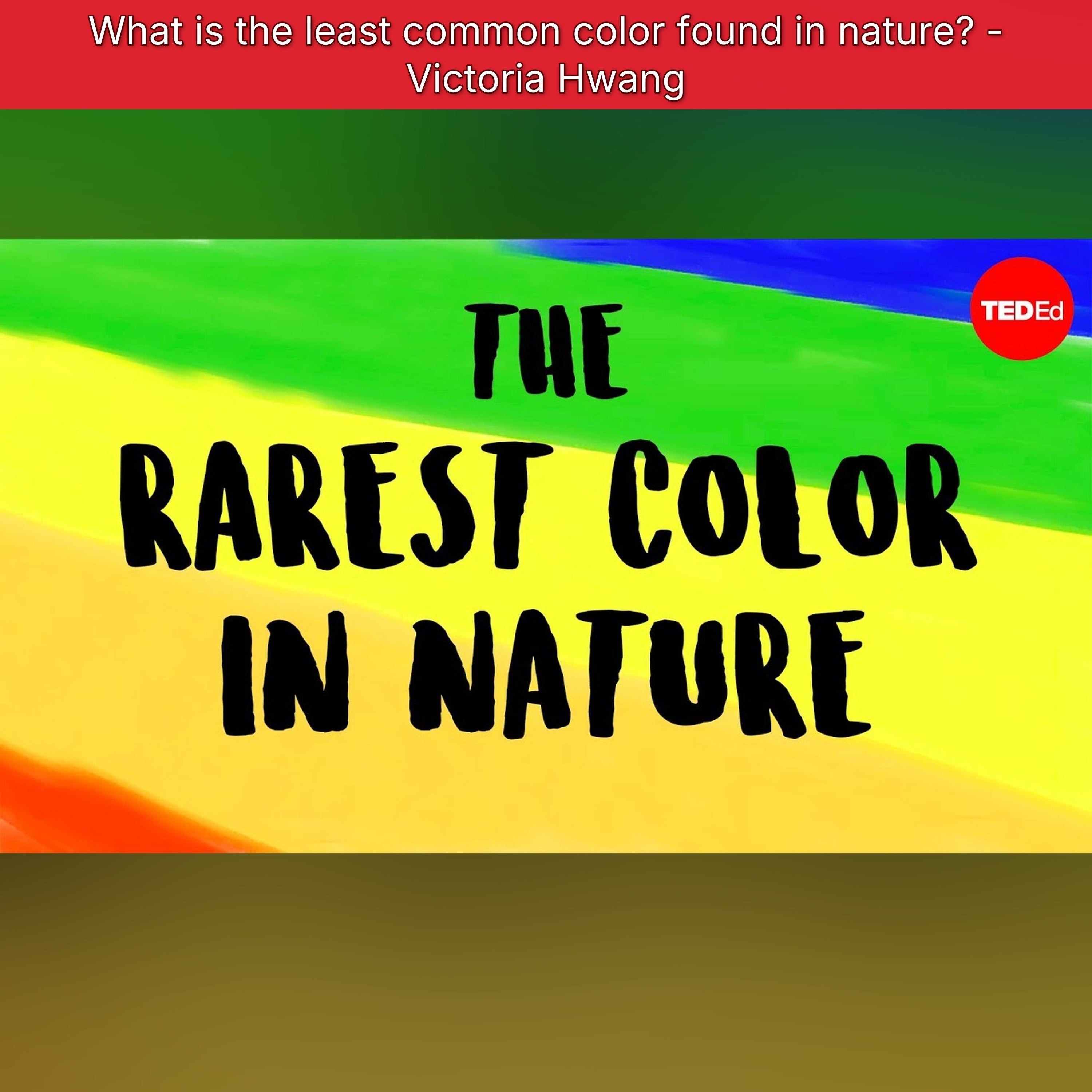
What is the least common color found in nature? - Victoria Hwang
Listen through the publisher, then discuss the episode here or arrange an in-person Roundtable. Your city determines where to meet.
Roundtables are designed for groups of four, with a shared subject and room for everyone to speak. Come for discussion, with no dating expectation.
Discover what colors are the most rare to see in nature, and how physics and evolution drive their scarcity. -- Plants, animals, or minerals found in nature bear almost every color imaginable. There are two factors that influence what hues you see in the wild: physics and evolution. So, which colors are you least likely to see in the natural world? Victoria Hwang explores one of nature’s rarest spectacles. Lesson by Victoria Hwang, directed by Tamara Bogovac, Artrake Studio. 2:33 - Image referenced from paper by Eric R. Dufresne, Heeso Noh, Vinodkumar Saranathan, Simon G. J. Mochrie, Hui Cao and Richard O. Prum, photograph of Plum-throated Cotinga (Cotinga maynana) by Thomas Valqui, https://rsc.li/3xyhxGu Support Our Non-Profit Mission ---------------------------------------------- Support us on Patreon: http://bit.ly/TEDEdPatreon Check out our merch: http://bit.ly/TEDEDShop ---------------------------------------------- Connect With Us ---------------------------------------------- Sign up for our newsletter: http://bit.ly/TEDEdNewsletter Find us on Twitter: http://bit.ly/TEDEdTwitter Peep us on Instagram: http://bit.ly/TEDEdInstagram ---------------------------------------------- Keep Learning ---------------------------------------------- View full lesson: https://ed.ted.com/lessons/what-is-the-rarest-color-in-nature-victoria-hwang Dig deeper with additional resources: https://ed.ted.com/lessons/what-is-the-rarest-color-in-nature-victoria-hwang#digdeeper (https://ed.ted.com/lessons/what-is-the-rarest-color-in-nature-victoria-hwang) Animator's website: https://www.artrake.com (https://www.artrake.com/) ---------------------------------------------- Thank you so much to our patrons for your support! Without you this video would not be possible! Conder Shou, BrushReads, Matt Kennedy, Jonah Dobbs, ntiger, Noname, Hansan Hu, Cameron Burkle, Dhanwanth Varadhan, David D, Zuko Gameplays, Jonathan Bates JBZ, Aria Smith, Mac Hyney, Keith Ellison, robin valero walters, Camehira, Lynne Truesdale, Gatsby Dkdc, Matthew Neal, Jayson Gasper Ayson, Maxwell Ramsby, Dmitry Yuryev, Denis Chon, Julian Oberhofer, Monte Carroll, Eddy, Jay M, Constantino Victor Delgado, Andrea Galvagni, Andrew Tweddle, Laurel-Ann Rice, Fernando A. Endo, Helen Lee, pam morgan, sarim haq, Juan Pablo Rodriguez Morales, ANNE FINE, Gerardo Castro, Siddharth Toshniwal, Michel-Ange Hortegat, Enes Kirimi, Amaury BISIAUX, ND, Samyogita Hardikar, Vanessa Graulich, Vandana Gunwani, Abdulmohsin Almadi, Andrew Brodski and AJ Lyon.
Episode information is provided by the publisher. Listening takes place on the publisher’s service.
Listen at the source ↗