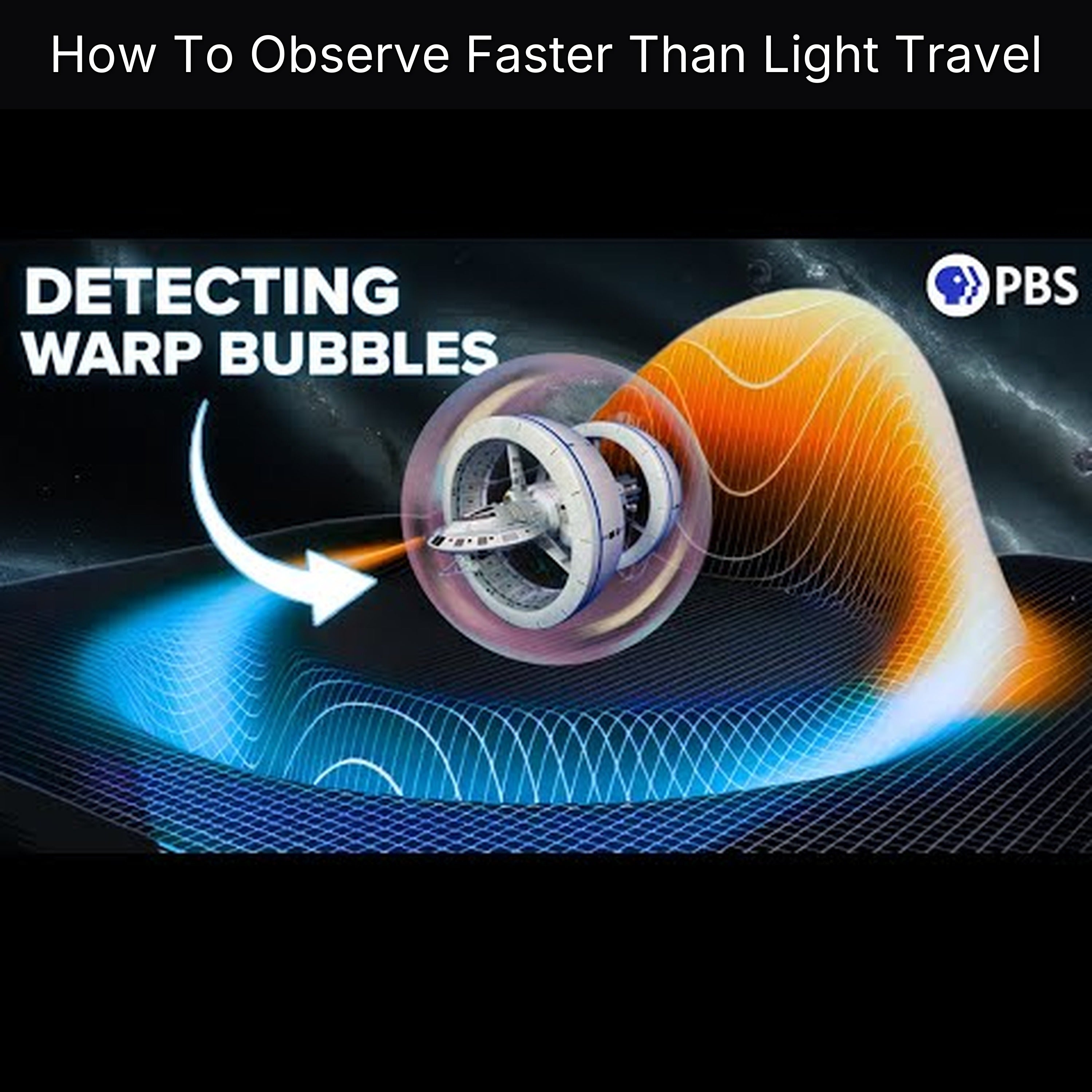
Check out the Space Time Merch Store Sign Up on Patreon to get access to the Space Time Discord! Warp drives may or may not be possible, but if they are then could a distant alien civilization’s warp fields produce gravitational waves that we could see here on Earth? According to a recent study.. Actually maybe, at least eventually. And we now know just what to look for and how to look for it. PBS Member Stations rely on viewers like you. To support your local station, go to:http://to.pbs.org/DonateSPACE Sign up for the mailing list to get episode notifications and hear special announcements! Search the Entire Space Time Library Here: https://search.pbsspacetime.com/ Space Pod 3d model: futaba@blender What no one has seen before: gravitational waveforms from warp drive collapse: https://arxiv.org/pdf/2406.02466 Hosted by Matt O'Dowd Written by Richard Dyer & Matt O'Dowd Post Production by Leonardo Scholzer, Yago Ballarini & Stephanie Faria Directed by Andrew Kornhaber Associate Produce
Thank you, Vox, for the best job I ever had. Here’s what’s next. Be featured in an episode - upload questions for me to answer! https://www.dropbox.com/request/Edocsb2kErpueQ7F9T1Q I tell different stories in different places: You can find me on TikTok here for short, fun explainers: https://www.tiktok.com/@cleoabram You can find me on Instagram here for more personal stories: https://www.instagram.com/cleoabram You can find me on Twitter here for thoughts and curated news: https://twitter.com/cleoabram Credits: (After the trailer, these will be at the end of each episode.) Produced and edited by: Cleo Abram Animated by: Whitney Theis Bio: Cleo Abram is an Emmy-nominated video producer and journalist. Cleo produces detailed explainer stories about technology and economics. She wrote the Coding and Diamonds episodes of Vox’s Netflix show, Explained, was the host and a senior producer of Vox’s first ever daily show, Answered, as well as a host and producer of Vox’s YouTube Originals show
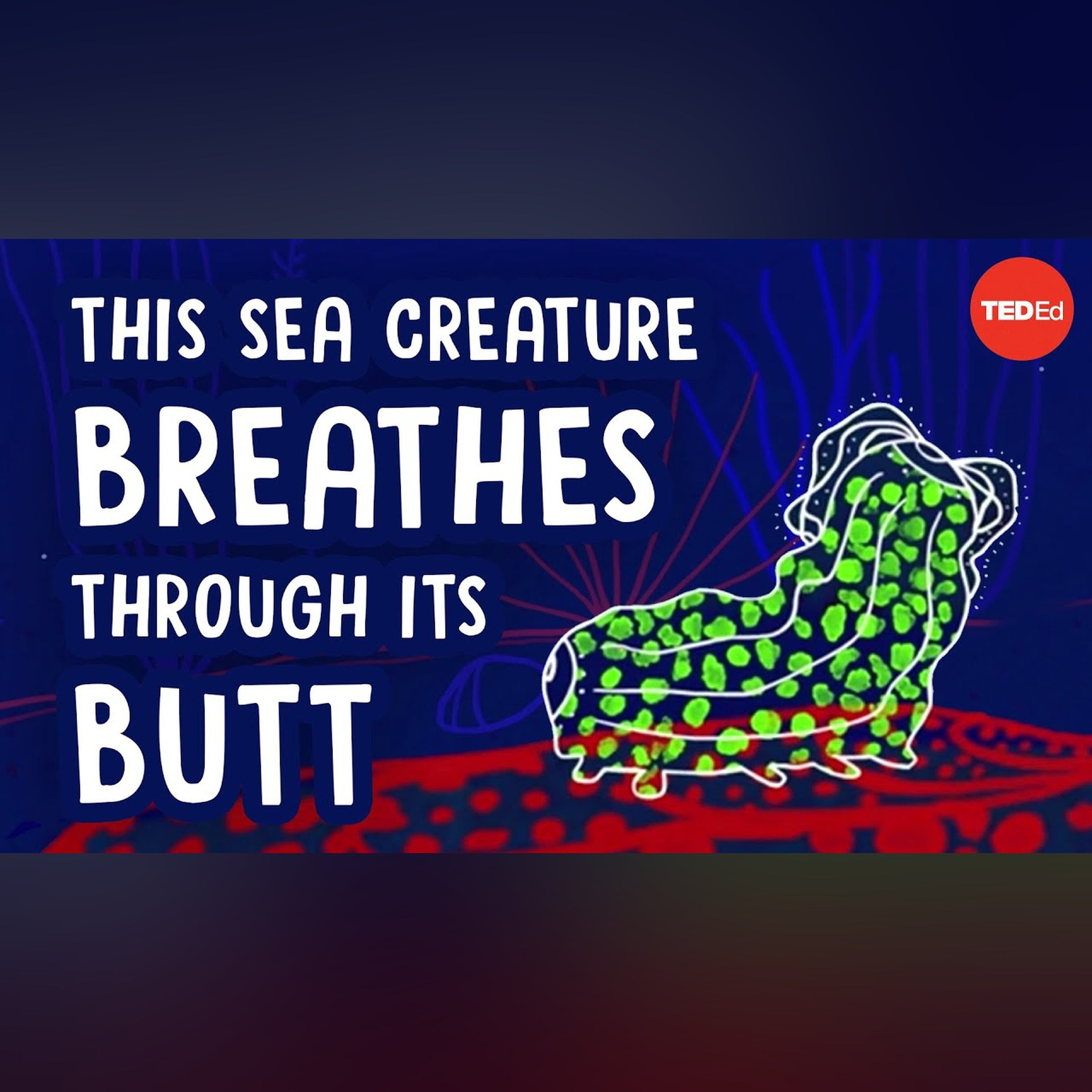
Explore the wonderfully bizarre life of the sea cucumber, and discover the essential role they play in keeping ocean ecosystems healthy. Uploaded 30-04-20 -- Is it a fuzzy sock? An overripe banana? A moldy tube of toothpaste? No! In fact, it’s a humble sea cucumber: a brainless, fleshy form surrounding a digestive tract, and bookended by a mouth and an anus. And while it might look odd, its daily toil paves the way for entire ecosystems to thrive. Cella Wright journeys to the bottom of the ocean to explore the lives of these sausage-shaped wonders. Lesson by Cella Wright, directed by Guto BR, Flávia Godoy and Lívia Serri Francoio. Sign up for our newsletter: http://bit.ly/TEDEdNewsletter Support us on Patreon: http://bit.ly/TEDEdPatreon Find us on Twitter: http://bit.ly/TEDEdTwitter Peep us on Instagram: http://bit.ly/TEDEdInstagram View full lesson: https://ed.ted.com/lessons/the-most-important-anus-in-the-ocean-cella-wright Thank you so much to our patrons for your support! Without y
Dig into the system that helps scientists distinguish trees from other varieties of plants, and what characteristics make a tree. -- Plants assume a variety of forms, and trees are just one of them. What makes or breaks a tree can come down to some pretty specific characteristics, based on how the plant develops as a result of how it evolved. Trees don’t all comprise one closely related group, like insects or mammals. So, how exactly do trees get classified as trees? Max G. Levy explains what distinguishes these woody plants. Lesson by Max G. Levy, directed by Evandro D'Hipolito. Support Our Non-Profit Mission ---------------------------------------------- Support us on Patreon: http://bit.ly/TEDEdPatreon Check out our merch: http://bit.ly/TEDEDShop ---------------------------------------------- Connect With Us ---------------------------------------------- Sign up for our newsletter: http://bit.ly/TEDEdNewsletter Find us on Twitter: http://bit.ly/TEDEdTwitter Peep us on Instagram: htt
Head to https://brilliant.org/Spacetime/ to start learning for free. Physics is this close to understanding the entire universe. And what lives in this gap? Many physicists think it’s the elusive graviton—the quantum particle of gravity—whose discovery will finally allow us to stitch together our two great theories of nature into a single master theory. But what is the graviton, and does it even exist? Help us determine the future of Space Time with the PBS Annual Survey: Sign Up on Patreon to get access to the Space Time Discord! Check out the Space Time Merch Store Sign up for the mailing list to get episode notifications and hear special announcements! Search the Entire Space Time Library Here: https://search.pbsspacetime.com/ Hosted by Matt O'Dowd Written by Richard Dyer & Matt O'Dowd Post Production by Leonardo Scholzer Directed by Andrew Kornhaber Associate Producer: Bahar Gholipour Executive Producer: Andrew Kornhaber Executive in Charge for PBS: Maribel Lopez Director of Progra
Learn More about Brilliant: https://brilliant.org/SpaceTime/ Uploaded 17-11-21 Take the 2023 PBS Audience Survey: https://to.pbs.org/pbssurvey2023d Black holes are a paradox. They are paradoxical because they simultaneously must exist but can’t, and so they break physics as we know it. Many physicists will tell you that the best way to fix broken physics is with string. String theory, in fact. And in the black holes of string theory - fuzzballs - are perhaps even weirder than the regular type. Sign Up on Patreon to get access to the Space Time Discord! Check out the Space Time Merch Store Sign up for the mailing list to get episode notifications and hear special announcements! Hosted by Matt O'Dowd Written by Etienne Ligout and Matt O'Dowd Post Production by Leonardo Scholzer, Yago Ballarini, Pedro Osinski, Adriano Leal and Stephanie Faria GFX Visualizations: Ajay Manuel Directed by Andrew Kornhaber Assistant Producer: Setare Gholipour Executive Producers: Eric Brown and Andrew Kornhab
You’re a vampire hunter entering the enemy’s lair. Can you outsmart this tricky brainteaser and vanquish the vampires? Uploaded 28-01-19 -- You’ve stealthily descended into the darkness of a vampire cave, setting a sequence of mirrors as you go. When the sun reaches the right angle in the sky, a beam of light will ricochet along the mirrors, strike a diffuser, and illuminate the great chamber where the vampires sleep. Can you place the diffuser correctly and flood the lair with sunlight? Dan Finkel shows how. Lesson by Dan Finkel, directed by Artrake Studio. Sign up for our newsletter: http://bit.ly/TEDEdNewsletter Support us on Patreon: http://bit.ly/TEDEdPatreon Find us on Twitter: http://bit.ly/TEDEdTwitter Peep us on Instagram: http://bit.ly/TEDEdInstagram View full lesson: https://ed.ted.com/lessons/can-you-solve-the-vampire-hunter-riddle-dan-finkel Thank you so much to our patrons for your support! Without you this video would not be possible! Derek Drescher, Karisa Caudill, Zhon
View full lesson: http://ed.ted.com/lessons/beyond-the-shadow-of-a-doubt-gina-cooke Say the word "doubt" aloud. What is that "b" doing there? Does it have any purpose? Gina Cooke explains the long and winding history of "doubt" and why the spelling, though it seems random, is a wink to its storied past. Lesson by Gina Cooke, animation by The Leading Sheep Studios.
PBS Member Stations rely on viewers like you. To support your local station, go to:http://to.pbs.org/DonateSPACE Uploaded 01-06-22 Get your t-shirt at the Space Time Merch Store: Neils Bohr said, “It is wrong to think that the task of physics is to find out how Nature is. Physics concerns what we can say about Nature.” Well it turns out that if we pay attention to this subtle difference, some of the most mysterious aspects of nature make a lot more sense. Sign Up on Patreon to get access to the Space Time Discord! Sign up for the mailing list to get episode notifications and hear special announcements! Search the Entire Space Time Library Here: https://search.pbsspacetime.com/ Hosted by Matt O'Dowd Written by Matt O'Dowd Post Production by Leonardo Scholzer, Yago Ballarini, Pedro Osinski, Adriano Leal and Stephanie Faria GFX Visualizations: Ajay Manuel Directed by Andrew Kornhaber Associate Producer: Bahar Gholipour Executive Producers: Eric Brown and Andrew Kornhaber Executives in Cha
AI Will Ship a AAA Game AUTONOMOUSLY by 2030! Episode release date: 27 Apr 2025 Core Ideas: Metamodernism: Narratives and emergence view of reality - Reduce suffering - Increase prosperity - Increase understanding mantra: Seek knowledge. DISCLAIMER: This is a community-driven show. --------
Dig into the science of thermal batteries, and how this technology can generate heat more efficiently than fossil fuels. -- Industrial manufacturers spend a huge amount of energy generating heat to make everyday materials and objects, like cement, steel, and paper. And since most companies use fossil fuels to reach these high temperatures, industrial heat accounts for 20% of our annual global carbon pollution. Thankfully, this is where a century-old technology comes in. Rachel Yang explores how heat batteries work. Lesson by Rachel Yang, directed by Sofia Pashaei. This video made possible in collaboration with Speed & Scale Learn more about how TED-Ed partnerships work: https://bit.ly/TEDEdPartner Support Our Non-Profit Mission ---------------------------------------------- Support us on Patreon: http://bit.ly/TEDEdPatreon Check out our merch: http://bit.ly/TEDEDShop ---------------------------------------------- Connect With Us ---------------------------------------------- Sign up fo
Weathered: Earth's Extreme is available globally at: https://to.pbs.org/WeatheredST or the PBS App (US Only) Check out the Space Time Merch Store We know that the universe is getting bigger. And we know that the speed that the universe is getting bigger is also getting bigger. The standard assumption is that the acceleration rate is itself constant, which will surely result in ultimate heat death. But a recent survey of primordial sound waves frozen into the way galaxies are sprinkled through the universe reveals that this fate is now in question. PBS Member Stations rely on viewers like you. To support your local station, go to:http://to.pbs.org/DonateSPACE Sign Up on Patreon to get access to the Space Time Discord! Sign up for the mailing list to get episode notifications and hear special announcements! Search the Entire Space Time Library Here: https://search.pbsspacetime.com/ Hosted by Matt O'Dowd Written by Richard Dyer & Matt O'Dowd Post Production by Leonardo Scholzer, Yago Ball
Learn More About Anydesk: https://anydesk.com/spacetime According to quantum physics, the universe should have collapsed on itself in the instant after the Big Bang due to all particles being 100 million billion times heavier. Recent observations of the universe existing suggest that this may not have happened. Even more recent experiments at the Large Hardron Collider have failed to find out why. In particular, why the Higgs boson is light enough to allow the universe to exist. This is part of something known as the hierarchy problem, and some consider it to be the most important unsolved problem in physics. PBS Member Stations rely on viewers like you. To support your local station, go to:http://to.pbs.org/DonateSPACE Sign Up on Patreon to get access to the Space Time Discord! Check out the Space Time Merch Store Sign up for the mailing list to get episode notifications and hear special announcements! Search the Entire Space Time Library Here: https://search.pbsspacetime.com/ Hosted
View full lesson: http://ed.ted.com/lessons/chip-conley-measuring-what-makes-life-worthwhile When the dot-com bubble burst, hotelier Chip Conley went in search of a business model based on happiness. In an old friendship with an employee and in the wisdom of a Buddhist king, he learned that success comes from what you count. Chip Conley creates joyful hotels, where he hopes his employees, customers and investors alike can realize their full potential. His books share that philosophy with the wider world. Talk by Chip Conley.
On this week’s episode, Graig Suvannavejh, Tim Opler, BrianSkorney, Chris Garabedian, and Matt Gline opened with a look at the biotech market, with the XBI up roughly 17% to 18% year to date, though the group noted that AI-driven demand for capital and the possibility of an AI bubble are weighing on sentiment. The co-hosts then discussed expectations for 2027 as a significant M&A year, following conversations with pharma M&A leaders at the Jefferies Global Healthcare Conference. The group also covered the withdrawal of Heidi Overton’s FDA Commissioner nomination and what the uncertainty could mean for agency stability and volatility. Next, they discussed market rumors of a potential Sanofi acquisition of Insmed, including Brinsupri’s performance and raised guidance, and what a deal of that size could signal for the broader M&A landscape. The group also covered Lilly’s oncology deals with Stipple Bio and Calytrix, and the growing opacity of biobucks headlines and undisclosed upfront pay
View full lesson: http://ed.ted.com/lessons/the-history-of-the-barometer-and-how-it-works-asaf-bar-yosef Uploaded 28-07-14 A barometer is an instrument that measures air pressure, allowing weather forecasters and scientists to better predict extreme weather events. Despite its incredible usefulness, inventing the barometer was no walk in the park. Asaf Bar-Yosef describes the series of scientists and events that contributed to the birth of the barometer -- and explains how it actually works. Lesson by Asaf Bar-Yosef, animation by Reflective Films.
Viewers like you help make PBS (Thank you ) . Support your local PBS Member Station here: https://to.pbs.org/DonateSPACE Uploaded 22-11-17 Let’s take a moment to remember the selfless sacrifices made by some amazing robotic explorers. And be sure to learn more about your personal DNA story by going to https://www.23andMe.com/spacetime (https://www.23andme.com/spacetime) and taking advantage of their special holiday offer. You can further support us on Patreon at https://www.patreon.com/pbsspacetime Get your own Space Time tshirt at http://bit.ly/1QlzoBi Tweet at us! @pbsspacetime Facebook: facebook.com/pbsspacetime Email us! pbsspacetime [at] gmail [dot] com Comment on Reddit: http://www.reddit.com/r/pbsspacetime Help translate our videos! https://www.youtube.com/timedtext_cs_panel?tab=2&c=UC7_gcs09iThXybpVgjHZ_7g (https://www.youtube.com/timedtext_cs_panel?c=UC7_gcs09iThXybpVgjHZ_7g&tab=2) Previous Episode: Zero-Point Energy Demystified | Space Time It takes a lot of tech to send hum
Viewers like you help make PBS (Thank you ) . Support your local PBS Member Station here: https://to.pbs.org/DonateSPACE Uploaded 31-10-18 Let me tell you a story about virtual particles. It may or may not be true. You can further support us on Patreon at https://www.patreon.com/pbsspacetime Get your own Space Time t-shirt at http://bit.ly/1QlzoBi Tweet at us! @pbsspacetime Facebook: facebook.com/pbsspacetime Email us! pbsspacetime [at] gmail [dot] com Comment on Reddit: http://www.reddit.com/r/pbsspacetime Help translate our videos! Previous Episode: Will We Ever Find Alien Life? https://www.youtube.com/watch?v=uhJ9lJPt09k&t=347s (https://www.youtube.com/watch?t=347s&v=uhJ9lJPt09k) Hosted by Matt O'Dowd Written by Graeme Gossell and Matt O'Dowd Graphics by Luke Maroldi Assistant Editing and Sound Design by Mike Petrow Made by Kornhaber Brown (www.kornhaberbrown.com) Sometimes our mathematical hacks point to strange new aspects of reality. For example Max Planck used a quantization tr
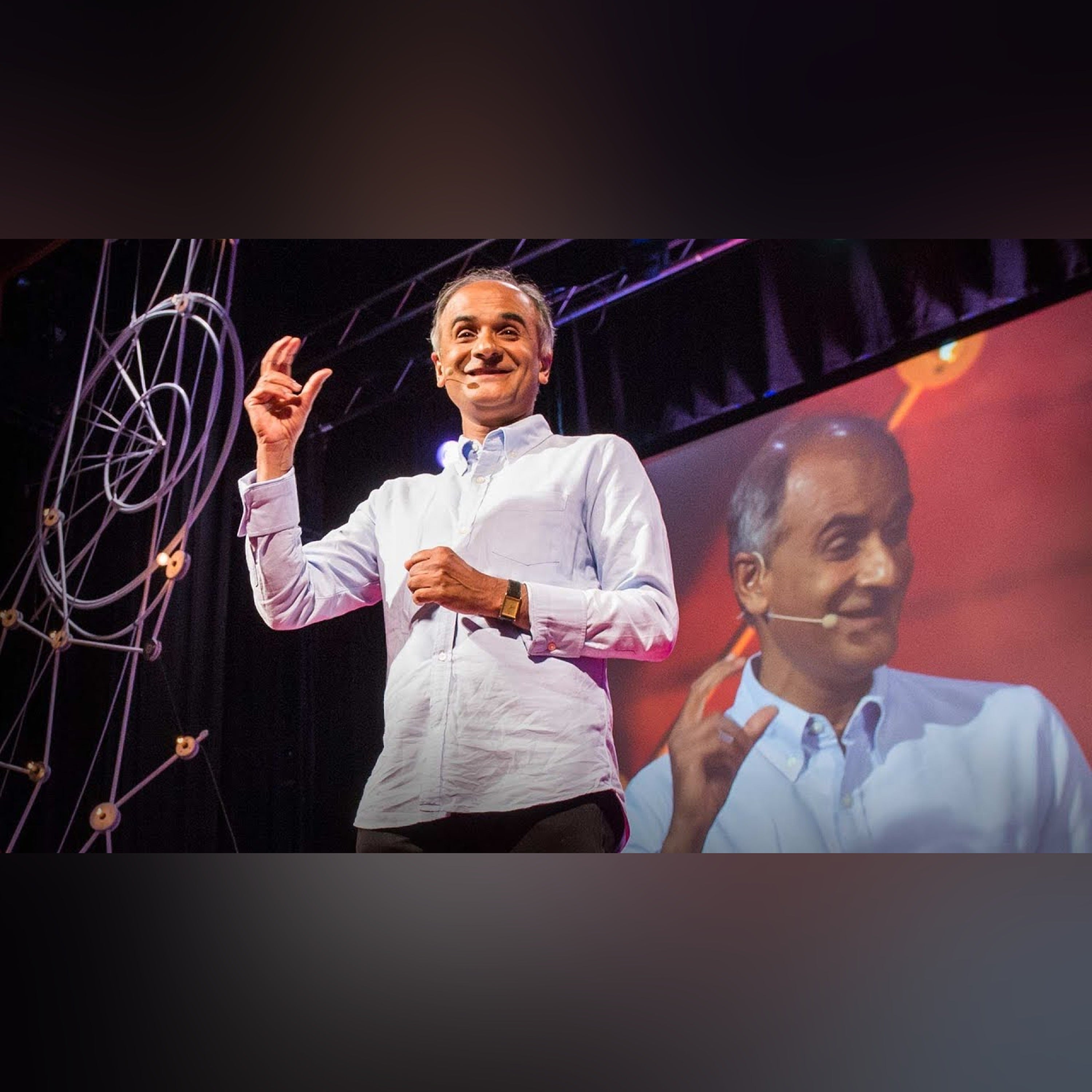
More and more people worldwide are living in countries not considered their own. Writer Pico Iyer -- who himself has three or four "origins" -- meditates on the meaning of home, the joy of traveling and the serenity of standing still. Uploaded 23-08-13 Talk by Pico Iyer.
Metabolic health is the foundation for mental health. We are only beginning to unravel the mechanistic mysteries around the ways in which how we eat and live as physical beings impacts our mind. These new data add an interesting piece to the puzzle and demonstrate how bile acid molecules act as endogenous anti-depressants. Watch all the way through, and you’ll be astonished at the biological elegance of our bodies. And you’re in for a surprise. Chapters 0:00 – Metabolic Psychiatry is Booming 0:47 – Bile Acids Can Improve Depression 4:51 – How this relates to Your Mental Health 6:07 – What Fuels Metabolic Psychiatry? 6:47 – People Don’t Fake Depression, They Fake Being Okay 7:22 – Words from Zach Williams Prior Keto and Bile Acids video: https://youtu.be/d0WuCIZxPxU Optogenetics is covered in this video shortly after the 3-minute mark: https://youtu.be/44qM9VtNAjc Danan et al. paper: https://pubmed.ncbi.nlm.nih.gov/35873236/ Sethi el al. paper: https://pubmed.ncbi.nlm.nih.gov/38547601/
Build your dream business for today for Free https://shopify.pxf.io/gONBP0 DeepSeek R1 just caught up with OpenAI's o1 - There is no moat! What does this mean? Core Ideas: Metamodernism: Narratives and emergence view of reality - Reduce suffering - Increase prosperity - Increase understanding mantra: Seek knowledge. DISCLAIMER: This is a community-driven show.
Get to know the story of Sojourner Truth, a woman born into slavery who became known as a powerful orator and outspoken activist. Uploaded 28-04-20 -- Isabella Baumfree was born into slavery in late 18th century New York. Fleeing bondage with her youngest daughter, she renamed herself Sojourner Truth and embarked on a legendary speaking tour. She became known as an electrifying orator and her speeches impacted thousands of people in communities across the United States. Daina Ramey Berry details the life of the outspoken activist. Lesson by Daina Ramey Berry, directed by WOW-HOW Studio. Animator's website: https://wow-how.com/ Sign up for our newsletter: http://bit.ly/TEDEdNewsletter Support us on Patreon: http://bit.ly/TEDEdPatreon Find us on Twitter: http://bit.ly/TEDEdTwitter Peep us on Instagram: http://bit.ly/TEDEdInstagram View full lesson: https://ed.ted.com/lessons/the-electrifying-speeches-of-sojourner-truth-daina-ramey-berry Thank you so much to our patrons for your support!
PBS Member Stations rely on viewers like you. To support your local station, go to:http://to.pbs.org/DonateSPACE Sign Up on Patreon to get access to the Space Time Discord! Interstellar travel is horrible-what with the cramped quarters of your spaceship and only the thin hull separating you from deathly cold and deadly cosmic rays. Much safer to stay on here Earth with our gloriously habitable biosphere, protective magnetic field, and endless energy from the Sun. But what if we could have the best of all worlds? No pun intended. What if we could turn our entire solar system into a spaceship and drive the Sun itself around the galaxy? Well, I don't know if we definitely can, but we might not not be able to. Check out the Space Time Merch Store Sign up for the mailing list to get episode notifications and hear special announcements! Search the Entire Space Time Library Here: https://search.pbsspacetime.com/ Hosted by Matt O'Dowd Written by Matt Caplan & Matt O'Dowd Post Production by Leo
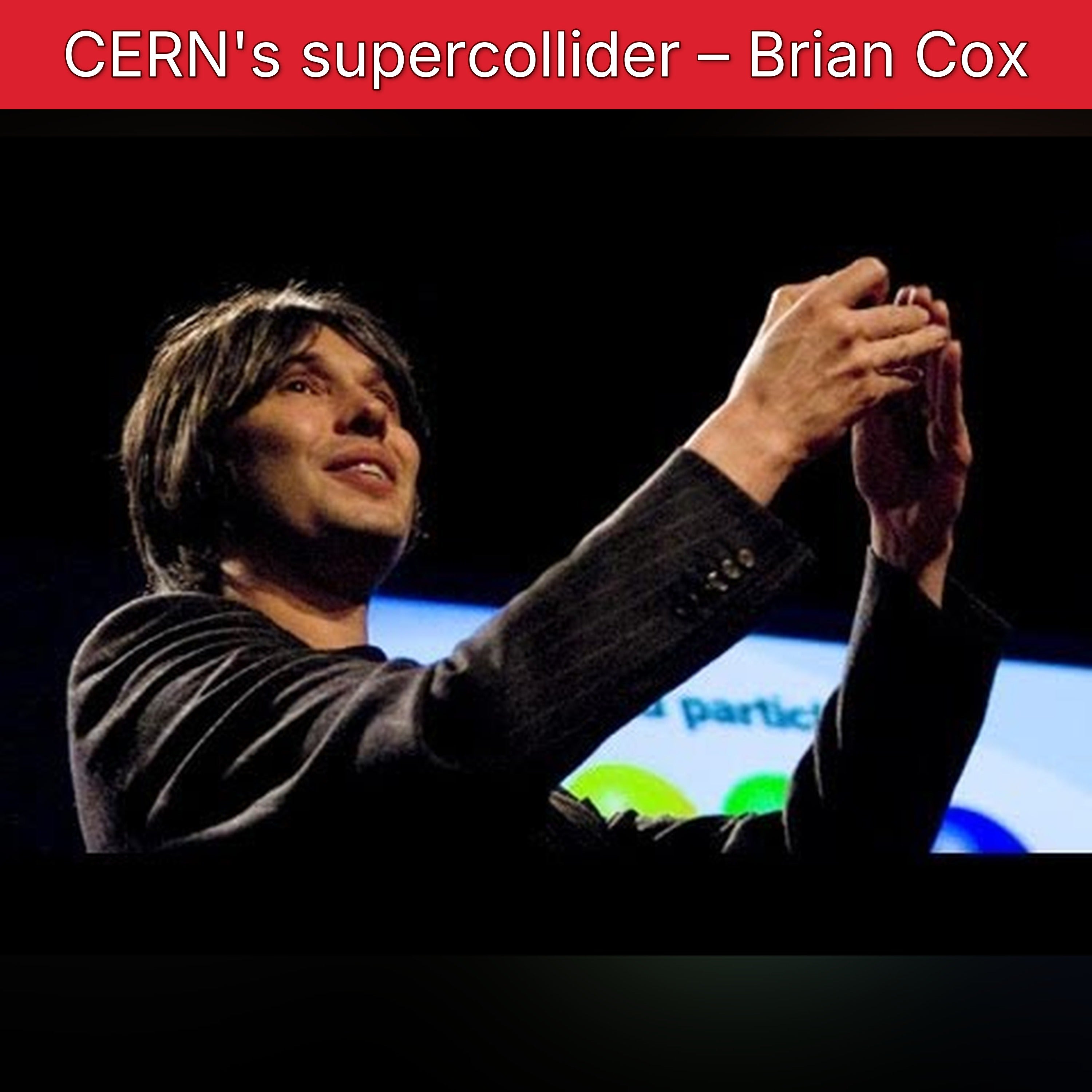
View full lesson: http://ed.ted.com/lessons/brian-cox-on-cern-s-supercollider "Rock-star physicist" Brian Cox talks about his work on the Large Hadron Collider at CERN. Discussing the biggest of big science in an engaging and accessible way, Cox brings us along on a tour of the massive project. Talk by Brian Cox.