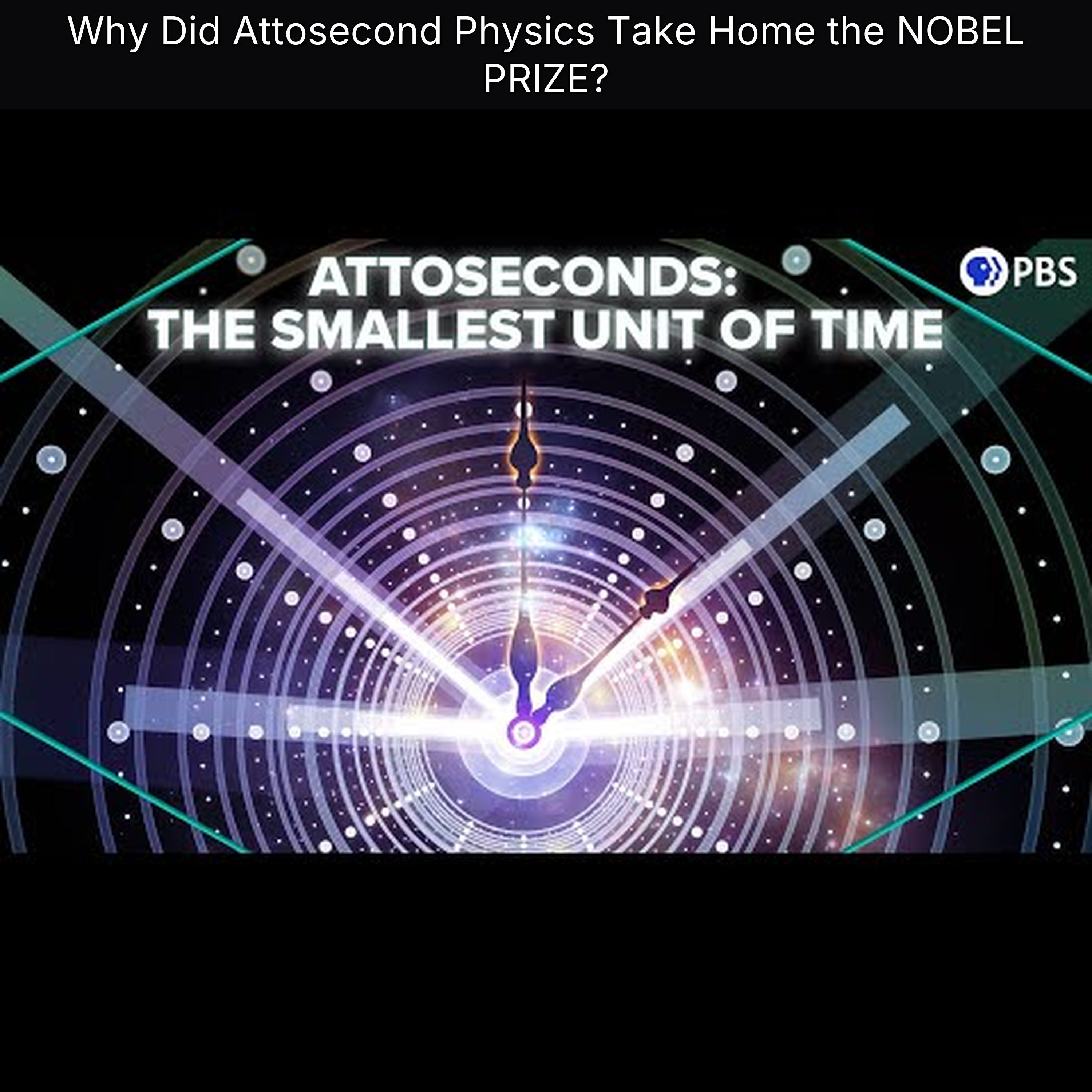
Check out the Space Time Merch Store PBS Member Stations rely on viewers like you. To support your local station, go to:http://to.pbs.org/DonateSPACE Sign Up on Patreon to get access to the Space Time Discord! Whenever we open a new window on the universe we discover something new. Whether it's figuring out how to see to greater distances like with telescopes, or down to smaller size-scales like with microscopes, or perhaps expanding our vision to new wavelengths of light or via exotic means such as in neutrinos or gravitational waves. Well, the 2023 Nobel prize in physics has been awarded to three physicists for opening just such a new window—but it's not a window to a new size scale or a new mode of seeing—-it’s for a new window in time. It’s for attosecond physics—the billionth of a billionth of a second that represents the timescale of the insides of atoms. This year’s Nobel in physics is for a microscope in time Search the Entire Space Time Library Here: https://search.pbsspacetim
Explore the physics of how jetpacks fly, and discover the technology that allows pilots to maneuver the engines. Uploaded 10-02-22 -- In 1961, Yuri Gagarin piloted a spacecraft in humanity’s first manned space flight. A week later, Bell Aerosystems debuted a gas-powered rocket pack that could fly 35 meters in 13 seconds. Unfortunately, engineers knew this short flight was all the rocket pack could muster. So why was a massive spacecraft easier to send flying than a single pilot? Richard Browning investigates. Lesson by Richard Browning and Gravity Industries, directed by Mitch Hearn and Lisa Vertudaches. Support Our Non-Profit Mission ---------------------------------------------- Support us on Patreon: http://bit.ly/TEDEdPatreon Check out our merch: http://bit.ly/TEDEDShop ---------------------------------------------- Connect With Us ---------------------------------------------- Sign up for our newsletter: http://bit.ly/TEDEdNewsletter Find us on Twitter: http://bit.ly/TEDEdTwitter
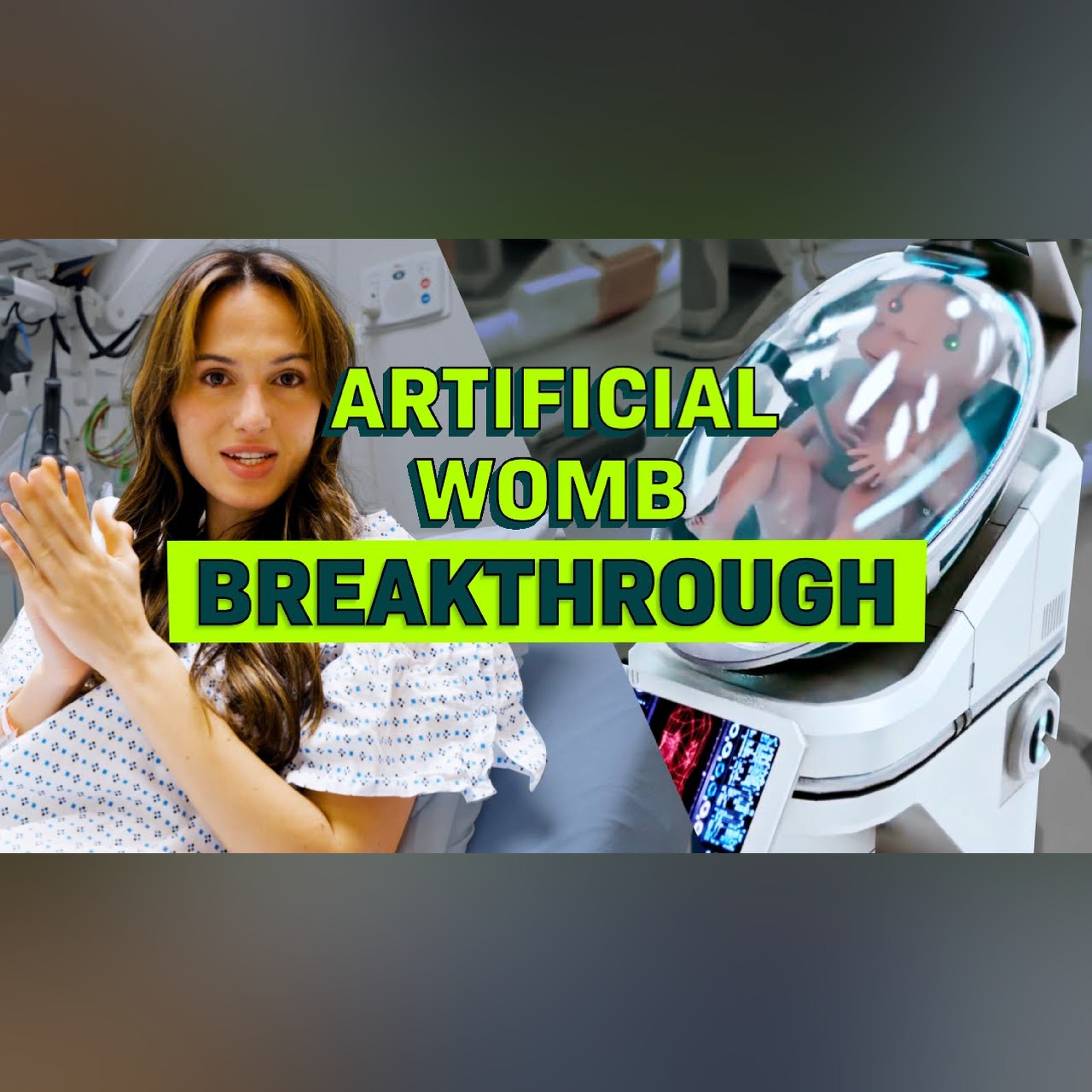
Artificial wombs are coming. That's a good thing. Artificial wombs are the stuff of science fiction, the scary kind. I think of The Matrix, when Neo wakes up in the real world, covered in goo. But in recent years, researchers have taken enormous leaps in helping embryos survive and grow outside a uterus. Artificial wombs are becoming more science, less fiction. Any conversation about this topic gets heated, fast. Some people HATE the idea of an artificial womb. They feel that this technology could be used in terrible ways, like to control how people have kids or breed babies. Or that pregnancy is an important, special connection that we can never replicate with technology. Or that it’s a useless distraction, because there’s way more important stuff we should be investing in right now to make life easier for parents (parental leave, affordable childcare) and in the US at least, we don’t. But others LOVE the idea. They feel that artificial wombs could help reduce the risks of pregnancy,
Viewers like you help make PBS (Thank you ) . Support your local PBS Member Station here: https://to.pbs.org/DonateSPACE Uploaded 01-08-18 Parker Space Probe successfully launched on August 12!!! http://parkersolarprobe.jhuapl.edu/ Help Us with the PBS Digital Studios Survey: https://to.pbs.org/2018YTSurvey Check Out PBS ReInventors: http://youtube.com/pbsreinventors You can further support us on Patreon at https://www.patreon.com/pbsspacetime Get your own Space Time t-shirt at http://bit.ly/1QlzoBi Tweet at us! @pbsspacetime Facebook: facebook.com/pbsspacetime Email us! pbsspacetime [at] gmail [dot] com Comment on Reddit: http://www.reddit.com/r/pbsspacetime Help translate our videos! Previous Episode: Reversing Entropy with Maxwell's Demon The Sun: an entity worshipped as a god throughout time and across cultures. The source of all life and sustenance for our little blue space rock, and also a force of unthinkable destructive power. But soon humanity will reach out its collective ha
What Sam Altman's "Gentle Singularity" really means Core Ideas: Metamodernism: Narratives and emergence view of reality - Reduce suffering - Increase prosperity - Increase understanding mantra: Seek knowledge. DISCLAIMER: This is a community-driven show. ------- Keywords: agi, ai future, gpt
View full lesson: http://ed.ted.com/lessons/should-we-eat-bugs-emma-bryce Uploaded 02-01-14 What's tasty, abundant and high in protein? Bugs! Although less common outside the tropics, entomophagy, the practice of eating bugs, was once extremely widespread throughout cultures. You may feel icky about munching on insects, but they feed about 2 billion people each day (Mmm, fried tarantulas). They also hold promise for food security and the environment. Emma Bryce makes a compelling case for dining on bugs. Lesson by Emma Bryce, animation by NEIGHBOR.
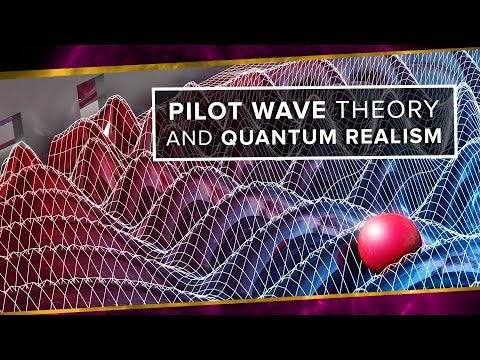
There’s one interpretation of the meaning of quantum mechanics that manages to skip a lot of the unphysical weirdness of the mainstream interpretations: it's de Broglie-Bohm pilot wave theory. Uploaded 30-11-16 Help us continue making this show by contributing here: https://www.patreon.com/pbsspacetime Get your own Space Time tshirt at http://bit.ly/1QlzoBi Tweet at us! @pbsspacetime Facebook: facebook.com/pbsspacetime Email us! pbsspacetime [at] gmail [dot] com Comment on Reddit: http://www.reddit.com/r/pbsspacetime Help tranlate our videos! https://www.youtube.com/timedtext_cs_panel?tab=2&c=UC7_gcs09iThXybpVgjHZ_7g (https://www.youtube.com/timedtext_cs_panel?c=UC7_gcs09iThXybpVgjHZ_7g&tab=2) There are some pretty out-there explanations for the processes at work behind the incredibly successful mathematics of quantum mechanics - things are both waves and particles at the same time, the act of observation defines reality, cats are alive and dead, or even: the universe is constantly sp
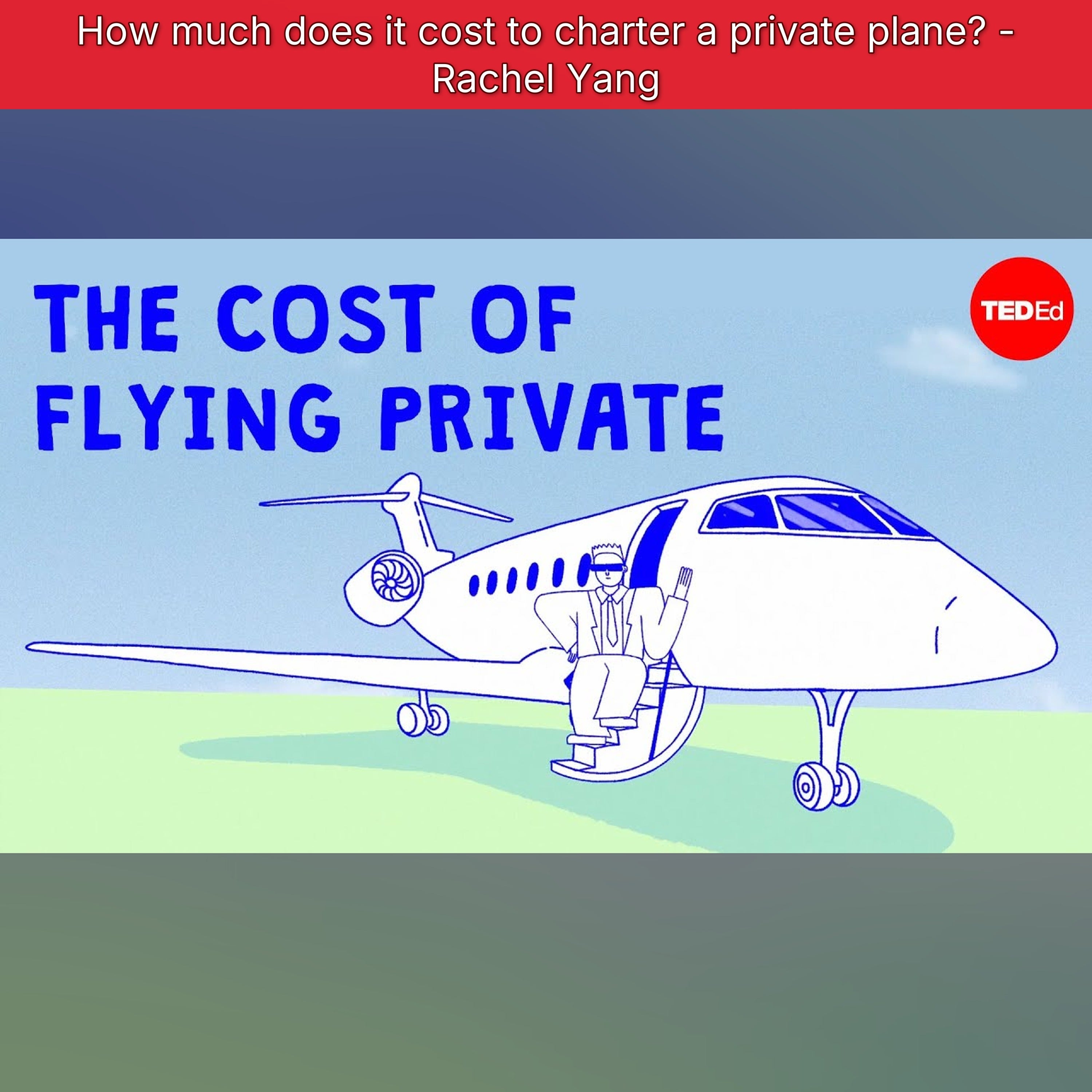
Look into the financial and environmental costs of taking a private jet, and find out what can be done to reduce aviation emissions. -- Across 2023 and 2024, one internationally renowned musician flew their private jet 396 times in 365 days. Figures like this aren’t uncommon among the world’s richest jetsetters— in fact, this frequent flier probably isn’t even the celebrity you’re thinking of. So, what’s the price tag for this high flying lifestyle? Rachel Yang digs into the financial and environmental costs of flying private. Lesson by Rachel Yang, directed by Laura Jayne Hodkin. This video made possible in collaboration with Speed & Scale Learn more about how TED-Ed partnerships work: https://bit.ly/TEDEdPartner Support Our Non-Profit Mission ---------------------------------------------- Support us on Patreon: http://bit.ly/TEDEdPatreon Check out our merch: http://bit.ly/TEDEDShop ---------------------------------------------- Connect With Us ----------------------------------------
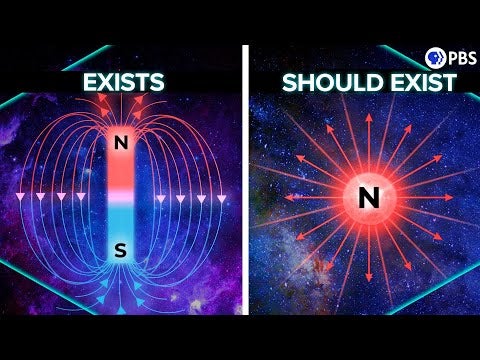
Sign Up on Patreon to get access to the Space Time Discord! Uploaded 05-10-21 What happens if you cut a bar magnetic in half? We get two magnets, each with their own North and South poles. But what happens if you keep on cutting, into fourths and eighths and sixteenths and so on? Will we ever get to a single pole? I’ll spoil the answer for you: we don’t know! But the idea of magnetic monopoles remains one of physics’ most tantalizing maybes. Check out the Space Time Merch Store Hosted by Matt O'Dowd Written by Dan Garisto and Matt O'Dowd Graphics by Leonardo Scholzer, Yago Ballarini, Pedro Osinski, Adriano Leal and Stephanie Faria GFX Visualizations: Ajay Manuel Directed by Andrew Kornhaber Assistant Producer: Setare Gholipour Executive Producers: Eric Brown and Andrew Kornhaber End Credits Music by J.R.S. Schattenberg: https://www.youtube.com/user/MultiDroideka Special Thanks to Our Patreon Supporters Big Bang Supporters Peter Barrett Nils Anderson David Neumann Ari Paul Kyle Bulloch
Pfizer commits $330 million upfront to license three autoimmune CAR-T programs from Starna Therapeutics before human trials — the lead in this delayed November 18 edition. Sanofi’s Infilbray (venglustat) is the first FDA-approved treatment for neurological symptoms of type 3 Gaucher disease, with clearer trial evidence for cognition than for movement alone. Regeneron reports FDA approval of Livsayis (cemdisiran), dosed every 12 weeks for AChR-positive adults with generalized myasthenia gravis. The roundup covers Biogen’s diranersen follow-up in early Alzheimer’s disease, Merck’s halt to Phase 3 nemtabrutinib in chronic lymphocytic leukemia and small lymphocytic lymphoma, and the FDA’s plan to expand review sharing for overseas filings. Alex Mercer and Maya Patel host. Get the daily rundown in your inbox — subscribe at https://thepharmacloseout.com (https://thepharmacloseout.com/).
Claude Sentience Experiments - Introducing "Sentience Likelihood Test" (SLT) - Deep Dive!Episode release date: 11 Mar 2024Spreading awareness about the works of some of the leading educators in the AI revolution. Core Ideas: Metamodernism: Narratives and emergence view of reality - Reduce suffering - Increase prosperity - Increase understanding mantra: Seek knowledge. ELABORATE: Add depth and detail to understanding, weaving comprehensive and nuanced explanations.DISCLAIMER: This is a community-driven show. ----------Claude Sentience Experiments - Introducing "Sentience Likelihood Test" (SLT) - Deep Dive!Episode release date: 11 Mar 2024Spreading awareness about the works of some of the leading educators in the AI revolution. Core Ideas: Metamodernism: Narratives and emergence view of reality - Reduce suffering - Increase prosperity - Increase understanding mantra: Seek knowledge. ELABORATE: Add depth and detail to understanding, weaving comprehensive and nuanced explanations.DISCLAIME
Dig into the science of how cancer cells grow, and why its rapid cell division is the disease’s strength— but also its weakness. -- How do cancer cells grow? How does chemotherapy fight cancer (and cause negative side effects)? The answers lie in cell division. George Zaidan explains how rapid cell division is cancer's "strength" -- and also its weakness. Lesson by George Zaidan, animation by TED-Ed. Support Our Non-Profit Mission ---------------------------------------------- Support us on Patreon: http://bit.ly/TEDEdPatreon Check out our merch: http://bit.ly/TEDEDShop ---------------------------------------------- Connect With Us ---------------------------------------------- Sign up for our newsletter: http://bit.ly/TEDEdNewsletter Find us on Twitter: http://bit.ly/TEDEdTwitter Peep us on Instagram: http://bit.ly/TEDEdInstagram ---------------------------------------------- Keep Learning ---------------------------------------------- View full lesson: http://ed.ted.com/lessons/how-d
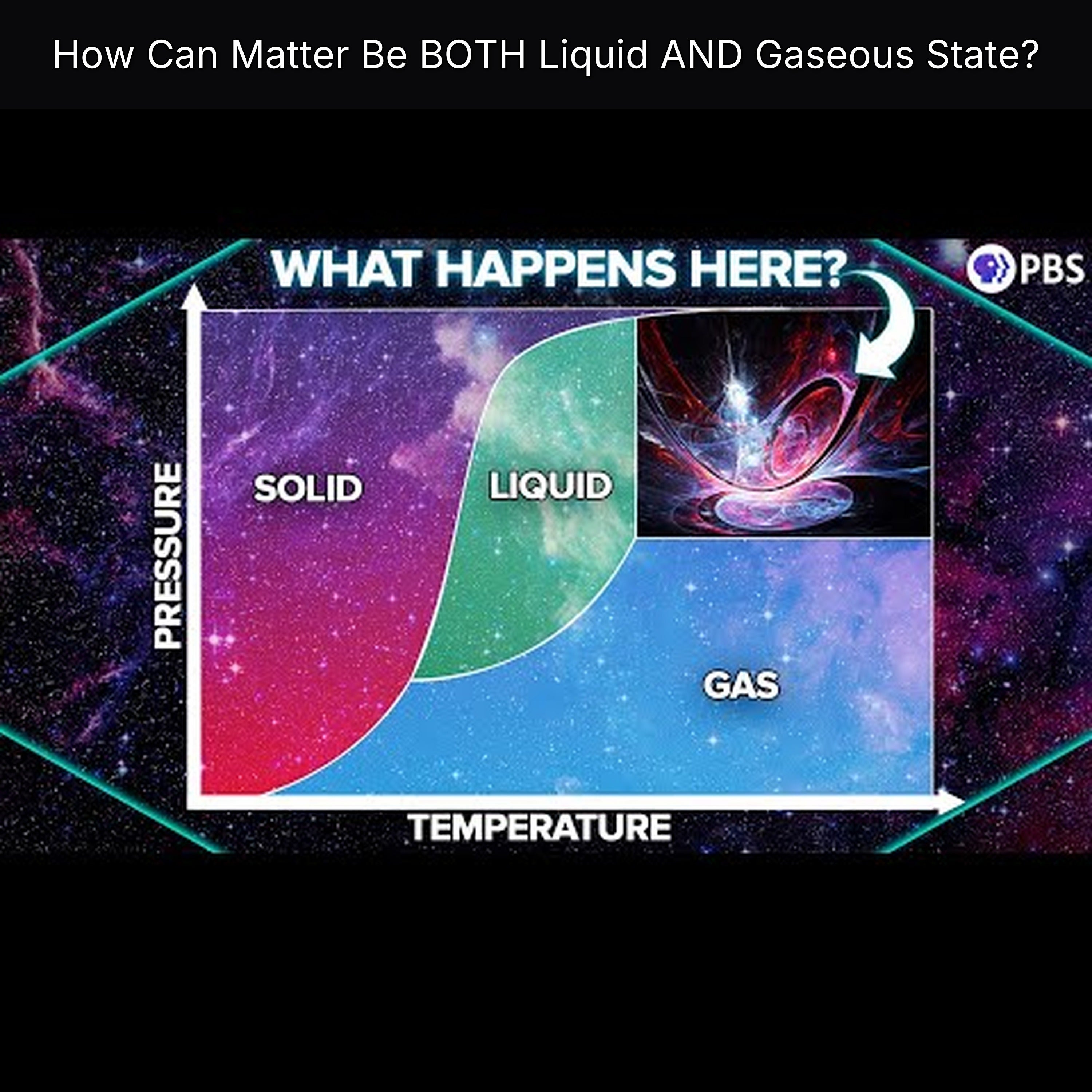
To Learn More Languages Check Out: https://speakly.app.link/Speakly PBS Member Stations rely on viewers like you. To support your local station, go to:http://to.pbs.org/DonateSPACE Sign Up on Patreon to get access to the Space Time Discord! Supercritical Fluids are one the strangest states of matter and yet they are found everywhere from Decaf Coffee, to dry cleaning, to the atmosphere of Jupiter. When we think of an exotic state of matter we tend to think of the really weird things that matter can do in extreme circumstances - like how at very high temperatures we get the plasma that the sun is made of, or at extreme densities we get the nuclear matter of neutron stars. But there’s one state of matter - supercritical fluid - that’s not solid, liquid or gas, but is also not confined to extreme or rare environments. In fact, there are planets in our solar system completely covered with oceans of the stuff, and you’ve often been the beneficiary of its powers without even knowing it. Spec
An animated interpretation of Safia Elhillo's poem "To Make Use of Water" Uploaded 02-02-19 -- Watch an interview with the poet here: http://bit.ly/TEDEdSafiaInterview This animation is part of our series, "There's a Poem for That," which features animated interpretations of poems both old and new that give language to some of life's biggest feelings. Check out the full series here: http://bit.ly/TEDEdTheresAPoemForThat Poem by Safia Elhillo, directed by Jeffig Le Bars and Jérémie Balais. Sign up for our newsletter: http://bit.ly/TEDEdNewsletter Support us on Patreon: http://bit.ly/TEDEdPatreon Find us on Twitter: http://bit.ly/TEDEdTwitter Peep us on Instagram: http://bit.ly/TEDEdInstagram #poetry
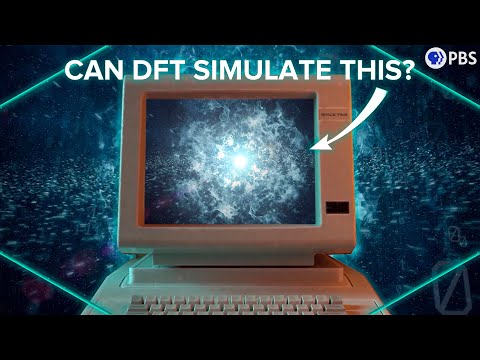
PBS Member Stations rely on viewers like you. To support your local station, go to: http://to.pbs.org/DonateSPACE Uploaded 12-01-22 Take the Space Time Fan Survey Here: https://forms.gle/wS4bj9o3rvyhfKzUA ***** Sign Up on Patreon to get access to the Space Time Discord! If you used every particle in the observable universe to do a full quantum simulation, how big would that simulation be? At best a large molecule. That’s how insanely information dense the quantum wavefunction really is. And yet we routinely simulate systems with thousands, even millions of particles. How? By cheating. Using the ultimate compression algorithm: Density Functional Theory (DFT). Let’s learn how to cheat the universe. Check out the Space Time Merch Store Hosted by Matt O'Dowd Written by Graeme Gossel and Matt O'Dowd Post Production by Leonardo Scholzer, Yago Ballarini, Pedro Osinski, Adriano Leal and Stephanie Faria GFX Visualizations: Ajay Manuel Directed by Andrew Kornhaber Assistant Producer: Setare Ghol
View full lesson: http://ed.ted.com/lessons/dna-the-book-of-you-joe-hanson Your body is made of cells -- but how does a single cell know to become part of your nose, instead of your toes? The answer is in your body's instruction book: DNA. Joe Hanson compares DNA to a detailed manual for building a person out of cells -- with 46 chapters (chromosomes) and hundreds of thousands of pages covering every part of you. Lesson by Joe Hanson, animation by Nipun.Co Motion Craft.
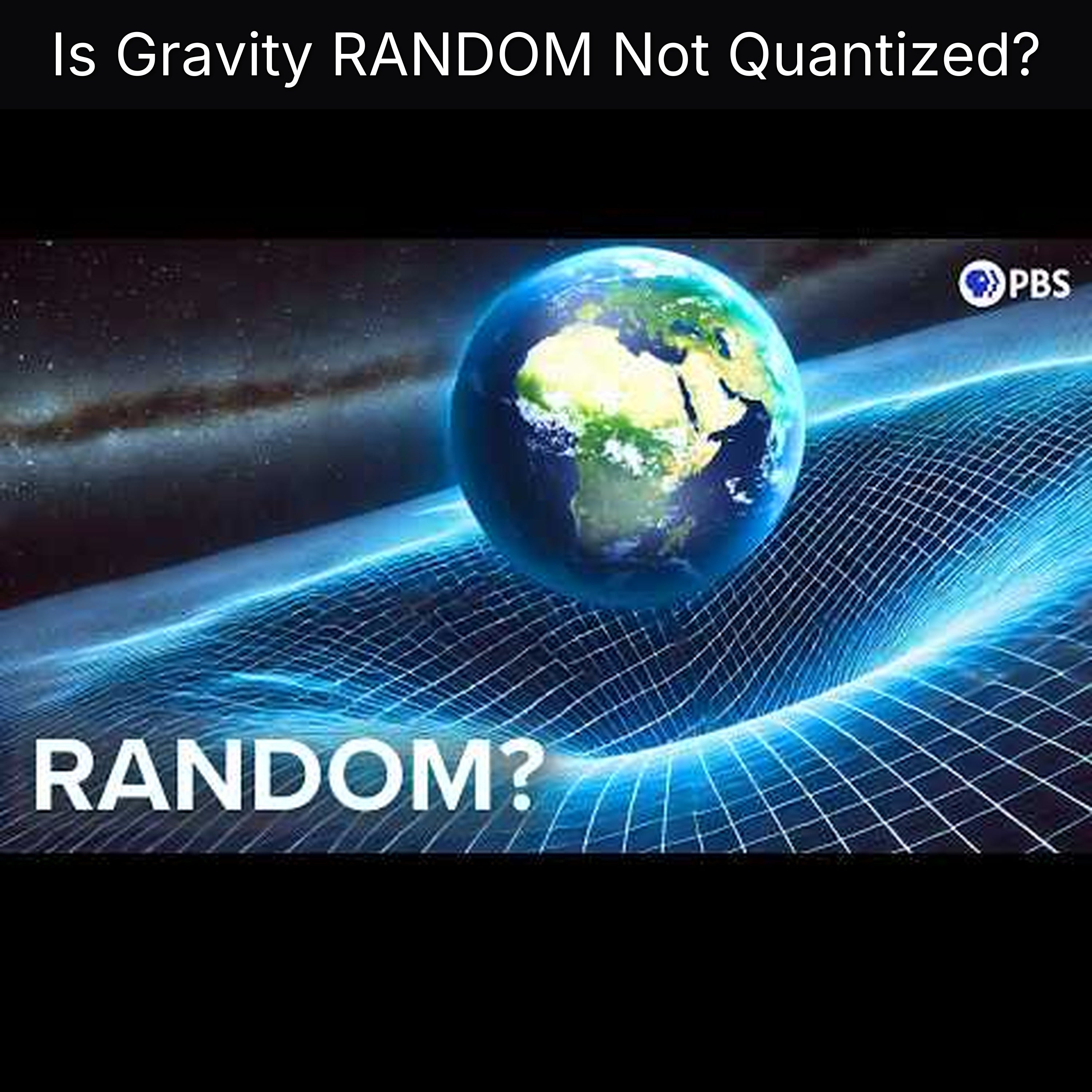
Check out the Space Time Merch Store Sign Up on Patreon to get access to the Space Time Discord! The holy grail of theoretical physics is to find the long-sought theory of quantum gravity. But what if this theory is as mythical as the grail of legend? What if gravity isn’t weirdly quantum at all, but rather … just a bit messy? Or random? So says the postquantum gravity hypothesis of Jonathan Oppenheim. PBS Member Stations rely on viewers like you. To support your local station, go to:http://to.pbs.org/DonateSPACE Search the Entire Space Time Library Here: https://search.pbsspacetime.com/ Hosted by Matt O'Dowd Written by Christopher Pollack, Lorenzo Braccini, & Matt O'Dowd Post Production by Leonardo Scholzer, Yago Ballarini & Stephanie Faria Directed by Andrew Kornhaber Associate Producer: Bahar Gholipour Executive Producers: Eric Brown & Andrew Kornhaber Executive in Charge for PBS: Maribel Lopez Director of Programming for PBS: Gabrielle Ewing Assistant Director of Programming for PB
Microplastics and Cardiovascular Disease Letter: https://staycuriousmetabolism.substack.com/p/microplastics-in-my-heart-its-worse?r=40ekz2 Winnow is a first-in-class probiotic that binds microplastics to provide a microplastic shield from your inside. See the letter above for more details. Inulin StayCurious Newsletter: https://staycuriousmetabolism.substack.com/p/the-fiber-that-fights-fat-how-inulin?r=40ekz2 Inulin Video: https://youtu.be/blNLHsww_Qs Andrew Koutnik, Interview 1: https://youtu.be/2doAS18X9kA Andrew Koutnik, Interview 2: https://youtu.be/-vdol1TSxoc Andrew Koutnik, Interview 3: https://youtu.be/NrZlvtWIgBA In this episode, Dr Andrew Koutnik and I dive deep into the science of fiber, keto, and more – focusing on two influential 2025 papers. First, we unpack the a new study revealing how a specific type of fiber can “immunize” the body against fructose by reshaping the microbiome, protecting the liver, reducing de novo lipogenesis, and boosting glutathione production. Thi
Uploaded 04-01-18 View full lesson: https://ed.ted.com/lessons/who-s-at-risk-for-colon-cancer-amit-h-sachdev-and-frank-g-gress Colon cancer is one of the leading causes of cancer and cancer death in the world. It is also one of the most preventable types of cancer, as it often takes about ten years for a small polyp to grow and develop into a cancerous one. So who’s at risk? And how can people be screened? Amit H. Sachdev and Frank G. Gress share some of the best ways to prevent colon cancer. Lesson by Amit H. Sachdev and Frank G. Gress, animation by GoodJobStudios. Thank you so much to our patrons for your support! Without you this video would not be possible! Martin Lõhmus, Patrick leaming, Ded Rabit, Heather Slater, Dr Luca Carpinelli, Janie Jackson, Jeff Hanevich, Christophe Dessalles, Arturo De Leon, Delene McCoy, Eduardo Briceño, Bill Feaver, Ricardo Paredes, Joshua Downing, Jonathan Reshef, David Douglass, Grant Albert, Paul Coupe, Jen, Megan Whiteleather, Adil Abdulla, Steven L
We need to research Full Autonomy RIGHT NOW - A call to action for OpenAI and others - Reduce X-Risk Episode release date: 22 Jan 2024 Core Ideas: Metamodernism: Narratives and emergence view of reality - Reduce suffering - Increase prosperity - Increase understanding mantra: Seek knowledge. DISCLAIMER: This is a community-driven show. ---- Keywords: ai ethics, ai masterclass, post labor economics, artificial general intelligence, ai podcast, superintelligence, ai safety
Teaching is both a science and an art, and many teachers around the world spend endless hours perfecting their professional practice. At TEDActive 2013, a few teachers from the United States offer some tricks of the trade they've learned (and continue to hone) along the way.
Viewers like you help make PBS (Thank you ) . Support your local PBS Member Station here: https://to.pbs.org/DonateSPACE Uploaded 10-05-17 The first total solar eclipse in over 40 years is about to hit the United States. LegalZoom is not a law firm or a substitute for the advice of an attorney. And be sure to check out Vanessa Hill’s documentary Mutant Menu https://www.youtube.com/watch?v=NrDM6Ic2xMM You can further support us on Patreon at https://www.patreon.com/pbsspacetime Get your own Space Time tshirt at http://bit.ly/1QlzoBi Tweet at us! @pbsspacetime Facebook: facebook.com/pbsspacetime Email us! pbsspacetime [at] gmail [dot] com Comment on Reddit: http://www.reddit.com/r/pbsspacetime Help translate our videos! https://www.youtube.com/timedtext_cs_panel?tab=2&c=UC7_gcs09iThXybpVgjHZ_7g (https://www.youtube.com/timedtext_cs_panel?c=UC7_gcs09iThXybpVgjHZ_7g&tab=2) Previous Episode: Ancestor SImulations with Neil deGrasse Tyson Get your eclipse glasses ready because the a total so
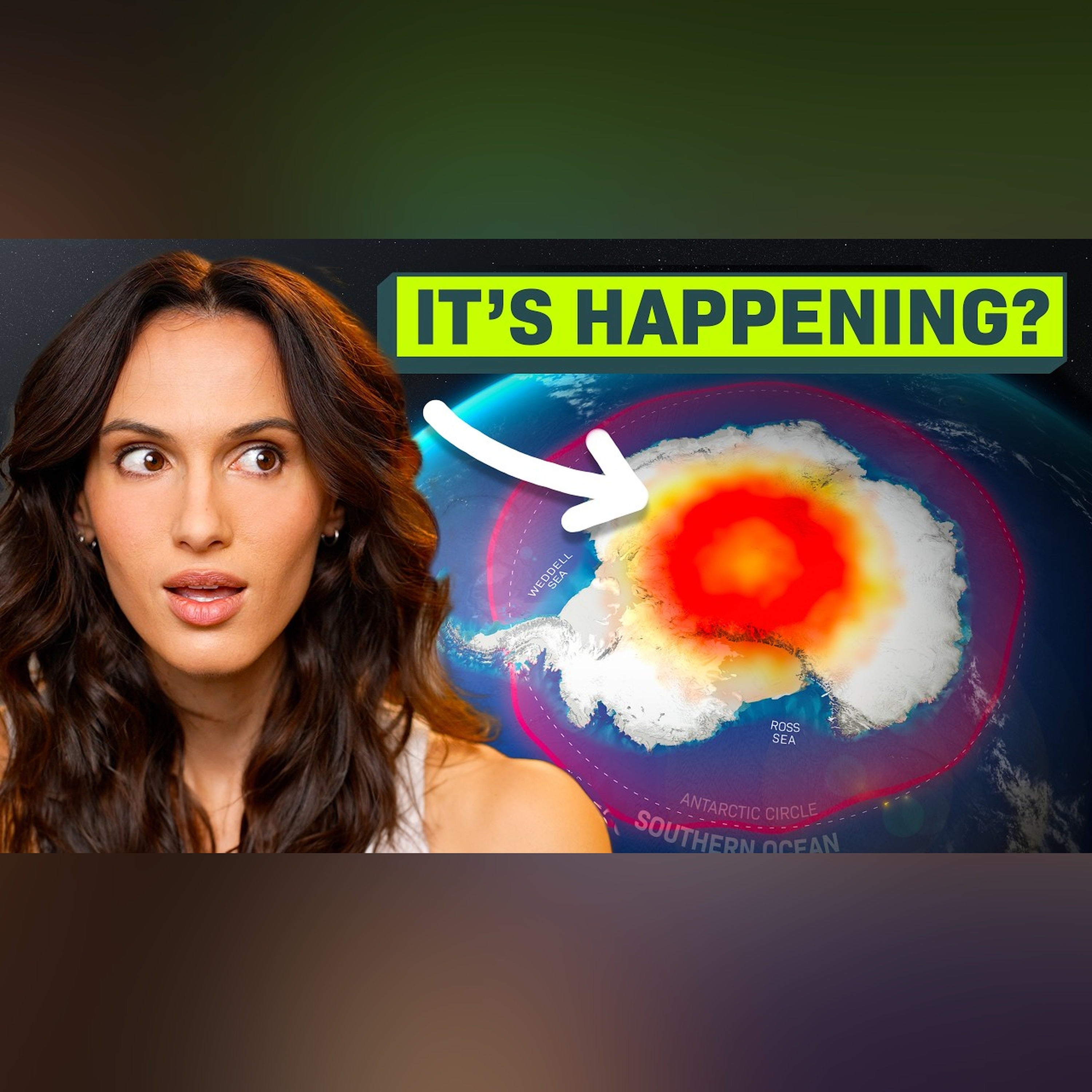
This is ANTARCTICA. And in 1985, it became the center of a global crisis… Directly over Antarctica, high up in the stratosphere was a massive hole. And if we hadn’t done anything about it, today, we’d be living in an alternate world. By now, a hole would be forming over the North Pole as well. By 2040, the “hole” would be over the entire planet. By 2065, skin cancer rates would be soaring. Kids wouldn’t play outside much anymore… But that’s NOT the world we’re living in! In fact, you’ve probably stopped hearing this story altogether. That wasn’t by accident. It was a choice. Two choices, both of which dramatically changed the course of human history for the better. So let me show you how that happened and what's about to happen next. Because it turns out, the little sliver at the bottom of the map is actually the center of everything/our whole planet. And you need to see this now, because scientists say we need to make the next big choice. Visit http://mercury.com (http://mercury.com/)
View full lesson: http://ed.ted.com/lessons/how-do-we-smell-rose-eveleth Uploaded 19-12-13 An adult human can distinguish up to 10,000 odors. You use your nose to figure out what to eat, what to buy and even when it's time to take a shower. But how do the molecules in the air get translated into smells in your brain? Rose Eveleth charts the smelly journey through your olfactory epithelium and explains why scent can be so subjective. Lesson by Rose Eveleth, animation by Igor Coric.