View full lesson: http://ed.ted.com/lessons/what-color-is-tuesday-exploring-synesthesia-richard-e-cytowic How does one experience synesthesia -- the neurological trait that combines two or more senses? Synesthetes may taste the number 9 or attach a color to each day of the week. Richard E. Cytowic explains the fascinating world of entangled senses and why we may all have just a touch of synesthesia. Lesson by Richard E. Cytowic, animation by TED-Ed.
How do we empower communities to help them step away from the extractive death cult of capitalism and the fossil fuels that underpin it, while keeping warm, saving money, and expanding their own agency? Our guests this week have poured years of time, energy, passion, professional expertise - and a deep understanding of the flaws in the current system and how local people can be empowered to take change into their own hands - into making it happen. Daniel Edelstyn is a documentary maker who worked with Channel 4 until he realised it wasn't helping him be part of the solution. When he left, the first film he made was BANK JOB, then POWER STATION of which he is co founder and director and which we're talking about in this episode. Now, as you'll hear, he's working on one called 'THIS MOVIE IS A HEDGE FUND'. Beyond this, he's a social entrepreneur focused on the technology of storytelling to provoke people powered change who believes in challenging economic narratives to build creative pra
For decades, five powerful Mafia families shaped New York's criminal underworld, building an empire that reached far beyond the city's streets. Their story is filled with rivalries, secret alliances, enormous fortunes, and notorious crime bosses who became household names. Meet Charles "Lucky" Luciano, Salvatore Maranzano, Carlo Gambino, Joe Bonanno, and other influential figures who shaped the history of the Five Families: Genovese, Gambino, Lucchese, Bonanno, and Colombo. Discover how Prohibition helped organized crime grow, how rivalries reshaped the Mafia, and how decades of investigations and courtroom battles challenged its power. Explore the hidden history behind America's most notorious criminal dynasty and discover what happened to the men who once stood at the center of New York's underworld. Boring History for Sleep — Soft stories about forgotten lives, hidden worlds, and the darker chapters of history.
Kate Bush built a career by making ambitious music that rarely sounded like anyone else. This episode explores her early life, breakthrough with “Wuthering Heights,” distinctive songwriting and performances, and the creative control that shaped albums such as Hounds of Love. Along the way, you’ll hear about her approach to recording, her famously limited live performances, and how “Running Up That Hill” found an enormous new audience decades after its original release. Apparently, being ahead of your time works out eventually. Happy sleeping! Read with permission from Kate Bush, Wikipedia, licensed under CC BY-SA 4.0: https://en.wikipedia.org/wiki/Kate_Bush
Fall asleep to this quiet science story. A Boring Science For Sleep episode about Why Gravitational Waves Stretch and Squeeze Space. Why Gravitational Waves Stretch and Squeeze Space Settle in for a quiet exploration of Why Gravitational Waves Stretch and Squeeze Space. This episode follows A Ring That Becomes Ellipses; Doubters, Referees and a Bead; Light Used as a Clock; Noise, Blips and September; Many Detectors, Squeezed Light. Listen closely or let the details drift past. If you enjoy this quiet science bedtime pace, you might also like Psalms for Sleep (https://open.spotify.com/show/7zd2RN8SMTCheFA2ifYK0m) on Spotify — same quiet rhythm, different night.
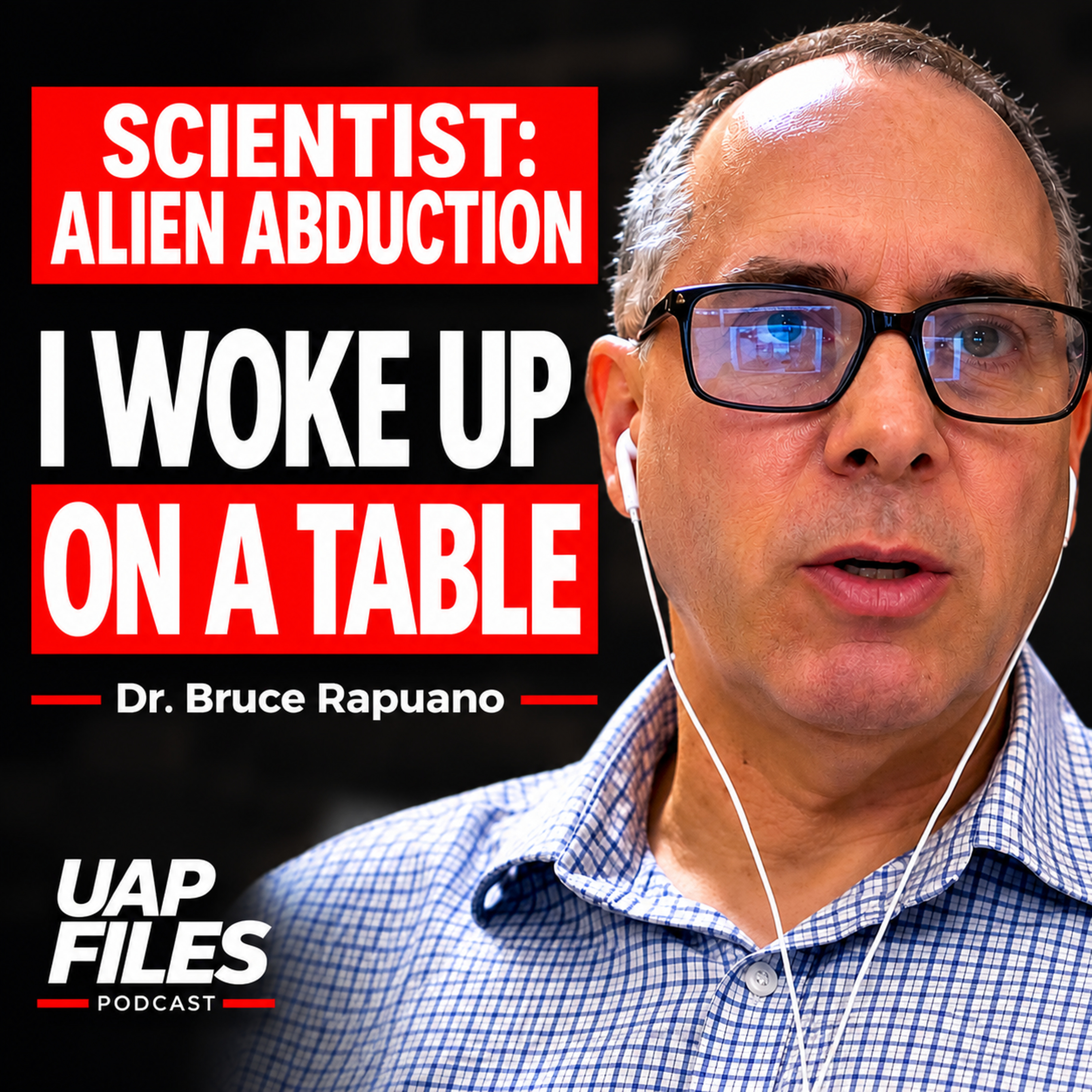
Dr. Bruce Rapuano is a scientist whose career has spanned molecular biology to astrophysics, and the author of “Dominion Lost: A Scientist’s Own Alien Abduction Encounters.” In this clip from UAP Files Podcast S2E17, Bruce talks us through his earliest memories of the beings, and the summer night in 1961, aged 6, when he says he saw a strange polished craft from his bedroom window and woke up somewhere else. In this clip: • A “sense memory” from age 2–3 of tall beings he felt were his mentors, and a sense of abandonment afterwards • Summer 1961 in Connecticut: a glint of light and “the strangest looking airplane I’d ever seen” • Turning away “as if under command”, falling asleep and waking up on what he took to be an exam table • Dozens of humanoid beings walking a hallway, and telling them “you’re not my doctors” • The hand on his chest, the garage-door-sized doorway and the sense of many rooms • Why he felt no fear as a child, only indignation and curiosity • A second encounter at 12
Forget your favorite flowers, because we’re talking all about the mean green sporing machines. In this episode of Crash Course Botany, we'll dive into the first few branches of plants’ phylogenetic tree—bryophytes and seedless vascular plants, like mosses and ferns. These plants are the unsung heroes of the botanical world, and we’re giving them their due. Chapters: The Plant World's Unsung Heroes 00:00 Plant Phylogeny 1:09 Bryophytes 3:08 The Bryophyte Life Cycle 7:15 Seedless Vascular Plants 9:39 Review & Credits 12:20 Sources: https://docs.google.com/document/d/1PB6WdUJcABAccO-U-t6ic7WbfP2z0Pr5P9a8HMr6zh4/edit?usp=sharing *** Crash Course is on Patreon! Thanks to the following patrons for their generous monthly contributions that help keep Crash Course free for everyone forever: Tawny Whaley, Sean Saunders, DL Singfield, Ken Davidian, Stephen Akuffo, Toni Miles, Steve Segreto, Kyle & Katherine Callahan, Laurel Stevens, Burt Humburg, Aziz Y, Perry Joyce, Scott Harrison, Mark & Susan
View full lesson: http://ed.ted.com/lessons/what-causes-economic-bubbles-prateek-singh Uploaded 04-05-15 During the 1600’s, the exotic tulip became a nationwide sensation; some single bulbs even sold for ten times the yearly salary of a skilled craftsman. Suddenly, though, the demand completely plummeted, leaving the tulip market in a depression. What happened? Prateek Singh explains the peak of a business cycle, commonly referred to as a mania. Lesson by Prateek Singh, animation by Simon Ampel.
Welcome to Crash Course Linguistics! Linguistics is everywhere and is super useful for pretty much everyone. Over 16 episodes, Taylor Behnke will teach you all about language, from its structure, to the relationship between language and our identity, the brain, and computers, to writing, language acquisition, and the diversity of human languages! Want even more linguistics? Check out the Lingthusiasm podcast, hosted by the writers of Crash Course Linguistics: https://lingthusiasm.com/ *** Watch our videos and review your learning with the Crash Course App! Download here for Apple Devices: https://apple.co/3d4eyZo Download here for Android Devices: https://bit.ly/2SrDulJ Crash Course is on Patreon! Thanks to the following patrons for their generous monthly contributions that help keep Crash Course free for everyone forever: Catherine Conroy, Patty Laqua, Leonora Rossé Muñoz, Stephen Saar, John Lee, Phil Simmons, Alexander Thomson, Mark & Susan Billian, Junrong Eric Zhu, Alan Bridgeman,
In this final episode of Crash Course Zoology, we review everything we've learned and even look at advances in the field that took place just in the 14 weeks of this course! Rae also shares various ways YOU can get involved in the zoology field! Special thanks to Angela Chuang, Jason Dinh, Annika May Carlson, Meghan Yap-Chiongco, Trinity Walls, Sydney Hollasch, Helene Forney, Rebekah Pettit, Alonso Delgado, and Emily Thompson for the use of their images. And a thank you to everyone who submitted their images and footage as well. We wish we could have used them all! Learn more about Rae here! https://www.raewynngrant.com (https://www.raewynngrant.com/) Watch our videos and review your learning with the Crash Course App! Download here for Apple Devices: https://apple.co/3d4eyZo Download here for Android Devices: https://bit.ly/2SrDulJ Crash Course is on Patreon! Thanks to the following patrons for their generous monthly contributions that help keep Crash Course free for everyone forever:
In this episode of The Carbon Removal Scoop, Eve Tamme and Sebastian Manhart sit down with Marian Krüger, Co-founder and Managing Director of remove, the non-profit accelerator that has backed 209 carbon removal startups since its first cohort in 2021. It is the first episode in the Scoop's new partnership with remove, and Marian brings a rare view of what founders are building across Europe, India, Africa and Latin America, and why remove never went to North America. Application numbers have fallen since the climate tech peak, but Marian argues the founders who remain are stronger for it. He explains why founders today rarely claim a brand new pathway and instead set out to do an existing one better, how the value chain is splitting into specialists, and why so many Global South startups are building biochar. In India and Africa, he says, none of remove's startups lead with climate: farmer prosperity, adaptation and air quality open the doors. Eve and Sebastian then press on money and
Check out Lucy Cooke's "The Truth About Animals": https://bit.ly/TruthAboutAnimals Uploaded 27-07-20 -- From Ancient Greece to the 20th century, Aristotle, Freud, and numerous other scholars were all looking for the same thing: eel testicles. Freshwater eels could be found in rivers across Europe, but no one had ever seen them mate and no researcher could find eel eggs or identify their reproductive organs. So how do eels reproduce, and where do they do it? Lucy Cooke digs into the ancient mystery. Lesson by Lucy Cooke, directed by Anton Bogaty. Animator's website: https://www.instagram.com/anton_bogaty/ Sign up for our newsletter: http://bit.ly/TEDEdNewsletter Support us on Patreon: http://bit.ly/TEDEdPatreon Find us on Twitter: http://bit.ly/TEDEdTwitter Peep us on Instagram: http://bit.ly/TEDEdInstagram View full lesson: https://ed.ted.com/lessons/no-one-can-figure-out-how-eels-have-sex-lucy-cooke Thank you so much to our patrons for your support! Without you this video would not be
What began as an afternoon of curiosity turned into an experience a group of high school friends would never forget. Fascinated by the paranormal, they decided to buy a Ouija board and see whether they could actually communicate with something on the other side. At first, the responses seemed friendly. But as the session continued, the messages became increasingly disturbing. The friends began arguing, the board appeared to know things it shouldn't, and one particular warning left them frightened enough to eventually destroy it. But getting rid of the board didn't seem to put an end to the strange experiences. And when tragedy struck one of the friends nearly two years later, an earlier message took on a haunting new meaning. Had they simply frightened themselves with a game, or had something been trying to tell them about the future? #RealGhostStoriesOnline #TrueGhostStories #OuijaBoard #OuijaBoardStories #SpiritCommunication #ParanormalEncounters #UnexplainedPredictions #SpiritBoard
This is a Grave Talks CLASSIC EPISODE! PART TWO From an early age, Andi Roe felt a presence around her that wasn’t frightening, but protective. That quiet awareness became the foundation of a lifelong connection to the paranormal — one shaped not by fear, but by empathy. As someone sensitive to energy and emotion, Andi doesn’t just sense spirits; she feels drawn to understand them. Her experiences led her to explore the stories behind the spirits she encounters, often uncovering forgotten histories and unfinished emotions. Rather than approaching the paranormal as something to confront, Andi approaches it as something to listen to, believing many spirits simply want to be acknowledged and heard. In 2018, she brought that perspective to a broader audience by joining Road Trip Paranormal. There, she balances active investigations with public events designed to educate others about the paranormal, empathy, and what it means to share space with the unseen. To learn more about Road Trip Par
Preston Stewart is a West Point graduate and Afghanistan veteran who covers the Ukraine war extensively on his YouTube channel, his podcast called War and Conflict, and his newsletter called Defense Tech News. Michael Kofman is a world-class military analyst specializing in the Russian and Ukrainian militaries. He is a senior fellow at the Carnegie Endowment and he hosts The Russia Contingency podcast on the War on the Rocks platform. Thank you for listening Check out our sponsors: https://lexfridman.com/sponsors/ep504-sc See below for timestamps, transcript, and to give feedback, submit questions, contact Lex, etc. Transcript: CONTACT LEX: Feedback – give feedback to Lex: https://lexfridman.com/survey AMA – submit questions, videos or call-in: https://lexfridman.com/ama Hiring – join our team: https://lexfridman.com/hiring Other – other ways to get in touch: https://lexfridman.com/contact EPISODE LINKS: Michael’s X: https://x.com/KofmanMichael Michael’s Podcast: https://warontherocks.
Welcome to Crash Course Psychology! Want more videos about psychology? Check out our sister channel SciShow Psych at https://www.youtube.com/scishowpsych! Crash Course is on Patreon! Want to find Crash Course elsewhere on the internet? Facebook - http://www.facebook.com/YouTubeCrashCourse Twitter - http://www.twitter.com/TheCrashCourse Instagram - https://www.instagram.com/thecrashcourse/ CC Kids: http://www.youtube.com/crashcoursekids
The big question in the comments last week was, "BUT WHAT ABOUT ECLIPSES?" Today, Phil breaks 'em down for you. This episode is sponsored by Squarespace: http://www.squarespace.com/crashcourse Check out the Crash Course Astronomy solar system poster here: http://store.dftba.com/products/crashcourse-astronomy-poster -- As promised, Phil's sun spotting recommendations: Astronomers Without Borders (charitable org): http://store.astronomerswithoutborders.org/index.php?main_page=product_info&cPath=8&products_id=3 (http://store.astronomerswithoutborders.org/index.php?cPath=8&main_page=product_info&products_id=3) Rainbow Symphony glasses: http://www.rainbowsymphony.com/soleclipse.html Wide variety of viewers from Rainbow Symphony: http://www.eclipseglasses2017.com/buy-eclipse-glasses -- Chapters: Introduction 00:00 How Do Solar Eclipses Work? 0:52 Umbra & Penumbra 2:04 The Sun's Corona 3:17 Solar Eclipse Totality 4:14 Annular Eclipse 5:09 Can You Look at a Solar Eclipse? 5:32 Lunar Eclipses 6
In this episode of Crash Course Psychology, we get to meet the brain. Hank talks us through the Central Nervous System, the ancestral structures of the brain, the limbic system, and new structures of the brain. Plus, what does Phineas Gage have to do with all of this? Want more videos about psychology? Check out our sister channel SciShow Psych at https://www.youtube.com/scishowpsych! -- Chapters: Introduction: Phrenology 00:00 Localized Parts of the Brain Control Different Functions 1:01 Basics of the Central Nervous System 2:15 The Curious Case of Phineas Gage 2:50 Brain Structures 5:15 Ancestral Structures of the Brain 5:37 "Old Brain" - Brain Stem, Medulla, Pons, Thalamus, Reticular Formation, Cerebellum 6:17 Limbic System - Amygdala, Hypothalamus, Hippocampus, Pituitary Gland 7:31 Gray Matter & Brain Hemispheres 8:32 Cerebral Cortex 9:31 Frontal, Parietal, Occipital, and Temporal Lobes 10:06 Specialized Regions: Motor Cortex, Somatosensory Cortex, & Association Areas 10:32 Review
Explore why zero-carbon technologies are vulnerable to the valley of death in product development and how we can change it. Uploaded 06-04-21 -- All new products must pass through the "valley of death" before they reach the market. Many never make it out, and sometimes that’s ok— if they don’t work, don’t fill a need, or for any number of reasons. One of the fields where this problem is most pressing is zero-carbon technologies. Why is it vulnerable to this trap, and can we change it? Explore how to break the cycle of the funding gap. Directed by Lisa LaBracio Animation and art direction by Luísa M H Copetti, Hype CG In partnership with Bill Gates, inspired by his book "How To Avoid A Climate Disaster": http://bit.ly/PlanForZero Support Our Non-Profit Mission ---------------------------------------------- Support us on Patreon: http://bit.ly/TEDEdPatreon Check out our merch: http://bit.ly/TEDEDShop ---------------------------------------------- Connect With Us -------------------------
You couldn’t go a day without interacting with gymnosperms and angiosperms, the two most prominent groups of plants on the planet. We rely on them for food, clothing, and shelter — but why are they so common? In this episode of Crash Course Botany, we’ll find out how their seeds and flowers propelled them to evolutionary success. Chapters: How Plants Move 00:00 How Seeds Evolved 1:23 Types of Gymnosperms 5:17 Angiosperms 6:25 Dr. Else Marie Friis 8:00 Flower Structure 10:00 Why Angiosperms Thrived 10:39 Review & Credits 12:59 Sources: https://docs.google.com/document/d/1PB6WdUJcABAccO-U-t6ic7WbfP2z0Pr5P9a8HMr6zh4/edit?usp=sharing *** Crash Course is on Patreon! Thanks to the following patrons for their generous monthly contributions that help keep Crash Course free for everyone forever: Tawny Whaley, Sean Saunders, DL Singfield, Ken Davidian, Stephen Akuffo, Toni Miles, Steve Segreto, Kyle & Katherine Callahan, Laurel Stevens, Burt Humburg, Aziz Y, Perry Joyce, Scott Harrison, Mark & S
From Melbourne to Munich, Lombardy to Wuhan and all the way back again: this episode is about what happened when we faced those first coronavirus cases. Where things went well, where they didn’t — and whether there’s anything we could have done to stop it.Guests:Rhonda StuartHead of infection prevention at Monash HealthMerle BöhmerInfectious disease epidemiologist at the Bavarian Health and Food Safety AuthorityRaina MacIntyreProfessor of Biosecurity at the Kirby Institute, University of New South WalesFabrizio CarinciBiostatistician at the University of BolognaCarl ZimmerScience journalist and columnist for The New York TimesHost:Olivia WillisProducers:Cheyne Anderson, James BullenExecutive Producer:Joel WernerSound Design:Tim Jenkins
Three transplant patients die within a week of each other and alarm bells start ringing.Guests:Fiona PepperActor, playing the part of Rae MoranDr Mike CattonDeputy Director, Doherty Institute for Infection and ImmunityDr Dominique MartinAssociate Professor in Bioethics, Deakin UniversityHost:Olivia WillisProducers:James Bullen, Cheyne AndersonExecutive Producer:Joel WernerSound Design:Tim Jenkins
A junior doctor uncovers a mystery that rewrites the story of a famous epidemic — and we learn the troubling origins of 'patient zero' as a concept.Guests: Dr John GerrardDirector of Infectious Diseases and Immunology, Gold Coast University Hospital Professor Sharon LewinDirector, Peter Doherty Institute for Infection and Immunity Phil CarswellFounding president, Victorian AIDS Council Bill BowtellAdjunct professor, University of New South Wales Host:Olivia WillisProducers:Cheyne Anderson, James BullenExecutive Producer:Joel WernerSound Design:Tim Jenkins
Disease is spreading in the wake of a natural disaster on the Caribbean nation of Haiti — and everyone thinks they know where it's coming from. Spoiler: they don't. Guests: Jonathan M. KatzFreelance journalist and author, The Big Truck That Went By Dr Louise IversExecutive Director, Massachusetts General Hospital Center for Global Health; Associate Professor of Global Health and Social Medicine, Harvard Medical School Nelson Junior CeranorHost:Olivia WillisProducers:James Bullen, Cheyne AndersonExecutive Producer:Joel WernerSound Design:Tim Jenkins