Hear the latest on SGLT2 inhibitors, potassium binders, pregnancy after kidney donation, and more from Kidney Week 2026 with Keisha Gibson, MD, MPH, cochair of the Kidney Week education committee. Related Content: SGLT2 Inhibitors, Potassium Binders, Pregnancy After Kidney Donation, and More From Kidney Week (https://jamanetwork.com/journals/jama/fullarticle/10.1001/jama.2026.19959)
In the early modern period, it was common practice to praise the mathematical sciences, a typical example being Martinus Hortensius’ Inauguration Speech on the Dignity and the Usefulness of the Mathematical Sciences (Amsterdam 1634). This lecture explains how "mathematical sciences" were understood in the 17th century, before exploring the arguments which were used to advocate for the use of the mathematical sciences, using visual materials such as title engravings of 17th century publications. Can previous answers to the question “What do you need a mathematician for?” help us understand our need for mathematicians today? This lecture was recorded by Volker Remmert on the 7th of October 2026 Volker Remmert has been trained as mathematician and historian. He teaches history of science and technology at the University of Wuppertal, Germany. His research interests are in the history of early modern science, with a focus on the mathematical sciences (Picturing the Scientific Revolution: T
This week we build on our naked eye observations from last week and take a look at the cyclical phenomena that we can see at work in the universe. Check out the Crash Course Astronomy solar system poster here: http://store.dftba.com/products/crashcourse-astronomy-poster -- Chapters: Introduction 00:00 Cycles in the Sky 0:42 The Zodiac 2:10 Planetary Movement 2:59 The Earth's Axis 3:36 Precession 6:09 Things We've Learned From Naked Eye Observations 7:09 Review 8:40 -- PBS Digital Studios: http://youtube.com/pbsdigitalstudios Follow Phil on Twitter: https://twitter.com/badastronomer Crash Course is on Patreon! Want to find Crash Course elsewhere on the internet? Facebook - http://www.facebook.com/YouTubeCrashCourse Twitter - http://www.twitter.com/TheCrashCourse Instagram - https://www.instagram.com/thecrashcourse/ CC Kids: http://www.youtube.com/crashcoursekids -- PHOTOS http://en.wikipedia.org/wiki/Right_ascension#mediaviewer/File:Stars_and_ra.png (http://en.wikipedia.org/wiki/Right_a
In which John Green teaches you about the presidency of Andrew Jackson So how did a president with astoundingly bad fiscal policies end up on the $20 bill? That's a question we can't answer, but we can tell you how Jackson got to be president, and how he changed the country when he got the job. Jackson's election was more democratic than any previous presidential election. More people were able to vote, and they picked a doozie. Jackson was a well-known war hero, and he was elected over his longtime political enemy, John Quincy Adams. Once Jackson was in office, he did more to expand executive power than any of the previous occupants of the White House. He used armed troops to collect taxes, refused to enforce legislation and supreme court legislation, and hired and fired his staff based on support in elections. He was also the first president to regularly wield the presidential veto as a political tool. Was he a good president? Watch this video and draw your own conclusions. Hey teach
What is turbulence and why does it happen? Explore the phenomenon that has perplexed physicists for over a century. Uploaded 15-04-19 -- You’re on an airplane when you feel a sudden jolt. Outside your window nothing seems to be happening, yet the plane continues to rattle you and your fellow passengers as it passes through turbulent air in the atmosphere. What exactly is turbulence, and why does it happen? Tomás Chor dives into one of the prevailing mysteries of physics: the complex phenomenon of turbulence. Lesson by Tomás Chor, directed by Biljana Labovic. Animated by Hippolyte Cupillard, http://www.studiotabassco.com (http://www.studiotabassco.com/) 1:46 - Original footage by Think Twice: https://www.youtube.com/watch?v=d0Z8wLLPNE0&t=2s (https://www.youtube.com/watch?t=2s&v=d0Z8wLLPNE0) 2:17 - Original footage by 3Blue1Brown: https://www.youtube.com/watch?v=_UoTTq651dE 4:14 - Original footage by VERIFI: https://www.youtube.com/watch?v=1o3PpYvZVa8&t=2s (https://www.youtube.com/watch?
Discover how chemotherapy drugs use cytotoxic agents to attack cancer cells and the impact they have on your body. Uploaded 05-12-19 -- During World War I, scientists were trying to develop an antidote to the poisonous yellow cloud known as mustard gas. They discovered the gas was irrevocably damaging the bone marrow of affected soldiers. This gave the scientists an idea: cancer cells and bone marrow both replicate rapidly. Could mustard gas be used to fight cancer? Hyunsoo No details the discovery and development of chemotherapy. Lesson by Hyunsoo Joshua No, directed by Artrake Studio. Animator's website: https://www.artrake.com (https://www.artrake.com/) Sign up for our newsletter: http://bit.ly/TEDEdNewsletter Support us on Patreon: http://bit.ly/TEDEdPatreon Find us on Twitter: http://bit.ly/TEDEdTwitter Peep us on Instagram: http://bit.ly/TEDEdInstagram View full lesson: https://ed.ted.com/lessons/how-does-chemotherapy-work-hyunsoo-joshua-no Thank you so much to our patrons for yo
Live from the Wu Tsai Neurosciences Institute 2026 Symposium, and in partnership with the institute’s podcast From Our Neurons to Yours, hostRuss Altman (https://bioengineering.stanford.edu/people/russ-altman) talks with brain development researchersKaren Parker (https://med.stanford.edu/profiles/karen-parker) andJason Yeatman (https://ed.stanford.edu/faculty/jyeatman). Parker studies autism at the molecular level, translating those findings to clinical trials. Yeatman studies dyslexia, deploying assessment tools to 1.2 million students at nearly 3,000 schools. While their individual work is different in approach, the conversation sheds light on the similar obstacles both face in turning scientific discovery into real-world impact. Their mutual takeaway is that scientific breakthroughs are increasingly the work of diverse teams, not lone investigators. “The magic happens at the interdisciplinary boundaries,” Parker tells Altman on this episode of Stanford Engineering’s The Future of Ev
This week, we’re replaying the inaugural episode of More Perfect (first aired in 2016) we explore three little words embedded in the 8th Amendment of the U.S. Constitution: “cruel and unusual.” America has long wrestled with this concept in the context of our strongest punishment, the death penalty. A majority of “we the people” (61 percent, to be exact) are in favor of having it, but inside the Supreme Court, opinions have evolved over time in surprising ways. And outside of the court, the debate drove one woman in the UK to take on the U.S. death penalty system from Europe. It also caused states to resuscitate old methods used for executing prisoners on death row. And perhaps more than anything, it forced a conversation on what constitutes cruel and unusual punishment. In this episode, we also include a new conversation with Harvard law professor Carol Steiker and former death-row inmate Damien Nichols about the moment the death penalty finds itself in now. After the botched executio
Fabian Theis has been one of the key players in the various iterations of the Virtual Cell concept and initiatives. It is not hyperbole at all to say that his lab has been pushing the frontier of algorithms to understand multi-scale, multi-modal (”mult... Full show notes and links (https://lspace.beehiiv.com/podcast/s/latent_space_the_ai_engineer_podcast/controlling_biology_-_fabian_theis_helmholtz_munich_1)
From giant rock sculptures to Confederate statues, there’s something about public art that cranks up the temperature of debate. In this episode of Crash Course Art History, we’ll learn about public art’s diversity of media, how it shapes collective identity, and why it seems to cause such intense controversy. Crash Course Art History #16 Introduction: Confederate Monuments 00:00 What is Public Art? 1:13 Political Public Art 2:33 Public Art & Social Change: 06:38 Review & Credits 10:28 Image Descriptions: https://docs.google.com/document/d/1ETiCxe4GrVzFii7dBhF42oHx1EUCCh5y12wbtUjsH8A/edit Sources: https://docs.google.com/document/d/1GW2NKzhpMNMmRyAFJVhFJG9cSfUOMRL-QrcWuHcWcIA/edit?usp=sharing *** Support us for $5/month on Patreon to keep Crash Course free for everyone forever! https://www.patreon.com/crashcourse Or support us directly: https://complexly.com/support Join our Crash Course email list to get the latest news and highlights: https://mailchi.mp/crashcourse/email Get our speci
There's an invisible force shaping our lives, affecting the weather, climate, land, economy, and just whether a flag looks majestic or not - we're talking about the wind! Today we’re going to go into the science of where the wind comes from and take a closer look at the major wind systems and pressure belts across the globe. We'll explain how the Coriolis effect causes the winds to curve (and makes air travel a bit more complicated), explore the doldrums and horse latitudes that could stall ships for days, and show the enormous impact the trade winds had on European colonization of the Americas. Sources Bryant, R.H. 1990. Physical Geography. Rupa and Co. Christopherson, R.W. 2010: Elemental Geosystems. Prentice Hall Strahler, A. Introducing Physical Geography. 5th Edition.Wiley and Sons. Petersen, J. et al. 2011. Fundamentals of Physical Geography. Cengage. Watch our videos and review your learning with the Crash Course App! Download here for Apple Devices: https://apple.co/3d4eyZo Dow
The Arab-Israeli Conflict, which is the ongoing political tensions and military conflicts between Arab nations and Israel, is one of the longest and most complex disputes in the world. Today, we're going to focus on more recent events, and look specifically at the role groundwater plays in preventing a pathway to peace between Israelis and Palestinians. Groundwater makes up the largest portion of available fresh water on Earth, but as we'll see, access isn't always fair and its availability doesn't always line up neatly with political borders. *** Watch our videos and review your learning with the Crash Course App! Download here for Apple Devices: https://apple.co/3d4eyZo Download here for Android Devices: https://bit.ly/2SrDulJ Crash Course is on Patreon! Thanks to the following patrons for their generous monthly contributions that help keep Crash Course free for everyone forever: Toni Miles, Oscar Pinto-Reyes, Erin Nicole, Steve Segreto, Michael M. Varughese, Kyle & Katherine Callaha
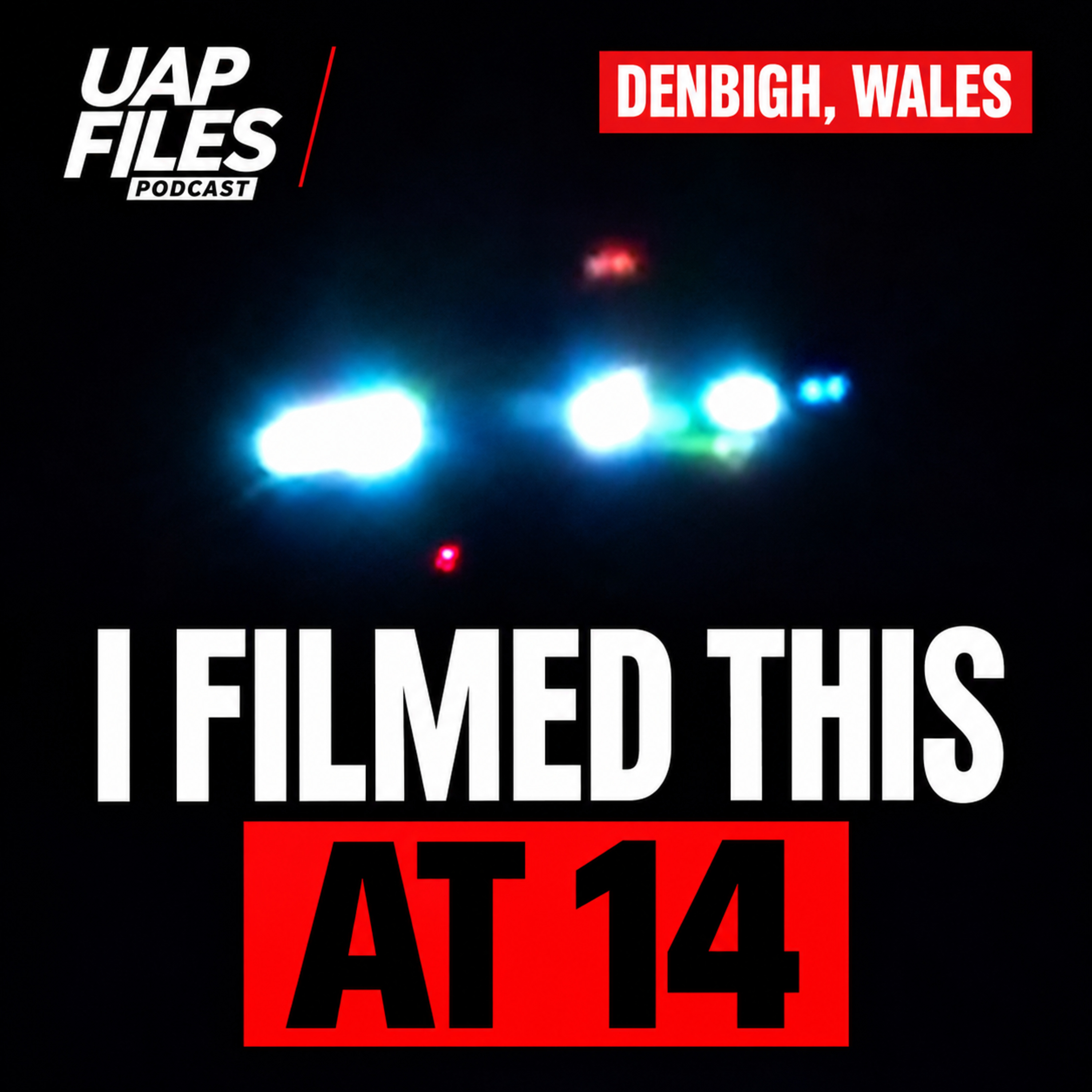
In 2012, a teenager called Nathan Thomas filmed a formation of strange lights from his bedroom window in Denbigh, North Wales, in the early hours of the morning. The footage went everywhere, and Nathan became known, sometimes mockingly, as “the UFO kid.” For over a decade he stayed silent. In this clip from UAP Files Podcast S3E40, I finally sit down with him and we talk through the night he captured it. In this clip: • How it started: a windy night, bins blowing over, and a light he first thought was a reflection off the TV • Waking his brother Alex, then his niece and his mum, and filming it on a camera he’d only just got for Christmas • The police visit, the “lampers” and golf cart explanations, and filmmaker Peter Glynn’s 2012 interview • What it was like being 14 and getting stick at school every single day, and why he still keeps it quiet at work • My analysis so far: the object appears to be above the horizon, which makes the ground-based explanations hard to fit • Why, after al
LCC in Spanish: ESMO 2026 Highlights En este episodio en español de Lung Cancer Considered, la Dra. Narjust Florez conversa con la Dra. Ana Velázquez Mañana sobre los principales avances en la investigación del cáncer de pulmón presentados en ESMO 2026 en Madrid. Destacan los resultados de los estudios DeLLphi-305, SAFFRON y Krascendo 1, explorando los avances en el tratamiento del cáncer de pulmón de células pequeñas y las terapias dirigidas para el cáncer de pulmón de células no pequeñas con mutaciones de EGFR y KRAS G12C. La conversación también aborda el estudio MOIO y sus implicaciones para los intervalos de administración de la inmunoterapia, la seguridad de los tratamientos y la práctica clínica. In this Spanish-language episode of Lung Cancer Considered, host Dr. Narjust Florez welcomes Dr. Ana Velázquez Mañana to discuss key lung cancer research presented at ESMO 2026 in Madrid. They highlight findings from the DeLLphi-305, SAFFRON, and Krascendo 1 trials, exploring advances i
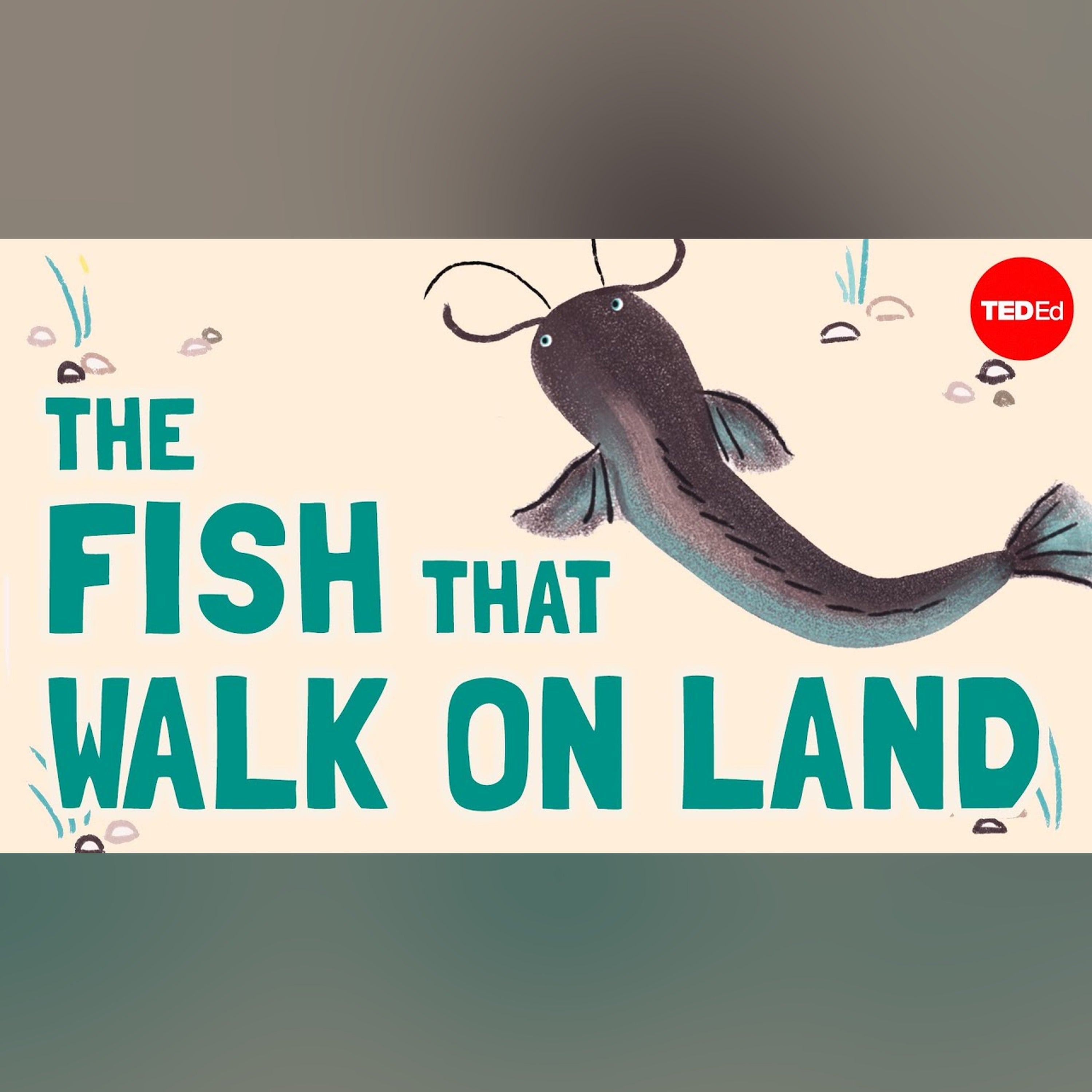
Explore the challenges facing amphibious fish when they leave water and the ingenious ways they survive on land. Uploaded 31-08-20 -- We think of fish as completely aquatic animals. But there are actually hundreds of fish species that are amphibious, meaning that they possess adaptations that enable them to survive on land. Once on land, however, they face suffocation, drying up, and being hunted by land predators. So why do fish make the exodus from water to land? Noah R. Bressman explores the ingenious ways these fish survive. Lesson by Noah R. Bressman, directed by Anna Benner. Animator's website: https://annabennerstudio.com/ Sound designer's website: http://www.tschernuth.com/ Sign up for our newsletter: http://bit.ly/TEDEdNewsletter Support us on Patreon: http://bit.ly/TEDEdPatreon Find us on Twitter: http://bit.ly/TEDEdTwitter Peep us on Instagram: http://bit.ly/TEDEdInstagram View full lesson: https://ed.ted.com/lessons/the-fish-that-walk-on-land-noah-r-bressman Thank you so mu
View full lesson: http://ed.ted.com/lessons/what-s-wrong-with-our-food-system-birke-baehr Uploaded 16-08-13 11-year-old Birke Baehr presents his take on a major source of our food -- far-away and less-than-picturesque industrial farms. Keeping farms out of sight promotes a rosy, unreal picture of big-box agriculture, he argues, as he outlines the case to green and localize food production. (Filmed atTEDxNextGenerationAshevillen.) Talk by Birke Baehr.
Featuring an interview with Dr Matthew Lunning, including the following topics: Bispecific antibody/antibody-drug conjugate combinations (0:00) A man in his late 90s with mantle cell lymphoma — Ann LaCasce, MD, MMSc (8:07) CME information and select publications (https://researchtopractice.com/ASCO2026/NHL/Micro/2)
EP 3888: There’s No Substitute for Hard Work Success rarely happens by accident. Whether you want to build a successful career, become a better leader, improve your physical health, strengthen your relationships or create a life you are proud of, there is one principle that remains constant. There is no substitute for hard work. We […] The post EP 3888 There’s no substitute for hard work (https://www.thestronglifeproject.com/the-strong-life-podcast/ep-3888-theres-no-substitute-for-hard-work/) appeared first on The Strong Life Project (https://www.thestronglifeproject.com/).
Gases are everywhere, and this is good news and bad news for chemists. The good news: when they are behaving themselves, it's extremely easy to describe their behavior theoretically, experimentally, and mathematically. The bad news is they almost never behave themselves. In this episode of Crash Course Chemistry, Hank tells how the work of some amazing thinkers combined to produce the Ideal Gas Law, how none of those people were Robert Boyle, and how the ideal gas equation allows you to find out pressure, volume, temperature, or number of moles. You'll also get a quick introduction to a few jargon-y phrases to help you sound like you know what you're talking about. Pssst... we made flashcards to help you review the content in this episode! Find them on the free Crash Course App! Download it here for Apple Devices: https://apple.co/3d4eyZo Download it here for Android Devices: https://bit.ly/2SrDulJ Table of Contents Ideal Gas Law Equation 0:50 Everyone But Robert Boyle 1:35 Ideal Gas L
So we all know that breathing is pretty important, right? Today we're going to talk about how it works, starting with the nameless evolutionary ancestor that we inherited this from, continuing to the mechanics of both simple diffusion and bulk flow, as well as the physiology of breathing, and finishing with the anatomy of both the conducting zone and the respiratory zone of your respiratory system. Pssst... we made flashcards to help you review the content in this episode! Find them on the free Crash Course App! Download it here for Apple Devices: https://apple.co/3d4eyZo Download it here for Android Devices: https://bit.ly/2SrDulJ Chapters: Introduction: The First Air-Breathers 00:00 Simple Diffusion 2:44 Bulk Flow 3:59 Mechanics of Breathing 4:30 Anatomy of the Conducting Zone 5:47 Anatomy of Respiratory Zone 7:07 Review 8:33 Credits 8:56 *** Crash Course is on Patreon! Thanks to the following Patrons for their generous monthly contributions that help keep Crash Course free for every
This week, Nate offers a reflection on the U.S. midterm elections, separating the relief of a clear outcome from the deeper questions that remain unsolved. He considers what has changed politically and what hasn't through a transpartisan lens, highlighting a growing disconnect between political institutions and the biophysical reality shaping our future. While the election has changed the occupants of some government positions, the Carbon Pulse continues, planetary boundaries remain in overshoot, and the global economic Superorganism carries on at its established pace. Nate also explores how the election itself may be revealing a signal that the political system has yet to recognize – rising energy costs, shrinking household surplus, and growing affordability pressures have contributed to electoral losses for both parties. He sees this as evidence of a problem upstream of conventional politics, rooted in the diminishing surplus that once made cheap food, cheap credit, and cheap energy
Independent public art like graffiti and street art often gets a bad rap, thanks to its legal classification as vandalism. But these art forms have much to offer as a means for people to speak truth to power and take ownership of community spaces. In this episode of Crash Course Art History, we’ll explore the various ways artists have used illicit public art to express themselves. Crash Course Art History #17 Introduction: Ancient Graffiti 00:00 Independent Public Art 01:01 Impermanent Art 02:29 Public Art as Political Expression 04:11 Jean-Michel Basquiat 06:40 Review & Credits 09:12 Image Descriptions: https://docs.google.com/document/d/1ETiCxe4GrVzFii7dBhF42oHx1EUCCh5y12wbtUjsH8A/edit Sources: https://docs.google.com/document/d/1GW2NKzhpMNMmRyAFJVhFJG9cSfUOMRL-QrcWuHcWcIA/edit?usp=sharing *** Support us for $5/month on Patreon to keep Crash Course free for everyone forever! https://www.patreon.com/crashcourse Or support us directly: https://complexly.com/support Join our Crash Cours
South Korea emerged from the devastation of the Korean War as one of the world's poorest countries. Within a generation, it had become an industrial powerhouse, mastering nuclear technologies originally imported from the United States and Canada. Today, Korean firms are among the world's most capable nuclear constructors, having delivered four APR1400 reactors at the UAE's Barakah nuclear power plant. Now the tables may be turning. With Washington pursuing an ambitious nuclear revival, the United States is looking to South Korea for the manufacturing expertise, skilled workforce and construction capabilities needed to turn its nuclear ambitions into reality.Chris Keefer is joined by Eun Jung Lim, professor at Kongju National University and visiting scholar at Stanford's Asia-Pacific Research Center, to explore Korea's extraordinary nuclear odyssey. They trace its origins in the developmental state of Park Chung-hee, the unlikely collaboration with North Korea through KEDO, and the indu
In this episode, Shawn from Florida shares unusual experiences from his years working in wooded areas. With a BA in anthropology, he brings a curious perspective to the tree arches, X formations, twisted trunks, and unexplained sounds he has encountered. Shawn works for the government; we’re keeping the details of his work private. He recounts what he believes was a Dogman encounter in early fall 2022 at a farm east of Parkersburg, West Virginia. What began as small tapping sounds escalated into heavy knocks and bangs. Around the property, he noticed unusual tree formations, a chewed tree, and strange canine tracks. Then came the sighting that sent him running indoors to lock the door. Shawn also describes a separate encounter that same year in Northwest Florida, where he and a friend fled after seeing a large hand emerge from the water. Listen to Shawn’s account and decide what you make of these encounters. IHEART RADIO - https://iheart.com/podcast/195559529 INSTAGRAM - https://www.in