Michael Wolff and Joanna Coles react to the shutdown of American airspace and take aim at Sean Duffy and Markwayne Mullin’s response to the travel chaos. Michael explains why he believes the fallout from Jensen Huang’s departure from Nvidia could reach Donald Trump and fuel a battle between Scott Bessent and Howard Lutnick. They also discuss the looming talks over Ukraine’s future, Marco Rubio’s uneasy place in the administration and why Michael believes everyone who works closely with Trump comes to hate him.
Isaac Asimov's Three Laws of Robots: Really Dumb and Totally Irrelevant - I have something better! Episode release date: 27 Nov 2023 Core Ideas: Metamodernism: Narratives and emergence view of reality - Reduce suffering - Increase prosperity - Increase understanding mantra: Seek knowledge. DISCLAIMER: This is a community-driven show. --- Keywords: ai education, gpt, ai research, ai future
Hank teaches us why water is one of the most fascinating and important substances in the universe. Review: Re-watch = 00:00 Introduction = 00:42 Molecular structure & hydrogen bonds = 01:38 Cohesion & surface tension = 02:46 Adhesion = 03:31 Hydrophilic substances = 04:42 Hydrophobic substances = 05:14 Henry Cavendish = 05:49 Ice Density = 07:45 Heat Capacity = 09:10 Citations: Crash Course is on Patreon! Want to find Crash Course elsewhere on the internet? Facebook - http://www.facebook.com/YouTubeCrashCourse Twitter - http://www.twitter.com/TheCrashCourse Instagram - https://www.instagram.com/thecrashcourse/ CC Kids: http://www.youtube.com/crashcoursekids
The psychology of desire, envy, and the ever present hedonic treadmill. You can live in an age of hot showers, antibiotics, abundant food, and instant entertainment... yet still feel vaguely cheated by existence. This episode examines why. We adapt astonishingly quickly to comfort, a process known as hedonic adaptation, and then measure ourselves against people whose lives appear shinier, richer, and more effortless than our own. Jimmy Carr calls the result “life dysmorphia”: a persistent sense that life is worse than it is, even when it is historically extraordinary. The episode offers a small corrective: not forced gratitude, but a more accurate view of what you already possess. Notice ways you make yourself feel bad for no reason Compare your life with the past, not with a stranger’s curated present. Identify one desire you can consciously stop feeding this week. If life has never been objectively better, perhaps the real challenge is learning to see it that way. SPONSORS ️ Base44 (
OpenAI Q&A: Finetuning GPT-3 vs Semantic Search - which to use, when, and why? Episode release date: 23 Jan 2023 Core Ideas: Metamodernism: Narratives and emergence view of reality - Reduce suffering - Increase prosperity - Increase understanding mantra: Seek knowledge. DISCLAIMER: This is a community-driven show. --------- Keywords: ai masterclass, ai development, david shapiro, ai safety
Today Phil’s explaining the stars and how they can be categorized using their spectra. Together with their distance, this provides a wealth of information about them including their luminosity, size, and temperature. The HR diagram plots stars’ luminosity versus temperature and most stars fall along the main sequence, where they live most of their lives. Check out the Crash Course Astronomy solar system poster here: http://store.dftba.com/products/crashcourse-astronomy-poster -- Chapters: Introduction: Stars 00:00 Stellar Spectra 1:07 Star Classifications 3:03 Why Are There No Green Stars? 4:00 Luminosity Depends on Size and Temperature 5:27 The HR Diagram 6:33 Main Sequence Stars 7:27 Other Stars on the HR Diagram 8:17 Review 9:50 -- PBS Digital Studios: http://youtube.com/pbsdigitalstudios Follow Phil on Twitter: https://twitter.com/badastronomer Want to find Crash Course elsewhere on the internet? Facebook - http://www.facebook.com/YouTubeCrashCourse Twitter - http://www.twitter.com
It's time! Crash Course Physics is coming soon and here is your introduction to our host for this series, Dr. Shini Somara. You can find out more about her linked below! What is AP Physics? Check it out here: https://advancesinap.collegeboard.org/stem/physics Twitter: https://twitter.com/shinisomara IMDB: http://www.imdb.com/name/nm4997483/?r... (http://www.imdb.com/name/nm4997483/?r...=) Website: http://www.drshinisomara.com/ *** Crash Course is on Patreon! Thanks to the following Patrons for their generous monthly contributions that help keep Crash Course free for everyone forever: Mark, Eric Kitchen, Jessica Wode, Jeffrey Thompson, Steve Marshall, Moritz Schmidt, Robert Kunz, Tim Curwick, Jason A Saslow, SR Foxley, Elliot Beter, Jacob Ash, Christian, Jan Schmid, Jirat, Christy Huddleston, Daniel Baulig, Chris Peters, Anna-Ester Volozh, Ian Dundore, Caleb Weeks -- Want to find Crash Course elsewhere on the internet? Facebook - http://www.facebook.com/YouTubeCrashC... Twitter - http:/
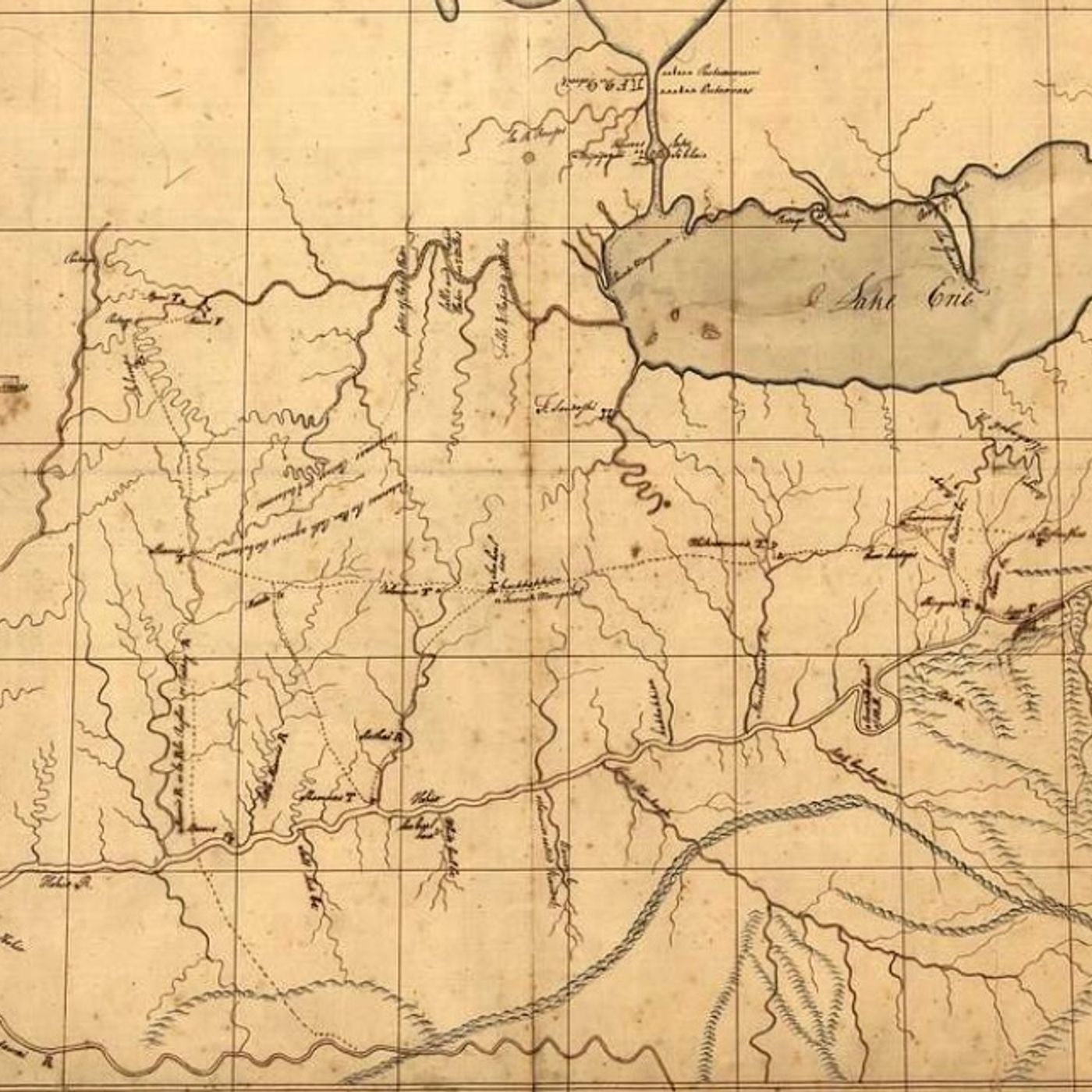
1753 Mistakes Inside Logan’s Frontier Speech — Part One Professor Robert G. Parkinson, author of Heart of American Darkness: Bewilderment and Horror on the Early Frontier, explains how Logan’s lament, printed in the Pennsylvania Journal in 1775, wrongly blamed Colonel Cresapfor the 1774 Yellow Creek murder of his family. He describes how border confusion between Pennsylvania and Maryland fueled violent land rivalries, while the diplomat Shikellamy and James Logan shaped early colonial-Indigenous land deals like the Walking Purchase. (1)
Can AI help treat trauma? I tested three methods, here are the results. Episode release date: 1 Nov 2023 Core Ideas: Metamodernism: Narratives and emergence view of reality - Reduce suffering - Increase prosperity - Increase understanding mantra: Seek knowledge. DISCLAIMER: This is a community-driven show. ------------- -------------- Keywords: tech singularity, machine learning, heuristic imperatives, ai consciousness
Get your City Scape set over at https://cozyearth.com (https://cozyearth.com/) and let them know you heard about them on Do We Know Them in the post-purchase survey. In today’s episode, Jessi shows Lily why the internet has been freaking out over the $150 SKIMS advent calendar to the point that the company has addressed it and offered "solutions" to those who are unhappy. But you know who was not unhappy about receiving hair ties, bobby pins, and keychains for $150? Glamzilla. We Love the Internets: 00:00 Introduction 02:24 Lily Goes To Jessi's Live Show in Miami 16:00 SKIMS Advent Calendar Disaster 31:33 Glamzilla Defends SKIMS 01:07:31 We Love the Internet We hope you enjoyed this episode! PS. Business Inquiries: [email protected] Do We Know Them Podcast Hosted by Lily Marston & Jessi Smiles
The person a narcissist can't get over is the one who sees the patterns, stops reacting and heals out of reach. These are ten ways to become unforgettable to a narcissist by becoming untouchable. Chapters 00:00 Understanding the Narcissist's End Goal 00:38 Overcoming Trauma and Becoming Unforgettable 01:58 1. Be the Woman Who Sees the Patterns 02:43 2. Become the Woman Who Does Not React 03:52 3. Be the Woman Who Disappears Without Begging for Closure 04:35 4. Be the Woman Who Thrives in Their Absence 05:19 5. Turn into a Woman Who Holds Her Boundaries 06:01 6. Be the Woman Who Never Tries to Prove Her Worth 07:11 7. Be the Woman Who Stops Hoping They Will Change 08:24 8. Turn into a Woman Who No Longer Explains the Abuse 09:12 9. Be the Woman Who Refuses to Hate 09:55 10. Be the Woman Who Writes a New Story Without Him in It 10:46 Conclusion Is this narcissistic abuse? Watch this episode on YouTube: youtu.be/x9oPfACrC5s (https://youtu.be/x9oPfACrC5s)
A weekend visit with family seemed like the perfect chance to catch up, although he knew his teenage cousins might try to pull a prank or two. So when he woke in the middle of the night to find three people standing at the foot of his bed, he assumed they were up to their usual tricks. But the figures didn't move. They didn't speak. And when he finally looked closely enough, he noticed something that made him realize these weren't ordinary visitors. The next morning, his aunt and uncle revealed something they'd neglected to mention about their new home. Apparently, strange things had been happening upstairs for months. But no one had experienced anything quite like this. Who were the three figures, and why had they gathered around his bed? #RealGhostStoriesOnline #ShadowPeople #BedroomHaunting #GhostlyVisitors #ParanormalEncounters #HauntedHouse #ShadowFigures #UninvitedVisitors #TrueGhostStories #Paranormal #Apparition Love real ghost stories? Want even more? Want even more? Stay conn
19666 Psychological Trauma and National Amnesia Tania Branigan, author of Red Memory: The Afterlives of China’s Cultural Revolution, explores psychological trauma with mental health professionals in Shanghai, addressing Maoist hysteria and the coping concept of “eating bitterness.” She shows how state censorship and fractured personal memory combine to create national amnesia, even as Xi Jinpingrevives centralized leader worship. (8)
1966 ragic Matricide of Zhang Hongbing Tania Branigan, author of Red Memory: The Afterlives of China’s Cultural Revolution, recounts how Zhang Hongbing, at sixteen, denounced his mother, Fang Zhongmou, for criticizing Mao Zedong in 1970, leading to her execution. Decades later, consumed by guilt, Zhang fights to protect her endangered grave at a construction site and seeks historical atonement. (7)
DIY ChatGPT: Enhancing RAVEN's long-term memories and starting to work on self-reflection Episode release date: 22 Jan 2023 Core Ideas: Metamodernism: Narratives and emergence view of reality - Reduce suffering - Increase prosperity - Increase understanding mantra: Seek knowledge. DISCLAIMER: This is a community-driven show. ----------- Keywords: ai innovation, tech singularity, ai future
Animals have evolved to eat a lot of different things, even stuff that barely passes for food, and it shapes our entire lives from what we look like to where we live. Today, we’ll talk about why being a carnivore is just easier than being a herbivore, why there are so few omnivores out there, and dedicate a little time to the remaining 2% of animals that really push the definition of food. So grab a snack because today’s episode is gonna make you hungry… well until we start talking about what happens to food after you’ve digested it. Learn more about Rae here! https://www.raewynngrant.com (https://www.raewynngrant.com/) Watch our videos and review your learning with the Crash Course App! Download here for Apple Devices: https://apple.co/3d4eyZo Download here for Android Devices: https://bit.ly/2SrDulJ Crash Course is on Patreon! Thanks to the following patrons for their generous monthly contributions that help keep Crash Course free for everyone forever: Alexis B, Rene Duedam, Burt Hum
1969 Lin Biao and Youth Memories Tania Branigan, author of Red Memory: The Afterlives of China’s Cultural Revolution, discusses Lin Biao’s rise as Mao’s sycophantic successor, his mysterious 1971 plane crash, and how his demise shattered ideological faith. She also examines reunions of the “educated youth” who, despite harsh rural banishment, express nostalgic camaraderie for their lost youth. (6)
1966 RED GUARDS Princelings and Red Nostalgia Politics Tania Branigan, author of Red Memory: The Afterlives of China’s Cultural Revolution, analyzes the princelings Xi Jinping and Bo Xilai, whose families suffered purges under Mao Zedong. Bo Xilai revived nostalgic Red songs in Chongqing before his dramatic downfall, while Xi embraced Maoist ideological discipline and centralized authority to foster unity amid slowing economic growth. (5)
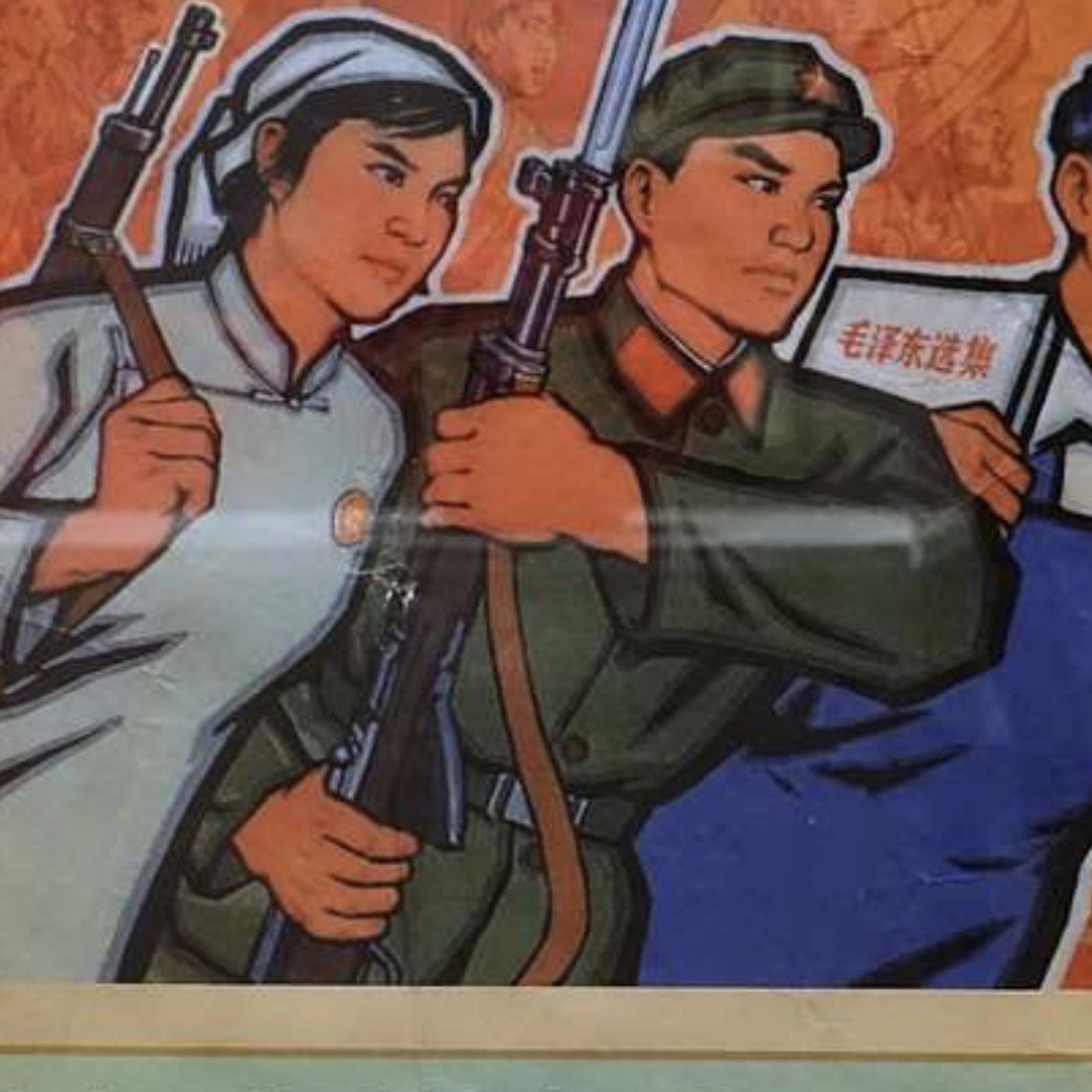
Political Legacies and Psychological Shadows — Part Two Tania Branigan of The Guardian, author of Red Memory: The Afterlives of China’s Cultural Revolution, continues with John Batchelor, examining the princelings Xi Jinping and Bo Xilai, the downfall of Lin Biao, the matricide case of Zhang Hongbing, and the enduring psychological trauma analyzed by mental health professionals in Shanghai.
So we’ve learned a lot of strategies to fight off failure. But we could be doing all this right and still fail if we straight-up run out of money. Expenses can pop-up, supplies can suddenly be hard to find, or delivering the most value to customers can involve some expensive choices. Businesses can run out of money -- it happens. But it doesn’t have to happen to us. *** Crash Course is on Patreon! Thanks to the following patrons for their generous monthly contributions that help keep Crash Course free for everyone forever: Eric Prestemon, Sam Buck, Mark Brouwer, Indika Siriwardena, Avi Yashchin, Timothy J Kwist, Brian Thomas Gossett, Haixiang N/A Liu, Jonathan Zbikowski, Siobhan Sabino, Zach Van Stanley, Jennifer Killen, Nathan Catchings, Brandon Westmoreland, dorsey, Kenneth F Penttinen, Trevin Beattie, Erika & Alexa Saur, Justin Zingsheim, Jessica Wode, Tom Trval, Jason Saslow, Nathan Taylor, Khaled El Shalakany, SR Foxley, Sam Ferguson, Yasenia Cruz, Eric Koslow, Tim Curwick, David
1966 Composer Wang Xilin’s Persecution Legacy Tania Branigan, author of Red Memory: The Afterlives of China’s Cultural Revolution, profiles composer Wang Xilin, born to peasants, who joined a military orchestra before falling victim to harsh political campaigns. Persecuted through brutal struggle sessions, he saw his compositions suppressed for thirty-seven years. His lingering anguish shows how deeply the period scarred survivors, many of whom later sought refuge abroad. (4)
1966 PEKING Red August Rallies and Trauma Tania Branigan, author of Red Memory: The Afterlives of China’s Cultural Revolution, examines Mao Zedong’s mobilization of teenagers during Red August 1966 to destroy the Four Olds. Former Red Guard Yu Xiangjun recalls her initial zeal, free nationwide train travel, and the enduring trauma of discovering a courtyard filled with the bodies of people beaten to death by her peers. (3)
1966 TIBET Murder of Educator Bian Zhongyun Tania Branigan, author of Red Memory: The Afterlives of China’s Cultural Revolution, recounts the brutal murder of Vice Principal Bian Zhongyun by her teenage female students in August 1966. Her husband, Wang Jingyao, secretly preserved photographs and her bloodstained clothing as proof. Decades later, former Red Guard Song Binbin issued a public apology, sparking intense debate over accountability. (2)
1966 Erasing History at Shantou Museum Tania Branigan, author of Red Memory: The Afterlives of China’s Cultural Revolution, discusses the Shantou Cultural Revolution Museum, founded by former official Peng Qi’an to preserve memory. Though it was China’s only museum dedicated to the tragedy, authorities removed it from maps, deployed undercover police, and eventually shuttered it, reflecting the Communist Party’s ongoing effort to minimize national catastrophes. (1)