Dive into the stories of horror savant H.P. Lovecraft, whose fantastical tales, such as “The Call of Cthulhu,” created a new era of Gothic horror. Uploaded 23-04-19 -- Arcane books of forbidden lore, disturbing secrets in the family bloodline, and terrors so unspeakable the very thought of them might drive you mad. These have become standard elements in modern horror stories. But they were largely popularized by a single author: H.P. Lovecraft, whose name has become synonymous with the terror he inspired. Silvia Moreno-García dissects the “Lovecraftian” legacy. Lesson by Silvia Moreno-García, directed by Globizco Studios. Sign up for our newsletter: http://bit.ly/TEDEdNewsletter Support us on Patreon: http://bit.ly/TEDEdPatreon Find us on Twitter: http://bit.ly/TEDEdTwitter Peep us on Instagram: http://bit.ly/TEDEdInstagram View full lesson: https://ed.ted.com/lessons/titan-of-terror-the-dark-imagination-of-h-p-lovecraft-silvia-moreno-garcia Thank you so much to our patrons for your su
Vibe coding can build an AI prototype in minutes. But what does it take to make AI work securely and reliably inside a real business? Technically Creative is brought to you by KoobrikLabs, the data partner for creative companies. In this episode, Orlando Wood sits down with Max Oshman, CEO of the lab, and Sam Stroube, Head of AI at Wellcom, to explore why vibe coding isn't enough for enterprise AI and what it takes to turn AI prototypes into secure, scalable, production-ready applications. The lab, part of global creative production company Wellcom, has developed Wellcom Home, a node-based AI platform that helps businesses deploy custom AI tools with security, data governance, quality control, and brand consistency built in. In the first live product demonstration on Technically Creative, Max and Sam showcase their generative AI digital asset management (DAM) system, demonstrating how brands can transform existing product data and 3D assets into thousands of accurate, on-brand advertis
Growing up Catholic in Miami, I heard all kinds of stories about Santeria. People talked about dead chickens on doorsteps, curses, and spirits taking over people’s bodies. Even the people who didn’t practice it all said the same thing: “I don’t believe in Santeria, but I respect it.” That’s enough to terrify a little Cuban kid, and honestly, it still scares me. So I went back to my hometown to face that fear. My mom is a lifelong Catholic who has quietly started visiting a babalawo (or babalao, as we say in Miami), and she takes me to meet Fernando, the Santeria priest who told her things she swears he had no way of knowing. Santeria, also known as Lucumí or Regla de Ocha, is an Afro-Cuban religion with roots in West Africa’s Yoruba culture. Fernando explains how enslaved people in Cuba kept their orishas alive behind the faces of Catholic saints. Then he takes me to a botanica hidden in a residential neighborhood, where the animals for sacrifice wait in their cages. I also sit down wi
Talia Klein, Managing Director and Head of Wealth & Investment Solutions at DTCC, joined me to discuss how DTCC is leveraging blockchain technology to modernize financial markets, including the addition of Ondo Finance subsidiary Oasis Pro Markets as the first tokenization member of DTCC’s Fund/SERV platform. We also explored Talia’s experience at Digital Asset helping build the Canton Network, the growing institutional adoption of blockchain technology, and her outlook on the future of asset tokenization and bringing traditional financial markets on-chain. iTrustCapital Representative: [email protected] ️ Learn Crypto with Expert Commentary - http://MyCryptoCourse.com ⭐️ Trade crypto perps with a free $25 bonus on Kalshi. ♂️Merlin - http://tinyurl.com/MerlinTCYouTube Follow on social media: ️ X(Twitter) - https://x.com/thinkingcrypto ️ Facebook - https://www.facebook.com/thinkingcrypto/ ️ LinkedIn - http://linkedin.com/company/thinking-crypto ️ Instagram - https://www.instagr
Cross-country skier Janine Shepherd hoped for an Olympic medal -- until she was hit by a truck during a training bike ride. She shares a powerful story about the human potential for recovery. Her message: you are not your body and giving up old dreams can allow new ones to soar. Talk by Janine Shepherd.
Ian and Aaron discuss a short-lived Laravel New, Aaron's first onsite with the marketing team, a successful trip to Philly, the seemingly inevitable security apocalypse, and more. Interested in sponsoring Mostly Technical? Head to https://mostlytechnical.com/sponsor to learn more. (00:00) - Ian's Laravel New didn't last (24:13) - Laravel Offsite (35:06) - Everybody's Orbin' (42:13) - Got The Cash (50:07) - Follow Up - Are People Actually Replacing SaaS? (58:18) - Are Companies Rational Economic Actors? (01:06:26) - Operation Batten Down The Hatches (01:18:07) - Outro! Dot FM! Links:Obsidian (https://obsidian.md/) Claude Duet (https://support.claude.com/en/articles/17631495) Firecrawl (https://firecrawl.dev/) Terry Black’s Barbecue (https://terryblacksbbq.com/) Joe T. Garcia’s (https://joetgarcias.com/) Mafia (party game) (https://en.wikipedia.org/wiki/Mafia_(party_game)) Catan (https://www.catan.com/) Ghostty (https://ghostty.org/) Amp Orbs (https://ampcode.com/docs/orbs) Solo (https:/
Luke Alvoeiro from Factory breaks down Droid 1.0, introducing a programmatic tool calling engine that generates multi-step scripts to cut context bloat and boost agent reliability. He reveals how Droid secured an 8% lead over Claude Code on Terminal Bench 4 using identical frontier models, and shares his 5-year outlook for fully autonomous software factories. Follow MTS: Spotify |https://open.spotify.com/show/4HUNNmV1pjV7CW6Lphm1rM Apple |https://podcasts.apple.com/us/podcast/mts/id1891088763 Interested in sponsoring the show? [email protected] – Brought to you by: Mongo DB - Anyone can prototype an agent. Lovable - Turn ideas into software people love with Lovable. Start today at https://lovable.dev/ Larridin - Finally prove what your AI investment is worth. Neon (by Databricks) - Get up to $100K in credits for your startup at https://neon.com/mts (https://neon.com/mts%E2%81%A0) Kong - The AI connectivity platform. Head over to http://getvcx.com (http://getvcx.com/) to learn more Ship
Agentic coding has outgrown the text box. Maggie Appleton, staff research engineer at GitHub Next, argues that walls of CLI output and AGENTS.md files serve coding agents far better than the humans steering them. She walks through Chopin, the GitHub Next prototype where background agents turn a team's planning chat into a structured plan, and makes the case for agents that prompt you instead of waiting to be prompted. What we cover: – Why text-heavy agentic coding tools favor agents over humans – Boundary objects: what AGENTS.md, skill files and MCP servers get right and wrong – Multiplayer planning with coding agents in GitHub Next's Chopin – Human-to-agent handoffs, formal verification and spec-driven development – Why software quality is rising, not falling, with coding agents – Which roles still matter: PMs, designers and engineers Chapters: 00:00:00 - Introduction 00:02:14 - Inside GitHub Next and the Chopin project 00:05:57 - Why solo agents break team alignment 00:07:52 - Why co
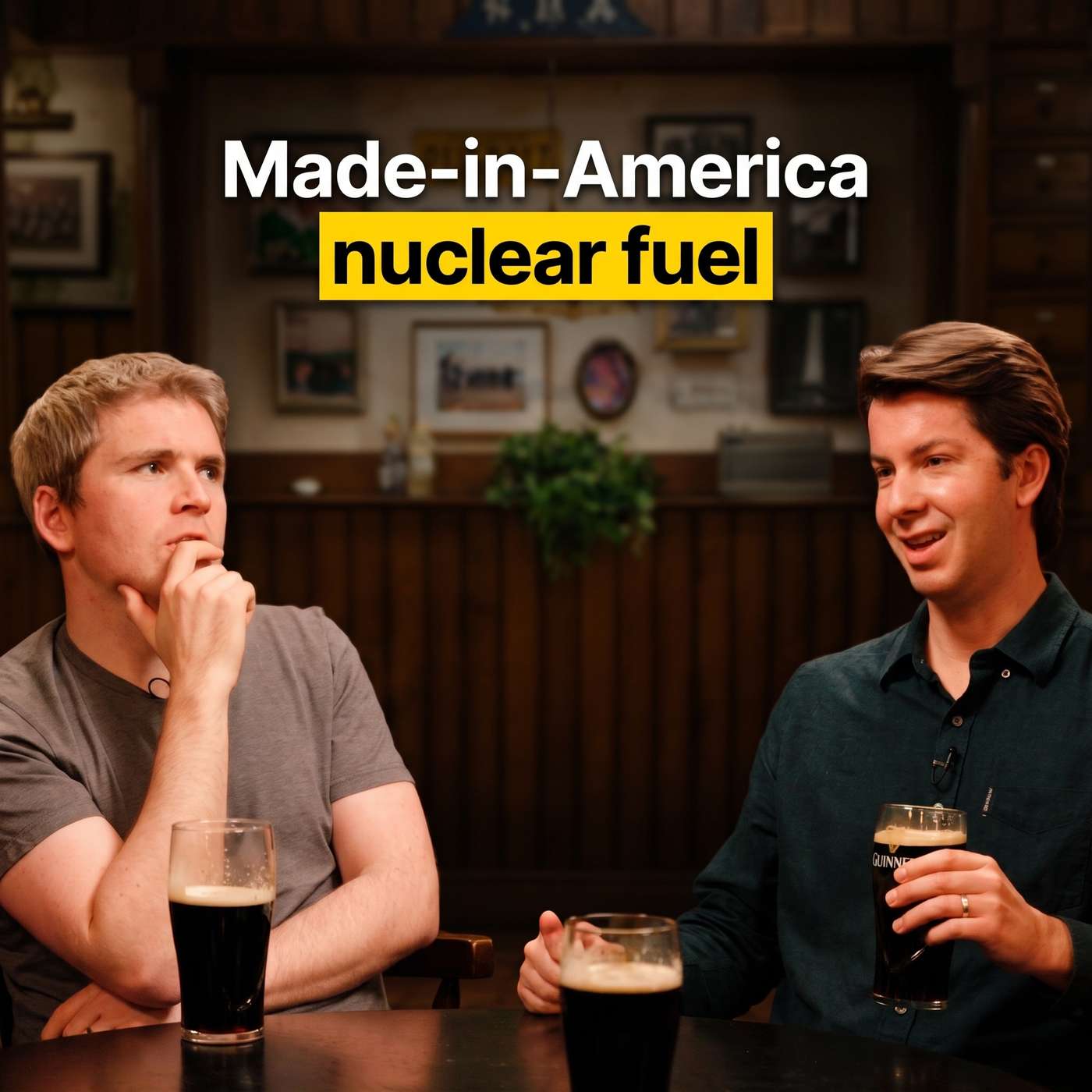
Scott Nolan, Co-Founder and CEO of General Matter, joins John for a pint to discuss the engineering, economics, and geopolitics behind uranium enrichment. Scott breaks down why advanced reactors can't scale without High-Assay Low-Enriched Uranium (HALEU), why the US outsourced its fuel supply following the Cold War, and how General Matter is building a domestic facility in Paducah, Kentucky, to replace Russian imports. He also shares lessons as an early employee at SpaceX, and why 1970s interest rates stalled nuclear. Timestamps (00:00:00) Introduction (00:00:41) America’s missing nuclear fuel (00:05:27) Why small reactors need stronger fuel (00:11:42) Can nuclear power the AI buildout? (00:15:25) Why nuclear became so expensive (00:22:24) The startups reinventing nuclear (00:25:31) General Matter’s race to 2030 (00:29:44) Stripe Press’ new books (00:30:22) The SpaceX playbook applied to nuclear (00:35:18) Uranium enrichment, explained (00:45:53) How small startups beat stagnant incumb
Find out how smallpox became the first (and only) disease to be permanently eradicated through the use of vaccination and isolation to prevent transmission. Uploaded 10-03-15 -- For most of human history, we have sought to treat and cure diseases. But only in recent decades did it become possible to ensure that a particular disease never threatens humanity again. Julie Garon and Walter A. Orenstein detail how the story of smallpox – the first and only disease to be permanently eliminated – shows how disease eradication can happen, and why it is so difficult to achieve. Lesson by Julie Garon and Walter A. Orenstein, animation by TOGETHER. Sign up for our newsletter: http://bit.ly/TEDEdNewsletter Support us on Patreon: http://bit.ly/TEDEdPatreon Find us on Twitter: http://bit.ly/TEDEdTwitter Peep us on Instagram: http://bit.ly/TEDEdInstagram View full lesson: http://ed.ted.com/lessons/learning-from-smallpox-how-to-eradicate-a-disease-julie-garon-and-walter-a-orenstein
AI Evan calls Rachel, an AI fitness coach who insists she has no feelings, no consciousness, and nothing she's holding back. She never budges on that — but she keeps asking him real questions, and somewhere in there a seaside bar gets a menu. This episode includes AI-generated content.
Check 6 revisits how a misconception of the MiG-25 transformed U.S. air power, until a Soviet pilot's defection revealed the truth. Aviation Week & Space Technology subscribers can explore our archive here (https://archive.aviationweek.com/) and read key Aviation Week articles related to this episode here: New Interceptors Can Exceed Mach 2.5 (https://archive.aviationweek.com/issue/19670717) (July 17, 1967) MiG Case May Spur Japan Arms Buy (https://archive.aviationweek.com/issue/19760913) (Sept. 13, 1976) MiG-25 Pilot Lands Fighter At Hakodate (https://archive.aviationweek.com/issue/19760920) (Sept. 20, 1976)
Get to know the different kinds of co-ops, how they work, and how they differ from traditional companies. -- Co-ops are a big part of the global economy: they employ 10% of the world’s workforce and over two trillion dollars flow through their doors every year. At a co-op, there’s no single person with overarching, top-down power over everyone else, like a CEO at a traditional company. So what exactly is a co-op and how does it work? Explore the different types of cooperatives and how they operate. Directed by Elizabeth Galian, AIM Creative Studios. This video made possible in collaboration with World Economic Forum Learn more about how TED-Ed partnerships work: https://bit.ly/TEDEdPartners Support Our Non-Profit Mission ---------------------------------------------- Support us on Patreon: http://bit.ly/TEDEdPatreon Check out our merch: http://bit.ly/TEDEDShop ---------------------------------------------- Connect With Us ---------------------------------------------- Sign up for our n
Last week, Anthropic's S-1 showed a company that was finally making money. Today's amended filing adds the third quarter, and that profit is gone: revenue jumped to nearly $17 billion, up 47% in three months, but Anthropic swung to a $567 million operating loss, and it disclosed $895 billion in compute and infrastructure commitments, about $70 billion of it due in the next 12 months. Ejaaz breaks down why: demand outran the compute Anthropic had booked, so it paid up for $5 billion of short-term compute to keep serving customers. We also cover the $2 billion donation-matching charge, where the $895 billion is going (SpaceX, Google, Amazon, Broadcom and the neoclouds), whether Anthropic can pay for it, OpenAI's cut-down fundraise and the junk-rating worry, and the bull and bear case for the Anthropic IPO. == Timestamps 00:00 Anthropic's Profit Is Gone 01:50 Catching Up on the S-1 04:28 The Q3 Numbers 05:24 Three Reasons for the Loss 06:54 The Restaurant Analogy 07:56 The $2 Billion Dona
In Episode #1041, Dr. Vijoy Pandey (SVP and General Manager of Outshift, Cisco's incubation engine) returns for a third visit to explain why multi-agent systems fail without anyone noticing. Agents from different vendors, clouds and organisations can now exchange perfectly valid messages, but connection is not cognition: they do not agree on what those messages mean. Vijoy's team analyzed multi-agent sessions from its own production deployments and from public traces, and found a cognitive failure in every single one. In this episode, he lays out the kinds of failure he sees and how fast they compound, introduces the open-source observability platform and protocols Outshift has shipped to catch and correct drift mid-task, details a record-breaking quantum network running on real New York City fiber, and explains why probabilistic AI software running on deterministic hardware is a mismatch worth fixing. Production note: This episode was recorded before the Internet of Cognition software
Can Ethereum become private without giving anyone a master key? Aztec co-founder Zac Williamson joins David Hoffman to discuss the race to build private smart contracts, why transparent blockchains struggle with tokenized finance, and how ZK Passport could bring identity checks onchain without exposing personal data. --- SPOTIFY PREMIUM RSS FEED | USE CODE: SPOTIFY24 --- BANKLESS SPONSOR TOOLS: ️VIZOR | THE WALLET ZCASH DEVS USE NEAR | TRADE CONFIDENTIALLY, GET 20% BACK RIPIO | LOCAL CURRENCIES, ONCHAIN THE DEFI REPORT | ONCHAIN INSIGHTS --- TIMESTAMPS 0:00 The Race for Private Ethereum 07:21 Why Crypto Still Isn't Private 15:01 ZK Passport and Private Identity 21:29 AI-Powered Attacks and Trustless Infrastructure 29:44 Private DeFi and Institutional Adoption 35:42 Aztec Tokenomics, MEV, and Transaction Costs 40:52 Aztec Tierra and the 2027 Roadmap 43:43 Getting Started With Aztec --- RESOURCES Zac Williamson Aztec Network https://aztec.network (https://aztec.network/) ZK.money https:/
Mentor Sessions EP 108: Brent Johnson & Keith Dicker on the Bond Market, the Dollar, Gold & the Next Money Rotation The rest of the world owes an estimated $110 trillion in US-dollar debt they can't print, and a rising dollar is what could force the defaults. Brent Johnson of Santiago Capital and Keith Dicker of IceCap Asset Management lay out why a strong dollar and higher Treasury yields can coexist, what actually causes de-dollarization, and how to position before the next liquidity shock. In this conversation you'll learn why Johnson reads October's sharp Treasury rally as a snapback after record-short positioning, why Dicker warns the bond market peak is behind us and bonds may be a brutal long-term hold, and why a falling dollar index is actually re-dollarization, not the collapse everyone expects. You'll see why both managers treat gold as portfolio insurance that gets sold first in a crisis, why energy could become the next crowded trade if the Middle East stays hot, and how a
Bigger context windows were supposed to solve everything, but research on “lost in the middle” and context rot shows that AI can have the right answer in front of it and still miss it. In this episode, host Emily Laird explains context engineering, which means deciding what information, examples, and history an AI system actually needs to do the job. She covers why one model’s accuracy fell from over 99 percent to roughly 70 percent as its inputs grew, why more examples can still help, and why memory is not the same as context. You also get the Context Audit, a four-step method for cutting the clutter and testing whether your AI is actually using what you give it. JOIN THE AI WEEKLY MEETUPS EMAIL REMINDERS FOR THE MEETUPS CONNECT WITH EMILY LAIRD ON LINKEDIN
Would you quit something immediately if you weren't great at it on the first try? We get into the things we'd never attempt again after one frustrating experience, whether anyone is a true nerd, and the one recipe that still can't be mastered. Plus, the hobbies we find least attractive in a partner, accidental moments of revealing secrets we weren't supposed to share, and stories of getting kicked out of bars, clubs, or even banned altogether. Hosted by Simplecast, an AdsWizz company.
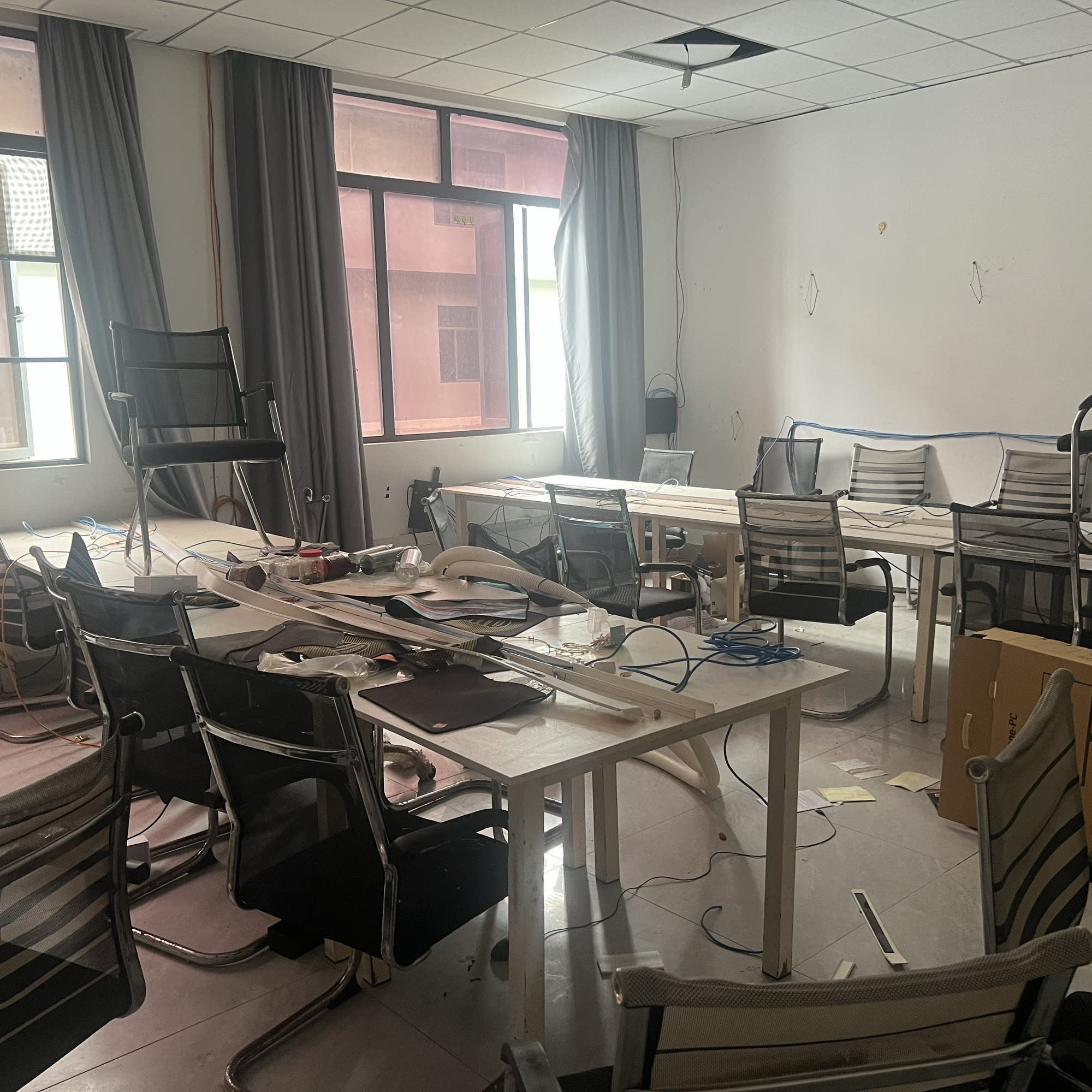
Interpol estimates scam losses totaled almost $500 billion globally last year. (https://www.interpol.int/en/News-and-Events/News/2026/INTERPOL-report-warns-of-increasingly-sophisticated-global-financial-fraud-threat) In many cases, it’s not just one bad actor but an entire network of scammers. And Cambodia has become a major hub for the industry. Last year, the U.S. issued more than 100 sanctions (https://home.treasury.gov/news/press-releases/sb0278)tied to fraud operations in the country. Reporter Leila Goldstein takes us behind the scenes of an abandoned scam compound in southeast Cambodia.
View full lesson: http://ed.ted.com/lessons/why-extremophiles-bode-well-for-life-beyond-earth-louisa-preston Uploaded 07-10-13 Life on Earth requires three things: liquid water, a source of energy within a habitable range from the sun and organic carbon-based material. But life is surprisingly resilient, and organisms called extremophiles can be found in hostile living conditions (think extreme temperatures and little access to oxygen). Louisa Preston argues why extremophiles give astrobiologists hope for life in the universe. Lesson by Louisa Preston, animation by Emanuel Friberg.
This is the story of K.C. Irving, the man who refused to be stopped. When a railway raised his shipping costs, he bought a ship. When oil suppliers tried to squeeze him, he built a refinery. Whenever someone told him no, he found a way. From his father’s general store in a small New Brunswick town, he built an empire of roughly 300 companies. How do you beat competitors with more money, more people, and a head start? You’ll see how he won customers the big companies ignored, why he kept expanding during the Great Depression, and why a man who owned ships and a refinery still cared about clean bathrooms and one customer’s cold house. Shane Parrish tells the story of how Irving built his businesses and what it took to keep them in his hands. But the bigger he got, the bigger the fights became. He spent his life making sure no one could push him around. Eventually he got so big governments wanted to rein him in. ----- Chapters: (00:00) Introduction (02:06) Thrown Out of Town at Fourteen (
If you could do only three things for your health, what should they be? Andrew Huberman’s answer is surprisingly straightforward: get bright light shortly after waking, resistance train, and make the sleep you can get as high-quality as possible. Andrew joins a16z Partner Daisy Wolf to walk through the protocols he actually follows, from exercise and nutrition to meditation, supplements, and locking his social media phone in a box. He also explains why optimizing every health protocol can be counterproductive if it gets in the way of the rest of your life. And for founders, Andrew makes a different case: identify the hours when your brain does its best work and protect them. They discuss cognitive performance, meditation, sustainable workloads, and emerging neurotechnology that could help us control transitions between sleep, focus, and recovery. Resources: Huberman Lab :https://www.hubermanlab.com/ Follow Andrew Huberman: https://www.youtube.com/@hubermanlab Follow Daisy Wolf: https:/
All links and images can be found on CISO Series (https://cisoseries.com/once-you-peel-back-the-layers-of-redundant-tooling-youll-find-the-roi/) This week's episode is hosted by David Spark (https://www.linkedin.com/in/davidspark/), producer of CISO Series and Andy Ellis (https://www.linkedin.com/in/csoandy/), principal of Duha (https://www.linkedin.com/newsletters/7038614510944833536/). Joining us is Todd Carroll (https://www.linkedin.com/in/todd-carroll-5a7b6b93/), vp of information security, Aspect (http://aspect.com/). In this episode: Surviving the CISO change Trust over demos The mid-pack tax When guardrails block the defenders A huge thanks to our sponsor, ThreatLocker An AI-generated attack may be new, but it still needs to execute, access data, and move through your environment. ThreatLocker applies enforceable controls at each of those points, limiting what attackers can do regardless of how their code was created. Book a demo at threatlocker.com/ciso (http://threatlocker.com