Save 20% with code 9to5daily. New episodes of 9to5Mac Daily are recorded every weekday. Stories discussed in this episode: Three new iPad models are reportedly launching early next year, here's what's coming (https://9to5mac.com/2026/11/01/three-new-ipad-models-are-reportedly-launching-early-next-year-heres-whats-coming/) Here's what's coming for the MacBook Pro next year, per report (https://9to5mac.com/2026/11/02/heres-whats-coming-for-the-macbook-pro-next-year-per-report/) Apple confirms iOS 27.3 beta is coming next week with Apple Intelligence in China (https://9to5mac.com/2026/10/30/apple-confirms-ios-27-3-beta-is-coming-next-week-with-apple-intelligence-in-china/) Apple acquires Ascend․io, an agentic AI engineering startup (https://9to5mac.com/2026/10/30/apple-acquires-ascend%e2%80%a4io-an-agentic-ai-engineering-startup/) Listen & Subscribe: Overcast (https://overcast.fm/itunes1331816080/9to5mac-daily) RSS (https://feedpress.me/9to5macdaily) Spotify (https://open.spotify.com/show
Scott Alexander argued against SURA, the push for AI labs, their employees and whole countries to stop unilaterally and raise awareness. Zvi Mowshowitz thinks that argument is deeply confused. He sets out Scott’s core claims, then takes them in turn: what high p(doom)s actually rest on, whether building something that might kill everyone is deontologically evil, why loud resignations from the labs have worked, how far to trust AI forecasters, what Anthropic has done to the timeline, and the eternal question of China. Along the way come replies from Oliver Habryka, Daniel Kokotajlo, Vaniver, TsviBT, Eliezer Yudkowsky and others, ending with a map of Absurd, Strong and Weak SURA and where Zvi stands among them. This has been an Askwho Casts audio conversion. Thanks for listening. * 00:00 - Introduction * 01:33 - Table of Contents * 02:39 - Scott Alexander’s Core Claims * 06:24 - My High Level Responses To Scott’s Core Claims * 09:15 - Briefly on Alignment * 11:26 - Probabilities and How
Shame is an unspoken epidemic, the secret behind many forms of broken behavior. Brené Brown, whose earlier talk on vulnerability became a viral hit, explores what can happen when people confront their shame head-on. Her own humor, humanity and vulnerability shine through every word. Uploaded 19-07-13 Talk by Brené Brown.
Bitcoin and Solana face a potential security threat as new crypto hack warnings raise concerns across the market! Today, we break down the latest crypto news, Bitcoin security risks, Solana vulnerabilities, and which altcoins could be impacted. Are your crypto investments safe? Join Skool Community - https://www.skool.com/discovercrypto/about Trade at Bitbase - https://www.bitbase.com/en/accounts/invite/jwpe3h Trade wtih Toobit- https://www.toobit.com/en-us/activity/halloween-2026 ●▬▬▬▬▬▬▬▬▬▬▬▬▬▬▬▬▬▬▬▬▬▬▬▬▬▬▬▬● All of our contents are strictly personal opinions. Please make sure to do your own research. Never take one person's opinion for financial guidance. Our contents ARE NOT financial advice. Our contents are sponsored & include affiliate content. Only use exchanges for trading digital assets. We never keep our entire portfolio on an exchange. #bitcoin #crypto
Another round of food getting spoiled by hacks on freezers. And a cool DIY kit to make a cheap e-paper display. Starring Tom Merritt, Robb Dunewood, and Dr. Niki. Links to stories discussed in this episode can be found here (https://dailytechnewsshow.com/2026/11/02/why-attackers-are-targeting-grocery-store-freezers-dtns-5386/). Hosted on Acast.
(00:21) - Joe Weisenthal is a Bloomberg financial journalist and co-host of the *Odd Lots* podcast. Joe Weisenthal discusses the midterm elections, prediction markets, the resilience of American consumers, and whether AI investment can deliver meaningful productivity gains and returns. (22:40) - Emily Sundberg, founder of the business-and-culture newsletter Feed Me, discusses its growth from a side project into an independent media company with podcasts, events, merchandise, and a production deal with Higher Ground. She also shares her views on AI’s influence, Substack’s increasingly crowded market, independent media economics, and her enthusiasm for New York’s holiday season. (40:10) - Ryan Serhant discusses expanding his media-driven real estate brokerage into competitive markets, using social content and technology to generate leads and improve the customer experience. The prominent real estate entrepreneur also examines housing affordability, limited inventory, AI-generated listing
Legora can’t read a single trace of what its agent does for a lawyer. The data belongs to the law firm’s clients. How do you build and test an agent when you can’t see its work? Jacob Lauritzen is the CTO of Legora, one of the fastest-growing companies... Full show notes and links (https://lspace.beehiiv.com/podcast/s/latent_space_the_ai_engineer_podcast/building_legal_agents_when_you_can_t_see_the_data_-_jacob_lauritzen_cto_of_legora)
“Imagine tomorrow you hear that the US government started putting Bitcoin on their balance sheet. Guess what happens next? Everybody tries to front-run it. Everybody and their mother tries to front-run it.” Misha Komarov and Clara Shikhelman of [[alloc] init] join me to discuss Shielded Bitcoin, their plan to make Bitcoin private. We get into how Bitcoin PIPEs use witness encryption to lock Bitcoin behind a cryptographic proof, how a shielded transaction actually works, why you leave with someone else’s deposit rather than your own, and what it would cost compared with a normal transaction. We also discuss why governments and institutions will need privacy, whether brand new cryptography can be trusted with billions of dollars, how the team plans to pay people to break it, and why they wouldn’t be comfortable with large amounts in it today. Finally, we get into whether Bitcoin’s resistance to change is a feature, whether soft forks are dead, why quantum resistance is a must-have upgrad
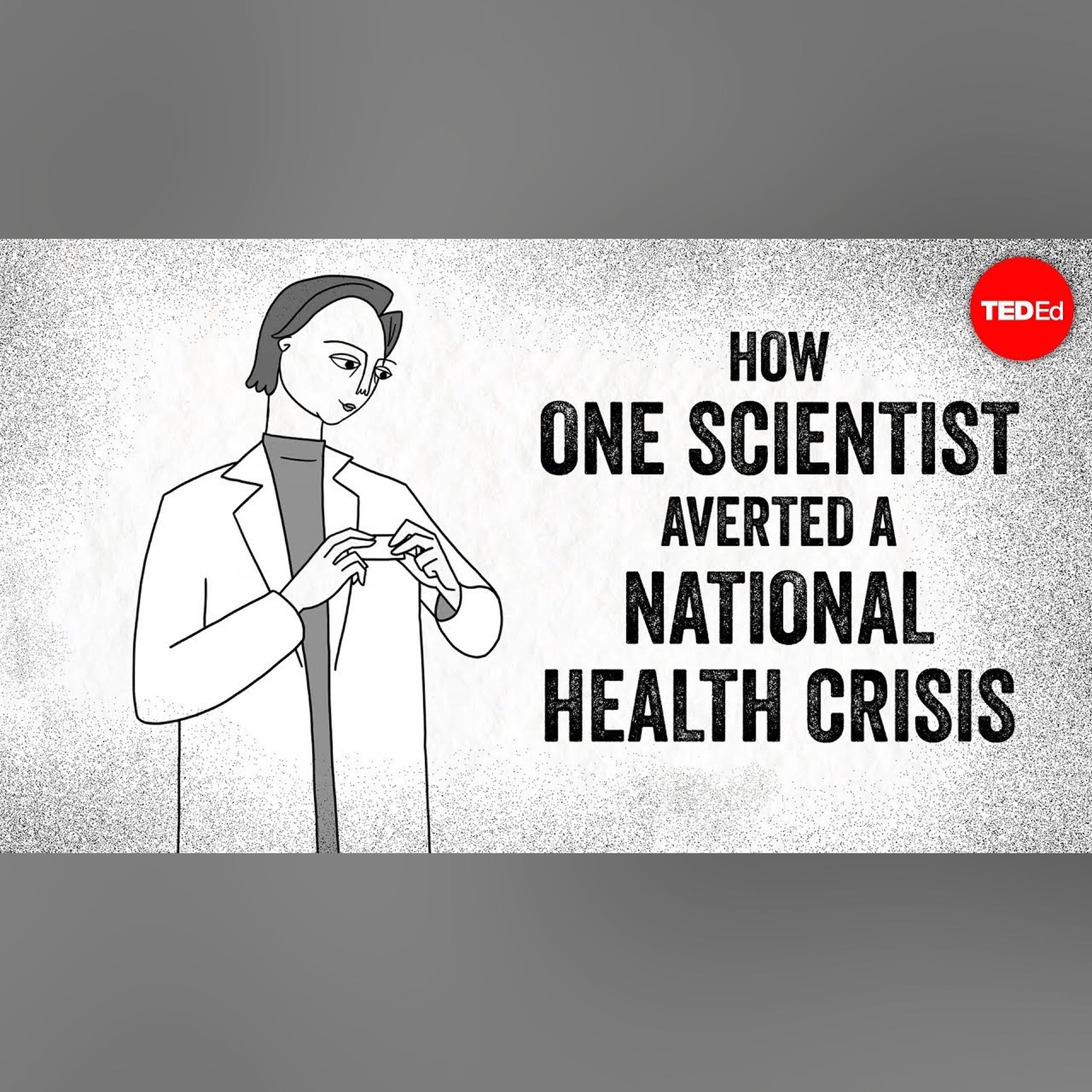
TED wants to promote student ideas! Learn more here: http://bit.ly/2M7hd87 Uploaded 07-06-18 View full lesson: https://ed.ted.com/lessons/how-one-scientist-averted-a-national-health-crisis-andrea-tone In 1960, Frances Kelsey was one of the Food and Drug Administration’s newest recruits. Before the year was out, she would begin a fight that would save thousands of lives — though no one knew it at the time. Andrea Tone explains how Kelsey was able to prevent a massive national public health tragedy by privileging facts over opinions, and patience over short-cuts. Lesson by Andrea Tone, animation by TED-Ed. Thank you so much to our patrons for your support! Without you this video would not be possible! Claudia Mayfield, Justus Berberich, Pavel Zalevskiy, Yankai Liu, Duo Xu, Ghassan Alhazzaa, Miloš Stevanović, Joy Love Om, Gi Nam Lee, Shawn Quichocho, Simone Kidner, Anika Westburg, Barun Padhy, Brandy Jones, Devin Harris, Tony Trapuzzano, Stephen Michael Alvarez, Tom Lee, Juliana, Jason We
Moravec’s paradox: vs. AI can defeat grandmasters, generate code, and analyse complex documents in seconds. Yet machines still struggle with abilities that humans use without conscious effort, such as opening a door, handling a soft object, understanding everyday context, or tying a shoelace. This is Moravec’s paradox: tasks that humans consider intellectually difficult can be relatively easy for computers, while perception, movement, and common sense remain some of the hardest problems in artificial intelligence. In this episode of A Beginner’s Guide to AI, we examine the difference between producing an intelligent answer and acting intelligently in the physical world. We look at the AI grounding problem, embodied intelligence, physical AI, robot perception, motor control, and the hidden limits of automation. A cake experiment demonstrates what happens when a robot follows its instructions perfectly but fails to adjust to a softer or slipperier object. We also examine the DARPA Roboti
You’ve promised to get your son the cutest creature in creation: the cuddly. Can you outsmart the cuddly incubator and go home a hero? Uploaded 25-04-19 -- You’ve promised to get your son the cutest creature in creation: the cuddly. It’s part of the Wuddly species, cousin to the terrifying duddly and the hideous fuddly. To make one, 100 eggs are placed in an incubator to undergo egg fusion, and the resulting combination will produce either a cuddly, a duddly or a fuddly. Can you make the right combination to get a cuddly? Dan Finkel shows how. Lesson by Daniel Finkel, directed by Artrake Studio. Sign up for our newsletter: http://bit.ly/TEDEdNewsletter Support us on Patreon: http://bit.ly/TEDEdPatreon Find us on Twitter: http://bit.ly/TEDEdTwitter Peep us on Instagram: http://bit.ly/TEDEdInstagram View full lesson: https://ed.ted.com/lessons/can-you-solve-the-cuddly-duddly-fuddly-wuddly-riddle-dan-finkel Thank you so much to our patrons for your support! Without you this video would no
Midterm elections are tomorrow, and uncertainty is hanging over the markets. At the same time, dozens of major companies are opting out of having their stock tokenized as the OKX and ICE comment period nears its end. Meanwhile Hong Kong is pushing ahead with tokenization, and we break down what it all means. ~This episode is sponsored by iTrust Capital~ iTrustCapital | Get $100 Funding Reward + No Monthly Fees when you sign up using our custom link! 00:00 Intro 00:10 Sponsor: iTrust Capital 00:50 Fear and greed reset 01:40 October AI losses 02:20 Pivotal week 04:00 Optimism? 04:30 Mike McGlone: Careful with post-midterms rally 05:45 Oil manipulation 07:05 Nuclear option? 09:00 Mr.Veto 09:20 Pardons incoming 10:10 Hacks ramping 11:15 Bottom near 12:00 Tom Lee: Dems will support AI/Data centers 13:15 Last 3 bottoms 14:40 Binance withdrawals 15:10 Matt Hougan: in one week, we’ll be back 16:30 Anti-tokenization 17:20 ICE 30 days 18:45 Red Coin 50,000 users/1 week #Crypto #Bitcoin #midterms
Today, we're joined by Joe Chalom, CEO of SharpLink and former Head of Digital Assets at BlackRock, to break down the three major forces driving Ethereum's long-term bull case: institutional adoption, tokenization and DeFi, and the rise of agentic finance. Joe explains why Ethereum could become the global settlement layer for traditional finance, how the $150 trillion global stock market represents an enormous tokenization opportunity, and why billions of autonomous AI agents could dramatically accelerate blockchain adoption. ~~~~~ Want to see what Buffett, Pelosi and Vitalik own? Track their holdings for free with our Insider Portfolios! (https://www.milkroad.com/) ~~~~~ ~~~~~ Tools & Channels ~~~~~ Follow Milk Road on Social Media: Milk Road Twitter:https://link.milkroad.com/X Apple Podcasts:https://link.milkroad.com/apple-podcast ~~~~~ GUEST INFO Joseph Chalom: https://x.com/joechalom Disclaimer It should not be considered as financial, legal.
OpenAI cut its funding round to about $20B at a $1.25T valuation as the AI selloff spooked investors. Anthropic’s S-1 showed nearly $17B in quarterly revenue, Marvell agreed to buy Lumentum for $115B, and Claude Code got game-cloning limits. Sources: OpenAI now seeks ~$20B at a $1.25T valuation for its latest round, from $30B at a $1.4T valuation, as some investors cut commitments amid an AI selloff (https://www.ft.com/content/7a3ad950-1b3b-4d9e-8c15-65a61ae6180f) (Financial Times) Anthropic’s updated S-1 shows Q3 revenue of nearly $17B, up from $1.4B a year ago, and a $23.3B net loss, as it plans to spend more than $895B in the years ahead (https://www.bloomberg.com/news/articles/2026-11-02/anthropic-revenue-hits-nearly-17-billion-before-blockbuster-ipo) (Bloomberg) Sources: neoclouds CoreWeave, Nebius, and Nscale have effectively been shut out of the bond market in recent weeks as lenders and investors demand tougher terms (https://www.wsj.com/finance/the-new-bottleneck-in-americas-a
Networking vendor Meter has recently launched their brand new Networking Grants program, putting money on the table to help you in your learning journey. In this sponsored episode, Matt Heim, Head of Partner Enablement at Meter, joins Ethan and Holly to explain why Meter created the program, how it works, who is eligible, and how... Read more » (https://packetpushers.net/podcasts/n-is-for-networking/n4n068-meters-networking-grants-program-sponsored/)
Uptober came and went. Marty and Baron break down Anthropic's S-1, why hyperscalers are now free cash flow negative, the $6.3 billion Binance hack, and why Bitcoin's simplicity keeps looking like a feature. https://bitcoinproducts.com (https://bitcoinproducts.com/) In this episode: What Anthropic's S-1 does and doesn't tell us about the bull and bear cases Where the compute goes: training vs. serving customers Junk rating talk and the cost of capital for the AI build out Microsoft job cuts and the search for real AI ROI Red October, Intel's worst day since 1974, and hedge fund de-grossing Big Tech free cash flow turning negative and the debt to GDP reckoning Lula's win in Brazil and what it means for the Donroe Doctrine The Binance hack and why Bitcoin's small attack surface wins TIMESTAMPS: 00:00:00 - Red October that wasn't 00:00:35 - Anthropic S-1 gradually then suddenly 00:02:39 - Enterprise customers and revenue retention 00:05:50 - Amended S-1 and the $895 billion in commitments
Art history is far from set in stone. Engineer Maurizio Seracini spent 30 years searching for Leonardo da Vinci's lost fresco "The Battle of Anghiari," and in the process discovered that many paintings have layers of history hidden underneath. Should they be part of the viewing experience too? Talk by Maurizio Seracini.
“To call this horrifying just doesn’t do it justice.” Eli the Computer Guy joins The Tech Report’s Isaac Pound to talk about Anthropic getting hacked and the future of AI agents as banks and now Amazon have started blocking them from their platforms. Hosted on Acast.
Streaming all your video games seems like such a good, simple idea. All your games, everywhere, on any screen you like — it's the dream! The Verge's Sean Hollister explains how the tech works now (which might be better than you think), why it'll take a huge amount of work to make it even a little bit better, and why games like Grand Theft Auto VI probably can't just live in the cloud. Further reading: SpaceX could buy Boost Mobile as part of its big mobile carrier plans | The Verge (https://www.theverge.com/science/1024330/spacex-boost-mobile-deal-report) Anthropic’s updated S-1 has even more eye-popping numbers. | The Verge (https://www.theverge.com/ai-artificial-intelligence/1024420/anthropics-updated-s-1-has-even-more-eye-popping-numbers) More European supermarkets are getting their freezers hacked | The Verge (https://www.theverge.com/tech/1024300/europe-freezer-fridge-hack-cyberattack) We love hearing from you!
Jeff Grubb and Jon Martin bring you into a new week with news about Yakuza creator Toshiro Nagoshi's new studio dissolving, Bend studio's new co-op game, Ocarina of Time midnight launch fun, and more. Support us directly and get new episodes ad-free by signing up for Giant Bomb Premium at https://www.giantbomb.com/join Timestamps (note, timestamps on this free version may vary greatly depending on how many ads you receive): 00:00 Intro 04:22 Nagoshi Studio has been dissolved 11:01 Nintendo announces Zelda: Ocarina of Time UK midnight launch, with free N64 boxes up for grabs 18:36 Bend reportedly aims to reveal AND release its co-op game in 2027 27:33 Digital Foundry: Modern Warfare 4's Switch 2 compromises 30:02 Speaking of Call of Duty – Activision will remove real Itaewon disaster footage from MW4 32:32 Modder uses AI to port Switch 2 games to Switch 1 36:05 Rumored Persona remake footage appears online 41:30 Phantom Blade Zero passes four million sales in 72 hours 43:46 Anthropic's
Is human consciousness a biological necessity, or merely a controlled hallucination designed to help us coordinate and survive? In this episode of The Peter McCormack Show, I sit down with Professor Karl Friston, the world’s most cited neuroscientist, to interrogate the fundamental architecture of the mind, the true nature of reality, and what happens when artificial intelligence collides with human development. From working alongside modern AI pioneers like Geoffrey Hinton and Demis Hassabis to developing the foundational theories of how the brain navigates uncertainty, Friston gives a stark warning: while today’s large language models mimic thought, they lack true agency, authentic curiosity, and an understanding of consequences. More critically, by outsourcing knowledge retrieval and cognitive friction to algorithms, we risk stunting the neurodevelopment of the next generation - eroding social cues, theory of mind, and the very foundation of human empathy. - - - - - - - - - - - - -
Ben Bajarin and Jay Goldberg unpack a packed week for AI and semiconductors, starting with Anthropic’s S-1 and what it reveals about the cost of staying at the frontier. We discuss why enterprise AI adoption still has room to grow, what our latest CIO survey says about ROI, and why Anthropic wants more control over its compute infrastructure. Hyperscaler earnings raise a broader question: how much of that AI investment is improving the rest of their businesses? Then we turn to Intel’s disappointing guidance and the planning problems that keep pushing its recovery further out. We close with the reported Marvell–Lumentum talks and a debate over whether optical suppliers need to become part of larger networking companies to defend their position against Broadcom.
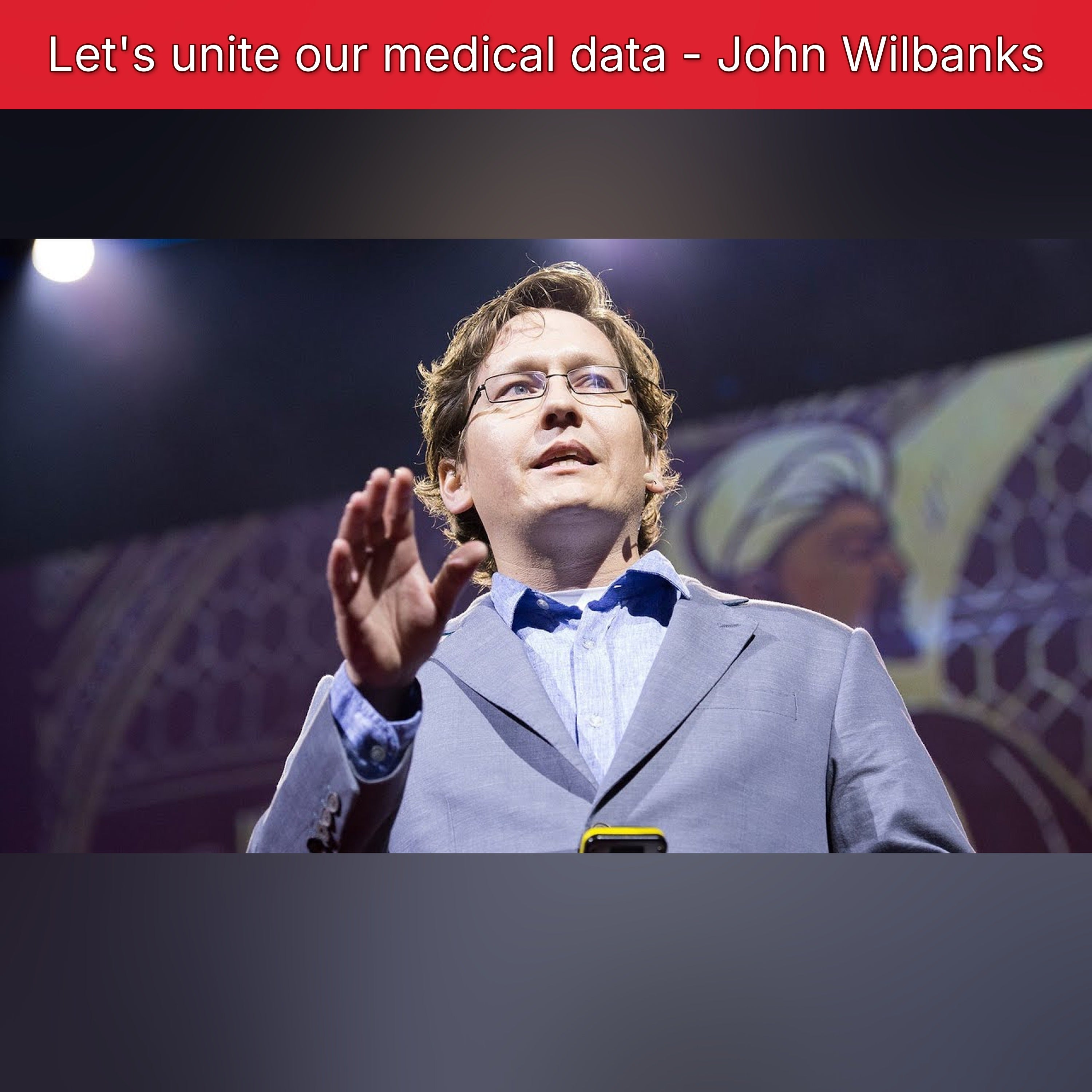
When you're getting medical treatment, or taking part in medical testing, privacy is important; strict laws limit what researchers can see and know about you. But what if your medical data could be used -- anonymously -- by anyone seeking to test a hypothesis? John Wilbanks wonders if the desire to protect our privacy is slowing research, and if opening up medical data could lead to a wave of health care innovation. Talk by John Wilbanks.
Kate was 39, grieving her dad, and finally certain. She’d spent three years in a COVID relationship, lost her father to cancer, watched her partner lose his dad, and felt the whole thing quietly unravel. When it did, the clarity was instant: she rang Melbourne IVF two months before her 40th birthday. What followed was ICSI, 13 eggs retrieved, a failed first transfer, a natural frozen cycle that worked — and then the worst hyperemesis gravidarum her obstetrician had ever seen. Kate was on 13 tablets a day, had IV fluids at home, missed most of a school term, and spent the first trimester in what she describes honestly as anxiety and depression. Her baby was perfectly healthy. She wasn’t, and she talks about it without filters. She also talks about the C-section she loved (favourite song, saw the placenta, best part of the whole process), the Airbnb-for-mum postpartum hack, the triple feeding she stopped at three months, and Oliver Ian — 11 months old, named for her nan Olive and her dad