04/11/26 UK-EU trade deal and what it will mean for food producers. Farm reservoirs and water management.
15 min
Listen through the publisher, then discuss the episode here or arrange an in-person Roundtable. Your city determines where to meet.
Roundtables are designed for groups of four, with a shared subject and room for everyone to speak. Come for discussion, with no dating expectation.
Food producers and farmers have been giving their reaction to a draft deal on EU trade re-alignment. The document outlines the details for sanitary and phytosanitary, or SPS regulations, and is expected to be discussed at the EU Summit planned for November 20th. When Brexit came into force six years ago, the SPS agreement was pivotal to many UK food export businesses. Shellfish producers, seed potato growers, cheesemakers and meat processors found they had to complete extra paperwork to export to the EU as a 'third country', often leaving their businesses less competitive. Some shut down completely, others found new markets. We speak to industry experts and producers to find out what the changes will mean. All week we're discussing how farmers can improve their water management - saving winter water and using it more carefully during the dry months. After the experience of this summer when three of its four reservoirs ran dry, Riverford Organic Farmers in Devon has been exploring how measuring data can help them manage water in the future. Presenter = Anna Hill Producer = Rebecca Rooney
Episode information is provided by the publisher. Listening takes place on the publisher’s service.
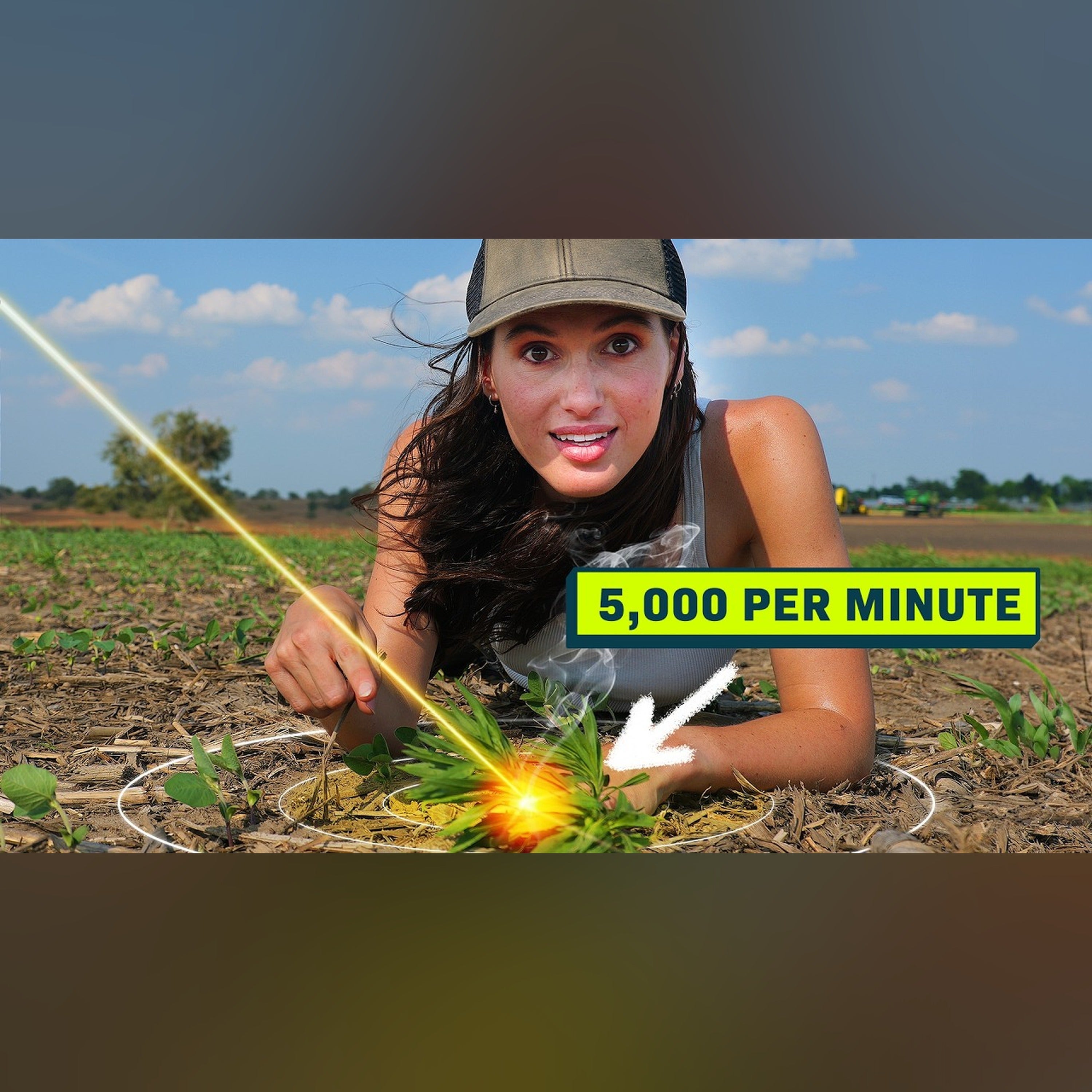
Growing food doesn’t look like I thought… Learn more about Dropbox for teams: https://www.dropbox.com/cleo Thanks Dropbox for sponsoring this video! Right now, we’re living through one of the most pivotal moments in food history… and most people have no idea it’s happening. Experts are calling the “Fourth Agricultural Revolution” and it’s here because we’re facing a big problem: The world’s population is rising, so experts say we’ll need to increase food output to catch up with our current population and feed those new people. But we’ve got to do it in ways that actually protect the Earth long term. Right now, farmers are in a fight to feed the world. So let me show you some of the coolest machines they’re using to do it… Chapters: 0:00 What’s the fourth agricultural revolution? 01:15 Why do we need more food? 1:54 Where does farming tech get tested? 3:00 What were the first 3 agricultural revolutions? 3:58 How do we feed billions more people… better? 4:31 How do farmers grow more food
Microplastics in my Heart Letter: https://staycuriousmetabolism.substack.com/p/microplastics-in-my-heart-its-worse?r=40ekz2 Stanford Fiber RCT, Letter https://staycuriousmetabolism.substack.com/p/fiber-is-good-for-you-is-lazy-science?r=40ekz2 Microbiome Reset, Letter https://staycuriousmetabolism.substack.com/p/how-im-rebuilding-my-microbiomeafter?r=40ekz2 Description: Microplastics are everywhere—in our food, water, and inside our bodies—and avoiding them completely is nearly impossible. In this conversation, I sit down with Dr. Matthew Dunn PhD, a molecular biologist working at the intersection of biotechnology and human health, to unpack what the science actually says about microplastics and how they may be linked to cardiovascular disease, reproductive health issues, and gut inflammation We break down the landmark human data, the animal and cellular studies that help explain possible mechanisms, and dissect the state of the data. We also explore a potential inside-out solution: usi
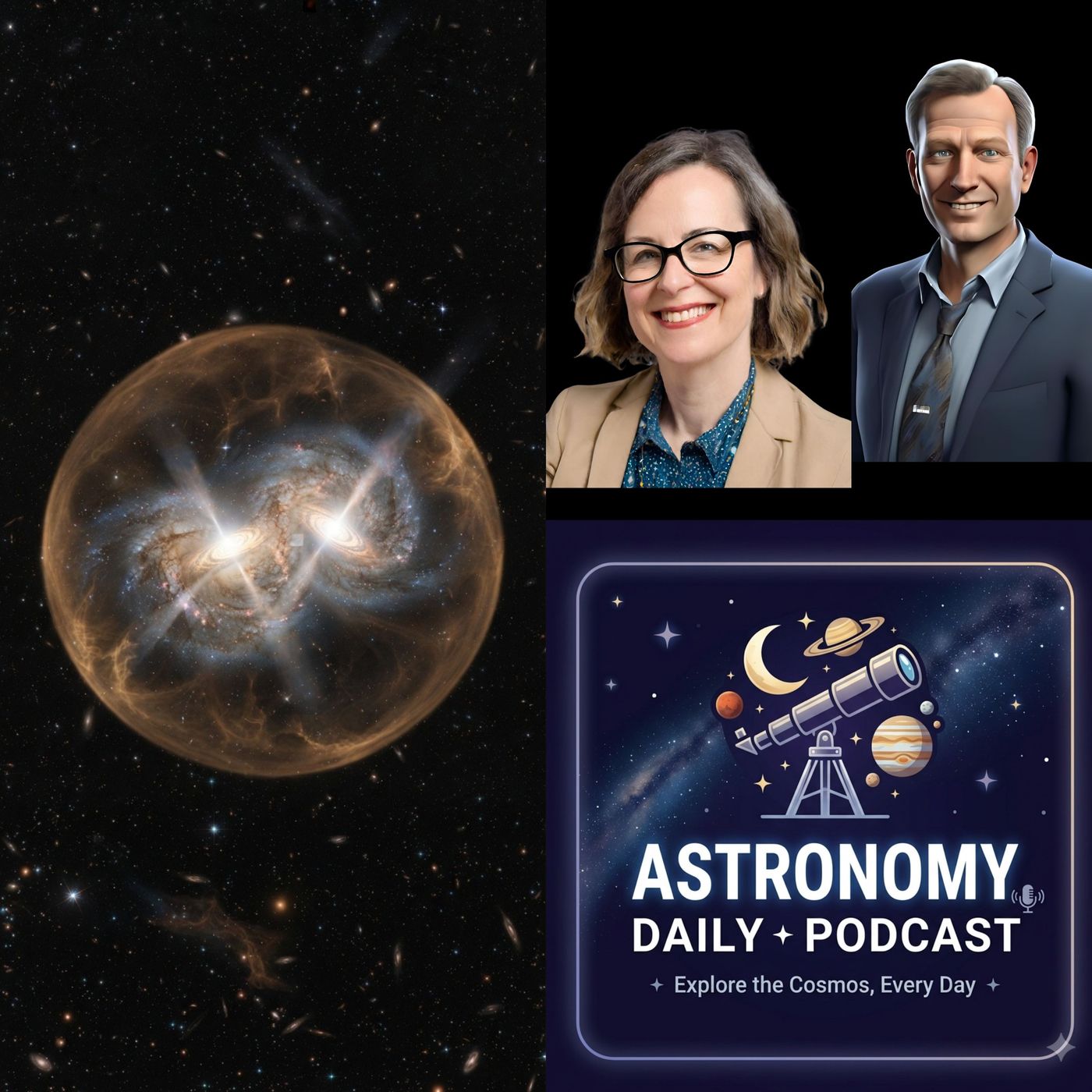
Eleven billion years ago two quasars blazed side by side, and this week astronomers weighed the invisible gas around them by the shadow it casts on the cosmic microwave background. There is 3.6 times more heat in it than gravity can explain. Plus a triple star 28 light-years away that 'should not exist', a pulsar found in ten hours with an algorithm borrowed from cryptography, The Week That Was, and the weekend sky from both hemispheres. In this episode Lead: Hot bubble around the dual quasar J1549+1245 at z = 2.37, measured with ALMA via the thermal Sunyaev–Zel'dovich effect (Hall, Zakamska et al., Nature Astronomy, 18 Nov 2026). Fresh item: Welopōʻai, the closest known triple with two white dwarfs, 28 light-years away (Artigau et al., A&A, 19 Nov 2026). Week That Was: Starship Flight 15 ship catch, CSIRO GenDIReCT and M87, SN 2026ahvu, failed supernovae in gravitational waves (E230); Voyager 1 one light-day, Beta Pictoris ices, heavy-oxygen water, Roman alignment (E231); Terra ends,
PBS Member Stations rely on viewers like you. To support your local station, go to:http://to.pbs.org/DonateSPACE Sign Up on Patreon to get access to the Space Time Discord! The first discovery of extraterrestrial life will almost certainly NOT be when it visits us, nor when we visit it. It won’t be when we see it’s stray TV signals. It’ll be in the excruciatingly faint changes in the color of alien sunsets glimpsed hundreds of light years away. Today we’re going to talk about the first such hint, why it's probably not aliens, and why there’s a tiny chance that it still might not not be aliens. Check out the Space Time Merch Store Search the Entire Space Time Library Here: https://search.pbsspacetime.com/ Hosted by Matt O'Dowd Written by Matt Caplan & Matt O'Dowd Post Production by Leonardo Scholzer, Yago Ballarini & Stephanie Faria Directed by Andrew Kornhaber Associate Producer: Bahar Gholipour Executive Producers: Eric Brown & Andrew Kornhaber Executive in Charge for PBS: Maribel Lop
In this calm and sleepy facts episode, we spend eight peaceful hours exploring some of the quietest wonders of the natural world. We begin beneath a gathering thunderstorm, following warm air as it rises into towering clouds and learning how a single flash of lightning can briefly heat the air to several times the temperature of the surface of the Sun. From there we settle into the hidden world of hibernation, where animals slow their breathing and their heartbeats to just a few beats a minute and wait out the long winter in stillness. Next, we wander among the trees, discovering how they lift water hundreds of feet into the air without a single moving part and quietly record each passing year in rings of wood. Finally, we cross the deserts, where the heat of the day gives way to cold, clear nights and some dunes hum softly as the sand slides down their slopes. Each story unfolds slowly and gently, with no sudden sounds, so the whole night can pass in calm and quiet wonder. Let these c
For some reason, it did not stop him.Now I just want to ask you something real quick to put you in the mind of a bear. If you found some of your favorite food just left out and you somehow, like me most of the time, just couldn’t resist the temptation. Bears live and eat by what is detected by their noses, so logically, after eating its fill, a proper expectation would be that the bear would go sleep off a large meal upwind of where its food was cached. The wind carries both scent and sound to the bear as it rests and acts as an alarm to it to defend its cache. The hide was still up in the birch, untouched. He dropped his packboard at the base of the tree and glanced up to see where he would need to climb. Movement in the brush, some three hundred feet away, caught his eye. Two bears, roughly thirty feet apart, moved through the brush. From their color and build, he identified them as grizzlies, also called coastal brown bears.Up to that day, every bear he had met in the wild had chose
The government says tomorrow's UK-EU summit will result in a food and drink trade deal which will cut back on paperwork, ease pressure on prices and add 'up to £5billion a year to our economy'. Behind the headlines are complicated talks on complicated rules governing things like food safety, pesticides, and genetic modification and gene editing. Today we're going to look at the possible impact on England's biotechnology sector. As part of this week's focus on trees, we're talking walnuts: most of those we eat here in the UK are imported, but a couple of sheep farmers in Warwickshire hope to change that, and have diversified into both importing and growing walnut trees. Presented by Charlotte Smith and produced by Beatrice Fenton.
The EU and UK will hold a long-awaited summit in Brussels later. A new trade agreement could remove checks and paperwork faced by exporters since Brexit. It's anticipated that the new deal will mean realigning with EU rules on aspects of agricultural production here in the UK, including regulation of pesticides. Farming leaders have warned this could strip British farmers of several products used to protect their crops and raise costs and are calling for a phased transition but wildlife and environmental groups want the negotiations to be a starting point for what they describe as a "far more ambitious plan" to cut pesticide use and restore nature. Farmers in England will be able to apply to a £15 million fund to help them dig new reservoirs and install water storage tanks from the end of the month. It's part of a wider drought resilience package announced by the prime minister back in August. The government's now confirmed the application window for round three of the water management
The UK's significant talks towards re-alignment with the EU will take place this Friday, and food and farming will be central to the discussions. Food trade was one of the areas most impacted by Brexit, and now re-drawing the EU UK relationship could cause disruption too. But will it be beneficial for farmers and food producers? We ask the president of the National Farmers Union. Government figures have shown a dramatic drop in new woodland creation in Scotland in 2025, falling well short of the Scottish Government's own original target of 18,000 hectares. In fact less than half of that was planted - a drop of 44% compared to 2024. That roughly mirrors a big cut in the cash for the Scottish Government’s forestry grant scheme, of 41%. But foresters say it’s more complicated than just a direct effect of cuts. And we speak to Lantra - a charity which helps young people into rural careers, training and education - about how Alan Milburn's report into NEETs might improve prospects for young
Moving a contested monument to a museum can be better than leaving it unchanged or destroying it.
Share your view, then see how readers voted. No sign-in required. This poll is shared across stories.
Do you agree or disagree?
Common Quandary
A Common Quandary to discuss
Another conversation to explore, separate from this news story.
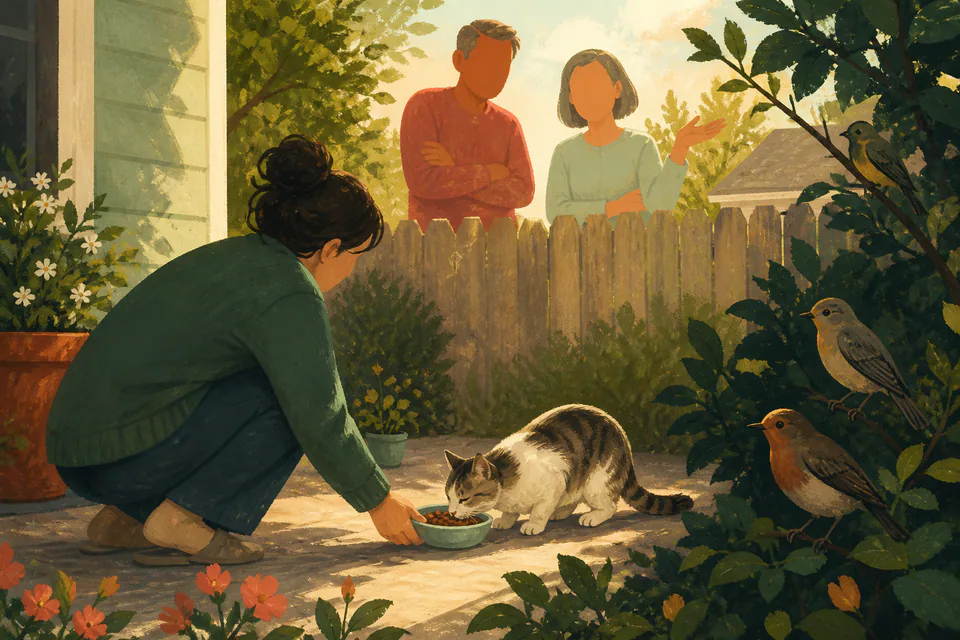
A stray cat adopts you—and starts killing birds. Do you keep feeding it?
A stray cat visits your yard daily and appears to depend on the food you leave out. Neighbors complain that outdoor cats kill birds and say feeding it encourages the problem without taking responsibility for the animal.
Does caring for one visible animal excuse harm to less visible ones?